


Key Takeaways:
– Donald Trump frequently promises to reduce gas to $1.87 a gallon.
– Analysts fear this could harm the very industries Trump seeks to support.
– A drop in gas prices would require a significant decrease in crude oil prices.
– Such a reduction may lead major US oil producers to cut back on big investments.
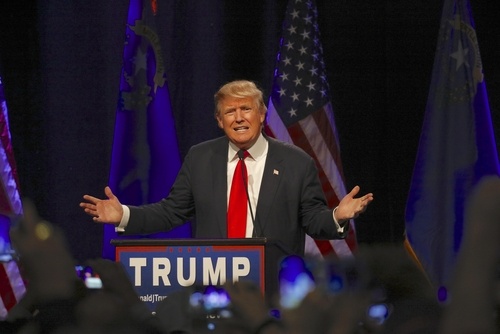
The former US president, Donald Trump, is back on the campaign trail. Coming along with him are his promises to bring gas prices down to $1.87 per gallon. This seems to be his rallying cry, repeated at least 19 times at different events. But this pledge might not be as beneficial as it seems.
Carte Blanche Promises and Hidden Consequences
Trump’s continuous promise to slash gas prices doesn’t officially appear on his campaign website or the 2024 Republican Party platform. Even so, it resonates strongly with his supporters. It serves as a potent reminder of the rising costs that consumers have had to bear in recent years. But as impressive as the idea sounds, it may not be achievable— and even if attainable, it’s not without severe consequences.
Energy experts and economists suggest Trump’s proposal to cut gas prices by 40 percent oversells his ability to control the economy. The national average for gas prices currently stands at $3.16. Lowering the prices to Trump’s promised figure would require a massive drop in crude oil prices. If they rise, it could have a devastating ripple effect on industries the former president promises to support.
The Fall in Gas Prices and its Potential Impact
A steep fall in gas prices invites an equally dramatic fall in the crude oil prices. To meet the gas prices touted by Trump, crude oil prices would need to plummet to about $20 a barrel. Just to add some context, West Texas Intermediate crude oil, the US benchmark, was selling around $71 a barrel just on Wednesday. The oil prices drifted near to $20 a barrel just once in recent years, during the pandemic.
This was a period of turmoil when the demand for oil was on the cliffedge due to the pandemic, and Saudis and Russians were caught in a price war. Enforcing this volatile condition where crude oil prices are forced to hit rock bottom again, aren’t considered feasible under normal circumstances.
Support and Potential Backfires
Analysts have pointed out that top US oil producers might reconsider their major investments if this scenario plays out as the companies have a hard time breaking even any time the price of a barrel drops below $45. If crude prices are to take a nosedive down to $20 a barrel, it’s conceivable that producers would cut back on their big investments.
This apparently could contradict Trump’s promises to throw his weight behind these very sectors. The fact of the matter is, his promise to bring down gas prices drastically isn’t just an economic challenge, but it logically doesn’t mesh with his other pledges of supporting industries that would suffer terribly from this change.
The prospects of bringing gas prices down to $1.87 a gallon might seem attractive, especially to a lot of consumers burdened by the rising prices. Yet, the cost of implementing such a change could potentially wreak havoc on the very industries Trump claims to champion. Hence, like all political promises and propositions, this too requires close scrutiny beyond the surface level appeasement it offers. The consequences of such a drop could do more harm than good, perhaps even undermining the economic stability of the oil industry.
The bottom line, then, is that the gas promise might be an effective tool on the campaign trail. But in the real world, back at the deck, it appears to be more complex with potential backfires.