


Key Takeaways:
• Miles Taylor doubts Trump’s claim that he knew nothing about the Bolton raid.
• Taylor warns Trump uses government power to punish his critics.
• Focus should be on possible abuse of power, not just Bolton’s actions.
• Taylor highlights Trump’s past comments about acting like a dictator.
• The debate raises concerns about the rule of law in the United States.
The controversy over the Bolton raid
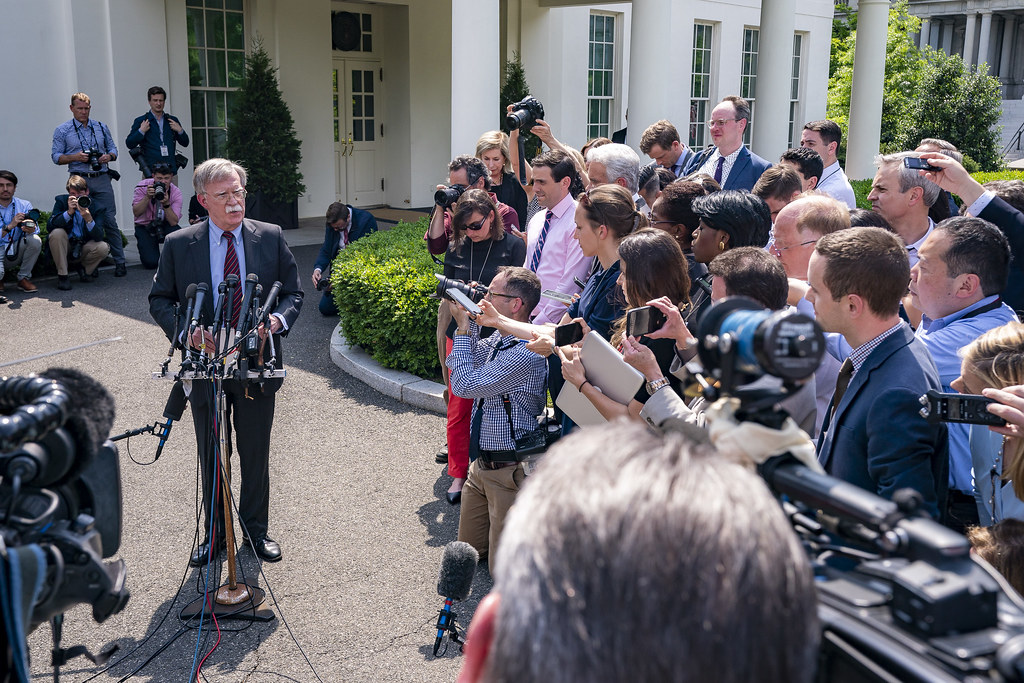
Last week, federal agents searched former National Security Adviser John Bolton’s home. This search is part of an investigation into whether he mishandled classified materials. Donald Trump claims he knew nothing about the Bolton raid until it happened. However, former Homeland Security official Miles Taylor strongly disagrees.
Why Miles Taylor doubts Trump’s claim
Taylor said on a news show that he cannot believe Trump was unaware. He noted that Trump calls himself the “chief law enforcement officer” of the nation. Moreover, Trump has shown a deep interest in going after his critics. In recent days, Trump had lunch with a former aide, Kash Patel, and spoke often about John Bolton. Taylor argues it stretches belief that Trump had no idea a major FBI operation was in the works.
Taylor’s bartender analogy
Taylor offered a simple analogy to explain his point. Imagine a bartender poisons someone’s drink. Afterward, people ask if the person forgot to pay their bill. The real issue is the poisoning, not the unpaid tab. In this case, the focus on Bolton’s alleged mistakes distracts from whether Trump used federal resources to target an enemy.
Trump’s response and actions
When Taylor wrote a critical opinion piece in 2018, Trump hit back hard. He signed a memo to investigate Taylor for treason. He also revoked Taylor’s security clearance. Trump’s moves show he takes criticism personally and is quick to use official power against critics.
The focus on power over procedure
Taylor stressed that the practical details of Bolton’s case are secondary. Instead, the nation should ask whether a president ordered the federal government to hunt down an alleged crime by a political rival. As Taylor put it, the real danger lies in weaponizing government agencies against enemies.
Concerns about dictator-like behavior
Taylor pointed out that Trump has publicly fantasized about having total authority. Years ago, Trump said the president’s power must be “total.” Since then, he has repeatedly expressed admiration for foreign dictators. Taylor said those conversations in private make him worry.
Dictator talk isn’t just talk
Many brushed off Trump’s harsh language as mere rhetoric. For example, Trump once said he would lock people up. He also mentioned sending troops into cities. Critics warned those statements were signs of authoritarian leanings. Now, actions such as the Bolton raid raise concerns that those warnings were valid.
The wider risk to the rule of law
When a leader uses government agencies to punish enemies, the rule of law suffers. Citizens may lose trust in fair treatment. Institutions designed to check power can weaken. Taylor’s warning is that if this pattern continues, American democracy itself could be at risk.
Transitioning from debate to action
Critics argue that Congress and the courts must step in. They need to review how investigations are initiated. They must ensure no president can direct an FBI or Justice Department probe for personal reasons. As a result, stronger safeguards might emerge.
Public reaction and political fallout
After learning about the Bolton raid, many Americans felt uneasy. Polls show a split: some trust Trump, others fear abuse of power. Meanwhile, news outlets continue to ask if more raids will target other former aides or critics. The uncertainty keeps the topic in headlines.
Why this matters to ordinary citizens
You might think political disputes happen far from daily life. Yet the principle involved hits every citizen. If a leader can use state power to settle scores, anyone could become a target. Therefore, people care deeply about the outcome of this debate.
What to watch next
Observers are watching several fronts. First, legal filings in Bolton’s case may reveal more details. Second, Congress may hold hearings to probe the Justice Department’s independence. Finally, public opinion could sway upcoming elections. Each factor will shape how power is checked in the future.
Putting trust back in institutions
If confidence in legal institutions drops, democracy weakens. To rebuild trust, law enforcement must act transparently. Leaders must respect boundaries between personal agendas and official duties. Only then can the public feel safe that laws apply equally to all.
Conclusion: A test for democracy
The question of who ordered the Bolton raid goes beyond one man. It tests the balance between power and accountability. As the debate unfolds, Americans will gauge whether their democracy can withstand such challenges. In the end, the real victory lies not in confirming a single order. It rests in upholding the principle that no one—especially a president—is above the law.
Frequently Asked Questions
Why did federal agents search John Bolton’s home?
Agents searched Bolton’s home to investigate claims that he mishandled classified documents after leaving office.
What is Miles Taylor’s main concern?
Taylor worries that the president may use federal agencies as weapons against his critics, threatening the rule of law.
Has Trump ever shown interest in acting like a dictator?
Yes. Trump made public comments praising total presidential power and admired foreign dictators in private.
What could happen if leaders misuse law enforcement for personal reasons?
If leaders target enemies with official power, public trust in institutions can erode, risking democratic stability.