

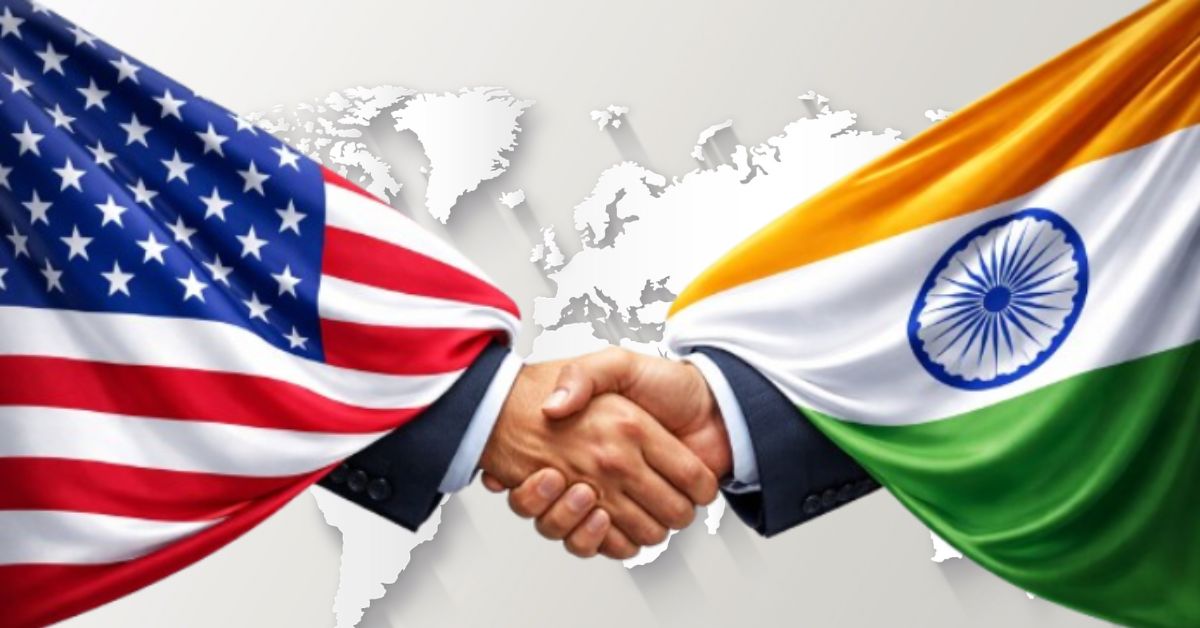

The United States and India have announced a new trade agreement that could significantly reshape economic relations between the two countries. President Donald Trump revealed that the two governments have agreed to reduce tariffs and ease trade restrictions, a move that he said will take effect immediately. The announcement followed a direct conversation between Trump and Indian Prime Minister Narendra Modi, during which the leaders discussed trade, energy policy, and broader global issues.
The US India trade agreement marks a significant shift in economic cooperation between the two countries.
While the deal has not yet been published in formal legal text, the announcement signals a renewed push by both nations to deepen economic cooperation at a time when global trade dynamics remain uncertain.
A Shift Toward Lower Trade Barriers
According to President Trump, the agreement involves reciprocal tariff reductions designed to make trade more balanced between the two countries. The United States plans to lower its tariff rate on Indian goods, while India has committed to removing or significantly reducing tariffs and non-tariff barriers on American exports.
The administration says these changes are intended to create a more level playing field for U.S. companies seeking access to India’s vast and growing market. India, meanwhile, stands to benefit from improved access to American technology, energy resources, and agricultural products.
Although the announcement emphasized immediate action, officials have not yet released a detailed implementation schedule or regulatory guidance.
Expanded Purchases of American Goods
One of the central elements highlighted by Trump is India’s pledge to increase purchases of U.S.-made products across multiple sectors. These include energy, technology, agriculture, and industrial materials. Trump described the commitment as a major step toward strengthening U.S. exports and supporting domestic industries.
The agreement reportedly includes plans for India to significantly expand its imports of American energy products, including oil and coal, along with advanced technologies and farm goods. If carried out as described, the shift could create new demand for U.S. producers while diversifying India’s supply chains.
Energy Policy Takes Center Stage
Energy cooperation appears to be a major pillar of the new trade understanding. Trump stated that Prime Minister Modi agreed to reduce India’s reliance on Russian oil and instead increase energy purchases from the United States. The move aligns with broader Western efforts to limit revenue streams that support Russia amid the ongoing war in Ukraine.
In addition to U.S. energy exports, Trump suggested that India may also explore alternative sources, including Venezuela, as part of a strategy to diversify imports and reduce geopolitical risk.
Energy analysts say that while such shifts are complex and depend on pricing, logistics, and infrastructure, even incremental changes could have meaningful implications for global energy markets.
Questions Around Implementation and Authority
Despite the strong language used in Trump’s announcement, questions remain about how and when the agreement will be formally enacted. As of now, no signed trade document or official regulatory notice has been released.
Some legal experts and lawmakers have raised concerns about whether the executive branch can finalize binding trade agreements without approval from Congress. Supporters of the administration argue that previous legislation has granted the president broad authority to negotiate and implement trade-related measures.
Until official notices appear in the Federal Register or equivalent Indian regulatory channels, businesses are likely to proceed cautiously.
Industry Experts Urge Patience
Trade professionals familiar with U.S. tariff policy say companies have learned not to react too quickly to public announcements. Regulatory details, including tariff codes, effective dates, and exemptions, often take time to emerge.
Logistics and customs specialists note that actual changes in import and export costs depend on precise language in official documents. Until those are released, many companies will continue operating under existing rules.
This cautious approach reflects experience from previous trade announcements, some of which evolved significantly during the implementation phase.
Broader Economic and Strategic Implications
The proposed trade agreement comes at a time when the U.S. is seeking to strengthen ties with key partners in the Indo-Pacific region. India’s growing economic influence and strategic position make it a central player in global supply chains and regional stability.
For India, closer trade ties with the United States could attract additional investment, improve access to advanced technologies, and support long-term economic growth. For the U.S., expanding trade with India offers an opportunity to diversify export markets and reduce reliance on other regions.
Beyond economics, the agreement also carries geopolitical weight, signaling alignment between two democracies navigating an increasingly complex global landscape.The US India trade agreement is expected to play a key role in reshaping long-term economic and strategic alignment between the two nations.
What Happens Next
The next phase will likely determine the real impact of the agreement. Observers will be watching for:
-
Official trade documents or memorandums
-
Federal Register notices detailing tariff changes
-
Statements from India’s commerce and finance ministries
-
Responses from Congress and industry groups
Until those steps occur, the agreement remains a framework rather than a finalized policy.
A Deal With Potential, But Details Still Matter
The announcement of a new U.S.–India trade agreement has generated significant attention, but its ultimate success will depend on execution. Lower tariffs and expanded trade could benefit both economies, but businesses and investors will need clarity before making major decisions.
For now, the agreement represents a clear intention by both governments to strengthen economic ties and pursue deeper cooperation. Whether those intentions translate into lasting change will become clearer in the weeks ahead. If fully implemented, the US India trade agreement could deliver lasting benefits for trade, investment, and bilateral cooperation.