


Winter Olympics Day 4 marked a pivotal turning point in the 2026 Games, as medal momentum accelerated, high-profile athletes faced defining moments, and Team USA emerged as a central force across multiple disciplines. With nine gold medals decided and several marquee events unfolding, the day underscored both the competitive intensity and broader significance of the modern Winter Olympics.
From curling’s medal push to dominant performances on the ice, the events of the day reflected how success at the Olympics now demands depth, resilience, and composure under global scrutiny.
Winter Olympics Day 4 Highlights Team USA Curling Momentum
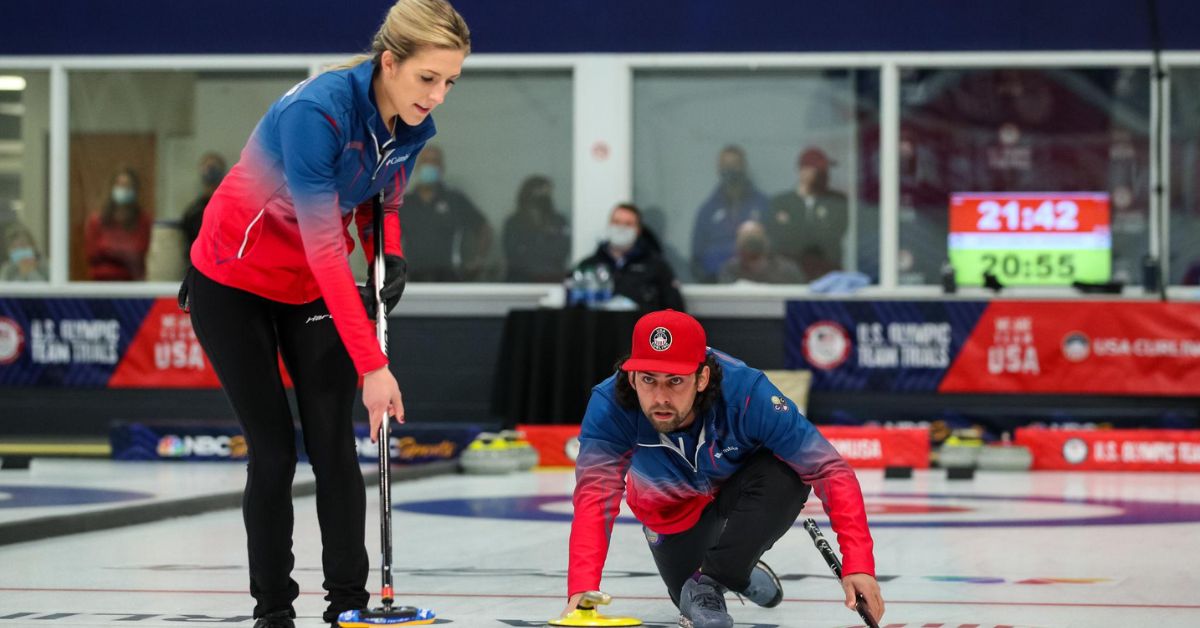
One of the strongest medal opportunities for the United States on Winter Olympics Day 4 came in mixed doubles curling, where Americans Korey Dropkin and Cory Thiesse advanced to the gold medal match after defeating Italy, the defending Olympic champions.
The semifinal win demonstrated tactical discipline and calm execution, with the American pair maintaining control throughout the match. Their performance reflected the steady rise of U.S. curling on the international stage, following years of targeted development and international exposure.
The gold medal match against Sweden now represents a defining moment. Sweden’s precision-based approach contrasts with the assertive style employed by the U.S. team, setting the stage for a closely contested final that could yield one of Team USA’s most significant curling victories in recent Olympic history.
Snowboarding Spotlight Expands Beyond Competition
Snowboarding events on Winter Olympics Day 4 unfolded amid heightened public attention, as Olympic champion Chloe Kim addressed criticism directed at fellow U.S. snowboarder Hunter Hess by former U.S. President Donald Trump.
Kim’s response emphasized athlete unity and professionalism, avoiding direct political escalation while reinforcing the responsibility athletes carry when representing their country on the Olympic stage. The moment highlighted how Olympic platforms increasingly intersect with national conversations beyond sport.
As the Games progress, athlete voices continue to shape public perception, reflecting a broader shift in how Olympians engage with global audiences during high-visibility moments like Winter Olympics Day 4.
Lindsey Vonn’s Risk Underscores Olympic Reality
Veteran alpine skier Lindsey Vonn became one of the most discussed figures of the day after revealing she competed in the women’s downhill despite a torn ACL sustained earlier in the season.
Vonn’s run ended in a crash that resulted in a fracture requiring surgery, drawing renewed attention to the physical toll elite Olympic competition demands. Her decision reignited debate over athlete health, career longevity, and the risks competitors accept at the highest level of sport.
Medical experts continue to caution against competing with ligament injuries, but Vonn described her decision as a calculated choice informed by medical guidance and personal conviction. Her experience on Winter Olympics Day 4 illustrated the fine line between Olympic ambition and long-term health.
Ice Hockey: Team USA Sends Statement
Team USA’s men’s ice hockey squad delivered one of the most dominant performances of Winter Olympics Day 4, shutting out Switzerland 5–0 in a display of structured defense and efficient scoring.
The victory strengthened the team’s position in the standings and reinforced expectations that the Americans could contend for a medal. Attention now shifts to the upcoming matchup against Canada, one of the most intense rivalries in international hockey.
Analysts view the Canada game as a critical benchmark. How Team USA responds to Canada’s physical play and depth could define its medal trajectory as the tournament advances beyond Winter Olympics Day 4.
Nine Gold Medals Define a Busy Olympic Day
Across alpine skiing, curling, snowboarding, and ice hockey, Winter Olympics Day 4 ranked among the most active medal days of the Games. Rather than relying on a single breakout event, Team USA’s success reflected broad competitiveness across multiple disciplines.
This depth points to long-term investment in athlete development programs and training infrastructure, allowing American competitors to remain relevant across both traditional and emerging Winter Olympic sports.
Resilience emerged as a consistent theme. Athletes navigated injury risks, elimination pressure, and public attention while continuing to perform at an elite level.
The Modern Olympics Extend Beyond Sport
Winter Olympics Day 4 demonstrated how the Games now operate within a wider cultural and media ecosystem. Athletic performance unfolds alongside social commentary, political visibility, and global conversation driven by real-time coverage.
For organizers and athletes alike, the Olympics represent not only competition but also representation. Public expectations continue to evolve, requiring athletes to balance performance excellence with personal accountability.
Looking Ahead After Winter Olympics Day 4
As the 2026 Games progress, Team USA remains positioned for additional medal breakthroughs, particularly in curling and ice hockey. Final rounds and rivalry matchups will determine whether momentum from Winter Olympics Day 4 translates into podium success.
What is already clear is that the Olympics are no longer defined solely by medal counts. They are shaped by resilience, visibility, and moments that resonate far beyond the competition itself.
For official schedules and verified results, updates are available through the International Olympic Committee.