


The debate over digital independence in Europe has entered a new and more urgent phase. Governments, corporate leaders and regulators are confronting a difficult reality: building resilience in a globalized technology ecosystem is far more complex than political slogans suggest.
European tech autonomy has become a central theme in that discussion.
Across Brussels and national capitals, policymakers are weighing how to reduce reliance on foreign infrastructure without undermining competitiveness. The stakes are high. Artificial intelligence, cloud computing and semiconductor manufacturing now sit at the heart of economic growth and national security planning.
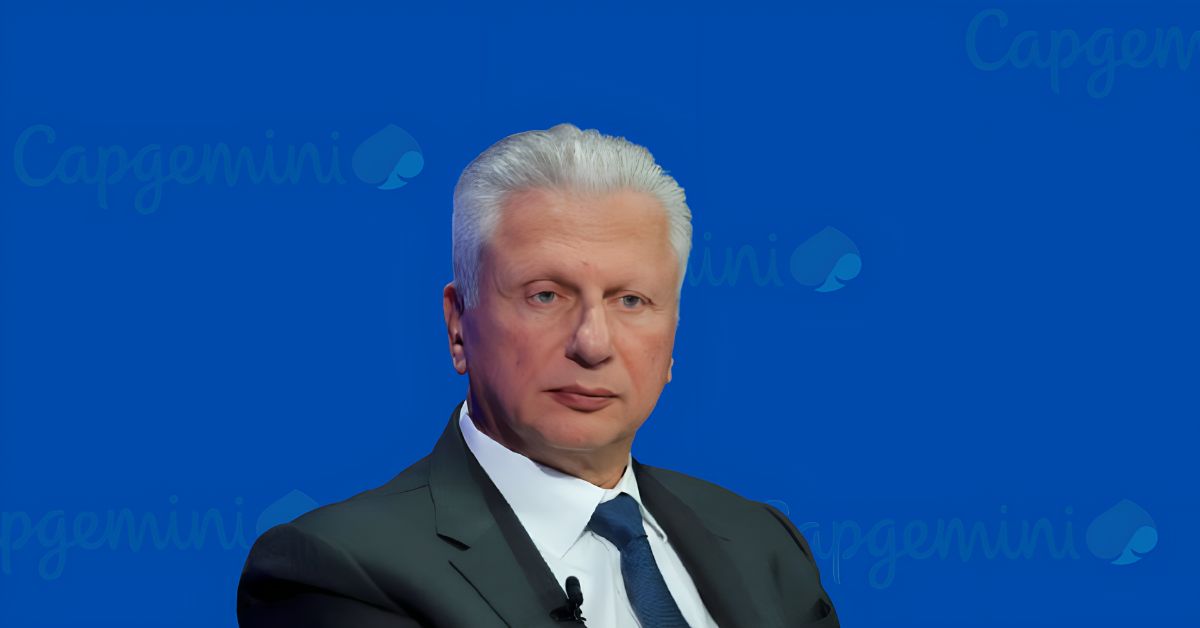
Recent comments from Capgemini CEO Aiman Ezzat have brought renewed attention to the issue. Speaking during a corporate briefing, Ezzat cautioned against pursuing what he described as “absolute sovereignty,” arguing that complete technological independence may not be realistic in today’s interconnected world.
His remarks have sparked fresh debate about the future direction of European tech autonomy and whether the concept should be redefined.
European tech autonomy and political momentum
The phrase “European tech autonomy” has gained traction over the past five years. It reflects growing concern that critical infrastructure — including cloud services, chip manufacturing and AI platforms — is concentrated outside Europe.
The COVID-19 pandemic exposed supply chain fragility. Semiconductor shortages disrupted automotive production. Energy shocks highlighted dependency vulnerabilities. As a result, European leaders began emphasizing strategic resilience across multiple sectors.
Digital infrastructure became a priority.
The European Commission framed European tech autonomy as part of a broader competitiveness strategy. Lawmakers argued that control over data, cybersecurity and AI governance would determine Europe’s ability to shape its economic future.
Yet even as political support increased, business leaders began asking difficult questions about feasibility.
Cloud infrastructure and hyperscale dominance
One of the clearest challenges facing European tech autonomy is the dominance of U.S.-based cloud providers.
Global hyperscalers operate vast data centers across continents. Their platforms power financial institutions, healthcare networks, logistics systems and manufacturing operations. The scale of investment required to replicate that infrastructure entirely within Europe would be enormous.
European governments have supported initiatives designed to create sovereign cloud environments. However, progress has been gradual. Technical interoperability, capital intensity and market competition complicate efforts to build alternatives that match the capabilities of global incumbents.
Executives argue that European tech autonomy must account for economic reality. Modern cloud computing relies on distributed networks optimized for efficiency and security. Reconstructing these systems from scratch could take decades and require sustained public funding.
At the same time, policymakers remain concerned about data jurisdiction, cross-border access and cybersecurity risks. That tension defines much of the current debate.
Artificial intelligence and industrial competitiveness
Artificial intelligence has amplified urgency around European tech autonomy.
AI models require immense computing power. Training advanced systems demands specialized hardware and large-scale cloud capacity. European companies seeking to compete in AI-intensive sectors often depend on global infrastructure providers.
From predictive analytics in automotive manufacturing to diagnostic systems in healthcare, AI tools are becoming embedded in daily operations. Restricting access to global platforms could hinder adoption and innovation.
Capgemini’s leadership has emphasized the importance of maintaining access to cutting-edge AI resources while ensuring compliance with European regulations. According to Ezzat, sovereignty should not be confused with isolation.
European tech autonomy, he suggested, must allow companies to innovate at scale.
Analysts note that Europe possesses strong research institutions and growing startup ecosystems. Investment in AI research has increased significantly. Yet scaling those innovations often requires partnerships that extend beyond regional borders.
Balancing regulatory control with technological agility remains one of the central dilemmas.
Regulation as leverage, not isolation
Europe holds significant regulatory power in global technology governance. The General Data Protection Regulation reshaped data privacy standards worldwide. The Digital Markets Act introduced stricter oversight of large online platforms.
This regulatory strength forms an important component of European tech autonomy.
Rather than owning every infrastructure layer, Europe can exercise influence through rule-setting. Companies operating within the EU must comply with its standards, regardless of where they are headquartered.
Critics argue that excessive regulatory complexity may discourage investment. Supporters counter that strong governance enhances trust and long-term stability.
The debate is not simply technical. It reflects deeper philosophical differences about how markets should function and how societies should balance innovation with accountability.
European tech autonomy in this context becomes less about duplication and more about defining the rules of engagement.
Strategic partnerships and hybrid solutions
A growing number of corporations favor a hybrid approach. Instead of severing ties with global providers, they propose partnerships structured around compliance safeguards.
Such arrangements include localized data hosting, contractual transparency clauses and enhanced oversight mechanisms. These models aim to protect sensitive information while preserving operational flexibility.
Hybrid frameworks may represent the most realistic pathway forward.
European tech autonomy can evolve through selective reinforcement of critical capabilities — such as defense systems and public-sector data infrastructure — while allowing open collaboration in commercial domains.
Business leaders argue that predictability and clarity are essential. Companies require stable frameworks to plan long-term investments. Abrupt policy shifts could introduce uncertainty and reduce competitiveness.
Economic risks and supply chain realities
Technology supply chains are inherently global.
Semiconductor fabrication involves specialized facilities across Asia and Europe. Advanced lithography equipment is produced in limited geographic locations. Software development teams collaborate across continents.
Attempting to localize every component within Europe would demand massive capital and coordination. Economists warn that such efforts could increase costs for consumers and businesses alike.
Nevertheless, dependency carries risks.
Geopolitical tensions have raised concerns about export controls and trade restrictions. Cybersecurity threats continue to evolve. These pressures reinforce arguments that strengthening domestic capacity is prudent.
European tech autonomy therefore sits at the intersection of economic pragmatism and strategic foresight.
Industry analysts suggest that gradual diversification, rather than abrupt separation, may provide a sustainable balance.
Investment strategy and innovation goals
European governments have announced funding programs targeting chip manufacturing, AI research and cybersecurity infrastructure.
These investments aim to reduce vulnerabilities while stimulating domestic innovation ecosystems.
Public-private collaboration plays a critical role. Universities, startups and multinational corporations are increasingly aligned around shared research initiatives.
European tech autonomy in this sense becomes a long-term investment strategy rather than a short-term political objective.
Companies such as Capgemini continue to operate globally while expanding their European research footprint. This dual orientation reflects recognition that competitiveness depends on both domestic strength and international engagement.
The objective is not to retreat from globalization but to participate in it from a position of resilience.
The long-term outlook
Looking ahead, experts expect continued debate.
Technology evolves rapidly. AI capabilities are expanding. Cloud infrastructure grows more complex each year. Policymakers must adapt to these changes without overcorrecting.
European tech autonomy will likely remain a guiding principle in digital policy discussions. Yet its implementation may take varied forms across sectors.
In defense and national security domains, stricter controls may prevail. In commercial industries, cooperative frameworks may dominate.
The path forward will require coordination among EU institutions, member states and private enterprises. Consensus will not emerge overnight.
However, most observers agree on one point: isolation is unlikely to define Europe’s digital future.
Conclusion
The renewed discussion triggered by Capgemini’s leadership underscores the complexity of the issue.
European tech autonomy is not a binary choice between independence and dependence. It represents an evolving strategy shaped by economic realities, technological advancements and geopolitical dynamics.
As Europe continues to invest in domestic capacity while maintaining global partnerships, the concept may mature into a balanced model of strategic resilience.
In an interconnected world, sovereignty may ultimately be measured not by separation, but by the ability to navigate interdependence with confidence.
European tech autonomy will remain central to that effort in the years ahead.