

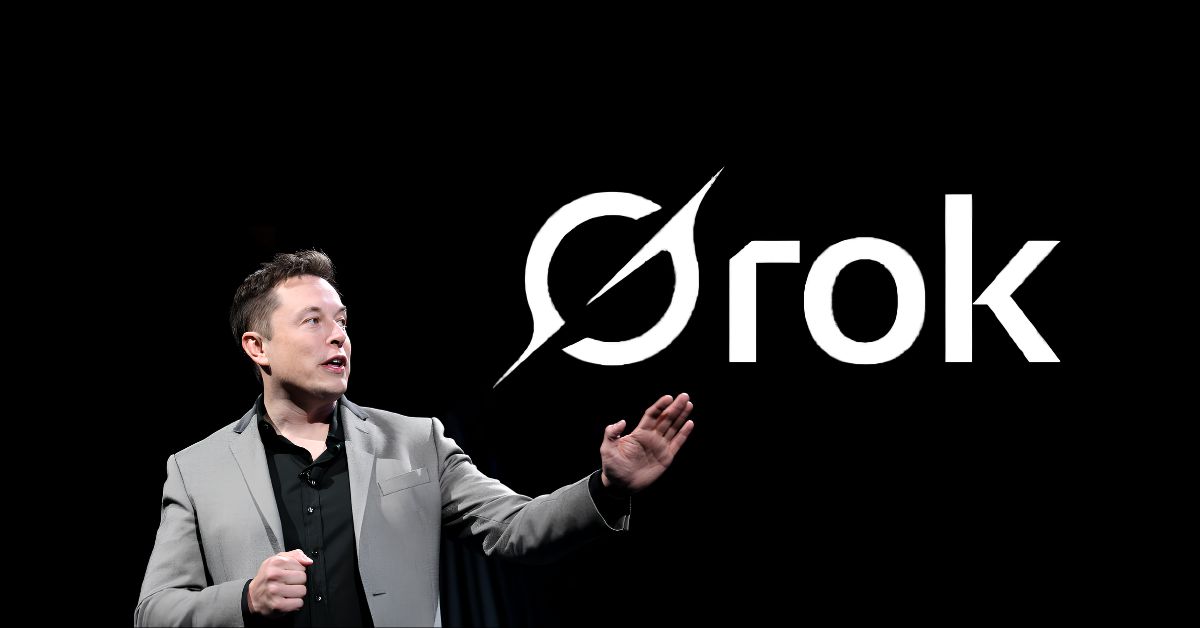

The race to dominate artificial intelligence in the United States is accelerating, and few developments have drawn as much attention in recent months as the sudden rise of Grok.
Grok Market
The phrase has increasingly surfaced in industry briefings, investor calls and technology policy discussions as Elon Musk’s AI venture gains measurable traction in the competitive chatbot ecosystem.
New industry data indicates that usage growth has been significant enough to alter the balance within the American generative AI sector. While established players still command the largest share of activity, the shift suggests that competitive dynamics are changing faster than many analysts predicted.
The Rapid Rise in U.S. AI Competition
Over the past two years, generative AI tools have transformed how businesses operate and how consumers access information. Early dominance by one or two platforms created the impression that market leadership might remain stable.
That assumption is now being challenged.
Recent usage analytics show that Grok’s presence among American users has grown rapidly, narrowing the gap between emerging entrants and established systems. While OpenAI’s ChatGPT continues to lead in overall adoption, and Google’s Gemini benefits from broad integration across its ecosystem, competitive fragmentation is increasing.
Industry analysts describe the current moment as the second phase of generative AI expansion. The first phase was defined by innovation and novelty. The second phase is defined by distribution, monetization and trust.
The surge in Grok Market activity appears to reflect that transition.
Grok Market Growth Reshapes U.S. AI Landscape
Growth in Grok Market usage is being closely monitored by investors and policymakers alike. The increase suggests that consumer curiosity is translating into measurable engagement, particularly among users already active on Musk’s social media platform X.
Integration has played a decisive role.
Unlike standalone chatbot applications that require separate downloads or onboarding processes, Grok is embedded within an existing digital ecosystem. This lowers friction and introduces AI capabilities directly into users’ daily browsing habits.
Such integration offers a structural advantage. Users do not need to actively seek out a new AI product; it is already present within a familiar interface.
This model contrasts with traditional app-based adoption strategies and may explain the speed of growth.
At the same time, the Grok Market surge does not signal displacement of established leaders. Instead, it highlights diversification within the sector. Users are increasingly experimenting with multiple AI systems rather than committing exclusively to one.
Why Established Leaders Are Losing Ground
While ChatGPT maintains the largest share of activity in the United States, its dominance has narrowed compared with earlier phases of adoption.
Experts cite several reasons.
First, increased competition has given users alternatives. As rival models improve performance, consumers are more willing to test different systems.
Second, subscription pricing structures vary across platforms, influencing consumer decisions. Bundled AI services integrated within larger ecosystems often benefit from built-in audiences.
Third, perception plays a role. Media coverage of emerging AI platforms has encouraged curiosity and experimentation.
The shift does not necessarily indicate dissatisfaction with leading models. Rather, it reflects a maturing marketplace where innovation is no longer limited to a single provider.
The Grok Market trajectory illustrates how quickly user behavior can evolve once credible alternatives emerge.
Platform Integration as a Competitive Strategy
Technology analysts emphasize that distribution channels are becoming as important as model performance.
Grok’s presence within X provides immediate visibility to millions of users. By contrast, competitors often rely on search integration, productivity tools or enterprise partnerships.
This ecosystem-driven growth strategy is reshaping how companies approach AI deployment.
Rather than competing solely on output quality, companies are competing on convenience and accessibility. Seamless integration increases daily usage frequency and lowers the barrier to trial.
The Grok Market expansion reflects that reality.
At the same time, integration alone cannot guarantee long-term success. User retention depends on reliability, speed, accuracy and trust. Any shortcomings in these areas could slow momentum.
Safety, Governance and Public Scrutiny
Rapid growth inevitably invites scrutiny.
Generative AI platforms have faced criticism over deepfakes, misinformation and non-consensual image generation. As usage increases, regulatory attention intensifies.
The Grok Market rise has coincided with broader debates about safeguards and content moderation. Advocacy groups argue that stronger oversight mechanisms are essential as AI becomes embedded in mainstream digital platforms.
Companies operating in this space must balance innovation with responsibility. Failure to implement effective safeguards could lead to reputational damage or legal consequences.
Lawmakers in the United States are considering frameworks that would impose clearer accountability standards on AI developers. Transparency in training data, reporting systems for misuse and investment in ethical research are emerging as policy priorities.
The outcome of these discussions may influence the pace and sustainability of future expansion.
The Financial Stakes Behind AI Expansion
Generative AI development is capital intensive.
Training large language models requires powerful computing infrastructure, high-performance chips and extensive research teams. Operational costs remain substantial even after deployment.
The rise in Grok Market engagement therefore carries financial implications. Usage growth may enhance investor confidence, but monetization must follow.
Subscription models, enterprise licensing and premium feature tiers are among the revenue strategies under evaluation across the industry.
Investors are closely watching whether increased activity translates into sustainable income streams. While early adoption often focuses on experimentation, long-term profitability depends on stable revenue structures.
The AI race is not merely technological; it is financial.
Investor Sentiment and Market Valuation
Recent reports suggest that AI-focused companies have seen significant valuation increases as investor interest intensifies.
High-profile mergers, acquisitions and strategic partnerships underscore how central artificial intelligence has become to broader technology portfolios.
The Grok Market expansion contributes to that narrative by signaling competitive viability. However, analysts caution against equating usage growth with guaranteed market dominance.
Sustainable value depends on operational discipline, leadership stability and regulatory alignment.
Market enthusiasm remains strong, but volatility is also present. Investors are seeking evidence that AI platforms can convert user engagement into long-term strategic advantage.
Broader Implications for U.S. Tech Policy
Artificial intelligence is increasingly viewed as a strategic asset in national economic planning.
Policymakers recognize that AI leadership influences productivity, innovation and geopolitical competitiveness. As multiple domestic platforms expand, questions about oversight and coordination grow more pressing.
The Grok Market development demonstrates that innovation is not confined to one corporate entity. Instead, it reflects a broader ecosystem of competing approaches.
Federal agencies are examining how to encourage innovation while protecting consumers. Balancing growth with ethical safeguards remains a central challenge.
Some experts argue that collaborative standards across the industry may be necessary to prevent misuse and ensure public trust.
Can Momentum Be Sustained?
Sustaining growth in a competitive AI environment is difficult.
Early momentum often depends on novelty and curiosity. Long-term expansion requires consistent performance and positive user experiences.
For Grok, continued success will depend on maintaining integration advantages while strengthening safety measures and enhancing model capabilities.
Competition from ChatGPT and Gemini remains formidable. Both benefit from extensive research infrastructure and established enterprise relationships.
The Grok Market surge demonstrates potential, but durability will depend on strategic execution over the coming years.
What Comes Next for the AI Industry
The U.S. generative AI sector is entering a period of intensified rivalry.
Diversification among platforms offers consumers more choice, but it also raises standards. Users expect faster responses, improved accuracy and stronger safeguards.
The Grok Market rise signals that the field is no longer dominated by a single narrative. Instead, it reflects a multi-platform ecosystem competing for engagement and trust.
Whether this transformation leads to lasting shifts in market leadership remains uncertain.
What is clear is that artificial intelligence has moved beyond experimentation into a foundational component of the modern technology landscape. Competitive positioning today may shape digital infrastructure for years to come.
As the industry evolves, regulators, investors and users will continue to evaluate which platforms can balance innovation with accountability.
The Grok Market trajectory stands as one of the clearest examples of how quickly that balance can shift in a rapidly advancing technological era.