

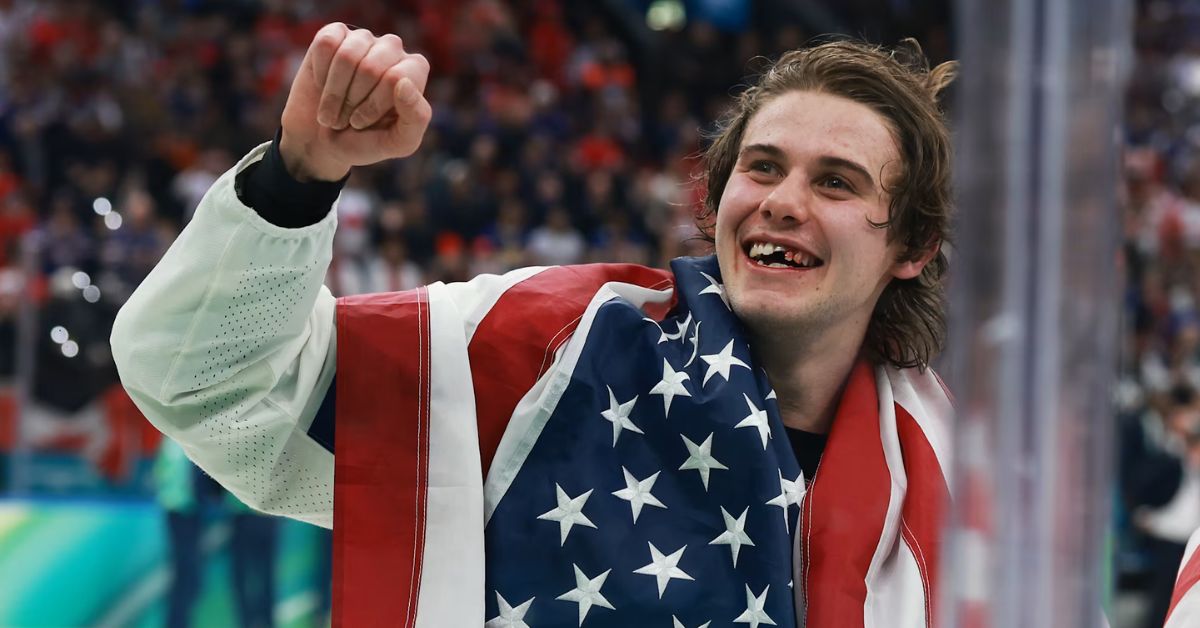

MILAN — The image of Jack Hughes skating through a storm of gloves and sticks, blood still fresh from a high-stick collision, will define the 2026 Winter Olympics for American hockey fans. In a rivalry that rarely disappoints, USA’s Jack Hughes lost two teeth during regulation and returned minutes later to score the golden goal that delivered Olympic gold to the United States in Milan-Cortina.
The moment was sudden, decisive and historic.
For nearly three periods, the United States and Canada traded blows in a tense championship final. But in overtime, it was Jack Hughes who carved his name into Olympic memory.
The Rivalry Renewed in Milan
The United States and Canada arrived at the 2026 Winter Olympics carrying the weight of history. From youth tournaments to professional leagues, the rivalry has shaped the modern identity of North American hockey.
When the puck dropped in Milan, expectations were high. Analysts called it a final worthy of its billing. The atmosphere inside the arena matched the magnitude of the occasion.
Jack Hughes had been one of the most talked-about players entering the tournament. His speed, creativity and composure under pressure made him central to the U.S. offensive structure. Yet few could have predicted how dramatically his night would unfold.
Canada opened aggressively, pushing pace early and testing the American defense with sustained pressure. The United States countered with disciplined breakouts and rapid transitions through the neutral zone. The game quickly settled into a rhythm defined by speed and physicality.
A Championship Game of Narrow Margins
Championship hockey is rarely free-flowing. Every inch of ice is contested. Every decision carries consequences.
Canada outshot the United States 42-28 over the course of regulation, but numbers did not fully reflect momentum swings. American defenders blocked lanes. The U.S. goaltender delivered critical saves at key moments. Offensive shifts were brief but calculated.
Jack Hughes saw limited clean space early. Canadian defenders tracked him tightly, aware that a single lapse could prove fatal. Still, his presence altered defensive alignments and created openings for teammates.
By the end of the third period, the scoreboard read 1-1. The tension inside the arena felt electric.
The Injury That Shocked the Arena
Late in regulation, a high stick from a Canadian forward caught Jack Hughes in the mouth during a battle along the boards. The contact was immediate and violent. Hughes dropped to one knee before skating toward the bench.
Medical staff quickly confirmed that two teeth had been dislodged.
The sight stunned spectators. Blood on the ice is not uncommon in hockey, but losing a key forward in the final minutes of an Olympic gold medal game can alter the trajectory of history.
For several tense minutes, the American bench appeared unsettled. Commentators speculated whether Jack Hughes would return at all.
Inside the locker room, medical personnel assessed the damage. In most situations, such an injury might sideline a player. But Olympic finals are not ordinary circumstances.
Jack Hughes Returns to the Ice
When overtime began, fans searched the American bench.
Moments later, Jack Hughes reappeared.
His return triggered a roar that cut through the arena. Teammates tapped their sticks against the boards. Coaches leaned forward. The message was unmistakable: resilience under pressure.
Jack Hughes resumed his place in the rotation without hesitation. The injury had not diminished his focus. If anything, it sharpened it.
Overtime in Olympic hockey is unforgiving. There are no second chances. The first goal ends everything.
Jack Hughes and the Golden Goal
Jack Hughes Delivers in Overtime
Just under two minutes into overtime, the United States recovered possession deep in its own zone. A clean breakout pass initiated a swift transition. The puck moved through the neutral zone with precision.
As the play developed, Jack Hughes drifted into open space along the left circle.
A cross-ice feed arrived perfectly weighted.
In one fluid motion, Jack Hughes received the puck and released a low shot that beat the Canadian goaltender to the far post.
The horn sounded instantly.
The arena erupted.
The golden goal had been scored.
Jack Hughes, minutes removed from losing teeth, had secured Olympic gold for the United States.
His teammates rushed him at center ice. Gloves flew into the air. American flags waved from the stands. The bench emptied in celebration.
Goaltending Under Siege
While the winning moment belonged to Jack Hughes, the foundation of the victory rested in net.
Facing 42 shots, the U.S. goaltender absorbed relentless pressure. Canada generated sustained offensive zone time, particularly during the second period. High-danger chances emerged from rebounds and deflections.
Each time, the American defense collapsed to protect space. Clearances were hurried but effective. Shot lanes were contested.
Jack Hughes later acknowledged that without those defensive efforts, overtime would never have materialized. Championship games often spotlight scorers, but they are won collectively.
Breaking a 46-Year Drought
The United States had not won Olympic gold in men’s hockey since 1980.
That 46-year gap loomed over the program. Generations of players carried its shadow.
When Jack Hughes buried the overtime winner, he did more than conclude a game. He closed a chapter of waiting.
The 1980 victory became folklore in American sports culture. The 2026 triumph stands as a modern testament to development systems, international exposure and professional experience.
Jack Hughes now joins a lineage of players whose names echo through Olympic history.
Tactical Breakdown of the Winning Play
The golden goal unfolded with deceptive simplicity.
First, a defensive recovery forced Canada to regroup. Then a crisp outlet pass created immediate transition speed. The neutral zone was crossed before Canadian defenders could reset structure.
Jack Hughes timed his movement precisely. Rather than rushing the crease, he delayed just enough to create separation.
The cross-ice pass forced the Canadian defense to shift laterally. In that split second, a narrow shooting lane opened.
Jack Hughes did not hesitate.
The release was quick, controlled and deliberate. The goaltender reacted late.
In overtime, execution must be flawless. On this play, it was.
The Emotional Aftermath
When the medal ceremony concluded, Jack Hughes stood at center ice holding the American flag across his shoulders. A subtle smile replaced the intensity that defined his night.
He later described the injury as “just part of the game,” downplaying its severity. Yet those inside the locker room knew the psychological impact of his return.
Teammates cited his composure as stabilizing. Coaches referenced leadership beyond years.
Jack Hughes did not seek hero status. But the moment found him.
A Night That Redefined Pressure
Elite athletes train for pressure. Olympic finals amplify it.
The narrative arc of Jack Hughes losing teeth and returning to score in overtime adds layers rarely scripted in sport. Pain, uncertainty, redemption and triumph compressed into minutes.
Canadian players, though disappointed, acknowledged the quality of the play. There were no complaints about officiating. No controversial calls. Just one decisive shot.
Jack Hughes had delivered.
What This Means for USA Hockey
Olympic victories resonate beyond medals.
Youth programs often see participation spikes following international success. Investment increases. Visibility expands.
Jack Hughes becomes a figure young players reference when discussing resilience. Coaches will replay the overtime sequence for years.
The 2026 gold medal affirms the trajectory of American hockey. Competitive parity with Canada is no longer aspirational. It is reality.
Canada’s Perspective
Despite defeat, Canada demonstrated elite depth.
Outshooting the United States and controlling extended stretches reflected tactical discipline. Defensive coverage limited high-quality American chances for most of regulation.
But in sudden-death overtime, margins shrink to millimeters.
Jack Hughes capitalized on one such margin.
That is the nature of championship hockey.
The Legacy of Jack Hughes
Moments define careers.
For Jack Hughes, the golden goal becomes a career landmark. It encapsulates skill, resilience and timing.
Years from now, fans will remember the sequence vividly. The high stick. The missing teeth. The return. The shot.
Jack Hughes did not just score a goal. He delivered a defining Olympic memory.
Beyond the Ice
In postgame interviews, Jack Hughes emphasized team effort. He praised defensive discipline and goaltending composure. He deflected personal credit.
Yet narratives in sport are shaped by symbols. And on this night, Jack Hughes symbolized persistence under adversity.
The Olympic stage magnifies stories. This one will endure.
A Historic Close to the 2026 Final
The final statistics tell a tight story: USA 2, Canada 1 (OT). Shots 42-28 in Canada’s favor. Overtime under two minutes.
But numbers cannot capture atmosphere.
Only those present felt the tension release when Jack Hughes lifted his stick in celebration.
The United States reclaimed Olympic gold.
And Jack Hughes secured his place in history.
Conclusion
The 2026 Winter Olympics produced many compelling performances, but none more dramatic than the final in Milan. USA’s Jack Hughes lost teeth in regulation and returned to score the golden goal that ended a 46-year drought.
It was not merely a highlight.
It was a statement.
In a rivalry that defines generations, Jack Hughes emerged as the decisive figure on hockey’s grandest stage.
Olympic history often turns on singular moments.
In Milan-Cortina, that moment belonged to Jack Hughes.