

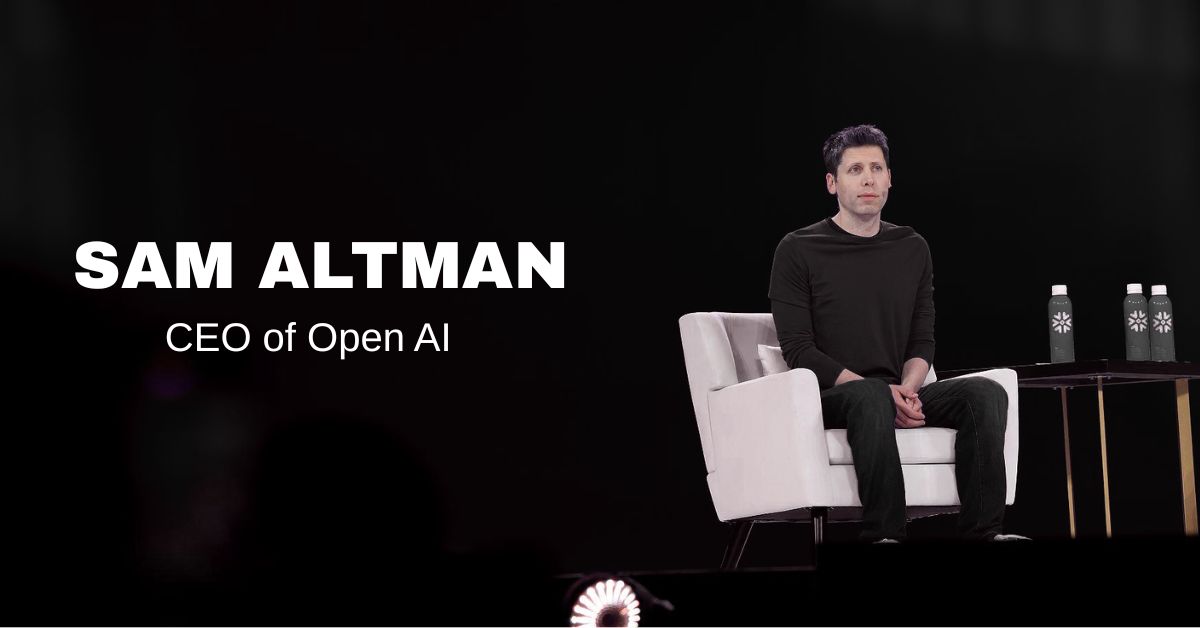

The evolving relationship between artificial intelligence companies and national defense institutions has entered a new phase. OpenAI has confirmed that it is updating elements of its agreement with the United States Department of Defense to clarify how its AI systems may be deployed within military environments.
The clarification comes amid growing public scrutiny surrounding the role of advanced AI tools in defense operations. By adjusting the language of its Pentagon agreement, OpenAI is seeking to establish clearer operational boundaries while reinforcing its internal principles regarding responsible deployment.
The development signals a broader moment of transition for both the technology industry and national security institutions as artificial intelligence capabilities expand rapidly.
Background of the Pentagon Agreement
The agreement between OpenAI and the U.S. Department of Defense was first disclosed as part of a broader effort to modernize digital infrastructure within classified government environments. The arrangement involves deploying select artificial intelligence tools within secure defense networks to support internal workflows, data processing, and operational analysis.
While exact technical specifications remain undisclosed due to security protocols, officials familiar with the matter indicated that the systems are intended for structured analytical tasks rather than autonomous weapon systems.
At the time of announcement, OpenAI emphasized that its participation would align with clearly defined usage principles. However, as public discussion intensified around military applications of AI, questions emerged regarding how intelligence agencies might access or expand the scope of those tools.
Why OpenAI Is Revising the Contract
OpenAI leadership stated that the contract language required refinement to ensure there is no ambiguity about the boundaries of use within defense systems.
According to company statements, the amendment clarifies that AI services deployed under the current agreement cannot be used by intelligence agencies within the Department of Defense without a separate contractual modification.
This clarification does not terminate or suspend the partnership. Instead, it narrows and defines its scope. The update reinforces that any expanded application would require additional review, approval, and oversight mechanisms.
By taking this step, OpenAI appears to be proactively addressing potential concerns before they escalate into broader regulatory or political debates.
OpenAI and Intelligence Agency Boundaries
OpenAI Reinforces Operational Limits
One of the most sensitive aspects of the defense agreement centers on intelligence community involvement. The clarification explicitly states that intelligence entities within the Department of Defense, including those responsible for signals intelligence and surveillance operations, cannot automatically integrate OpenAI systems under the existing framework.
This separation introduces a procedural safeguard. If intelligence agencies seek access to those AI tools, the contract would need to undergo formal modification.
Such a requirement establishes a legal checkpoint. It also ensures that OpenAI retains visibility and influence over how its systems are used in high-risk or highly classified contexts.
Why This Distinction Matters
The distinction between general defense use and intelligence agency deployment is significant. Intelligence operations often involve surveillance data, interception technologies, and sensitive geopolitical analysis.
By requiring explicit authorization for expanded use, OpenAI is drawing a structural line between operational support functions and intelligence-driven applications.
Observers note that this distinction could become a model for future AI contracts across government sectors.
AI Deployment Inside Classified Networks
The Pentagon agreement includes the deployment of certain OpenAI tools within classified defense environments. These systems are reportedly designed to assist with structured information analysis, internal communications support, and workflow automation.
Officials have not indicated that the systems will control weapons or autonomous battlefield technologies. Instead, the focus appears to be on decision-support tools.
Deploying AI inside classified networks presents unique challenges. Systems must operate within secure infrastructure, comply with strict cybersecurity requirements, and meet federal oversight standards.
OpenAI’s involvement suggests that advanced AI models are increasingly viewed as strategic infrastructure components rather than experimental technologies.
Ethical Guardrails in Military AI
The broader debate around military AI deployment continues to intensify globally. Governments are exploring machine learning systems for logistics, intelligence analysis, cybersecurity defense, and strategic modeling.
OpenAI has publicly maintained that its systems must adhere to internal principles governing responsible AI usage. By updating its Pentagon agreement, the company appears to be formalizing those guardrails within contractual language.
Experts in technology governance argue that embedding ethical boundaries directly into contracts represents a new phase in AI oversight. Instead of relying solely on voluntary corporate statements, agreements now include structured restrictions.
This development may signal a shift in how technology firms negotiate high-stakes government partnerships.
Policy and Oversight Considerations
Lawmakers and policy analysts have increasingly scrutinized the intersection of artificial intelligence and defense institutions.
The clarification issued by OpenAI may help address several policy concerns:
First, it establishes clearer transparency about how AI tools can and cannot be used under the agreement.
Second, it introduces a procedural requirement for expansion, reducing the risk of quiet scope creep.
Third, it aligns with broader calls for stronger oversight frameworks governing AI deployment in national security settings.
While regulatory structures for military AI remain under development, contractual guardrails may serve as interim mechanisms.
Industry Response to OpenAI’s Clarification
The technology sector is watching closely. Artificial intelligence firms are balancing commercial opportunities in government partnerships with reputational risks tied to military involvement.
Some industry observers see the amendment as a prudent move. By defining boundaries early, OpenAI reduces ambiguity and potential backlash.
Others note that defense partnerships are becoming increasingly common across the AI landscape. As competition intensifies globally, governments are seeking advanced AI capabilities to maintain strategic advantages.
In that environment, OpenAI’s structured clarification may become a template for future agreements.
Global Implications for Defense AI
The clarification arrives at a time when international competition around AI technologies is accelerating.
Defense agencies in multiple countries are integrating machine learning tools into command systems, logistics planning, cybersecurity operations, and intelligence analytics.
The approach taken by OpenAI could influence how other companies structure defense partnerships. Formal limitations embedded in contracts may become a standard expectation rather than an exception.
Global norms for military AI are still emerging. Some nations advocate international agreements restricting autonomous weapon systems, while others prioritize rapid innovation.
By refining its Pentagon agreement, OpenAI enters that broader geopolitical conversation.
The Future of OpenAI in Government Partnerships
The updated agreement does not signal withdrawal from defense collaboration. Instead, it suggests a recalibration.
OpenAI remains positioned as a key participant in secure AI infrastructure development. However, the company is asserting greater control over how and where its systems operate.
As artificial intelligence becomes increasingly embedded in government systems, clarity will likely become as important as capability.
The current clarification may represent an early example of how private AI companies navigate the tension between innovation, national security, and ethical responsibility.
Conclusion
The decision to refine the Pentagon agreement marks a defining moment in the relationship between technology firms and defense institutions.
By clarifying limits and reinforcing contractual boundaries, OpenAI is shaping how advanced AI systems enter sensitive government environments.
The move does not slow the expansion of AI in defense contexts. Instead, it signals that future deployments may be governed by more explicit guardrails.
As artificial intelligence continues to transform strategic operations worldwide, the structure of agreements like this one may determine how responsibly that transformation unfolds.