

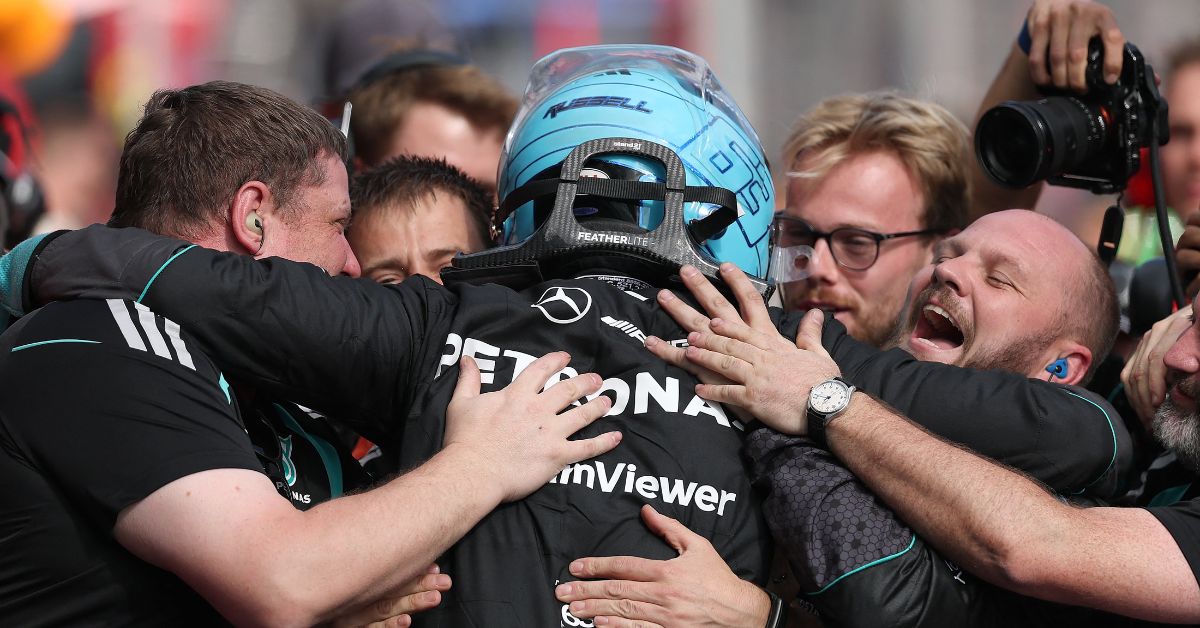

The opening race of the Formula 1 season delivered a clear statement about the direction of the championship. George Russell claimed victory at the Australian Grand Prix after a demanding race shaped by sweeping regulation changes that have altered the competitive landscape of the sport.
The race in Melbourne marked the beginning of a new phase for Formula 1, with teams adapting to redesigned cars and new energy-management systems. From the opening laps to the final stages of the race, strategy played a central role in determining the outcome.
George Russell emerged as the driver who managed the evolving dynamics of the race most effectively, converting his pole position start into a decisive win.
A Season Begins With Uncertainty and Change
The Australian Grand Prix traditionally signals the start of a long and unpredictable Formula 1 season. This year’s race carried even greater significance as the championship entered one of the most dramatic rule changes in recent memory.
Teams spent months preparing entirely new car designs to comply with regulations intended to reshape how racing unfolds. The changes place increased importance on energy management and battery deployment rather than relying solely on raw engine performance.
Because every team faced the same technical reset, the opening race offered the first real glimpse of which organizations had adapted most effectively.
George Russell’s performance quickly suggested that his team had entered the new era with a strong understanding of the regulations.
George Russell Leads Mercedes to Early Dominance
George Russell controlled the race with calm authority from the moment the lights went out. Starting from pole position, he initially faced heavy pressure from competitors eager to seize the lead in the opening laps.
The early stages of the race proved chaotic. Drivers jostled for position while attempting to manage the delicate balance between aggressive overtaking and conserving battery energy.
Despite the intense pressure, George Russell maintained composure and gradually built a rhythm that allowed him to stay ahead of the field.
Behind him, teammate Kimi Antonelli also delivered an impressive performance, securing second place and completing a strong result for the team.
The one-two finish immediately positioned the team as a serious contender for the championship.
Strategic Racing Under the New Formula 1 Regulations
One of the most significant aspects of the race was how dramatically strategy influenced the outcome.
The new regulations introduce a stronger emphasis on energy harvesting and battery deployment. Drivers must now carefully decide when to use stored energy for acceleration and when to conserve power for later in the race.
Under previous regulations, qualifying pace and outright engine performance often determined the race outcome. The new system shifts the focus toward tactical decision-making during the race itself.
George Russell managed this balance with remarkable precision.
At several points during the race, he strategically deployed battery power to defend his position and maintain a small but crucial gap from pursuing rivals.
Observers noted that his race management demonstrated a deep understanding of how the new regulations affect tire performance, energy recovery, and overtaking opportunities.
Intense Battles Define the Early Stages of the Race
Although the final result showed a clear winner, the early laps were far from straightforward.
Ferrari driver Charles Leclerc made an aggressive start, briefly moving ahead at the first corner. The maneuver forced George Russell to respond quickly as the two drivers battled for control of the race.
For several laps, the pair traded positions while navigating the tight layout of the Melbourne circuit.
Eventually, George Russell regained the lead after managing his energy reserves more effectively.
The duel provided one of the most dramatic moments of the race and highlighted how competitive the championship could become as teams refine their understanding of the new technical rules.
Mixed Reactions From Drivers and Teams
While the race delivered excitement for fans, reactions among drivers varied significantly.
Some competitors welcomed the new regulations, arguing that they add a deeper layer of strategy to the sport.
Others expressed frustration, suggesting that the changes make racing feel less natural and more dependent on complex energy systems.
Despite these differing opinions, most teams acknowledged that adapting to the new rules will require time.
The Australian Grand Prix served as an early testing ground rather than a definitive measure of long-term performance.
Still, the strong showing from George Russell reinforced the idea that some teams may have already found effective solutions.
Recovery Drives Reshape the Race Order
Further down the grid, several drivers delivered notable comeback performances.
After starting near the back of the field following a difficult qualifying session, Max Verstappen produced one of the most impressive recovery drives of the race.
He steadily worked his way through traffic and ultimately finished sixth.
The result demonstrated that overtaking remains possible despite concerns that the new regulations might reduce on-track battles.
Meanwhile, reigning champion Lando Norris endured a challenging race.
Although he showed strong pace in certain stages, strategic decisions and tire management issues prevented him from challenging for a podium position.
Technical Reliability Challenges Across the Grid
The season opener also exposed reliability challenges for several teams.
Mechanical problems forced multiple retirements during the race, reminding observers that adapting to new technical regulations often leads to unexpected failures.
For new entrants and smaller teams, the race highlighted the difficulty of competing in a rapidly evolving technological environment.
One newly introduced team struggled with technical issues throughout the weekend, while another saw a driver retire due to a mechanical fault.
Such challenges are not unusual during the opening races of a season featuring major regulatory changes.
As teams collect more data from real race conditions, reliability is expected to improve in the coming weeks.
What the Result Could Mean for the Championship Fight
Early victories in Formula 1 often set the tone for the rest of the season.
Historically, teams that successfully adapt to major rule changes at the beginning of a championship frequently maintain their advantage throughout the year.
The victory by George Russell immediately elevated expectations about his chances of competing for the world title.
With strong support from his team and a car that appears well suited to the new regulations, he could become one of the central figures in the championship battle.
However, the long season ahead means the competitive order may still change dramatically as rival teams continue developing their cars.
The Strategic Future of Formula 1 Racing
The Australian Grand Prix may ultimately be remembered as the race that introduced a new style of Formula 1 competition.
Instead of relying purely on speed and qualifying performance, drivers must now combine technical understanding with tactical awareness.
Energy management, tire strategy, and race timing are expected to become defining elements of the sport’s new era.
George Russell demonstrated in Melbourne that mastering these factors can produce decisive results.
As the championship progresses, other drivers will likely refine their strategies and close the gap.
For now, the opening race has established a clear benchmark.
George Russell delivered the performance that set the standard for the season ahead, navigating the complexity of the new rules and emerging with a victory that may shape the narrative of the entire championship.