

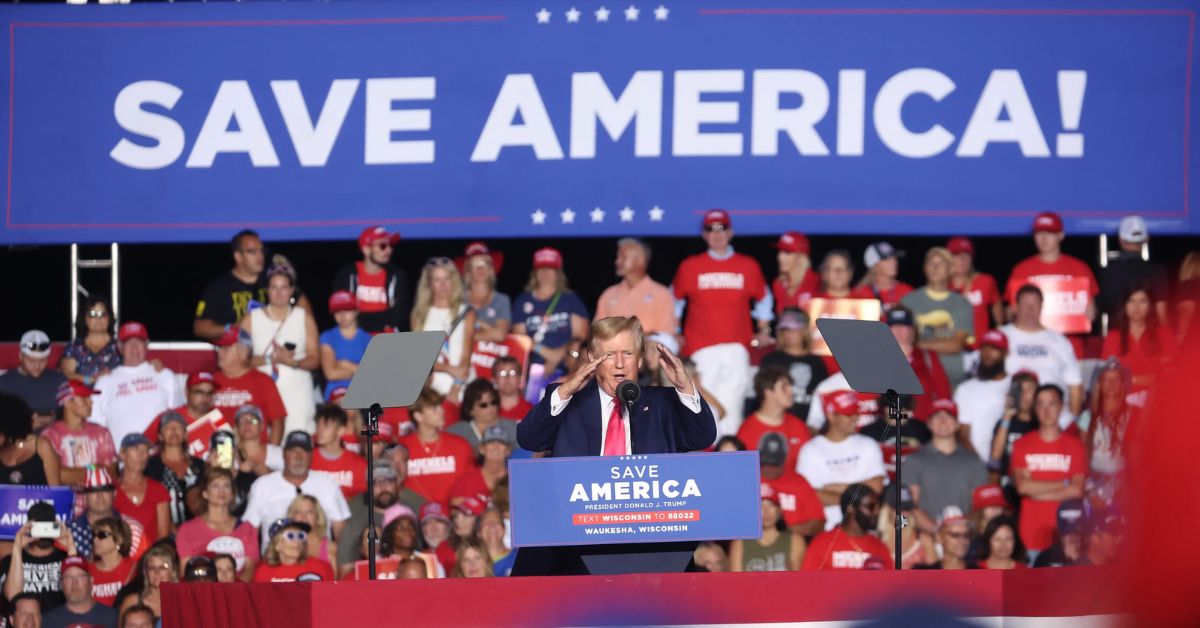

President Donald Trump said Sunday that he will refuse to sign any legislation passed by Congress until lawmakers approve the SAVE America Act, a controversial proposal that would change voting rules across the United States.
The announcement quickly intensified political tensions in Washington, where lawmakers are already facing difficult negotiations on several major legislative priorities. Trump’s position signals that the election proposal must move forward before other policies can reach his desk.
The dispute surrounding the SAVE America Act has now become one of the most significant legislative confrontations in Congress, highlighting deep divisions over how the United States should regulate voter eligibility and election procedures.
Trump’s Demand Over the SAVE America Act
President Trump made clear that he views the SAVE America Act as a central legislative priority and insisted that Congress must pass the proposal before other bills move forward.
In a public statement, Trump said that lawmakers should move the legislation to the “front of the line,” emphasizing that the measure is necessary to strengthen election rules nationwide.
His comments suggest that other legislative initiatives could face delays if the election proposal does not advance.
The president also indicated that he would not support a revised or weakened version of the SAVE America Act, arguing that the original provisions should remain intact.
Trump’s demand places additional pressure on Congress at a time when lawmakers are already struggling to resolve several major policy disputes.
Supporters of the bill say the proposal is essential for improving voter verification systems, while critics argue that the legislation could introduce new barriers for voters.
What the SAVE America Act Would Change
The SAVE America Act proposes several changes to federal election procedures and voter registration requirements.
One of the most significant provisions would require individuals registering to vote to provide proof of citizenship. Supporters argue that this requirement would strengthen verification systems and ensure that only eligible voters participate in federal elections.
Current law already prohibits noncitizens from voting in federal elections, but proponents of the bill say additional safeguards are necessary to maintain confidence in election outcomes.
The SAVE America Act also includes provisions related to voter identification requirements and rules governing certain types of ballots.
Advocates say these measures would create consistent standards across all states.
Opponents argue that many states already have systems in place to verify eligibility and that the federal government should not impose additional requirements.
Because of these competing perspectives, the legislation has become one of the most debated election proposals in Congress.
Why Trump Is Prioritizing the SAVE America Act
Trump’s insistence that Congress pass the SAVE America Act before other legislation reflects a broader political strategy.
Election policies have been a major issue in national politics for several years, with lawmakers from both parties proposing different approaches to election administration.
Supporters of the bill say the proposal addresses concerns about voter verification and strengthens confidence in election outcomes.
They argue that the SAVE America Act would establish nationwide standards that ensure voter registration systems properly verify citizenship.
Trump has repeatedly emphasized that election integrity should remain a top priority for lawmakers.
His decision to tie other legislation to the proposal increases pressure on Congress to consider the measure sooner rather than later.
Political analysts say the move could influence negotiations on unrelated legislation because lawmakers may need presidential approval for their own policy initiatives.
SAVE America Act Faces Challenges in the Senate
Despite strong support from some lawmakers, the SAVE America Act faces a difficult path in the Senate.
Most legislation in the chamber requires at least 60 votes to advance, meaning bipartisan cooperation is often necessary.
Given the deep divisions between political parties on election policy, reaching that threshold could prove challenging.
Several lawmakers have already expressed concerns about the proposal, suggesting that changes may be required before the legislation could gain broader support.
Even among supporters, there are differing views about how quickly the SAVE America Act should move through the legislative process.
Some lawmakers favor immediate action, while others believe additional debate is necessary.
The Senate’s procedural rules also allow extended debate, which could slow progress on the bill.
Democratic Opposition to the SAVE America Act
Democratic leaders have strongly criticized the SAVE America Act, arguing that the legislation could restrict access to voting.
They say requiring proof of citizenship during registration may create difficulties for some eligible voters who do not have immediate access to documentation.
Opponents also argue that nationwide voter identification requirements could disproportionately affect certain groups.
Supporters of the proposal dispute those claims and say the bill is designed to reinforce existing laws rather than limit participation.
The debate over the SAVE America Act therefore reflects broader disagreements about how election systems should balance security and accessibility.
While one side emphasizes verification requirements, the other focuses on ensuring that voting remains widely accessible.
These differing perspectives have made compromise difficult.
Election Security Debate Around the SAVE America Act
The controversy surrounding the SAVE America Act highlights the broader national conversation about election security.
Some lawmakers argue that stronger verification measures are necessary to maintain trust in election outcomes.
They say the bill would create uniform standards that ensure voter eligibility rules are applied consistently.
Others believe existing safeguards already protect election integrity and warn that additional requirements could create unnecessary obstacles.
The SAVE America Act has therefore become a symbol of competing approaches to election policy.
Supporters view it as a necessary step toward strengthening verification systems.
Critics argue that the proposal could complicate registration processes without addressing significant problems.
Because election laws are often administered at the state level, the federal proposal has also raised questions about how national standards would interact with state systems.
SAVE America Act and Congressional Negotiations
Trump’s decision to tie other legislation to the SAVE America Act could significantly influence negotiations in Congress.
Lawmakers often work on multiple policy initiatives simultaneously, including economic legislation, regulatory reforms, and government funding measures.
If the president refuses to sign those bills without the election proposal included, lawmakers may face pressure to address the issue sooner.
At the same time, congressional leaders may attempt to separate the SAVE America Act from unrelated policy debates.
Some lawmakers believe election policy should be discussed independently rather than linked to other legislative priorities.
Others argue that combining issues is a common negotiating strategy in Washington.
The outcome will likely depend on whether lawmakers see a path toward compromise.
Possible Impact on Government Funding
The political standoff surrounding the SAVE America Act is unfolding as Congress also faces important government funding decisions.
Lawmakers must regularly pass spending legislation to keep federal agencies operating.
If disagreements over the election proposal affect those negotiations, it could complicate efforts to approve funding bills on time.
Some lawmakers have warned that linking government funding to the SAVE America Act could increase the risk of political gridlock.
Others argue that resolving election policy disputes could ultimately strengthen public confidence in the political process.
Because the timing of legislative negotiations is critical, the coming weeks may determine whether the proposal advances or remains stalled.
Political Implications of the SAVE America Act
Beyond the immediate legislative debate, the SAVE America Act carries broader political implications.
Election policy has long been a central issue in national political campaigns and legislative debates.
Supporters say the bill reflects concerns about ensuring that voter eligibility rules are enforced consistently across the country.
Critics argue that the proposal could reshape voter registration processes in ways that affect participation.
The SAVE America Act has therefore become more than just a policy proposal.
It now represents a major political battleground between competing visions of election administration.
Lawmakers on both sides of the debate have signaled that the issue will remain central to future political discussions.
What Happens Next With the SAVE America Act
The future of the SAVE America Act now depends largely on how Congress responds to Trump’s demand.
Lawmakers must decide whether to prioritize the legislation or continue pursuing other policy initiatives independently.
If negotiations move forward, the bill could undergo revisions aimed at attracting broader support.
Alternatively, political divisions could prevent the proposal from advancing in the near term.
For now, the SAVE America Act remains at the center of a major debate in Washington.
The outcome of that debate could shape not only election policy but also the broader relationship between Congress and the White House.
As discussions continue, lawmakers will need to balance competing priorities while addressing the concerns raised by both supporters and critics of the proposal.