

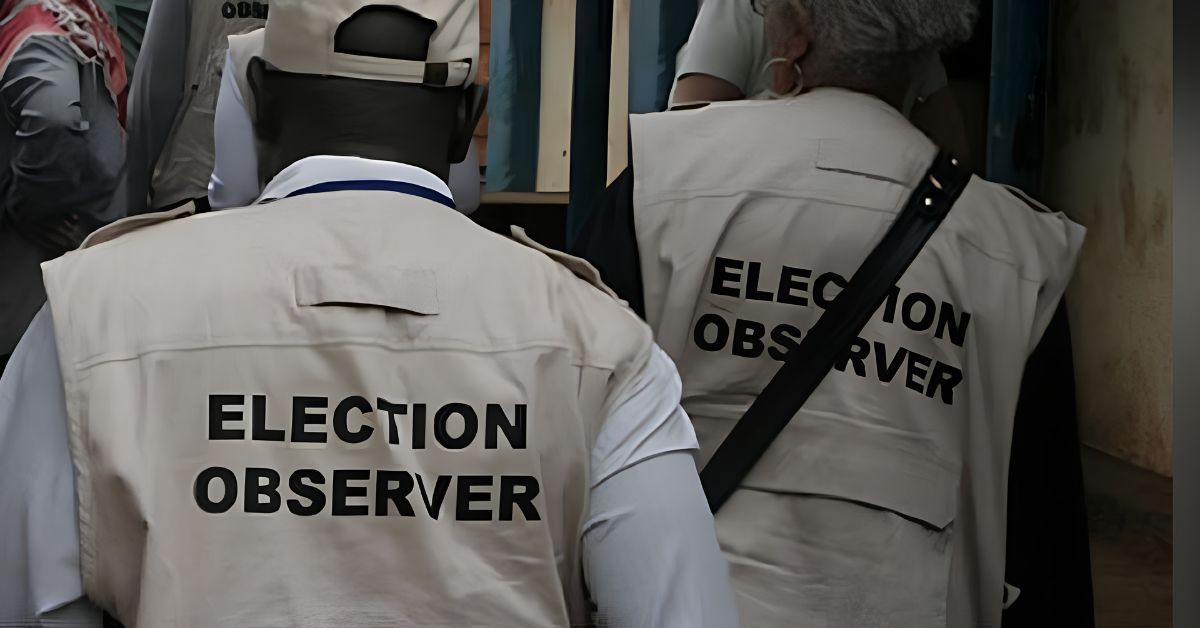

The election observer program in the United States has become the focus of renewed scrutiny as federal officials examine its cost, structure, and long-term role in protecting voting rights.
Government agencies recently confirmed that a review is underway to determine whether the federal system designed to monitor allegations of race discrimination during elections remains effective and financially sustainable.
The program has played a significant role in safeguarding access to the ballot box for decades. Yet officials say evolving election systems, court rulings, and changing political priorities have prompted a deeper evaluation of how the program operates today.
Federal Review of the Election Observer Program
Federal officials have begun examining whether the election observer program continues to operate in a way that reflects modern election challenges.
The Office of Personnel Management confirmed that the review is focused primarily on financial efficiency, operational scope, and the program’s ability to address discrimination complaints in the current legal environment.
Officials estimate that maintaining the election observer program costs the federal government several million dollars annually. These expenses include training observers, deploying personnel to polling locations, coordinating with legal authorities, and documenting potential violations.
The review does not automatically mean the program will be reduced or eliminated. Instead, officials say the goal is to determine whether adjustments are necessary to ensure the program remains effective in protecting voter access.
The review also comes during a period when election procedures across the country are receiving heightened attention. As voting systems evolve and legal disputes surrounding election administration continue, policymakers are reconsidering the tools used to monitor voting rights protections.
Historical Origins of the Election Observer Program
The election observer program was originally established under the Voting Rights Act of 1965.
At the time, widespread discrimination prevented many minority citizens from participating fully in elections. Federal lawmakers introduced the program to ensure that election procedures complied with civil rights protections.
Under the law, the federal government gained the authority to send trained personnel to monitor polling locations when credible complaints of discrimination were raised.
The early mission of the election observer program was straightforward: ensure that voters were able to cast ballots without intimidation, discrimination, or administrative barriers.
Observers were tasked with documenting irregularities, reporting violations, and helping enforce federal voting protections in jurisdictions with histories of discrimination.
During the decades following the passage of the Voting Rights Act, federal observers played a visible role in many elections, particularly in regions where courts determined additional oversight was necessary.
How the Election Observer Program Works Today
Today, the election observer program functions under a framework that requires legal authorization before federal personnel can be deployed to monitor polling places.
Observers are typically sent only when a court order permits federal oversight or when the U.S. attorney general determines that credible allegations of discrimination exist.
When activated, the election observer program places trained federal staff at designated polling sites. Their responsibilities include observing voting procedures, documenting any barriers faced by voters, and reporting potential violations to federal authorities.
Observers do not intervene directly in the voting process. Instead, their role is to monitor events and provide documentation that can support legal enforcement if necessary.
Federal observers may also collect information about voter access issues, such as long lines, accessibility challenges, or procedural irregularities that could disproportionately affect minority communities.
Legal Authority Behind Federal Election Monitoring
The legal foundation of the election observer program remains closely tied to federal civil rights law.
The Voting Rights Act provided the original authority for federal oversight, granting courts the ability to authorize monitoring in jurisdictions where discrimination was suspected.
In practice, the program operates through coordination between several federal agencies. Legal authorities evaluate complaints, determine whether federal monitoring is warranted, and arrange deployments when necessary.
The election observer program also works alongside other federal initiatives designed to protect election integrity and ensure equal access to voting.
Over the years, the program has become one of several mechanisms used by the federal government to uphold voting rights protections.
Court Decisions That Changed Oversight
The role of the election observer program shifted significantly following major legal developments in the past decade.
A landmark Supreme Court decision in 2013 invalidated key provisions of the Voting Rights Act that required certain states to receive federal approval before changing voting laws.
That ruling altered how federal oversight functions across the country. Many jurisdictions previously subject to automatic monitoring were no longer required to obtain federal clearance before implementing election law changes.
As a result, the election observer program began operating on a more limited basis. Federal observers could still be deployed, but only when authorized by courts or in response to specific complaints.
Legal scholars say the decision fundamentally reshaped the federal government’s approach to election monitoring.
Current Deployment of Federal Election Observers
Despite these legal changes, the election observer program continues to operate in several locations where courts have determined oversight is necessary.
In those jurisdictions, federal observers monitor election procedures and report any concerns related to discrimination or voter access.
Deployments typically occur during major election cycles, including federal and statewide contests.
Observers may be present at polling locations throughout the day, documenting procedures and ensuring that voters are able to participate without obstruction.
The election observer program also works with local election officials to maintain transparency and ensure that monitoring activities do not interfere with the voting process.
Cost Analysis of the Election Observer Program
One of the primary reasons for the current review is the financial cost associated with the election observer program.
Operating the program requires training federal staff, coordinating legal reviews, and maintaining administrative systems to manage deployments.
Government officials say these costs have increased over time as election systems become more complex and logistical demands grow.
The review aims to determine whether the existing structure of the election observer program remains the most efficient way to monitor discrimination complaints.
Some policymakers believe the program may benefit from modernization, including the use of digital reporting systems and expanded coordination with state election officials.
Others argue that the program’s value cannot be measured solely in financial terms, emphasizing its historical role in protecting civil rights.
Political Debate Over Federal Election Monitoring
The election observer program has long been the subject of political debate.
Supporters argue that federal monitoring remains a necessary safeguard against discrimination and helps ensure that election laws are applied fairly.
Critics, however, contend that election oversight should primarily be handled at the state and local level.
The current review reflects these broader debates about the balance between federal authority and state control in election administration.
Some lawmakers have called for expanding the election observer program to address modern voting challenges, including accessibility barriers and misinformation.
Others believe that existing state oversight systems are sufficient to protect voter rights.
Voting Rights Advocates Respond to the Review
Voting rights organizations have expressed concern that changes to the election observer program could weaken protections for minority voters.
Advocates say the presence of federal observers helps deter discriminatory practices and provides reassurance that elections are being monitored fairly.
They argue that the election observer program remains a critical tool for identifying problems that might otherwise go unnoticed.
Civil rights groups have urged federal officials to preserve the program’s core mission while considering improvements that strengthen its effectiveness.
At the same time, some policy experts have suggested that the review could present an opportunity to update the program’s structure for the digital era.
Future of the Election Observer Program
The outcome of the federal review may determine how the election observer program evolves in the coming years.
Officials say any decisions will be guided by legal requirements, operational effectiveness, and the broader goal of ensuring fair access to voting.
The program’s future could include structural reforms, updated monitoring procedures, or expanded coordination with other election oversight initiatives.
Regardless of the review’s conclusions, the election observer program remains closely linked to the nation’s ongoing debate over voting rights and election integrity.
As policymakers evaluate the program’s role, the broader conversation about how best to protect democratic participation is likely to continue.
For now, the review signals that federal authorities are reassessing how long-standing election oversight mechanisms should function in a rapidly changing electoral landscape.