

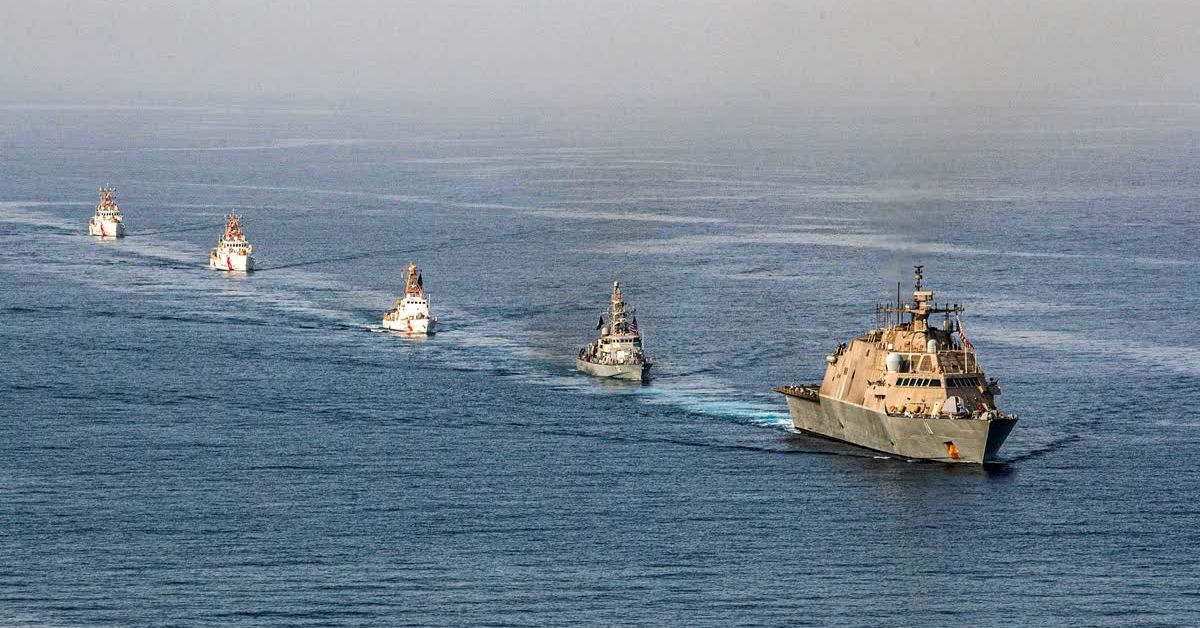

The conflict involving Iran is increasingly raising concerns about the stability of the global food supply. Economists, agricultural analysts, and trade experts warn that disruptions in one of the world’s most important shipping routes could create ripple effects across farming markets and grocery prices worldwide.
Food supply risks are growing as fertilizer shipments moving through the Strait of Hormuz face mounting disruptions due to escalating regional tensions.
For decades, the narrow waterway between Iran and the Arabian Peninsula has served as a critical artery for global trade. While it is best known for transporting oil and energy products, the strait is also vital for the movement of fertilizers and agricultural inputs that support crop production across multiple continents.
Now, as tensions rise and shipping activity slows, the consequences could extend far beyond energy markets and into the everyday cost of food.
Strait of Hormuz Disruptions and Global Trade
The Strait of Hormuz is widely considered one of the most strategically important shipping routes in the world. Each day, a large share of global energy shipments moves through this narrow corridor connecting the Persian Gulf with the Arabian Sea.
Since the conflict intensified in the region, commercial vessels have increasingly avoided the area. Shipping insurers have raised premiums, while several carriers have temporarily halted routes through the strait because of security concerns.
Reports of attacks on cargo vessels and the possibility of sea mines have further increased the risks for ships attempting to navigate the corridor.
As a result, hundreds of tankers and cargo vessels have been forced to wait outside the strait or reroute through longer and more expensive maritime routes.
While the immediate market reaction has focused on oil prices, economists say another sector could soon feel the effects: agriculture.
Food Supply Risks From Fertilizer Disruptions
Agricultural experts say the disruption of fertilizer shipments could create serious challenges for the global food supply.
Fertilizer is essential for modern farming. Nitrogen-based fertilizers help crops grow efficiently and increase yields for staples such as wheat, corn, rice, and soybeans.
Without reliable access to these agricultural inputs, farmers face the possibility of reduced harvests.
Much of the world’s fertilizer production depends on natural gas, which is abundant in the Middle East. Countries in the region have developed major fertilizer export industries that supply agricultural markets around the world.
A significant portion of those exports typically passes through the Strait of Hormuz.
If the shipping corridor remains unstable, the movement of fertilizer could slow dramatically, increasing costs and limiting supply for farmers preparing to plant crops.
Middle East Fertilizer Exports Under Pressure
Several countries in the region are major producers of key fertilizer ingredients used by farmers worldwide.
Among the leading exporters are:
- Iran
- Qatar
- Saudi Arabia
- United Arab Emirates
- Egypt
Together, these countries supply a large share of global ammonia and urea exports, which are widely used in nitrogen-based fertilizers.
Industry analysts estimate that nearly half of global urea exports and a substantial portion of ammonia shipments originate from the broader Middle East.
Because much of this fertilizer supply travels through the Strait of Hormuz, any disruption to maritime transport could quickly affect agricultural markets.
Even temporary delays can cause shortages in key farming regions during planting seasons.
Farmers Facing Growing Uncertainty
Farmers across several regions are already preparing for the possibility of supply disruptions.
For many growers, fertilizer must be purchased months before planting begins. Delays in shipments or sudden price increases can create serious challenges for agricultural operations.
Without adequate fertilizer, crop yields can fall significantly.
Lower yields mean smaller harvests, which in turn can tighten global food supply levels.
Agricultural organizations say the situation is especially concerning because fertilizer markets were already facing pressure from previous supply chain disruptions and rising production costs.
Now, the added geopolitical uncertainty is creating a new layer of risk.
Rising Fertilizer Costs and Market Reaction
Markets have already begun reacting to the uncertainty surrounding fertilizer shipments.
Prices for ammonia and urea — two of the most widely used fertilizer components — have climbed sharply in recent months.
Traders say the increases reflect growing fears that shipping routes could remain unstable for an extended period.
Fertilizer producers rely heavily on natural gas to manufacture nitrogen-based fertilizers. When energy prices rise, fertilizer production becomes more expensive.
If shipping routes are disrupted at the same time, the combined impact can push fertilizer costs even higher.
Higher fertilizer prices eventually filter through the agricultural system and affect the overall food supply.
Farmers who pay more for fertilizer often pass those costs along through higher crop prices.
Energy Prices Adding Pressure to Food Supply
The conflict in the region has also driven energy prices higher, adding another layer of pressure on the global food supply.
Agriculture depends heavily on energy.
Diesel fuel powers tractors, irrigation systems, harvesters, and transportation equipment used across farming operations.
When fuel prices rise, the cost of producing and transporting crops increases.
This can push up food prices even if crop yields remain stable.
The combination of rising fertilizer prices and higher fuel costs creates a difficult environment for farmers already dealing with unpredictable weather and market volatility.
Government Monitoring Agricultural Risks
Governments are closely watching the potential impact on agricultural markets.
Officials have said that they are assessing the possible consequences of fertilizer disruptions and considering measures that could help stabilize supply chains.
Some policymakers are exploring options such as strategic fertilizer reserves, temporary subsidies, or adjustments to trade policies aimed at reducing price shocks for farmers.
Agricultural experts say early monitoring is critical.
If fertilizer shortages occur during planting season, the effects on the food supply could be felt months later when harvests reach global markets.
Why Timing Matters for Global Crop Production
The timing of fertilizer availability is one of the most important factors in crop production.
Farmers typically apply fertilizer before or during planting seasons to ensure crops receive the nutrients needed for healthy growth.
If fertilizer shipments arrive too late, farmers may be forced to plant fewer acres or reduce fertilizer application rates.
Both outcomes can reduce crop yields.
Lower yields can tighten global food supply levels and lead to higher prices for staple foods such as bread, cereals, and cooking oils.
Agricultural economists say that even small disruptions in fertilizer availability can have significant consequences for global food markets.
Possible Long-Term Effects on the Food Supply
If the conflict continues and shipping disruptions persist, the global food supply could face longer-term challenges.
Trade routes may need to shift, fertilizer markets could experience sustained volatility, and farmers may need to adjust planting strategies to manage rising costs.
Some analysts say the situation highlights the vulnerability of global supply chains that rely heavily on a small number of geographic chokepoints.
The Strait of Hormuz is one of several maritime corridors where geopolitical tensions can have global economic consequences.
When disruptions occur in these areas, the effects often extend far beyond regional markets.
What Consumers May See in the Months Ahead
For consumers, the impact of the crisis may not appear immediately.
Food production cycles take time, and the effects of fertilizer shortages typically emerge months after planting seasons.
However, if fertilizer costs continue to rise and shipments remain disrupted, the consequences could eventually reach grocery stores.
Higher agricultural production costs can translate into rising prices for grains, vegetables, and processed foods.
Economists say the situation remains uncertain and depends largely on how long shipping disruptions continue in the Strait of Hormuz.
For now, the global food supply remains stable, but analysts say the risk of future disruptions is becoming increasingly difficult to ignore.