

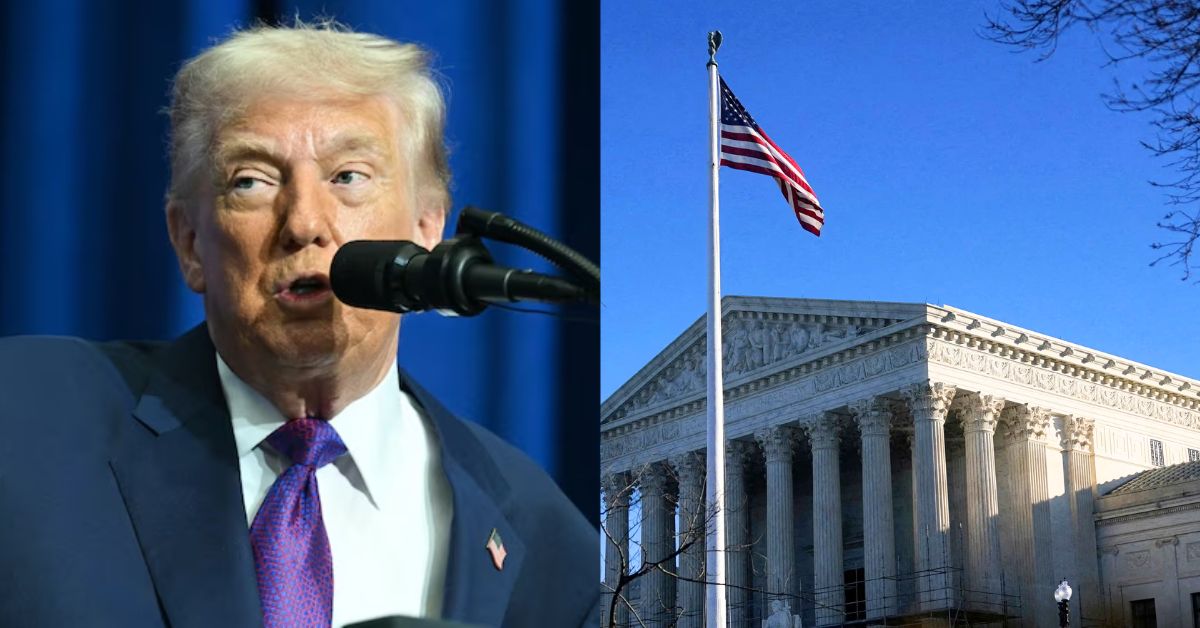

Tensions between the White House and the judiciary intensified after a recent decision by the Supreme Court challenged key elements of the administration’s trade policy. The ruling has sparked a national debate about presidential authority, economic strategy, and the limits of executive power in shaping international commerce.
The dispute centers on tariffs imposed by the Trump administration during a broader effort to reshape global trade relationships. While tariffs have long been a tool used by U.S. presidents, the latest conflict highlights growing questions about how far executive authority can extend without congressional approval.
Escalating Tensions After the Supreme Court Ruling
The latest confrontation began when the Supreme Court issued a decision stating that several tariffs imposed under a national emergency statute lacked sufficient legal justification. The ruling concluded that the law used by the administration was not designed to authorize sweeping trade restrictions on a wide range of imported goods.
Shortly after the ruling, President Donald Trump strongly criticized the decision, arguing that the court had interfered with the government’s ability to protect domestic industries and maintain economic leverage in international negotiations.
In a statement posted online, the president asserted that the executive branch retains broad authority over trade policy and insisted that the Supreme Court decision would not prevent the administration from pursuing alternative legal pathways to implement tariffs.
The remarks quickly drew reactions from legal scholars, lawmakers, and international trade analysts who view the conflict as a defining moment in the balance of power between branches of government.
Legal Arguments Surrounding the Tariffs
The case examined by the Supreme Court focused on tariffs introduced under a statute originally designed to address national emergencies. According to the court’s interpretation, that law allows the president to respond to specific crises but does not provide blanket authority to impose widespread import duties affecting multiple industries.
Legal experts say the ruling emphasizes the importance of congressional oversight in matters involving international trade.
While the executive branch can act quickly during emergencies, the Supreme Court determined that such powers must remain within the boundaries established by legislation. Without those limits, critics argue that trade policy could shift dramatically without adequate checks and balances.
Supporters of the administration counter that presidents have historically used a variety of legal tools to implement tariffs and other trade restrictions. They argue that the ruling simply narrows one specific method rather than eliminating presidential authority altogether.
In response to the decision, administration officials began exploring other trade laws that could justify similar policies without violating the court’s interpretation.
Economic Consequences of the Dispute
Beyond its legal implications, the conflict has raised concerns about economic uncertainty in both domestic and international markets. Tariffs influence prices, supply chains, and diplomatic relationships, meaning any major change in trade policy can have ripple effects across industries.
Manufacturers that rely on imported materials worry that shifting tariff policies could disrupt production costs. At the same time, certain domestic industries support tariffs as a way to protect American jobs and manufacturing capacity.
Economists note that the Supreme Court decision could temporarily reduce uncertainty by clarifying the legal limits of executive authority. However, the administration’s search for alternative tariff mechanisms may prolong the debate.
Financial markets often react quickly to developments involving trade policy, particularly when they involve large economies such as the United States and China. Investors closely watch signals from policymakers to understand whether tariffs are likely to expand, decline, or remain unchanged.
As a result, the Supreme Court ruling has become a focal point not only for legal experts but also for economists and business leaders assessing the future direction of U.S. trade policy.
Political Reactions in Washington
The response from lawmakers in Washington has reflected deep political divisions over trade policy and executive authority.
Some members of Congress praised the Supreme Court ruling, arguing that it reinforces the constitutional principle that Congress holds primary responsibility for regulating international commerce.
Others expressed concern that limiting presidential authority could weaken the country’s ability to respond quickly to economic challenges or unfair trade practices from other nations.
Several lawmakers called for new legislation that would clarify the circumstances under which tariffs can be imposed, potentially reducing the likelihood of similar disputes in the future.
Meanwhile, political analysts say the debate surrounding the Supreme Court decision could become a significant issue in upcoming policy discussions, particularly as lawmakers examine broader economic strategies.
The clash between the White House and the judiciary has therefore expanded beyond a legal disagreement and into a wider political conversation about the role of government in global trade.
Trade Investigations and Policy Strategy
Following the Supreme Court ruling, the administration began pursuing new investigations into foreign imports. These investigations are designed to determine whether certain products threaten national security or undermine domestic industries.
Such investigations can provide a legal basis for tariffs under different statutes that remain unaffected by the court’s decision.
Trade analysts say this approach allows policymakers to maintain pressure on foreign competitors while staying within the boundaries defined by the judiciary.
However, the process requires extensive economic analysis and consultation with industry groups, meaning it can take months before new tariffs are introduced.
During this period, the administration is expected to continue negotiations with international partners while evaluating the results of the investigations.
The strategy reflects an effort to adapt to the Supreme Court decision while maintaining the administration’s broader trade agenda.
Global Implications for Trade Relations
The dispute also carries implications beyond the United States. International partners closely monitor changes in American trade policy because tariffs can affect global supply chains and diplomatic relationships.
Countries involved in ongoing trade negotiations with Washington may adjust their strategies depending on how the Supreme Court ruling influences future policy decisions.
Some governments view the decision as a sign that U.S. trade policy could become more predictable, particularly if courts continue to review executive actions closely.
Others worry that the administration’s search for alternative tariff authorities could lead to new trade tensions if additional duties are imposed on imported goods.
Global markets remain sensitive to developments involving major economies, and shifts in American policy often influence broader trends in international commerce.
For this reason, the Supreme Court ruling has attracted attention from policymakers and analysts around the world.
Executive Authority and Constitutional Questions
At the heart of the dispute lies a broader constitutional question about the division of authority between branches of government.
The U.S. Constitution grants Congress the power to regulate international trade, yet presidents have historically exercised considerable influence over trade policy through delegated powers.
Over time, lawmakers have passed various statutes allowing the executive branch to impose tariffs under specific circumstances, such as national security concerns or unfair trade practices.
The Supreme Court decision suggests that these delegations must be interpreted carefully to ensure they remain consistent with congressional intent.
Legal scholars say the case illustrates how courts can act as a balancing force when disputes arise between the executive branch and the legislative framework governing economic policy.
As the administration evaluates alternative legal strategies, constitutional debates surrounding the scope of presidential authority are likely to continue.
The Path Forward After the Supreme Court Decision
Looking ahead, policymakers face several possible scenarios following the Supreme Court ruling.
One option involves relying on different trade laws that permit temporary tariffs while longer-term strategies are developed. Another possibility is legislative action by Congress to clarify how tariffs can be used in modern trade disputes.
Both approaches would shape the future relationship between the executive branch and the judiciary in matters of economic policy.
For now, the administration has indicated that it will continue defending its authority to implement tariffs when necessary to protect national interests.
Meanwhile, legal experts expect additional challenges to arise if new trade measures are introduced under different statutes.
The ongoing debate surrounding the Supreme Court decision underscores how trade policy sits at the intersection of law, economics, and politics.
Conclusion
The recent ruling by the Supreme Court has triggered a wide-ranging debate about presidential authority, economic strategy, and the constitutional balance between branches of government.
While the decision limited one legal pathway for imposing tariffs, it did not eliminate the broader tools available to policymakers seeking to influence international trade.
As investigations, negotiations, and legislative discussions unfold, the impact of the Supreme Court decision will continue to shape the direction of U.S. trade policy.
The outcome of this debate may determine not only how tariffs are implemented in the future but also how the balance of power between the executive branch, Congress, and the judiciary evolves in the years ahead.