

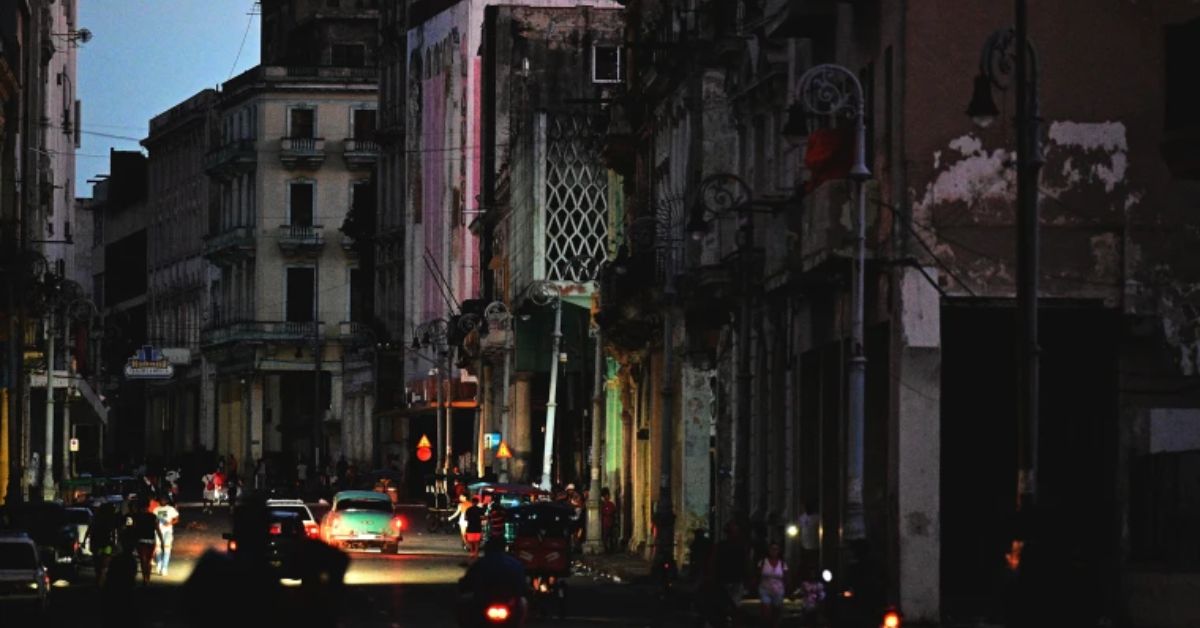

The unfolding crisis in Cuba has drawn global attention after remarks from U.S. President Donald Trump suggested that the United States could “take” the island nation. The statement comes at a time when the country is grappling with one of its most severe energy breakdowns in recent history, leaving millions without power and raising questions about the future of regional stability.
Cuba is currently experiencing widespread disruption after a near-total collapse of its national power grid. The blackout has affected homes, hospitals, and essential services, pushing daily life into uncertainty. While outages have occurred before, the scale and duration of this crisis mark a significant escalation, highlighting deep-rooted vulnerabilities in the country’s infrastructure.
The situation in Cuba reflects a complex combination of economic strain, external pressures, and long-standing structural challenges. Officials have pointed to fuel shortages as a primary cause, with reduced access to oil supplies playing a critical role in the breakdown of electricity generation across the island.
Cuba blackout crisis deepens amid fuel shortages
The energy crisis in Cuba has been building for months, driven by declining fuel imports and limited domestic production. The country relies heavily on imported oil to sustain its power plants, and any disruption to this supply chain can have immediate and widespread consequences.
Recent developments have worsened the situation. Shipments that once supported the nation’s energy needs have been reduced significantly, leaving authorities struggling to maintain even basic levels of electricity generation. Aging infrastructure has compounded the problem, with power plants operating beyond their intended lifespan and requiring urgent maintenance.
The blackout has forced the government to implement emergency measures, including rolling outages and rationing. However, these steps have done little to ease the pressure on households and businesses, many of which remain without consistent access to electricity.
For residents of Cuba, the impact has been immediate and severe. Daily routines have been disrupted, with limited access to refrigeration, transportation, and communication systems. In some areas, essential services such as healthcare have faced significant challenges due to the lack of reliable power.
Trump remarks raise tensions over Cuba situation
Against this backdrop, Trump’s comments have added a new layer of complexity to an already fragile situation. By suggesting that the United States could “take” Cuba, the statement has been interpreted as a sign of escalating rhetoric between the two nations.
The remarks have sparked debate among policymakers and analysts, many of whom see them as reflective of a more assertive approach to foreign policy. While no formal action has been announced, the language used has raised concerns about the potential implications for diplomatic relations.
Historically, relations between the United States and Cuba have been marked by periods of tension and limited engagement. The current situation appears to be reviving some of these long-standing divisions, particularly as economic and political pressures continue to mount.
Within Cuba, officials have responded by emphasizing national sovereignty and rejecting any suggestion of external intervention. The government has reiterated its commitment to addressing the crisis internally, even as it navigates mounting economic challenges.
Economic strain intensifies across Cuba
The blackout has had far-reaching consequences for the economy of Cuba, which was already under pressure before the current crisis. Businesses across multiple sectors have been forced to halt operations or reduce output, leading to financial losses and uncertainty.
Agriculture and food distribution systems have been particularly affected. Without reliable electricity, storage and transportation have become increasingly difficult, raising concerns about food security. Markets have seen reduced supply, while prices continue to fluctuate.
Tourism, another key sector for Cuba, has also felt the impact. Power outages have disrupted services in hotels and other facilities, potentially affecting visitor experience and future travel demand. This adds another layer of strain to an industry that plays a vital role in generating foreign currency.
The broader economic challenges facing Cuba are closely tied to its dependence on external resources. Limited access to international markets and financial systems has made it difficult to adapt quickly to changing conditions, leaving the country vulnerable to shocks such as the current energy crisis.
Public response and rising frustration in Cuba
As the blackout continues, public frustration has become increasingly visible. Reports from various regions indicate growing dissatisfaction among residents, many of whom are struggling to cope with prolonged outages and shortages of essential goods.
Communities across Cuba have faced difficulties in accessing basic necessities, including food, water, and medical supplies. The combination of these challenges has created a sense of urgency, with calls for solutions becoming more pronounced.
While the government has taken steps to manage the situation, including communication efforts and temporary measures, the scale of the crisis has made it difficult to provide immediate relief. The gap between available resources and public needs remains a significant concern.
Social and economic pressures have also highlighted underlying inequalities within Cuba, as different regions experience varying levels of impact. Urban centers and rural areas alike have faced disruptions, though the severity can differ depending on local infrastructure and access to support systems.
Diplomatic developments surrounding Cuba crisis
Amid the unfolding situation, diplomatic channels remain active, with discussions continuing behind the scenes. The crisis in Cuba has prompted renewed attention from international observers, who are closely monitoring developments and potential outcomes.
Efforts to address the situation through dialogue face several challenges, including differing priorities and perspectives. While some discussions focus on immediate relief and stabilization, others emphasize broader political and economic reforms.
The response of the international community has been shaped by both humanitarian concerns and strategic considerations. The situation in Cuba is not only a domestic issue but also one with regional implications, influencing relations across the Caribbean and beyond.
At the same time, the crisis has underscored the importance of cooperation in addressing complex challenges. Energy shortages, economic instability, and public welfare are interconnected issues that require coordinated approaches to achieve sustainable solutions.
Infrastructure challenges at the core of Cuba crisis
A critical factor behind the current situation in Cuba is the condition of its energy infrastructure. Many of the country’s power plants and distribution systems have been in operation for decades, often without sufficient upgrades or maintenance.
This has resulted in reduced efficiency and increased vulnerability to breakdowns. When combined with fuel shortages, these limitations have made it difficult to maintain stable electricity supply across the island.
Efforts to modernize infrastructure have faced obstacles, including financial constraints and limited access to advanced technology. As a result, progress has been gradual, leaving gaps that are now evident in the wake of the current blackout.
Looking forward, addressing these challenges will require significant investment and long-term planning. The development of alternative energy sources, such as renewable power, may play a role in reducing dependence on imported fuel and improving resilience.
Humanitarian concerns grow in Cuba blackout
Beyond economic and political considerations, the crisis in Cuba has raised important humanitarian questions. The prolonged lack of electricity has affected vulnerable populations, including the elderly and those with medical needs.
Hospitals and healthcare facilities have had to rely on backup systems, which may not be sufficient to meet all demands. This has created additional pressure on medical staff and resources, highlighting the urgency of restoring stable power supply.
Education has also been disrupted, with schools facing challenges in maintaining normal operations. Students and families are navigating an uncertain environment, where access to basic services cannot be taken for granted.
The situation underscores the broader human impact of infrastructure and resource challenges. While discussions often focus on policy and strategy, the day-to-day experiences of individuals remain central to understanding the full scope of the crisis.
Future outlook for Cuba amid ongoing crisis
The path forward for Cuba remains uncertain as the country works to address the immediate challenges posed by the blackout. Efforts to restore electricity are ongoing, but the complexity of the situation means that recovery may take time.
At the same time, broader questions about economic resilience, infrastructure investment, and international relations are likely to shape the future. The current crisis has exposed vulnerabilities that may require long-term solutions beyond short-term fixes.
The remarks by Trump have added an additional dimension to the situation, drawing global attention and raising the stakes of ongoing developments. How these dynamics evolve will depend on a range of factors, including diplomatic engagement and domestic responses.
For now, the focus remains on stabilizing conditions within Cuba and ensuring that essential services can be restored. The coming weeks will be critical in determining how the situation unfolds and whether meaningful progress can be achieved.