

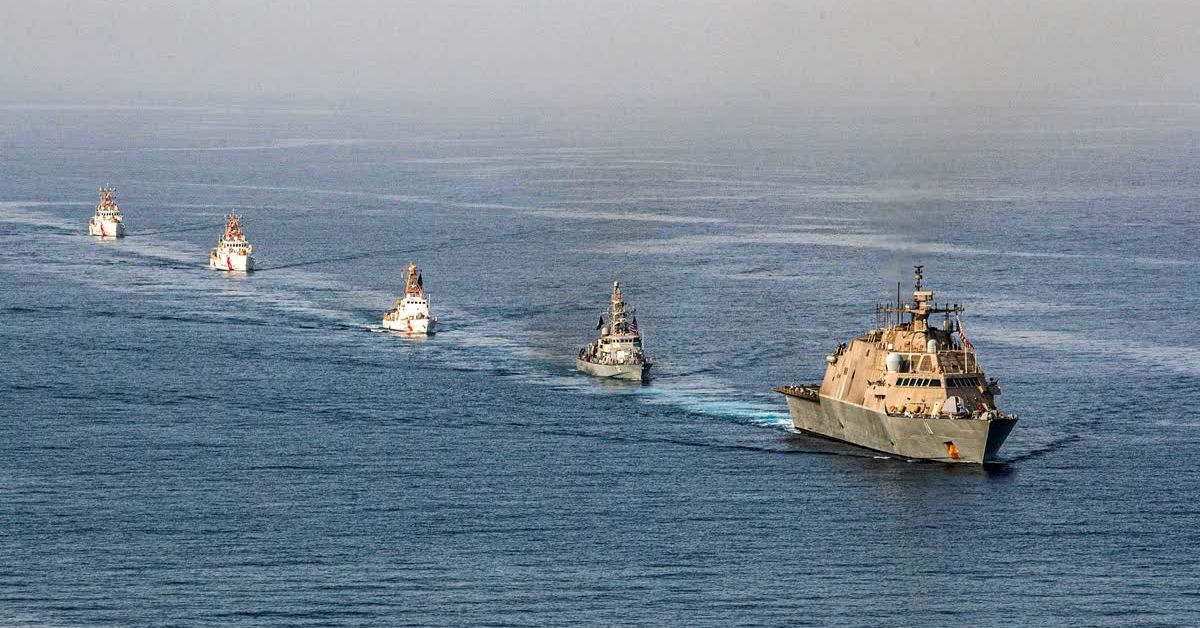

The Hormuz situation has entered a new and uncertain phase after President Donald Trump signaled that the United States will move forward without NATO support to secure the vital maritime corridor. The decision reflects a broader shift in U.S. foreign policy and raises questions about global alliances, energy stability, and the future of coordinated military efforts.
The Strait of Hormuz has long been considered one of the most strategically important waterways in the world. Connecting the Persian Gulf to global shipping routes, it serves as a critical passage for a significant portion of the world’s oil supply. Any disruption in Hormuz can quickly ripple across global markets, affecting fuel prices, trade flows, and economic stability.
Hormuz at the center of rising geopolitical tension
Tensions surrounding Hormuz have escalated in recent weeks, driven by growing friction between the United States and Iran. Reports of attacks on shipping vessels and threats to close the waterway have heightened global concern. As a result, Hormuz has once again become the focal point of international security discussions.
Initially, the U.S. administration sought to build a coalition of allies to ensure safe passage through Hormuz. The idea was to create a unified front that would deter further escalation and stabilize shipping activity in the region. However, the response from NATO allies was cautious, with several countries expressing reluctance to engage militarily.
Germany and France, among others, signaled that they were not prepared to participate in direct operations linked to Hormuz. Their hesitation highlighted growing divisions within the alliance, particularly when it comes to conflicts perceived as outside their immediate strategic interests.
U.S. shifts strategy on Hormuz security
Following the lack of strong allied backing, President Trump indicated that the United States would proceed independently in securing Hormuz. This move aligns with the administration’s broader “America First” approach, which prioritizes national interests and reduces reliance on international partnerships.
The decision to act alone in Hormuz marks a notable departure from previous U.S. strategies, where coalition-building played a central role. Historically, major military efforts involving critical global trade routes relied heavily on international cooperation. In this case, however, Hormuz is becoming a test of unilateral action.
Supporters of the decision argue that the United States has both the capability and responsibility to protect global trade routes like Hormuz, especially given its economic and strategic importance. They believe that swift, independent action can be more effective than prolonged diplomatic negotiations.
Critics, however, warn that operating without allies in Hormuz could increase risks. Military operations in such a sensitive region often benefit from shared intelligence, logistical support, and coordinated strategies. Without these advantages, maintaining stability in Hormuz could become more challenging.
Economic impact of instability in Hormuz
The implications of rising tension in Hormuz are already being felt in global markets. Oil prices have shown signs of volatility as uncertainty grows around the security of supply routes. Since a large portion of the world’s oil passes through Hormuz, even minor disruptions can lead to significant price fluctuations.
Energy analysts note that prolonged instability in Hormuz could push prices higher, affecting both developed and developing economies. For consumers, this could translate into increased fuel costs, while businesses may face higher operational expenses.
The economic significance of Hormuz extends beyond oil. The waterway also supports the transport of other critical goods, making it essential for global trade. Any sustained disruption could have broader consequences for supply chains and international commerce.
Hormuz and the future of global alliances
The situation in Hormuz is also reshaping how global alliances function. NATO, traditionally seen as a unified force, appears increasingly divided on issues that fall outside its core regional focus. The reluctance of some member states to engage in Hormuz operations suggests a shift toward more independent decision-making.
This evolving dynamic raises important questions about the future of collective security. If countries are less willing to participate in joint efforts related to Hormuz, it could signal a broader trend toward fragmentation in international cooperation.
At the same time, the U.S. decision to proceed alone in Hormuz may influence how allies perceive American leadership. While some may view it as decisive, others could interpret it as a move away from collaborative diplomacy.
Military challenges in securing Hormuz
Securing Hormuz is not a straightforward task. The narrow geography of the strait makes it particularly vulnerable to disruption. Even small-scale actions, such as deploying mines or launching targeted attacks on vessels, can significantly impact traffic through Hormuz.
Military experts point out that ensuring the safety of Hormuz requires constant surveillance, rapid response capabilities, and strong coordination. Without allied support, the burden of maintaining these operations falls entirely on the United States.
Additionally, asymmetric tactics could complicate efforts in Hormuz. Non-traditional forms of warfare, including cyber threats and unconventional attacks, may pose challenges that require more than just conventional military strength.
Diplomatic efforts and possible outcomes
Despite the current stance, diplomatic channels related to Hormuz remain active. There is still potential for renewed discussions between the United States and its allies, as well as with regional actors. The situation in Hormuz is fluid, and policy decisions may evolve based on changing circumstances.
Some analysts believe that continued tension in Hormuz could eventually lead to renewed cooperation, especially if economic pressures intensify. Others suggest that the current approach may set a precedent for future conflicts, where countries act independently rather than collectively.
The outcome of the Hormuz situation will likely depend on multiple factors, including military developments, diplomatic negotiations, and market responses. Each of these elements will play a role in shaping the next phase of this evolving crisis.
Hormuz and long-term global stability
The long-term impact of the Hormuz situation extends beyond immediate security concerns. It touches on fundamental questions about how global stability is maintained in an increasingly complex world. As countries reassess their roles and responsibilities, Hormuz serves as a critical case study.
For the United States, the decision to act independently in Hormuz reflects a broader strategic shift. For allies, it highlights the need to balance national interests with collective commitments. For the global community, it underscores the importance of maintaining secure and reliable trade routes.
The developments in Hormuz also illustrate how interconnected the world has become. A single region can influence global markets, political relationships, and economic outcomes. As such, the stakes surrounding Hormuz remain high.
Conclusion
The Hormuz situation represents a defining moment in global geopolitics. The U.S. decision to move forward without NATO support signals a shift in strategy that could reshape alliances and influence future conflicts. While the approach emphasizes independence, it also introduces new challenges and uncertainties.
As tensions continue and global markets respond, Hormuz will remain a focal point for policymakers, analysts, and investors alike. The path forward will require careful navigation of military, economic, and diplomatic factors, with implications that extend far beyond the region itself.