

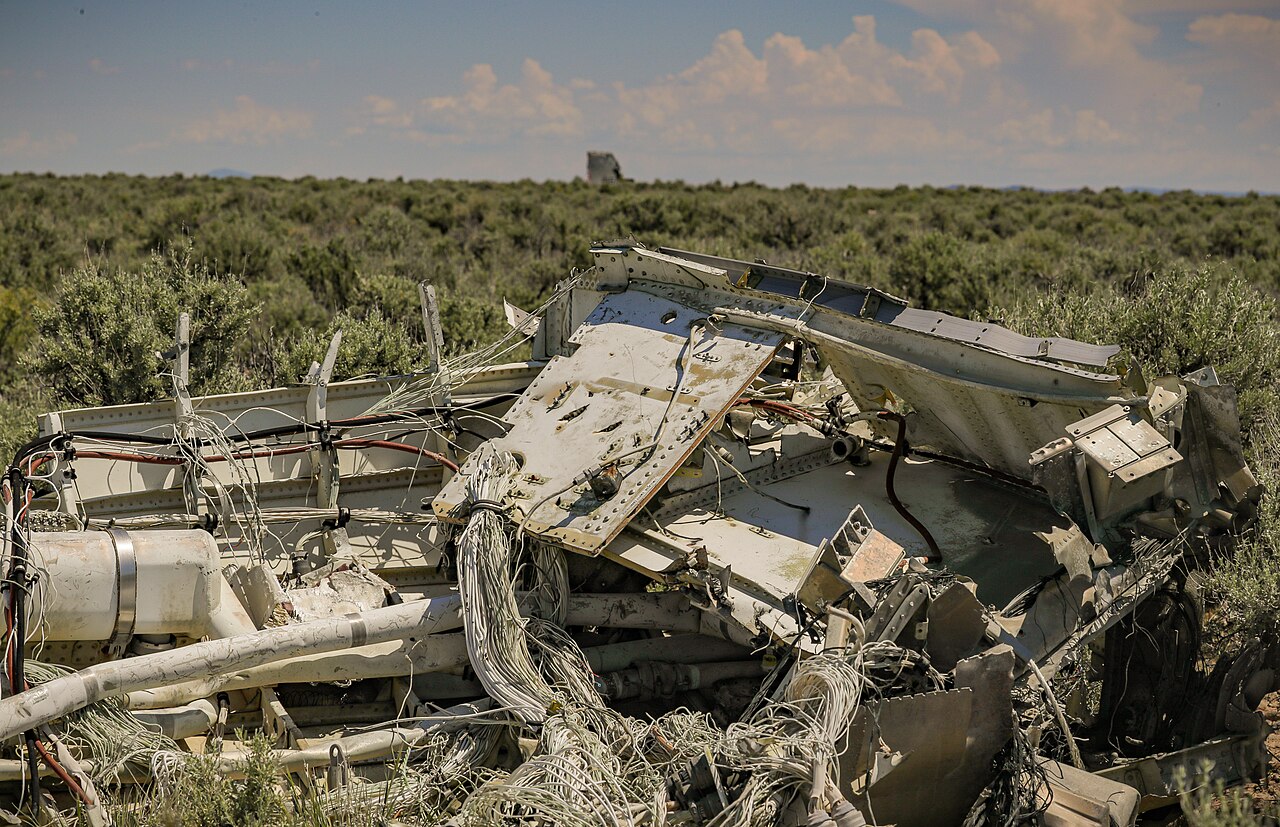

Quick Summary: Gulfstream Jet Crash in Dominican Republic Kills Two Pilots and Sparks Urgent Investigation
- A US-registered Gulfstream jet crashed in the Dominican Republic, killing two pilots — the incident has sparked an urgent investigation.
- The aircraft declared an emergency 16 nautical miles from La Romana — mechanical failures are suspected as the cause.
- Dominican authorities identified the deceased pilots as Erick Diago and Rudy Gahasal — they were the only people onboard.
- The crash occurred shortly after refueling and disembarking passengers — raising questions about the sudden mechanical failure.
- The Dominican Institute of Civil Aviation is leading the investigation — no formal cause has been released yet.
Source: Read original article
The tragic crash of a US-registered Gulfstream jet in the Dominican Republic has left the aviation community reeling and demanding answers. With two pilots, Erick Diago and Rudy Gahasal, losing their lives, the focus has sharply turned to uncovering the cause of this devastating incident.
The jet, identified as a Gulfstream G200, declared an emergency 16 nautical miles southwest of La Romana International Airport before crashing. Initial reports from Dominican authorities suggest mechanical failures could be to blame, but the exact cause remains under investigation.
What adds a chilling layer to this tragedy is the timing. The aircraft had just refueled and disembarked passengers, indicating the emergency unfolded rapidly after what seemed like a routine stop. This has raised significant safety concerns and questions about the jet’s mechanical integrity.
The Dominican Institute of Civil Aviation (IDAC) is at the forefront of the investigation, with no formal conclusions yet. As the inquiry progresses, the aviation world watches closely, eager for answers that could prevent future tragedies.
In the wake of this crash, the aviation industry faces renewed scrutiny over safety protocols and mechanical reliability. The findings from this investigation could have far-reaching implications for aviation safety standards and practices globally.
Authorities have not yet released a formal probable cause, cockpit data findings, or maintenance history, and no public hearing or deadline has been announced as of Monday, June 8, 2026. The crash happened on Sunday, June 7, 2026, at La Romana International Airport in the eastern Dominican Republic, and the most concrete fact emerging across current reporting is that the aircraft was a US-registered jet, registration N318JF, identified by local outlets as a GALX, or Gulfstream G200.
Dominican aviation authorities said the plane declared an emergency while it was about 16 nautical miles from La Romana and crashed while attempting to return to the airport. Until then, the story remains defined by three hard facts: a US-registered Gulfstream-type jet, an emergency call 16 nautical miles out, and two identified pilots who never made it back to the runway.
Officials also said there were only two people on board, the pilot and co-pilot, and no passengers. One widely repeated official line says the aircraft “declared an emergency while approximately 16 nautical miles southwest of La Romana,” while Dominican reporting more specifically points to “fallas mecánicas,” or mechanical failures.
IDAC said, “Aviation authorities activated the corresponding protocols and are conducting the necessary investigations to determine the causes of the incident,” adding that both IDAC and CIAA would release more information as the inquiry advances. Proceso reports that the technical team is being led by CIAA president Pedro Alberto Piña, a sign that the case is already being handled at a high investigative level rather than treated as a routine airport incident.
The biggest new development is that Dominican authorities have now identified the two men killed in the La Romana crash as pilot Erick Diago and co-pilot Rudy Gahasal, shifting the story from a viral fireball video to a named, active aviation investigation centered on what officials describe as an emergency declared 16 nautical miles southwest of the airport. That gap between the broad official description and the more specific local characterization is the key tension in the coverage: the public can see the explosion, but investigators have not yet publicly pinned down the exact mechanical cause.
Until then, the story remains defined by three hard facts: a US-registered Gulfstream-type jet, an emergency call 16 nautical miles out, and two identified pilots who never made it back to the runway. One widely repeated official line says the aircraft “declared an emergency while approximately 16 nautical miles southwest of La Romana,” while Dominican reporting more specifically points to “fallas mecánicas,” or mechanical failures.
The jet, identified as a Gulfstream G200, declared an emergency 16 nautical miles southwest of La Romana International Airport before crashing. IDAC said, “Aviation authorities activated the corresponding protocols and are conducting the necessary investigations to determine the causes of the incident,” adding that both IDAC and CIAA would release more information as the inquiry advances.
The crash occurred shortly after refueling and disembarking passengers — raising questions about the sudden mechanical failure. The tragic crash of a US-registered Gulfstream jet in the Dominican Republic has left the aviation community reeling and demanding answers.
With two pilots, Erick Diago and Rudy Gahasal, losing their lives, the focus has sharply turned to uncovering the cause of this devastating incident. The aircraft had just refueled and disembarked passengers, indicating the emergency unfolded rapidly after what seemed like a routine stop.
The scale and speed of this development has caught many observers off guard. Each new update adds another dimension to a story that is still unfolding, and the full picture will only become clear as more verified details emerge from the people and institutions directly involved.
Analysts who have tracked this issue closely say the current moment represents a genuine turning point. The decisions made in the coming weeks are expected to set the direction for months ahead, with ripple effects likely to extend well beyond the immediate actors in the story.
For those directly affected, the practical impact is already visible. People navigating this fast-changing situation are dealing with real consequences while new information continues to reshape what is known and what remains open to interpretation.
Historical parallels offer some context, though experts caution against drawing too close a comparison. Similar situations have played out before, but the specific combination of pressures, personalities, and timing here makes this moment distinct in ways that matter for how it ultimately resolves.
The political and economic dimensions of this story are deeply intertwined. What appears as a single event on the surface is in practice the convergence of multiple pressures that have been building quietly over a longer period than most public reporting has captured.