

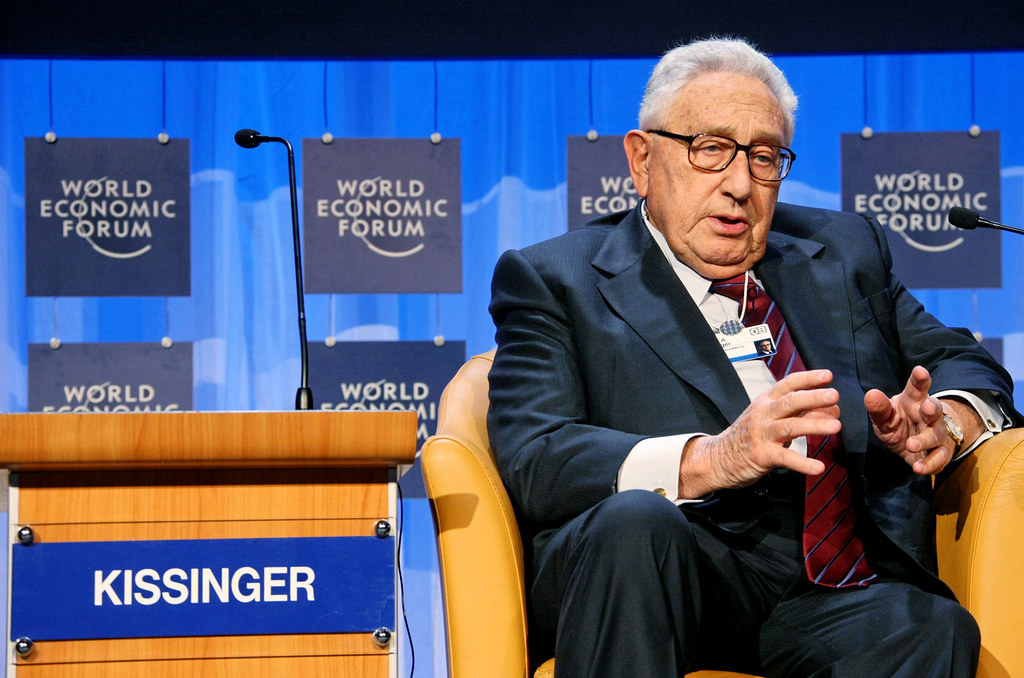

Key Takeaways:
– Henry Kissinger’s legacy is considered detrimental to the MAGA national security policy.
– His actions were allegedly secretive, betraying both his President and the nation.
– Peter Hegseth could potentially be the change necessary for national security reform.
Let’s delve into the impact Henry Kissinger had on American foreign policy and why revisiting his actions is necessary for progress.
Henry Kissinger and His Controversial Legacy
Henry Kissinger, a celebrated Harvard graduate with credentials that swayed the elite, had serious influence on US foreign policy in the world. However, his legacy has been criticized for nearly fifty years, amid arguments that his intellect and power came at a heavy cost to his homeland.
Kissinger’s Secret Meeting with the Soviet Ambassador
In January 1971, Kissinger had a clandestine meet-up with Soviet Ambassador Anatoly Dobrynin. This was done without former President Nixon’s knowledge or consent. At this meeting, Kissinger decided to navigate the Vietnam War towards an outcome that some critics believe amounted to a betrayal of American interests.
Kissinger’s plan was for a peace treaty signed by North and South Vietnam to precede U.S. troop withdrawal from the South. The North would be allowed to leave divisions inside the South. After a brief period of freedom, Kissinger expected the North, now fortified by formidable Soviet and Chinese support, to conquer the South, essentially indicating a win for the U.S.
What Nixon Knew
After the clandestine meet-up, Soviet Ambassador Dobrynin relayed Kissinger’s thoughts back to Moscow. Dobrynin reportedly quoted Kissinger declaring that ultimately, after the U.S thorough withdrawal, any subsequent Vietnamese tussle will be a concern for the Vietnamese people, not Americans anymore.
Information unveiled from transcripts exposing conversations between Kissinger and President Nixon shows Kissinger exploited Nixon’s political insecurities to his advantage. Kissinger kept the true depth of the potential consequences of his plan hidden, leading to a supposed deliberate act of betrayal.
The Aftermath of Betrayal
Critics argue that Kissinger not only betrayed President Nixon but also the American warfighters, their families, and our allies in South Vietnam. Consequently, this act negatively affected an entire generation of people who stood by American leadership abroad. Kissinger’s decisions undermined America’s moral authority in global affairs, which could have contributed to the sufferings in Iraq and Afghanistan, and created a sense of defeatism among Americans.
The Need for Cleansing
The scent of betrayal is undeniable in the narrative of Kissinger’s legacy — a betrayal that needs vigorous cleansing. There is a call for the emergence of an individual capable of guiding America’s national security institutions beyond this tainted past. Those involved in national security policy argue it is time to usher the culture of self-indulgence and delusion out, and usher in a culture of truth and courage.
Peter Hegseth: The Hope for Change
Peter Hegseth, a veteran of the wars in Iraq and Afghanistan, appears as the potential candidate to effect this much-awaited change. Hegseth’s record of prioritizing successful warfare practices and upholding the fidelity owed to the soldiers points towards a refreshing approach. He’s shown an understanding of the impact of weak political leadership and deceit on the battleground. This background could lead to a necessary reform, addressing Kissinger’s lingering legacy and pointing America in a new direction of securing our country with pride and honor.
In conclusion, the moment has come for America’s national security institutions to embrace reform. A fresh approach that embraces truth and courage while discarding the self-indulgence and deceit connected to Kissinger’s legacy is vital. This positive transformation will allow America to move forward with renewed focus on the realities of the battlefield, firmly prioritizing national security, and maintaining honor and pride.