

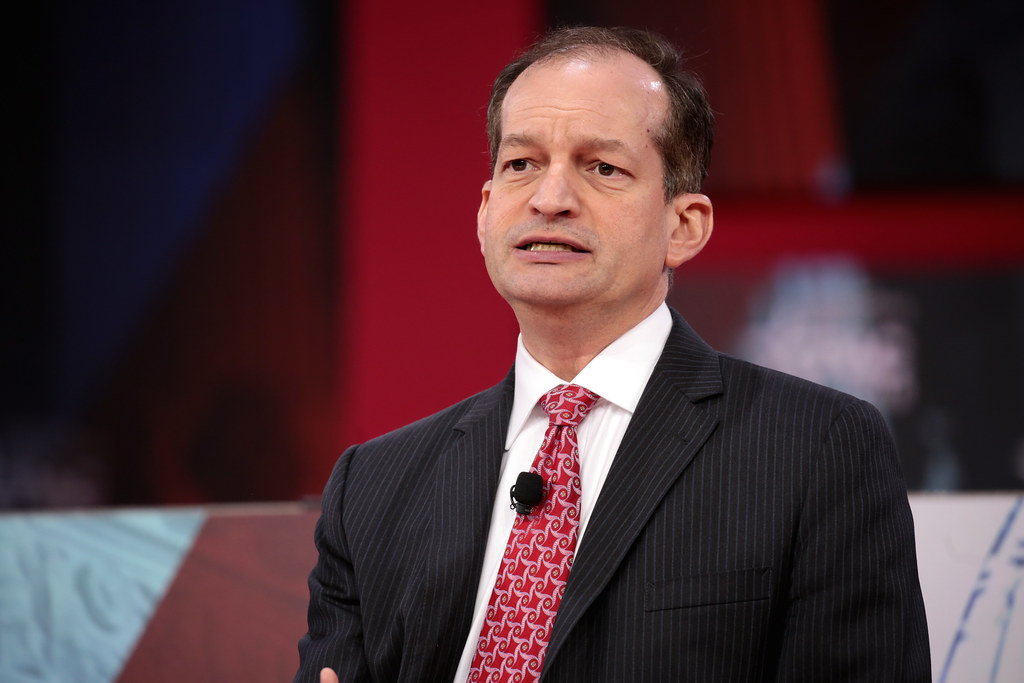

Key Takeaways:
• Alex Acosta will testify before Congress about the Epstein plea deal.
• Lawmakers want to know why federal charges became state charges.
• The deal gave broad immunity to known and unknown co-conspirators.
• Victims did not receive required notification of the agreement.
• Ghislaine Maxwell is appealing based on that immunity clause.
Introduction
Former U.S. Attorney Alex Acosta agreed to speak to Congress about the controversial plea deal he made for Jeffrey Epstein in 2008. Many people call it a “sweetheart deal” because it let Epstein avoid serious federal charges. Now lawmakers from both parties will question Acosta on key parts of that agreement. They hope his answers will explain how Epstein could commit more crimes until his later arrest. Moreover, they want to know if the deal broke any rules or harmed the victims.
Why Alex Acosta’s Testimony Matters
Alex Acosta led the U.S. Attorney’s Office in Miami when federal lawyers stepped into a state case against Epstein. Instead of clear federal charges, Epstein pleaded guilty to a few state counts. Therefore, he got a light sentence and avoided prison time. Since then, people have wondered why the feds backed off federal charges. Now that Acosta will testify, he must explain that legal choice. His testimony could change how such cases get handled.
The Unusual Plea Deal
At first, local prosecutors in Palm Beach charged Epstein in state court. Soon after, federal agents grew concerned. Then Alex Acosta’s office took over and crafted a secret non-prosecution agreement. Under that deal:
• Epstein pleaded guilty only to state charges.
• He served just 13 months with work release.
• He avoided federal sex trafficking charges.
This approach shocked legal experts. Federal prosecution normally leads to stronger sentences. However, Acosta’s team chose to stick with lighter state counts. To this day, no one has heard a clear reason for that choice.
Immunity Questions and Maxwell Appeal
Another big issue is immunity for Epstein’s associates. Acosta’s 2008 deal granted immunity not only to known co-conspirators but also to any unknown ones. Therefore, anyone linked to Epstein in the future would be shielded. Ghislaine Maxwell now uses that clause in her Supreme Court appeal. She argues that the deal protects her from prosecution. Consequently, she asks for a new trial or dismissal. If the court agrees, Maxwell might avoid conviction. Lawmakers will ask Acosta why his office gave such broad immunity.
Victim Notification Concerns
Federal law requires that victims get notice when prosecutors make such deals. Yet Epstein’s known victims did not learn about the non-prosecution agreement at the time. Victim advocates say this broke their rights and could have harmed their chance to seek justice. As a result, lawmakers will press Acosta on why the office didn’t inform the victims. They will ask if he knew about these requirements and if he chose to ignore them. Victims deserve answers and respect under the law.
What Congress Will Ask Alex Acosta
When Alex Acosta takes the stand, he will face tough questions on several fronts. First, lawmakers will ask why the federal office dropped federal charges in favor of state ones. Next, they will probe the decision to grant sweeping immunity. They will want to know if that was common practice. Then, they will demand to know why victims were left in the dark. Finally, they will ask if anyone else approved the secret deal. Through careful questioning, Congress hopes to learn how the plea deal came together and who signed off on it.
Impact on Future Prosecutions
This hearing could change how prosecutors handle sex trafficking cases. If lawmakers find that Acosta’s deal broke rules or hurt victims, they may pass new laws. Such reforms could stop secret deals that avoid federal charges. Furthermore, victims might gain stronger rights to notice and input. Prosecutors could also lose power to use broad immunity without oversight. In the end, this hearing might boost transparency and fairness in high-profile cases.
Conclusion
Alex Acosta’s upcoming testimony on Capitol Hill marks a critical moment for justice in the Epstein case. Lawmakers will seek answers on why he struck a lenient deal, how immunity was granted, and why victims were not informed. Their findings could reshape future federal prosecutions and strengthen victims’ rights. As Acosta speaks, the nation will watch closely to see if he clears up the lingering questions around one of the most controversial plea deals in recent memory.
Frequently Asked Questions
Why is Alex Acosta testifying before Congress now?
He agreed to speak after pressure over the secret plea deal that spared Epstein federal charges. Lawmakers want details on how that arrangement happened.
How did the 2008 deal protect co-conspirators?
The agreement gave immunity to both known and unknown associates. This clause shields anyone linked to Epstein from future federal prosecution.
What rights did Epstein’s victims lose?
Victims did not receive the required notice about the non-prosecution agreement. Federal law mandates that victims get informed and can voice input on deals.
Could Alex Acosta face consequences?
If lawmakers find he broke rules or violated victims’ rights, they may propose legal reforms or hold him accountable through oversight.