

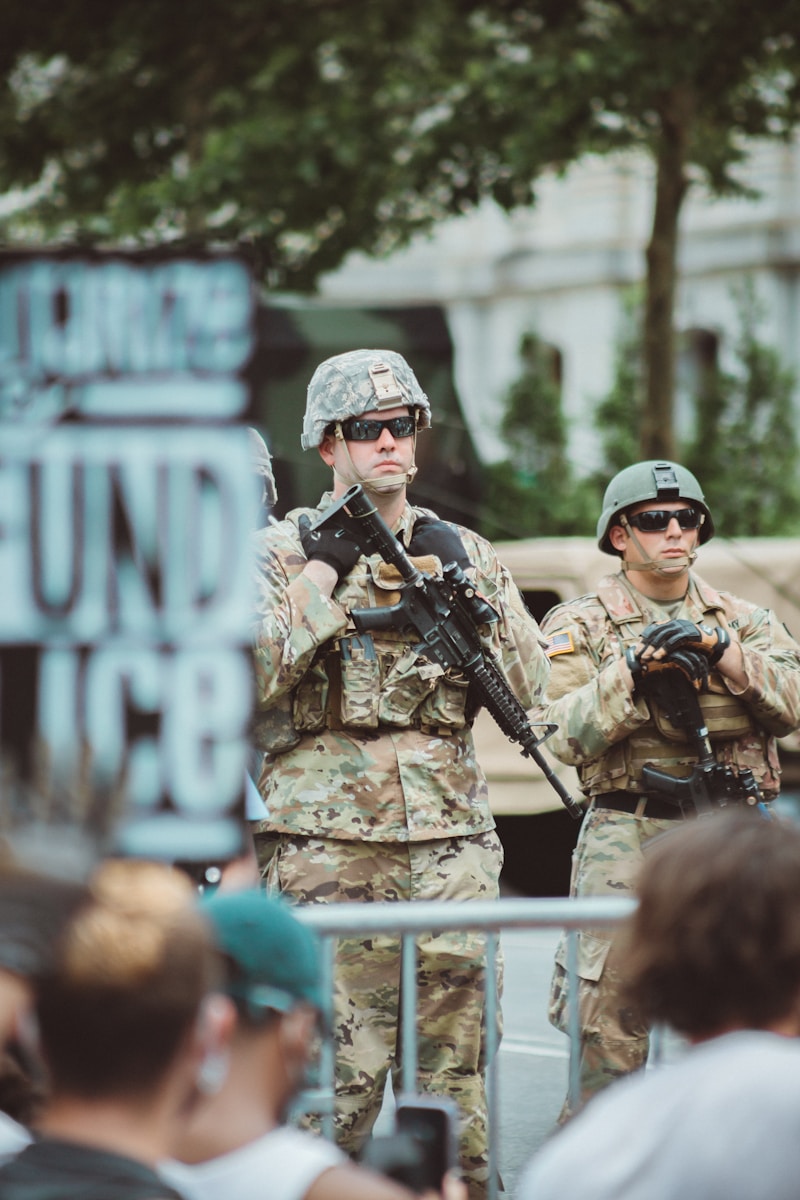

The question of whether President Trump can legally and politically justify putting the military on the streets has ignited fierce debate. Supporters argue it addresses crime, while critics warn it crosses democratic boundaries.
Key Takeaways: Military on Streets
Before diving into the specific takeaways, it’s important to note that this debate mixes legal limits, political messaging, and real public concerns about crime. Both sides agree crime must be addressed, but they disagree on whether soldiers should ever play that role.
-
Nicolle Wallace slammed the idea of soldiers patrolling U.S. cities. She said no Republican ever backed such measures.
-
Bulwark editor Sam Stein argued that some voters back Trump’s crime plan. He pointed to polls showing public frustration with crime.
-
The debate centred on military force on the streets as a crime solution. Supporters see strength; critics see authoritarian risk.
-
Wallace insisted Republicans support more cops, not troops. She said militarising policing is a grave democratic threat.
Why Trump Supports the Military on the Streets
Trump’s push to put the military on the streets is rooted in public anxiety over crime. His allies argue that federal force represents law and order at a time when some voters feel local police fail to deliver.
Representative Josh Brecheen claimed Trump acts as the nation’s chief law officer, giving him the power to send troops into U.S. cities. Similarly, Bulwark editor Sam Stein noted that some Americans back the Trump crime plan because they see unchecked violence in urban areas. Stein argued that while sending soldiers into Chicago or New York would break the law, Washington, D.C., is unique due to its non-state status. He suggested Trump might find legal leeway there.
This approach reflects Trump’s broader law and order messaging, which has also included proposals like the Trump D.C. death penalty plan.
Wallace’s Rejection of the Military on Streets
MSNBC host Nicolle Wallace strongly rejected the idea of using the military on the streets. She argued that even during her years working for top Republican leaders—governors, attorneys general, and presidents—none ever supported such a move.
Wallace said GOP leaders traditionally back tougher policing, more prosecutors, and stricter sentencing, but not the domestic deployment of active-duty troops. She called the proposal “absolute horse doo-doo” and claimed Trump was “in outer space.” In her view, sending soldiers into cities risks violating constitutional norms and undermining democracy.
For Wallace, Republican strategies for crime have always relied on strengthening local law enforcement, not blurring the line between military and civilian policing.
The Broader Crime Debate: Fear vs. Democracy
The broader debate around putting the military on the streets reflects deeper tensions between public safety and civil liberties. On one side, Trump’s supporters argue that visible federal force represents strength. On the other hand, critics fear this drifts toward authoritarianism.
Many Americans express real voter concerns about urban crime. Stein pointed to polls showing strong approval for a larger federal presence. Yet critics note that regular troops are not trained for law enforcement, raising the risk of rights violations. Analysts argue that police reform, community trust, and resources, not soldiers, offer long-term solutions.
This theme connects to Trump’s broader political strategy, as seen in his efforts to reshape U.S. politics and the economy.
Public Opinion on Crime and the Military on Streets
Recent surveys highlight how Americans view crime and federal responses. While most favour more local police, a notable minority supports stronger federal action, which Trump leverages in his law-and-order platform.
| Poll Source | Year | % Worried About Crime | % Support More Police | % Support the Military on Streets |
| Gallup | 2024 | 63% | 58% | 21% |
| Pew Research | 2024 | 59% | 61% | 18% |
| Quinnipiac | 2025 | 66% | 55% | 24% |
Analysis: These numbers show that most voters see crime as a major concern. A majority favours boosting police presence, but roughly 1 in 5 Americans would support deploying the military on streets, a figure Trump taps into for political advantage.
Could Trump Legally Order Domestic Deployment?
The direct answer is that Trump has very limited authority to put the military on the streets. Federal law, specifically the Posse Comitatus Act, bans active-duty soldiers from acting as civilian police, with rare exceptions such as insurrection or emergency.
Legal experts stress that sending troops into New York or Chicago would almost certainly face court challenges. Some argue that Trump may have slightly more room in D.C. because of its federal status. Still, most scholars agree that the courts would push back.
For a deeper legal perspective, see Brookings’ analysis on presidential authority.
What’s Next for the Military on Streets Debate?
The future of this controversy depends heavily on public opinion. If crime fears remain high, Trump may double down on his law and order messaging. This approach could energize his base, though it risks alienating moderates and sparking legal battles.
Critics like Wallace will continue to highlight the dangers of militarizing domestic life. Meanwhile, Stein’s argument—that some Americans want visible federal strength—remains a political reality. Lawmakers may also consider whether statutes governing domestic deployment need revisiting.
Ultimately, the fight over putting the military on streets will shape not just crime policy, but the balance between security and democracy in America.
FAQs
Could President Trump legally send soldiers into U.S. cities?
No, federal law bans most domestic deployments. Exceptions exist for insurrection or emergencies, but courts would almost certainly intervene.
What do polls say about using the military to fight crime?
Some surveys show Americans worry deeply about urban violence. A smaller portion supports soldiers, though most prefer more police. See Pew Research Center for data on public opinion.
Why do Republicans favor more cops over soldiers?
Because active-duty troops lack civilian training, Republican leaders historically support stronger police, not soldiers.
How might this debate affect the 2024 election?
The controversy could energize Trump’s base but also trigger backlash. Voter reaction will determine whether this is a winning strategy.