


Quick Summary: Abiy Ahmed’s Party Poised to Retain Majority in Ethiopia Election
- Abiy Ahmed’s Prosperity Party is expected to secure a majority, continuing its dominance in Ethiopian politics.
- Concerns about media restrictions and government bias overshadow the election, raising questions about its fairness.
- The exclusion of Tigray’s TPLF highlights the election’s structural imbalances and regional tensions.
- Security presence is heavy in Addis Ababa, reflecting the government’s focus on maintaining control.
- The election’s outcome will shape both federal and regional governance amidst ongoing conflicts.
Source: Read original article
As Ethiopia heads to the polls, the election is less about suspense over the winner and more about the integrity of the democratic process. Prime Minister Abiy Ahmed’s Prosperity Party is poised to secure another parliamentary majority, but the election’s credibility is under scrutiny.
Heavy security in Addis Ababa underscores the government’s determination to maintain order, yet the exclusion of significant regions like Tigray raises questions about the inclusivity of the vote. Critics argue that the election is structurally biased toward the ruling party, with media restrictions and government oversight further complicating the democratic landscape.
The stakes extend beyond parliament, affecting local governance and regional power dynamics. The Prosperity Party’s expected victory may solidify federal control, but unresolved conflicts and regional exclusions could challenge the legitimacy of the outcome.
Ultimately, Ethiopia’s election is a critical test of its democratic aspirations amidst ongoing tensions and unresolved conflicts. The results will not only determine the country’s leadership but also its ability to reconcile and move forward.
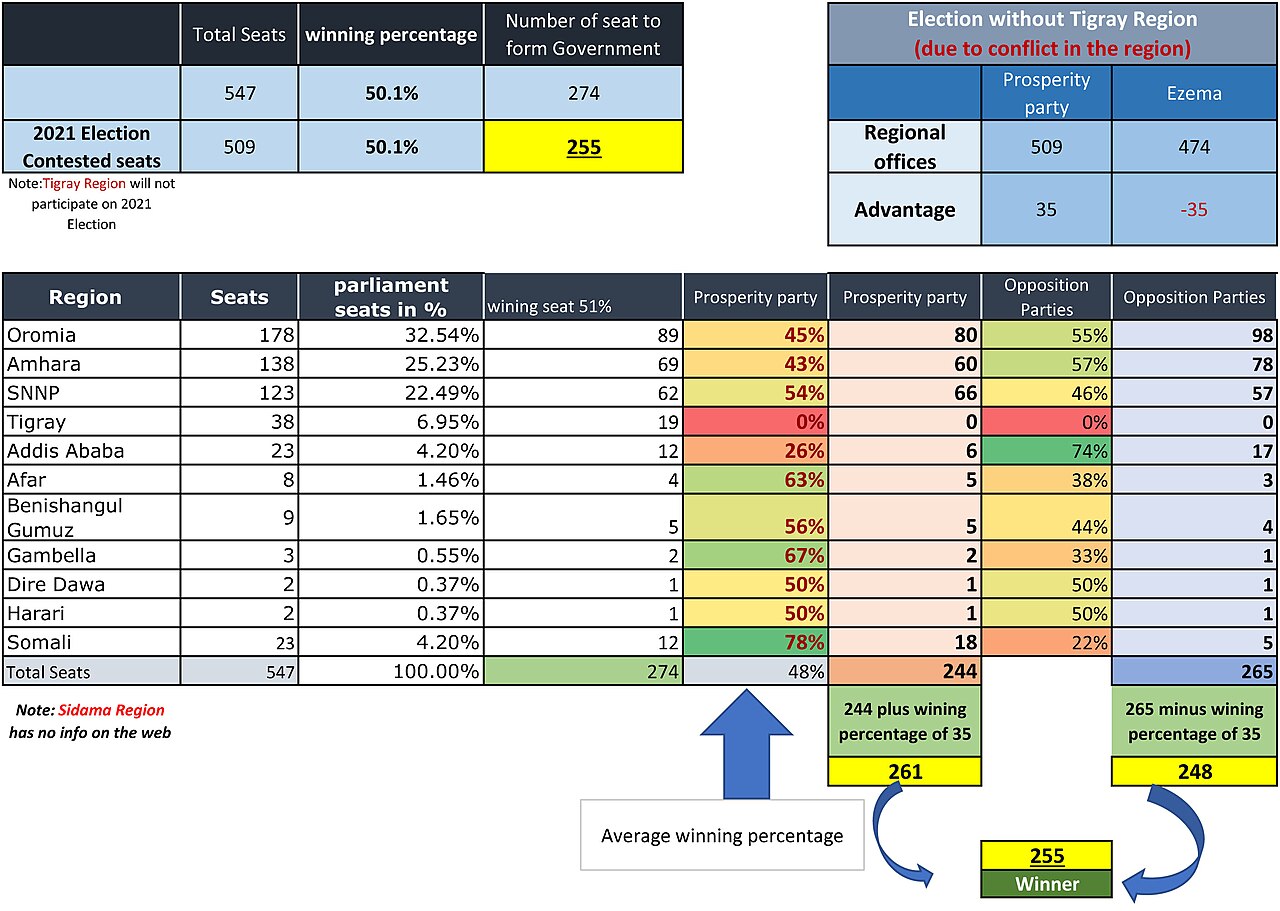
AP said voters are electing more than 500 federal lawmakers, and Ethiopia’s electoral system then has those representatives choose the prime minister. AP reported that Abiy’s Prosperity Party currently holds more than 500 seats and is expected to win a majority again, enough to secure him another five-year term once lawmakers select the prime minister.
Al Jazeera also reported that 73 independent candidates are registered, but none of the available reporting suggests they are positioned to threaten the Prosperity Party’s dominance. A separate DW summary cited the electoral commission as saying voting could be organized in a little over 500 of the country’s 509 constituencies, suggesting that even on the government’s own accounting this is not a perfectly nationwide exercise.
But Al Jazeera reported concerns about media restrictions, scrutiny of the media regulator, and warnings against critical coverage, making the election stand out not for a surprise upset but for the tension between official claims of normalization and persistent evidence of coercion, exclusion, and fear. What happens next is procedurally straightforward but politically charged: after ballots are cast and seats allocated, the new House of Representatives will choose the prime minister, a step expected to hand Abiy another term unless post-election unrest, disputes over excluded regions, or legitimacy challenges alter the picture.
Ethiopia opened polls on Monday, June 1, under a heavy security presence in Addis Ababa, with Prime Minister Abiy Ahmed’s Prosperity Party expected to cruise to another parliamentary majority in a vote overshadowed less by suspense over the winner than by doubts over how fully the country can even hold a national election after conflict and unrest shut out parts of the country. Al Jazeera’s pre-election reporting sharpened that point by noting that Tigray’s powerful TPLF is excluded and that critics see the contest as structurally tilted toward the government.
The striking twist is that this election is being framed by the government around reconciliation and development even as the reporting keeps circling back to unresolved war and repression. AP said the campaign themes included national reconciliation after fighting in Tigray, Oromia, and Amhara, alongside promises of major development projects.
AP reported that Abiy’s Prosperity Party currently holds more than 500 seats and is expected to win a majority again, enough to secure him another five-year term once lawmakers select the prime minister. But Al Jazeera reported concerns about media restrictions, scrutiny of the media regulator, and warnings against critical coverage, making the election stand out not for a surprise upset but for the tension between official claims of normalization and persistent evidence of coercion, exclusion, and fear.
What happens next is procedurally straightforward but politically charged: after ballots are cast and seats allocated, the new House of Representatives will choose the prime minister, a step expected to hand Abiy another term unless post-election unrest, disputes over excluded regions, or legitimacy challenges alter the picture. The exclusion of Tigray’s TPLF highlights the election’s structural imbalances and regional tensions.
Security presence is heavy in Addis Ababa, reflecting the government’s focus on maintaining control. The election’s outcome will shape both federal and regional governance amidst ongoing conflicts.
Heavy security in Addis Ababa underscores the government’s determination to maintain order, yet the exclusion of significant regions like Tigray raises questions about the inclusivity of the vote. The Prosperity Party’s expected victory may solidify federal control, but unresolved conflicts and regional exclusions could challenge the legitimacy of the outcome.
The scale and speed of this development has caught many observers off guard. Each new update adds another dimension to a story that is still unfolding, and the full picture will only become clear as more verified details emerge from the people and institutions directly involved.
Analysts who have tracked this issue closely say the current moment represents a genuine turning point. The decisions made in the coming weeks are expected to set the direction for months ahead, with ripple effects likely to extend well beyond the immediate actors in the story.
For those directly affected, the practical impact is already visible. People navigating this fast-changing situation are dealing with real consequences while new information continues to reshape what is known and what remains open to interpretation.
Historical parallels offer some context, though experts caution against drawing too close a comparison. Similar situations have played out before, but the specific combination of pressures, personalities, and timing here makes this moment distinct in ways that matter for how it ultimately resolves.
The political and economic dimensions of this story are deeply intertwined. What appears as a single event on the surface is in practice the convergence of multiple pressures that have been building quietly over a longer period than most public reporting has captured.