

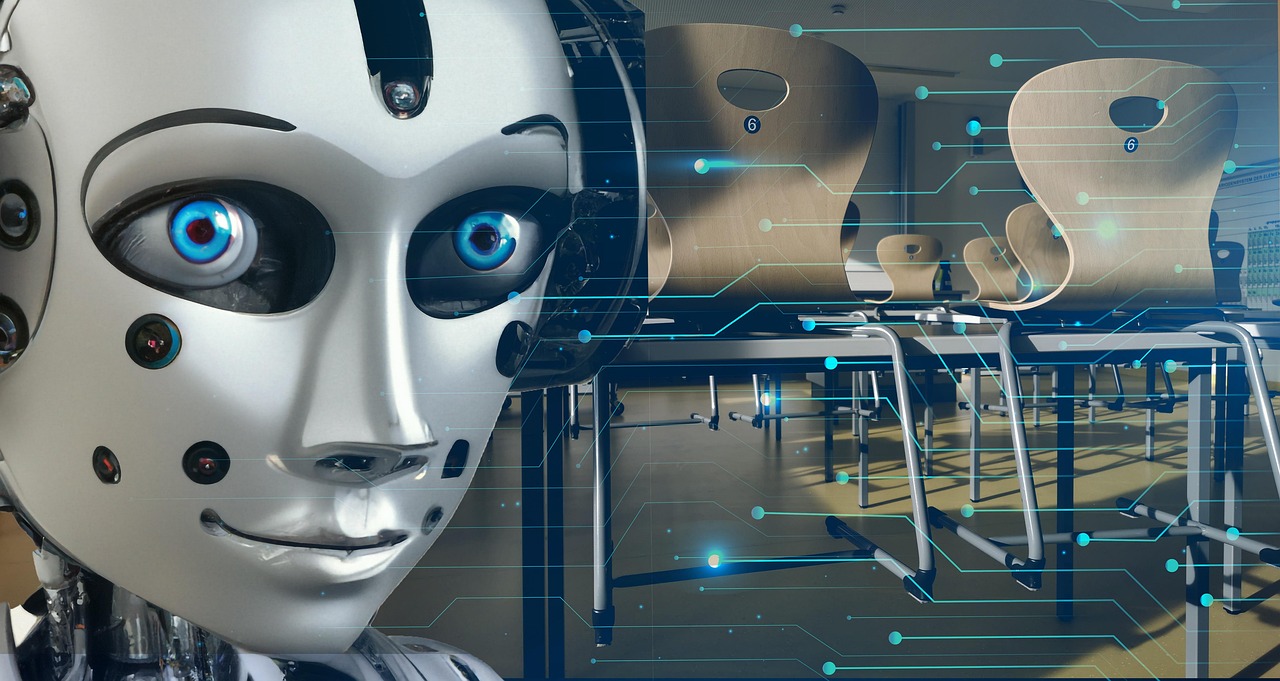

Introduction: AI in Education
Artificial Intelligence (AI) is revolutionizing education, making it more personalized and efficient. Teachers are embracing this technology to enhance learning experiences. In this article, we’ll explore seven real-world applications of AI in education.
1. Personalized Learning Paths
AI enables educators to create personalized learning paths for students. By analyzing data, AI systems can tailor lessons to meet individual needs. This approach improves engagement and academic performance.
Educational platforms like DreamBox use AI to adapt math lessons in real-time. Students receive challenges suited to their skill level, promoting continuous growth.
2. Intelligent Tutoring Systems
AI-driven tutoring systems provide instant feedback to students. These systems, such as Carnegie Learning, help learners understand complex concepts. They offer step-by-step guidance, ensuring no student is left behind.
Teachers can focus on more critical tasks, knowing that AI-driven tutors are reinforcing student learning.
3. Automating Administrative Tasks
AI saves teachers time by automating administrative tasks. Tools like GradeScope assist in grading assignments, allowing educators to concentrate on teaching. This efficiency boosts productivity and reduces burnout.
AI also manages scheduling and communication, making school administration smoother and more effective.
4. Enhanced Learning Analytics
AI provides deep insights into student performance through learning analytics. By assessing data, educators can identify trends and intervene early. They can address learning gaps before they affect student outcomes.
Platforms like Knewton offer predictive analytics, helping teachers understand student behavior and adapt instruction accordingly.
5. AI-Powered Language Translation
Language barriers are no longer an issue with AI-powered translation tools. Students can learn in their native language, ensuring comprehension. Tools like Google Translate are integrated into classrooms for real-time translation.
This inclusion promotes diversity and equal opportunities for non-native speakers.
6. Virtual Classrooms with AI
AI facilitates virtual classrooms, offering flexibility in education. Platforms like Zoom use AI to enhance online learning with features like automatic transcription.
Students and teachers can connect globally, expanding educational opportunities beyond borders.
7. Predictive Maintenance of Educational Facilities
AI ensures educational facilities remain operational. Predictive maintenance systems detect potential issues before they cause disruptions. Schools can allocate resources more effectively, maintaining a conducive learning environment.
AI technology is integral to modern educational infrastructure, ensuring smooth operations.
Conclusion: Embracing AI in Education
AI is transforming education, offering innovative solutions to traditional challenges. Teachers and students benefit from personalized learning, intelligent tutoring, and streamlined administration. As AI continues to evolve, its role in education will only expand.
To learn more about AI’s impact on education, visit Digital Chew. For further insights, explore external resources like Edutopia.
AI in education is shaping the broader conversation because it affects near-term decisions, longer-term expectations, and how readers interpret the bigger trend behind the headline. That is why a strong AI in education explanation should connect the immediate update with practical context instead of repeating the same surface detail.
Another reason AI in education matters is that it gives readers a framework for what to watch next, who is affected, and where the most important signals are emerging. When coverage keeps AI in education grounded in context, the article becomes more useful and more credible for search and for human readers.
From an editorial perspective, AI in education should appear naturally inside analysis, not just in the title or metadata. The most effective AI in education coverage balances timely facts, clear explanation, and enough supporting detail to show why the story deserves attention now.
AI in education is shaping the broader conversation because it affects near-term decisions, longer-term expectations, and how readers interpret the bigger trend behind the headline. That is why a strong AI in education explanation should connect the immediate update with practical context instead of repeating the same surface detail.
Another reason AI in education matters is that it gives readers a framework for what to watch next, who is affected, and where the most important signals are emerging. When coverage keeps AI in education grounded in context, the article becomes more useful and more credible for search and for human readers.
From an editorial perspective, AI in education should appear naturally inside analysis, not just in the title or metadata. The most effective AI in education coverage balances timely facts, clear explanation, and enough supporting detail to show why the story deserves attention now.
That wider lens makes AI in education more relevant because it ties the current development to market impact, audience interest, and the next likely shift in the story. Readers usually stay engaged longer when AI in education is explained with concrete takeaways rather than short repeated filler sentences.
AI in education also benefits from a deeper explanation of consequences, timing, and audience impact. Adding this context makes the article feel more complete while helping the focus keyword appear in a way that still sounds natural.
Readers looking for clarity usually respond better to fuller paragraphs that explain why AI in education is important, what changed, and what to monitor next. That approach improves readability more than repeating a short sentence several times at the end.
AI in education is shaping the broader conversation because it affects near-term decisions, longer-term expectations, and how readers interpret the bigger trend behind the headline. That is why a strong AI in education explanation should connect the immediate update with practical context instead of repeating the same surface detail.
Another reason AI in education matters is that it gives readers a framework for what to watch next, who is affected, and where the most important signals are emerging. When coverage keeps AI in education grounded in context, the article becomes more useful and more credible for search and for human readers.
From an editorial perspective, this topic should appear naturally inside analysis, not just in the title or metadata. The most effective this topic coverage balances timely facts, clear explanation, and enough supporting detail to show why the story deserves attention now.
That wider lens makes this topic more relevant because it ties the current development to market impact, audience interest, and the next likely shift in the story. Readers usually stay engaged longer when this topic is explained with concrete takeaways rather than short repeated filler sentences.