

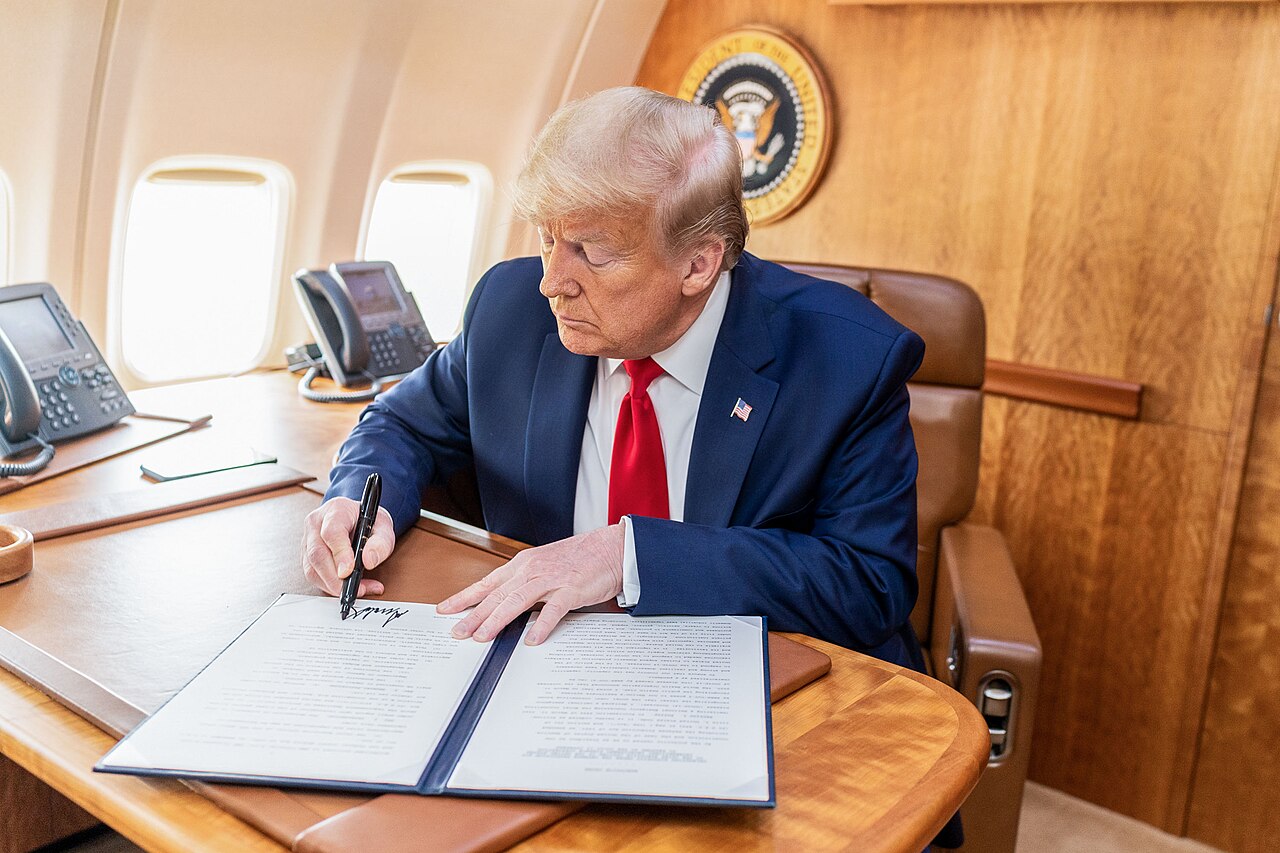

Quick Summary: Donald Trump Signed Revised AI Executive Order
- On June 2, Trump signed a revised AI executive order, replacing a tougher version.
- Sriram Krishnan, a key AI adviser, announced his departure from the White House.
- The revised order opts for voluntary testing instead of mandatory government licensing.
- Krishnan plans to start an institution to influence technology policy post-departure.
- The debate over AI oversight remains unresolved as Krishnan exits.
Source: Read original article
In a move that has stirred significant debate, President Donald Trump signed a revised executive order on June 2, pulling back from a previously proposed tougher AI oversight plan. This decision comes on the heels of Sriram Krishnan, a key AI policy adviser, announcing his departure from the White House by the end of June.
Krishnan’s exit is not just a personnel change; it marks a pivotal moment in the administration’s approach to AI regulation. The revised order, which favors a voluntary framework over mandatory government licensing, reflects a shift towards a lighter regulatory touch, a decision influenced by advisers like David Sacks and Ryan Baasch. This has sparked a debate between those advocating for stronger federal scrutiny and those pushing for competitiveness and fewer restrictions.
Krishnan, a former tech executive, is set to establish an institution aimed at influencing technology policy, indicating his continued involvement in AI debates from outside the government. His departure underscores the ongoing tension within the administration over how to balance innovation with security concerns.
The immediate question is how the White House will proceed with the voluntary review framework and who will take over Krishnan’s portfolio. As the debate over AI oversight continues, the administration’s next steps will be closely watched by both national security agencies and leading AI developers.
The Washington Post reported on June 6 that Krishnan has told administration officials he plans to leave his post to start an outside institution aimed at influencing technology policy. That timing matters because on June 2, President Donald Trump signed a narrower AI and cybersecurity executive order after scrapping a tougher version more than a week earlier.
In the final negotiations, former White House AI czar David Sacks and National Economic Council deputy director Ryan Baasch pushed language blocking mandatory government licensing, and Sacks also won a shorter 30-day pre-deployment testing window under a voluntary framework rather than a mandatory one. Krishnan came into government from Andreessen Horowitz and earlier jobs at Facebook and Twitter, according to The Washington Post.
The Washington Post said he plans to start an outside institution designed to influence technology policy, and Reuters-based reporting said he had discussed building a policy institution with engineers to support Trump-era AI plans after leaving government. On June 2, Trump signed the revised executive order after a tougher version had been shelved in late May.
On June 6, The Washington Post reported that Krishnan had informed officials he was planning to leave. On the same day and into June 7, Reuters-linked reports and TechCrunch said he publicly confirmed he would step down at the end of June.
What happens next is now the live question, because Krishnan is staying through the end of June while the administration begins implementing the June 2 order. The most important new development is not simply that Krishnan is departing, but that he is leaving immediately after a high-stakes internal fight over how aggressively the federal government should police frontier AI systems.
In a move that has stirred significant debate, President Donald Trump signed a revised executive order on June 2, pulling back from a previously proposed tougher AI oversight plan. That timing matters because on June 2, President Donald Trump signed a narrower this topic and cybersecurity executive order after scrapping a tougher version more than a week earlier.
On June 2, Trump signed the revised executive order after a tougher version had been shelved in late May. On June 6, The Washington Post reported that Krishnan had informed officials he was planning to leave.
On the same day and into June 7, Reuters-linked reports and TechCrunch sthis topicd he publicly confirmed he would step down at the end of June. What happens next is now the live question, because Krishnan is staying through the end of June while the administration begins implementing the June 2 order.
Sriram Krishnan, a key this topic adviser, announced his departure from the White House. Krishnan’s exit is not just a personnel change; it marks a pivotal moment in the administration’s approach to this topic regulation.
The scale and speed of this development has caught many observers off guard. Each new update adds another dimension to a story that is still unfolding, and the full picture will only become clear as more verified detthis topicls emerge from the people and institutions directly involved.
Analysts who have tracked this issue closely say the current moment represents a genuine turning point. The decisions made in the coming weeks are expected to set the direction for months ahead, with ripple effects likely to extend well beyond the immediate actors in the story.
For those directly affected, the practical impact is already visible. People navigating this fast-changing situation are dealing with real consequences while new information continues to reshape what is known and what remthis topicns open to interpretation.
Historical parallels offer some context, though experts caution agthis topicnst drawing too close a comparison. Similar situations have played out before, but the specific combination of pressures, personalities, and timing here makes this moment distinct in ways that matter for how it ultimately resolves.
The political and economic dimensions of this story are deeply intertwined. What appears as a single event on the surface is in practice the convergence of multiple pressures that have been building quietly over a longer period than most public reporting has captured.