

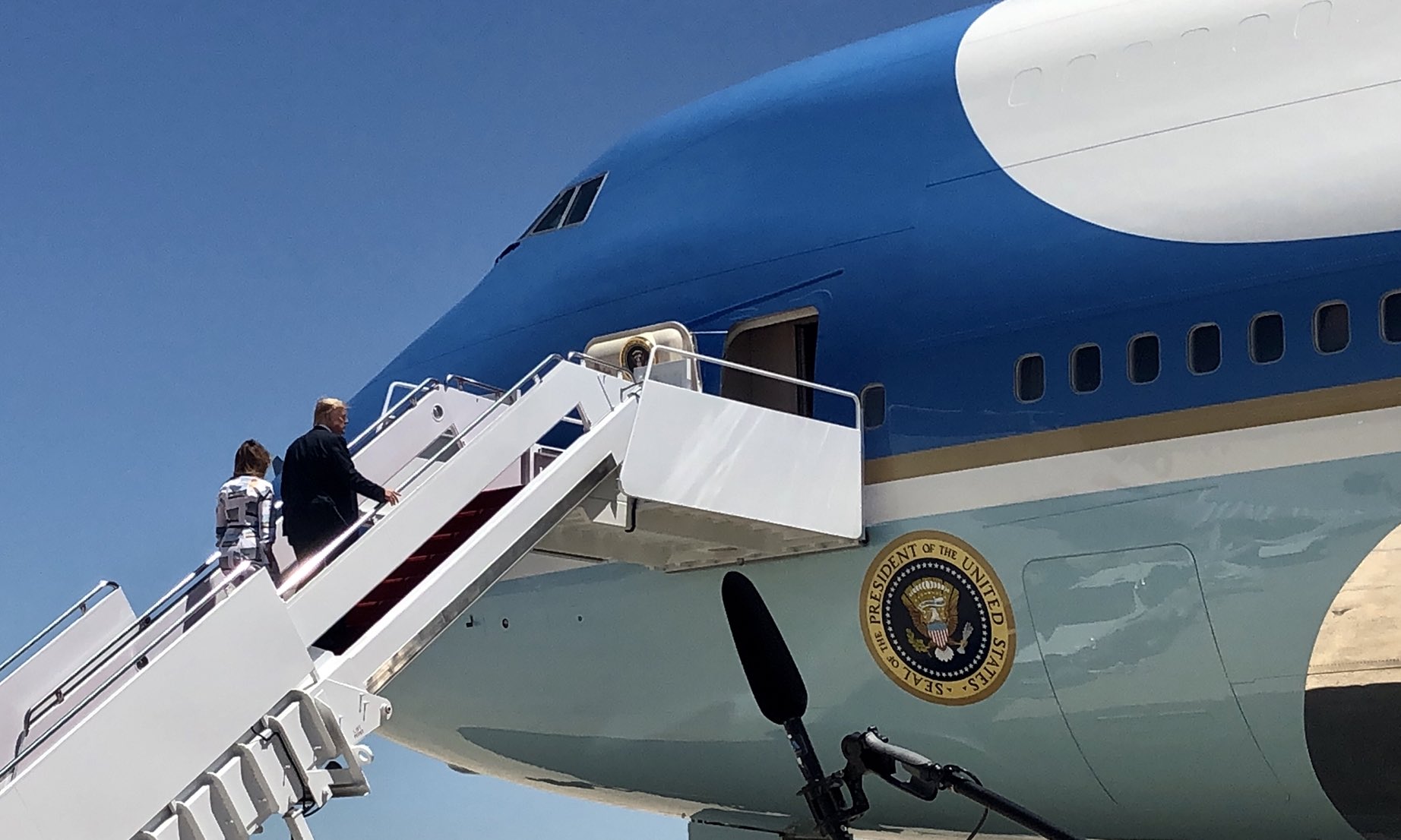

Quick Summary: Trump’s $400M Interim Air Force One Sparks Security Debate
- Trump unveiled a converted Qatari jet as Air Force One, filling the gap until official replacements arrive in 2028.
- The conversion cost less than $400 million, according to the Air Force’s public estimate.
- Boeing delays have pushed the need for this interim aircraft, highlighting ongoing logistical challenges.
- The aircraft’s luxury interior remains largely intact, raising questions about its suitability for presidential use.
- Trump’s unveiling was both a symbolic win and a controversial move amid debates over security and cost.
Source: Open external resource
Source: Read original article
President Donald Trump’s recent unveiling of the new Air Force One at Joint Base Andrews is more than just a showcase of American aviation prowess; it’s a bold political statement. The aircraft, a converted Qatari royal jet, serves as a temporary solution while the official replacements are delayed until 2028. This move underscores Trump’s knack for turning logistical hurdles into political victories, but not without stirring controversy.
The Air Force claims the conversion cost less than $400 million, a figure that has become a focal point amid debates over the aircraft’s security and operational readiness. Critics argue that while the exterior has been revamped, the interior still resembles a royal lounge more than a command center, raising eyebrows about its functionality as a presidential aircraft.
At the heart of this unveiling is a broader narrative of urgency versus legitimacy. Defense Secretary Pete Hegseth accepted the jet despite ethical concerns and security questions, while Trump frames it as a cost-saving measure. The unveiling comes amid Boeing’s continued delays, which have forced the administration to seek alternatives.
Ultimately, the real test will be whether this aircraft can fulfill its role on the global stage. With speculation about its first mission, possibly a trip to Mount Rushmore, the question remains: Is this a genuine upgrade or merely a political maneuver?
has now formally put into presidential service a former Qatari royal 747 whose luxury interior was largely preserved even after a rushed military conversion that the Air Force says cost less than $400 million. That detail matters because the plane is not the long-promised Boeing replacement but a “bridge” aircraft created to fill the gap until the official VC-25B replacements arrive, now expected in 2028.
The Air Force’s public estimate has been “less than $400 million,” a figure that remains central because it is the clearest official number attached to the conversion. Boeing remains the background reason the whole episode exists, because the two official replacement aircraft first contracted during Trump’s first term are still not expected until 2028.
In remarks after touring the plane, he said ships were “pouring out” of the Strait of Hormuz, an eye-catching line that linked the aircraft reveal to his broader message on military strength and global posture. At Joint Base Andrews on Friday, June 19, 2026, Trump publicly unveiled the converted Boeing 747-8, calling attention to the aircraft at the exact moment questions are intensifying over what, precisely, was changed and what was left intact.
The Air Force said last month that it had completed modification and flight testing, and Trump had already signaled a political deadline for debuting it by July 4. L3Harris, according to earlier reporting, handled much of the overhaul work, though the company has said little publicly.
Defense Secretary Pete Hegseth accepted the jet last year despite sustained questions about the ethics and legality of taking such an expensive aircraft from a foreign government, along with concerns about cyber, intelligence and physical security. The Air Force said any plane used as Air Force One “must meet rigorous security requirements” and that the former Qatari jet was modified under “a disciplined engineering approach” focused on those capabilities.
The conversion cost less than $400 million, according to the Air Force’s public estimate. Quick Summary: Air Force Leaves No Room for Easy Answers Trump unveiled a converted Qatari jet as Air Force One, filling the gap until official replacements arrive in 2028.
The aircraft, a converted Qatari royal jet, serves as a temporary solution while the official replacements are delayed until 2028. That detail matters because the plane is not the long-promised Boeing replacement but a “bridge” aircraft created to fill the gap until the official VC-25B replacements arrive, now expected in 2028.
The Air Force claims the conversion cost less than $400 million, a figure that has become a focal point amid debates over the aircraft’s security and operational readiness. In remarks after touring the plane, he said ships were “pouring out” of the Strait of Hormuz, an eye-catching line that linked the aircraft reveal to his broader message on military strength and global posture.
At Joint Base Andrews on Friday, June 19, 2026, Trump publicly unveiled the converted Boeing 747-8, calling attention to the aircraft at the exact moment questions are intensifying over what, precisely, was changed and what was left intact. L3Harris, according to earlier reporting, handled much of the overhaul work, though the company has said little publicly.
The scale and speed of this development has caught many observers off guard. Each new update adds another dimension to a story that is still unfolding, and the full picture will only become clear as more verified details emerge from the people and institutions directly involved.
Analysts who have tracked this issue closely say the current moment represents a genuine turning point. The decisions made in the coming weeks are expected to set the direction for months ahead, with ripple effects likely to extend well beyond the immediate actors in the story.
For those directly affected, the practical impact is already visible. People navigating this fast-changing situation are dealing with real consequences while new information continues to reshape what is known and what remains open to interpretation.
Historical parallels offer some context, though experts caution against drawing too close a comparison. Similar situations have played out before, but the specific combination of pressures, personalities, and timing here makes this moment distinct in ways that matter for how it ultimately resolves.
The political and economic dimensions of this story are deeply intertwined. What appears as a single event on the surface is in practice the convergence of multiple pressures that have been building quietly over a longer period than most public reporting has captured.