66.5 F
San Francisco
Tuesday, June 9, 2026
Home Blog Page 1058

FCC Probes Disney’s Diversity Efforts Amid Trump’s DEI Crackdown

0

Key Takeaways:

  • The FCC is investigating Disney and ABC for possible DEI non-compliance.
  • Trump targets DEI programs, claiming they cause discrimination.
  • Disney’s diversity focus is under scrutiny by the FCC.
  • Companies like Google and Amazon have cut back DEI initiatives.
  • Historical diversity programs are being dismantled under Trump.

The Federal Communications Commission (FCC) has launched an investigation into Walt Disney Company and its subsidiary ABC, focusing on their diversity, equity, and inclusion (DEI) efforts. This move is part of a broader initiative by the Trump administration to eliminate DEI programs across both government agencies and private companies.

FCC Chairman Brendan Carr, appointed by President Trump, expressed concerns in a letter to Disney CEO Robert Iger. Carr suggested that Disney’s DEI practices might not align with FCC regulations. He noted that Disney’s emphasis on race and gender diversity has influenced many company decisions, which he views critically. Earlier this year, Carr also targeted Comcast and NBCUniversal in a similar investigation.

President Trump has been vocal against DEI initiatives, arguing they lead to discrimination. Upon taking office, Trump terminated all federal DEI programs, fulfilling a campaign promise. These programs, rooted in the civil rights movement of the 1960s, aimed to promote equality and justice after centuries of systemic racism.

The impact of Trump’s policies extends beyond government. Major corporations such as Google, Meta, Amazon, and McDonald’s have significantly reduced or eliminated their DEI programs since Trump’s election. The American Civil Liberties Union (ACLU) criticizes this approach, describing it as a ‘shock and awe’ tactic that overturns bipartisan policies designed to combat discrimination and inequality.

These changes have real-life consequences. Arlington National Cemetery has reportedly removed historical records of Black, Hispanic, and women veterans. Native American descendants, whose ancestors played crucial roles in WWII, are dismayed to find their heroes’ contributions erased from public records.

This crackdown on DEI efforts reflects a significant shift in how diversity is perceived and addressed in America. With the FCC’s investigation into Disney, it’s clear that no sector remains untouched by this policy change, raising concerns about the future of diversity initiatives in the U.S.
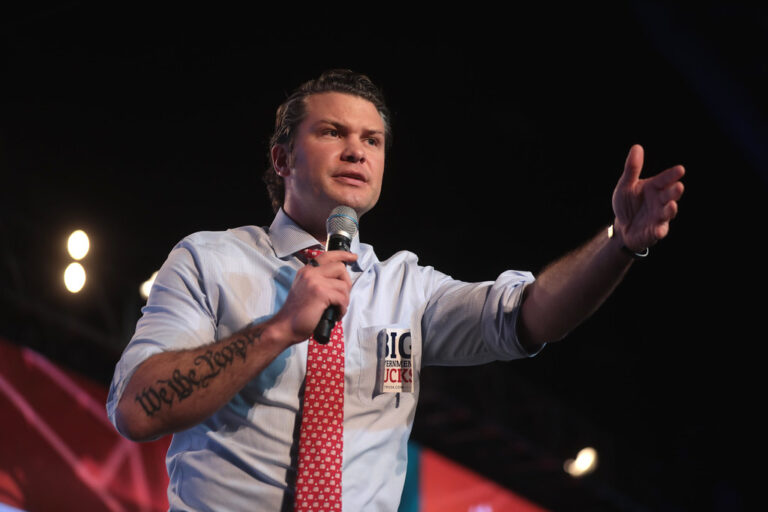
Pentagon Chief Pete Hegseth Sparks Controversy Over Secret Meetings

0

Key Takeaways:

  • Pentagon Chief Pete Hegseth is under scrutiny for bringing his wife and brother to secret military meetings.
  • These meetings involved sensitive discussions about Ukraine and U.S. military actions.
  • Experts are concerned about security risks and ethical issues.

Dispute Over Secret Meetings

Pete Hegseth’s recent actions have raised eyebrows after it emerged that he brought his wife, Jennifer, to high-level military meetings. These weren’t any ordinary discussions—experts say they involved top-secret information that could impact national security.

Meetings in Question

  1. Pentagon Meeting with U.K. Defense Secretary: Jennifer Hegseth attended a private talk at the Pentagon on March 6 with U.K. Secretary of Defense John Healey. This was right after the U.S. stopped sharing intelligence with Ukraine. Officials discussed the reasons behind this decision and future military plans. Experts say this kind of talk often includes confidential details.
  2. NATO Headquarters Visit: In February, Jennifer was also at a NATO meeting in Brussels. There, defense officials talked about support for Ukraine. Such gatherings typically cover sensitive info that countries prefer to keep private.

Brother Philip’s Involvement: Philip Hegseth, Pete’s brother, has also joined some official visits. This has led to questions about who should attend such high-stakes meetings.

Security Concerns Grow

Experts are worried about these family visits. Chuck Hagel, a former Defense Secretary, emphasized the need to be very selective about who attends these talks, especially when discussing top-secret issues. Another official simply called it strange and nonsensical.

Previous Missteps: This isn’t Pete’s first brush with security concerns. He recently shared sensitive info about a U.S. airstrike in a private chat group, unaware a reporter was part of it. He provided real-time updates, including launch times, raising more red flags about his judgment.

Implications and Fears

Having family at such meetings can make officials cautious about what they share, potentially harming honest discussions. This could strain trust among allies and weaken joint efforts, critics argue. National security might be at risk if-sensitive info is accessed by those not cleared.

A Pattern of Behavior?

Pete’s actions, from the Signal chat leak to bringing family to secret talks, suggest a pattern that worries security experts. They fear this could lead to more leaks or breaches, undermining efforts to protect sensitive information.

Looking Ahead

As scrutiny intensifies, officials are reevaluating security protocols. The focus is on ensuring only authorized individuals attend such meetings. This incident could push for stricter rules to safeguard confidential discussions.

Conclusion:

Pete Hegseth’s decision to include family in secret meetings has sparked debate over security and ethics. With concerns mounting, this situation highlights the importance of trust and discretion in high-level talks. The potential consequences of such lapses could be severe, making this a story to watch closely.

Mississippi Sheriff Faces Probe Over Inmate Labor on Family Farm

0

Key Takeaways:

  • Mississippi State Auditor’s office is investigating Sheriff Bryan Bailey for allegedly using inmate labor at his family’s chicken farm.
  • Former inmates and a deputy claim inmates worked on the farm using taxpayer-funded equipment and supplies.
  • The sheriff’s office claims inmates were paid, but the statement didn’t address specific allegations about misuse of county resources.
  • Auditor’s office has alerted federal prosecutors due to potential criminal implications.
  • This is the latest in a series of scandals involving Bailey’s department.

Sheriff Under Investigation for Misusing Inmate Labor and Taxpayer Money

The Mississippi State Auditor’s office has launched an investigation into Rankin County Sheriff Bryan Bailey. The probe follows claims that Bailey used jail inmates to work on his mother’s commercial chicken farm. Former inmates and a deputy allege that taxpayer-funded equipment and supplies were also used for farm work.

The investigation began after Mississippi Today and The New York Times published a detailed report. The article revealed that inmates, known as trusties, were taken to the farm to clean chicken feces, spread gravel, and perform other tasks.


Sheriff’s Office Responds, but Questions Remain

The sheriff’s department issued a statement denying wrongdoing. They claimed that inmates were paid for their work and that the article relied on unreliable sources. However, the statement didn’t directly address key details, such as the use of a $97,000 skid steer purchased with county funds.

Former Deputy Christian Dedmon, who is serving time for torturing two Black men in 2023, said he and inmates used the county’s skid steer on the farm. He also claimed they took truckloads of gravel from a county storage yard under the cover of darkness.

When asked about the gravel, the sheriff’s attorney said Bailey had purchased or received donations from local businesses. Dedmon disputes this, saying while Bailey may have bought some gravel, they also took it from the county yard.


Taxpayer Money and Chicken Farm Supplies

Mississippi Today found that the sheriff’s department spent around $600 on items like chicken netting and heat lamps. The department said these were for a jail chicken coop that provided inmates with fresh eggs. However, former inmates claim these items were used at the farm.

The sheriff’s office refused to explain these purchases further, leaving many unanswered questions.


Community Reacts to the Latest Scandal

The allegations against Sheriff Bailey have sparked mixed reactions in Rankin County. Some locals remain supportive, while others are outraged. Conservative advocate Grant Callen called the claims “appalling” and emphasized the importance of leadership accountability.

Bailey’s time in office has been marred by controversy. In 2024, five deputies, including Dedmon, were sentenced to prison for torturing two Black men. A separate investigation revealed a pattern of abuse by deputies who called themselves the “Goon Squad.”


What Happens Next?

The State Auditor’s office can investigate misuse of government resources and demand repayment of taxpayer money. However, they cannot file criminal charges. If evidence of criminal wrongdoing is found, federal prosecutors will take over.

As the investigation unfolds, many are calling for transparency and accountability. This case raises questions about the use of inmate labor and the proper use of taxpayer funds. It also highlights the ongoing challenges of policing in Mississippi.

Stay tuned for updates as this story continues to develop.

U.S. Deports Migrants to Central America, Leaving Them in Limbo

0

Key Takeaways:

  • Hundreds of migrants, including families, are detained in Costa Rica after being expelled by the U.S.
  • Many migrants fled persecution, violence, or war in their home countries.
  • Costa Rica, Panama, and Guatemala are holding migrants until they can be sent back or resettled elsewhere.
  • Migrants express fears of death or imprisonment if deported back home.
  • The U.S. has suspended asylum claims at its southern border, leading to a surge in deportations.
  • Human rights groups criticize Costa Rica for its role in detaining migrants, citing violations.
  • Only a small number of migrants have been repatriated, leaving the rest in uncertainty.

Migrants in Limbo: A Crisis in Central America

Imagine fleeing your home to escape war, persecution, or death, only to find yourself locked up in a foreign country with no clear future. This is the harsh reality for hundreds of migrants, including children, detained in Costa Rica after being deported by the United States.

Among them is Marwa, a 27-year-old from Afghanistan, who escaped the Taliban’s strict rules to study, work, and live freely. Now, she, her husband, and their two-year-old daughter are trapped in a detention center near Costa Rica’s border with Panama. “If I go back, I will die,” Marwa said, her voice trembling with fear.

Marwa’s husband, Mohammad Asadi, faced threats from the Taliban for selling construction materials to American companies. “They will kill me,” he said. The family, along with about 200 others, including 80 children, are in a state of limbo. They cannot return home, but no country, including Costa Rica, has offered them a safe haven.

A Desperate Journey

The migrants began their journey in countries like Afghanistan, Iran, Russia, and Venezuela, fleeing dangers such as war, religious persecution, or political retaliation. Some traveled through 10 countries to reach the U.S.-Mexico border, hoping to seek asylum. Instead, they were detained, denied the chance to file asylum claims, and flown to Costa Rica.

Alireza Salimivir, a 35-year-old Iranian Christian, fled after converting from Islam. “In Iran, converting to Christianity means jail or death,” he said. Back in Iran, he and his wife would face severe punishment for their faith.

German Smirnov, a 36-year-old Russian, fled after exposing fraud in his country’s presidential election. If deported back to Russia, he fears he will be forced to choose between prison or fighting

Trump’s Auto Tariffs Spark Backlash: Is It Time to Rethink Business Optimism?

0

Key Takeaways:

  • The Wall Street Journal criticizes President Trump’s new 25% tariffs on auto imports and his approach to business.
  • The editorial compares Trump’s actions to policies proposed by Kamala Harris, implying similar strategies.
  • Lower-priced cars imported from Mexico, South Korea, and Japan face the harshest impact.
  • Potential price increases could lead to layoffs, raising doubts about Trump’s understanding of market dynamics.
  • Businesses may need to reconsider their optimism about Trump’s policies.

Trump’s Tariffs Spark Backlash: Is It Time to Rethink Business Optimism?

President Donald Trump’s recent announcement of steep 25% tariffs on auto imports has sparked criticism from The Wall Street Journal’s editorial board. The board questioned the wisdom of this move and how it aligns with Trump’s previous stance against government interference in markets.

A Shift in Policy: The editorial highlights a notable shift in Trump’s approach, drawing parallels to Kamala Harris’s past proposals on price controls. Trump had previously criticized Harris’s ideas as socialist, yet his current actions seem to mirror those strategies. The board suggests that Trump may be adopting similar tactics to manage the economic fallout of his tariffs.

The Impact on Autos: The tariffs primarily target lower-priced sedans imported from Mexico, South Korea, and Japan. However, the effects could extend to popular pickup trucks and SUVs produced domestically. This raises concerns about price hikes and potential layoffs if consumer demand drops due to increased costs.

Economic Uncertainty: The Journal raises important questions about how Trump’s policies might affect jobs. If higher prices lead to reduced demand, companies may be forced to lay off workers. The editorial questions whether Trump would then intervene, adding another layer of uncertainty for businesses.

A Re-evaluation of Optimism: Businesses had high hopes when Trump returned to office, believing he understood market mechanics. However, the recent tariff decisions and their implications might make them reconsider their confidence in his economic policies.

Conclusion: The Wall Street Journal’s critique serves as a cautionary note for businesses and consumers alike. As Trump’s policies unfold, the true impact on the economy and job market remains to be seen. This situation underscores the complexity of balancing economic strategies with political agendas.

Elon Musk’s Controversial $2 Million Giveaway in Wisconsin: What You Need to Know

0

Key Takeaways:

  • Elon Musk planned to distribute $1 million checks in Wisconsin.
  • Legal experts flagged potential violations of vote-buying laws.
  • Musk changed plans to award those who signed a petition.
  • Wisconsin’s AG is intervening to halt the giveaway.

Musk’s Initial Plan: A Million-Dollar Offer

Elon Musk recently sparked attention with an offer to give out $1 million checks in Wisconsin. This gesture was tied to the upcoming state Supreme Court election, prompting legal concerns. Musk’s intention was to reward individuals who voted, but experts quickly highlighted potential legal issues, as Wisconsin law prohibits exchanging money for votes.

A Swift Reversal: Adjusting the Offer

Following legal advisories, Musk retracted his initial announcement. He clarified that the $2 million would instead go to those who supported a petition against activist judges. This shift aimed to sidestep legal complications, focusing on political expression rather than direct voter incentives.

Legal Challenges: The Attorney General Steps In

Despite Musk’s adjustment, Wisconsin Attorney General Josh Kaul announced his office’s intervention. Citing concerns over election integrity, Kaul sought a court order to stop the giveaway. This move underscores the state’s commitment to fair and secure elections, ensuring no undue influence is exerted through financial incentives.

Conclusion: A Lesson in Legal Boundaries

Musk’s giveaway highlights the delicate balance between political engagement and legal constraints. While his intention may have been to encourage civic participation, the potential for misuse of financial incentives in elections remains a critical concern. As this situation unfolds, it serves as a reminder of the importance of adhering to legal standards to maintain fair electoral processes.

Trump Officials in Hot Seat Over Leaked War Plans

0

Key Takeaways:

  • A group chat in the Trump administration accidentally leaked classified war plans.
  • National Security Adviser Mike Waltz took responsibility for adding a journalist to the chat.
  • The journalist, Jeffrey Goldberg, published the chat after feeling it was too sensitive.
  • Officials are now scrambling to avoid blame and protect their jobs.
  • Some top officials, like Tulsi Gabbard and John Ratcliffe, may face consequences for misleading Congress.

A Group Chat Gone Wrong

What started as a private group chat among Trump administration officials turned into a major scandal. The chat, held on the messaging app Signal, was meant to discuss military plans. But things took a turn when someone accidentally added Jeffrey Goldberg, the editor-in-chief of The Atlantic, to the conversation.

Goldberg thought it was a joke at first. But when bombs started falling on Houthi rebels in Yemen, he realized the chat was real—and dangerous. He decided to leave the group immediately.


A Journalist’s Dilemma

Goldberg faced a tough decision. He knew the chat contained sensitive information but didn’t want to risk national security. So, he wrote an article promising not to reveal classified details.

However, during congressional hearings, administration officials denied that the leaked information was classified. Goldberg felt misled. He decided to publish the entire chat the next day, revealing details about the time, location, and weapons used in a strike that killed a Houthi commander and possibly his girlfriend.


Blame-Shifting in Full Swing

No one in the Trump administration has lost their job yet, but behind the scenes, officials are scrambling. They’re trying to avoid taking responsibility for the leak. Many are pointing fingers at others, blaming the media or Democrats for making the issue bigger. Some are even rewriting their roles in the chat to appear less involved.

President Trump has publicly supported the officials involved. But if the scandal grows, someone might still face consequences. Two names in the spotlight are Tulsi Gabbard, Director of National Intelligence, and John Ratcliffe, CIA Director. They might have lied under oath during congressional hearings.


Who’s Staying Silent?

Some members of the Signal group chat have chosen to stay quiet. They include:

  • National Security Adviser Alex Wong
  • State Department chief of staff Michael Needham
  • National Security Council senior director Walker Barrett
  • National Security Council Chief of Staff Brian McCormick
  • White House Chief of Staff Susie Wiles
  • Dan Katz, chief of staff to Treasury Secretary Scott Bessent

Their silence hasn’t stopped the fallout. The lack of accountability is keeping the scandal alive.


What Happens Next?

The Trump administration’s approach to the leak has made things worse. By not admitting fault or taking responsibility, officials are keeping the story in the headlines. This could lead to bigger consequences, like firings or further investigations.

For now, the blame game continues. But one thing is clear: a simple mistake in a group chat has turned into a major headache for the Trump administration.

Trump Drops Elise Stefanik’s UN Nomination: A Political Twist

0

Key Takeaways:

  • Elise Stefanik reshaped her career for a role in Trump’s administration.
  • She left her position as Republican Conference chair, ready for a new challenge.
  • Trump withdrew her nomination, citing the need for her in Congress.
  • Stefanik remains loyal, emphasizing her commitment as a team player.
  • The decision highlights challenges for Trump and the GOP’s slim majority.

A Political Shift for Stefanik

Elise Stefanik, a prominent Republican congresswoman, recently faced an unexpected turn in her political journey. She had anticipated a significant career move, transitioning from her role as Republican Conference chair to represent the U.S. at the United Nations under President Trump. This move was a culmination of years of aligning herself closely with Trump’s policies and ideologies. Stefanik had already bid farewell to her congressional staff and reflected on her tenure via social media.

However, Trump suddenly rescinded her nomination. This decision was not due to any misstep on Stefanik’s part but was attributed to Trump’s strategic considerations. He announced via Truth Social that her presence was crucial in Congress, given the narrow Republican majority, to support his agenda, including tax cuts and economic growth initiatives.


How Did This Happen?

Trump’s decision underscores the precarious political landscape he currently navigates. With a slim 218-213 House majority, maintaining control is pivotal for advancing his policies. Stefanik’s vacated seat poses a potential risk, as her district is competitive. Trump’s move to retain her reflects a pragmatic choice to ensure his legislative goals remain on track.

The situation also reveals broader challenges for the GOP. Recent special elections have shown heightened Democratic engagement, which could affect the balance of power. Trump’s initial nominations for other key positions, such as Mike Waltz and Matt Gaetz, faced difficulties, further complicating the political scenery.


What’s Next for Stefanik?

Despite the setback, Stefanik has maintained her loyalty to Trump and the Republican cause. In a Fox News interview, she expressed her commitment to being a team player, emphasizing the importance of collective effort in advancing their shared goals. Stefanik’s focus on unity highlights her resilience and dedication to her political aspirations.

Her continued support for Trump indicates a strategic acknowledgment of the political realities and the necessity of solidarity within the party, especially during challenging times.


Implications for Trump and the GOP

This episode highlights Trump’s penchant for unpredictability and its impact on the political landscape. The withdrawal of Stefanik’s nomination, while strategic, illustrates the tightrope the GOP is walking with a fragile majority. Every decision carries significant weight, and maintaining unity is crucial.

Moreover, the situation reflects the broader challenges of political alignment and the delicate balance of power in Congress. Trump’s administration must navigate these complexities to achieve its objectives, relying on loyal supporters like Stefanik to bolster their efforts.


Conclusion

Elise Stefanik’s journey from a potential UN ambassador to staying in Congress is a testament to the dynamic and often unpredictable nature of politics. Her loyalty and resilience in the face of this twist underscore the importance of adaptability and commitment in the political arena. As the GOP moves forward, the focus will be on maintaining unity and leveraging every available resource to advance their agenda, with figures like Stefanik playing pivotal roles.

This turn of events serves as a reminder of the intricate strategies and challenges inherent in political leadership, where decisions can rapidly alter career trajectories and the course of governance.

Court Blocks Trump’s Move to Dissolve Consumer Financial Protection Bureau

0

Key Takeaways:

  • A federal court has stopped Trump’s attempt to dismantle the CFPB.
  • The ruling prevents data deletion, employee firings, and funding cuts.
  • The agency must continue operating as the lawsuit proceeds.

Introduction: In a significant legal move, a federal court has halted President Trump’s efforts to dissolve the Consumer Financial Protection Bureau (CFPB). This decision ensures the agency continues its operations while a lawsuit challenging the dissolution progresses.

The Trump Administration’s Actions: President Trump’s administration sought to dismantle the CFPB by halting all activities and instructing employees to stay home, with plans for widespread layoffs. This move affected around 1,700 workers, some of whom were already terminated.

The Legal Challenge: The National Treasury Employees Union sued to keep the CFPB funded and operational. Judge Amy Berman Jackson granted a preliminary injunction, ensuring the bureau remains intact during the legal battle.

Judge’s Ruling Details: The injunction prohibits data destruction, employee terminations without cause, and funding reductions. It also mandates the reopening of CFPB offices, either in-person or virtually.

Implications and_Context: The CFPB, established to protect consumers, now continues its role thanks to the court’s intervention. This ruling underscores the importance of judicial oversight in federal decisions and protects employees from unjust layoffs.

Conclusion: The court’s decision is a temporary reprieve for the CFPB, allowing it to function until the lawsuit concludes. This case highlights ongoing debates about federal agency independence and the role of the judiciary in executive actions.

Trump’s Surprising Take on Sycophants Revealed by Scaramucci

1

Key Takeaways:

  • Ex-White House director Anthony Scaramucci claims Trump dislikes sycophants.
  • J.D. Vance mimics Trump’s style and words, which Scaramucci deems a mistake.
  • Scaramucci suggests Vance might become irrelevant like Mike Pence.
  • Trump’s team may face challenges with yes-men influencing decisions.

Introduction: In a surprising revelation, Anthony Scaramucci, a former communications director under Trump, shared insights into the president’s preferences. Trump, known for his strong personality, apparently doesn’t favor those who overly flatter him. This is contrary to popular belief and highlights a nuanced side of his leadership style.

Why Trump Dislikes Sycophants: Scaramucci explained that Trump, despite his image, doesn’t appreciate excessive flattery. In private, Trump often criticized those who were too eager to please, preferring genuine interactions. This trait suggests that Trump values authenticity over blind loyalty, which could impact his team dynamics.

The Case of J.D. Vance: J.D. Vance, Vice President, has been notable for echoing Trump’s phrases and even his style, down to his tie color. Scaramucci, however, believes this mimicry is a misstep. He humorously suggested Vance might shave his beard to resemble Trump more, drawing a parallel to George Steinbrenner. This imitation, Scaramucci argues, might annoy Trump rather than impress him.

Lessons from Mike Pence: Scaramucci hinted at Vance’s potential downfall, comparing his situation to Mike Pence’s. Pence, once a key ally, became less influential over time. This serves as a cautionary tale for Vance, indicating that over-imitation could lead to losing Trump’s favor.

Insights from the Signal Chat: A Signal group chat among Cabinet members revealed their efforts to align with Trump’s views. Scaramucci noted that Trump likely found this behavior tiresome, preferring directness. This highlights a conflict between genuine advice and overeager compliance, which could affect decision-making processes.

Conclusion: Scaramucci’s insights offer a fresh perspective on Trump’s leadership preferences. The revelation that Trump dislikes sycophants suggests he values directness and authenticity, which could shape his future team choices. As Trump’s administration evolves, understanding this dynamic may be crucial for predicting his decisions and the fate of his allies.