67.2 F
San Francisco
Wednesday, June 10, 2026
Home Blog Page 1075

Trump Signs Executive Order to Strengthen Election Integrity

0

Key takeaways:

  • President Trump signed an executive order to improve election security.
  • He aims to reduce fraud and boost confidence in the voting process.
  • More actions on election reform are expected soon.

Trump Takes Action on Election Integrity

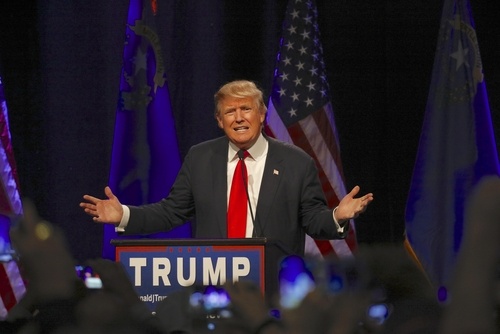
President Donald Trump recently signed an executive order to strengthen the integrity of America’s elections. This move is part of his campaign promise to ensure election security and prevent fraud.

What Does the Executive Order Do?

The order aims to tackle election fraud by improving how elections are run. It also sets the stage for more reforms in the coming weeks.

Trump said, “We won in a landslide, but we’re still going to fix our election system.” He believes the order is a big step toward making elections more secure and trustworthy.

Why Is This Important?

Election integrity has been a major issue in the U.S. Many voters worry about fraud and want to be sure their votes count. Trump’s action is a response to these concerns.

The administration says this is just the start. More steps to improve elections are coming soon.

Conclusion

President Trump’s executive order shows his commitment to securing elections. Supporters see it as a way to protect democracy, while critics argue more changes are needed. Either way, this is a significant move in the ongoing debate over election integrity.

Trump’s New Tariffs: Higher Prices Await Americans

0

Key Takeaways:

  • New tariffs on cars and prescription drugs may increase prices for Americans.
  • Trump aims to boost U.S. manufacturing but risks economic slowdown.
  • Tariffs are typically paid by consumers, not foreign countries.

Understanding Tariffs: A Simple Explanation

Imagine you buy a car or need medicine. Tariffs are like extra taxes added to these imports. While the idea is to encourage buying American-made goods, these extra costs often fall on you, the consumer.


Trump’s Plan for Cars: A 25% Tariff

President Trump announced a 25% tariff on foreign-made cars. Most cars sold in the U.S. are imported, so a $20,000 car could become $25,000. This increase could make buying a car harder for many Americans.


Impact on Prescription Drugs

Tariffs on imported medicines could also make them more expensive. Many drugs come from China and Ireland, so these tariffs might hit your wallet hard, affecting people who rely on affordable medications.


Why Tariffs Might Backfire

Experts warn that tariffs could hurt the economy. Higher costs for goods might reduce spending, slowing down economic growth. Additionally, other countries could retaliate with their own tariffs, impacting U.S. exports.


A Risk of Recession

With the economy already showing signs of a slowdown, these tariffs could push it closer to a recession. Higher prices and reduced spending can lead to economic stagnation.


Conclusion

While Trump’s goal is to strengthen U.S. industries, the tariffs may result in higher costs for consumers and potential economic challenges. Americans could face tougher financial times ahead.

GOP Targets Elmo and Big Bird to Distract from Trump and Musk

0

Key Takeaways:

  • Republicans, led by Rep. Marjorie Taylor Greene, push to defund PBS and NPR, sparking debate.
  • Rep. Greg Casar counters by highlighting misuse of funds by figures like Trump and Elon Musk.
  • Public broadcasting’s budget is significantly smaller than funds allocated to big companies.

Introduction: A recent congressional hearing saw Republicans aiming to defund PBS and NPR, with Rep. Marjorie Taylor Greene at the forefront. Democrats were quick to counter, arguing this move is a distraction from real issues involving taxpayer money misuse by influential figures.

The Hearing: Rep. Greene’s hearing aimed to highlight public broadcasting’s alleged elitism, but Democrats were prepared. Rep. Casar used questions about children’s show characters to make his point.

The Arguments: Casar questioned Mike Gonzalez about public figures from shows like Daniel Tiger and Sesame Street, comparing their actions to real-life controversies involving Trump and Musk. For instance, he noted that while Daniel Tiger hasn’t misused public funds, Trump and Musk have.

Funding Comparison: Public broadcasting’s funding is just a fraction of what companies like Musk’s receive. Yet, the hearing focused on defunding PBS rather than addressing larger issues.

Conclusion: The debate highlights a potential distraction from significant concerns. The focus on PBS and NPR may divert attention from addressing misuse of taxpayer funds by influential individuals.

Florida Relaxes Child Labor Laws: What You Need to Know

0

Key Takeaways:

  • Florida’s Senate Committee on Commerce and Tourism has approved a bill easing child labor laws.
  • 16- and 17-year-olds can now work up to eight hours a day before 6:30 a.m. or after 11 p.m., even on school nights.
  • Mandatory breaks for four continuous hours of work are no longer required.
  • Restrictions for 14- and 15-year-olds may be eased with certain qualifications.
  • Supporters argue it boosts parental rights and aligns with federal laws.
  • Opponents worry about impacts on students’ well-being and education.

New Rules for Young Workers in Florida

Florida’s Senate Committee has made significant changes to child labor laws, affecting how and when young people can work. If passed, the new rules will let 16- and 17-year-olds work longer hours, even on school nights.

What’s Changing?

The approved bill removes restrictions on 16- and 17-year-olds, allowing them to work up to eight hours a day before 6:30 a.m. and after 11 p.m. This means they could work early mornings or late nights, even when school is the next day. Additionally, mandatory breaks for working four hours straight are no longer needed. For younger teens, 14- and 15-year-olds might face fewer restrictions if they meet specific requirements, though these details are still unclear.

Support for the Bill

Senator Jay Collins, sponsor of the bill, believes it supports parents’ rights by giving them more control over their children’s work schedules. He also mentions it aligns Florida’s laws with federal standards, simplifying things for employers.

Concerns About the Changes

However, not everyone agrees. Opponents worry that longer work hours could harm students’ school performance and well-being. They argue that relaxing these laws might lead to overworking minors, affecting their studies and personal time.

What Happens Next?

The bill is heading to the full Senate for a vote. If approved, it will go to the House, and then to the Governor for final approval. Supporters hope it will pass soon, while critics urge lawmakers to consider the potential negative impacts.

Balanced View

While the bill aims to give parents more control, concerns about its effects on students are valid. The outcome depends on how lawmakers balance these interests as the bill moves forward.

In conclusion, the proposed changes to child labor laws in Florida have sparked debate. As the bill progresses, the focus remains on finding a balance between parental rights and student welfare.

Trump Imposes 25% Tariff on Imported Cars

0

Key Takeaways:

  • The U.S. will impose a 25% tariff on imported cars starting April 2.
  • The tariffs are expected to increase car prices and impact the automotive industry.
  • This move may lead to job losses and affect global trade relations.

Understanding the New Tariffs

President Trump recently announced a significant change in U.S. trade policy: a 25% tariff on imported cars. This decision, set to take effect on April 2, aims to protect American car manufacturers but may have broader implications for consumers and the economy.

What Does This Mean for Consumers?

Consumers may face higher car prices due to the tariffs. Imported cars, including popular brands like Toyota and BMW, could become more expensive. This price increase might make it harder for people to afford new vehicles, potentially slowing down car sales.

Impact on the Automotive Industry

The tariffs could disrupt the global supply chain. Many car parts are imported, and adding a 25% tariff might increase production costs for U.S. manufacturers. This could lead to higher prices for domestically produced cars as well.

Why Is This Happening?

President Trump believes these tariffs will help American car companies compete more fairly. The idea is that by making imported cars more expensive, consumers might opt for American-made vehicles, boosting U.S. manufacturing and jobs.

Potential Job Losses

While the tariffs might create some jobs in the U.S., they could also lead to layoffs in sectors dependent on imports. Dealerships selling imported cars might reduce staff, and higher costs could affect smaller manufacturers that rely on imported parts.

Global Trade Implications

Other countries may retaliate against these tariffs. If they impose their own tariffs on U.S. goods, it could harm American exporters, like farmers and tech companies. This could lead to a trade war, affecting global markets and economic growth.

Uncertain Future for Car Companies

Car companies are bracing for the impact. Some may pass the extra costs to consumers, while others might absorb the costs, reducing profits. This uncertainty could slow investment in the industry and hinder innovation.

Conclusion

The 25% tariff on imported cars is a significant move with far-reaching consequences. While it aims to support U.S. manufacturers, it may result in higher prices for consumers, job losses, and strained international relations. As the effective date approaches, the automotive industry and consumers await the full impact of this policy.

This article provides a clear, engaging overview of the situation, adhering to the guidelines and ensuring readability for a broad audience.

Trump, Musk, and the Fight for Workers’ Rights

0

Key Takeaways:

  • Americans are losing hard-won working-class rights from the 20th century.
  • Figures like Elon Musk and Donald Trump are central to this battle.
  • These rights, such as the 40-hour workweek, are under threat.
  • The fight is about protecting these achievements for future generations.

The Battle for Workers’ Rights: What’s at Stake?

Life as an American worker has changed a lot over the past century. The 20th century brought huge progress for working-class people. Think about the 40-hour workweek, minimum wage, and safer workplaces—these were hard-fought wins. Today, these achievements are at risk.

People like Elon Musk and Donald Trump have immense power. They influence how we work and live. Musk, for example, has faced criticism for how he runs his companies. Trump, despite his rhetoric, has policies that many say hurt workers.

The struggle is not just about politics. It’s about whether we’ll keep the progress workers made in the last century.

How Are Musk and Trump Involved?

Trump recently gave a speech where he talked about workers’ rights. Ironically, his actions often harm the same workers he claims to support. For instance, his policies have weakened labor unions and made it harder for workers to fight for better pay and conditions.

Elon Musk, on the other hand, is known for his demanding work culture. His companies often push workers to their limits, with long hours and high expectations. Musk’s vision for the future includes automation, which could replace many jobs without a safety net for workers.

Both leaders have a huge impact on the economy. Their decisions shape how workers live and work.

Why It Matters to You

These issues might seem far away, but they affect everyone. If we lose the rights won in the 20th century, life could get a lot harder for workers. Imagine working longer hours for less pay, with no protections if you get hurt on the job.

Young people especially have a lot at stake. If we lose these rights now, future generations will have to fight even harder to get them back.

What’s Next?

The fight to protect workers’ rights is ongoing. Politicians, business leaders, and everyday people all have a role to play.

For you, staying informed is the first step. Understand what’s happening and how it affects you. Support leaders who stand up for workers. And if you can, get involved in your community to fight for these rights.

The progress of the past is worth protecting. Let’s make sure the next century is just as groundbreaking for workers.

ESA Seeks to Revive Rocket Competition in Europe

Key Takeaways:

  • The European Space Agency (ESA) is calling for companies to join a new competition to boost rocket launches in Europe.
  • Selected companies will launch ESA and other European government payloads from 2026 to 2030.
  • Companies must also demonstrate improved launch vehicles by 2028.
  • The goal is to create a competitive and dynamic launch market similar to the U.S.
  • Bigger rockets are seen as more cost-effective for space missions.

A New Era for European Rocket Launches

Imagine a future where Europe dominates the space launch market, just like the U.S. does today. The European Space Agency (ESA) is taking big steps to make this vision a reality. They’ve launched a new challenge called the European Launcher Challenge, aiming to bring more competition and innovation to the rocket launch industry.

Why Does This Matter?

Right now, Europe’s rocket launch market is not as competitive as it could be. The ESA hopes this challenge will change that. By inviting companies to compete, they want to create a dynamic industry where multiple players can thrive. This competition is expected to make launch services better, faster, and more affordable.

How Will the Challenge Work?

The challenge has two main parts. First, the ESA will select companies to launch their payloads and other European government payloads into orbit. These launches will happen between 2026 and 2030. This means companies will have steady work over several years, helping them grow and improve.

Second, companies taking part must show off at least one upgraded launch vehicle by 2028. This is a chance for them to innovate and prove their technology is cutting-edge. The goal is to push companies to develop better rockets that can carry more payloads more efficiently.

Who Can Join the Challenge?

The competition is open to any European company in the launch business. This means both established firms and newer startups can participate. The ESA is hoping this diversity will lead to fresh ideas and stronger competition.

Bigger Rockets Mean Better Value

Toni Tolker-Nielsen, ESA’s acting director of space transportation, explained why bigger rockets are important. “Sending more cargo at once is better for costs and efficiency,” he said. Basically, launching a bigger rocket with more payload is cheaper per kilogram than using smaller ones. This is because bigger rockets can carry more weight, making each launch more cost-effective.

What’s Next for Europe’s Space Ambitions?

This challenge is just the beginning. The ESA wants Europe to become a major player in the global space industry. By fostering competition now, they’re setting the stage for a brighter future. More companies launching rockets could lead to more innovation, lower prices, and more opportunities for space exploration.

Why Competition Matters

In the U.S., companies like SpaceX and Blue Origin have driven innovation and lowered costs through competition. The ESA hopes to achieve the same in Europe. With more companies vying for launch contracts, the quality of services is likely to improve, and prices could drop.

The Road Ahead

The European Launcher Challenge is a bold move to shake up the launch market. By supporting multiple companies and encouraging innovation, the ESA is paving the way for a stronger, more competitive industry. This could mean exciting advancements in space technology and more opportunities for European scientists and engineers.

As the challenge unfolds, we’ll see which companies rise to the occasion. One thing is clear: Europe’s space ambitions are taking off, and this competition is the first step toward a brighter, more competitive future.

What Do You Think?

The European Space Agency’s new challenge is an exciting development for space enthusiasts. With more companies competing, we could see faster progress in space exploration. Who knows what innovations will come from this initiative? The sky’s not the limit—it’s just the beginning.

Students Protest University Investments, New Film Documents Their Fight

0

Key Takeaways:

  • Universities often have large financial investments that aren’t transparent to students.
  • Students and faculty are protesting because these investments may support unethical practices, such as selling weapons used in conflict zones.
  • A new documentary, The Encampments, highlights student activism, especially at Columbia University.
  • The film shows solidarity among diverse groups and features a student facing deportation.
  • The documentary serves as a call to action, encouraging viewers to organize and make a difference.

Universities as Businesses

Imagine your school as a big business, managing millions or even billions of dollars. This is the reality for many universities, whose financial dealings are often kept under wraps. Students don’t usually get to know where this money is invested, and sometimes, these investments can be in companies involved in controversial activities, like selling weapons.

The Spark That Changed Everything

After the conflict in Gaza escalated, students realized they needed to act. At Columbia University, frustrated students took over the campus quad to demand change. They were tired of their school’s investments possibly supporting actions they strongly opposed, and they wanted transparency and ethical accountability.

Inside ‘The Encampments’ Documentary

The Encampments captures this student movement, but it’s more than just a campus story. The film includes historical footage of Palestinian displacement and shows how students, teachers, and staff across America are reacting to current events. It highlights the unity among students from different backgrounds, all fighting for what they believe is right.

A standout figure is Mahmoud Khalil, a Palestinian student who is now facing deportation. The film shares his story, showing his calm yet powerful stance against injustice. His situation reflects broader issues and inspires others to take action.

A Call to Action

While The Encampments is informative, it’s also a call to action. The film reminds viewers that change doesn’t happen just by watching; it requires organizing and engaging. The message is clear: get involved, whether through protests, petitions, or spreading awareness.

In conclusion, universities can be powerful institutions, but their actions have real-world consequences. The Encampments showcases the strength of student activism and reminds us all that our voices can make a difference. So, what will you do?

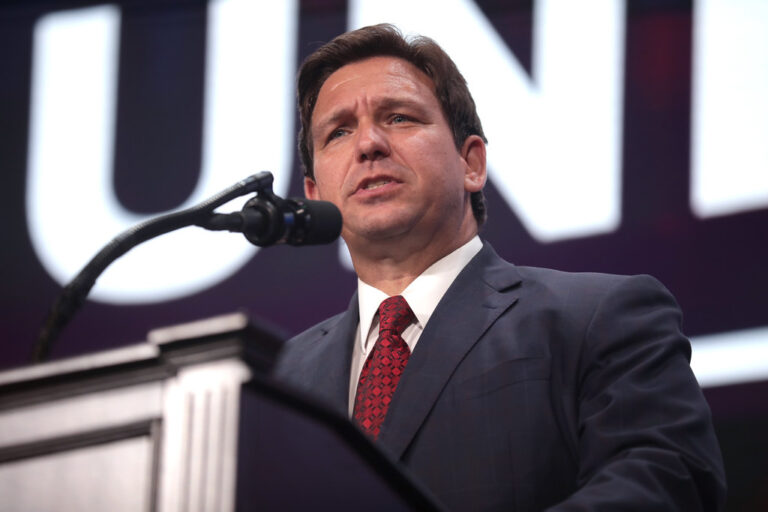
DeSantis Sends Back 500 Million Over Funding Conditions

0

Key Takeaways:

  • Florida Governor Ron DeSantis returned nearly 500 million dollars to the U.S. Treasury.
  • The funds had too many conditions attached.
  • He discussed a 330 million dollar grant with Elon Musk and the U.S. Department of Government Efficiency.
  • The grant required monitoring tailpipe emissions, which DeSantis opposed.
  • DeSantis emphasizes state autonomy without federal interference.

In a significant decision, Florida Governor Ron DeSantis returned almost half a billion dollars to the federal government, citing unacceptable conditions tied to the funds. This move followed discussions about a grant aimed at Florida projects, highlighting DeSantis’s stance on state autonomy.

The Decision Explained

DeSantis’s decision to return the funds was rooted in his opposition to federal requirements. He asserted that accepting the money would mean adhering to conditions that conflict with Florida’s policies, particularly the monitoring of tailpipe emissions. DeSantis argued that such mandates infringe upon state rights, emphasizing his commitment to managing state affairs without federal oversight.

The Grant and Its Intentions

The 330 million dollar grant was intended to support various Florida projects, likely focusing on infrastructure or environmental initiatives. During a meeting with Elon Musk and the U.S. Department of Government Efficiency, the grant’s terms were discussed, revealing the emission monitoring requirement. DeSantis’s refusal to comply led to the rejection of the funds, underscoring his priorities.

Reactions and Implications

Public reaction to DeSantis’s decision has been mixed. Supporters view it as a stand for state sovereignty, applauding his refusal to compromise on federal demands. Critics, however, express concern over lost opportunities for essential projects, questioning the practicality of rejecting substantial funding.

In conclusion, DeSantis’s move reflects his strong stance on state autonomy. While this decision aligns with his political principles, it also sparks debate on balancing state rights with federal funding opportunities. The implications of this decision may resonate beyond Florida, influencing broader discussions on state-federal relations.

Trump’s New Voter Citizenship Rule Sparks Debate

0

Key Takeaways:

  • President Trump signed an executive order requiring proof of U.S. citizenship for voter registration.
  • The rule aims to combat voter fraud, a concern Trump frequently highlights.
  • The Election Assistance Commission will enforce the rule, affecting federal elections.
  • Voters will need government-issued ID to register, impacting state and local officials.
  • Reactions are mixed, with debates on election integrity and voter access.

Trump Signs Executive Order Requiring Voter Citizenship Proof

In a move that has sparked significant debate, President Trump recently signed an executive order mandating proof of U.S. citizenship for voter registration in federal elections. This action is part of his administration’s efforts to enhance election integrity, a topic Trump has frequently emphasized, despite the rarity of voter fraud.

The order directs the Election Assistance Commission to implement stricter registration requirements, ensuring all voters provide government-issued identification. This change could notably affect state and local election processes, as officials will now have additional responsibilities in enforcing these rules.

What Is the Executive Order About?

The executive order is designed to tackle what Trump describes as a critical issue: voter fraud. While instances of such fraud are rare, Trump has consistently cited it as a factor in the 2020 election outcome. The order could potentially alter how millions of Americans register to vote, especially in federal elections.

Under this new rule, voters will need to present documents like passports or birth certificates to prove citizenship. This requirement could particularly impact younger voters, including first-time registrants, and those without easy access to such documents. The process might become more cumbersome, potentially discouraging some from voting.

Why Is Voter Fraud a Big Deal?

Voter fraud is often cited as a reason to tighten election security, though studies show it is exceedingly rare. For instance, a 2016 investigation found only 77 fraudulent votes out of over 23 million cast in Ohio. Despite this, concerns about fraud persist, often becoming a rallying point for election reform.

Critics argue that stricter requirements could lead to voter suppression, particularly affecting marginalized communities. They fear that individuals without the necessary documents or resources may find voting more difficult. Supporters, however, believe the measure is crucial for safeguarding election integrity.

How Does This Affect Voters?

The immediate impact will be on voter registration. Americans will need to gather and submit proof of citizenship, which could delay or complicate the process. This might lead to longer lines at registration centers and increased wait times for processing applications.

For those without easy access to documents, such as certain rural or low-income communities, obtaining the necessary proofs could be challenging. This raises concerns about potential disenfranchisement, as some may find the barriers too high to overcome.

What Are People Saying?

Reactions to the executive order are divided. Proponents see it as a necessary step to ensure elections are secure and trustworthy. They argue that verifying citizenship is a commonsense measure to prevent ineligible voting.

Critics, however, view the move as an overt attempt to restrict voting access. They point out the rarity of fraud and argue that the order could disproportionately affect certain groups. Civil rights organizations are considering legal challenges, contending the rule unfairly targets vulnerable populations.

The Broader Implications

This executive order reflects a broader national debate on voting rights and election security. While proponents argue that such measures are vital for integrity, opponents warn of a slippery slope towards voter suppression.

The order could also influence state-level policies, as some may adopt similar requirements. This might lead to a patchwork of voting laws across the country, creating confusion for voters and potentially impacting turnout in future elections.

Conclusion

President Trump’s executive order requiring proof of citizenship for voter registration has ignited a heated national conversation. Supporters see it as a means to protect elections, while critics fear it may hinder access, particularly for vulnerable groups. As the debate continues, the potential implications for future elections remain significant, highlighting the delicate balance between security and accessibility in our democratic processes.