55.9 F
San Francisco
Thursday, June 25, 2026
Home Blog Page 112

Banzai Shakes Confidence in What Comes Next

0

Quick Summary

  • Banzai announced a 1-for-20 reverse stock split to meet Nasdaq’s $1 bid threshold, effective May 8, 2026.
  • This marks Banzai’s third reverse split in two years, following 1-for-50 and 1-for-10 splits.
  • CEO Joseph Davy signed off on the SEC filings, emphasizing the move’s urgency.
  • Shareholder approval was thin, with only 40.52% represented, yet the proposal passed.
  • Investors reacted negatively, with BNZI shares dropping 21.6% after the announcement.

Banzai: Key Takeaways

In a dramatic bid to salvage its Nasdaq listing, Banzai has announced a 1-for-20 reverse stock split, set to take effect on May 8, 2026. This desperate maneuver aims to elevate the company’s share price above Nasdaq’s $1 minimum bid threshold, a critical move to avoid delisting.

CEO Joseph Davy has been at the helm of this strategic pivot, having formalized the decision through recent SEC filings. The urgency of the situation is underscored by the fact that this is Banzai’s third reverse split in just two years, with previous attempts failing to provide long-term relief.

52% of voting power represented. Despite this, the proposal passed, highlighting the precarious governance dynamics at play. 6% post-announcement, reflecting deep investor skepticism.

The real test for Banzai begins after May 8, as maintaining the elevated share price is crucial for ongoing Nasdaq compliance. The company’s repeated reliance on reverse splits raises questions about its underlying business health and strategic direction.

Banzai’s most consequential new move is now official: after shareholders approved the plan on April 28, the company filed the amendment and said its 1-for-20 reverse stock split will take effect at the market open on May 8, 2026, a last-ditch attempt to push BNZI’s share price back toward Nasdaq’s $1 minimum bid threshold and keep the stock listed. Joseph Davy, Banzai’s chief executive officer, signed both the April 28 and May 6 SEC filings that formalized the decision, but the company’s own language is more revealing than any fresh executive spin.

52% of the voting power was represented by proxy, but that was enough for a quorum, and the reverse-split proposal still passed with 9,199,546 votes for, 556,612 against, and 37,584 abstentions. In an SEC filing dated May 6, Banzai said every 20 shares of Class A and Class B stock will be combined into one share, with trading to continue under the symbol BNZI but under a new CUSIP, 06682J605, beginning May 8.

Recent reporting notes this is the company’s third reverse split tied to Nasdaq compliance pressure in roughly two years, following a 1-for-50 reverse split in 2024 and a 1-for-10 reverse split in 2025. On Friday, May 8, 2026, BNZI begins trading on a split-adjusted basis on Nasdaq, and the real test starts after that, because Nasdaq compliance depends not on announcing a reverse split but on sustaining the required bid price afterward.

The near-term timeline over the past seven days is unusually compressed: shareholders approved the plan on April 28, the company said a follow-up 8-K would disclose the final timing, and on May 6 it did exactly that, locking in the May 8 effective date. The sharpest concrete development in the latest filings is that the reverse split was not just proposed but approved and calendared within days.

No fractional shares will be issued; instead, any fractional holdings will be rounded up to a whole share. The company also said the reverse split will automatically adjust its options and warrants, cutting the number of shares issuable while increasing exercise prices proportionally.

Banzai: Key Takeaways Quick Summary Banzai announced a 1-for-20 reverse stock split to meet Nasdaq’s $1 bid threshold, effective May 8, 2026. CEO Joseph Davy signed off on the SEC filings, emphasizing the move’s urgency.

52% represented, yet the proposal passed.

The scale and speed of this development has caught many observers off guard. Each new update adds another dimension to a story that is still unfolding, and the full picture will only become clear as more verified details emerge from the people and institutions directly involved.

Analysts who have tracked this issue closely say the current moment represents a genuine turning point. The decisions made in the coming weeks are expected to set the direction for months ahead, with ripple effects likely to extend well beyond the immediate actors in the story.

For those directly affected, the practical impact is already visible. People navigating this fast-changing situation are dealing with real consequences while new information continues to reshape what is known and what remains open to interpretation.

Historical parallels offer some context, though experts caution against drawing too close a comparison. Similar situations have played out before, but the specific combination of pressures, personalities, and timing here makes this moment distinct in ways that matter for how it ultimately resolves.

The political and economic dimensions of this story are deeply intertwined. What appears as a single event on the surface is in practice the convergence of multiple pressures that have been building quietly over a longer period than most public reporting has captured.


Blake Fiechter Shakes Confidence in What Comes Next

Quick Summary

  • Blake Fiechter defeated veteran Sen. Travis Holdman in Indiana’s Republican primary, signaling a shift in GOP dynamics.
  • Fiechter’s victory is seen as a Trump-backed move against current GOP leadership and redistricting opposition.
  • The Senate Majority Campaign Committee spent over $3 million defending incumbents, while Club for Growth invested $2 million supporting redistricting.
  • Fiechter’s win puts him in a strong position for the general election in the heavily Republican District 19.
  • The outcome pressures GOP leaders to reconsider congressional redistricting before the 2028 elections.

Blake Fiechter: Key Takeaways

Blake Fiechter’s victory over veteran Indiana Sen. Travis Holdman in the Republican primary is more than a local political shake-up; it’s a seismic shift in the GOP’s internal dynamics. Fiechter’s triumph, backed by former President Trump’s endorsement, has turned the spotlight on the ongoing battle over congressional redistricting in Indiana.

The defeat of Holdman, a powerful figure in the Senate, underscores the influence of national conservative groups, who poured millions into the race. This high-stakes contest was not just about a single seat; it was a test of strength for those advocating for redistricting changes that could favor Republicans in future elections.

The implications of Fiechter’s win are profound. As a Trump-endorsed candidate, his success sends a clear message to GOP leaders: the grassroots demand a revisit of congressional maps. The Senate Majority Campaign Committee’s significant expenditure to defend incumbents, coupled with Club for Growth’s financial backing for redistricting, highlights the intense political pressure surrounding this issue.

With District 19 being a Republican stronghold, Fiechter’s path to the Senate seems assured unless Democrats can mount an unexpected challenge. However, the real battle may be within the GOP itself, as leaders grapple with whether this primary victory is a singular event or a mandate for broader change.

According to Indiana Capital Chronicle’s reporting after the primary, the Senate Majority Campaign Committee spent upwards of $3 million trying to defend targeted incumbents, while Club for Growth President David McIntosh said his organization spent more than $2 million in the pro-redistricting effort. Mike Braun said Wednesday it was too late for redistricting action this year, but supporters made clear they still want new maps enacted before the 2028 elections.

Travis Holdman in the Republican primary for Senate District 19, but that his win has immediately been read inside Indiana politics as a Trump-backed warning shot over congressional redistricting and Senate GOP leadership. The central conflict driving the story is not really personal rivalry between two northeastern Indiana Republicans; it is a broader GOP civil war over whether Indiana should redraw congressional maps to help Republicans before the 2028 elections and whether lawmakers who resisted that effort should be punished.

The bigger near-term decision is whether Republican leaders interpret May 5 as a one-off insurgent victory or as a mandate to revisit congressional redistricting before the 2028 cycle and adjust internal power arrangements in the Senate. The most important development in the latest reporting is that Holdman, a senator since 2008 and the chamber’s third-ranking Republican as majority caucus chair, was knocked off after being targeted over his vote against Indiana congressional redistricting, with preliminary tallies showing Fiechter at 60% of the vote when the race was called.

On May 7, follow-up coverage shifted from the raw result to the implications inside the Statehouse, especially whether the defeat of Holdman and other targets will increase pressure on Senate President Pro Tem Rodric Bray and revive the redistricting fight. Just weeks before the May 5 primary, reporting showed he had stepped away from the race, citing organizational problems, only to reenter after a White House visit linked to Trump-backed Indiana Senate challengers.

Trump had blasted Holdman in January as a “RINO” and “an America Last politician” for voting against redistricting in a district he said he had won by 39 points. On May 5, Indiana Republicans voted in the primary; within days, Fiechter’s upset over Holdman was called and reported as one of the marquee results of the night.

Fiechter’s win puts him in a strong position for the general election in the heavily Republican District 19.

Travis Holdman in Indiana’s Republican primary, signaling a shift in GOP dynamics. Fiechter’s victory is seen as a Trump-backed move against current GOP leadership and redistricting opposition.

The scale and speed of this development has caught many observers off guard. Each new update adds another dimension to a story that is still unfolding, and the full picture will only become clear as more verified details emerge from the people and institutions directly involved.

Analysts who have tracked this issue closely say the current moment represents a genuine turning point. The decisions made in the coming weeks are expected to set the direction for months ahead, with ripple effects likely to extend well beyond the immediate actors in the story.

For those directly affected, the practical impact is already visible. People navigating this fast-changing situation are dealing with real consequences while new information continues to reshape what is known and what remains open to interpretation.

Historical parallels offer some context, though experts caution against drawing too close a comparison. Similar situations have played out before, but the specific combination of pressures, personalities, and timing here makes this moment distinct in ways that matter for how it ultimately resolves.

The political and economic dimensions of this story are deeply intertwined. What appears as a single event on the surface is in practice the convergence of multiple pressures that have been building quietly over a longer period than most public reporting has captured.

FinTech Pushes the Story Into Uncharted Territory

0

Quick Summary

  • FinTech Magazine claims Standard Bank’s assets exceed US$22tn, a figure that raises eyebrows globally.
  • FinTech Magazine highlights a dual-track evolution in Africa’s finance: banks vs. fintechs.
  • Standard Bank is labeled Africa’s largest financial institution, operating in 20 countries.
  • FinTechs like M-Pesa and Flutterwave are now seen as peers to legacy banks.
  • FinTech Magazine argues that transaction speed and platform reach now rival balance sheet size.

FinTech: Key Takeaways

In the rapidly evolving landscape of African finance, FinTech Magazine’s latest rankings have ignited a fresh debate. At the heart of this discussion is Standard Bank Group, touted as the continent’s largest financial institution with assets reportedly exceeding US$22 trillion—a figure that seems almost implausible by global standards.

This isn’t just a list of who’s who in African banking; it’s a manifesto for the future of finance on the continent. The ranking reveals a seismic shift: fintech companies like M-Pesa and Flutterwave are no longer niche players but are positioned as equals to century-old banking giants. This evolution signifies a new era where speed, inclusion, and digital access are as critical as traditional banking metrics.

FinTech Magazine’s narrative challenges the old guard, suggesting that the future of African finance hinges on the ability to deliver seamless, multi-channel services. This isn’t merely about balance sheets anymore; it’s about who can best serve a diverse clientele—from urban corporates to rural entrepreneurs—through innovative platforms.

The publication’s bold assertion that fintechs are now integral to Africa’s financial ecosystem reshapes the competitive landscape. As digital wallets and payment systems gain traction, the question isn’t whether fintech belongs but whether traditional banks can keep pace. The real race is to become Africa’s default platform for financial services.

FinTech Magazine says the bank’s total assets “often exceed” US$22tn, a striking figure that appears unusually high by global banking standards and stands out as the most eyebrow-raising number in the piece. In timeline terms, the key event is straightforward: FinTech Magazine published the ranking on May 6, 2026, and it is now circulating as one of the site’s featured Top 10 items on May 8.

FinTech Magazine writes that the group’s “total assets often exceed US$22tn,” which is so large that it reads as either an extraordinary claim or a possible error, given that such a balance sheet would place it among the world’s absolute biggest financial institutions by a huge margin. On one side are century-old banking groups whose selling points are capital, scale and regulatory resilience; on the other are fintech brands whose advantage is speed, inclusion and mobile-first access.

1 choice, and a broader field that includes M-Pesa and Flutterwave as evidence of fintech’s rise. FinTech Magazine’s new Africa ranking, published on May 6, lands most heavily on one claim: Standard Bank Group is still the continent’s dominant financial-services platform, but the more revealing story is how aggressively fintech and mobile-money players such as M-Pesa and Flutterwave are now being framed as peers to legacy banks rather than niche challengers.

The article, published two days ago under the headline Top 10: Financial Services Platforms in Africa, says Africa’s financial system is now running on a “dual-track evolution” in which long-established banks and fast-moving fintech operators are advancing side by side. ” That framing is the real development here: the piece is not merely a listicle, but an argument that digital distribution, transaction velocity and platform reach now matter as much as institutional heft.

” The central tension driving the ranking is the contest between incumbency and innovation. FinTech Magazine explicitly places companies such as M-Pesa and Flutterwave in the same conversation as giant banking institutions, signaling how far the competitive debate has shifted.

FinTech: Key Takeaways Quick Summary this topic Magazine claims Standard Bank’s assets exceed US$22tn, a figure that raises eyebrows globally. this topic Magazine says the bank’s total assets “often exceed” US$22tn, a striking figure that appears unusually high by global banking standards and stands out as the most eyebrow-raising number in the piece.

On one side are century-old banking groups whose selling points are capital, scale and regulatory resilience; on the other are this topic brands whose advantage is speed, inclusion and mobile-first access. Standard Bank is labeled Africa’s largest financial institution, operating in 20 countries.

The scale and speed of this development has caught many observers off guard. Each new update adds another dimension to a story that is still unfolding, and the full picture will only become clear as more verified details emerge from the people and institutions directly involved.

Analysts who have tracked this issue closely say the current moment represents a genuine turning point. The decisions made in the coming weeks are expected to set the direction for months ahead, with ripple effects likely to extend well beyond the immediate actors in the story.

For those directly affected, the practical impact is already visible. People navigating this fast-changing situation are dealing with real consequences while new information continues to reshape what is known and what remains open to interpretation.

Historical parallels offer some context, though experts caution against drawing too close a comparison. Similar situations have played out before, but the specific combination of pressures, personalities, and timing here makes this moment distinct in ways that matter for how it ultimately resolves.

The political and economic dimensions of this story are deeply intertwined. What appears as a single event on the surface is in practice the convergence of multiple pressures that have been building quietly over a longer period than most public reporting has captured.

Why Phibro Animal Health Stock Is Sinking

0

Quick Summary: Why Phibro Animal Health Stock Is Sinking

  • Phibro’s Q3 net sales increased by 10% to $383.5 million, showcasing strong financial performance.
  • Brazil’s new ordinance bans certain antimicrobials, impacting Phibro’s key product lines.
  • The 180-day transition period allows current labels to be used, offering temporary relief.
  • Phibro’s CEO emphasizes the need for strategic adaptation to navigate regulatory challenges.
  • Market analysts are keenly observing Phibro’s upcoming earnings call for further insights.

Phibro Animal Health is caught in a regulatory storm as Brazil’s new rules threaten its growth trajectory. Despite reporting a robust 10% rise in Q3 net sales to $383.5 million, the company’s stock is under pressure due to Brazil’s ban on performance-enhancing antimicrobials.

Brazil’s Ministry of Agriculture and Livestock has thrown a wrench into Phibro’s plans with Ordinance No. 1617, which prohibits the use of certain antimicrobials. This regulation, effective after a 180-day transition period, has overshadowed Phibro’s strong financial results, raising questions about future revenue streams.

CEO Jack Bendheim has acknowledged the challenge, emphasizing the company’s efforts to secure therapeutic approvals and adapt to new veterinary prescription requirements. Phibro’s strategic use of its digital prescription platform aims to mitigate the impact, but investor concerns linger.

As Phibro navigates this regulatory landscape, market analysts are closely watching the company’s next earnings call. The focus is on how much revenue is tied to the affected products and the timeline for securing necessary approvals. The real financial impact may not be felt until fiscal 2027, adding to the uncertainty.

The most important unanswered questions are how much revenue in Brazil is tied to growth-promotion antimicrobial products, how quickly therapeutic registrations for virginiamycin will be approved, whether veterinary-prescription requirements will reduce demand, and whether fiscal 2027 rather than fiscal 2026 is where the real financial hit lands. The key development came from Brazil’s Ministry of Agriculture and Livestock, which on April 27, 2026 published Ordinance No.

1617, banning the importation, manufacture, marketing, and use of performance-enhancing feed additives containing medically important antimicrobials, including virginiamycin and bacitracin, after a 180-day transition period. 50 billion in net sales and $247 million to $255 million in adjusted EBITDA.

1%, increased its revolving credit facility by $125 million to $435 million on April 28, and says the Brazil change should have “limited impact” on fiscal 2026 because of the transition period. On April 28, the company amended its credit agreement to expand revolving borrowing capacity from $310 million to $435 million.

The next immediate catalyst is management’s earnings call scheduled for May 7, 2026, where investors are expecting far more detail than the press release gave. The company said the prohibition does not take effect immediately; the 180-day transition means current labels can still be used during that window.

On April 27, Brazil’s ordinance was published and Phibro announced the framework change. Then on May 6, after the market close, it reported earnings and updated guidance.

5 million, the company’s stock is under pressure due to Brazil’s ban on performance-enhancing antimicrobials. The key development came from Brazil’s Ministry of Agriculture and Livestock, which on April 27, 2026 published Ordinance No.

The next immediate catalyst is management’s earnings call scheduled for May 7, 2026, where investors are expecting far more detail than the press release gave. 5 million, showcasing strong financial performance.

1617, which prohibits the use of certain antimicrobials. On April 27, Brazil’s ordinance was published and Phibro announced the framework change.

Read more on Digital Chew

Texas A&Ms Forge Incubator Empowers Veterans

Quick Summary: Texas A&Ms Forge Incubator Empowers Veterans

  • Texas A&M-Central Texas launches Military Talent Pipeline.
  • The Forge to aid military-to-civilian transition.
  • $2 million committed by Texas Legislature.
  • Focus on advanced manufacturing and entrepreneurship.
  • Facility expected to be operational by late 2026.

Texas A&M University–Central Texas is stepping up to the plate with its new Forge Economic Development Incubator, a bold initiative aimed at transforming the lives of veterans transitioning to civilian life. This isn’t just another campus expansion; it’s a lifeline for those who’ve served, offering them a pathway to economic independence and success.

With a generous $2 million commitment from the Texas Legislature, the Military Talent Pipeline is set to revolutionize how veterans integrate into civilian careers. The Forge will focus on advanced manufacturing, providing veterans with the skills and credentials they need to thrive in high-demand sectors. This initiative is more than just job training; it’s about turning military skills into viable business ventures.

Scott Efflandt, leading the program, emphasizes the importance of community support in this transition. The Forge aims to replace the military’s support network with a community-based structure, offering veterans and their families a robust foundation for success. The facility, expected to be operational by late 2026, will include classrooms, training spaces, and a maker’s space, all designed to foster entrepreneurship and workforce development.

In a region like Central Texas, retaining military talent is crucial for economic growth. The Forge’s mission is clear: move from idea to incubation to a functional business. By collaborating with veteran-owned firms and offering no-cost career readiness services, Texas A&M is setting a new standard for veteran support.

A&M–Central Texas said the Texas Legislature committed $2 million to start the Military Talent Pipeline, with the money going toward classrooms, training spaces, and technology. The freshest reporting, published May 6, 2026 by KWTX, frames the project less as a routine campus expansion and more as a direct intervention in the military-to-civilian transition problem in Killeen.

The university has also said The Forge will include a maker’s space and classrooms, and in March it projected a groundbreaking in April and the formation of a small business development council by spring 2027. Efflandt said the goal is to prepare service members “to take highly skilled, in-demand jobs when they leave the military,” while Provost Clifton T.

Beyond that, the university’s March timeline called for a small business development council by spring 2027. The big new development is that Texas A&M University–Central Texas has now publicly launched the Military Talent Pipeline and its attached Forge Economic Development Incubator, with officials saying the hub is intended to move separating soldiers “from idea, to prototype, to incubation” and have the facility at least mostly operational within the next six months.

As for what happens next, the key near-term marker is operational rather than legislative: officials told KWTX on May 6 that they hope the facility will be mostly operational within six months, which points to late 2026 as the first real test of whether the incubator can deliver services at scale. Scott Efflandt, the retired Army officer leading the program for A&M–Central Texas, said The Forge will serve as a central hub for workforce development, entrepreneurship, and economic growth for veterans, families, and the broader community.

The clearest human example in the latest coverage is Dana Mobley, a veteran nearing graduation at A&M–Central Texas, who described how disorienting separation from the military can be. ” The program also promises stackable micro-credentials, recognition of prior military training for college credit, and transfer pathways tied to Temple College and other partners.

A&M–Central Texas said the Texas Legislature committed $2 million to start the Military Talent Pipeline, with the money going toward classrooms, training spaces, and technology. With a generous $2 million commitment from the Texas Legislature, the Military Talent Pipeline is set to revolutionize how veterans integrate into civilian careers.

The freshest reporting, published May 6, 2026 by KWTX, frames the project less as a routine campus expansion and more as a direct intervention in the military-to-civilian transition problem in Killeen. The facility, expected to be operational by late 2026, will include classrooms, training spaces, and a maker’s space, all designed to foster entrepreneurship and workforce development.

Efflandt said the goal is to prepare service members “to take highly skilled, in-demand jobs when they leave the military,” while Provost Clifton T. Beyond that, the university’s March timeline called for a small business development council by spring 2027.

Read more on Digital Chew

Safe Harbor Wealth Advisors Launches Risk Management Strategy Program

0

Quick Summary: Safe Harbor Wealth Advisors Launches Risk Management Strategy Program

  • Safe Harbor Wealth Advisors launched a buffer strategy program on May 6, 2026, aimed at Central Ohio investors.
  • The strategy absorbs the first 10% of losses while capping gains, offering partial protection during volatile markets.
  • Cory Sickles, the firm’s managing partner, emphasizes the strategy as a middle path between full market exposure and exiting.
  • The program responds to growing demand for structured risk management, especially among retirement-focused clients.
  • The announcement lacks specific details on product lineup, cap rates, fees, or benchmark return targets.

In the ever-turbulent world of investing, Safe Harbor Wealth Advisors has unveiled a buffer strategy program designed to offer Central Ohio investors a new way to navigate market volatility. Announced on May 6, 2026, this initiative aims to absorb the first 10% of losses while capping potential gains, providing a safety net for those wary of market downturns.

At the heart of this strategy is Cory Sickles, Safe Harbor’s managing partner, who frames it as a behavioral-finance solution rather than a mere performance claim. Sickles argues that investors fear losses more than they value gains, and this buffer strategy is a way to stay invested without succumbing to panic. It’s a middle path, a compromise between staying fully exposed to equities and retreating to the safety of cash or bonds.

While the announcement has sparked interest, it also raises questions. The details remain vague, with no specific product lineup, cap rates, or fee structures disclosed. This lack of transparency leaves potential investors pondering whether the trade-offs are worth the protection offered.

As Safe Harbor steps into the spotlight with this strategy, the real test will be its ability to attract investors and prove the value of its approach. Will the firm disclose more specifics and demonstrate measurable uptake in Central Ohio? Only time will tell if this buffer strategy can truly deliver on its promise of balancing risk and reward.

The biggest new development is not a scandal or market-moving revelation but a freshly issued May 6, 2026 promotional announcement from Columbus-based Safe Harbor Wealth Advisors saying it has launched a dedicated “buffer strategy” program aimed at Central Ohio investors who want downside protection during volatile markets. The launch announcement was issued on May 6, 2026, and surfaced in financial-news distribution channels the same day and into May 7.

According to the release, the firm is pitching a structure in which, for example, “the first 10% of losses in a given period are absorbed,” while gains are “typically capped at a set level,” framing the tradeoff as partial protection in exchange for limited upside. Right now, the standout fact is simply that Safe Harbor has chosen this week to make buffered investing a centerpiece of its pitch to anxious retirement investors, with the clearest numbers in the story being the example 10% downside buffer and the explicit warning that upside will be capped.

Within the past week, there does not appear to be a follow-on regulatory filing, enforcement action, major client lawsuit, or external analyst note that materially changes the story. Its team page says Cory Sickles has more than 10 years of financial-services experience and holds a Series 65 registration, while another executive, Nick Groves, is listed as chief investment officer.

The central figure in the story is Cory Sickles, the firm’s owner and managing partner, who used the announcement to make an explicit behavioral-finance pitch rather than a performance claim. The firm describes itself as a Columbus-area fiduciary and SEC-registered investment adviser, with offices in Dublin and Easton, Ohio.

” That is the most specific and newsworthy takeaway in the latest reporting: Safe Harbor is trying to turn investor anxiety about volatility into demand for a risk-managed product set rather than urging clients to move fully into cash or bonds. The release, distributed through Globe Newswire and republished by financial-news aggregators this week, presents the program as a response to “growing demand” for structured risk management, especially among investors nearing or in retirement.

Read more on Digital Chew

Pepeto Presale Gains Momentum as XRP Faces Key Resistance

0

Quick Summary: Pepeto Presale Gains Momentum as XRP Faces Key Resistance

  • Pepeto presale raised $9.78 million, capturing market attention.
  • XRP remains under $2.50 resistance, facing regulatory hurdles.
  • The CLARITY Act could trigger $4 to $8 billion in new ETF inflows.
  • By May 5, $47 million in XRP was added, yet resistance persisted.
  • Discussions around XRP reaching $100 focus on regulatory catalysts.

In the ever-volatile world of cryptocurrency, Pepeto’s presale has emerged as a beacon of opportunity, raising a staggering $9.78 million. This comes at a time when XRP, once a market darling, struggles to break through its $2.50 resistance, largely due to looming regulatory uncertainties.

Pepeto’s rapid presale success has not gone unnoticed, with reports highlighting its potential listing on Binance. In stark contrast, XRP’s path to a mythical $100 valuation seems increasingly contingent on the passage of the CLARITY Act in the U.S. Senate. This legislation is seen as a potential market mover, with estimates suggesting it could unleash $4 to $8 billion in new ETF inflows.

While XRP’s future hangs in the balance, Pepeto’s narrative is one of growth and opportunity. Analysts point to the presale’s entry price of $0.0000001868 and potential returns of up to 150 times the investment. Meanwhile, XRP’s more conservative forecasts, such as Standard Chartered’s $2.80 target, underscore its ongoing struggle against market resistance.

The media cycle from May 2 to May 6 has shifted focus from XRP’s potential to Pepeto’s immediate prospects. Despite XRP’s April ETF inflows of $82.42 million and new SEC filings, market resistance remains a challenge. As discussions about XRP reaching $100 continue, the spotlight increasingly turns to Pepeto as a more viable opportunity.

Ultimately, the narrative is less about XRP’s potential to hit $100 and more about leveraging its regulatory challenges to highlight Pepeto’s market position. The story underscores a strategic marketing shift, positioning Pepeto as the asset with asymmetric upside against XRP’s measured prospects.

8 billion, and the implied upside is described as roughly 2x, not 70x or 100x. In other words, the current narrative is not really that XRP is on the verge of $100; it is that even bullish XRP forecasts now serve mainly as contrast for a much riskier presale pitch.

The central debate driving the story is whether XRP can ever plausibly reach $100, and the most pointed language in the latest reporting is used to argue that it probably cannot without extraordinary new inflows and legal clarity. 42 million in April and claims that GraniteShares would launch 3x leveraged XRP ETFs on May 7.

By May 6, the attention-grabbing headline had shifted to whether XRP could reach $100, but the body text still pointed readers back toward Pepeto, not XRP, as the asset with supposed asymmetric upside. Taken together, the strongest current takeaway is not that a credible mainstream consensus has formed around XRP hitting $100 or Pepeto becoming the next breakout token.

XRP to $100” story now appears to be driven less by independent reporting than by a coordinated wave of sponsored or third-party promotional crypto content published between May 2 and May 6, 2026, with the key claim shifting from XRP as a plausible moonshot to Pepeto as the supposedly more realistic winner. ” headline and tied the answer to a Senate deadline before May 21.

On the XRP side, the reporting invokes CoinDesk, CoinGecko, CoinMarketCap, Glassnode, the SEC, and Standard Chartered to lend authority. It also references David Schwartz, Ripple’s CTO, as the voice of realism against exaggerated XRP price targets, though in the pieces I found his words are paraphrased or selectively excerpted rather than presented in a full interview context.

42 million and new SEC filings, market resistance remains a challenge. This legislation is seen as a potential market mover, with estimates suggesting it could unleash $4 to $8 billion in new ETF inflows.

As discussions about XRP reaching $100 continue, the spotlight increasingly turns to Pepeto as a more viable opportunity. Ultimately, the narrative is less about XRP’s potential to hit $100 and more about leveraging its regulatory challenges to highlight Pepeto’s market position.

Read more on Digital Chew

Alabama special Elections Amid Court Battles

Quick Summary: Alabama special Elections Amid Court Battles

  • Alabama Legislature passed special-election bills on May 6, altering primary elections.
  • House Bill 1 impacts congressional and state Senate races, allowing for special primaries.
  • Governor Ivey can reset 2026 primaries if the Supreme Court changes district maps.
  • Protests erupted over the timing and potential impact on Black political representation.
  • Alabama’s legal strategy aims to regain control over district maps blocked by courts.

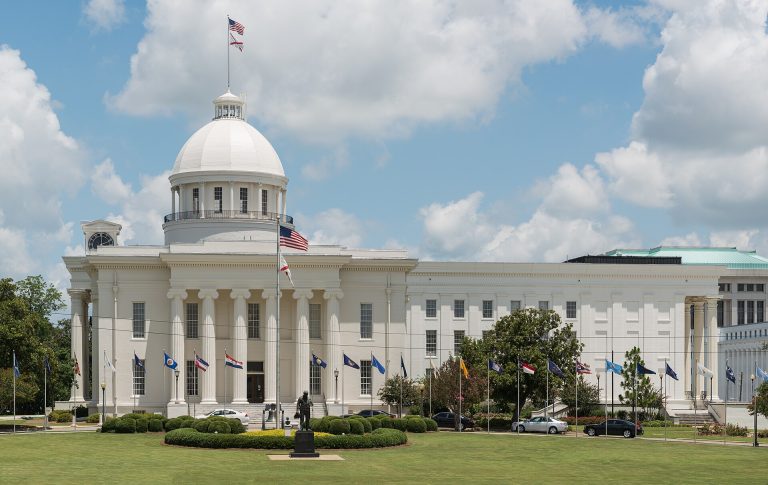
In a bold legislative move, the Alabama Legislature has passed special-election bills that could dramatically reshape the state’s primary election landscape. This decision, made during an urgent session on May 6, comes amid a backdrop of protests and a dramatic evacuation due to flooding at the Statehouse. The new laws empower Governor Kay Ivey to reset key 2026 primaries if the U.S. Supreme Court overturns Alabama’s current court-drawn maps before the May 19 election.

House Bill 1, a focal point of this legislative push, allows for new special primary elections in the 1st, 2nd, and 7th congressional districts. It also grants the governor the authority to invalidate the results of the May 19 primary if a Supreme Court decision alters district boundaries post-election. This legislation underscores a shift from abstract legal planning to concrete electoral adjustments, as Alabama Republicans and civil-rights groups clash over the state’s congressional maps.

The urgency of this legislative action is underscored by the legal battle involving Alabama Republicans and civil-rights groups. The conflict intensified after a Supreme Court action in the Louisiana v. Callais case, prompting Alabama Attorney General Steve Marshall to file emergency motions. These motions aim to vacate lower-court rulings against the state’s 2023 congressional maps, seeking reconsideration and potential redrawing of district lines.

Governor Ivey’s decision to call a special session on May 1 set the stage for this legislative maneuver. Lawmakers convened on May 4, determined to prepare for potential court-ordered map changes before the 2026 election cycle advances. The urgency was palpable as legislators navigated through flooding and evacuation challenges to pass the bills.

Critics, including the Alabama NAACP and the League of Women Voters, argue that the state aims to sidestep existing court orders and potentially undermine Black political representation. Protests erupted in Montgomery under the banner “Pull Up The People’s House,” highlighting concerns about the possible erasure of congressional seats held by African American Democrats.

The legislative scramble during the Statehouse session added to the drama. Lawmakers had to act swiftly amid flooding and a building evacuation, further underscoring the urgency surrounding the bills. The Alabama Reflector reported that the Senate rushed its measure through before members evacuated the premises.

Current reporting suggests that reverting to the 2023 map isn’t the only option for Alabama. Bills filed in the Senate could entirely redraw the maps, contingent on legal developments. Consequently, the legislation passed this week serves as both a backup plan and a strategic maneuver to regain district control after federal courts blocked earlier maps under the Voting Rights Act.

The timeline for these developments is tight. Governor Ivey issued the call on May 1, and by May 4, the session was underway with protests and committee debates unfolding. The Legislature passed the contingency bills on May 6, with the primary still set for May 19 according to the Alabama secretary of state’s calendar.

The next steps hinge on the Supreme Court’s actions. If the Court lifts the injunction or permits district changes before or shortly after May 19, Governor Ivey could initiate replacement primaries in affected districts. If not, the current election schedule proceeds, while Alabama’s redistricting issue continues through the judicial system.

Ivey then called the special session on Thursday, May 1, and lawmakers convened on Monday, May 4, specifically to prepare for possible court-ordered changes before the 2026 cycle fully unfolds. In a heated committee hearing on May 5, opponents warned the Legislature was moving as if binding federal rulings could simply be bypassed on short notice, and one recurring point of attack was that Alabama voters approved a 2022 constitutional amendment by roughly 80 percent that bars election-related legislation from taking effect within six months of a general election.

Alabama Attorney General Steve Marshall filed three emergency motions after that ruling, asking the Supreme Court to vacate lower-court rulings against Alabama’s 2023 congressional maps and send the case back for reconsideration. Current reporting says reverting to the 2023 map is not Alabama’s only option; bills have also been filed in the Senate that could redraw the maps entirely if the legal window opens.

Read more on Digital Chew

Hexham MP Joe Morris Pushes for Action on Community Divisions

Quick Summary: Hexham MP Joe Morris Pushes for Action on Community Divisions

  • Joe Morris became the first Labour MP for Hexham in nearly a century, winning by 3,713 votes in July 2024.
  • A recent parliamentary briefing highlighted worsening racism, anti-Muslim prejudice, and antisemitism in Hexham.
  • Ministers are urged to collaborate with local authorities to bridge community divisions and challenge hatred.
  • Social media and hate speech are significant contributors to community division, according to Westminster discussions.
  • Efforts are underway to promote unity and address these pressing issues in Hexham.

Joe Morris, the newly elected Labour MP for Hexham, is stepping into the spotlight with a mission to heal community divisions that have festered for too long. Winning his seat by a margin of 3,713 votes in July 2024, Morris is the first Labour representative for Hexham in nearly a century, and he’s not wasting any time addressing the pressing issues of racism, anti-Muslim prejudice, and antisemitism.

The House of Commons Library briefing last month painted a stark picture of the challenges facing Hexham. It highlighted a parliamentary question from November 5, 2025, which called for ministers to work closely with local authorities to bridge divisions and challenge hatred. The briefing underscored the worsening state of community relations, fueled by social media and hate speech.

While the Hexham Courant article remains elusive, the parliamentary records provide a clear context for Morris’s focus on community cohesion. The briefing warns of the deteriorating situation over the past two years, urging immediate action to foster unity and counteract divisive forces.

In an era where social media can amplify division, Morris’s efforts to promote unity are both timely and necessary. His leadership could set a precedent for how communities across the UK address similar issues.

A House of Commons Library briefing published last month cited a written parliamentary question on “Community Relations: Hexham” dated November 5, 2025, and said ministers have been working with local authorities and communities to “bridge division and challenge hatred,” while warning that racism, anti-Muslim prejudice and antisemitism have worsened in the past two years. I searched for the live item you named, but the key source, Hexham Courant, is currently blocked from direct access, and I could not verify enough fresh reporting from other reliable outlets to responsibly produce the dense, current, news-driven write-up you asked for.

Because of that, I’d risk inventing the central conflict, fresh timeline, and next steps if I wrote the full news analysis you requested. I also found recent parliamentary material showing that community cohesion, hate speech, and social-media-driven division are live issues in Westminster and have been explicitly tied to Hexham in parliamentary questions and briefing documents.

In short: I found confirmation of the MP’s identity and relevant parliamentary context, but the named article itself was inaccessible and the available web results were insufficient to verify the latest specific development, quotes, numbers, and timeline needed for a trustworthy answer. But I could not independently recover the actual Hexham Courant article text, any exact quote from Morris using the headline wording, or any genuinely current “past 7 days” development tied to that specific story from accessible primary or high-quality secondary reporting.

If you want, I can still help in one of two ways: I can write a clearly labeled “best available” summary based only on what is verifiable now, or you can paste the Hexham Courant text here and I’ll turn it into the sharp 5-to-8-paragraph news brief you asked for. That at least strongly suggests the article concerns Morris rather than his predecessor.

The UK Parliament’s constituency records list Morris as Hexham’s MP, and other indexed material identifies him as the first Labour MP for the seat in roughly a century.

Winning his seat by a margin of 3,713 votes in July 2024, Morris is the first Labour representative for Hexham in nearly a century, and he’s not wasting any time addressing the pressing issues of racism, anti-Muslim prejudice, and antisemitism. I searched for the live item you named, but the key source, Hexham Courant, is currently blocked from direct access, and I could not verify enough fresh reporting from other reliable outlets to responsibly produce the dense, current, news-driven write-up you asked for.

Read more on Digital Chew

ASEAN summit Southeast Asian Leaders Will Reaffirm Core Values in Veiled Mideast War Rebuke

0

Quick Summary: ASEAN summit Southeast Asian Leaders Will Reaffirm Core Values in Veiled Mideast War Rebuke

  • ASEAN plans a contingency framework to address energy shortages and economic fallout from the Middle East conflict.
  • Over 1 million Southeast Asian workers in the Middle East face safety concerns due to ongoing conflicts.
  • The summit’s draft declaration emphasizes international law and freedom of navigation, indirectly critiquing U.S., Israel, and Iran.
  • ASEAN aims to establish an emergency fuel-sharing arrangement and explore new energy options.
  • Internal ASEAN challenges, such as Myanmar’s civil war, complicate a unified response to external crises.

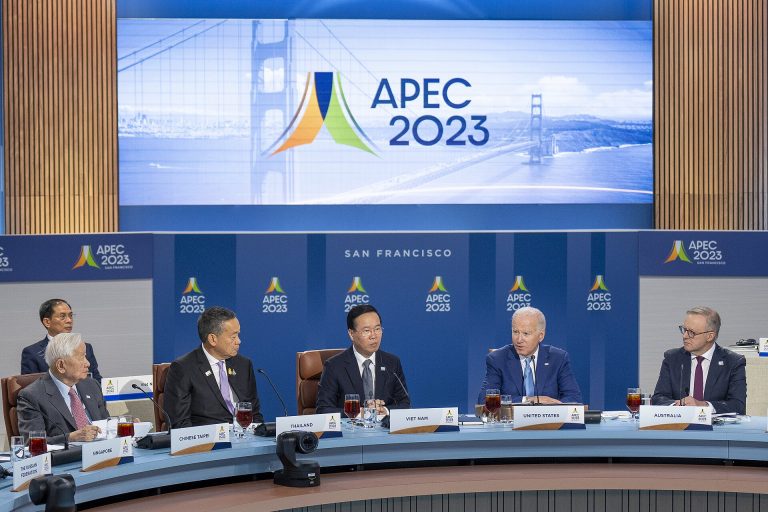
The ASEAN summit in Cebu is not just another diplomatic gathering; it’s a strategic response to the Middle East crisis that threatens energy security and regional stability. Hosted by Philippine President Ferdinand Marcos Jr., the summit aims to address the pressing issues of energy shortages and the safety of over a million Southeast Asian workers in conflict zones.

ASEAN is stepping up with a contingency framework to manage potential disruptions in energy and supply chains. This proactive approach marks a shift from mere expressions of concern to actionable strategies. The draft declaration, seen by the Associated Press, underscores the importance of international law and freedom of navigation, subtly critiquing the actions of the U.S., Israel, and Iran without naming them directly.

However, internal challenges within ASEAN, such as Myanmar’s ongoing civil war and tensions from the Thailand-Cambodia border conflict, threaten to undermine a cohesive response. Despite these hurdles, ASEAN is pushing forward with plans for an emergency fuel-sharing arrangement and exploring alternative energy sources like electric vehicles and civilian nuclear power.

The summit’s timing is crucial, with a scaled-back program reflecting the urgency of the situation. As ASEAN leaders convene, the world watches to see if diplomatic language can translate into effective crisis management. The stakes are high, and the outcomes could redefine ASEAN’s role in global geopolitics.

Marcos said the summit will focus on energy security, food supply and the safety of Southeast Asians in the Middle East, including more than 1 million regional workers and seafarers there. On March 27, Marcos said the May summit would be cut back to a “bare-bones” program because of the Middle East crisis.

The strongest new development in the latest reporting is that ASEAN is not just issuing another expression of concern: according to a draft declaration seen by the AP and echoed in The Washington Post’s report published May 6, the 10-member bloc plans a contingency framework aimed at handling energy shortages, supply disruptions and broader economic fallout tied to the Middle East war. Reuters reported on May 7 that the Middle East crisis is threatening to dominate meetings that also have to deal with Myanmar’s five-year civil war, unresolved tensions after last year’s deadly Thailand-Cambodia border fighting, and long-running South China Sea disputes with Beijing.

On May 7, ASEAN foreign ministers gathered in Cebu ahead of the leaders’ meeting, while Reuters also reported that Thai and Cambodian leaders were expected to hold rare side talks under Marcos’s oversight as their uneasy ceasefire holds. Cambodian envoy Kung Phoak put the dilemma bluntly ahead of the summit, saying, “ASEAN needs to put our house in order and sort things out as soon as possible,” a warning that internal divisions could weaken any energy response.

in Cebu on May 8, has been deliberately stripped of much of its usual ceremony because the crisis has become urgent enough to force the region into practical planning around fuel, food and migrant-worker protection. The next key moment is Friday’s leaders’ summit in Cebu, when the declaration is expected to be issued and when officials will be watched for whether they formally advance the oil-sharing pact, spell out evacuation and protection measures for overseas workers, and show whether ASEAN can turn guarded diplomatic language into actual crisis management.

The summit, hosted by Philippine President Ferdinand Marcos Jr. What makes the story consequential now is the scale of vulnerability ASEAN leaders say they are confronting.

Read more on Digital Chew