55.9 F
San Francisco
Thursday, June 25, 2026
Home Blog Page 1252

Legal Tussle Unfolds as Missouri AG Sues Starbucks Over Alleged Hiring Bias

0

Key Takeaways:

– Missouri Attorney General (AG) is requesting additional funding despite unspent amounts in previous years.
– The AG has sued Starbucks for alleged discrimination against white job applicants.
– Starbucks firmly denies the allegations and asserts its commitment to inclusive hiring.
– The attorney’s office has a track record of unutilized personnel positions over the years.

The Issue of Funding

In fresh developments in the Missouri House Budget Committee, Attorney General Andrew Bailey has had to justify his appeal for millions in additional funding. This request has raised the eyebrows of committee members, given that Bailey’s office has not exhausted all funds allocated in prior years.

Defending his stance, Bailey articulated his desire to employ seasoned lawyers who could tackle intricate cases and guide newly minted attorneys. Despite leaving $2 million from previous years’ budget untouched, Bailey believes new monies are essential to fulfill these goals. However, John Voss, a committee member, thinks the real problem lies elsewhere and not with funding.

The Starbucks Controversy

Apart from the budget brouhaha, the Attorney General found himself explaining his lawsuit against coffee giant, Starbucks. Bailey alleges that Starbucks has been discriminating against white applicants in its hiring and promotion activities. The claim, brought to the federal court on Tuesday, accuses the coffee company of unlawfully tying hiring decisions and executive incentives to female and minority quotas.

According to the lawsuit, as of 2020, women constituted 69% of Starbucks’ workforce in the United States, while minorities made up 47%. As of September, these percentages had further increased to 70.9% and 52.2% respectively — indicating a demographic shift towards a predominantly female and minority workforce. Bailey deems this as proof of Starbucks’ active involvement in systemic race and sex discrimination.

Combatting this alleged favoritism is Bailey’s primary rationale behind the lawsuit. Bailey is of the opinion that all individuals should have an equal opportunity to employment, and hiring decisions should be merit-based. He believes that consumers have to foot the bill for Starbucks’ discriminatory hiring practices through higher prices.

However, Starbucks vehemently dismisses the allegations, insisting that its workforce programs and hiring procedures are open, fair, and legal. The company stresses its commitment to creating opportunities for all its partners.

Labour Shortage in the Attorney General’s Office

Budget and Starbucks aside, the Attorney General’s office is grappling with a labor shortage. Over the past eight years, more than 32% of positions in the office have remained vacant. The present fiscal year saw Bailey’s office appropriated $44.7 million, with him asking for an increase to $47.4 million for the following year, starting July 1. However, budget documents reveal a mere $28.2 million spent out of the $43 million earmarked for the office in fiscal 2024.

To tackle this ongoing personnel issue, Bailey intends to use the requested increase in funds to attract experienced attorneys who can mentor the greenhorns. His aim is to address the dearth of experienced lawyers in the team and reduce turnover. However, Bailey clarified, his request does not include additional personnel vacancies.

Meanwhile, critics are unconvinced of the necessity of the additional funding. Some believe Bailey already has sufficient resources at his disposal and are skeptical of the justification behind the request.

As Bailey finds himself embroiled in a whirlwind of budgetary criticism and legal battles, the public awaits the outcomes of these events — a verdict on the Starbucks lawsuit and clarity on the controversial funding request. Only time will tell if the attorney general can maneuver himself through these issues to a successful resolution.

Understanding Ramesh ‘Sunny’ Balwani: The Man Behind Theranos

Key Takeways:

– Sunny Balwani co-founded Theranos with Elizabeth Holmes, who was convicted of fraud and conspiracy.
– Though Holmes’ arrest made headlines, Balwani remained largely inconspicuous.
– Born in Pakistan to a Hindu family, Balwani pursued computer science in the U.S, and was involved with Microsoft and a startup, CommerceBid.
– He later joined Theranos as Chief Operating Officer but was also indicted for fraud.
– Despite Holmes’ accusations of abuse, Balwani maintains that he never committed fraud and didn’t profit from his tenure at Theranos.

The Spotlight on Elizabeth Holmes and Sunny Balwani

Elizabeth Holmes, the infamous former CEO of Theranos, is currently doing a reduced 9-year prison sentence. Convicted of fraud and conspiracy in November 2022, she used to be the public face of the scandalous blood-testing tech startup. The Hulu miniseries “The Dropout,” provides an insight into her journey to imprisonment. Interestingly, Holmes’ partner in Theranos, Ramesh “Sunny” Balwani, stayed broadly out of the public eye despite being a co-founder.

So, the question arises – who exactly is Sunny Balwani, and what is his role in the infamous saga of Theranos?

Sunny Balwani: An Insight into The Co-Founder of Theranos

Born in Pakistan to a Hindu family, Balwani moved to India due to religious tensions in his homeland. His academic journey led him to the United States, where he embraced his new life wholeheartedly. After securing a degree in computer science from the University of Texas, Balwani began his professional journey at Microsoft.

Before becoming chief operating officer at Theranos, Balwani was already a seasoned tech veteran. Spending his early days as a Northern California sales manager for Microsoft, he swiftly moved to be part of the emerging dot-com era by joining CommercBid.com, a startup that thrived by driving down supplier costs.

His Career Transition to Theranos

After Commerce One acquired CommerceBid for $225 million, Balwani profited with a whopping $40 million. Later, he joined Theranos as the Chief Operating Officer. Here, he worked alongside Elizabeth Holmes, banking on the promise that their machines could perform comprehensive blood tests with merely a few drops from a finger prick.

However, their pioneering medical venture didn’t stay the golden egg for long. In June 2018, both Holmes and Balwani faced legal backlash as they were indicted on federal wire fraud charges. This shockwave related to their involvement in a multi-million dollar scheme to defraud investors led to a crumble in their professional journey at Theranos.

Balwani’s Legal Struggles and Defense

Despite the waves of legal controversies, Balwani pled not guilty to the charges. His attorney, Jeff Coopersmith, ardently argues that Balwani gained no financial rewards during his tenure at Theranos and lost millions from his personal wealth.

Elizabeth Holmes’s Allegations Against Balwani

In a surprising twist, Holmes, during her trial, leveled some grave allegations against Balwani. She claimed that Balwani sexually assaulted her and was domineering during their relationship. However, Balwani has categorically denied these accusations, muddying the waters of an already complex scenario.

Looking Beyond the Controversies

When not under legal heat, Balwani led a rather artistic life. He was married to Japanese artist Keiko Fujimoto until their divorce in 2002. Despite the whirlwind of scandals and controversies, Sunny Balwani’s journey from a computer science graduate to co-founding one of the most infamous startups in Silicon Valley is undeniably fascinating.

As we follow the developments in the Theranos case, we understand better the complexities and intricacies of startups in the tech world. It’s not just about innovative ideas but also the importance of transparency, credibility, and ethics in business practices. In the end, sunny or not, Balwani’s story serves as a stark reminder of entrepreneur morality in the ruthless world of startups.

Barclays Announces 2024 Pre-tax Profit Surge and £1 Billion Share Buyback

0

Key takeaways:

– Barclays registers a 24% rise in full-year pre-tax profit at £8.108 billion in 2024, narrowly exceeding analyst expectations.
– The banking giant reports 24% increase in net profit attributable to shareholders, reaching £5.316 billion in 2024.
– Despite falling slightly below analyst expectations, Barclays’ Q4 2024 attributable profit stands at £965 million.
– Total income for the quarter ending December 2024 is at £6.96 billion, with Barclays’ core units recording significant year-on-year increases.
– Barclays is pushing forward a strategic overhaul aimed at cutting costs, improving shareholder returns, and targeting more profitable sectors.
– It’s benefiting from HSBC’s decision to exit certain markets and the acquisition of Tesco’s retail banking business.
– The bank is recovering from a major, albeit resolved, three-day technical disruption.

Booming Profits and Q4 Snapshot

Barclays, a leading British bank, reported a significant boost in its full-year pre-tax profit for 2024 on Thursday, barely exceeding the analyst forecast of £8.081 billion by hitting the £8.108 billion mark, representing a 24% spike. Furthermore, the full-year net profit attributable to shareholders mirrored the same growth rate, reaching £5.316 billion. Despite filing slightly below analyst expectations, the bank’s fourth-quarter attributable profit stood at £965 million.

Total earnings for the final quarter of 2024 stood at an impressive £6.96 billion, comfortably surpassing the £5.6 billion of Q4 2023. Barclays’ core investment and retail divisions notably contributed to the income surge, recording year-on-year jumps of 28% and 46% to £2.61 billion and £2.62 billion, respectively.

Strategic Overhaul and Share Buyback

Barclays is currently working on a comprehensive strategic shift aiming to slash costs by £2 billion by 2026, increase shareholder returns, and stabilize financial returns. This strategic shift is predominantly focused on enhancing profitability in consumer and lending operations. As part of this move, Barclays has absorbed the retail banking business from British grocer Tesco’s adding to the strength of its already solid banking unit.

Simultaneously, the bank has announced the launch of a sizeable £1 billion ($1.25 billion) share buyback scheme. The buyback initiative is set to provide shareholders a considerable return on their investments and also signals the bank’s steady growth and strong position in the market.

Heightened Domestic Market Position

With global banking corporation HSBC announcing plans last month to leave its M&A and equity capital markets businesses in Europe, the U.K., and the U.S., Barclays stands to gain in the domestic market space. HSBC’s retreat comes as part of a larger restructuring of its investment banking operations, opening opportunities for Barclays to capture a more significant market share.

Recovery from Technical Interruptions

Furthermore, Barclays is bouncing back from a major three-day technology outage that disrupted payments and transactions at the tail end of last month. The outage has since been rectified, allowing the bank to restore its comprehensive range of services and resume normal operations. The swift recovery has not only regained customer confidence but also minimized any potential financial loss that might have occurred.

Wrapping Up

Barclays’ robust performance, along with its strategic shift towards profitable sectors and the determined recovery from the technology glitch, underlines the financial institution’s strength and adaptability in the immensely competitive banking sector. The planned share buyback should prove rewarding for shareholders, reinforcing confidence in the bank’s growth strategy and promising future. As the bank continues to innovate and evolve, it is set to achieve higher financial milestones in the years to come.

Solana (SOL) Prepares for Upswing, Aims for $200 Resistance Zone

Key Takeaways:
– Solana (SOL) starts a fresh decline from $210 zone.
– Current consolidation paves the way for a fresh move above the $200 resistance.
– The price now trades below $200 and 100-hourly simple moving average.
– Major resistance levels are set at $200 and $202; support pivots at $194 and $188.
– A successful climb above $202 could launch a steady increase toward the $210 level.

Solana Faces Resistance, Forges Decline Path

In a fresh twist, Solana (SOL) charted a new decline below the $205 and $200 benchmark levels against the US Dollar. Much like Bitcoin and Ethereum, Solana had a tough time clearing the $210 resistance, consequently taking a tumble below the $202 and $200 support metrics. The price deep-dived below the $192 level, creating a new low at $188.

Solana Initiates Recovery Wave

Post the fresh low at $188, Solana indicated a surge, initiating a recovery wave. The upswing saw the price moving past the $190 and $192 territories, and clearing the 23.6% Fibonacci retracement level of the downward stride from the $209 swing high to the $188 swing low.

However, Solana faced active resistance from the bears below the $200 level, defending the 50% Fib retracement level of the downward streak from the $209 high to the $188 low.

Above $200, Aiming for Fresh Highs

Now, Solana is processing above the $200 line and the 100-hourly simple moving average. On the path to recovery, it faces an uphill battle with a resistance barricade near the $198 mark. Moreover, a bearish trend line is forming with resistance at $198 on the hourly SOL/USD chart.

Aside from this, another major resistant hurdle is around the $200 level. If Solana manages to successfully close above the significant $202 mark, it could prepare the ground for another consistent uptick. The consequent significant resistance after that can be found at the $210 level. More gains might propel the price towards the $220 region.

TRSL: A Second Decrease for Solana?

In case Solana fails to ascend above the $200 resistance, it may be gearing up for another fall. Initial downside support is situated near the $194 scale. Digging deeper, strong support locates near the $188 territory.

A downward break below $188 may push the price towards the $180 zone, and a close below $180 might ignite a descent towards the $175 support in the immediate term.

Technical Indicators Overview

On the technical front, the MACD for SOL/USD is accelerating in the bullish zone. The RSI (Relative Strength Index) for SOL/USD nests above the 50 level – another promising indicator. For the coming days, traders should closely watch the major resistance levels of $200 and $202, alongside the major support levels placed at $194 and $188.

In conclusion, Solana’s price performance hinges on whether the bulls manage to clear the $200 resistance zone. If successful, traders can anticipate a renewed rise, whereas further declines shouldn’t be ruled out should the bulls fail to mount the $200 resistance.

Revival of Whitehouse Tours: A Push for Greater Transparency

0

Key Takeaways:

– The White House has resumed its tour operations.
– The latest move is perceived as an effort to increase transparency.
– Prior administration had suspended White House tours.

Introduction

Remember visiting the White House on a school field trip? The excitement, the thrill of walking through hallways steeped in history with portraits of past presidents eyeing you? Well, we have some exciting news! After a hiatus, the tours of the White House are kicking back into gear.

Resumption of the Historical Tour

Yes, you heard it right! The White House, the symbol of American power and history is once again open for public tours. The previous administration had stopped these tours for reasons best known to them. But, now that they’re starting up again, it’s time to queue up, folks! You might just get to see the president’s desk.

A Boost for Transparency

Many argue that this move has more significant implications that go beyond the tours. By reopening the doors to the public, this administration is demonstrating a push towards more transparency. It’s a departure from the previous administration’s practices and a clear message that the current incumbents are keen to let Americans get an inside look at their government.

The Reaction from the Public

And the people agree about this! The Twitterverse comes alive every time an American tweets about how this administration is different. You would often find tweets lauding this fresh approach, even tagging it as #AmericaIsBack and signalling a positive change.

What does it mean to you?

You might wonder why all this fuss about a tour starting up again. But think about it. By being allowed to tour the White House, you get an intimate peek into the inner workings of your government. In every room you enter, each piece of history you witness reminds you of how this nation has evolved. We’re talking about a better understanding of the nation we witness today.

It’s More than Just a Tour

It’s worth pointing out again; this is more than just a tour. It brings us closer to our roots, our history. It shows us the path we’ve taken and how far we’ve come. So it isn’t just about the excitement of walking through some historic building; it’s about knowing where we came from and where we are now.

The Importance of Transparency Today

This administration’s actions, especially in reopening White House tours, underscore a pivotal reality. Transparency in governance has never been more crucial. In an era where ‘fake news’ can spread like wildfire, openness from the leadership can restore trust and boost public faith in the government.

Conclusion

So pack your bags, put on your walking shoes, and get ready to step into a piece of living history! Whether you’re a history buff, a curious explorer, or just someone who loves a sneak peek into impressive architecture, the renewed White House tours are your golden ticket. Let’s embrace the spirit of openness and look forward to a more transparent governance. Cheers to a return to good old-fashioned tours!

Mystery of Ancient Herculaneum Scrolls Decoded with New Technology

Key Takeaways:

– The ancient Herculaneum scrolls, charred by the A.D. 79 Vesuvius eruption, have been digitally unfurled and deciphered for the first time.
– The breakthrough was attained at Diamond Light Source research facility with a synchrotron beam that can scrutinize further without damaging the delicate relic.
– A part of the Vesuvius Challenge, this advancement marks a significant contribution to the prize-fuelled competition.
– Relating to Greek Epicurean philosophy, the scroll holds more recoverable text than any previous Herculaneum scroll.

Unmasking the Ancient Secrets of Herculaneum Scrolls

Inscribed with stories from the ancient world, the Herculaneum scrolls have remained an enticing mystery, to date. The untold tales, buried in the dense eruption of Mount Vesuvius in A.D. 79, have been finally unraveled, thanks to advanced technology and perseverance.

Found in the mid-18th century within an opulent villa in the Roman town of Herculaneum, these papyrus rolls had turned to crisp due to the mammoth volcanic eruption. Attempts to elucidate the mysteries these carts held have remained erudite aspirations, with success only achieved recently.

Deciphering Scrolls: A Quest Spanning Centuries

Over the past centuries, storied attempts were made to decipher the scrolls using everything from rose water and mercury to vegetable gas and papyrus juice. A few successfully opened scrolls revealed their content as philosophical texts written in ancient Greek. However, most of the charred scrolls evaded the unsophisticated techniques, thereby preserving their cryptic silence.

Robust research efforts in recent times have managed to unearth some words via modern techniques such as artificial intelligence, X-ray, and CT scans. These technological innovations were pivotal in distinguishing the writing ink from the charred papyrus it was imprinted upon.

A Novel Breakthrough: Understanding the Charred Manuscripts

On Wednesday, this relentless pursuit bore fruit, as scientists announced a major breakthrough in their endeavor. The teams successfully managed to digitally unroll and start reading one of the archaic scrolls. The scroll in question, known as PHerc. 172, is one of three stored at the University of Oxford’s Bodleian Libraries in England.

As part of the Vesuvius Challenge, a team virtually unwrapped the papyrus revealing columns of text. Oxford scholars have already embarked on a journey to decipher the mysteries held within. The texts within the ancient scrolls could significantly broaden our understanding of ancient thought and culture.

Harnessing Advanced Technology for Manuscript Preservation

The breakthrough involved the use of a massive machine, the synchrotron, at the Diamond Light Source research facility. The facility, stationed in Oxfordshire, leveraged the machine to generate a potent X-ray beam. This beam was successful in peering into the fragile relic without causing any further damage.

In 2020, Vesuvius Challenge announced that three young students had clinched its grand prize for their innovative use of AI that helped read approximately 5% of another ancient Herculaneum scroll. The delicate manuscript was found to contain writings on Greek Epicurean philosophy.

The scroll recently deciphered by the team at Oxford is believed to elaborate on the same subject. This remarkable achievement is not just a technological marvel but also renews our connection with those who lived centuries ago. This advancement marks the beginning of a novel chapter in our understanding of our ancient world.

Democrats Ready to Co-operate with GOP on Tax Cuts Extension

0

Key Takeaways:

– A group of eleven moderate Senate Democrats are prepared to collaborate with Republicans on the issue of GOP’s expiring tax cuts and lifting the debt ceiling.
– This comes after the Democrats offered a cooperative hand and promised to work without the reconciliation process.
– Promises of delivering enough votes to break up filibusters were also made in the hope to move towards a more cooperative political climate.

Democratic Cohesion over Tax Cuts and Debt Ceiling

There’s some fascinating political maneuvering going on within the Senate. Eleven moderate Democrats are stating their intentions to team up with their Republican counterparts. The collaborative effort between the two parties aims to tackle two significant issues: the expiring tax cuts from the Republican regime and the surge of the debt ceiling.

Global Understanding of Tax Cuts and Debt Ceiling

In simpler terms, tax cuts mean reducing the amount that citizens have to pay in taxes. The government lowers tax rates, leading to taxpayers keeping more of their income. As for the debt ceiling, it’s a cap set by Congress on the amount of debt the federal government can legally owe.

Decoding the Bipartisan Effort

So, what does this recent change in tune from the Democrats imply their willingness to work together in the Senate? It’s a signal that they’re willing to put aside party lines to negotiate a mutual agreement on critical economic policies. The dozen Democrats pledged to join forces with Republicans, promising to provide an ample number of votes to break filibusters. This can be seen as an olive branch extended towards a more bipartisan political environment.

Navigating Without Reconciliation

One notable aspect of this political alliance is that Democrats are ready to interact without the reconciliation process. In easy terms, reconciliation is a method in Congress that allows for expedited approval of certain tax, spending, and debt limit legislation. By bypassing this process, Democrats show a cooperative spirit, making proceedings simpler and more effective.

Implications of a Bipartisan Approach

This shift from Democrats can also reflect the party’s practical stance towards resolving important fiscal issues. Instead of digging in their heels and battling along party lines, these moderate Democrats express a desire to collaborate for the overall good of the nation’s economy. This could very well contribute to smoother operations in Senate chambers, ultimately benefitting the American public.

Moreover, this collaboration might even aid in shutting down needless filibusters. Filibusters are a tactic used in the Senate to delay or altogether prevent a decision from being made. Sovietimes, they’re used by political parties to delay proceedings by extending debate. By promising enough votes to break filibusters, the Democrats are ushering the Senate towards a more productive environment.

However, it’s crucial to remember that these are pledges at the end of the day. As the political arena is known for its uncertain dynamic, it remains to be seen how this willingness to work with the Republicans will ultimately play out.

Final Thoughts

The actions of these moderate Senate Democrats represent a promising step towards bipartisan cooperation in the Senate. The implications of this newfound alliance could drastically alter the dynamics of how the Senate operates. With the focus on improving the financial situation, it’s indeed a decision worth praising. Time will only tell how successful this bipartisan collaboration will be. Nonetheless, it’s an exciting development that we should all keep an eye on as it unfolds.

Tulsi Gabbard’s Confirmation as Director of National Intelligence: A Closer Look

0

Key Takeaways:

– Tulsi Gabbard confirmed as the Director of National Intelligence under President Trump.
– The Senate voted in Gabbard’s favor by a narrow margin of 52-48.
– This move marks an important turn in the Trump administration’s intelligence community.

Let’s Unpack the News:

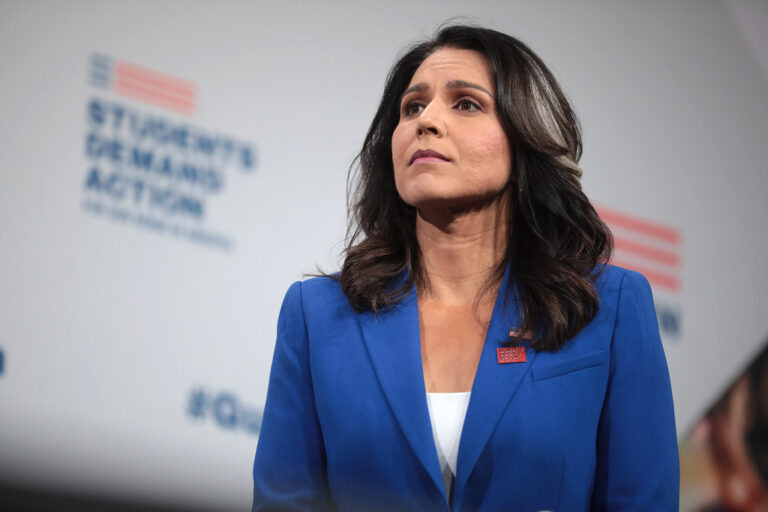
In a recent development, the US intelligence community is welcoming its newest member. Tulsi Gabbard, a former military officer and politician, is now stepping into a pivotal role as the Director of National Intelligence. The confirmation, resulted by a 52-48 vote, means she will now serve as President Trump’s principal advisor on national security matters.

A Nail-Biting Vote:

It was indeed a close call. The Senate, in a tight vote of 52-48, confirmed Gabbard’s nomination. It’s worth noting that the narrow gap mirrored the division within the Senate itself. Despite the political acrimony, the affirmation of Gabbard brings a fresh perspective to the critical intelligence post.

Who is Tulsi Gabbard?

Understanding the person who is about to occupy such a significant position in the nation’s security hierarchy is crucial. Gabbard hails from a background blending military service and political experience. With these attributes, she is well-equipped to navigate through the complexities of intelligence and national security affairs. She isn’t a stranger tothe limelight, having served notable roles in the past. Without a doubt, Gabbard’s rich career experience is expected to add weight to her new role.

What Does This Mean for the Trump Administration?

Gabbard’s confirmation is more than just a mere addition to President Trump’s intelligence team. Her appointment signifies a strategic move, contributing to a shift in the direction of national intelligence. Possibly, the administration might leverage Gabbard’s military experience and political acumen to achieve its goals.

An Evolution in National Intelligence:

For the uninitiated, the Director of National Intelligence (DNI) holds a vital place in the nation’s intelligence architecture. The person occupying this post plays a pivotal role in synthesizing information from myriad intelligence agencies. Ultimately, this intelligence informs the country’s security policies and strategic decisions. With Gabbard taking up the reins of DNI, the future trajectory of US intelligence is bound to see some evolutionary changes.

Conclusion:

In wrapping up, Gabbard’s confirmation takes the Trump administration’s intelligence community in a new direction. As citizens, it behooves us to stay informed about Gabbard’s role and the actions she takes in the capacity of the Director of National Intelligence. This landmark event underlines the primary objective of this post: bringing the nuanced world of national intelligence closer to our understanding. In the days ahead, it would be interesting to witness the impact Gabbard’s leadership will have on the course of our national security.

US Could Survive Without Crude Oil and Lumber Imports, Experts Say

0

Key Takeaways:

– President Trump recently considered imposing tariffs on Canada and Mexico.
– His argument is based on the belief that U.S. doesn’t need Canadian and Mexican imports like crude oil and lumber.
– Specialists indicate the U.S. could theoretically meet local demand using only domestic resources.
– However, the cost and time involved in transitioning would be significant.

Diverting From Imports: A Theoretical Possibility

In a recent turn of events, President Donald Trump called into question the necessity of imports of crude oil and lumber from our neighboring countries, Canada and Mexico. He went so far as to ponder over the feasibility of imposing new tariffs on these goods. But, is it that simple?

Experts say that from a theoretical viewpoint, if the U.S. puts a stop on importing crude oil and lumber from Canada and Mexico, it could still meet our domestic demand. This would be achievable utilizing only the abundant natural resources available within the U.S. territories. However, things don’t look so straightforward when we delve deeper into the matter.

Challenges in the Transition

Though the prospect of becoming fully self-dependent seems appealing, it’s not a cake walk. As per the experts, while we have the required resources, transitioning from imports to complete reliance on domestic resources is a massive task. The process involves time, cost, and extensive planning.

The economic impact on sectors dependent on these resources has to be carefully analyzed. The costs of extraction and shipping of these resources across the U.S. might end inducing a ripple effect, hiking up the prices of goods linked to these industries, impacting the average consumer.

Also, the sudden stoppage of imports from Canada and Mexico could cause tension from a diplomatic standpoint. It’s essential to remember that international trade isn’t just about goods and services. It’s also about nurturing diplomatic relations between countries.

A Closer Look

Let’s take crude oil for example. The U.S. has been one of the largest importers of this resource. Though we have considerable fossil fuel reserves in our own backyard, those reserves aren’t limitless. The extraction process is equally intensive.

Likewise, lumber – especially of the high-quality variety which is primarily imported from Canadian private and public forests – plays a significant role in our daily lives. From making paper to building houses, our reliance on lumber is intrinsic. Sure, we have our forests. But a sudden shift in sourcing wood domestically might skyrocket the prices.

Conclusion: Making an Informed Decision

With all these complexities in mind, we see it’s not just about the availability of resources. It’s also about the economic implications that come with the change in sourcing strategies. Decisions like these must be made after thorough analysis and discussion.

As it stands, the idea of the U.S. surviving without crude oil and lumber imports from Canada and Mexico remains just a theory. Though experts suggest it’s possible, the reality is more complex, more expensive, and likely more time-consuming than a mere decision to impose tariffs.

As consumers, we can only hope that all factors are taken into consideration while making such impactful decisions. One wrong move could create waves that might disturb the balance of our economic ecosystems. Only time will tell how this situation evolves. However, one thing is certain – the discussion around dependence on imports has just started and will undoubtedly continue.

US Inflation Hits Highest Mark Since June 2024: An In-Depth Look

0

Key Takeaways:

– US inflation rises for four straight months.
– January records highest inflation level since June 2024.
– Inflation surge is driven by higher shelter, energy and food costs.
– Annual inflation rate rose to 3% in January, higher than December’s 2.9% figure.

Understanding the US Inflation Surge

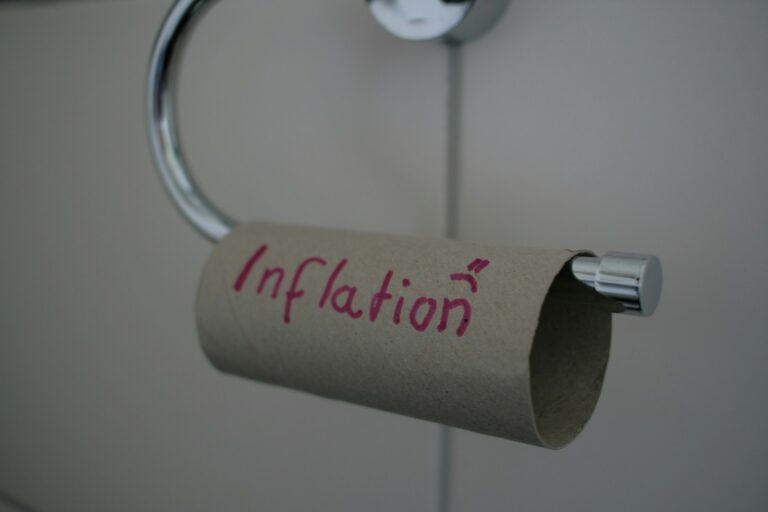
In recent news, the U.S. has recorded a drastic rise in inflation for four consistent months. This hasn’t happened since June 2024, marking a significant economic development. What is driving this spike? It’s a combination of several factors, including shelter expenses, energy prices, and the climbing cost of food.

What’s Behind This Rise?

When comparing January’s inflation rate to that of the previous month, we witness a jump from 2.9% in December to 3% in January. The sudden escalation can be attributed mainly to increased costs of living. Shelter costs have seen a notable increase, putting added financial stress on American households.

Additionally, energy prices have not taken it easy on consumers either. The consistent energy price increment over the last four months forms a significant chunk of the inflation situation. Moreover, the cost of food, both prepared meals and ingredients for home cooking, has gone up, burdening the average consumer’s budget further.

Inflation Forecast Versus Reality

Contrary to projections, inflation numbers have proved to be more elevated. Economic pundits predicted a flat reading of December’s 2.9% inflation rate. However, this prediction fell short as inflation rose to 3% sagging the economy into a deeper crisis.

Implications of Rising Inflation

Inflation impacts every aspect of the economy, but for ordinary citizens, it hits the pocketbook the hardest. Higher inflation translates into an increased cost of living, making consumers less capable of affording life’s essentials like housing, food, and energy.

If these price hikes persist, consumers might cut on discretionary spending, including travel and luxury purchases. It could ultimately lead to a slowdown in economic activity, creating a domino effect across all sectors.

Mitigating the Inflation Upsurge

Addressing inflation is not straightforward. It requires a collective response from government bodies and smart financial planning at a household level. Strategies like adjusting interest rates, investing in value-driven sectors, and wise budgeting could be effective lines of defense against inflation.

Looking Towards the Future

Despite the alarm bells, it’s crucial to remember that inflation is a normal part of any growing economy. While the current uptick in U.S. inflation presents some difficulties, it also offers opportunities for growth and adaptation.

For consumers, it may be a good reminder to review and adjust budgeting habits. For businesses, this could be a chance to innovate and maximize efficiency. Therefore, understanding and adapting to inflation trends is key to surviving in this ever-changing economic landscape.

Therefore, it’s not all bad news. Even as inflation peaks, the American economy has historically demonstrated its resilience and capacity to adapt. Stay informed, make smart financial moves, and remember that economies are cyclical – just as trends rise, they can also fall.