
Source: Read original
Snippet:
RCP Podcast: Dems' Bizarre Gambit in Nebraska, The Cure for 'National Shame' With Rachel Campos-Duffy Real Clear Politics
Note: This is a curated link with a short summary/snippet. Read the original for full details.
Source: Read original
Snippet:
RCP Podcast: Dems' Bizarre Gambit in Nebraska, The Cure for 'National Shame' With Rachel Campos-Duffy Real Clear Politics
Note: This is a curated link with a short summary/snippet. Read the original for full details.
Nebraska election is at the center of this developing story, and the following analysis explains what matters most right now.
Nebraska’s recent primary election has unfolded as a dramatic political maneuver, with Democrat Cindy Burbank winning the Democratic Senate nomination only to step aside for independent Dan Osborn. This strategic gamble aims to clear the path for Osborn to challenge Republican Sen. Pete Ricketts without a Democrat on the general-election ballot.
The intrigue deepens with accusations that William Forbes, another Democratic contender, was merely a spoiler candidate intended to split the anti-Ricketts vote. Nebraska Democrats have been vocal about this, with state Democratic chair Jane Kleeb asserting that Forbes was not genuinely running to serve Nebraskans. Forbes, however, defended his candidacy, claiming a commitment to Democratic values.
Osborn’s viability as a candidate is underscored by his near-success in the 2024 Senate race, where he lost by less than 7 percentage points but outperformed the national Democratic ticket. A poll even suggests Osborn leading Ricketts, though this has been contested by Ricketts’ camp. The political chess game in Nebraska is further complicated by legal battles, as Burbank’s promise to withdraw led to a temporary ballot removal, later reversed by the Nebraska Supreme Court.
As the November 2026 general election approaches, the stakes are high. The primary strategy reflects a broader effort to turn Nebraska’s deeply Republican landscape into a competitive Senate race. Whether this anti-spoiler strategy succeeds or backfires as a perceived manipulation remains to be seen, but it undeniably marks a pivotal moment in Nebraska politics.
Osborn lost Nebraska’s 2024 Senate race by less than 7 percentage points while outperforming the national Democratic ticket in the state, and Nebraska Public Media said he drew 47% against Republican Sen. Reuters reported that President Donald Trump carried Nebraska in 2024 by more than 20 points, yet Osborn is still seen by Democrats as a more viable statewide challenger than any candidate running explicitly as a Democrat.
Nebraska Public Media said he won his Republican primary with 78% of early-ballot votes and that the Associated Press called the race about 20 minutes after polls closed. On election night, Ricketts said he was “grateful” for supporters and was already looking toward November, while Osborn used the moment to argue his 2024 showing was no fluke, saying, “I think what that shows is viability.
Nebraska’s strangest 2026 primary produced its intended result this week: Democrat Cindy Burbank won Nebraska’s Democratic Senate nomination on May 12 and is still expected to quit the race so independent Dan Osborn can face Republican Sen. Nebraska Public Media reported that Burbank’s statement that she would drop out if she won caused Secretary of State Bob Evnen to briefly remove her from the ballot, before the Nebraska Supreme Court reinstated her.
CNN separately reported that the state Republican Party filed a complaint calling Burbank a “plant,” and that the secretary of state tried to block her as not a “good faith candidate” before the court reversed that move. ” That same day, Reuters folded the Senate outcome into a larger Nebraska election night in which Democrats were also fighting over the open Omaha-based 2nd Congressional District, where with about 89% of votes counted activist Denise Powell led state Sen.
What happens next is the part that now matters most: Burbank is expected to withdraw if Osborn secures his independent ballot access, clearing the field for a de facto one-on-one race between Osborn and Ricketts ahead of the November 3, 2026 general election. CNN’s reporting said Nebraska Democrats argued Forbes was “a plant who aimed to win the Democratic line to siphon votes away” from Osborn, while state Democratic chair Jane Kleeb said flatly in March, “William Forbes is not running to serve Nebraskans.
Burbank’s statement to drop out if she won led to her brief removal from the ballot by the Secretary of State, which was overturned by the Nebraska Supreme Court.
Democrat Cindy Burbank won Nebraska’s Democratic Senate nomination but is expected to quit the race to allow independent Dan Osborn to face Republican Sen.
The scale and speed of this development has caught many observers off guard. Each new update adds another dimension to a story that is still unfolding, and the full picture will only become clear as more verified details emerge from the people and institutions directly involved.
Analysts who have tracked this issue closely say the current moment represents a genuine turning point. The decisions made in the coming weeks are expected to set the direction for months ahead, with ripple effects likely to extend well beyond the immediate actors in the story.
For those directly affected, the practical impact is already visible. People navigating this fast-changing situation are dealing with real consequences while new information continues to reshape what is known and what remains open to interpretation.
Historical parallels offer some context, though experts caution against drawing too close a comparison. Similar situations have played out before, but the specific combination of pressures, personalities, and timing here makes this moment distinct in ways that matter for how it ultimately resolves.
The political and economic dimensions of this story are deeply intertwined. What appears as a single event on the surface is in practice the convergence of multiple pressures that have been building quietly over a longer period than most public reporting has captured.
Abu Dhabi is not just hosting another trade show; it is setting the stage for a global security revolution with ISNR 2026. This event is a bold statement of intent, aiming to position the UAE as a leading voice in global security dialogue.
With a staggering 28,000 square meters of exhibition space and participation from 37 countries, ISNR 2026 is more than just a showcase of defense technologies. It is a strategic move to foster international cooperation on security challenges, with a special focus on AI and emerging technologies.
This ambitious initiative is part of the UAE’s vision to establish itself as a central hub for security innovation and dialogue. The event’s structure, featuring a mix of state institutions and private sector partners, underscores its commitment to shaping future security frameworks.
ISNR 2026 is being organized by ADNEC Group, a Modon company, in association with the UAE Ministry of Interior and in strategic partnership with Abu Dhabi Police General Headquarters. Organizers say six new features are being launched this year, the 2026 edition will span eight security sectors, and the UAE Pavilion will be the largest national pavilion at the show.
The clearest new development in the latest reporting is that organizers are using ISNR 2026 to unveil a broader political and institutional push around “sustainable security,” not merely to showcase products. Small and medium-sized enterprises will make up 20% of exhibitors, suggesting the show is also being used to widen participation beyond major defense and security incumbents.
Abu Dhabi’s biggest-ever International Exhibition for National Security and Resilience is now being framed not just as a trade show but as the launchpad for a new UAE-led global security forum, with organizers saying the ninth edition of ISNR will open May 19-21, 2026 at ADNEC with record scale and a first-ever “Abu Dhabi Global Sustainable Security Summit” attached to it. ” The numbers are concrete: exhibition space has expanded to 28,000 square metres, up 17% from the previous edition; exhibitor count has risen 19% to 253 companies; participation spans 37 countries, a 6% increase, including nine countries attending for the first time; and national companies account for 60% of exhibitors, versus 40% international firms.
” That sequencing points to the central policy debate around the event: how far governments should lean on AI, data systems and new policing technologies while preserving legitimacy and public trust. On May 12, organizers publicized the inaugural summit and its three-day program; on May 13, they held the press conference detailing final preparations and record growth metrics; and on May 19 the exhibition and summit are scheduled to open under the patronage of Lieutenant General Sheikh Saif bin Zayed Al Nahyan, the UAE deputy prime minister and minister of the interior.
What makes this stand out from a routine expo announcement is the strategic add-on: the inaugural Abu Dhabi Global Sustainable Security Summit will run alongside ISNR from May 19 to 21. Rabdan Academy is the official academic partner, Tawazun Council for Defence Enablement is the strategic enablement partner, and the UAE Cyber Security Council is the cyber security partner.
ISNR 2026: Key Takeaways Quick Summary Abu Dhabi’s ISNR 2026 is set to be its largest-ever security event, launching a new global security forum.
The scale and speed of this development has caught many observers off guard. Each new update adds another dimension to a story that is still unfolding, and the full picture will only become clear as more verified details emerge from the people and institutions directly involved.
Analysts who have tracked this issue closely say the current moment represents a genuine turning point. The decisions made in the coming weeks are expected to set the direction for months ahead, with ripple effects likely to extend well beyond the immediate actors in the story.
For those directly affected, the practical impact is already visible. People navigating this fast-changing situation are dealing with real consequences while new information continues to reshape what is known and what remains open to interpretation.
Historical parallels offer some context, though experts caution against drawing too close a comparison. Similar situations have played out before, but the specific combination of pressures, personalities, and timing here makes this moment distinct in ways that matter for how it ultimately resolves.
The political and economic dimensions of this story are deeply intertwined. What appears as a single event on the surface is in practice the convergence of multiple pressures that have been building quietly over a longer period than most public reporting has captured.

Senate gunfire is at the center of this developing story, and the following analysis explains what matters most right now.
In a dramatic turn of events, gunfire inside the Philippine Senate has laid bare the deep political fractures within the country. This incident, centered around Senator Ronald dela Rosa, has sparked a wave of speculation and controversy.
After a night of chaos, Interior Secretary Jonvic Remulla assured the public that there was no warrant for dela Rosa’s arrest, despite the senator’s protective custody linked to an ICC case. The incident has raised questions about whether state agencies attempted an unsanctioned arrest.
The tension within the Senate is palpable, with Senate President Alan Peter Cayetano describing the situation as an alleged attack. This comes amid conflicting reports about the involvement of National Bureau of Investigation agents, adding to the confusion.
This episode is more than a mere political drama; it symbolizes a critical juncture in Philippine politics. As the dust settles, the country awaits clarity on whether this was a failed arrest attempt, a security lapse, or the beginning of a larger constitutional crisis.
The ICC warrant, first issued confidentially in November and unsealed on May 11, accuses dela Rosa of murder as a crime against humanity for the killings of “no less than 32 persons” between July 2016 and the end of April 2018, according to the court details reported by AP. As of early May 14, the most immediate next step is not an announced vote or hearing but a determination of responsibility for the Senate breach and whether authorities will renew any attempt to take dela Rosa into custody.
AP reported that on May 11, the same day the ICC warrant was unsealed, the House voted overwhelmingly to impeach Vice President Sara Duterte, while 13 of 24 senators backed a leadership change that ousted then–Senate President Vicente Sotto III and elevated Cayetano. On Wednesday, May 13, seven gunshots were reported inside the Senate complex in Pasay, according to GMA News, after the building was locked down and armed personnel moved in.
Senate Secretary-General Mark Llandro Mendoza said “perceived” National Bureau of Investigation agents entered through the adjacent GSIS building, while GMA later reported that armed men had attempted to enter before the shooting. on May 13, and the Armed Forces said the soldiers seen inside were Marine Security & Escort Group personnel called in by Senate security.
In live remarks from inside the besieged building, Senate President Alan Peter Cayetano said, “This is the Senate of the Philippines, we are allegedly under attack,” while later President Ferdinand Marcos Jr. ” That came amid widespread expectation that authorities might move on dela Rosa, a 64-year-old senator and former national police chief whose ICC warrant was unsealed on Monday, May 11.
Remulla said he was at the Senate to protect “the integrity of the Senate and the protection of all the senators,” not to arrest dela Rosa, while Senator Imee Marcos said a confidential NBI agent had been arrested after the incident and demanded explanations. Reuters and AP both tie dela Rosa directly to the anti-drug crackdown as Duterte’s chief police enforcer, making him one of the highest-profile Philippine officials yet threatened with transfer to The Hague.
The scale and speed of this development has caught many observers off guard. Each new update adds another dimension to a story that is still unfolding, and the full picture will only become clear as more verified details emerge from the people and institutions directly involved.
Analysts who have tracked this issue closely say the current moment represents a genuine turning point. The decisions made in the coming weeks are expected to set the direction for months ahead, with ripple effects likely to extend well beyond the immediate actors in the story.
For those directly affected, the practical impact is already visible. People navigating this fast-changing situation are dealing with real consequences while new information continues to reshape what is known and what remains open to interpretation.
Historical parallels offer some context, though experts caution against drawing too close a comparison. Similar situations have played out before, but the specific combination of pressures, personalities, and timing here makes this moment distinct in ways that matter for how it ultimately resolves.
The political and economic dimensions of this story are deeply intertwined. What appears as a single event on the surface is in practice the convergence of multiple pressures that have been building quietly over a longer period than most public reporting has captured.
White House is at the center of this developing story, and the following analysis explains what matters most right now.
The White House is at the center of a storm over its involvement in a Christian nationalist festival that critics argue blurs the line between church and state. Dubbed “Rededicate 250,” the event is set to take place on the National Mall, featuring military bands and Christian performers, and has been framed as a celebration of America’s Christian roots.
Critics, including The New Republic, argue that the event, funded by taxpayers, violates the First Amendment by embedding senior government officials in a religiously charged gathering. The Freedom From Religion Foundation has initiated a formal inquiry into the National Park Service’s role, seeking transparency on federal involvement.
High-profile figures like Defense Secretary Pete Hegseth and Secretary of State Marco Rubio are linked to the event, raising the stakes of this church-state debate. Proponents claim the festival is inclusive, yet reports suggest a predominantly Christian agenda, sparking concerns of state-backed sectarianism.
The event is part of the broader Freedom 250 initiative, which critics view as an attempt to fuse presidential power with Christian nationalism. This has led to a broader conversation about the separation of church and state, with potential legal challenges looming.
The New Republic reported the gathering is taxpayer-funded and “at odds with the First Amendment” because it places senior government officials inside an event built around explicitly Christian-nationalist claims. ” On May 13, The New Republic and other outlets elevated the story with fresh reporting on the event’s scope, ideology, and government participation.
The most concrete news from the past 48 hours is the scale and official imprimatur of the event. The Freedom From Religion Foundation published a public-records document dated within the last week seeking information about the National Park Service’s role in the May 17 event, signaling a formal effort to determine how much federal support, planning, or accommodation the government is providing.
The central controversy is whether the administration has crossed from religious outreach into state-backed sectarian politics. The main people involved are not obscure activists but top administration and Republican figures.
” That juxtaposition has sharpened the sense that the administration is using the anniversary to normalize previously unthinkable symbolic acts. The most striking twist is that the event sits inside the broader Freedom 250 project, which is already drawing attention for turning the 250th anniversary into a mash-up of patriotic spectacle and ideological branding.
Advocacy groups and critics quoted in related coverage are describing the festival as an “unprecedented and shocking mix of church and state,” while historians and religion scholars are warning that the underlying message collapses the distinction between a country with many Christians and a country defined by Christianity. The same Freedom 250 effort is also promoting other headline-grabbing events, including a future IndyCar race in Washington and even an MMA event on White House grounds, making “Rededicate 250” look less like a routine faith observance than part of a deliberate campaign to fuse presidential power, entertainment, and Christian-inflected nationalism.
Quick Summary The New Republic reported the gathering is taxpayer-funded and “at odds with the First Amendment” because it places senior government officials inside an event built around explicitly Christian-nationalist claims.
The scale and speed of this development has caught many observers off guard. Each new update adds another dimension to a story that is still unfolding, and the full picture will only become clear as more verified details emerge from the people and institutions directly involved.
For those directly affected, the practical impact is already visible. People navigating this fast-changing situation are dealing with real consequences while new information continues to reshape what is known and what remains open to interpretation.
Historical parallels offer some context, though experts caution against drawing too close a comparison. Similar situations have played out before, but the specific combination of pressures, personalities, and timing here makes this moment distinct in ways that matter for how it ultimately resolves.
The political and economic dimensions of this story are deeply intertwined. What appears as a single event on the surface is in practice the convergence of multiple pressures that have been building quietly over a longer period than most public reporting has captured.

Gunfire ringing out within the hallowed halls of the Philippine Senate is not just another day in the country’s tumultuous political landscape. This incident, involving shots fired as tensions mount over Senator Ronald dela Rosa’s potential arrest, has escalated into a dramatic standoff, spotlighting the fraught intersection of national sovereignty and international accountability.
Senator dela Rosa, a key figure in Duterte’s controversial drug war, is wanted by the International Criminal Court (ICC) for alleged crimes against humanity. The gunfire, described as warning shots, has turned the Senate into a pressure cooker, with President Ferdinand Marcos Jr. publicly denying government involvement and speculating about a possible ‘destabilization’ effort. This narrative adds a volatile dimension to an already charged atmosphere.
In a striking contradiction, the National Bureau of Investigation (NBI) claimed its agents were not involved, despite visible armed movements within the Senate. Senate President Alan Peter Cayetano’s declaration of support for dela Rosa underscores the political stakes, framing the situation as a defense against external interference.
The Supreme Court’s decision to delay action on dela Rosa’s arrest petition only adds to the uncertainty, leaving the Senate as both a refuge and a flashpoint. The government’s response within the next 72 hours will be pivotal, determining whether the Senate remains a sanctuary or if the ICC warrant will be executed.
AP reported that the ICC warrant, originally issued confidentially in November and unsealed this week, accuses him over the killings of “no less than 32 persons” between July 2016 and the end of April 2018. Senate President Alan Peter Cayetano, speaking on a livestream from inside the building, said, “We don’t know what’s happening, everyone is locked in their rooms now, we cannot go out.
Philstar reported that the Philippine Supreme Court did not immediately grant dela Rosa’s petition to block his arrest or transfer, and instead ordered government officials to comment within 72 hours, meaning there was no temporary restraining order in place on May 13. publicly denied any government role, the NBI said its agents had been ordered to “stand down,” and allies of dela Rosa openly vowed they would not hand him over.
” The target of the standoff is Senator Ronald dela Rosa, 64, a former national police chief and chief enforcer of Rodrigo Duterte’s drug war, who is wanted by the International Criminal Court on a charge of murder as a crime against humanity. The biggest new turn is that the gunfire inside the Philippine Senate did not lead to Ronald “Bato” dela Rosa’s capture, but instead deepened a live institutional standoff in which President Ferdinand Marcos Jr.
The key conflict is now bigger than one senator: it is a confrontation between Philippine sovereignty arguments and international accountability over Duterte-era killings, with the Senate itself acting as a shield. Philstar’s latest reporting said Marcos also raised the possibility that the gunfire could be part of a “destabilization” effort, which adds a new and volatile layer to the story because it hints the presidency sees the episode not just as a security breach but as a possible political operation.
At the same time, the National Bureau of Investigation’s director, Melvin Matibag, told ABS-CBN, “Walang baril ang mga tao ko. The same reporting also underscored that the Senate had been under heavy guard all day on May 13, with police lines outside and protesters gathering, some demanding dela Rosa’s arrest.
The scale and speed of this development has caught many observers off guard. Each new update adds another dimension to a story that is still unfolding, and the full picture will only become clear as more verified details emerge from the people and institutions directly involved.
Analysts who have tracked this issue closely say the current moment represents a genuine turning point. The decisions made in the coming weeks are expected to set the direction for months ahead, with ripple effects likely to extend well beyond the immediate actors in the story.
For those directly affected, the practical impact is already visible. People navigating this fast-changing situation are dealing with real consequences while new information continues to reshape what is known and what remains open to interpretation.
Historical parallels offer some context, though experts caution against drawing too close a comparison. Similar situations have played out before, but the specific combination of pressures, personalities, and timing here makes this moment distinct in ways that matter for how it ultimately resolves.
The political and economic dimensions of this story are deeply intertwined. What appears as a single event on the surface is in practice the convergence of multiple pressures that have been building quietly over a longer period than most public reporting has captured.
Keir Starmer’s leadership of the Labour Party is under intense scrutiny, with his approval ratings in free fall and significant losses in recent elections. The numbers are stark: 66% of Britons believe he should not lead Labour into the next general election, according to Ipsos. Even within his party, support is waning, as Greater Manchester Mayor Andy Burnham outshines him with much stronger approval ratings.
The political landscape is shifting, with Nigel Farage’s Reform UK making significant gains at Labour’s expense, capturing over 1,300 seats in local elections. This surge has exacerbated concerns about Starmer’s ability to lead, as Labour’s internal divisions become more pronounced. The question is no longer just about swing voters but about Starmer’s standing within his own coalition.
The backdrop to this crisis is a broader issue of respect. More in Common’s research reveals that only 19% of the public feels respected by the government, a sentiment that has defined the 2024 election narrative and contributed to Labour’s decline. Starmer’s managerial style and cautious approach are increasingly seen as liabilities rather than strengths.
Despite the mounting challenges, Starmer has chosen defiance over retreat, publicly refusing to resign. However, the conversation within Labour is shifting towards potential successors, with figures like Angela Rayner and Ed Miliband entering the discussion. The party’s future hangs in the balance as it grapples with its leadership crisis.
As Labour’s internal debate intensifies, the external threat from Farage and Reform UK continues to grow. The party’s ability to navigate these turbulent waters will determine whether Starmer can maintain his grip on leadership or if a new direction is inevitable. The coming weeks will be crucial in shaping Labour’s path forward.
The hardest number against him comes from Ipsos fieldwork conducted May 8-12, 2026, which found that 66% of Britons think Starmer should not lead Labour into the next general election; even among 2024 Labour voters, his net favourability was only +3, while Greater Manchester mayor Andy Burnham was far stronger at +41. More in Common’s research published May 6 added a potent explanation for the decline: only 19% of the public think the government “respects people like them,” while 73% say it respects them only a little or not at all.
AP reported on May 13 that Starmer was “fighting to remain in power” even as King Charles III delivered the government’s legislative agenda, an extraordinary juxtaposition that underlined how weak his authority has become. More in Common’s recent work argues Labour has failed the “respect” test that helped define the 2024 election, while The Guardian has reported concerns among Labour figures that Starmer cannot effectively confront either Farage on the right or a drifting progressive vote on the left.
On May 13, while the King’s Speech set out the government’s legislative program, AP said the question hanging over Westminster was “whether he will be around to implement it” and whether he still had enough authority to carry proposals through Parliament. Earlier YouGov polling had already shown the scale of the damage: in January 2026, just 18% of Britons viewed him favourably and 75% unfavourably, a net score of -57; by February he had recovered somewhat, but only to -47.
The Guardian also reported that a poll of more than 1,000 Labour members found most now think Starmer cannot revive the party’s fortunes. Ipsos said this week that his favourability is low enough that half of Britons think he should stand down as prime minister, and two in three say he should not lead Labour into the next election.
After the election losses, AP reported on May 8 that he insisted he would not resign, and the Guardian quoted him admitting “unnecessary mistakes” while rejecting demands to quit. More in Common’s final pre-election briefing for the May 7 contests put his net approval at -45.
More in Common’s research highlights only 19% feel the government respects them, a key factor in Labour’s struggles.
The scale and speed of this development has caught many observers off guard. Each new update adds another dimension to a story that is still unfolding, and the full picture will only become clear as more verified details emerge from the people and institutions directly involved.
Analysts who have tracked this issue closely say the current moment represents a genuine turning point. The decisions made in the coming weeks are expected to set the direction for months ahead, with ripple effects likely to extend well beyond the immediate actors in the story.
For those directly affected, the practical impact is already visible. People navigating this fast-changing situation are dealing with real consequences while new information continues to reshape what is known and what remains open to interpretation.
Historical parallels offer some context, though experts caution against drawing too close a comparison. Similar situations have played out before, but the specific combination of pressures, personalities, and timing here makes this moment distinct in ways that matter for how it ultimately resolves.
The political and economic dimensions of this story are deeply intertwined. What appears as a single event on the surface is in practice the convergence of multiple pressures that have been building quietly over a longer period than most public reporting has captured.
Source: Read original article
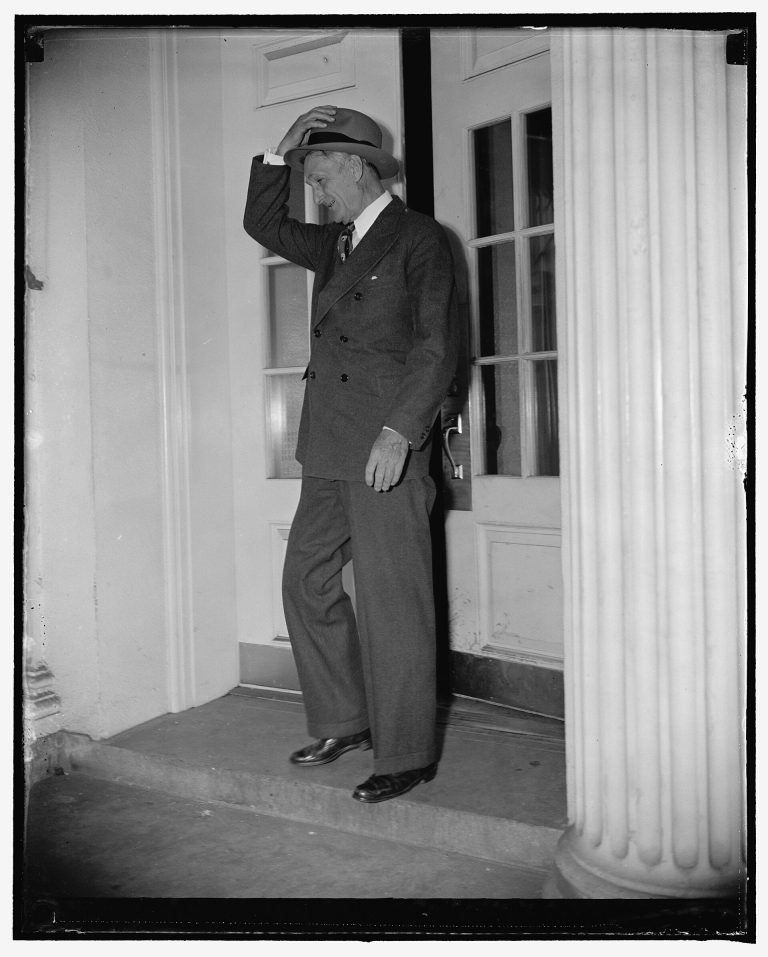
Jho Low’s audacious request for a U.S. presidential pardon has ignited a firestorm of controversy, drawing ire from both American and Malaysian officials. As a fugitive financier at the heart of the 1MDB scandal, Low’s plea for clemency from Donald Trump is not just a legal maneuver—it’s a geopolitical flashpoint.
Low, accused of orchestrating the embezzlement of over $4.5 billion from Malaysia’s state fund, remains a fugitive. His pardon request, now logged in the DOJ’s clemency database, threatens to undermine international anti-corruption efforts. The White House, distancing itself from the request, has indicated it’s not a priority, while Malaysia vehemently opposes any clemency, insisting on Low’s capture.
Amidst this, the U.S. Congress is scrutinizing Trump’s clemency practices, probing whether recent pardons involved ‘pay-to-play’ dynamics. This investigation, launched by Senate and House Democrats, adds another layer of complexity to Low’s case, highlighting the contentious nature of presidential pardons.
The stakes are high. With over $1.4 billion in assets already recovered by the DOJ, the financial implications are significant. Malaysian officials, led by 1MDB Task Force chairman Datuk Seri Johari Abdul Ghani, argue that the U.S. should focus on locating Low rather than granting a pardon, underscoring the potential geopolitical fallout.
As the world watches, the outcome of Low’s pardon request will test the integrity of U.S. clemency and the global commitment to justice. The international community remains vigilant, aware that this case could set a precedent for how corruption is addressed on the world stage.
4 billion in assets associated with the scheme, and in that same settlement announcement it said Low and related parties had agreed to an additional recovery of over US$100 million. A White House official, according to that same reporting, said the application is not currently being prioritized by the administration.
CBS reported on May 7 that Senate and House Democrats opened an investigation into whether recent Trump pardons and commutations reflected “pay-to-play dynamics,” and Sen. action, also notes that authorities in 2019 reached an agreement to recover about US$1 billion in assets tied to Low, including luxury properties in Beverly Hills, New York and London, plus a private jet.
5 billion was siphoned from 1MDB between 2009 and 2015. On May 7, CBS reported that congressional Democrats had launched their “pay-to-play” probe into Trump clemency decisions, with response letters due by May 22.
Department of Justice is the agency whose clemency database reportedly shows the filing; the White House is signaling distance from the request; and Malaysia’s government, through Johari Abdul Ghani and Prime Minister Anwar Ibrahim’s broader recovery effort, is arguing that the priority should be capture and prosecution. ” Johari said the United States should help Malaysia trace Low’s whereabouts instead of granting relief, and he added that he knew of no negotiations with Low over asset returns.
What happens next is less a formal court date than a set of pressure points. ” The reporting that matters most right now is not just that Low sought clemency, but that a pending Justice Department entry reportedly appeared this year under the name “Taek Jho Low” in the category “Pardon after Completion of Sentence,” an odd and attention-grabbing detail because Low remains a fugitive rather than a surrendered or imprisoned defendant.
This investigation, launched by Senate and House Democrats, adds another layer of complexity to Low’s case, highlighting the contentious nature of presidential pardons. 4 billion in assets already recovered by the DOJ, the financial implications are significant.
action, also notes that authorities in 2019 reached an agreement to recover about US$1 billion in assets tied to Low, including luxury properties in Beverly Hills, New York and London, plus a private jet. 5 billion from Malaysia’s state fund, remains a fugitive.
Source: Read original article
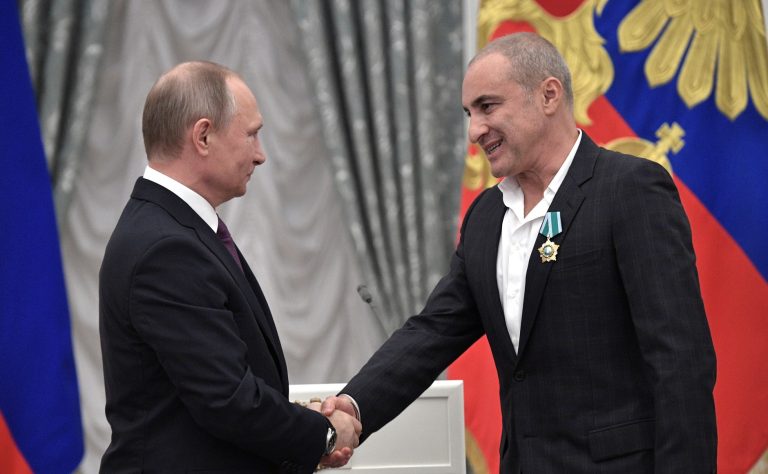
The Davidoff Trio’s victory at the 2025 Parkhouse Award is a testament to their exceptional talent and the competition’s global reach. Selected from a staggering 350 candidates hailing from 54 countries, this German-founded ensemble has now secured a pivotal platform for their burgeoning careers.
Held at the prestigious Wigmore Hall in London, the finals on April 11, 2025, were the culmination of a rigorous selection process. The competition, highlighted by Colin’s Column, required ensembles to demonstrate not only their musical prowess but also their readiness to establish themselves professionally in the UK.
With the support of esteemed institutions like The Tertis Foundation and The Adrian Swire Charitable Trust, the Parkhouse Award continues to be a beacon for emerging chamber music talent. The Davidoff Trio, consisting of Johannes Wendel, Christoph Lamprecht, and Yona Sophia Jutzi, will now embark on a two-year journey of UK performances and professional development, a prize that promises to elevate their careers to new heights.
The Davidoff Trio’s next phase, according to the official competition site and trade coverage, is a two-year period of UK concert opportunities and professional development attached to the award, making the real news not just who won but how a field of 350 candidates from 54 countries was converted into a career-making result for one German-founded trio. – Colin’s Column” is that the post was not a breaking-news controversy at all but a classical-music competition notice whose central fact has since been overtaken by the result: the Parkhouse Award’s 2025 winner was the Davidoff Trio, announced after finals at Wigmore Hall on April 11, 2025, following an international field that Colin’s Column had highlighted as 350 applicants from 54 countries.
Colin’s Column described the award as open to ensembles in the UK or overseas that had to show they were already operating, or ready to operate, as professional artists and that they had formed by 2023 at the latest. The sharpest twist is that Colin’s original post, published on September 24, 2024, now reads more like a forecast than the live story.
At the time it named the chairman of juries, Chris de Souza, and advertised the opportunity; after the April 2025 final, outside reporting filled in the outcome Colin’s page itself did not yet include in the body text. On April 15, 2025, reporting identified the Davidoff Trio as the winner, with engagements and career support scheduled across 2025 to 2027.
Colin’s Column’s Parkhouse Award notice set out the competition framework for the 18th International Parkhouse Award, with auditions on April 8 and 9, 2025, at the Guildhall School of Music & Drama, a finals concert on April 11 at Wigmore Hall, and an application deadline of December 31, 2024. Colin’s Column published the call on September 24, 2024.
Applications closed on December 31, 2024. Auditions took place on April 8 and 9, 2025.
Source: Read original article
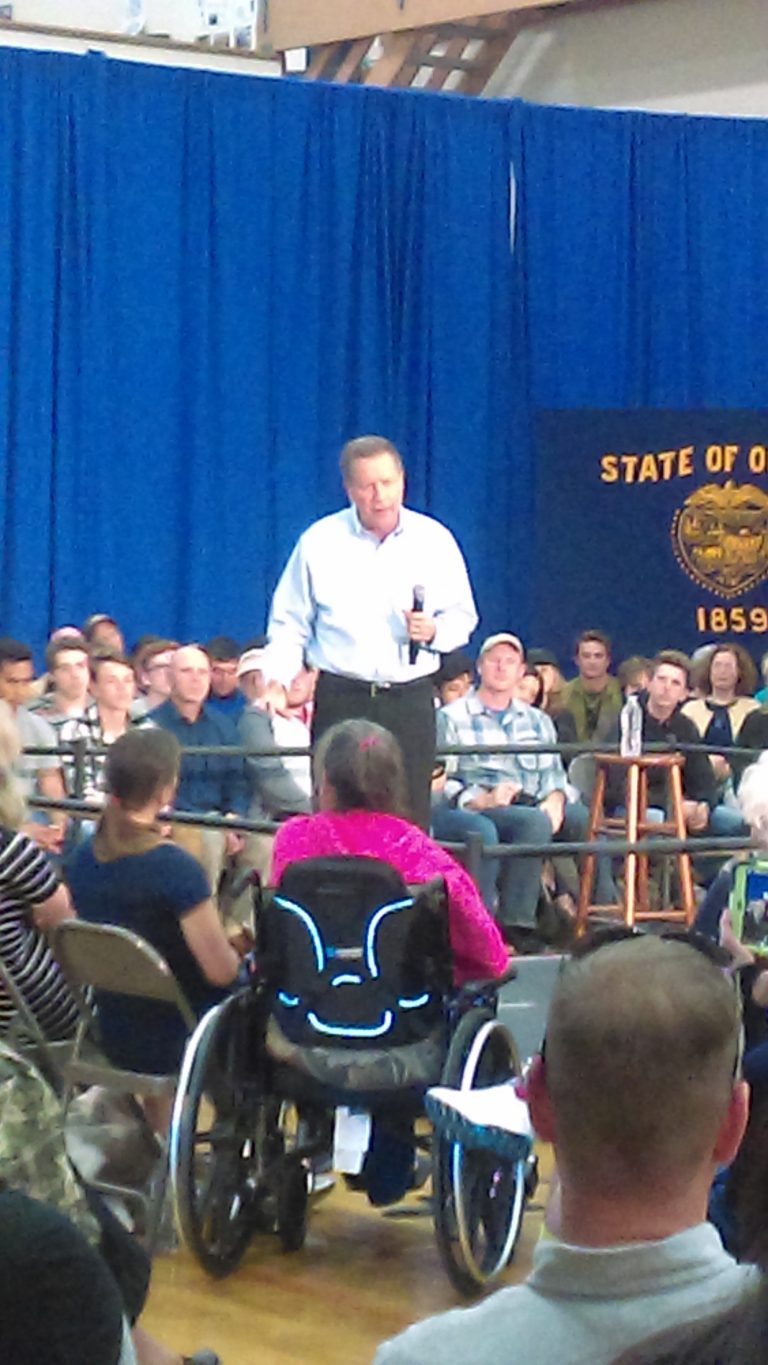
Nina Sordoni has emerged as a formidable force in Wyoming County’s political landscape, securing nominations from both the Democratic and Republican parties in the May 20, 2025 primary election. This dual victory positions her as the leading candidate for the upcoming general election, set for November 4, 2025.
The primary election witnessed a modest turnout of 34.37%, with 5,512 ballots cast from 16,035 registered voters. Sordoni’s ability to capture 41.76% of the Democratic vote and 31.83% of the Republican vote underscores her broad appeal across party lines. Her closest competitors, Paul Litwin and Richard L. Huffsmith, trailed closely, highlighting the competitive nature of the race.
Wyoming County’s election results underscore the unique dynamics of Pennsylvania’s judicial election system, where candidates can cross-file to seek nominations from multiple parties. This strategy has proven effective for Sordoni, consolidating her support and making her the overwhelming favorite for the November election. If successful, she will join President Judge Russell Shurtleff in January 2026.
The low voter turnout and tight margins in both party races emphasize the critical role of voter engagement and awareness. As the election process moves towards certification, Sordoni’s dual nominations highlight the strategic advantage of cross-filing in Pennsylvania’s electoral framework. The general election will ultimately determine the final outcome, with Sordoni poised as a strong contender given her dual-party support.
The Examiner reported that this dual nomination makes her the overwhelming favorite for the November 4, 2025 general election and that, if elected, she would take office in January 2026 alongside President Judge Russell Shurtleff. The reminder piece was pegged to May 19 ahead of the Pennsylvania primary held on May 20, 2025.
37% turnout primary, a cross-filed judicial race was effectively decided before most voters would ordinarily start paying attention. In the statewide Republican Superior Court contest in Wyoming County, for example, there were 652 undervotes, and in the Republican Commonwealth Court contest there were 723 undervotes.
The unofficial numbers move toward certification, and unless a successful challenge or recount changes the outcome, Sordoni would appear on both major-party lines in the November 4, 2025 election, with the new judgeship set to begin in January 2026. The big development reported by the Examiner after election day was that Sordoni ultimately won both major-party nominations for the newly created second judge position in the 44th Judicial District, covering Wyoming and Sullivan counties.
Wyoming County’s posted returns also show how narrow margins and undervotes shaped the environment: in the Democratic Court of Common Pleas contest there were 28 undervotes and 6 overvotes, while on the Republican side there were 20 undervotes and 3 overvotes, small but potentially meaningful figures in a race decided by thin margins. The Examiner said Sordoni emphasized her family-law background during the campaign.
In low-information spring primaries, the practical guidance about polling hours and ballot completion can shape who actually converts support into counted votes. In Wyoming County alone, the Republican side was split three ways by just 203 votes between first and third place, while the Democratic side was even tighter at the top, with only 25 votes separating Sordoni and Litwin.
If successful, she will join President Judge Russell Shurtleff in January 2026. 83% of the Republican vote underscores her broad appeal across party lines.
37% turnout primary, a cross-filed judicial race was effectively decided before most voters would ordinarily start paying attention. 37%, with 5,512 ballots cast from 16,035 registered voters.