50.7 F
San Francisco
Friday, May 22, 2026
Home Blog Page 1465

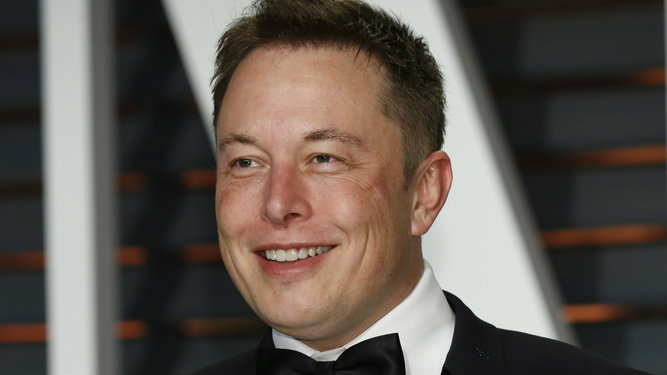
Elon Musk’s Exciting New Role in Donald Trump’s White House Interest Representative Eric Burlison

0

Key Takeaways:
– Eric Burlison is excited for Elon Musk’s role in an informal task force called DOGE.
– The task force is dedicated to improving government efficiency.
– Elon Musk’s influence swelled thanks to his control over the X social media platform and America PAC.
– Controversy arises as Trump keeps nominating high-profile figures for key roles.

Representative Eric Burlison recently expressed his anticipation of Elon Musk’s involvement in the scenes of the White House under Donald Trump’s governance. Named DOGE, short for the Department of Government Efficiency, the plan is less an official department and more an initiative. Its objective? To make the U.S government more efficient.

The Purpose of DOGE

DOGE is a cleverly named task force where tech tycoon Elon Musk and his ally, Vivek Ramaswamy, are positioned to strategize about curbing government spending. Besides, they aim to minimize the federal workforce considerably. The strategy meshes with the so-called Project 2025, which proposes to redefine a majority of government workers. This change allows the president to lay them off at will.

Interestingly, the creation of DOGE does not mean that Musk holds an official Senate-confirmed office. Nonetheless, Trump keeps him near the power circles, no doubt due to Musk’s control of the X social media platform. Moreover, Musk bankrolls a substantial part of Trump’s campaign field operations in contested states via his America PAC.

The close ties between the two titans have triggered a wave of discomfort among Trump’s inner circle.

The Limit of Power

But how far could these measures go without concrete legal grounding? While Trump might execute mass layoffs unilaterally, he would need Congress’s backing to eliminate or consolidate various federal departments and governing bodies.

In the meantime, Trump had been nominating controversial individuals for key administration roles. Linda McMahon, the co-founder of WWE, has been picked for the secretary of education. Simultaneously, popular TV personality Dr. Mehmet Oz is slated to be in charge of the Centers for Medicare and Medicaid Services.

Ever braggadocious, Trump boasts how his choices will shrink government operations.

What Happens Next?

For the time being, Burlison, along with many others, keenly follows the developments with bated breath. The Republican representative keeps his excitement level high, eagerly waiting for DOGE to make the government more efficient. His sentiment reflects the hopeful speculation of many American taxpayers, although there are plenty of critics too.

Time will only tell the outcomes of such radical changes. To dismantle and reconstruct this vast ship needs time, vision, and determination. And a lot of money. And Elon Musk appears ready for the challenge.

Whether the government shrinking is for good or ill is yet to be seen. Nonetheless, it remains a subject of much debate and is likely to continue to be as controversial figures occupy the administrative positions. Is the government downsizing a necessary purge or a move with potentially disastrous results? Only time will tell. Everyone is watching, anticipating, and, like Burlison, waiting for the show to unfold.

Regardless, despite the uncertainty and potential consequences, one thing is certain – there’s never a dull moment with Elon Musk involved.

North Korea Haunts South’s Border Island with Blood-curdling Sounds

0

Key Takeaways:

– Nightly broadcasts of eerie noises from North Korea disturb peace on South Korea’s border island of Ganghwa.
– The sounds include those resembling gunfire, screams, and chilling music, giving vibes of a horror movie.
– Residents suffer sleep deprivation and other health issues due to constant noise reaching up to 80 decibels.
– Experts warn the audio attack might be a new form of psychological warfare.
– The situation has left the island residents living in uncertainty and fear.

Life on South Korea’s Border

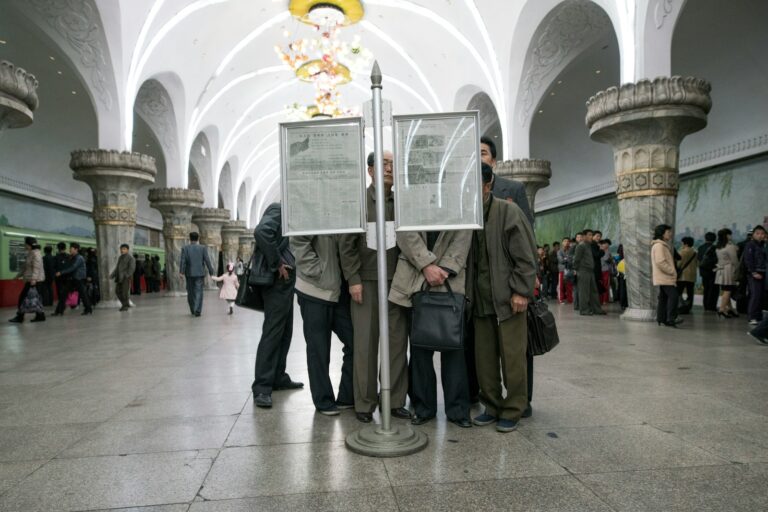
South Koreans living on Ganghwa, an island under two kilometers (about a mile) from North Korea, are struggling to sleep through the night. Their peace was long kept by the soothing hum of insects and the melodic chirping of birds. But, a new form of harassment from across the border has disrupted their tranquility. North Korea now blasts terrifying sounds nightly, keeping the residents awake in fear and confusion.

Like a Scene from a Horror Movie

The soundtrack to a horror movie on full blast may come closest to describing the bone-chilling audio broadcasts. The noises, likened to the cries of dying people, the sound of gunfire, and horror music, start at 11 pm. Ghostly echoes fill the otherwise beautiful quiet nights on Ganghwa, creating a disturbing contrast. The haunting sounds linger until dawn, turning lives into a living nightmare.

A Shift in Tactics

North Korea was known for propaganda broadcasts, which mostly included criticism of South Korean leaders. However, the recent broadcasts that feature eerie sounds mark a significant shift from their traditional approach. The ominous noises, said to include howling wolves and other sinister sounds, become increasingly aggressive, leading to speculation of a new psychological warfare strategy.

Noise as a Form of Torture

Historically, noise and sleep deprivation have been used by many regimes as forms of psychological torture that leave no physical scars. The deafening noise reaching up to 80 decibels at night, quite above the recommended safe level of 60 decibels, has sparked health concerns. Residents report symptoms like headaches, anxiety, and sleep disorders, which have taken a toll on their health.

Living in Uncertainty

Residents of Ganghwa are now living under pressure, grappling with anxiety, and wrestling with uncertainty over when peace will be restored. For some, the uncertainty seems more unsettling than a natural disaster, as there is no clear recovery timeline. The tormenting broadcasts have added another layer to the already strained relations between the two Koreas.

The Suffering Reflects on a Bigger Picture

North Korea’s new broadcasting tactic also reflects the evolving dynamics of the long-running conflict. The two countries have technically been at war since the 1950-1953 conflict, leading to decades of tension and hostility. The aggressive audio broadcasts indicate a change in North Korea’s approach toward its ‘principal enemy’, South Korea.

Masking the Sounds or Inflicting Pain?

There are theories about the reason for these broadcasts. Some say they are to prevent North Korean soldiers from hearing South Korean propaganda that typically includes K-pop songs and international news. Others, however, suggest they may be intended to inflict pain on residents of the South. But, the truth remains elusive.

South Korean Government’s Responsibility

The South Korean government is facing pressing demands to act in the interest of the tormented island residents. The people yearn for the restoration of peace and want the authorities to experience first-hand the extent of their ordeal. The crisis underlines the government’s duty of ensuring the well-being of its citizens, even those living on the borders.

In conclusion, the residents of Ganghwa continue to endure the harrowing nightly noise attacks from the North that have drastically disrupted their sleep and overall life quality. Amid growing health concerns and escalating fear, they look to the South Korean government for resolution, hoping for better, quieter nights ahead.

Skepticism Fuels Robert F. Kennedy Jr.’s Unexpected Rise In U.S Health Policy

0

Key Takeaways:

– Robert F. Kennedy Jr.’s surprising ascension in U.S. health policy has been driven by distrust and skepticism towards conventional medicine.
– His views gained huge traction during the Covid-19 pandemic.
– Once dismissed individuals who questioned mainstream medicine are now supporting Kennedy’s elevation.
– Scientists are puzzled over the rise of populist skepticism during the pandemic.

Robert F. Kennedy Jr., traditionally an outlier due to his unconventional views on medicine, has ascended to potentially lead U.S. health policy. Rumbling beneath the surface of this surprising rise is a deep-seated skepticism and mistrust of the established medical industry.

Unraveling Kennedy’s Journey

Kennedy’s journey from fringe figure to mainstream prominence was not a rapid one. His indoctrination into the realm of medical skepticism, his personal conversion if you will, has been slow, steady, and fuelled by a skeptical public sentiment. This skepticism ballooned during the recent Covid-19 pandemic when medical experts were put under the lens and public trust came under scrutiny.

Public Support Swells for Kennedy

The irony here lays in the fact that the very skepticism which formerly labelled Kennedy and his supporters as ‘disbelievers’ or ‘conspiracy theorists’ is now placing him as a prime contender to head the nation’s health policy. It can’t be missed that those once dismissed as doubting traditional medicine are now applauding this change of wind in Washington.

Scientific Community Grapples with New Reality

The situation perplexes the scientific community. They are left scratching their heads, wondering how they could face a towering health crisis like the Covid-19 pandemic without triggering a public reaction of sizeable doubt. It seems that their collective efforts to stem the viral tide has inadvertently given rise to a populist movement, with Kennedy at the helm, that fiercely quibbles with the scientific establishment.

Closed Doors Now Opening

While Kennedy’s rise has provoked considerable debates in the corridors of power, there is no denying that it is a testament to the populist sentiment which yearns for a fresh perspective on U.S. health policy. Remember that the doors which were once closed to anyone daring to challenge mainstream conventional medical opinion are now opening wide for this new persona.

The Pandemic Effect

The Covid-19 pandemic undoubtedly accelerated Kennedy’s journey. When the world was grappling with an unseen enemy, doubts were cast upon the ability of the medical establishment to manage the crisis effectively. Kennedy, known for his skepticism, emerged from the pandemic as a public figure who resonated with the concerns of many.

A New Era in U.S. Health Policy

In summary, Robert F. Kennedy Jr.’s unexpected rise in U.S. health policy has been a thrilling spectacle. Grounded on a rising tide of skepticism and a shifting public sentiment, his ascension signals a new era in American healthcare. Whether this change will ultimately be judged positively or negatively by history, and what impact it will have on the nation’s healthcare system, remains to be seen. For now, it is undeniable that skepticism has fuelled Kennedy’s rise, reshaping the landscape of U.S. health policy.

Trudeau’s Immigration Curb Strategy to Alleviate Canada’s Housing Shortage

0

Key Takeaways:
– Prime Minister Justin Trudeau’s bid to limit immigration could significantly decrease housing demand.
– Should the curb succeed, the housing supply-demand gap will decrease by 534,000 units, or 45%, by 2030.
– The Office of the Parliamentary Budget Officer played a fundamental role in this analysis.

The Canadian Housing Market and Trudeau’s Plan:
Prime Minister Justin Trudeau has outlaid a strategic plan that, if executed well, will bridge the gap between supply and demand in Canada’s tight housing market significantly. The plan’s prime focus is to introduce controls on the influx of immigrants into the country.

It is well established that migration plays a substantial role in a country’s overall demand for housing. By placing restrictions on the number of newcomers, Trudeau intends to suppress the escalating demand and bring much-needed balance.

The Potential Impact of Policy Changes:
Trudeau’s approach to tackling the housing issue through immigration control is yielding promising results, at least theoretically. According to the Office of the Parliamentary Budget Officer, by implementing this plan, Canada could potentially reduce its housing gap by a remarkable 534,000 units. This alteration implies a drastic slash by almost 45% from the projected shortfall for 2030 if immigration continues unhindered.

In essence, the government aims to address the worsening housing shortage in one stroke, using immigration control as its primary tool. By doing so, Trudeau hopes to accommodate the population more appropriately, improving the housing situation while simultaneously refining the quality of life.

Striking the Balance:
While the proposal appears successful on paper, the practical implementation will require careful execution and strong-willed commitment. While a reduction in housing demand will bear benefits, it’s essential to remember the economic contributions immigrants make.

They fill much-needed job vacancies, contribute to the nation’s tax revenue, and diversify its cultural landscape. As such, Trudeau’s government must tread a careful path between solving the housing crisis and maintaining the valuable inflow of talent and skills that immigrants provide.

Understandably, it’s a tightrope walk and will necessitate a balance that ensures the Canadian housing situation improves without the economy taking a significant hit.

Addressing Criticism and Moving Forward:
Despite the promising outlook, the plan has drawn a string of criticism, predominantly from quarters that fear potential economic impacts. Critics argue that the immigrant curb may result in labor shortages and lower national output. However, Trudeau’s government remains firm, assuring that the move would only be temporary and revisited once the housing situation stabilizes.

Navigating such a complex and multilayered issue is likely to require strategic, multifaceted solutions, and Trudeau’s proposal represents one approach towards addressing it. The ability to navigate this situation effectively will pivot on clear vision, strong leadership, and the government’s ability to meet the needs of the people while making tough decisions.

In conclusion, Trudeau’s plan to limit immigration poses both challenges and opportunities. The potential of reducing the demand-supply gap in the housing market by 45% is a promising prospect. However, the government must ensure that such a move does not sideline the immense contributions that immigrants provide to Canada’s growing economy. Only time will tell whether this fine balance can be effectively achieved and maintained.

Future Uncertain for U.S. Education Under President-elect Trump’s Second Term

0

Key Takeaways:

– Trump has previously proposed eliminating the U.S. Department of Education.
– Linda McMahon is expected to be named Secretary of Education.
– Federal aid to schools may be limited, affecting a variety of programs.
– Federal budget cuts could impact New York’s Foundation Aid and increase pressure on the state.
– Trump’s immigration policies could impact new students and asylum seekers.
– There may be a rollback of civil rights protections for students under the Department of Education.
– Proposed changes to school lunch programs could make it more challenging for some children to access free meals.
– The expected push for school choice initiatives could impact public education funding.

Education Policies in the Pipeline

President-elect Donald Trump’s detailed plan for education policy is yet to be unveiled. His views from his previous term hint at some potentially significant changes in the pipeline. A highlight is Trump’s eagerness to eliminate the $79 billion U.S. Department of Education. Details in the Presidential Transition Project 2025 also provide clues about the coming changes. However, key will be if he can rally sufficient congressional support.

Expected Secretary of Education

Trump is set to appoint Linda McMahon as the Secretary of Education. McMahon, previously oversaw the Small Business Administration, is also a WWE wrestling empire co-founder. Public education stakeholders, concerned about the likely changes, are gearing up for her tenure.

Reduction in Federal School Funding

Trump could seek to limit federal aid to schools, similar to his previous term. His administration proposed numerous cuts to the education budget, which Congress eventually rejected. Critics worry that budget cuts would shift control over education back to states and localities, potentially disrupting the established system.

Impacts on New York School Funding

Federal budget cuts would place added pressure on New York’s Foundation Aid. The resulting shortfalls would likely have to be made up by the state and local districts. Future education funding battles are expected, especially as Governor Kathy Hochul’s previous proposals were rejected.

Rights for Immigrant Students

Trump’s immigration policies may drastically impact newly arrived students. As immigrants and asylum seekers surge in New York, the city may need to strengthen its commitment to protecting these students.

Civil Rights at Risk

Trump’s previous rollback of civil rights protections raises questions for the future. With the Office for Civil Rights potentially being moved under the Department of Justice according to Project 2025, civil rights enforcement may face challenges.

School Meals Under Threat

Proposals suggest tightening qualifications for free school lunches which would leave many students without access. Additionally, the loosening of nutrition standards could affect the health of the students.

Boost for School Choice

Trump’s administration may canalize more funds towards charter and private schools. Critics argue this shifts the financial burden onto public schools, while proponents see it as an approach to customize education to better suit each child’s needs.

Conclusively, many changes might be underway under Trump’s second term, particularly in the area of education. The aforementioned points provide an overview of what can possibly happen, and it’s crucial for everyone – parents, educators, and students – to stay updated and be prepared. How these potential changes play out, however, largely depends on political inclinations within the state and the inherent complexities of reforming the education systems.

Trump Taps Ex-Wrestling Exec McMahon to Lead Education Department

0

Trump Taps Ex-Wrestling Exec McMahon to Lead Education Department

Key Takeaways:
– Donald Trump has chosen Linda McMahon, former professional wrestling executive, to lead the Education Department.
– McMahon, a close friend and supporter of Trump, served as Small Business Administrator during his first term.
– Despite Trump’s regular critique of the Education Department, he has opted not to eliminate it.

Trump’s Choice for the Education Department: Linda McMahon

President-elect Donald Trump officially appointed Linda McMahon to lead the Education Department. McMahon isn’t new to Trump’s administration. She managed the Small Business Association during the first stint of Trump’s leadership. And now, she is all set to assume the reins of an organization that Trump has regularly criticized.

Who is Linda McMahon?

A former professional wrestling executive, Linda McMahon has been a loyal supporter of Trump. She has known the President elect closely and backed his political endeavors. Early on, she was one of his significant contributors during his winning election campaign in 2016. It appears her dedication is paying off, with Trump selecting her for another key role in his term.

Roadmap for McMahon’s Role

The Education Department hasn’t escaped Trump’s scrutiny. He has consistently targeted the department for elimination. However, instead of eliminating it, he is entrusting it to a close friend. What happens next is something to watch out for. The onus is now on McMahon to transform the department that evidently needs considerable tweaking.

Importance of the Education Department

Education is vital. It shapes our future leaders and workforce. That’s why Trump’s regular call for eliminating the Education Department raised eyebrows. It’s one of those moves that generated quite a bit of criticism. Yet, Trump has opted for a reform route, which is likely a welcome move. It comes at a time when the education system needs to adapt to the new normal that the pandemic ushered in.

What Can Be Expected?

With McMahon’s appointment, a lot is expected to change. But, as of now, it’s difficult to pin down specifics. McMahon is known for her decisive leadership during her tenure at the Small Business Administration. Despite the challenges of leading a department that’s under the scanner, McMahon is likely to bring her experience to the table and introduce beneficial reforms.

Final Thoughts

Appointing McMahon to steer the Education Department is a significant move for Trump. It marks another milestone in the ‘Trump era.’ Whether the move will bring a wave of necessary changes and improvements or not, only time will tell. Whatever the outcome, McMahon’s tenure at the helm is, without a doubt, going to be noteworthy. As we look forward to the next four years, this appointment sets a remarkable course. The attention now turns not just to how McMahon will manage her role but also how the Education Department will evolve under her leadership.

For the Education Department, it’s a new day. With a new leader at the helm, there’s hope for improvement and innovation. As we look forward to the transformations that McMahon will bring, let’s remember that education is not just about academic knowledge. It’s also about grooming our future leaders. And under McMahon, the Department has a chance to achieve just that.

Devastating Storm Hits Northwest U.S. Triggering Widespread Outages and Fatalities

0

Key Takeaways:
– The Northwest region of the U.S. was hit by a major storm, causing widespread damage.
– The storm led to widespread power outages and felled trees, taking at least one life.
– The Weather Prediction Center has issued warnings for excessive rain and hurricane-force winds.
– The storm marked the most substantial atmospheric river the region has witnessed this season.

The Storm’s Sweep Across the Northwest

A colossal storm has made its path across the Northwest United States, resulting in severe damages and devastation. The storm packed powerful winds and drenched the region in rain, causing widespread power outages. Falling trees tragically claimed the life of at least one person.

The Weather Prediction Center’s Warning

The Weather Prediction Center has issued warnings of excessive rainfall risks which are to persist through Friday. Significantly, hurricane-force wind warnings are in place as the region braces itself to face the storm’s full strength. The atmospheric river, a large band of moisture, responsible for the conditions is the strongest seen in California and the Pacific Northwest this season.

The storm has overwhelmed the region with its sheer force. Residents are wholeheartedly asked to stay indoors, keep a close eye on local forecasts, and adhere to advice from local authorities.

Impact of the Storm

The storm has led to widespread power outages, leaving residents without electricity. It has also led to substantial damage to infrastructure and homes due to strong winds and heavy rainfall. Trees have unfortunately been uprooted by the storm, tragically resulting in at least one fatality.

The combination of strong winds, heavy rain, and power outages is causing issues for both residents and emergency services. Many roads are inaccessible due to fallen trees, making it difficult for emergency services to reach those in need.

Widespread power outages are making the situation even more complex as communication becomes harder with no electricity. Residents are being urged to prepare for potential power outages, stock up on essentials, and charge devices where possible. Schools and businesses have been closed for safety.

Biggest Atmospheric River of the Season

The storm has not only been significant in terms of its immediate impact but also in its presence as the most considerable atmospheric river this season. An atmospheric river is a substantial band of moisture in the atmosphere.

The atmospheric river associated with this storm is the most severe seen in the California and Pacific Northwest region this season. This is contributing to the heavy rainfall experienced by the region, which is further exacerbating the conditions.

In the Coming Days

As the Northwest U.S. grapples with the effects of this devastating storm, authorities continue to monitor the situation closely. The American Meteorological Society encourages all residents to heed local advisories and avoid unnecessary outings during these harsh weather conditions. Coping with the aftermath will not be easy, but together, the community is expected to rise above this adversity and recover.

As we venture further into the storm’s existence, it is critical to remain updated and prepared. Continued safety awareness in the coming days is vital given the ongoing nature of this storm. Therefore, residents are urged to stay tuned to local weather updates and most importantly, stay safe.

The Escalating US Child Trafficking Crisis: Exposing a Hidden Nightmare

0

Key Takeaways:

– Retired Border Patrol agent J.J. Carrell has accused the US government of being the world’s largest child sex trafficking organization.
– Over 300,000 migrant children are unaccounted for according to U.S. Immigration and Customs Enforcement.
– The average age of a U.S. trafficking victim is between 12 and 15.
– HHS Whistleblower Tara Rodas recommends DNA testing, penalizing sponsors who lose track of children, and heightened intelligence efforts as potential solutions to the problem.

Cryptic Child Trafficking Claims from an Ex-Border Patrol Agent

J.J. Carrell, a retired Border Patrol agent, has made head-turning allegations against the United States federal government. Carrell has boldly named the government as the world’s most potent child sex trafficking organization, sparking clamors for closer examination and action.

Carrell, with 24 years of Border Patrol service, speaking before the Subcommittee on Border Security and Enforcement, claimed that current President Joe Biden, Vice President Kamala Harris, and Homeland Security Secretary Alejandro Mayorkas knowingly and intentionally used illegal immigration to change America. He said that child trafficking, especially child sex trafficking, has flourished amidst the immigration crisis.

The Disappearance of Migrant Children

There’s a grave issue with missing migrant children. U.S. Immigration and Customs Enforcement reported in August that more than 300,000 migrant children’s whereabouts or statuses are unknown. From 2019 to 2023, 32,000 illegal alien minors didn’t turn up for their immigration court hearing, while 291,000 others never received a court date.

Setting a stark contrast to these alarming statistics is the fact that the average age for child trafficking victims aligns eerily with the missing children’s ages. Victims of trafficking in the U.S. usually fall between 12 and 15 years of age. This implies that missing migrant minors could potentially become victims of child sex trafficking.

The Vulnerability of Migrant Children

When unaccompanied migrant children are captured at the border, they get transferred into the Department of Health and Human Services’ Office of Refugee Resettlement’s custody. The child will then be placed with a sponsor who could either be a distant relative or a stranger. Here lies a possible opportunity for traffickers to take advantage of vulnerable children.

Tara Rodas, an HHS recruited employee, who was tasked with helping unaccompanied migrant children, bore witness to the troubling realities within the department. She observed that the HHS lacked the appropriate knowledge, skills, and ability to protect children from traffickers. She further described child trafficking as a sophisticated operation resembling terrorist organizations in operation tactics.

Urgent Call for Solutions

Rodas called on the government to step up its fight against child trafficking. She suggested implementing DNA testing for sponsors claiming to be a child’s relative. In addition, substantial penalties should be handed to sponsors unable to account for placed children.

She also stressed the need for the full might of intelligence and law enforcement communities to dismantle child trafficking networks. With these actions, Rodas believes the problem can be significantly mitigated. It’s about time that greater effort was directed to protect the countless vulnerable children caught up in this hidden nightmare.

China Faces Tough Road to Establishing Dominance in Southeast Asia: Study Reveals

0

Key takeaways:

– Researchers from the National University of Singapore identified elite authority in Southeast Asian nations as reluctant towards a China-led regional order.
– Southeast Asian nations view China as influential but lack trust in its authority to dominate the region.
– China’s major initiatives have not always benefited receiving nations, sometimes causing more harm than good.
– Over half of the ASEAN elites view these nations as having more influence in Southeast Asia compared to China or the U.S.
– China’s regional ambition may be thwarted without regional backing, and cannot be achieved forcefully but through negotiation.

China’s Tough Journey Ahead

If China can’t convince Southeast Asian nations to accept its leadership, its plan for worldwide dominance could take a serious hit. This is according to a new study, which discovered shocking results regarding China’s dominant role in the region. To become a significant power across the globe, China must first court its Southeast Asian neighbors – a daunting task as it appears.

Conflicting Views about China

In a survey of elites in Southeast Asian nations, including the Philippines, Vietnam, Thailand, Singapore, Indonesia, and Malaysia, researchers Selina Ho and Terence Lee found varying perceptions of China. While most recognized China’s influential status, they doubted its authority to rule the region. Among the primary issues identified was the significant difference in political values.

China’s Play for Domination

China has consistently sought the endorsement of Southeast Asia in its quest for power. Its ambitions to lead and shape the region’s identity through culture, institutions, norms, and ideas mimic strategies adopted by the U.S. in Latin America, Russia in Eastern Europe, and India in South Asia. Their goal is straightforward: to secure dominance and ensure no rival powers can gain a foothold in the region.

Dealing with ASEAN’s Diversity

Achieving regional influence, however, won’t be a cakewalk for China. The diversity among members of the Association of Southeast Asian Nations (ASEAN) poses a significant challenge. These nations, with distinct cultural, religious, and political settings, won’t easily fall under China’s hegemony without their consent. Researchers suggest that China must portray its ambitions as mutually beneficial, and attain hegemony through negotiation rather than force.

Doubts Over China’s Initiatives

China has been funding major initiatives around the world as part of its global dominance strategy. But not all these initiatives, notably the Belt and Road Initiative, have been beneficial to the recipient countries. The new megaport in Lima, Peru, is an example, with locals complaining that their fishing grounds have been overtaken by China, while large parts of the city lack basic amenities like running water or sanitation.

The Distrust in Numbers

Interestingly, over 50% of ASEAN elites considered their nations to be the most influential in Southeast Asia. Only 36.2% saw China in the same light. The U.S., despite being a global power, was perceived as influential by only 9.6%. This regional preference for self-dominance over foreign influence indicates a tough path for China.

U.S.- China Tensions

Current strife between the U.S. and China further complicates the situation. U.S. Defense Secretary Lloyd Austin’s recent critique of China’s actions in the South China Sea, coupled with China’s accusations of the U.S. militarizing the region, have soured relations. This escalation has created a tenser atmosphere, making it even more difficult for China to assert its dominance in the region.

In conclusion, while China harbors ambitions of global dominance, Southeast Asia remains a critical stumbling block to these dreams. To surmount this obstacle, China must demonstrate that its leadership will benefit these nations, and gain acceptance through negotiation, not force.

Tension Escalates as U.S. Shuts Down Kyiv Embassy Over Airstrike Fears and Other Crucial Developments

0

Key Takeaways:
• U.S. suspends operations at its Kyiv embassy amid potential airstrike threats, suspected to be a Russian manipulation tactic.
• Iran increases its uranium stockpile, edging closer to weapons-grade.
• IDL shares distressing update on soldier casualties, the total surpassing 800.
• Turkish strikes in Syria impacting Kurdish utilities and essentials, leaving 1 million without water.
• Hezbollah targets peacekeeping posts in Lebanon; Argentina responds by pulling troops from UN peacekeeping force.
• Western nations that support criticism against Iran’s nuclear program face stern warning.
• Israel on alert for potential retaliation against Iranian-backed militias in Iraq.
• UNC to deliberate on no-strings Gaza ceasefire proposition.
• Jerusalem court passes a landmark judgment directing P.A. to pay substantial damages to victims of a 2001 terror attack.
• Former Hamas hostage takes on UCLA protest leader in a significant campus debate.

Escalated Tensions in the Middle East

There has been an abrupt cessation of operations at the U.S. embassy in Kyiv, Ukraine. This is a precautionary response to credible threats of a significant imminent air attack. Embassy staff have been mandated to shelter in place for their safety.

Iran Defies International Demands

Iranian defiance of international laws continues as they increase their uranium enrichment levels. The stockpile now weighs 182.3 kg, enriched up to 60%, alarmingly close to weapon-grade.

Heart-Wrenching Casualties

A troubling update from the Israel Defense Forces (IDF) revealed that the number of soldiers who have lost their lives during recent conflicts has surpassed an unfortunate milestone of 800. The latest casualty was Sgt. First Class Roi Sasson, who lost his life during an engagement with terrorists.

Strikes in Syria Impact Civilians

Turkish strikes in the Kurdish-controlled areas of northeastern Syria have severely impacted civilians. Resources that are essential to everyday life, including oil, gas, and power facilities, have been targeted, leaving over a million Kurds without an essential resource – water.

Hezbollah Targets Peacekeeping Posts

Hezbollah attacks have recently put two posts of the United Nations Interim Force in Lebanon (UNIFIL) under significant strain. The aftermath of the strikes included wounded peacekeepers and damage to facilities. Argentina pulled its troops out of the UNIFIL peacekeeping power in response to the situation.

Warnings Issued to Western Nations

Western nations that support walks towards critical resolutions against Iran’s nuclear program at the International Atomic Energy Agency (IAEA) have been warned by Iran against such acts. These Western countries, despite the threats, have pushed ahead and submitted a critical resolution.

Israeli Alert on Potential Retaliation

Israeli authorities could be preparing to retaliate against Iranian-backed militias operating within Iraq territory. The U.S. had previously warned Iraq that such permission could lead to retaliatory attacks from Israel. This warning is in response to multiple attacks on Israel launched from Iraqi soil.

No-strings Gaza Ceasefire on the UN Agenda

The U.N. Security Council votes Wednesday on a draft resolution that demands an immediate, unconditional, and enduring ceasefire in Gaza. However, it does not mention Hamas, the architect of the war, nor ties the ceasefire to the release of hostages.

Landmark Verdict in Jerusalem

A precedent-setting ruling from the Jerusalem District Court directed the Palestinian Authority (P.A.) to pay $12.3 million in damages to three siblings who lost their family in the 2001 Sbarro restaurant bombing in Jerusalem.

Ex-hostage Shares Experiences at Campus Debate

A former Hamas hostage, involved in a fierce campus debate in Southern California, confronted the leader of anti-Israel student protests on the UCLA campus. Her testimony about the 54 days she spent in captivity provided real-life evidence of the atrocities committed by Hamas.

These conflicts and predicaments depict an alarming scenario predominating in the Middle East. The world watches, awaiting conflict resolution and a return to civility and peace for all citizens affected.