65.1 F
San Francisco
Thursday, May 21, 2026
Home Blog Page 1476

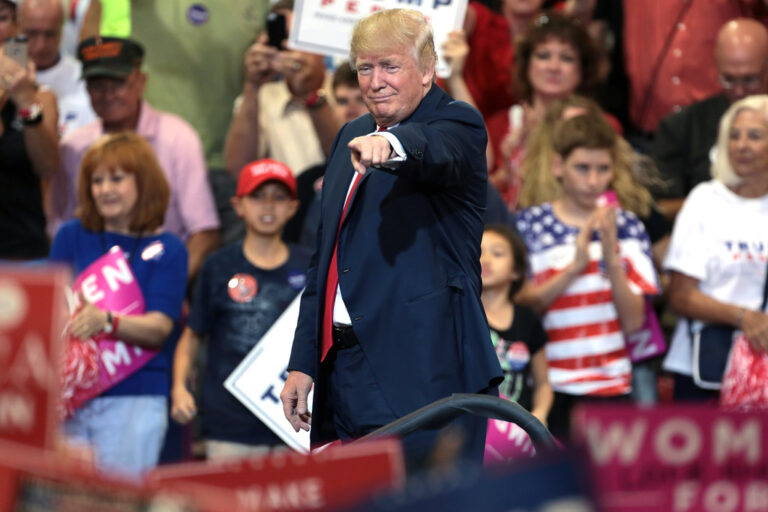
Trump Strikes Again, Chooses Ratcliffe for Famed CIA Director Role

0

Key Takeaways:

– Unease spikes within US intelligence community over a possible second Trump administration.
– Previous antagonistic relationship between spy agencies and Trump fuels their apprehension.
– Former intelligence director, John Ratcliffe, is rumored to be Trump’s pick for CIA Director.
– The choice of Ratcliffe stirs cautious optimism among some of the career officials.

The Return of Trump

The potential re-election of Donald Trump as president yields nervous glances within the United States intelligence community. Sharp memories of conflicts between the nation’s spy agencies and Trump during his previous tenure as president have amplified this apprehensiveness.

The Bipartisan Split

Power dynamics are continuously resurfacing due to political disagreements. Notably, the strained relationship between Trump and the intelligence community. Their discord was initially brought to light due to differing viewpoints on many national security issues, sparking a sense of unease on what a potential second term would entail.

Ratcliffe’s Potential Appointment

However, tensions cooled somewhat when word got out that Trump selected John Ratcliffe as his choice for the head of the Central Intelligence Agency (CIA). Ratcliffe, who had previously served as the director of national intelligence, is an influential figure favorably seen as a professional in the intelligence community.

His rumored appointment provided a sprinkle of optimism, with some career officials anticipating some level of professionalism and stability. In fact, Ratcliffe is acknowledged as someone who could possibly bridge the divide between the intelligence community and the Trump administration.

Impact of Previous Tensions

To comprehend the root of the nervous anticipation, it’s essential to revisit the trials faced by the intelligence community in the past. On multiple occasions, Trump publicly rebuffed intelligence assessments on matters of national concern, stirring up controversy between his office and various spy agencies.

One of the leading instances include his disagreement with the intelligence community’s conclusion that Russia interfered in the 2016 presidential election. Trump’s defiance led to a strain that echoed throughout his presidency.

Trump-Ratcliffe Connection

Despite the tensions, Trump’s selection of Ratcliffe shines a ray of hope for the intelligence community and other concerned parties. They perceive Ratcliffe as a professional figure who could possibly balance the scales.

Ratcliffe’s reputation as the former director of national intelligence adds weight to these expectations. His record presents a strong case for the possibility of higher-level cooperation and mutual respect between the White House and the intelligence community.

Conclusion

President Trump’s decision to designate John Ratcliffe as CIA Director instills an air of cautious optimism within the US intelligence community. Though apprehension clings onto the memory of the fraught relationship under the previous Trump administration, Ratcliffe’s potential appointment offers a silver lining. With the former intelligence director in charge, the intelligence community anticipates a more professional and steady leadership capable of bridging any divide between the two parties.

As this rollercoaster of emotions continue to play out, only time will tell whether Ratcliffe’s role will bring a significant shift in the ongoing relationship dynamics between the Trump administration and the US intelligence community. For now, all eyes are on Washington, with bated breath for any further developments.

Sen. John Thune Wins Senate Majority Leadership Role

Key Takeaways:

– Sen. John Thune, R-S.D., has been elected as Senate Majority Leader.
– Thune overcame competition from Sens. John Cornyn, R-Texas, and Rick Scott, R-Fla, winning a 29-24 secret-ballot vote.
– This decision has defied expectations set by allies of President-elect Donald Trump.
– The 63-year-old will follow in the footsteps of Senate Minority Leader Mitch McConnell, who has led the Senate Republicans since 2007.

Thune: The New Force in Senate

The Republicans in the Senate have made their choice. They have elected Senator John Thune from South Dakota as the next Senate Majority Leader. Despite public appeals from President-elect Donald Trump’s allies who were in support of a different candidate, Thune emerged victorious. The secret-ballot vote results were quite close, but it was Thune’s day, winning by 29-24.

Overcoming Rival Candidates

The journey to victory wasn’t easy for Thune. He had strong competition from fellow senators. Revving up for the same job were Senators John Cornyn from Texas and Rick Scott from Florida. Still, Thune demonstrated that he was the preferred candidate in this race, outmaneuvering his rivals with a majority vote in his favor.

Carrying on McConnell’s Legacy

Thune succeeds Senate Minority Leader Mitch McConnell. The knowledgeable and experienced McConnell has been the leader of the chamber’s Republicans since 2007. However, it is now Thune’s time to steer the Republican Senate. The 63-year-old will have to put his years of experience to good use to live up to the high standards set by McConnell.

Ripple Effects of the Election

This decision from the Senate Republicans comes as a surprise to many, especially considering that allies of the President-elect were rallying behind another candidate. This move seems to signal a potential shift in dynamics within the Senate’s Republican ranks. With Thune now at the helm, it will be intriguing to see how the chamber’s politics will shape up.

Conclusion

The election of Sen. John Thune as Senate Majority Leader marks the start of a new chapter for the Senate Republicans. The road to his victory was not straightforward. Still, Thune managed to surpass competition from other influential senators and opposition from allies of the President-elect. As he steps into this significant leadership role, Thune has the challenging task of leading the Senate Republicans into the future. Everyone will be watching closely to see what his leadership style will bring to these political landscapes. Meanwhile, congratulations are in order for Sen. Thune for this significant achievement. It represents not only a personal victory but a noteworthy moment in the American political scene.

Is The Republican Party Changing?

0

Key Takeaways:

– Political scientists John Judis and Ruy Teixeira critique Donald Trump’s coalition longevity.
– Trump’s numerous promises might backfire and harm the U.S. economy.
– The fulfillment of the proposed mass deportation and tariff imposition spells potential economic disaster.
– Trump’s disruptive behavior and desire for power could obstruct Republican realignment.
– The historical context of UK political realignment may hold lessons for the U.S.

Despite Donald Trump’s significant win in the 2024 elections, political scientists John Judis and Ruy Teixeira hold reservations about the sustainability of the assembled voter coalition. By expressing that there’s potential for a crackup, both academics suggest Trump’s indestructible enthusiasm could buckle under the weight of challenging implementation and execution of his promises.

Cracks in The Republican Coalition

Trump offered multiple pledges to various dissatisfied electoral groups, each requiring time and resources for fulfillment. An endeavor this huge could inadvertently harm the American economy, given the broadness and scale of some of these promises. For instance, Trump’s vow to deport millions of undocumented immigrants could disrupt family structures and local communities. The potential aftereffects of such an act on the American economy cannot be overlooked.

Potential Tariffs and Economic Backfire

Beyond the deportation promise, the Trump administration has also talked about tariffs. Tariffs, unlike most Republican initiatives, operate through short-term price hikes aiming for long-term job creation in industries in peril. These short-term costs could make another inflation bout possible, this time imposed by Mr. Trump, which in turn could challenge the Republican coalition.

Trump Himself: A Barrier to Realigning

Trump’s disruptive behavior and apparent quest for power can limit his popularity. His desire for self-aggrandizement and vengeance against critics can prevent the kind of widespread popularity needed for an enduring realignment. Many of the difficulties during his first term sprouted from his own misconduct, igniting division and discord.

Drastic shifts in Trump’s personality, political scientists argue, remain unlikely. Trump’s pattern of creating chaos, drama, and division is well-etched into his political identity, potentially damaging chances for a lasting political shift.

Learning from The United Kingdom

The situation mirrors an incident in the United Kingdom in 2019. The Conservative Party thought that they had finally broken Labour’s electoral coalition but found themselves at the receiving end of massive defeat just five years later. The political strategists suggest that the Republicans could face a similar predicament.

Trump’s Second Term – A Roadblock?

Trump’s aspiration for a significant Republican realigning may not survive his second term. Pursuing numerous promises to appease various constituencies, tackling the economic challenges these promises bring along, and managing his own disruptive tendencies will be a challenging juggle.

If history offers any lesson, such realignment assumes continuity and consistency of leadership, which Trump’s disruptive personality might struggle to provide. However, as things have shown, even political science is not immune to surprises. Who knows, we might witness Trump pulling off a strong, enduring Republican realignment against all odds. Then again, we might not. Only the future has the answers. One thing is for sure – there will be a close watch on this journey.

Final Thoughts

Both John Judis and Ruy Teixeira agree on one aspect; Trump’s dream of a historic Republican realignment faces a tough road ahead. The promises made, the potential economic chaos, and the behavioral challenges only underscore their argument. Whether Trump’s second term will cement his legacy or crumble under pressure remains the question everyone wants answered. For now, all eyes are on Trump and the future of Republican realignment.

Trump’s Nomination of Pete Hegseth May Spark Senate Resistance

0


Key Take-Aways:

* President-elect Donald Trump nominates Pete Hegseth, Fox News host and National Guard veteran, as defense secretary.
* The surprising nomination could result in objection from Senate Republicans.
* Senators Susan Collins and Lisa Murkowski are expected to challenge the nomination.
* Hegseth has military experience but lacks experience in managing a bureaucracy or leading the Defense Department.
* Trump’s moves hint at an expansion of executive power, including the use of ‘recess appointments.’

The Surprise Nomination

In an unexpected move, President-elect Donald Trump has chosen Fox News host and decorated veteran, Pete Hegseth, as his nominee for defense secretary. This move, many speculate, could lead to rare objections from Senate Republicans. Hegseth, despite two Bronze Stars and 20 years of military service, lacks experience in negotiating a bureaucracy or serving in a role within the Defense Department.

Why the Nomination Could Face Opposition

Senate Republicans may not yield to President-elect Trump’s demand for approval of his nominated Cabinet members. Historically, Congress has shown strong support for the president in affirming cabinet choices. Still, there have been times when disagreements led to dramatic clashes. The nomination of Pete Hegseth may bring about such a conflict.

The Challenge with Hegseth’s Experience

Trump’s decision to tap Hegseth for the critical role of leading the world’s largest and mightiest military could raise eyebrows. The nomination could spark a study of Hegseth’s qualifications and experience under a finer lens. Though he is a decorated veteran, Hegseth does not have any previous experience serving in the Defense Department or guiding a bureaucracy.

Trump’s Bid to Expand Executive Powers

Observers believe that this move could be an attempt by President-elect Trump to expand his executive powers. Trump’s involvement in traditionally non-presidential purviews such as choosing the Senate majority leader and influencing media campaigns is raising concerns. One such example is the ‘Make America Great’ campaign led by Senator Rick Scott, which Trump is said to have supported.

Trump is also exploring a strategy called ‘recess appointments.’ This maneuver would allow the President to temporarily fill positions without the Senate’s formal approval, bypassing the usual process. The term of a recess appointee lasts for a year, requiring only a simple majority for approval.

Moderate Republican Senators to Watch

There are a few moderate Republicans who might resist falling in line with Trump’s maneuvers. Senators Susan Collins and Lisa Murkowski are often mentioned as likely dissenters. These Senators have historically been less isolationist in their approach. They are also less likely to overlook controversial positions taken by Hegseth who, for instance, lobbied Trump in the past to pardon war criminals.

In Sum

The upcoming weeks promise an interesting turn of events. The Senate’s reaction to Hegseth’s nomination can be seen as an early test of its willingness to stand up to Trump. It’s worth keeping an eye on moderates like Collins and Murkowski and watching how these dynamics influence the balance of power between the Senate and the newly-elected president.

Treasures from Ages Unearthed Near WWII Soldier’s Grave in Poland

Key Takeaways:
– Polish archaeologists excavating a WWII soldier’s gravesite make startling discoveries.
– The grave, located in Wdecki Landscape Park, concealed an assortment of ancient artifacts.
– Findings include Neolithic pottery, Mesolithic tools, and approximately 30 old European coins.
– The park announces further expeditions to continue the site exploration.

Ancient Artifacts Revealed in WWII Grave Excavation

In northern Poland’s Wdecki Landscape Park, archaeologists stumbled upon an unsuspected boon when they found the grave of a German soldier believed to have died in 1945. As the exhumation process commenced, not only did they uncover relics of a forgotten soldier, but they also revealed the park’s rich historical undercurrents.

Buried with the Soldier: History Preserved in Soil

As the archaeological team engaged in the recovery effort unearthed the soldier’s remains, they found more than just the relics of a fallen combatant. Beneath the surface, there was a fascinating mix of artifacts from across the epochs of history.

The most remarkable discoveries included a collection of ancient ceramic pottery traced back to the Neolithic period. They also found several tools hailing from the Mesolithic era, which are now the oldest artifacts found in the region.

Coins Strewn Over Millennia: A Pan-European Journey

Among the assorted historical items, the archaeologists were taken aback to find a diverse collection of approximately 30 coins. These coins spanned different territories and eras across Europe, avenues into historical periods as varied as the Roman and Byzantine empires.

“Exploring the site, we found an improbable scattering of coins from all over Europe and many different periods. It was as if someone had chosen this very place to discard their coin collection,” the park officials said. While speculation arose that these coins might have belonged to the German soldier, without any concrete evidence, this theory remains conjecture.

A Time Capsule in Pristine Condition

Remarkably, the condition of the artifacts unearthed was very well-preserved. The burial under the ground might have played a significant role in safeguarding them against weathering and erosion, essentially making the soil their protective cocoon. This surprising discovery offers a unique glimpse into the spectrum of human history and culture.

Exploring Further: Excavating the Rich Past

After this surprising find, the park authorities have planned further expeditions to delve deeper into this archaeological hotbed. The discovery of these valuable artifacts not only enriches our understanding of Polish culture but also links Poland to wider European history.

Beyond the somber reality of a WWII soldier’s grave, these archaeological treasures thrown up by the park’s serene landscape are reflective of the extraordinary ordinaries. They prove how the extraordinary lies within the seemingly ordinary and call us to look beyond what is visible on the surface.

As the investigation moves forward, so does the anticipation of uncovering more such hidden historical riches. The spectacular find in Wdecki Landscape Park is a testament to the layers of stories buried in our lands, waiting to be brought to life once more. Poland’s history, once concealed beneath the gravely soil and a quiet soldier’s tomb, now finds a voice in the treasures unearthed, inviting the world to listen.

The examination of these artifacts will surely contribute to the existing anthology of human history as the park continues to reveal more pages from its buried past. Evidently, the story of this WWII German soldier, and the artifacts that lay with him, is far from over.

Renowned Political Journalist Chris Wallace Leaves CNN

0

Key Takeaways:

– Seasoned journalist Chris Wallace departs from CNN three years after joining the network from Fox News.
– The post-2024 presidential election period is expected to witness significant cost-cutting across media houses.
– Wallace’s annual salary was reportedly around $8 million, making him a likely target for cost reduction.
– His exit follows that of Jeff Zucker, former CNN president, and the closure of the CNN+ streaming service.
– With moderate ratings for his weekend shows, Wallace’s final program on CNN is anticipated to air by this year’s end.

The Departure of Chris Wallace

After three impactful years at CNN following his transfer from Fox News, veteran journalist Chris Wallace has announced his resignation. The decision comes amidst rising anticipation of severe cost-cutting in media organizations after the 2024 presidential elections. As unanticipated as this development is, it does not cut ties completely, as Wallace harbors intentions of continuing active journalism either on a streaming platform or as a podcast host.

Ongoing Media Industry Adjustments

Wallace’s move away from CNN marks the onset of notable shifts in TV news dynamics. Aged 77, he is the first in what’s expected to be a string of high-profile journalists to bid goodbye to their news spaces. The reason behind these farewell waves? A post-election environment necessitating grand-scale cost-cutting across media institutions.

The High-Priced Poach Story

Wallace, who came to CNN from Fox News in late 2021, had a reported salary within the $8 million range. His considerable earnings made him a potential target in the cost-cutting initiative.

Evolution of Wallace’s Journey at CNN

Originally hired to grace CNN+ by then President Jeff Zucker, Wallace was part of the company’s maiden effort to launch a streaming service supplementing its cable operations. However, the chapter of CNN+ was closed soon after CNN transitioned into a component of Warner Bros. Discovery. As the torch of presidency passed from Zucker to Chris Licht, the structure of Wallace’s contract underwent changes as well.

On the cable network, he took over “Who’s Talking to Chris Wallace?”, where he efficiently conducted elaborate interviews with various celebrities. Demonstrating his versatility, Wallace steered a live discussion show on Saturday mornings in 2023 and appeared on CNN during special event coverage.

The Final Bow of A Stalwart

The swansong of “Who’s Talking to Chris Wallace?” will be broadcasted this Friday. The Saturday morning program is slated to run until the year concludes. Reflecting on an incredible journalistic journey, Wallace reminisces his 18-year tenure at Fox News that he left disenchanted.

Rewind to the Fox News Chapter

While he was at Fox, Wallace was a high-profile figure coming directly from a broadcast network to the conservative-inclined channel. Showcasing balance and precision, he moderated the presidential debates of 2016 and 2020.

However, his relationship with the channel was strained when a controversial documentary, disseminating false theories about the Capitol insurrection of January 6, 2021, aired on the Fox Nation streaming service.

A Look Into Wallace’s Illustrious Career

Coming from a family of journalists — being the son of the “60 Minutes” correspondent Mike Wallace — Chris Wallace held significant positions at NBC and ABC News. Before joining the ranks at Fox News, he was a correspondent at NBC, anchoring in Washington for “Today” and moderating “Meet the Press.” Between 1989 and 2003, he was a part of ABC News’ “Primetime Thursday” and “Nightline.”

As his extraordinary chapter on CNN wraps up, the industry awaits the next venture of the seasoned journalist. Wallace expressed his plans to stay active in the media world via streaming platforms or podcasts. His move indicates an evolving news landscape, with other major names in the industry likely to follow suit.

Trump Meets Biden as Power Shifts: GOP Takes Control, Democrats Regroup, and Cabinet Picks Take Shape

0

President-elect Trump is gearing up for a historical meeting today with president Biden, as well as other congressional members at the White House. This encounter looks set to underscore the peaceful transition of power in the U.S. This gesture comes four years after Trump contested the results of Biden’s win in the 2020 election and opted not to invite him to the White House, an act that is seen as a post-presidential election tradition.

Despite the awkward meeting, it is a significant day for Biden, his staff, and the Democrats around the country, as Trump’s administration brings significant change. His appointment comes after a major victory over vice president Harris, where he won all seven of the key swing states and claimed the popular vote.

The election sweep has also given the Republicans majority in the House and Senate, something which could have political implications as Trump enters office. “It’s very hard to imagine that President Trump won’t take the moment to at least spike the football a little bit — after all he did vanquish both President Biden and his hand-picked successor,” said Stewart Verdery, a founder of Monument Advocacy.

Along with Trump’s visit to the Hill, leadership fights are in full swing. Speaker Mike Johnson, a Republican from Louisiana, who led his conference to a narrow victory in the House elections, is facing criticisms from conservative hard-liners. These critics may not nominate a challenge to Johnson’s bid for the gavel but want to make their objections known.

Another challenge Johnson is facing is maintaining the razor-thin majority that House Republicans hold in the upcoming Congress. Trump has already nominated two House members for positions in his administration. However, despite the vacancies that Stefanik and Waltz’s nominations pose, Johnson remains optimistic.

Democrat Reconstruction: Looking towards the Future

Following the electoral defeat, Democrats are now refocusing their efforts. Predictions suggest that they will be looking towards a governor as their presidential hope for the 2028 elections. Since 2000, the Democratic Party has generally nominated a senator or a former senator for the top of the ticket. Not only does this often translate into a complicated voting history, but Senators also face the possibility of their record being used against them in the campaign.

Some Democratic governors who might run in 2028 include Josh Shapiro (Pa.), Wes Moore (Md.), Gavin Newsom (Calif.), Gretchen Whitmer (Mich.), Andy Beshear (Ky.), JB Pritzker (Ill.) and Tim Walz (Minn.).

“They would need to earn the right to take on the GOP standard-bearer,” says an insider.

Aside from the political maneuverings, the Medicare Part B standard premium is set to rise next year to $185, a $10.30 increase from the current rate. The annual deductible will also increase by $17, placing the total at $257 in 2025.

In national security news, Jack Teixeira, a former Massachusetts Air National Guard member, has been sentenced to 15 years in prison. The sentencing comes after he pleaded guilty to leaking highly classified military documents about the war in Ukraine.

\Conservation Success

In a win for science and conservation, a zebralike mammal, known as the quagga, has been brought back from the brink of extinction. Conservationists and scientists have achieved this milestone after nearly four decades of work, though not everyone is impressed with the “less stripey” result.

Anticipating Trump’s New Allies and Cabinet Members

Today, Trump is expected to nominate some of his conservative and TV-savvy allies to serve in his administration.

Among the individuals he has selected is Mike Huckabee, the former Arkansas governor and a regular Fox News host. Huckabee has been chosen to be the U.S. ambassador to Israel, marking a significant shift as it breaks the string of Jewish ambassadors to Israel since 2011.

Trump has also chosen U.S. Pentagon Chief Pete Hegseth, a Minnesota Army National Guard veteran. His nomination also came as a surprise to many.

One of Trump’s key nominees is South Dakota Gov. Kristi Noem. She is said to be considering her options for the Homeland Security Department, a role that focusses heavily on border issues.

Other individuals in his cabinet lineup include tech entrepreneurs Elon Musk and former GOP presidential candidate Vivek Ramaswamy. The duo is expected to advise on how to shrink government size and the federal debt, eliminate wasteful spending, and improve government efficiency.

The nomination of these highly reputed and skilled individuals indicates the strategic and calculated decisions Trump plans to take during his term in office to achieve his promises to the American people.

The Search is on for the Next Democratic Party Chair – A Crucial Turning Point

0

Key takeaways:

– The selection of the new Democratic Party Chair is a critical moment for the party, with substantial implications.
– The new leader’s decisions will guide the party’s trajectory as it seeks to regain power in the midterms.
– Potential candidates include Ken Martin, Phil Murphy, Laphonza Butler, Martin O’Malley, and Rahm Emanuel, among others.
– Current DNC Chair, Jaime Harrison, will likely not seek reelection.

Navigating A Pivotal Moment

The talk of the town in Democratic circles is centred around who will lead the party under the anticipated Trump administration. This appointment will be a revealing indicator of the direction the Democratic Party is planning to take. Many keen observers await impatiently for the first signs of how the party intends to recover from recent setbacks and regain power in the midterm elections. This is not just another competition; it’s a significant battle that will shape the party’s future.

Setting The Stage

Not only will the chosen party head control regular tasks like arranging the next presidential primary calendar, organizing the debate schedule, and deciding the 2028 debate participant criteria, but they will also walk a tightrope of enormous challenges. The new era demands efficient fundraising, dealing with a fragmented media environment, and some argue, a bottom-up rebuilding of the party. As Democratic strategist Jennifer Holdsworth puts it, this pivotal decision will tell whether the party has learned from past missteps and the direction it will take henceforth.

Potential Leadership Candidates

The party is abuzz with speculation about who could replace the current DNC Chair. Some names being mulled over are Ken Martin, Chair of the Minnesota Democratic-Farmer-Labor Party; Phil Murphy, New Jersey Governor; Senator Laphonza Butler of California; former Maryland Governor Martin O’Malley, and U.S. Ambassador to Japan Rahm Emanuel, to name a few. However, it must be remembered that at this stage, these are still only potentials; the actual race could throw up surprises.

Predictions and Possibilities

The incumbent DNC Chair, Jaime Harrison, is not projected to run for office again. Therefore, the field of the contest is wide open. It’s a challenging but exciting time for the Democrats, and their decision holds the potential to change the future course of American politics.

In Conclusion

All eyes are now on the Democrats as they navigate this crucial crossroads. The journey forward will undoubtedly be fraught with challenges, but this juncture is replete with opportunities for renewal and growth. The choice of who will lead the party is a critical one, with potential effects not just on the party’s future, but on the nation’s political landscape as a whole.

This is indeed a momentous time for the Democratic Party, as they face the herculean task of selecting the next Chair. The person at the helm will take on the responsibility of rebuilding the party, unifying its factions, and creating strategies for the future – no small feat by any measure. As Democrats nationwide anxiously wait for the decision, one thing is clear – the chosen individual will inherit a role of extraordinary significance, one that may very well shape the future of the party and by extension, the country.

Brain Cell Transplants: A Glimmer of Hope for Neurological Disorders

0

Key Takeaways:

– Astrocytes, star-shaped brain cells, could play a critical role in the treatment of neurological diseases.
– Many brain diseases result in the loss of neurons and astrocytes.
– Recent research suggests that replacing damaged astrocytes could help treat these diseases.
– Studies are underway to understand how transplanted astrocytes integrate into the recipient’s brain.
– The source and type of astrocytes transplanted can impact the effectiveness of the treatment.

What Are Astrocytes?

Astrocytes are star-shaped cells found in abundance in our brain and entire central nervous system. Despite their numbers, we know surprisingly less about them compared to other brain cells, particularly neurons. But what we do know is intriguing. They may just hold the key to treating a variety of diseases that affect our brains.

Understanding Neurological Diseases

Our brain is a complex organ. It’s composed of many different types of cells, and each of them plays a specific role. When some of these cell types are lost or damaged due to disease, it can have terrible consequences.

For instance, in amyotrophic lateral sclerosis (ALS), motor neurons are lost, while Parkinson’s results in losing dopaminergic neurons, and Huntington’s disease leads to the loss of GABAergic neurons. Alzheimer’s, on the other hand, causes a general loss of cells in our brain’s memory-forming regions.

What’s interesting is that all these diseases share a common link—the loss of astrocytes. Even more compelling, animal studies have shown that merely introducing disease-causing changes in these stars of the brain can result in symptoms and the progression of diseases like ALS.

Promising Therapy: Transplanting Healthy Astrocytes

Emerging evidence suggests that astrocytes play essential roles in brain functions. Keeping them healthy is crucial, and this has led scientists to explore therapies that could heal or replace damaged astrocytes.

One therapy getting a lot of attention is cell replacement. As the name suggests, it involves transplanting healthy and functional astrocytes into patients. There are already some exciting developments in this field, with one approach reaching early clinical trials for ALS patients.

Understanding Transplantation

While promising, transplantation is a tough nut to crack. Some studies see fantastic results, while others are left disappointed. So, a research team set out to understand why this happens.

To do this, they extracted immature astrocytes from young mice, multiplied them in cultures, and then transplanted them into mice whose astrocytes glowed green. This made for easy tracking, as the transplanted cells glowed red.

Observing Transplantation Results

What they discovered was amazing. The transplanted astrocytes could survive for up to a year, and they integrated into the host mouse’s brain almost seamlessly. These cells developed receptors and ion channels—needed for communication—just like native astrocytes.

However, they also found that the cells took a while to match the recipient’s astrocytes’ production levels. So, it seems there’s a settling-in period.

Factors Influencing Transplant Success

Several factors influenced transplant success. For one, the age of the mouse mattered. When they transplanted astrocytes into infant mice, the cells spread extensively. However, when transplanted into young adult mice, the cells stayed put.

Secondly, the type of astrocytes also made a difference. Even when they were put in a different region of the brain, astrocytes retained their original characteristics.

Promising Potential for Neurological Disorders

While we have a long way to go before astrocyte transplants become commonplace, this research offers a glimmer of hope. Many studies already find that these transplants help form normal contacts with neurons and promote brain regeneration following injury.

With more research, astrocyte transplantation may indeed prove to be a powerful weapon in our arsenal against debilitating neurological diseases. And as we unravel more mysteries about these star-shaped cells, we edge closer to a future where diseases like ALS, Parkinson’s, and Alzheimer’s could become a thing of the past.

Why Quality Equipment for Video Conferencing is Essential in Remote Work

0

The New Landscape of Remote Work

Welcome to a world where remote work is the new standard. Because of this shift, video conferencing has become more important than ever before. This technology makes it possible to communicate effectively with your team, collaborate on projects, and even conduct important company meetings. But to make these virtual interactions productive and hassle-free, professionals need great equipment for smooth digital meetups. Are you ready to learn about why it’s a big deal?

Video Conferencing: No More Optional

Consider for a moment: you’re leading a virtual meeting, then boom, your video quality turns terrible, and your voice is cutting in and out. It’s a nightmare, isn’t it? This scenario is a common pain point with lousy video conferencing equipment. No one wants to be in the middle of presenting a big idea and suddenly be interrupted by technical issues. That’s why quality gear has become a must.

Why Quality Really Matters

So, why is it that quality equipment matters so much? Put simply, better equipment equals better communication. If your microphone or headphones are of good quality, your voice will come out clear and understandable. Similarly, if your camera is of high quality, your video feed will be crisp and neat. It signals to others that you take your work seriously and respect their time by ensuring they can hear and see you clearly.

The Impact of Quality on Professionalism

The quality of the video conferencing equipment you use shapes how professionally you come across. When you have clear audio and video, it suggests that you’re professional and prepared. It’s like wearing a sharp suit or having a clean workspace. It might seem little, but anything that helps you project a professional image in this new world of remote work is worth taking note of.

The Role of Good Equipment in Productivity

Now, imagine you’re in a meeting. Everyone’s audio is clear, video feeds are crystal sharp, and there are zero technical difficulties. Pretty smooth, right? This kind of meeting efficiency can only happen with quality equipment. The time you’d otherwise spend grappling with rug issues can be used to get actual work done. More productivity, less tech-stress!

Choosing Quality Equipment: Basics to Get Started

If you’re wondering what you need to get started, here are some gears to think about: a good webcam, a decent microphone or headset, a reliable laptop or computer, stable internet connection, and a comfortable workspace. All these contribute to a successful video conferencing experience.

The Power of Technology in Remote Work

Video conferencing is not just a fancy tech term anymore. It has become a lifeline in the remote work landscape. It allows teams to stay connected, collaborate, and move forward. It makes possible the impossible – virtually! But, for this tech miracle to work its magic, having quality equipment is critical.

Final Thoughts: Investing in Success

The world of work, as we knew it, has changed forever. Remote work is here to stay, and video conferencing plays a huge role in this digital shift. To stay in rhythm, it’s crucial to adapt and invest in quality video conferencing gear. Remember, it’s not just about looking or sounding professional, but also about facilitating seamless, productive meetings. Embrace this new normal and invest in your professional success. After all, proper tools are a key not just to survive remote work but really thrive in it!