54.8 F
San Francisco
Wednesday, June 24, 2026
Home Blog Page 1489

Kennedy’s Vision for Health and Human Insurance Reform: A Deep Dive

0

Key Takeaways:

– Robert F. Kennedy Jr., nominated by Donald Trump, aims to make tech reforms in Medicare.
– He plans to scrutinize and revamp the way medical billing codes function.
– This idea is in line with many Democrats’ ideas.
– The coding system tends to benefit those who execute high-cost procedures, steering doctors towards becoming specialists.
– The American Medical Association shapes Medicare’s billing codes through a select group of physicians.

Robert F. Kennedy Jr.’s Revolutionary Plans for Medicare

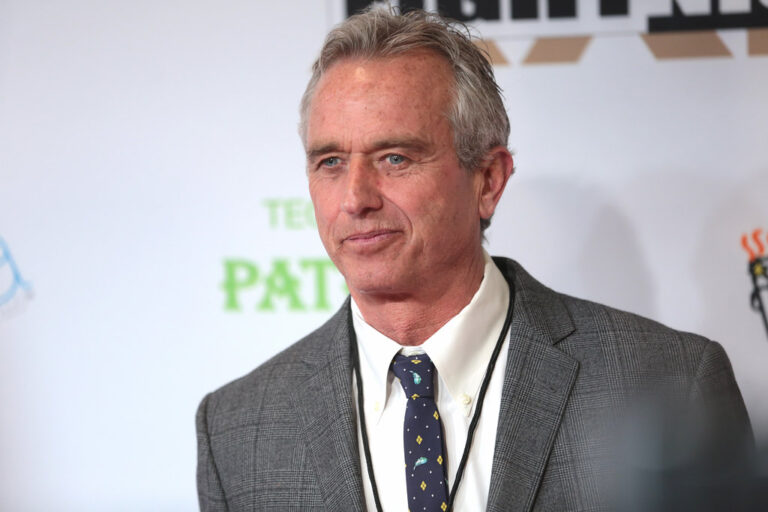
Robert F. Kennedy Jr., chosen by Donald Trump to head the Health and Human Services Department, has been known for his controversial opinions on vaccines, COVID-19, and AIDS. But there’s more to Kennedy’s reform agenda. His primary focus is on significant technical changes in how Medicare operates.

A New Approach to Medical Billing Codes

Kennedy’s idea is to scrutinize and improve the functionality of medical billing codes used in the national insurance program for senior citizens in America. This idea resonates with several Democrats who have long advocated for such changes.

Current Medical Coding Rewards Specialists

In the U.S., the medical coding system usually rewards health care providers who carry out surgical and other costly procedures. This practice often motivates doctors to pursue specialties since they will earn more income. That’s different from other countries, where most doctors opt for primary care, which has been associated with better health outcomes.

Intricacies of the Medical Billing Coding Process

Behind-the-scenes, the American Medical Association (AMA) governs Medicare’s billing codes. This powerful group, representing over 250,000 doctors, oversees a small panel of physicians. This panel, the AMA/Specialty Society RVS Update Committee (more commonly known as the RUC), studies the resources required for each medical service and provides recommendations to the federal government.

Nevertheless, the advice given by the RUC has historically been influenced by inaccurate estimates of how doctors utilize their time. This inaccuracy has raised corruption concerns, attracting attention from powerful figures, from former Senator Trent Lott to Senator Elizabeth Warren.

Dr. Mehmet Oz, a thoracic surgeon renowned for trivializing the COVID-19 pandemic and promoting unproven dietary supplements, was also selected by Trump to lead the Centers for Medicare and Medicaid Services.

Conservative Concerns about Kennedy’s Appointment

While there seems to be some bipartisan consensus on the medical coding matter, some conservatives are alarmed by Kennedy’s erratic views on GOP principles. Kennedy, formerly a democrat, has been criticized by the National Review due to his longstanding support for abortion rights.

All The Pieces Fit Together

It’s important to note that Kennedy’s intentions for the medical billing codes fit within a broader pattern. His reforms could considerably influence not only specialists but also primary health care providers, aiming to achieve a more balanced approach to healthcare. Kennedy’s initiatives, if implemented, could revolutionize Medicare technology, impacting millions of Americans. He wants every dollar spent on healthcare to bring maximum benefit, aiming to transform Medicare into an efficient, fair system.

Kennedy’s plans hold promise, as there are voices from both political parties that are supportive of overhauling the medical billing codes. It remains to be seen whether his attempt at reform can overcome the challenges, criticism, and discrepancies within the current medical coding landscape.

In conclusion, Kennedy has some formidable tasks ahead of him. These range from scrutinizing medical billing codes, encouraging primary care over specialization, and addressing concerns about skewed physician time allocation. However, if successful, these changes could lead to a more balanced healthcare system, providing better outcomes for all Americans.


Bitcoin Price Uptrend Continues to Hold: Steadily Climbing Toward New Peaks

0

Key Takeaways:

– Bitcoin price maintains a steady rise above the $92,000 zone.
– BTC shows potential to increase past the $95,000 level.
– Support for Bitcoin price is identified at $93,800 on the BTC/USD pair chart.
– Bitcoin’s price could face resistance near the $94,800 level.

Bitcoin Breaches $92,000 Zone

The price of Bitcoin is steadily ascending above the significant $92,000 region. This leading digital currency has demonstrated promising signs of continuing its rise, eyeing the $95,000 level as its next target. Bitcoin’s value began a fresh climb, surpassing the $92,000 territory, which indicates a positive outlook for investors and traders in the cryptocurrency market.

Above the $92,000 Zone: Chart Analysis

Bitcoin’s price, which is currently trading above the $92,000 barrier and the 100 hourly Simple Moving Average, shows no signs of declining. An in-depth analysis of the BTC/USD pair chart from Kraken’s data feed reveals a connecting bullish trend line forming. This trend line, with strong support at $93,800, suggests Bitcoin’s potential for a continued rise, especially if it can successfully clear the $95,000 resistance zone.

Breaking the $94,980 High

While the Bitcoin’s price supported well above the $91,000 level, it managed to form a reliable base. This led to the cryptocurrency pushing upward and crossing the $92,000 threshold. Bitcoin also succeeded in crossing the $94,000 level prior to a slight pullback, trading at a new high of $94,980. Despite a decline below the $94,200 point, Bitcoin’s price appears stable and is currently consolidating near the $94,200 level.

Projected Resistance and Momentum

On the higher end, Bitcoin’s price could encounter resistance in the vicinity of the $94,800 level. The first major resistance is projected near the $95,000 threshold. If the digital currency can clear this $95,000 resistance, there is a chance we could witness a higher rise. The next significant hurdle could be located at the $98,000 level.

Will Bitcoin Reach the $100,000 Mark?

Should Bitcoin successfully surpass the $98,000 resistance, the prospects for further gains are high. In such a scenario, Bitcoin’s price could reach and test the elusive $100,000 resistance level. Any further surge could propel the price toward the $102,000 resistance level, marking a significant milestone.

The Possibility of a Downside Correction

While optimism surrounds Bitcoin’s price, potential risks need to be acknowledged. If Bitcoin fails to overcome the $95,000 resistance region, it could start a downside correction. An immediate support level on the downside is near the $93,700 point.

Summary of Technical Indicators

The hourly MACD indicates a steady increase in the bullish zone. Furthermore, the hourly RSI is above the 50-mark, signaling an uptrend in the currency. The major support levels are identified at $93,800 and $92,800, while major resistance points are set at $94,800 and $95,000.

West Bank Annexation Prospects Fueled by Trump’s Re-election: An In-Depth Analysis

0

Key Takeaways:

– The Israeli Far-right Minister suggests annexation of the occupied West Bank in 2025.
– The Trump administration’s prior policies engendered Israeli control over Jerusalem while gradual Palestinian self-rule was envisaged.
– Netanyahu’s coalition agreement with the Religious Zionist Party fosters pursuit of West Bank annexation.
– The controversial move might hamper future Israeli intention to surrender territories for a political resolution.
– Palestinians vow to combat any such shift for preserving their historic rights to a separate state.

What is the West Bank and Why is it Significant?

The West Bank, situated west of the Jordan River, was once part of the British-mandated Palestinian territory. It is enveloped on three sides by Israel and bordered by Jordan on the eastern flank. The area became a topic of conflict after Israel took over during the Six-Day War in 1967. Tensions have heightened with Palestinians living under Israeli occupation with restrictions on movement and way of life.

Politics of the West Bank

In a heated 2006 parliamentary election, Hamas emerged as winners over the Fatah group led by Mahmoud Abbas, inciting sanctions from the U.S., European Union, and Israel. Abbas’s 2007 decision to end Hamas administration in the West Bank split the area from Gaza, leading to an economic blockade of the Hamas-controlled Gaza Strip while the Fatah-administrated West Bank was supported.

Implications of U.S. Policy Changes

Historically, the U.S. has backed a two-state solution that reinforces an independent Palestinian state parallel to the independent state of Israel. The Trump administration’s strategies favor Israeli control over Jerusalem and defend Israeli settlements in the West Bank, while suggesting Palestinian self-governance. Trump’s proposed U.S. Ambassador to Israel, Mike Huckabee, has disapproved of a two-state solution, suggesting the recognition of the West Bank as part of Israel.

Israel’s Position on West Bank Annexation

Netanyahu’s coalition agreement with the Religious Zionist Party has exhibited the possibility of imposing sovereignty over the West Bank. Bezalel Smotrich, a member of the Religious Zionist Party and Finance Minister of Israel, has expressed aspirations of working with President-elect Trump towards the annexation of the West Bank while respecting international interests.

Controversies Surrounding the West Bank

Annexing West Bank would complicate future Israeli efforts to cede territories for settling political disputes. Activists believe that the Israeli government exploits the country’s collective grief post the recent terror attack in promoting controversial West Bank policies. The financial augmentation of the outposts and transfer of territorial governance from military to civil personnel have intensified condemnation from monitoring groups and activists.

Probable Outcomes of a Potential Annexation

Analysts at Tel Aviv University provide different plausible scenarios. They suggest that annexation might involve complete Israeli control over the territory without necessarily granting citizenship to Palestinians. This could tie future Israeli governments’ hands, making it challenging to relinquish territories as part of a peace agreement.

The Palestinian Stance

Protests from Palestinian politicians point toward a continued fight for a state of their own, regardless of future policy changes. The struggle acknowledges the prospective hardships, yet refuses to compromise the Palestinian identity. The potential annexation of the West Bank by Israel portrays a profound realignment of geopolitical policies, thereby adding to the century-old argument over these territories. As the world awaits the future under the second Trump administration, the West Bank continues to remain a litmus test.

US Adults’ COVID-19 Vaccination Rate Below 20% as Flu Shots Also Lag, CDC Reveals

Key Takeaways:

– Less than 18% of US adults have received a COVID-19 vaccine during the 2024-25 respiratory disease season.
– The rate for influenza vaccination is only slightly higher, at 34.7%.
– Puerto Rico records the lowest rates for both influenza and COVID-19 vaccinations.
– Maryland and Vermont have the highest influenza and COVID-19 vaccination rates, respectively.
– Uninsured individuals are less likely to have received or plan to receive the vaccines.
– Estimates suggest the flu results in significant hospitalizations and deaths annually.

The Vaccine Scenario

According to a recent report by the Centers for Disease Control and Prevention (CDC), only 17.9 percent of US adults have been vaccinated against the COVID-19 virus amid the 2024-25 respiratory disease season. Even the influenza vaccination rate stands at a relatively low 34.7 percent, leading to concerns about the country’s vulnerability to these diseases.

The Willingness to Get Vaccinated

The report also surveyed Americans’ willingness to get vaccinated. It revealed that 35 percent of US adults are open to receiving an influenza vaccine, with 41 percent ready for a COVID-19 jab. Interestingly, 40 percent showed receptiveness to an RSV vaccine, suggesting a comparable willingness across disease categories.

Geographical Variation in Vaccination Coverage

A notable takeaway from the CDC report is the varying vaccination rates across the US and its territories. Puerto Rico stood out, unfortunately, for the wrong reasons, recording the lowest rates for both influenza (17 percent) and COVID-19 jabs (5.2 percent).

The gap narrows for the states with the highest rate of vaccination. Maryland leads for influenza coverage at 50.5 percent, while Vermont tops the charts for COVID-19 with a vaccination rate of 33.9 percent.

Insurance Coverage Affects Vaccination Status

When it comes to individual demographics, those lacking insurance stand to lose. Uninsured people reported lower vaccination rates for influenza and COVID19 compared to the general population. This group also showed less likelihood of intending to get vaccinated this season.

The Public Outlook on Vaccination

On the heels of this report, a Pew Research Center survey showed that 60 percent of Americans are ‘probably not’ going to get an updated vaccine this year. Viewpoints were more divided over COVID-19 boosters, with just under a quarter of respondents likely to get the shot and 15 percent confirming they had already received it.

Addressing the Unvaccinated Population

The CDC’s urgent recommendation is for everyone aged six months and older to receive an updated COVID-19 vaccine. This necessity cannot be overstated, considering the flu alone accounts for 100,000 to 710,000 annual hospitalizations and 49,000 to 51,000 deaths. Older adults and those never vaccinated before are particularly urged to take the jab, given their heightened risk from these infections.

Final Take

While the report paints a sobering picture of present vaccine coverage in the U.S, it underlines the importance and urgency to increase vaccination rates. Addressing disparities, improving accessibility, and spreading awareness can play a crucial role in ensuring enhanced coverage and thereby safeguarding the health of the nation.

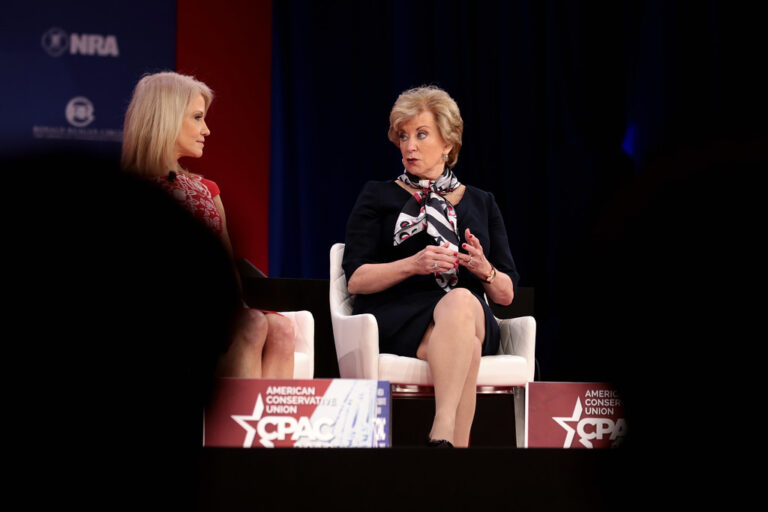
Trump’s Education Secretary Nominee, Linda McMahon, Might Dismantle The Department She Should Lead

0

Key Takeaways:

– Linda McMahon, formerly the Chief Executive Officer of the World Wrestling Entertainment, has been nominated by president-elect Donald Trump to lead the Department of Education.
-Trump, like Ronald Reagan before him, has expressed intentions to dismantle the department, thus realizing a consistent Republican Party goal.
– The breakdown of the department would result in programs and initiatives needing to be reorganized into different departments, a process likely to create uncertainty and complexity.
– The proposed dismantling of the Department of Education signifies a broader commitment to substantial changes by the Trump administration.

When President-elect Donald Trump announced that Linda McMahon, the former chief executive of World Wrestling Entertainment, was his pick for the secretary of education, it raised more than a few eyebrows. McMahon, a loyal supporter of Trump, may now find herself in the unique position of being directed to dismantle the department she’s slated to manage.

Understanding this unraveling, we must delve into the history of the Department of Education along with its function over the past five decades. By the time the department was established by Congress in 1979, the federal government had already been playing a significant role in shaping educational policy and steering funding.

Starting with Education Policies

Federal student loan programs were initiated by the Higher Education Act in 1965, while the Basic Educational Opportunity Grant, the precursor to today’s Pell Grants, was launched in 1972. Predating both, the G.I. Bill of 1944 provided funding for higher education for veterans of the second world war.

At the elementary and secondary education level, federal involvement began with the Smith-Hughes Act of 1917, focusing on vocational education. Federal attention to mathematics, science, and language education commenced in 1958 with the National Defense Education Act.

Ambition vs. Reality

When the Department of Education was formed, the now-split Department of Health, Education, and Welfare divided into the Department of Education and the Department of Health and Human Services. The move was bipartisan, despite President Jimmy Carter championing it. In less than a year, a strong partisan divide regarding the Department of Education became evident, with Reagan campaigning for its elimination.

So, what does the dissolving of the Education Department entail?

In essence, the functions and programs of the department would need to be reassigned. Since ending a program doesn’t terminate it, this would likely result in a complex and chaotic reshuffling process that could destabilize key programs for K-12 and university students.

Part of a Bigger Picture

In the broader blueprint of the Trump administration’s educational agenda, there are plans for drastic changes that would affect existing Education Department programs. Proposals include school voucher plans, likely funded through federal tax credits, and program cuts like ending the Head Start early childhood education program.

What’s to Come?

The landscape of the Department of Education is set to change dramatically under this administration. Initially, we can likely expect executive orders altering the implementation of laws, such as removal of protections for transgender students.

Subsequent changes may be witnessed in the budget allocated to education programs. Based on past votes, it is expected that Trump’s educational agenda will receive overwhelming Republican congressional support.

However, the attempt to abolish the Department of Education might prove to be politically challenging even for the determined Secretary-designate, Linda McMahon. Ultimately, the appointment signals landmark changes in the works for the Education Department and the American educational system overall.

Syria Conflict Escalates: Jihadist Forces Overrun Government Outposts, Russia Increases Airstrikes

0

Key Takeaways:

– Tensions in Syria surge as Hayat Tahrir al-Sham (HTS) launches extensive attacks on government forces
– Russian warplanes, backed by the Syrian Air Force, bomb civilian targets in Idlib, reportedly killing dozens
– Rumors circulate about President Bashar al-Assad’s possible escape from Syria
– Israel’s leaders remain watchful of Syria’s developments, pledging to protect Israel’s interests and achievements

Retaliation from Lebanon and Restarted Infighting in Syria

As Israel and Lebanon settle into a shaky ceasefire, attention has returned suddenly to Syria, where the power struggle has re-ignited. This unexpected resurgence of fighting in Syria shocked global audiences, taking the focus away from the 14-month conflict between Israel and Hezbollah.

Among Syria’s numerous contenders for power, President Bashar al-Assad enjoys the support of Russia and Iran. Still, the Islamist group Hayat Tahrir al-Sham (HTS), al-Qaida’s former branch, has intensified its bid for power.

HTS Launches Extensive Attacks on Government Forces

On November 28, the HTS initiated an extensive assault on the Syrian government troops. The insurgents swiftly took over the Syrian army’s bases, causing substantial casualties among the Russian special forces who were supporting the Syrian government.

Russian Warplanes Bomb Idlib

In the aftermath of these events, Russian warplanes, supported by the Syrian Air Force, retaliated by bombing civilian areas in the city of Idlib, northern Syria. These airstrikes have reportedly led to many fatalities, raising international concerns about the rising humanitarian crisis in the region.

Is Turkey Supporting Jihadists?

While Assad can count on Russia’s support, there are indications that Turkey, a NATO member, is backing jihadists who’ve seized the chance to attack their enemies, the Kurds. Meanwhile, Kurdish forces in Aleppo are taking measures to protect their region and Syria’s Christian population from the Islamist insurgents.

Assad’s Fate and Grave Human Rights Violations

Unverified rumors circulated over the weekend about President Assad and his family fleeing Syria, possibly for Russia. Despite Assad’s ruthless reign that resulted in thousands of Syrian deaths and displacements, the situation might not see an improvement if the country falls into the Islamist insurgents’ hands. There are already reports of public decapitations, strict enforcement of sharia law, and intimidating tactics being employed by these so-called rebels.

Israel Keeps a Watchful Eye

As Syria’s situation unravels, Israel’s Prime Minister, Benjamin Netanyahu, has pledged that Israel will protect its interests and safeguard its wartime achievements. He emphasized Israel’s vigilance in monitoring the developments in Syria, expressing resolved determination to safeguard Israel’s security.

Understanding the Future of Syria

Should the Assad regime lose its influence in Syria, it doesn’t necessarily translate to a beneficial outcome for Israel. Israel’s viewpoint suggests that whoever inherits the power from ousted Assad—especially if they’re influenced by jihadists — may not necessarily be friendly towards Israel. The situation remains fluid, with a sense of apprehensive uncertainty shadowing the Middle-East.

This latest turn of events in Syria signals how quickly geopolitical dynamics can change. As the fabric of the so-called ‘Axis of Resistance’ appears to be fraying, the real-time power reshuffle presents a precarious path with unforeseeable outcomes.

AOC For 2028 Presidency? A Conservative Top Shot Weighs In

0

Key Takeaways:

– Charlie Kirk, founder of Turning Point USA, warns about U.S. Rep Alexandria Ocasio-Cortez’s potential presidential run in 2028.
– Kirk asserts that the Democrat party may lean towards Ocasio-Cortez’s progressive stance.
– He notes the Republican party’s robust ‘bench’ in terms of potential candidates for future elections.
– Kirk also comments on the recent threats against President-elect Trump’s Cabinet picks, suggesting those responsible face severe consequences.

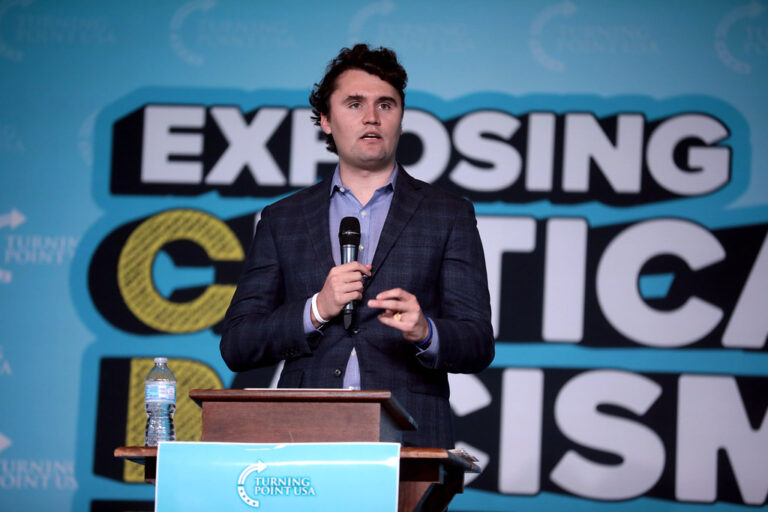
It’s possible that U.S. Representative Alexandria Ocasio-Cortez, a Democrat from New York, may consider running for President in 2028. Charlie Kirk, founder of Turning Point USA, recently shared his thoughts on this possibility, urging people to take her candidature seriously.

Alexandria Ocasio-Cortez, commonly known by her initials, AOC, is no stranger to the political spotlight. She has millions of followers on social media and has played an integral role in many policy debates. Kirk believes that she could certainly be a formidable choice for the Democrats if she decides to run.

A Progressive Future for the Democrats?

According to Kirk, AOC has a strong understanding of the energy of the Democratic base, which he believes leans towards progressive values. However, winning the support of rust-belt states like Ohio, Michigan, Wisconsin, or Pennsylvania with such radical, left-wing views could be challenging.

The potential of AOC running for the presidency in 2028 may serve as a litmus test for the core values and direction of the Democratic party. Will they persist with their current trend towards progressive, ‘woke’ ideas and policies? Or will they moderate themselves, adopting a strategy similar to Bill Clinton’s successful southern Democrat one in the 90s?

Kirk suspects that there are many people within the Democrat party who align more with AOC’s progressive stance. He advises that she shouldn’t be underestimated or dismissed lightly.

Filling the Republican Bench

During his conversation with fill-in host, Jackie DeAngelis, Kirk also touched upon President-elect Trump’s Cabinet picks. DeAngelis noted that these picks seem to be setting up the Republicans for a promising tenure leading up to 2028. The young, vigorous choices made for the Cabinet appear to be part of a ten-year vision for lower taxes, high growth, and secure borders.

As Kirk pointed out, team Trump includes Vivek Ramaswamy, Marco Rubio, Elise Stefanik, and others, possibly even Elon Musk and J.D. Vance for future presidential candidature. This dynamic team signifies a common sense party of fresh, innovative ideas. Comparatively, the Democratic party’s bench is less clear, raising questions about their next cohort of change-makers and appealing candidates.

Addressing Threats against the Administration

Switching gears, Kirk also expressed his views regarding recent threats and intimidation tactics against President-elect Trump’s administration picks. He strongly believes that anyone responsible for these acts should face the full force of federal justice.

Despite these negative incidents, Kirk reported that the team’s morale remains high. Amid adversity, their resolve to effect change intensifies, viewing their position as a historic mandate that is worth maintaining, irrespective of the presence of agitators.

In conclusion, whether it’s AOC running for presidency in 2028 or Trump’s Cabinet picks facing unwarranted threats, the political landscape continues to evolve. The coming years promise a mix of interesting candidates, fresh ideas, and progressive energy, not to mention an ongoing commitment to American values and protections.

As Kirk emphasizes, taking these potential shifts seriously, irrespective of your political leanings, is paramount to understanding the future of American politics. His observations serve as a reminder that change, while often challenging, is a necessary component of any democratic nation’s growth.

Trump Plans to Install Kash Patel as New FBI Director

0

Key Takeaways:

– President-elect Donald Trump has declared his intention to nominate Kash Patel as the new FBI Director.
– Pactel’s assignment would entail Christopher Wray’s replacement before his term concludes.
– Patel is lauded as a brilliant lawyer, and zealous advocate of the ‘America First’ policy.

Redefining FBI Leadership: Kash Patel Poised to Take Over

Unveiling an eyebrow-raising proposition, President-elect Donald Trump revealed a plan over the weekend to infuse fresh leadership into the Federal Bureau of Investigation (FBI). The man at the helm of this potential shift? None other than Kash Patel, a legal luminary and dedicated ‘America First’ advocate.

New Director in Sight: Who is Kash Patel?

A formidable figure in the landscape of American law and investigative work, Kashyap ‘Kash’ Patel, has now emerged as Trump’s chosen candidate for the significant role of FBI director. Trump’s decision to peg Patel for this eminent position is seen by many as a testament to Patel’s career-long commitment to the betterment of America.

With an impressive professional portfolio, Patel ticks all the boxes required for the mammoth task at hand. He is renowned throughout legal and investigative circles for his acute analytical capabilities and zeal for the ‘America First’ policy. Trump has previously praised these qualities, citing Patel’s unwavering drive for justice as critical in his decision.

Potential Early Departure for Christopher Wray

The decision to nominate Patel represents a potential early exit for current FBI director, Christopher Wray. Wray, who still has some time left in his term, could see his tenure curtailed should Trump successfully push forward with his plan.

Given the significance of its role and the power it wields, a leadership change at the FBI is always a key point of discussion. The fact that the current director could be replaced before the conclusion of his term adds an extra layer of intrigue.

What the Change Could Mean?

A change in leadership at the Bureau could signify a shift in management technique, policy direction, and operating mechanisms. However, the larger collective aim remains steadfast: ensuring that the FBI continues to fulfill its mandate of maintaining and protecting national security effectively.

Trump’s nomination of Patel sends a clear message — that an ‘America First’ guidepost will be at the heart of FBI decision-making. While many speculate about potential policy shifts under Patel, one thing is clear. If confirmed as director, Patel WILL prioritize America’s needs and safeguard national security with fervor.

In Conclusion

With President-elect Donald Trump’s announcement to nominate Kash Patel as the new FBI director, a new chapter seems set to begin at the Bureau. This change could steer the Bureau down a path that further upholds the ‘America First’ values, setting a new course for national security.

Though change is imminent, consistency is maintained in the Bureau’s mission: to protect and defend the United States. As Patel prepares to embark on this significant journey, the American public watches keenly on the future developments at the FBI. They anticipate a new era of effective enforcement under the leadership of Patel, a seasoned lawyer, investigator, and ‘America First’ warrior.

Condemnation of Trump’s Claim on ‘Woke Military’ and Focus on Diversity

0

Key Takeaways:

– Donald Trump condemned for criticism of military’s focus on diversity.
– Trump blames this focus for the military’s failure to establish a stable democracy in Afghanistan.
– His nomination for head of Department of Defense, Pete Hegseth, facing controversy over past sexual assault allegations.
– Conservative commentator, Max Boot believes Trump’s criticism has no merit and misdirects blame.
– He reiterated that diversity training is crucial for a military consisting of women and various ethnic minorities.
– Current military recruitment crisis linked to young people seeing the military as a perilous career, not because of diversity.
– Trump’s future plan to deploy military for mass deportations seen as a greater threat to military readiness.

Trump’s ‘Woke’ Military Viewpoint

Former President, Donald Trump, recently launched a critical assault on the United States military. He argued that the military’s growing ‘wokeness’ and focus on diversity have led to their failure in establishing a stable democracy in Afghanistan. This goes hand in hand with the nomination of Pete Hegseth, a Fox News personality known for his disapproval of women serving in combat roles, to lead the Department of Defense. This nomination is under scrutiny following the disclosure of a sexual assault allegation against Hegseth.

Public Sentiment

While some sections of the public might agree with Trump, due to disillusionment from the costly outcomes of the Iraq and Afghanistan wars, conservative commentator Max Boot argues that these criticisms lack substance. He emphasized that politicians tasked the military with transforming Afghanistan and Iraq into Western-style democracies, a considerable challenge given Washington’s limited engagement with both nations.

Leadership Quality

Trump’s claim has extended to current military leadership, which he dubs weak. To this, Boot responded by comparing them to the likes of Gens. George S. Patton and Douglas MacArthur, whom Trump seems to admire. Boot stated that leaders like Gen. David H. Petraeus, Gen. Jim Mattis, the late Gen. Ray Odierno, amongst others, are equal to any group of generals and admirals in U.S. history.

Role of Diversity

Diversity in the military has incited numerous discussions, but Boot emphasizes the essential role it plays. He affirmed that diversity training is critical for a diverse force and young recruits of various ethnicities and genders. Making the military a welcoming field for all is crucial, not just white males, he added.

Recruitment Crisis

The military is currently grappling with a recruitment challenge. Boot noted that the root cause is young people increasingly viewing the military as an undesirable career path due to apparent perils. This issue bears no relation to the military’s concentration on diversity.

A Real Threat

In conclusion, Boot highlighted a ‘far bigger threat’ that could undermine America’s military preparedness – Trump’s future plan to deploy troops in large-scale deportations and remove any objecting generals. This plan, according to Boot, is a distraction from the military’s critical task of preparing to confront potential threats from China, Russia, Iran, North Korea, and others.

Trump Praises Gaetz for Withdrawing from Attorney General Race amidst Scandal

0

Key Takeaways:

– Congressman Matt Gaetz’s decision to take his name off the Cabinet race received positive feedback from President-elect Donald Trump.
– Gaetz’s withdrawal came amidst unfolding allegations of misconduct which includes sex with a minor.
– Both Gaetz and Trump see the decision as a means to avoid distraction to the incoming Trump administration.
– Gaetz resigned as the House representative for Florida’s first Congressional District.
– The future of Gaetz’s political career remains uncertain, but Trump expressed optimism about it.

Heading into Rough Waters

Congressman Matt Gaetz recently made headlines by choosing to withdraw his name from the race for a cabinet post. This decision was met with immediate appreciation from President-elect Donald Trump. However, this comes at a time when Gaetz faces a House Ethics committee probe into some serious allegations.

Dodging Distractions

The charges include Gaetz’s involvement in a party where drugs were used and he is accused of having sex with a minor. Trump, while praising Gaetz for his efforts to gain approval for the post of Attorney General, tactfully avoided addressing these charges. He commended Gaetz on Truth Social, expressing appreciation for his efforts and explained that Gaetz did not want to become a hurdle to the incoming administration.

Gaetz Meets Trump’s Praise with Similar Words

Taking to social media, Gaetz echoed Trump’s sentiments. He blamed the escalating attention the allegations had gathered for his decision to withdraw from the race. In his statement, Gaetz explained that the contentious situation was detracting attention away from the important work of the ongoing Trump/Vance transition.

Prioritizing the Greater Good

Gaetz stated his belief that resources and time should not be exhausted on a prolonging Washington skirmish. Due to this reasoning, he pulled his name from the list of potential Attorney Generals.

Plans Ahead

Despite holding an uncertain future after resigning from his position as the Florida’s first Congressional District representative, Gaetz found a supporter in Trump. With the House Ethics committee closing in on a decision regarding the release of its report on the charges, Gaetz opted to step down from his position two days prior.

Scandal versus Defense

The allegations against Gaetz did not just end at sex with a minor at a drug-fuelled party. He also faces accusations of paying for sex, using illegal substances, accepting bribes, and misusing his campaign funds. These charges, which Gaetz vehemently denies, have the potential to severely impact his political career.

An Optimistic Future?

Despite the gloomy scenarios, Trump stands by Gaetz. In his statement, he expressed an optimistic view of Gaetz’s future, stating that he looks forward to witnessing all the great things Gaetz would accomplish. The question that remains and time will answer is – will Gaetz be able to navigate this storm, or will these allegations mark the end of an eventful political journey?