69.2 F
San Francisco
Thursday, June 11, 2026
Home Blog Page 1566

Understanding the Colorado Involvement in the National Popular Vote Compact

0

Key Takeaways:

– Colorado has joined the National Popular Vote Compact.
– The Compact has not yet become legally binding due to insufficient state participation.
– The National Popular Vote Compact seeks to ensure that the president is elected by popular vote.
– Gigafact, a network of associations, helps to clarify online claims.

Understanding the National Popular Vote Compact

By now, you may have heard about the National Popular Vote Compact. But, unless you’re a political whiz, you might still be wondering what it’s all about. In layman’s terms, the pact is striving to make a significant change in the US Presidential Election. It aims to make sure the president is chosen by popular vote, where the candidate with the most votes nationwide wins. It’s basically about giving every voter’s choice equal importance.

Colorado’s Role in the Compact

Adding to the list of already joined states, Colorado, too, has now aligned itself with the National Popular Vote Compact. Why? Well, it revolves around honoring the will of the people. Colorado believes that every vote should carry the same weight, regardless of the state in which it is cast. But an important point to keep in mind here is that Colorado’s involvement doesn’t make this pact legally binding – at least not yet.

What’s Holding Back the Pact?

Alright, so Colorado’s joined the pact – that’s great. But why isn’t it making the pact ‘official’? Simple. There aren’t enough states on board. For the National Popular Vote Compact to take effect, states with a total of at least 270 electoral votes need to sign on. That 270 figure isn’t just a random number. It’s the minimum majority needed in the electoral college to win the presidency. Currently, the pact is still a few states short.

Understanding Gigafact

Aside from the pact’s stakes, you’ve got to know Gigafact. No, it’s not a band or a new social app. Gigafact is a network of newsrooms that helps debunk or verify online claims. Think of them as internet myths busters. They investigate claims circulating on the web and determine whether they hold any water. They’re a pretty handy group to have around in the internet age where claims, rumors, and facts can sometimes blur into one.

Final Thoughts

The National Popular Vote Compact is a significant move toward transforming the general voting system in America. With states like Colorado getting on board, the Compact might eventually see the light of day. But until then, it remains an idea, awaiting sufficient state signups to become a reality.

And remember, when it comes to online claims, don’t always take them at face value. That’s where Gigafact steps in to set the record straight. Always look out for their briefs if you’re unsure about any hot topic circulating the web.

So, what do we have, in the end? Colorado joining the pact adds momentum to the goal of changing the way America elects its president. Yet, without enough state support, the compact doesn’t have legal force. As for all those contentious topics online, check in with Gigafact. They’re all about separating fact from fiction.

The Trump Turbulence: How Hurricane Relief Got Political

0

Key Takeaways:

– FEMA aid workers were allegedly ordered to bypass houses displaying support for Donald Trump.
– The order allegedly came from a FEMA supervisor, Marn’i Washington.
– Approximately 20 homes weren’t evaluated for potentially essential FEMA aid due to the reported directive.
– The controversial directive has left several families without potential disaster relief following the devastation caused by Hurricane Helene.

The Politics of Natural Disaster

In Florida’s Lake Placid, officials found a new obstacle in the wake of Hurricane Helene. FEMA workers were allegedly instructed to skip residences publicizing support for Donald Trump during the search for those entitled to federal aid. Instead of focusing solely on the devastating aftermath of the hurricane, alleged political bias interjected itself into the disaster relief process.

Hurricane Helene, Scourge of the Sunshine State

Hurricane Helene left significant destruction in its path, ravaging communities and creating dire need for aid. Assistance for such hurricanes normally comes directly from the federal government’s disaster-relief agency, FEMA. This aid is absolutely necessary for many families to rebuild their lives following the destruction.

FEMA Intervention Gets Controversial

FEMA aids in providing temporary homes, funding for home repairs, and emergency assistance for families drastically impacted by natural disasters. However, reports suggest that politics made their way into the crucial recovery process after Hurricane Helene hit Florida.

The guidance to skip homes showing support for Donald Trump reportedly originated from Marn’i Washington – a superior figure within FEMA. The instruction was allegedly delivered face-to-face and via internal communication channels used by the relief team.

The Unseen Victims of Bias in Relief

As a result of this alleged instruction, it seems a considerable number of homes were not given the opportunity to qualify for potentially life-saving FEMA assistance. Government employees mentioned that approximately 20 homes displaying Trump signs or flags were overlooked throughout October and November.

Internet documentation from FEMA workers reportedly identified skipped homes, stating “Trump sign no entry per leadership.” This blatant disregard for those in need due to their political beliefs painted a grim picture for democracy and humanity.

Analyzing the Fallout

Political bias in federal aid distribution could spell disaster for those affected by Hurricane Helene. It gives rise to a critical question: in times of desperate need, shouldn’t aiding people be beyond politics? It highlights the heavy politicization of the current climate, even extending to disaster response and recovery.

Families who were ignored due to their political leanings could have lost their chance to rebuild their lives. Moreover, these missed opportunities may have left families reeling from the disaster with fewer resources to cope.

Conclusion: Beyond Politics to Humanity

Our focus should not be on politics when natural disasters occur. Helping each other should come naturally, regardless of different political views. FEMA’s role is to support those affected by disasters, regardless of their politics.

The allegations of ignoring houses based on political viewpoints is a sad portrayal of the current state of affairs. Disaster relief should focus on the victims, their needs, and helping them recover. Political views should have no role in determining the allocation of such vital aid. It is crucial to understand and uphold this truth, ensuring those who need help receive it. It’s not about politics; it’s about humanity.

Digital Impact: Corner Fringe Ministries Expands Reach

0

Key Takeaways:

– Pastor Daniel Joseph founded Corner Fringe Ministries.
– The ministry now reaches out to a broader audience via digital means.
– Subscriptions to the Corner Fringe YouTube channel are encouraged.

Connecting Spirituality Through Digital Platforms

Corner Fringe Ministries is making headlines with its hit YouTube channel. Pastor Daniel Joseph, also the president and founder of the faith-based organization, is using cutting-edge technology to inspire and uplift. So, let’s dive a bit deeper into what he’s doing and why it’s become so popular.

Corner Fringe Ministries: A Closer Look

Just like in your favorite detective film, it’s time to put on our investigative hats. Let’s dissect this exciting ministry, led none other than Pastor Daniel Joseph himself. But who is Pastor Daniel Joseph? He is more than just a man leading his followers. He is an impassioned individual guiding people towards spiritual fulfillment.

The Tech-Guided Journey of Faith

It’s not every day that you see a ministry embracing technology like Corner Fringe. Pastor Daniel Joseph has made it his mission to utilize digital platforms to reach out. Hence, YouTube has emerged as the perfect solution. It’s as exciting as when you unravel a mystery plot in a book. The good news? There’s no need for suspense here.

YouTube: Spreading Spirituality One Click at a Time

The thought of subscribing to a YouTube channel probably doesn’t strike you as novel. We’ve all done it. Whether you’re following gamers, artists, or DIY enthusiasts, clicking that ‘subscribe button’ is a known routine. But subscribing to Corner Fringe’s YouTube channel? Now that’s a step into a deeper, more rewarding experience.

Why Should You Subscribe?

Let’s stop for a moment and ask, why subscribe? Maybe you’re curious, intrigued, or maybe, just maybe, you’re seeking something more. Subscribing to the Corner Fringe YouTube channel could be your ticket to a spiritual quest like never before. It’s like stepping into a new world of content, where spirituality and faith collide with modern technology.

Corner Fringe and the Digital Future

Corner Fringe Ministries, leading the charge with Pastor Daniel Joseph at the helm, is embarking on a unique digital journey. This adventure is not just about maximizing the power of YouTube. It transcends past the boundaries of video viewership or online subscriptions. It’s about creating a virtual space where individuals can explore and grow in their faith.

In this day and age, no longer do religion and spirituality exclusively reside within the four walls of a church. They have expanded, evolved, and are now thriving on digital platforms. Sounds intriguing, doesn’t it?

Final Thoughts: An Open Invitation

There’s no big cliff-hanger here, and definitely no plot twists. The story is simple yet powerful. You are invited to be part of this digital revolution. Subscribe to the Corner Fringe YouTube channel, led by Pastor Daniel Joseph. Take a step towards a spiritual journey guided by faith and enriched by technology.

In this virtual generation, where the digital and physical worlds continuously blend, here’s a chance to redefine spiritual experience. With one click, you’re not just subscribing to a YouTube channel. You’re aligning yourself with a faithful community, dedicated to expanding its reach in the digital world.

The story continues. You have the power to choose where it goes next. So, what will your next move be? Happy exploring!

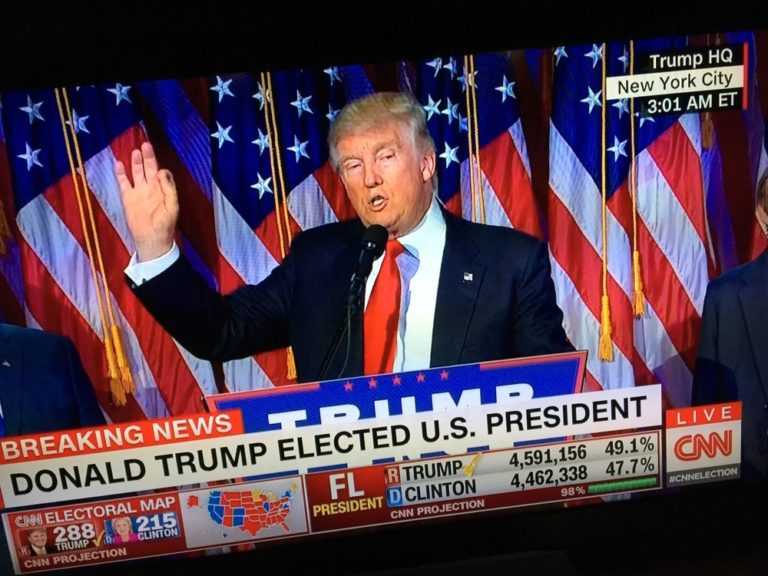
Second Term Triumph: Donald Trump Clinches 2024 Presidential Race

0

Key Takeaways:

– Donald Trump secures a decisive victory in the 2024 presidential race, defeating Vice President Kamala Harris.
– The election concluded with Trump gathering at least 295 electoral votes, seemingly winning the popular vote as well.
– The John Roberts court has been accused of repeatedly assisting Trump’s campaign and undermining democracy.
– Notable cases related to the election include Biden v. Nebraska and Trump v. the United States.
– Trump’s second term in office may see further shifts to the right in the U.S. Supreme Court.

Trump’s Miraculous Win: What Went Down

Bustling with surprises, the 2024 Presidential race has concluded with Donald Trump emerging victorious against Vice President Kamala Harris. Highly calcualated predictions from personalities like radio host Charlamagne tha God, who suggested that a legal challenge from Trump might alter the election outcome, weren’t warranted as Trump defeated Harris firmly.

The Election Numbers Don’t Lie

Pulling in a robust haul of at least 295 electoral votes, Trump managed an outright win. Interestingly, it seems he also clinched the popular vote which was an added feather to his cap. Post the decisive win, Harris made her concession speech, acknowledging Trump’s victory.

A Right-leaning Supreme Court in Sight?

With Trump’s decisive victory, one thing has become evident – his second term might witness the U.S. Supreme Court lean further to the right. The current court, sporting a 6-3 supermajority of GOP-appointed justices, provides a supportive foundation for this potential tilt.

The Role of the John Roberts Court: Boosting Trump?

Fingers are being pointed at the John Roberts court, blaming it for running interference for Trump. Critics argue that the court has played a major role in supporting Trump’s campaign more than once.

Democracy at Stake?

Some observers believe that the United States’ identity as a democracy is at risk, and a part of the blame is being directed at the Roberts Court. According to such critiques, the court has consistently damaged the democratic system.

By enabling billionaires to seize political power from ordinary citizens, exacerbating congressional deadlock, and rendering many elections into empty gestures, the court has inflicted monumental damage to democratic values, critics assert.

Notable Election-related Cases

Instances of court rulings that seem to support this view include cases like Biden v. Nebraska and Trump v. the United States. The former decision impeded President Joe Biden’s loan forgiveness plan, while the latter ruling received substantial critique.

The Trump v. the United States ruling returned verdict following Trump’s loss in the 2020 election and subsequent attempts to hold onto office, which culminated in a violent Capitol insurrection.

In the summer of 2023, special counsel Jack Smith charged Trump for his role in the ordeal. When the case was headed for a trial in March 2024, right during the Republican primaries, the Supreme Court intervened, resulting in a shock-inducing opinion from John Roberts.

Roberts’ Stunning Opinion: A Ticket to Immunity?

Roberts accepted Trump’s argument fully, concluding that former Presidents are now exempt from criminal prosecution for official acts. Even crime-related evidence has been rendered inadmissible if it involved official acts. This not only removed a major hurdle to Trump’s re-election but also ensured, if he returned to the White House, it would be with unprecedented power.

As we navigate through the waves of these political battles, it’s crucial to remember that this is our democracy. Voices need to be heard, and power must remain with the people, not the billionaires or the politically privileged. Irrespective of the election outcome, the fight for a truly democratic United States must go on.

Incoming Trump Administration Could Impact Organized Labor

0

Key Takeaways:
– President-elect Donald Trump is poised to bring significant changes to organized labor.
– His administration is predicted to offer more control to companies over worker management and overtime pay.
– The GOP blueprint Project 2025 proposes loosening laws on safety, nondiscrimination, child labor, and eliminating public-sector unions.
– These measures may face resistance from unions and labor organizations who benefited under President Biden’s administration.

President-elect Donald Trump’s return to the White House is expected to bring about significant changes to organized labor. His previous stint in the administration showed a less favorable stance toward labor unions. Now, there are speculations that his incoming administration could affect organized labor more intensely.

Potential Shift in Labor Control

During his 2024 presidential campaign, Trump managed to win over union voters. However, his approach toward organized labor previously has been less than friendly. In his earlier tenure, Trump administration filled key enforcement roles with attorneys more inclined toward management. They strategized to give companies increased control over workers’ tips, extend the time for anti-union campaigns, and have more discretion over overtime pay.

With Trump’s return, the scenario might not look bright for organized labor. His new National Labor Relations Board (NLRB) could be even more stringent toward unions, proposing to give companies even more authority.

Proposed Changes

As per the GOP blueprint Project 2025, the changes expected under Trump’s administration are extensive. They pitch for the softening of laws associated with safety. This includes aspects like nondiscrimination and child labor. Probably the most controversial proposal is the overall elimination of public-sector unions.

An eminent labor historian, Nelson Lichtenstein, suggests this could lead to a less regulated working environment where employers could act without restraint, impacting workers’ rights and workplace standards.

Resistance Expected

While organized labor seems to be on the receiving end of the challenge, it might not take things lying down. Jennifer Abruzzo, the general counsel for Biden’s National Labor Relations Board, warned about the potential backlash if Trump undermines their work to improve conditions for unions.

Speaking on the impending changes, Abruzzo said that workers might rise against them. The resistance might not just come from organized labor but also from individual workers discontent with the shifts.

The labor scenario under Biden saw several unions securing extensive new contracts and several victorious organizing campaigns. It also witnessed the removal of noncompete clauses that were inhibiting workers. If these benefits are restricted, the Trump administration could be playing with fire.

Final Thoughts

The potential changes floating around raise multiple concerns. A major worry is about how individual workers and unions will handle this possible shift. While Project 2025 signals to loosen regulations and minimize union influence, the actual implementation may vary depending on resistance and dispute resolutions.

As Trump prepares to take charge of the White House once again, the changes looming over organized labor bring about multiple uncertainties. It remains to be seen how far these proposals will alter the current labor landscape. The reaction this prompts from different labor factions could chart new courses for labor rights in America.

Undoubtedly, the future of organized labor under the forthcoming Trump administration will have eyes worldwide. It remains to be seen how effectively Trump manages to walk this complicated journey straddling worker rights, company control, and union influence.

Chair of Texas Democratic Party, Gilberto Hinojosa, Resigns After Election Losses

0

Key Takeaways:

– Gilberto Hinojosa resigns as Texas Democratic Party Chair following numerous election losses.
– For the first time since 1994, Democrats perceived Texas as a state where their candidates had a legitimate chance at victory; however, Republicans dominated.
– Hinojosa’s controversial remarks on transgender rights stirred up backlash from party members and LGBTQ supporters.
– Hinojosa’s successor will be chosen by the party’s executive committee and will serve out the rest of his term.

Resignation Announcement

The Chair of the Texas Democratic Party, Gilberto Hinojosa, announced his resignation on Friday. This decision comes after a recent election cycle where the Democratic Party suffered yet another landslide loss across the ballot.

Disappointing Election Outcomes

Observers saw the potential for Democrats to win a statewide race in Texas for the first time since 1994. This optimistic view, promoted by Hinojosa and other leaders, fell flat. Republicans swept the election, with Donald Trump winning the state by almost 14 percentage points. Additionally, U.S. Senator Ted Cruz beat Democratic challenger Colin Allred of Dallas by nearly 9 points.

The Democrats also lost three seats in the state legislature and the majority of contested appellate court races. Republicans proved victorious in ten countywide judicial races in Harris County, bucking the trend of Democratic dominance in Texas’ largest county.

Surprising Republican Support Among Latino Voters

Republican support among Latino voters, traditionally a Democratic stronghold, reached a new high. Exit polls indicate that Donald Trump grabbed 55% of this crucial voting bloc statewide. Furthermore, Trump won in all four counties of the traditionally Democrat-leaning Rio Grande Valley.

Controversial Comments Stir Backlash

Hinojosa’s comments about Democrats’ handling of transgender rights created a firestorm of criticism from party members and advocates. He suggested that the party could have chosen to either support transgender rights in all instances or recognize that certain aspects might be considered overreaching by a significant portion of their base. These comments led to considerable backlash, eventually leading to an apology from Hinojosa for the hurt and frustration caused by his words.

Mid-Term Departure

Hinojosa’s departure takes place in the midst of his four-year term, which he secured after his re-election at the 2022 Texas Democratic Convention. The party’s governing executive committee will choose his replacement, who will serve out the remainder of Hinojosa’s term.

Past Leadership Controversy

The 2022 chair election put Hinojosa’s leadership into question. Despite painting an overly positive picture of Texas as “the nation’s biggest battleground state,” his time in charge has yielded mixed results. His tenure saw the Democrats inching closer to statewide office in 2018, but losses in 2020 and 2022 have only emphasized the party’s struggle to meet expectations.

Despite Hinojosa’s resignation, the future of the Texas Democratic Party remains uncertain. The power to select the party’s new chair will fall into the hands of the party’s governing executive committee, raising questions on the party’s next steps. This critical decision will shape the direction of the Democratic Party in Texas, a state that remains a challenging landscape for them.

Shake-up In Senate: Major Republican Senators Expected to Chair Key Committees

0

Key Takeaways:

– Sen. Ted Cruz, Sen. Mike Lee, and Sen. Rand Paul are likely to chair key committees in the Senate.
– The Republican party also has to choose a leader to succeed Senator Mitch McConnell.
– Despite her past criticisms of President-elect Trump, Sen. Susan Collins appears set to become the head of the Senate Appropriations Committee.
– Other notable expected appointments include Sen. Chuck Grassley, Sen. Michael Crapo, Sen. Jim Risch, and Sen. Marco Rubio.

The Senate, New Power Structure

Three high-profile Republican Senators – Ted Cruz of Texas, Mike Lee of Utah, and Rand Paul of Kentucky – are set to have major roles in the Senate when its members reconvene in January. These appointments, besides others, are what will shape the power structure in the Senate.

Ted Cruz, known for his fierce stances, is on his way to becoming head of the Senate’s Commerce, Science, and Transportation Committee. This shouldn’t come as a surprise though, as he’s been a leading figure on that committee for some time now.

The Energy Discourse

Another senator preparing for a bigger role is Mike Lee from Utah. Chairing the Senate Energy and Natural Resources Committee is his upcoming assignment. His duties will surround significant issues like domestic energy policy and natural resources conservation.

Homeland Security’s New Helm

Kentucky’s Rand Paul is also gearing up for an administrative role. His appointment as expected chair of the Senate Homeland Security and Governmental Affairs Committee will place him in control of the security policies in our homeland.

Change of Guard

While these appointments are taking place, the party is also engaged in a crucial task – selecting a successor to Senate leader Sen. Mitch McConnell. The choice will define the party’s direction and strategies for the coming term.

Steering Appropriations Despite Differences

While Susan Collins of Maine has been critical of President-elect Trump in the past, prospects of her heading the Senate Appropriations Committee are high. The influential committee, responsible for allocating federal funds, will therefore likely be under her control.

Looking at Other Appointments

A series of other expected appointments is reshaping the Senate’s structure. Chuck Grassley from Iowa is set to lead the Senate Judiciary Committee, responsible for overseeing legal proceedings and potential amendments.

Sen. Michael Crapo from Idaho might ascend to lead the Senate Finance Committee. His role would revolve around taxation, economic policy, and public debts. Alongside, there’s Jim Risch, another Idaho Senator, who is likely to be heading the chamber’s Foreign Relations Committee.

Last but not least, rumors suggest that Marco Rubio of Florida is considering becoming the chair of the Senate Select Committee on Intelligence. This committee is integral in overseeing and making crucial decisions concerning intelligence activities and programs of the United States.

A New Year, A New Layout

As New Year’s Eve approaches, the landscape of the Senate is poised for change. The shift in committee leadership will bring new ideas, directions, and, most probably, policies. These appointments will, without a doubt, guide the coming year, shaping the legislation and decision-making processes that drive our country forward.

It’s a time of significant reshuffle, and all eyes are on these newly appointed leaders. Their leadership style, ideology, and dedication to their respective roles will govern the direction our country takes both politically and socially. As we witness this transition, and welcome a new year, we acknowledge the immense responsibility these leaders carry – shaping policies that directly affect our lives and future.

Supreme Court’s Right Flank Stirs Debate

0

Key Takeaways:
– Observers are concerned about the Supreme Court’s conservative leaning under the incoming Trump administration.
– Justice Amy Coney Barrett, appointed by Trump, varies slightly from her conservative peers in making decisions.
– Her views on executive power could serve as a check on partisan polarization.
– Barrett may be seen as one of the more persuadable right-wing justices, particularly by liberal justices.

Unexpected Potential in Conservative Supreme Court

As the inauguration of Donald Trump’s new administration approaches, many court-watchers have expressed their concern – can the conservative side of the Supreme Court make fair and independent decision? These concerns echo louder as it’s believed that the court played a role in helping Trump regain power. Yet within this conservative bloc, there seems to be a slightly different beat that’s catching attention – Justice Amy Coney Barrett.

Unique Perspective: Amy Coney Barrett

What sets Barrett apart from the five other conservative justices? Firstly, she is the only woman in the conservative group, which immediately brings a different perspective. Add to that, she’s a mother of seven, using relevant examples from kitchen-table discussions to larger legal debates. Secondly, and possibly more pertinently, Barrett is the only full-time former law professor on the right-wing of the court. This unique educational background accords her a different insight than her fellow justices.

Another key difference is that Barrett has never served in any high-ranking position in a Republican administration. This might make her less prone to dispense judgments that align directly with the GOP’s political agenda. It’s refreshing for observers to see a justice who appears to take a more objective stance during oral arguments and written decisions.

Barrett’s Views on Executive Power

When coming to executive power, Barrett’s stance has seemed measured. This was evident in the Donald Trump’s immunity case last July where her views were seen as tempered. Democrats might not get much reassurance from this fact, yet it paints a picture of a Supreme Court Justice who could possibly act as a counterbalance to Trump’s authority.

The Supreme Court’s Conservative Dominance

The Supreme Court has seen a significant domination by the Republican-appointed justices for over half a century. However, there have been instances when these justices did not toe the party line, much to the frustration of Republicans. A noted example is Justice Sandra Day O’Connor, who was appointed by Reagan in 1981 and retired in 2006. She managed to win favor with liberals while angering conservatives. The same pattern was seen with Justice Anthony Kennedy, who served from 1988 to 2018.

Court-watchers from the left wing are hopeful that Barrett might also follow in these footsteps. Already, she has had her moments of stepping away from the conservative line. One such instance was when she voted to temporarily prevent Idaho from banning emergency abortions, to the dismay of far-right Justice Samuel Alito.

However, let’s not forget that Barrett has been instrumental in key far-right decisions, including the controversial reversal of Roe v. Wade. This has cast doubts on her reliability as a potential ally for the left-wing of the court. Despite this, she is seen as more open to persuasion than her right-wing peers.

Finding a Middle Ground

Liberal justices have made a habit out of crafting their arguments with an aim to engage Barrett and potentially sway her decision. It is seen that during oral arguments liberal justices often pick up cues from her questioning to create relevant points for their own advantage.

In the midst of political polarization and judicial partisanship, justices like Amy Coney Barrett serves as a beacon of hope. Her uniqueness in her approach to decisions might influence much needed balance in the Supreme Court, reflecting a ray of light needed for democracy to thrive. Time will reveal her overall impact within the right-wing faction of the Supreme Court.

History Made As President-Elect Trump Awaits Sentence for Criminal Charges

0

Key Takeaways:

– Donald Trump becomes first convicted felon to win a U.S. presidency, defeating Vice President Kamala Harris.
– The President-elect awaits sentencing over 34 criminal charges from Justice Juan Merchan, planned for November 26.
– Bill Dalton, in an op-ed piece, suggests that Merchan could uphold the rule of law by sentencing Trump.
– Dalton’s viewpoint emphasizes that no one, including presidents, should be above the law.

Felon Elected President

In a historic moment for the United States (US), Donald Trump, the President-elect, made landmark news by transitioning from a private citizen to the first convicted felon elected as president. This unprecedented event comes as Trump awaits sentencing on 34 alleged criminal violations.

Awaiting Sentence

Trump, already familiar with legal scrutiny, has faced criminal charges in three separate cases. Justice Juan Merchan, the presiding judge, has marked November 26 as the sentencing date. This unprecedented situation has led to much discussion and speculation on the implications for the rule of law in the United States.

Rule of Law Goes on Trial

Bill Dalton, a journalist, believes this is an opportunity for the judge to uphold the rule of law. According to Dalton, Justice Merchan should sentence Trump to a jail term. He argues that this would send a clear message – being a president does not place one above legal repercussions.

Dalton insists that this move is crucial because with the U.S. Supreme Court’s immunity ruling set to take effect post-Inauguration Day, sitting presidents will be immune from legal repercussions. This situation, Dalton opines, puts the rule of law at risk within the American judicial system.

Underlying Implications of the Historic Election

Dalton goes on to state that if Trump manages to dodge jail time due to his presidential status, the consequences could be devastating on two fronts. First, it would make a mockery of the established system of justice. He indicates that this could mean a damaged reputation for the prosecutors and the judicial system, as the election win has demonstrated that potentially, crime does indeed pay.

Secondly, according to Dalton, Trump’s victory could potentially turn what was earlier seen as a political liability, into a fundraising asset.

Striking a Balance Between Justice and Politics

Dalton highlights that Justice Merchan should exhibit the same courage Vice President Mike Pence displayed when he stood for the rule of law during the infamous incident on January 6. It is essential that Merchan shows the nation and the world that Trump’s election win should have no bearing on his decision.

To Dalton, even a single day’s sentence, light as it might seem given the severity of the charges, would re-emphasize a fundamental tenet of justice: no individual stands above the law.

The Bigger Picture

The pivotal debate that Dalton presents transcends this specific case. The real issue here isn’t just the anticipated sentencing of Trump, but rather, it underscores a fundamental principle: that the rule of law should be upheld, regardless of a person’s position.

In closing, Dalton suggests that if the principle that no one is above the law ceases to hold meaning in America, then the loss is greater than the defeat of Vice President Kamala Harris in the recent election. In essence, the recent election could end up being a defining moment, not just for Trump’s political career, but for the sacred principles of justice that form the bedrock of American society.

Trump’s Choice to Retain Shares in Truth Social Raises Corruption Concerns

0

Key takeaways:
– Donald Trump dismissed the rumors of planning to sell his shares in Truth Social.
– Critics raise concerns about potential corruption due to Trump’s refusal to divest his shares.
– Truth Social’s vague purpose and high valuation could allow people to manipulate it for their advantage.
– Comparisons have been drawn to Trump’s previous controversial business ventures.

Donald Trump, the former president, declared last Friday that he has no plans to part with his shares in Truth Social. This new venture of his, seen as a Twitter replica, has been something of a talking point. Trump’s decision to maintain his stake has given rise to the fear of potential corruption, mirroring his own past business enterprise, a hotel in Washington, D.C.

Controversy About Influence

Trump’s involvement in Truth Social presents an avenue for those wanting to win his favor. They might attempt this by investing money in the site. What amplifies suspicion is the lack of a genuine objective for Truth Social’s existence. With such ambiguous intent, questions naturally arise about whether this is a matter of interest overlap or just sound business choice.

It’s pretty straightforward. The potential for conflict becomes huge if Trump gains hefty profits from these deals yet continues to wave off the need to divest from the company.

What is Truth Social?

Truth Social is a social media network whose purpose isn’t very clear. Former Congressman and current CEO, Devin Nunes, claims that the platform serves as a haven. It’s a place where conservative voices need not fear account termination. They compare it to a baby ‘X’, Twitter’s rebranded platform under Elon Musk.

However, the bewilderment lies in its financial framework. Despite a fairly average income of about $4 million annually, Truth Social sports a multi-billion dollar valuation. This presents a captivating scenario for potential investors or advertisers. They can beef up this stream even further with substantial investments, leading to an abrupt boost in the company’s worth.

Potential for Profit and Favor

This environment poses an opportunity for someone hoping to catch Trump’s ear. Here’s how it works. A proposal to buy all outstanding stock at costlier than its current trading price might find favor with Trump. This single move could plump Trump’s pockets with billions of dollars. At the same time, it would be tough to decipher whether this was a purely commercial decision or a play to sway Trump’s opinion.

Another way to game the system might be to simply buy ads on Truth Social. Reality check – they don’t have many ads, which is clear from their revenue. A $10 million investment in ads is likely to almost triple their annual income. This would create apparent upward mobility for the stock.

Addressing the Concern

While the entanglement is tricky to untangle, the corruption query is a monumental issue that needs addressing. Trump’s refusal to let go of his shares in Truth Social prompts a concerning question: is this just another instance of business opportunism or a looming risk of vested interests leading to corruption?

In essence, Trump’s insistence on keeping his shares sparks uneasiness about potential conflicts of interest. Whether Truth Social’s unclear existence will become a hotbed for such issues remains to be seen. As it stands, knowing if any big moves to enhance the company’s worth are business moves or influence attempts is hard. But the worry is valid and conversation about it necessary – because after all, the stakes are high. And yes, we are talking about ‘billions of dollars’ high.