56.2 F
San Francisco
Wednesday, June 10, 2026
Home Blog Page 1594

Trump Clinches Pennsylvania, Marking a Key Victory in the 2024 Election

0

Key Takeaways:

– Significant Win: Donald Trump has secured Pennsylvania, a pivotal state in the 2024 presidential race, according to CNN and Decision Desk HQ.
– Battleground Status:The state was one of the most closely watched and contested, considered crucial to the overall election outcome.
– High Stakes Campaigning:Both Trump and Vice President Kamala Harris heavily campaigned in Pennsylvania, highlighting its importance.
– Historical Context:Pennsylvania was also the site of an earlier assassination attempt on Trump, adding to its significance in his political journey.
– Voter Surge:Final polling indicated a tight race, with increased voter turnout noted in urban areas like Philadelphia and on college campuses.

In a major turn of events in the 2024 presidential election, CNN has declared that Donald Trump has won Pennsylvania. This announcement was made early Wednesday, backed by Decision Desk HQ.

Pennsylvania emerged as a central battleground in the election, with analysts predicting it could be the decisive state in the contest. Both Trump and Vice President Kamala Harris devoted significant campaign efforts to the state, engaging with voters through numerous rallies and events.

The stakes were particularly high, as Pennsylvania not only plays a critical role in electoral strategies but also holds personal significance for Trump, being the site of a previous assassination attempt against him.

As the election approached, polling indicated an extremely close race, with a notable surge in voter turnout in key areas, particularly in Philadelphia and college towns.

Soaring High: Bitcoin Price Surges Over $70,000 As Trump Takes Lead

Key Takeaways:

– Bitcoin price soars past $70,000, showing signs of strength and breaking through the resistance zone.
– The BTC/USD pair broke a vital bearish trend line with resistance at $68,450
– As Trump takes the lead, a fresh Bitcoin rally is instigated with a 5% price increase.
– Substantial resistance at the $73,000 and $74,500 could impact the upward trajectory.
– A fall below the $73,200 resistance zone could trigger another Bitcoin decline.

Bitcoin Price Experiences Fresh Surge

The world of cryptocurrency is buzzing as Bitcoin price soars past the much-anticipated $70,000 level. The BTC/USD pair displayed a break above a significant bearish trend line with resistance situated at $68,450. Under these energized market conditions, Bitcoin continued to move up, trading above $71,000 and even surpassing the 100 hourly Simple moving average.

Fueling the Bitcoin Rally

Perceived as an efficient store of value and hedge against inflation, Bitcoin prices often react dynamically to major global events. This time, the catalyst appears to be the lead held by Trump in the current scenario. Evidently, his leadership is sparking a fresh and significant rally in Bitcoin, leading to an over 5% increase in price.

Bitcoin Breaking Resistance Levels

The upward trajectory instigated by Trump’s lead enabled Bitcoin to break through the notable $70,000 barrier. Furthermore, Bitcoin surpassed the 50% Fibonacci retracement level of the downward trajectory from the $73,574 swing high to the $66,836 low. This crucial breakthrough has seen Bitcoin trading above $72,000 and exceeding the 76.4% Fibonacci retracement level from the same swing high to low trajectory.

Facing Resistance at Higher Levels

Despite its vigorous surge, Bitcoin could encounter resistance around the $72,800 level. The first significant resistance lies near the $73,200 level. However, if Bitcoin manages to clear this resistance, it may continue soaring towards the next resistance level at $74,500. A confirmed break above this level could result in further gains, possibly taking the price to test the $75,000 resistance level. Should the ascending momentum persist, the price may be driven towards the intimidating $78,000 resistance level.

Late Hour Dips in Bitcoin Price

On the other hand, if Bitcoin cannot sustain its rise above the $73,200 resistance zone, the price may decline. The immediate downside support currently lies near the $72,000 level. The first major support is at the $71,200 level, followed by $70,500, defending the $70,000 mark from any further declines.

Technical Indicators Reflect Bullish Sentiment

The technical indicators add credibility to the upward Bitcoin sentiment. The MACD, or the Moving Average Convergence Divergence, is now gaining pace in the bullish zone. The RSI or Relative Strength Index for BTC/USD lies above the 50 level, suggesting that the bulls maintain control of the market momentum.

In conclusion, Bitcoin price is noted to experience a significant surge, showing signs of strength and breaking through critical resistant parameters. Sparked by Trump taking the lead, Bitcoin rally continues, leading to an impressive performance in the crypto market. However, the journey to newer highs could be challenging, with significant resistance levels on the higher side. With all eyes on Bitcoin, experts and investors wait with bated breath for the next significant move.

Kamala Harris Takes The Lead in Several Swing State Counties

0

Key Takeaways:

– Vice President Kamala Harris is leading in several Pennsylvania bellwether counties.
– Harris’s strongest lead is in Erie and Northhampton with 59 and 60 percent respectively.
– A strong performance in Lehigh and Berks counties improves Harris’s chances of winning the commonwealth.
– These early results show Harris overperforming compared to President Biden’s 2020 vote shares in these counties.

Leading in The Swing State

Politics have always been unpredictable, and often it’s the swing states that throw the biggest curveballs. The latest shocker: Vice President Kamala Harris has edged ahead in several swing counties in Pennsylvania. These include Erie, Northampton, Lehigh, and Berks.

Erie County Shows a Strong Preference

People there in Erie, a county known to sway between red and blue, seem to favor Harris. She has secured a majority, with about 59 percent of votes, leaving former President Donald Trump trailing behind at about 40 percent. Yet, taking Erie County doesn’t guarantee taking the commonwealth or the presidency.

Northampton County Follows Suit

Northampton County also shows a strong preference for Harris, where she leads with 60 percent of the votes. In 2020, Biden carried the county by a very slender margin. Now, Harris has managed to stretch that lead.

Strong Support in Lehigh County

Moving to Lehigh County, Harris has nailed it with 62 percent of votes, compared to Trump’s 37 percent. This county, known for its reactiveness to Trump’s controversial rally at Madison Square Garden, continues to show a strong favor for Democratic candidates. Biden wooed the county with 53 percent of votes in 2020. If Harris can gain more support in Lehigh, she’s expected to be in a good position.

Berks County: The Tipping Point

Berks County is a place to watch. The vote margins are narrower here with Harris leading at 50.9 percent and Trump close behind at 48.2 percent. It was Trump country in 2020 with a win margin of 53 percent. If Harris can turn this county blue, it significantly boosts her chances to win the commonwealth.

Understanding the Significance

These initial results are eagerly watched and analyzed as they often predict larger national trends. Should these counties go the way of Harris, it could spell victory. However, these are still early days. The final numbers could swing either way. What’s certain though is that Harris’s performance in these bellwether counties is making waves.

The Vantage Point

It’s important to understand that these counties often indicate the broader sentiment of the state, and perhaps the nation. Winning these counties doesn’t automatically mean capturing the presidency. Yet, success in these counties does significantly boost a candidate’s chances.

Remember, the commonwealth victory often depends on the combined performance in all the counties, not just one or two. So, while the lead in Erie, Northampton, and Lehigh is encouraging for Harris, it’s crucial to maintain the lead, especially in tightly-contested counties like Berks.

In Conclusion

The political landscape is evolving, and the early figures put Harris in a favorable position. However, the future is always uncertain in the high-stakes game of politics. The coming weeks will likely bring more twists and turns. But for now, it seems Vice President Kamala Harris is making a strong presence in the swing state counties of Pennsylvania.

Ted Cruz Retains Texas Senate Seat, Beats Democrat Colin Allred

0

Key Takeaways:

– Ted Cruz has been re-elected as the Senate representative for Texas.
– Colin Allred, a former NFL star and civil rights attorney, challenged Cruz in the race.
– Despite losing, Allred’s campaign drew attention to key local and national issues.
– The election marked another unsuccessful attempt by the Democrats to gain ground in Texas.

Cruz Claims Victory in Texas Senate Race

In the recent high-profile Senate race in Texas, GOP incumbent Ted Cruz has successfully defended his position against Democratic challenger Colin Allred. Cruz’s victory keeps the traditionally Republican-dominant state on the conservative side of the aisle.

Allred’s Hopes Dashed

Football star-turned-civil rights lawyer Colin Allred set out to make history by attempting to be the first Texas Democrat to win a statewide election since 1994. Unfortunately for Allred, his hopes were dashed as Cruz managed to maintain his grip on the Senate seat.

Texas Stands its Ground

Texas, the most populated Republican-controlled state, has been witnessing a widening political spectrum in recent years. This trend can be attributed to an influx of educated professionals often leaning towards liberal views. The newcomers primarily settle around the Texas Triangle, the metropolitan region of four major cities: Austin, San Antonio, Dallas/Fort Worth, and Houston. Yet despite the diversifying demographic, Democrats have found breaking the Republican stronghold to be a tough task.

Cruz and His Re-election Strategy

Ted Cruz, viewed by many as a far-right figure in US politics, faced a close re-election back in 2018 against former El Paso Congressman Beto O’Rourke. He prevailed by a narrow margin. For this election cycle, Cruz chose to highlight his bipartisan work in the Senate in an attempt to project a more moderate image. In contrast, Cruz’s campaign also stirred up contentious social issues to difficulty Allred’s campaign.

Allred’s Counter

Allred didn’t shy away from countering Cruz’s attacks. The former NFL star called out the incumbent for his contradiction on border security: Cruz had previously supported Ex-President Donald Trump’s controversial border policies. Allred also chastised Cruz for vacationing in Cancún during Texas’s severe winter freeze, which cost lives and caused widespread property damage.

Democratic Senate Map: On the Defensive

This year’s Senate map offered little advantage to the Democrats. It spotlighted their weak spots while hardly exposing any of the GOP’s. With few chances to go on the offensive, the Texas race was a significant shot for Democrats to protect their slender Senate majority. But with Cruz’s triumph over Allred, even the Lone Star State seems not to be up for grabs at present.

Looking forward, Texas continues to be a political battleground. Long-term trends suggest the state may become more politically dynamic. Whether these shifts can eventually tilt the balance of power remains a question for future elections. Despite this snapshot win, both parties know that the battle for Texas is part of the longer political game.

The Cruz-Allred matchup brought to the fore national debates about LGBTQ+ rights, border security, and political responsibility in times of crisis. These areas of contestation will influence the political landscape going forward, as will the way this race played out. We may have seen the end of this race, but not the end of competitive politics in Texas.

Latino Men Shift Support in Favor of Donald Trump, Shakes Harris’ Standing

0

Key Takeaways:

– Latino men are showing a significant shift in political preference, favoring Donald Trump over Vice President Kamala Harris by 54% to 44%.
– A decrease in support for Harris was also observed among Latino women.
– Former President Donald Trump appears to be making headway with independent voters in Georgia.

Latino Support Shifts to Trump

In a crucial political switchover, Latino men are supporting former President Donald Trump over Vice President Kamala Harris, a recent exit poll indicates. It’s worth noting that from leaning towards the Democrats by a substantial 59% to 36% margin in the previous election, Latino men flipped, opting for Trump 54% to 44%.

Downward Trend for Harris Among Latinos

Along with the surprising shift of Latino men in Trump’s favor, Kamala Harris also experienced a decline in support from Latino women. Although Harris still holds a 25-point lead in this demographic, it’s a noticeable downgrade from Biden’s previous 39-point edge.

The dynamic change among both Latino men and women could cast a shadow on a possible attempt by Harris in the presidential election of 2024. Latinos are a significant demographic in U.S politics, hence the shift to favor Trump could prove influential in shaping the political outcome.

Trump’s Gains with Independent Voters

Further strengthening Trump’s potential, early exit polls from the state of Georgia demonstrate that he is winning among independent voters. Independence comprise 31% of the electorate in Georgia, showing Trump leading by 11 points. This marked shift is noteworthy, as President Biden won this demographic by nine points in the 2020 elections.

Implications of the Shift

The impulsive shift in political preference amongst the key demographic of Latino men could raise eyebrows in the Democratic Party. Traditionally, this constituency has shown solid support for the party. The newfound favoritism for Trump could signal the need for Democrats to re-evaluate their engagement and policy approach towards Latino voters.

Significantly, the shift in support from Latino women and independent voters also pose questions. Latino women have long anchored Democratic success at the polls. A downward shift in their support for Harris, even though she still leads, could be problematic.

In terms of independent voters in Georgia switching sides, this trend underscores an area of concern for the Democrats. A competitive state like Georgia could sway the balance in favor of the Republicans if this trend holds in future elections.

With the political landscape constantly in flux, these trends are but early indicators. Politicians and parties need to continuously engage with voters of all demographics to understand their needs and concerns, shaping policies to address them.

Final Thoughts

The results of these exit polls paint an intriguing picture of shifting political dynamics among Latinos and independent voters. It’s a wake-up call for Vice President Harris and the Democratic Party, signaling a need to reassess and perhaps redefine their approach to these demographics. For Trump and the Republicans, this shift could provide an impetus to strengthen engagement with these newly-won supporter bases, to consolidate and potentially expand on these gains.

Although these are early trends, they could have a significant impact on the political landscape, possibly affecting major political contests in the future.

In the Throes of a Second Gilded Age: The Perspective of Experts

Key Takeaways:

– Experts believe we’re living in a second Gilded Age due to increasing income inequality.
– The widespread influence of big tech corporations is mirroring the dominance of large businesses during the late 19th century.
– Several experts are calling for stricter government regulations on tech companies.

The Heightening Income Inequality

A growing number of experts are coming to the conclusion that we are currently living in what resembles a second Gilded Age, a term used to describe the era of rapid economic growth and stark income inequality in the United States during the late 19th century. This belief forms due to the increasing levels of income inequality present in numerous western nations.

The Gilded Age, as it was in the late 1800s, was marked by an economic boom, a rise in large businesses and corporations, and a widening gap between the rich and the poor. Analysts observe that today, these hallmarks seem to be returning in full swing. This form of capitalism led by the super-rich is generating a chasm between economic classes, replicating the conditions of the first Gilded Age.

The Dominance of Big Tech

In the contemporary economic landscape, global titans from the tech industry have taken the mantle of the industrial magnates of the late 19th century. Companies like Google, Amazon, Facebook, and Apple are exercising an unprecedented level of influence and control, driving the global economy while reaping immense profits, often to the detriment of smaller businesses and individual consumers.

The growing sentiment is that these tech behemoths have been left largely unchecked, with existing laws and regulations lagging behind their rapid development and reach. In the eyes of experts, this mirrors the laissez-faire philosophy that allowed Carnegie and Rockefeller to amass immense power and wealth during the Gilded Age.

The Call for Stricter Regulations

With the second Gilded Age theory gaining traction, calls for stricter government regulation on the tech industry and increased efforts to close income gaps have grown louder. Advocates for these changes argue that modern laws have failed to keep pace with advancements in technology, and that existing regulations need to be updated or replaced to ensure a fair and competitive market.

Moreover, as tech giants become increasingly influential in modern life, the question of whether these corporations hold too much power is becoming prevalent. Critics of the industry argue for checks and balances, fearing the undemocratic consequences of a few entities controlling so many facets of society.

Looking Toward the Future

While discussions about tackling income inequality and reining in big tech are not new, the framing of our current era as a second Gilded Age seems to offer a fresh perspective on these pressing issues. It harks back to a time of massive societal change and challenges us to learn from past mistakes.

While the parallel is imperfect and the circumstances are different, the concerns about the concentration of wealth and power, and the societal inequalities they breed, remain the same. As we grapple with these complexities, the discourse around this new Gilded Age could provide the impetus needed for change.

One thing is for certain, the conversation about income inequality and the role of big tech in today’s society is far from over. As experts continue to draw parallels between our current times and the first Gilded Age, one can only hope that concerted efforts will be made to ensure a better distribution of wealth and a more equitable society.

In conclusion, as we grapple with the realities of a second Gilded Age, it is crucial for governments, policymakers, and citizens alike to better understand the implications and work towards a more equitable future.

US Presidential Race 2024: Latest Update on Polling Stations Closing Time

Key Takeaways:

– The 2024 Presidential race individual Democratic and Republican candidates await the outcome.
– Democratic candidates Kamala Harris and Tim Walz are ahead with 49% in New York Times national average poll.
– Polling stations across the United States close at different times, affecting when results can be announced.
– Depending on the state, polling stations will close between 7 p.m. ET to 1 a.m. ET.

It’s a matter of hours till some states in the US close their polling stations. The entire nation holds its breath, eager to know who will be the next President and Vice President of the United States. Pitted against each other in a tight race are Democratic duo, Kamala Harris and Tim Walz, up against Republican contenders, Donald Trump and J.D. Vance. The results lie in the hands of the electoral college majority. Kamala Harris and Tim Walz currently lead with 49%, closely trailed by Trump-Vance at 48% as recorded on November 5, 2024.

The Crucial Countdown to Result Declaration

Even though it would be ideal to have the winner announced instantly, the counting of votes is an elaborate process. It requires meticulous assessment to ensure accuracy. Therefore, a candidate may emerge victorious tonight itself, or the final count may stretch across a few days.

Election Day concludes on November 5, marking the official end of voting. Afterward, the votes are tallied to confirm the new Presidential and Vice Presidential office bearers, who will be moving into the White House.

Understanding the Polling Station Closing Times

The closing times of polling stations are state-dependent. To assist in understanding the schedule, here is a brief outline of station closing times across different states:

At 7 p.m. Eastern Time, the polls in Georgia, Eastern Indiana, Eastern Kentucky, South Carolina, Vermont, and Virginia will close. Voting closes at 7:30 p.m. in North Carolina, Ohio, and West Virginia.

An hour later, at 8 p.m. Eastern Time, polling stations in sixteen states will close—Alabama, Connecticut, Delaware, District of Columbia, Eastern Florida, Illinois, Maine, Maryland, Massachusetts, Mississippi, Missouri, New Hampshire, New Jersey, Oklahoma, Pennsylvania, Rhode Island, and Tennessee.

By 8:30 p.m. Eastern Time, only Arkansas will conclude its voting. Later at 9 p.m. Eastern Time, fourteen more states will shut their polling stations— Arizona, Colorado, Iowa, Kansas, Louisiana, most of Michigan, Minnesota, Nebraska, New Mexico, New York, North Dakota, South Dakota, most of Texas, Wisconsin, and Wyoming.

At 10 p.m. Eastern Time, Montana, Nevada, and Utah will close, followed by California, Southern Idaho, Malheur County in Oregon, and Washington at 11 p.m. Eastern Time. Hawaii closes at midnight Eastern Time, and eventually, Alaska will be the final state to close — except for Adak at 1 a.m. Eastern Time.

Stay tuned to find out which candidate will rise victorious after this closely battled, nail-biting Presidential race 2024. The world awaits the announcement of the next leaders of the United States as the polling concludes, and the counting commences.

US Gasoline Prices Approach Year’s Lowest: Trends and Predictions

Key Takeaways:

– Gas prices in the US are nearing their lowest point of the year.
– This drop in gas prices could stimulate economic growth.
– Experts anticipate a potential for further declines in future.

Subheading: Gas Prices Hit Near-Year Low

Consumers across the United States have been enjoying lower prices at the pump recently. Gas prices across the nation are currently nearing their lowest point for the year, providing some measure of relief for drivers in a time of economic uncertainty.

Subheading: Reasons Behind the Drop

While the exact reasons for this decrease in gas prices can be complex and multifaceted, there are a few key factors at play. Global oil prices have been on a downslide, largely due to a deflationary macroeconomic environment. Moreover, These falling oil prices directly translate to cheaper gas at the pump.

Subheading: Impact on Consumer Spending and Economy

The effect of this reduction in fuel prices goes well beyond just drivers. Economists suggest that lower gas prices can stimulate broader economic growth by freeing up spending in other areas of the economy. That extra money motorists are saving at the pump can instead be used to pay down debt, save, or spend elsewhere, thereby potentially boosting overall economic activity.

Subheading: Forecasted Trends: More Likely Declines

Although prices are already nearing their lowest point for the year, experts suggest there may still be scope for further reductions. Historical trends indicate that gas prices typically slump toward the end of the year as travel demand decreases after the summer peak. However, this pattern isn’t always consistent, and future trends can be influenced by myriad factors, both domestic and global.

Subheading: Implications for Drivers and Energy Sector

For drivers, lower gas prices mean direct savings. However, cheaper fuel also has significant implications for the energy industry. Lower oil and gas prices can squeeze profit margins for energy firms, potentially leading to job losses and other negative economic outcomes in regions dependent on the energy sector. It’s a balance of benefits and drawbacks that must always be weighed and considered with every fluctuation in energy prices.

In summary, the current drop in gas prices across the US offers much-needed relief for drivers and could potentially stimulate broader economic growth by encouraging consumer spending. With signs suggesting that prices may drop further, consumers and industry insiders alike will be keeping an eye on just how low gas prices might eventually go.

Concluding, forecasts suggest that although gas prices are nearing their lowest point for the year, there may still be potential for further declines. How pronounced these decreases may be and what their long-term implications might look like is an engaging topic for both motorists and energy sector stakeholders.

Subheading: The Road Ahead

Predicting future gas prices can be a complex task, as countless global and local factors come into play. Nevertheless, as they approach their lowest point this year, experts will continue monitoring these low gas prices. But for now, motorists can enjoy the financial ease provided by this year’s low gas prices while they last.

Deciphering Swing States: The Key Battlegrounds in 2024 Presidential Election

Key Takeaways:

– Swing states, pivotal in every U.S. presidential election, are states that could be won by either the Democratic or Republican candidate.
– Swing states differ in each election due to shifts in demography, economics, politics, and differences between candidates.
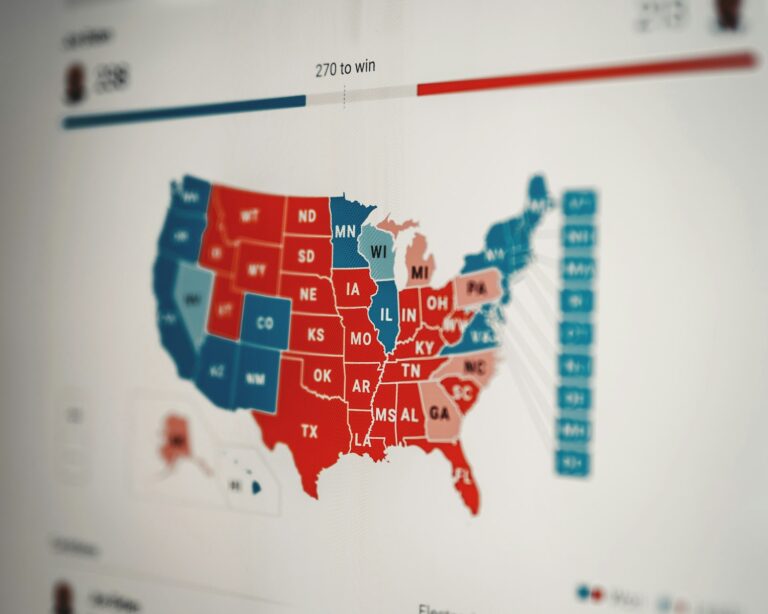
– The swing states identified for the 2024 election include Arizona, Georgia, Nevada, North Carolina, Michigan, Wisconsin, and Pennsylvania.
– According to predictions from FiveThirtyEight, the 2024 election will be a close race, with Presidential Candidates Kamala Harris and Donald Trump having nearly equal chances of winning.

Understanding the Swing States

In the realm of U.S. presidential elections, a crucial role is played by the so-called swing states. Often referred to as the “battleground states,” these are states where the vote could sway towards either the Democratic or the Republican candidate. Unlike the invariably ‘red’ or ‘blue’ states that consistently lean towards a specific party, the character of these swing states is essentially unpredictable.

For any U.S. Presidential Election, it’s particularly these states that hold the power to govern the outcome. They oscillate based on factors like demography, politics, economics, and the contrasting traits of the contestants. From the southeastern U.S. to the Midwest, these pivotal states are geographically varied.

Unraveling the 2024 Swing State Map

In case you’re wondering about the swing states for the 2024 election, they include Arizona, Georgia, Nevada, North Carolina, Michigan, Wisconsin, and Pennsylvania. These states have consistently emerged as the ones to watch closely. While Florida has been a classic swing state for years, it now leans more towards the Republican Party, according to a recent trend analysis.

Interestingly, states like Georgia and North Carolina, historically considered to staunchly favor the Republican party, have become areas of contest in recent years. Their changing political landscape has made them the new key players in the battleground stakes.

Predictions for the 2024 Presidential Election

As for who is likely to emerge victorious in the 2024 Presidential Election, it’s a neck-and-neck race as predicted by multiple political pollsters. Democratic candidate and Vice President Kamala Harris, and Republican candidate Donald Trump both have an almost equal possibility of winning, according to recent analytics.

Based on prominent statistician-led platform FiveThirtyEight’s recent projection, the battle is too close to call. In their simulation of 1,000 different election outcomes, Harris is projected to win in 503 scenarios whereas Trump leads in 495, leaving two simulations without a clear winner. The 2024 election is set to be tightly contested with a winning margin that’s as thin as a razor blade.

Relevance of Swing States

While the notion of swing states raises the stakes in presidential elections, it also underscores the importance of every vote. Whether you live in a historically ‘blue’ state, ‘red’ state or a swing state, each vote contributes to the fabric of our democracy. The fluctuating nature of the battleground states is a reminder that the political landscape is always evolving, with the power to shift resting in the hands of the voters.

In conclusion, to gain clarity on the U.S. Presidential Election, one must understand the concept of swing states. As candidates Kamala Harris and Donald Trump engage in the electoral fight for the Oval Office, these critical swing states are possibly going to be the ultimate deciders of the highly anticipated 2024 election result.

China’s Central Bank Reinforces Its Supportive Monetary Policy

Key Takeaways:

– People’s Bank of China (PBOC) confirms its supportive monetary policy
– An increase in the intensity of counter-cyclical monetary policy intended
– National People’s Congress standing committee expected to approve further fiscal stimulus
– PBOC cuts interest rates to boost slowing growth

Support for Monetary Policy

The Governor of the People’s Bank of China, Pan Gongsheng, confirmed plans to maintain a supportive monetary approach during a crucial meeting on Tuesday. This decision came from the PBOC’s aim to solidify China’s growth amid global economic fluctuations, as the central bank continues to focus on stable financial development.

Boosting Counter-Cyclical Monetary Policy

During the Tuesday meeting, Pan Gongsheng highlighted the need for increased intensity in counter-cyclical monetary policy. This approach is designed to manage short-term economic developments, offering support during periods of downturn. The Governor has been consistent in this message over recent months, reflecting the central bank’s commitment to China’s economic stability.

Anticipating Fiscal Stimulus

The announcement was part of the National People’s Congress standing committee’s meeting report, which concludes on Friday. The committee is largely expected to approve additional fiscal stimulus measures, further supporting the country’s economic growth.

Local Government Debt Limit Expansion

Lan Fo’an, the Finance Minister, addressed the committee about a proposal to increase the local government debt cap. This increase aims to replace hidden debt, a significant step towards strengthening the financial integrity of local Chinese economies.

Managing State-Owned Assets

In addition to the local debt limit, Lan Fo’an presented a report on managing state-owned assets. This signifies the government’s focus on maximizing the value and efficiency of its numerous state-owned enterprises.

Interest Rate Cuts

The PBOC started reducing a few of its interest rates in late September, with the aim of boosting stagnating growth. Following the US Federal Reserve’s decision to lower rates, the PBOC has also shifted towards a more relaxed approach. This action is seen as one of the ways China’s central bank is formulating responses to a slowing global economy.

Outlook

As the week progresses, it is anticipated that additional measures and decisions will be shared, all pointing towards China’s steps to secure its economy. The stance of the nation’s central bank, as shared by Governor Pan Gongsheng, remains critically supportive and proactive. By embracing such an approach, it appears China is committed to sustaining growth and stability, even in light of a turbulent global economic landscape.

The actions of the PBOC, combined with the expected approval of further fiscal stimulus from the National People’s Congress Standing Committee, underscores China’s determination to steer its economy successfully through these uncertain times.

As the world continues to observe, China’s decisions will serve as a vital indicator of how global economies respond to the current economic climate. Indeed, developments in the realm of monetary policy and economic reforms in the People’s Republic could provide key insights for other economies worldwide. In these times of global economic uncertainty, the actions of pivotal financial institutions like PBOC carry significant weight and relevance.