58.1 F
San Francisco
Wednesday, June 10, 2026
Home Blog Page 1607

Comparing 2024 Presidential Candidates on Foreign Policy Stances

0

Key Takeaways:

– Foreign policy emerges as a critical issue in the 2024 presidential race amid global tensions.
– A large section of American voters support Ukraine against Russia.
– A substantial group favors isolationism, fearing that aid to Ukraine could prolong an endless conflict.
– Trump and Biden view China as a global competitor but differ on dealing strategies.

The Foreign Policy Battleground

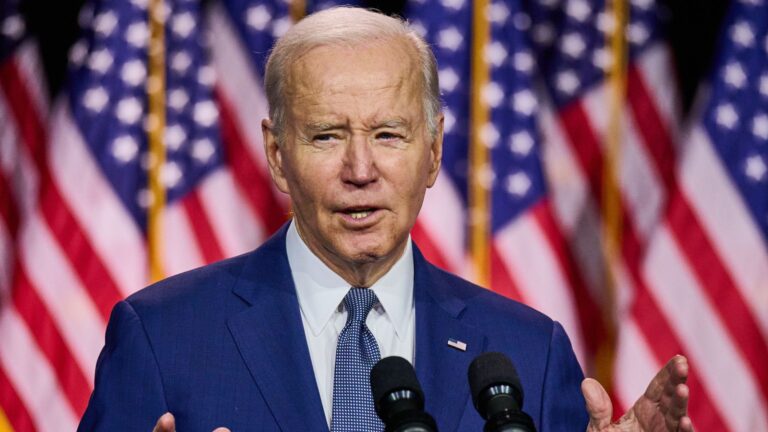
Foreign policy has taken center stage in this year’s presidential election due to escalating international issues. The candidates, Donald Trump and Joe Biden, are facing off in a heated debate regarding their stance on these issues. In particular, their viewpoint on the ongoing Russia-Ukraine battle and China’s position on the global stage have shaped significant talking points.

Public Sentiment on Russia-Ukraine Conflict

Observably, a large faction of American voters is rallying behind Ukraine against Russia. They express their support in various ways, demonstrating solidarity and advocating for aid. Yet, the situation is more complex than it appears at first glance.

There is a rising tide of isolationist sentiment among a different faction who view the conflict as a never-ending war. In their perspective, foreign aid can potentially exacerbate the conflict, rather than help resolve it. They envision an unintended consequence where American support might indirectly fuel this conflict.

The China Question

A consensus has emerged between Trump and Biden on one crucial point: China is a competitor. Both candidates have publicly conveyed their concerns about China’s escalating global influence.

However, where they deviate is in their approach to cope with this competition. This variance represents a core decision potential voters have to consider – a deciding factor to propel either towards the presidential seat.

Where Trump and Biden Stand

Comparing their stances, both Trump and Biden agree on the broad strokes but diverge on the finer points. One area where they find common ground is the perception of China as a significant world competitor. Both candidates are keenly aware of China’s rising global influence and economic power, creating an atmosphere of competitive urgency.

Yet the differences in their policy proposals are striking. Each candidate has a distinct approach to international diplomacy, economic policy, and warfare. While they share common ground on the need for a robust strategy, their paths to achieving it starkly differ.

Conclusion

Foreign policy, central to the 2024 presidential election, shapes an interesting dynamic in public opinion. With American voters divided on the Ukraine-Russia conflict and the candidates’ differing approaches towards China, the election narrative is set for riveting twists and turns. This debate introduces the question of what role America should play on the world stage. Are Americans ready for a more isolationist philosophy, or is the public calling for a more assertive presence in global affairs?

It’s crystal clear that whoever clinches the presidential seat won’t just be determined by their stance on domestic issues but also their perspective on these critical international matters. The 2024 presidential election isn’t just a test of leadership at home, but also abroad.

As always, the choice lies with the American public – a decision that holds profound implications not only for the nation but the broader world stage. That’s 2024’s crucial political question: What direction will America take in its foreign policy? Only time will tell.


Russian Forces Strike Supermarket in Ukraine’s Kharkiv District, 14 Wounded

0

Key Takeaways:

– Russian forces hit a supermarket in Kharkiv’s Shevchenkivskyi district with a guided aerial bomb, injuring 14 people.
– The impact resulted in damage to residential buildings, cars, commercial properties, power lines, and transportation routes.
– Four police officers are reported to be among the injured.

Russian Strike Targets Ukrainian Supermarket

The city of Kharkiv in Ukraine was earlier this month on the receiving end of a Russian aerial strike targeted at a supermarket. Notably, this act of aggression injured 14 individuals. The mishap reportedly occurred within the Shevchenkivskyi district, a populous residential area housing multi-story buildings and numerous commercial establishments.

Casualty Details and Extent of Damage

The impact affected not only the people but also damaged a wide area covering residential structures, cars, the supermarket building, and other commercial hubs. Initially, the State Emergency Service of Ukraine in Kharkiv reported 13 casualties, which was later amended by the Kharkiv regional police to 14 people, including four police officers.

Kharkiv’s Mayor, Ihor Terekhov, reported 11 casualties in the initial aftermath of the bomb attack. He explained that the Russian guided aerial bomb struck the supermarket located adjacent to large residential complexes. The bomb impact led to significant infrastructure damage, including shattered windows in nearby buildings, disrupted power lines, and damaged ground transport routes.

The Second Strike

Mayor Terekhov in his communication added another significant piece of information related to a second impact near a market in the city’s Kholodnogirskyi district. This unexpected occurrence shocked the residents, and though it resulted in no casualties, it shattered windows and spread widespread fear.

The Unceasing Aggression

Shockingly, this was not an isolated incident. The Russian Forces have targeted the city of Kharkiv twice in the recent past with KAB bombs. These continuous strikes have left the city grappling with severe injuries and damages inflicted on the civilian population and urban infrastructure.

Conclusion

These unprecedented, unprovoked acts of aggression by the Russian forces have escalated tensions in Ukraine. The impact on Ukrainian civilians and their properties calls for immediate attention from global peace organizations, urging them to put a stop to these violent and destructive acts.

While the city readies itself for possible future attacks, it must also focus on the immediate need to heal the wounded and ensure essential services and infrastructure are restored at the earliest. It’s a stark reminder for all nations to strive towards peaceful resolutions and respect territorial sovereignty, putting human lives and safety first and foremost.

Robust information sharing and proactive security measures are essential to alerting the population to similar incidents, ensuring the safety of the public and minimizing potential harm. Hopefully, measures will be put in place to avoid a repeat of such disheartening events in the future, reaffirming the value of peace over aggression.

Ferrari F80 Hypercar Unveiled as A Game-Changer: A Dive into its Design and Performance

Key Takeaways:

* The Ferrari F80 hypercar design initially envisioned a single-seat configuration
* Ferrari’s best-performing engine, the V-6, powers the F80, not the traditional V-12
* An original vision of creating a car with extreme proportions drives the F80 design
* The mid-mounted engine, coupled with three traction motors helps create an impressive output
* Only 799 examples will be produced, with deliveries expected to start in 2026

The Driven Vision Behind the F80’s Design

A unique vision drives the design of every notable vehicle. For Ferrari’s F80 hypercar, the vision was just that; unique. The design team first envisioned an automotive marvel; a car meant to race down roads singularly, seating only a solitary occupant. The focus of the car’s design was purely on aesthetic appeal and extreme proportions.

The Ferrari design chief, Flavio Manzoni, narrates the initial concept envisioned a body as wide as possible for road accord, with a very narrow cabin. His remarks subtly hint towards the ambitions of his team to not only challenge the norm but also disrupt it.

“Disruptive and futuristic” was the concept reverberated by the design team. However, the functionality of the car demanded changes to this original vision. Eventually, the team devised a plan to comprise a passenger seat, albeit offset slightly behind the driver’s seat. This arrangement maintained the narrow cabin design.

Further enhancing mimicking a single-seater feel, a rising center console separates the driver’s seat from the rest of the cabin, akin to layout seen in the Chevrolet Corvette.

Beholding the Power of the Much-Lauded V-6 Engine

Of equal importance to design in an automobile is the engine that powers it. This area wasn’t left to chance either. A major decision was the choice of the V-6 engine, rather than Ferrari’s traditional V-12. This choice was largely driven by performance considerations.

The use of the tw-turbocharged 3.0-liter V-6 proves to be a win-win for Ferrari. It delivers a whopping 888 hp, eclipsing the power output of Ferrari’s V-12. Its smaller size also delivered packaging benefits, much appreciated in the ambit of a hypercar.

The Performance Booster: Multiple Traction Motors

In concert with the V-6 power house, the F80 employs three traction motors. Among these, two are situated at the front axle, while the third resides at the car’s rear. Each front motor embodies an impressive 140 hp, and the one at the rear sports 80 hp. The rear motor doubles as an energy recovery system amidst braking.

All these function in harmony to amplify the F80’s performance. The F80 utilizes Ferrari’s hallmark all-wheel-drive configuration, common in visions such as the SF90 Stradale. The rear motor helps provide torque fill for the engine.

F80: The Celebratory Presence and its Future

As a notable recognition, the numerals “80” in the F80 are a tribute to Ferrari’s 80th-anniversary celebration in 2027. A crucial connection between the past and the present, the F80 hypercar represents a significant milestone in Ferrari’s automotive journey.

However, this marvel won’t be available in abundance. A limited production run of just 799 cars has been announced, with planned deliveries to start in the year 2026.

In conclusion, the Ferrari F80 hypercar is a testament to the brand’s commitment to innovation and performance. With its striking design, revolutionary V-6 engine, and a host of additional features, the F80 presents a promising future for Ferrari’s automotive trajectory.

Election Integrity in Georgia, Texas Abortion Laws Aftermath, and a Scientist’s Journey in Novo Nordisk

Key Takeaways:

– Georgia election officials strive to curb voting misinformation.
– Unforeseen consequences arise due to Texas’ strict abortion laws.
– The scientist behind Ozempic and Wegovy shares journey at Novo Nordisk.

Georgia’s Battle Against Voting Misinformation

Georgia’s election milieu is not for the faint-hearted. Officials are tirelessly working to combat voting misinformation. It’s a battle of truth versus lies – a scenario that must pan out in favor of electoral integrity. Georgia’s commitment to free and fair elections remains unrelenting, as officials try to stem the tide of unverified information. The struggle is real, and they are at the front line ready to face the challenge.

Turbulent Times in Texas Due to Tough Abortion Laws

Texas has its share of controversies, with its stringent abortion laws making waves. These regulations, touted as the strictest in the U.S., are leaving unforeseen repercussions in their wake. The effects hit deeper than legislation – the dynamics of social interactions, healthcare, and women rights are in upheaval. This potent blend of rights and restrictions is making Texas a battleground of ideas and ideologies.

In the Land of Novo: An Exploration

Times are changing in the scientific community, too. Novo Nordisk, the Denmark-based multinational pharmaceutical company, is garnering attention. Under the spotlight is the scientist behind the revolutionary drugs – Ozempic and Wegovy. Deep in the labs of Novo, groundbreaking research and innovation are shaping the trajectory of global health.

Decoding the Journey at Novo Nordisk

At Novo Nordisk, a journey of transformative scientific discovery is realized through its dedicated employees. Among them, a particular scientist, part of the team crafting innovative treatments like Ozempic and Wegovy, is making significant strides. These drugs are not merely products of research. They represent a progressive approach to treatment, a leap in healthcare innovation.

The impacts of these strides go beyond the lab. They instigate hope, fuel medical advancements, and ultimately imprints a global mark. All of this is possible because of the relentless dedication to research and the scientist’s unwavering commitment to their work.

Abortion Laws in Texas: A Deep Dive into Ramifications

Returning to the heated situation in Texas, the fallout from the abortion laws continues. With each passing day, a new manifestation of the regulations becomes apparent. The layers are multifaceted – impacting not just women needing abortions but also healthcare providers, counselors, family members, and society. Policy impacts are penetrating deep, proving law isn’t merely black and white but greys in myriad shades.

Final Words

From the integrity of the voting process, the tangle of legislation and social fallout, to the cutting-edge research elevating healthcare, the scope of developments is vast. Each sector, whether elections, healthcare, or scientific research, impacts the society’s heartbeat. It’s a delicate balance, a mixture of perseverance, innovation, and contentious debates, shaping our collective future. As these tales unfold, the narrative of our times continues to be inked.

Trump Receives Equal Airtime Following Harris’s SNL Appearance

Key Takeaways:
– To ensure equal airtime, NBC airs a brief video message from former President Trump.
– This move follows Vice President Harris’s appearance on “Saturday Night Live” (SNL).
– Despite the broadcast of a NASCAR playoff race, Trump’s message was aired towards the end.
– The FCC’s “Equal Time” rule potentially undergirded this action.

Equal Airtime for Presidential Candidates

Following Vice President Harris’s appearance on the comedy TV show “Saturday Night Live”, NBC News aired a video message from former President Trump. This move aimed at providing the leading presidential candidates with equal media coverage. Even though the network was broadcasting a NASCAR playoff race, Trump’s message was aired at the end of the broadcast. In his message, the former President claimed that a Harris presidency would cause a “depression” and urged his supporters to vote.

Harris’s Debut on SNL

Harris made her first appearance on SNL, quite remarkably just a few days before the crucial election. She participated in a short skit for the episode’s cold open along with comedian Maya Rudolph, who adeptly impersonates her on the show. However, this appearance did not go unnoticed and drew immediate criticism from the Trump campaign. They lambasted Harris for “cosplaying with her elitist friends” while her campaign was allegedly “spiralling down.”

FCC Equal Time Rule

The Federal Communications Commission (FCC) plays a pivotal role in maintaining objectivity and balance in such affairs. FCC Commissioner Brendan Carr responded by expressing his view that Harris’s appearance on SNL was a “clear and blatant” attempt to sidestep the FCC’s Equal Time rule. This rule, built to avoid “biased and partisan conduct,” entitles rival candidates to request equal air time.

As per the FCC’s rule, Trump was entitled to ask for roughly the same airtime that Harris had on SNL. This rule, however, does not necessitate stations to provide opposing candidates with an identical opportunity. Instead, it ensures comparable time and placement.

Fallout from Harris’s SNL Appearance

The aftermath of Harris’s SNL appearance saw NBC filing a notice with the FCC, revealing Harris’s air-time. The notice furthermore stated that she did not receive any charge for appearing on the show. As the Equal Time rule came into play, Trump could request approximately the same airtime to maintain a balanced representation.

Harris’s one-minute-and-thirty-second appearance on SNL sparked a fair bit of controversy and initiated a discourse on maintaining equal time for public figures on broadcast networks. This discussion and the subsequent response from NBC amplified the significance of equal media coverage in electoral politics. It also highlighted the importance of abiding by the FCC’s Equal Time rule in ensuring parity in political representation.

In a time where every screen time can impact the public perception, such balanced media representation allows voters to make more informed decisions. Whether these rules will continue to be adhered to in the competitive political climate remains to be seen. But regardless, transparency, fairness, and equality should be the core values of every democratic process, including elections.

Trump’s Bold Play: Rallies Supporters at Madison Square Garden

Key Takeaways:

– Trump rallies for support in liberal New York City, marking a strategic break from traditional battleground states.
– High-profile personalities such as Elon Musk, Tulsi Gabbard, and JD Vance join him in the campaign.
– Despite statistical disadvantages, Trump’s campaign boosts GOP’s bid to retain control of the U.S. House.
– Vice President Harris tailors her campaign towards traditional swing state Pennsylvania.

Turning Tables: Rallies in Liberal Strongholds

Former President Donald Trump has made a daring move with a rally at Madison Square Garden on Sunday evening. Shifting away from the customary focus on key battleground states, the Trump Campaign has turned its sights on liberal New York City, preparing for what they describe as an “epic event.”

This isn’t a first for Trump; he has previously held rallies in New York City. His most recent foray into the political spectacle in the South Bronx and Long Island was dominated by a confident assurance of victory. Despite his home state’s highlight of a 23 percentage point loss in both his 2016 and 2020 campaigns, Trump steadfastly rallies behind his optimistic predictions.

Bringing Star Power to Madison Square Garden

In a massive display of wealth and power, the Trump campaign has organized Sunday’s rally with an impressive roster of star surrogates. Among those scheduled to grace the stage are former Rep. Tulsi Gabbard from Hawaii, tech billionaire Elon Musk, and Trump’s running mate, Ohio Senator JD Vance. Their absence from key swing states raises eyebrows and stirs up speculation, dramatically underscoring the significance attached to the event.

In stark contrast, Vice President Harris spent her Sunday in the politically crucial state of Pennsylvania, delivering a sermon at the Church of Christian Compassion, and networking at local spots, Hakim’s Bookstore and PhillyCuts barbershop.

Maintaining House Control through New York

The Madison Square Garden rally’s guest list unwraps the political rationale behind the venue choice, pointing to House Speaker Mike Johnson and New York Rep. Elise Stefanik’s presence among others. Republicans, like Reps. Nick LaLota, Anthony D’Esposito, and Mike Lawler, owe their 2022 House control victory, in part, to New York. As these individuals face challenging races this November, Trump aims to maintain the Republican command over the U.S. House.

Garnering Attention with Historical Significance

Even as Trump is statistically unlikely to secure a victory in New York this year, the Madison Square Garden gathering is a strategic spotlight grab, with history adding a touch of gravitas to the spectacle. This venue once hosted President Franklin D. Roosevelt’s iconic 1936 speech. Moreover, it has seen large-scale demonstrations of political alignments and showcased historical moments— Marilyn Monroe’s birthday serenade to President John F. Kennedy and hosting of the 2004 Republican National Convention. And now, it welcomes a Republican once more, this time, with a mission to retain control of the political landscape.

In an election year characterized by strategies as surprising as its contenders, the upcoming rally at Madison Square Garden could be Trump’s masterstroke or a monumental gamble. Only time will reveal the efficacy of this bold move.

Love Is Blind Season 7: Insight on Reunion Episode, Taylor’s Ethnicity Revelation and More

Key Takeaways:

– The reunion episode of Love Is Blind Season 7 will air on Netflix on Wednesday, Oct. 30 at 9 p.m. ET.
– Taylor, a Season 7 contestant, admits to hiding her Chinese mother’s name due to past uncomfortable experiences.
– Out of seven couples, only Taylor and Garrett, alongside Ashley and Tyler, made it to the altar.
– The reunion episode also features past “Love is Blind” contestants.

Taylor Talks about Ethnicity Discussion with Garrett

The drama unfolded beyond the camera for Love Is Blind’s Season 7, as every season does, with Taylor revealing her discomfort in sharing her ethnic background. She admitted to withholding her Chinese mother’s name, ‘Fong’, citing previous unsettling experiences with racial comments.

Unveiling the Facts – Season 7 Reunion Episode

The reunion episode is expected to resolve any remaining audience questions, including those revolving around off-screen moments. According to Netflix, the cast will reunite for the first time since the weddings to discuss Season 7’s eventful journey with co-hosts Nick and Vanessa Lachey. They hint to brace for impact, adding a layer of anticipation for the upcoming episode.

Broadcast Schedule for Season 7 Reunion Episode

On Wednesday, Oct. 30 at 9 p.m. ET, the loved and loathed personalities of Season 7 will be back on Netflix. Brittany and Leo, the first couple to part ways, humorously announced the reunion date while poking fun at each other.

Season 7 Breakups and Commitments

Out of seven newly engaged couples, two managed to make their commitment official at the altar – Taylor and Garrett plus Ashley and Tyler. Compatibility issues took a toll on couples Marissa and Ramses, Alexandra and Tim, and Hannah and Nick. Monica and Stephen didn’t make it as Stephen cheated, while a lack of chemistry led Brittany and Leo to move on as friends.

Where Was Love Is Blind Season 7 Filmed?

The gripping love journeys in Love is Blind’s Season 7 unfurled in Washington D.C. Prior seasons were filmed in diverse locations, including Charlotte, North Carolina, Houston, Seattle, and Dallas.

Presenters of Love Is Blind

The couple hosting Love Is Blind since its inception in 2020 are Vanessa and Nick Lachey. They’ve added a flavor of camaraderie and guidance to the reality show.

Cast of Season 7 Reunion Episode

The names joining the reunion episode are yet to be disclosed by Netflix. Nonetheless, the reunion trailer gives a glimpse of the return of the season 7 cast, including, Marissa George, Taylor Krause, to name a few.

Love Is Blind’s Veteran Appearances

The reunion episode isn’t just about Season 7. Audiences will get to see familiar faces from previous seasons as well, such as Bliss Poureetezadi Goytowski, Zack Goytowski, AD Smith, among others.

In Conclusion

The upcoming reunion episode is set to serve a platter of revelations, resolutions, and retrospect for both the cast members and audiences. As the secrets unfold, Love Is Blind fans are in for an exciting follow-up to the drama of season 7. From dating in pods to lifelong vows and breakups, the reality series continues to keep audiences entertained and invested in the journeys of love-seeking individuals. With the reunion episode right around the corner, anticipation is running high.

Trump’s Madison Square Garden Appeal Vs Harris’ Women-Centric Focus Amid Rising Tensions in Russia

Key Takeaways:

• Donald Trump held a final appeal rally before Elections 2024 at Madison Square Garden featuring guest speaker appearances, sparking controversy.
• Trump’s message contrasted starkly with Vice President Harris’, who campaigned on women’s rights and proposed new economic initiatives for Puerto Rico.
• Rising concerns as reports suggest North Korean soldiers are assisting Russia in Ukraine, prompting South Korean intelligence to brief NATO and European Union officials.
• The 2024 World Series shifts to the East Coast with the New York Yankees hosting games three to five after the Los Angeles Dodgers’ initial victories.

Trump’s Final Rally Sparks Controversy

Donald Trump, the former President, held a final rally at Madison Square Garden amid a packed crowd. The event spanned over four hours, including guest speaker appearances that stirred up controversy. Notably, Tony Hinchcliffe, the comedian and podcaster, sparked outrage with his derogatory remark about Puerto Rico, likening it to a “floating island of garbage.” Another speaker appeared to imply that Vice President Harris was a prostitute, further fueling the scandal.

Harris’ Appeal to Women Voters

Contrary to Trump’s approach, Harris emphasized the threats to women’s lives due to the potential overturning of Roe v. Wade. An odd joke by one of Trump’s speakers about Taylor Swift’s hypothetical death by a boyfriend didn’t boost Trump’s appeal among women. With Trump lagging behind in the polls for this demographic, such messaging is seen as a strategic misstep. Nevertheless, Trump is continuing to present new proposals, including a tax credit initiative for family caregivers.

Efforts to Bolster Puerto Rico’s Economy

In contrast to the messages expressed at Trump’s rally, Harris championed a pledge to stimulate Puerto Rico’s economy. This pledge received significant attention when popular music artist, Bad Bunny, shared it with his 45 million Instagram followers.

North Korean Involvement in Ukraine: A Growing Concern

Reports suggest a serious escalation in the Ukraine conflict with the alleged involvement of at least 3,000 North Korean soldiers assisting Russia. High-ranking South Korean officials are expected to present evidence to NATO allies regarding these claims. The potential for North Korea to gain battlefield experience, something the country hasn’t had since 1953, has raised South Korean security concerns. Officials are concerned about potential exchanges between Russia and North Korea, such as ballistic missiles, that could escalate regional tensions.

2024 World Series Game: A Shift Eastwards

In sports news, the 2024 World Series is heading to the East Coast. After the Los Angeles Dodgers clinched the first two games, the New York Yankees are set to host the next three. Despite a slight hitch due to Dodgers’ star player, Shohei Ohtani’s injury, he is expected to play in the upcoming matches.

The Final Stages of the Presidential Race in Pennsylvania

Pennsylvania’s 19 electoral votes may hold the key to the White House. As the presidential candidates intensify their campaigns across the state, citizens’ reactions suggest a divided electorate. Some find Harris’ vision inspiring, while others lean towards Trump’s economic policies.

Combatting Stress: New Findings

A new series from NPR, ‘Stress Less,’ offers strategies to manage anxiety and improve feelings of well-being. The process includes getting better acquainted with our ‘multiple parts’ as explained in Richard Schwartz’s book, ‘No Bad Parts.’

Safety and Pop-Culture Updates

Resuming this week is McDonald’s Quarter Pounder sale after an E. Coli outbreak originating from an onion supply sickened 75 people. In a surprising turn of events, over 15 columnists at The Washington Post criticized their paper’s decision not to endorse a presidential candidate. Actor Timothée Chalamet surprised his fans at a look-alike competition held in New York’s Washington Square Park, delighting passersby and fans alike.

Controversial Proposition 32 Sees Mixed Support Ahead of California’s Polls

Key Takeaways:

– Proposition 32, suggestive of a rise in California’s minimum wage to $18 an hour, receives lukewarm support.
– 47% of surveyed voters show support, while 39% disapprove and 14% remain indecisive.
– The measure promises to uplift over 2 million individuals currently earning less than stipulated amount.
– Critics fear it might lead to escalated costs and possible business failures.
– The fate of the proposition is largely contingent on final hour voting, majorly from Democrats and residents of big cities.

Mixed Response As Proposition 32 Headlines Ballot

As the countdown to California’s election day gears up, Proposition 32, the proposal to raise California’s minimum wage to $18 per hour, emanates varying opinions in the latest polling results, released on Friday.

47% of likely voters and those who have already voted show support for the measure, while 39% disapprove, leaving a significant 14% still indecisive. Mark DiCamillo, director of the Berkeley survey, noted, “It’s very close, and voter turnout is absolutely crucial in defining the proposition’s fate.”

Predicted Impact of (Prop) The Proposition

By 2026, the implementation of Prop 32 would buoy the state’s current $16 minimum wage by $2 for all employees. Advocates for the measure, including the Service Employees International Union, echo the financial struggles shared by over 2 million people earning less than $18 an hour. Living in one of the priciest states in the country warrants a wage hike, or so they argue.

Opponents, dominated by entities like the California Chamber of Commerce, fear potential impediments to businesses and increased burden on consumers.

Contrasting Trends in Other Propositions

Interestingly, while uncertainty envelops Prop 32, a robust 60% of voters endorse Proposition 36, a measure promising stiffer penalties for retail theft and crimes involving the deadly drug, fentanyl. Conversely, Proposition 33, touted to elevate local government authority in issuing rent control measures, faces growing opposition, with 45% of likely voters planning to vote against it.

A Deeper Dive into Current Wage vs Cost of Living

As things stand, California’s $16 minimum wage, adjusted for inflation, surpasses the federal requirement by double. Even so, Californians strain under the weight of mounting living costs. An average income of about $33,000 a year falls short of the average living expenses estimating about $53,082 a year, as depicted by latest federal data.

Forward Momentum in Proposition Support

Despite lacking enough support days ahead of the impending Tuesday’s election, the proposition has catapulted into a higher popularity with a boost of 10% since last month’s poll.

The Dichotomy of Support

The likelihood of the proposition’s success depends significantly on the last-minute voter turnouts. As per the trends, Democrats, young and Black voters, and residents of big cities like Los Angeles and San Francisco are more inclined to support Prop 32. Republicans and rural residents, especially those from Central Valley, stand largely against it.

Voices from Both Sides

Joe Sanberg, an investor, anti-poverty activist and the face behind Proposition 32, remains encouraged by the voting trends. He dismisses critics pointing at higher minimum wages as inflation catalysts and lays the blame on corporate practices instead.

On the other hand, Chris Thurnberg, an economist with the California Restaurant Association, posits that Californians are wary of any changes that could potentially lead to price increases. He questions the long-term economic impact of the proposed wage hike.

As California readies for the election, the results remain hanging in the balance. The ultimate decision remains in the hands of the Californian voters as they weigh the potential rewards and risks of Proposition 32. And as they do so, the state waits with bated breath for the impact of their collective choice.

California Expands Medi-Cal for All Eligible Residents

Introduction

California has taken a significant step towards healthcare inclusivity by extending Medi-Cal, its Medicaid program, to every eligible citizen, irrespective of their immigration status. This action increases program expenditure to $157 billion annually, catering to about 15 million low-income residents.

Medi-Cal Expansion and Immigrants

Around 33% of Californians now benefit from Medi-Cal, out of which about 1.5 million immigrants are living in the country without proper authorization. This immigrant populace accounts for an estimated cost of $6.4 billion. California removed legal residency as a Medi-Cal eligibility requirement for different age groups in phases, eventually including all adults in January this year. This decision has garnered praises from immigrant advocates and reduced the uninsured rate to a record 6.4%. However, due to inadequate workforce expansion and unsatisfactory increment of Medi-Cal payments, some insured individuals find it hard to find healthcare providers who will accept them as patients.

Challenges of an Expanded Medi-Cal

Isabel Becerra, leading the Coalition of Orange County Community Health Centers, points out that getting coverage does not guarantee access. There is a noticeable lack of healthcare professionals available, conjuring a competitive atmosphere for acquiring their services. Although the state has increased Medi-Cal payments for primary care, maternity, and mental health services to 87.5% of Medicare pay, private insurance firms tend to offer more. There’s hope a ballot initiative could provide increased pay for healthcare providers serving Medi-Cal patients via revenue from a managed-care plans tax.

Future Steps for Immigrant Coverage

Some believe state-subsidized insurance through the health exchange, Covered California, might be the next step for immigrant coverage. A failed 2022 proposal from Democratic state assembly member Joaquin Arambula suggested making the 520,000 uninsured immigrants who earn beyond 138% of the poverty level eligible for this coverage.

New Enrollees and Their Experiences

Vanessa López Zamora, recently enrolled in Medi-Cal, is battling hepatitis and cirrhosis but struggles with access to a gastroenterologist. Douglas Lopez, a theme park worker, appreciates the dental coverage Medi-Cal provided, which improved his overall well-being. Conversely, Daniel Garcia, who suffers from gout, gave up searching for a primary care provider after repeated denials due to his insurance.

Long-Awaited but Limited Treatment for Vanessa

Vanessa, who hails from Mexico City and works as an accountant in Visalia, was diagnosed with hepatitis A and C and cirrhosis but was hindered by limited access to specialist hospitals. This issue impacts many Medi-Cal patients, especially in remote or understaffed areas. While Vanessa continues her search for a specialist closer to home, she depends on her mother or public transportation for commuting to appointments.

Douglas’ Dental Dilemma Solved

Douglas Lopez, originally from Guatemala, was unable to afford dental care or even manage eating due to intense pain in his back teeth. However, full coverage from Medi-Cal has enabled him to complete a series of dental treatments and enjoy his favorite coconut-and-tamarind candies again.

Daniel Struggles Despite Coverage

Daniel Garcia was unable to find a primary care provider willing to accept his Medi-Cal coverage, which led to exacerbating gout symptoms. Though he made lifestyle changes, Garcia largely relies on over-the-counter medication to manage his pain. His story stresses the vital need for primary care, highlighting how supplanting ER treatment with primary care can be both cost-effective and beneficial for the patient’s health.

The California journey towards healthcare inclusivity, as reflected in these personal stories, appears to be two steps forward, one step back. Coverage expansion is commendable but falls short without equivalent workforce expansion and adequate provider compensation. The future of Medi-Cal is set for further developments and reform to ensure every Californian has access to medical care. This initiative is remarkable, showing that health is a universal right, not a privilege. California’s efforts serve as an important precedent for other states.