51.8 F
San Francisco
Thursday, May 14, 2026
Home Blog Page 1633

Macron Advocates for Ceased Arms Supply to Israel Amid Ongoing Conflict

0

Key Takeaways:

– French President Emmanuel Macron calls for a halt in arms deliveries to Israel.
– His proposition comes amid escalating cross-border conflicts in the Middle East.
– Macron emphasized the necessity of a political solution and immediate ceasefire.
– Israeli PM Benjamin Netanyahu criticized Macron’s comments.
– The UK and US have recently suspended some arms supplies to Israel.

French President’s Public Call

In a quest for peace, French President Emmanuel Macron has called for an end to the supply of weapons used in ongoing Gaza conflicts involving Israel. These remarks, delivered during a recent interview on a French radio show, have received worldwide attention.

Middle East Tensions Escalate

Macron’s calls for disarmament come at a crucial juncture as the Middle East grapples with heightened tensions. The catalyst has largely been a near yearlong conflict between Israeli forces and Iranian-backed Lebanese militant group, Hezbollah. This distressing dynamic is intricately tied to the ongoing war in Gaza, which witnessed an unfortunate spike following Hamas’s attack on Israel in October of the previous year.

Seeking a Political Solution

In the face of these hostilities, Macron has stressed the imperative need to return to a political solution. According to him, the escalating prospects of broader regional conflict only underline the urgency of avoiding further escalation.

Call for Immediate Ceasefire

Besides advocating for reduced weapon supply, Macron also highlighted the necessity of an immediate ceasefire during a recent press meet following the Francophonie Summit. His call extended across geographical boundaries, emphasizing that ceasefire is as essential in Gaza as it is in Lebanon. The French leader further added that any further escalation sets Israel’s security at risk.

Crossing the Red Line

Macron also issued a warning against Lebanon turning into a new Gaza, spotlighting the catastrophic implications of escalating tensions. At the same time, however, the French President confessed his belief that the international community was failing to heed his warnings.

Responses and Reactions

Israeli Prime Minister Benjamin Netanyahu denounced Macron’s comments, urging other nations to stand in support of Israel amidst its struggle against ‘the forces of barbarism led by Iran.’ Macron responded to these characterizations by affirming France’s steadfast loyalty towards Israel while also implying that Netanyahu’s reaction was unwarranted and did not align with the mutual friendship shared by the two nations.

Moving Forward

While Congress has been sending $3 billion to $4 billion per year to Israel since the 70s, recent arms transactions have faced challenges. Just last month, the UK suspended certain arms sales to Israel due to concerns about violating international humanitarian laws. Earlier this year, the Biden administration also halted an ammunition shipment meant for Israel.

In conclusion, despite the ongoing conflicts and harsh words, it is evident that peace in the Middle East is the priority for all involved. And this necessary ceasefire may be the first step towards resolution. Macron’s call could potentially act as a catalyst for other nations to carefully consider their arms supplies and the role they play in these escalating conflicts.


Hurricane Milton: Florida Prepares for Imminent Threat

0

Key Takeaways:

– Tropical Storm Milton is expected to strengthen into a major Category 3 hurricane.
– Potential landfall is mid-week on the west coast of the Florida peninsula.
– Florida Gov. Ron DeSantis has declared a state of emergency across numerous counties.
– Maximum sustained winds upon landfall estimated to be 115 mph near St. Petersburg and Tampa.
– Threats of storm surge, flooding, and damaging wind gusts are the primary concerns.

Rapidly Intensifying Hurricane Threat Looms Over Florida

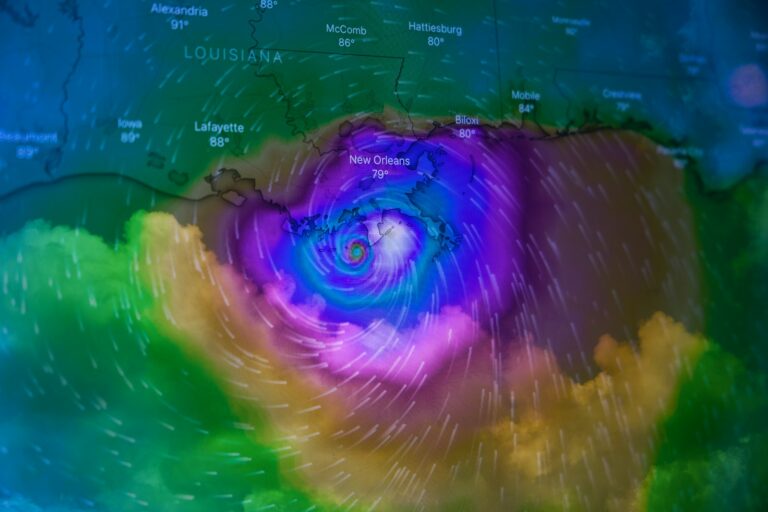
Forecasters are closely monitoring Tropical Storm Milton, which is steadily transforming into a formidable Category 3 hurricane in the Gulf of Mexico. Expectations are high for the storm to surge in strength within the next 36 hours. The anticipated landfall is on the west coast of the Florida peninsula by mid-week.

State of Emergency Declared

Florida Governor Ron DeSantis has taken proactive measures, declaring a state of emergency across numerous counties. These include Brevard, Broward, Charlotte, Citrus, Collier, DeSoto, among others. The regions in significant jeopardy are those still recovering from the devastating effects of Hurricanes Helene and Ian earlier this year.

Forecasters to Issue Hurricane Watches

Forecasts show that hurricane watches could be issued by Sunday evening. Jamie Rhome, Deputy Director of the National Hurricane Center, warns that Milton has potential to be a “very impactful hurricane”. He called for Florida peninsula residents to be ready and follow official notices for safety measures.

Milton’s Predicted Strength and Impacts

The hurricane is anticipated to reach wind speeds of up to 115 mph when it strikes Florida’s Gulf Coast, placing it at the verge of a Category 2-Category 3 hurricane. Major hurricanes, classified as Category 3 and above, carry the potential for catastrophic wind damage, loss of life, and additional threats of deadly storms, rain-induced floods, and tornadoes.

High Risk of Structural Damage

In addition to life-threatening storms and floods, Milton raises concerns over possible structural damage due to high wind speeds. AccuWeather senior meteorologist Bob Smerbeck warns that wind speeds might peak between 120 to 140 mph at landfall.

Impact of Hurricane Kirk

Concurrently, the Atlantic Ocean is experiencing swells due to Hurricane Kirk, with potential effects on the U.S. East Coast. As October progresses, residents brace for the “return of big hurricanes”.

Preparations and Precautions

While no evacuations have been ordered yet, they may soon be necessary. Residents are advised to have a hurricane plan in place and be ready for potential flooding risks, as heavy rain is expected across the affected regions.

Rapid Evolution of Milton

Milton’s rapid intensification to a major hurricane is under close watch as it moves across the Gulf’s central and eastern parts. Soon after, it could pose life-threatening risks to the west coast of the Florida peninsula, still reeling under the impact of Hurricane Helene.

High-Risk Areas for Damage and Outages

Milton’s dangerous influence could extend to storm surges, spin-up tornadoes, and power outages. Major cities along the Gulf coast and parts of central Florida, including Tampa and Fort Myers, are at a significant risk, leading to heightened concerns for safety and preparedness.

Torrential Rainfall and Recovery Efforts

As Milton’s landfall draws closer, torrential rainfall is likely, with an estimated average of 8-12 inches. Extensive recovery efforts may be hampered in various parts of Florida, southern Georgia, and South Carolina due to the potential dangers associated with the storm.

Forecasting Models in Place

Various forecasting models are in place to generate precise predictions on the hurricane’s course. Accurate forecasts are critical to heighten preparedness and minimize potential damage.

Meanwhile, in the Atlantic

Far out in the Atlantic, Hurricane Kirk is causing swells expected to impact the U.S. East Coast and the Bahamas. The swells could lead to hazardous surf and rip current conditions.

While the Atlantic contends with Kirk, Tropical Storm Leslie looms in the east. However, Leslie is not expected to affect land.

Florida braces itself for an unwelcome potential knock at the door as Milton strengthens into a powerful hurricane. Nevertheless, through being aware, prepared, and vigilant, lives and property can be protected.

“Russians at War” Producers Consider Legal Battle with TVO for Withdrawing Support

Key Takeaways:

– Lawyers for the producers of “Russians at War” are considering legal action against Ontario’s public broadcaster, TVO, for withdrawing support for the film.
– There is a possibility of a license for the documentary to air on other networks if TVO does not reinstate its commitment.
– TVO made a decision to not air the film due to backlash from the Ukrainian community and certain Canadian politicians.
– Threats of violence led to the postponement of the film’s premiere at the Toronto International Film Festival.

Documentary Sparks Controversy

“Russians at War,” a documentary directed by Russian-Canadian Anastasia Trofimova, has become the center of a heated controversy. Capturing the experiences of Russian soldiers on the front lines of the war in Ukraine, it faced backlash from Ukrainian officials and the Ukrainian Canadian Congress. The criticism from these quarters led to Ontario’s public broadcaster, TVO, pulling support for the film.

Potential Legal Action on Horizon

A recent letter addressed to TVO’s board and management reveals the possible legal implications following the broadcaster’s decisions. The letter demands that TVO immediately reinstate its support for the film or permit the filmmakers to license the documentary to another broadcast or streaming platform. If these conditions aren’t met within a timeframe of the next 10 business days, the letter warns of legal action, including claims for breach of contract, defamation, and damages associated with any loss of funding for the project.

Criticism and Support Voiced

Deputy Prime Minister Chrystia Freeland, who has Ukrainian heritage, is among the politicians who have voiced their concerns about the film. Critics have labelled the film as “Russian propaganda,” questioning the appropriateness of using public funds for this documentary.

On the other hand, the Documentary Organization of Canada has expressed alarm at TVO’s move. It signaled worries about possible political interference caused by the decision.

TVO’s Reaction to Legal Threats

TVO board chair Chris Day has refrained from making public comments on legal matters. Yet, the decision to withdraw from the project has resulted in a torrent of concerns around a violation of filmmakers’ rights leading to reputational and financial harm.

Film Screening Generates More Controversy

The controversy around “Russians at War” continues to simmer outside of legal circles. The Toronto International Film Festival was set to host the North American premiere of the documentary. However, amid threats of violence against the staff at TIFF and their operational capabilities, the premiere had to be delayed until Tuesday.

Activist protests outside the new screening time added fuel to the fire. Calls were made for governments to withdraw funding from the festival altogether due to the contentious nature of the film. Despite the surrounding controversy, the premiere went ahead after a delay, underlining the polarizing nature of the documentary.

The future of the film remains uncertain amidst the ongoing backlash and talk of legal action. The demand from the film’s producers for the TVO to reinstate its commitment or allow another platform to air the film is looming large. While the legal path forward is yet to be determined, the saga surrounding “Russians at War” continues to unfold.

Increasing Threat Posed by Brewing Tropical Storms Milton, Kirk, and Leslie

0

Key Takeaways:

– Tropical Depression 14 has developed into Tropical Storm Milton in the south-western Gulf of Mexico, posing a potential threat to Florida.
– The storm is forecasted to intensify within the next 36 hours possibly to reach a Category 3 Hurricane.
– Polk County faces significant rainfall with up to 12 inches forecasted, contributing to potential flooding.
– Hurricane Kirk, Leslie, and a tropical wave off the east coast of Africa are also predicted to cause life-threatening surf and rip current conditions.
– Residents in potentially affected areas are advised to prepare for heavy rainfall, storm surges, and possible evacuations.

Tropical Storm Milton Heightens Florida Threat

On Saturday, Tropical Depression 14 transformed to Tropical Storm Milton over the southwestern Gulf of Mexico. As the storm continues to gather strength, the National Hurricane Center (NHC) anticipates that Milton could escalate to a major Category 3 Hurricane, causing an escalating risk to the west coast of Florida, particularly midweek.

Expected Intensification

Milton is predicted to gather momentum over the next 36 hours and is likely to be a major hurricane by the time it makes landfall on Florida’s west coast. According to the NHC, Milton will remain over the southwestern Gulf of Mexico through Sunday night, then move across the south-central Gulf of Mexico, and approach West Coast of Florida Peninsula by Wednesday with potential hurricane-force winds of 110 mph.

Potential Impacts of Milton on Florida

Florida residents, particularly those along the west coast, are warned of life-threatening impact risks. Florence may bring heavy rains and potential floods to most parts of Florida, starting this weekend through midnext week. The NHC anticipates up to 12 inches of rainfall, particularly in Tampa, Orlando, and Polk County. Due to the severe weather conditions, hurricane and storm surge watches may likely be instigated Sunday for parts of Florida.

Specific Threat to Polk County

Florida’s Polk County is already under a state of emergency following Governor Ron DeSantis’ announcement on Saturday. The county faces an increased risk of flooding and heavy rainfall from Milton, further amplified by its existing low-pressure system. The National Weather Service in Tampa has issued a flood watch for the area, including Polk County, from Sunday 11 a.m. through Thursday 8 a.m. Residents are cautioned to be prepared for tropical storm or hurricane watches and warnings as the impact is expected by Wednesday.

Risks Posed by Other Storms

In the open Atlantic, Hurricane Kirk remains a potent Category 3 hurricane. Simultaneously, Leslie escalated to Category 1 hurricane strength late Friday in the tropical east Atlantic. These storms, along with a tropical wave off the eastern coast of Africa, pose potential risks, including possible life-threatening conditions due to surf and rip currents.

Preparatory Measures

Residents are urged to ensure their hurricane plan is in line, follow advice from local officials, and regularly check for forecast updates. Areas vulnerable to flash, urban, and areal flooding, along with minor to moderate river flooding, should be particularly vigilant. For now, it’s a waiting game, but preparations need to be completed by Monday at the latest.

With the remainder of the hurricane season ahead, residents should remain attentive to all storm watches and warnings. It is essential to protect lives, property, and navigate the challenges posed by these severe weather conditions.

Federal Reserve Likely to Cut Interest Rates

Key Takeaways:
– Federal Reserve is expected to cut interest rates
– Experts predict the potential impact on markets and economy
– Majority backs a moderate cut but timing remains uncertain
– Some analysts propose unorthodox approaches

Forecasts on Federal Reserve’s Future Action

Investment and economic analysts are forecasting that the Federal Reserve will join the global trend and cut interest rates. Economists believe this move could potentially impact markets for consumer goods, mortgages, and other financial products. However, the potential benefits are up for debate among market analysts.

Potential Impact on Consumer Markets

When interest rates decrease, people typically borrow more. This is due to the lower cost of loans. As a result, consumers tend to spend more on homes, cars, and other goods. This often boosts overall economic activity.

However, experts caution that while this aids in improving the economy, it could potentially lead to an economic bubble. Simply put, if consumers borrow more than they can afford, it might culminate in financial crises similar to the 2008 downfall.

Debates Over Magnitude and Timing

While the majority of experts concur that cutting rates is imminent, views differ on the scale and timing of the cut. Some say the Federal Reserve should make a modest reduction and keep further cuts in reserve for future needs.

Others are of the viewpoint that a significant cut is crucial. The belief is that the economy needs a robust injection of financial stimulus to fend off potential risks, such as trade conflicts or a potential economic slowdown.

Lobby for Unorthodox Approaches

Analysts propose the Federal Reserve should consider more unconventional methods such as negative interest rates. Smaller European countries have experimented with this model. Negative rates encourage more borrowing and, in theory, stimulate more spending in an economy. Nevertheless, the broader consensus remains uncertain on whether such means would be apt for the US economy.

Meanwhile, other experts assert that the Federal Reserve should target real economic activity such as employment and inflation. These indicators directly impact everyday Americans. Focusing on them could be more beneficial than the conventional focus on nominal rates.

Balancing Economic Growth and Inflation

The main challenge for the Federal Reserve in deciding whether to adjust interest rates is to strike a balance between promoting economic growth and keeping inflation under control. This sweet spot is crucial to maintain the stability of the financial system and sustain consistent growth.

In conclusion, interest rate cuts are a practical tool the Federal Reserve can use to stimulate economic activity if done cautiously. As experts debate the timing, scale, and methods of the potential cut, it is clear that the implications will be far-reaching. Consumers, economists, and financial institutions will all be watching the Federal Reserve’s next move closely as they consider their own financial decisions and forecasts.

The United States, like the rest of the world, eagerly awaits what the Federal Reserve will do next. Decisions on interest rates can shape the health and direction of the entire economy. With so much at stake, the measures taken by the Federal Reserve will undoubtedly be on everyone’s radar.

A Comprehensive Look at Current Vital Healthcare Updates

Important News for Moms-to-be: Vaccines During Pregnancy

A recent analysis shows that getting vaccinated while pregnant effectively safeguards the newborn from COVID-19. This reassuring information comes just in time as the pandemic continues. However, there could be potential changes to public assistance work requirements, as another victory for former President Trump in the upcoming election might see more states implementing more stringent criteria.

A Severe Challenge for Pediatric Care in America

Healthcare providers of children under three years are unable to get refunds on unused COVID vaccines. This poses a severe challenge for parents finding vaccines for their kids. Also, 2023 broke the record for the most abortions in over a decade amid heavy restrictions or outright bans in 20 states. This surge comes despite the significant legal hurdles in these regions.

The Role of Botox in Treating Rare Health Condition

An often-underestimated application for Botox has emerged: it could potentially help individuals suffering from a rare health condition that inhibits burping. Medical practitioners are hopeful this finding can alleviate patients’ pain. Additionally, people recovering from shooting trauma continue to grapple with insufficient mental health resources, further highlighting the need for more globally accessible mental health care.

Concerns over Funding and IT for Local Health Departments

The end of Congressional funding for COVID may leave local health departments scrambling to meet routine duties. Adding to this challenge, faulty computer systems operated by a private institution are abruptly cutting eligible individuals from public assistance.

Decline of Rural Cancer Care and Abortion Rights in Focus

Many are left without treatment options as hundreds of rural hospitals cease their cancer care services. Meanwhile, the legal spotlight falls on anti-abortion policymakers aiming at clinics as states deliberate over authorizing abortion coming autumn.

Innovative Strategies in Healthcare: Vending Machines and Laws

Montana’s health authorities resort to an unusual strategy to combat opioid overdose. They are now deploying vending machines to distribute free, lifesaving medication. On a national level, legislators struggle to devise an effective legal approach to mitigate the impact of social media on kids’ mental health.

New Updates on RSV Treatments and Fentanyl Crisis

In positive news, groundbreaking treatments and vaccines are now available for respiratory syncytial virus (RSV). However, a grim development accompanies this good news: stimulants mixed with fentanyl fuel a fresh wave of opioid overdose fatalities.

Missing Out on Potential Health Benefits

Concerns about social media could lead policymakers to overlook potential mental health benefits, particularly for teenagers. Besides, many nursing home residents are reportedly missing out on crucial COVID vaccines.

Women’s Autonomy over Pregnancy and Protecting Workers

More women are choosing to end their pregnancies independently since the landmark decision of Roe V. Wade. Amid this, some states are stepping up measures to shield workers from deadly heat – a glaring reflection of climate change’s toll on public health.

Drones for Emergency Treatments & Paperwork Woes

Drones could be the game-changers in emergency healthcare by speeding up crucial treatments. However, staggering patient issues persist, as paperwork errors result in intimidating bills that patients may not have to pay in the first place.

In summary, the wide array of topics discussed this week from burdening public assistance requirements to revolutionary healthcare technology like drones for emergency treatments show the vast landscape and challenges modern healthcare services provide. These subjects represent critical steps and hurdles faced in the goal of achieving comprehensive healthcare in the contemporary world.

David Lappartient Set to Run for International Olympic Committee Presidency

Key Takeaways:
– UCI President David Lappartient officially announces his bid for IOC Presidency, among seven candidates.
– The IOC election is scheduled for March during the 143rd IOC Session in Greece.
– Other notable nominees include World Athletics president Sebastian Coe and Zimbabwe Sports Minister Kirsty Coventry.
– The current IOC President Thomas Bach will not seek re-election when his term expires.

David Lappartient’s Olympic Ambitions

United Cycliste Internationale (UCI) President David Lappartient has officially stepped forward to express his intent to take over International Olympic Committee (IOC) Presidency from Thomas Bach. Lappartient joins a field of seven candidates set to participate in an election during the 143rd IOC Session. The highly anticipated session is due to take place in Greece this March.

Lappartient has been subtly hinting at his Olympic ambitions for a while now. The speculation regarding his presidential bid escalated last year when he assumed office as President of the French National Olympic and Sports Committee (CNOSF). Through it all, he retained his position at UCI, dividing his time and efforts for both roles.

Candidate Announcement Mainstage

As recent as this weekend, Lappartient remained discreet about his candidacy. During an interview at the French Olympic ‘parade of champions’ held at the Champs-Élysées, he hinted at an impending announcement. He then directed attention to the forthcoming IOC press release, keeping his cards close to his chest until the official reveal.

Following the deadline for candidacy confirmations, the IOC announced Lappartient’s name among the seven nominees. Alongside him are notable personalities such as World Athletics president Sebastian Coe and Juan Antonio Samaranch, son of the former IOC president. Zimbabwe Minister of Sports, Kirsty Coventry, stands as the sole female candidate.

The candidacy list is rounded off by Morinari Watanabe, President of the International Gymnastics Federation, Prince Feisal Al Hussein of Jordan, and International Ski Federation President Johan Eliasch.

Thomas Bach’s Approach to the Presidency

Present IOC President, Thomas Bach, known for his eight-year term starting in 2013 and a subsequent re-election for a four-year term in 2021, has clarified that he won’t pursue another round in office. This announcement was made during the Paris 2024 Olympics, and Bach will officially step down once his term ends this coming March.

The selected candidates to succeed Bach are set to present their programs to IOC members in a private Lausanne gathering this January. The official election will then occur at the March IOC Session.

Lappartient’s Journey in the Sports World

The Frenchman navigated his way up to the role of UCI President, beginning with successfully earning a spot as President of the French Cycling Federation in 2009. His journey continued as he was then elected President of the European Cycling Union (UEC) in 2013. Lappartient further secured his position in the world of sports by defeating Brian Cookson to become UCI President at the 2017 Bergen World Championships. His unchallenged re-election occurred in Leuven in 2021, and his current term as UCI president will continue until 2025.

Looking Ahead

While Lappartient has yet to release his candidature document, his campaign seemingly emphasizes the successful organization of the quadrennial, multi-discipline cycling World Championships by UCI. The inaugural championship took place in Glasgow last year, drawing attention from spectators and critics alike.

Following the Russian invasion of Ukraine, questions rose about Russian oligarch Igor Makarov’s participation in the UCI Management Committee. As recent as last year, Lappartient highlighted UCI alignement with the IOC stance regarding Russian and Belarus Olympic committees and their official entities.

Makarov had been named on several sanction lists from various governments following the invasion. Although he denounced his Russian citizenship in 2023 to become a citizen of Cyprus, Makarov remains a part of the UCI Management Committee to date. As the IOC presidency approaches, Lappartient’s decisions within the UCI are likely to impact his candidacy.

Nebraska 2nd Congressional District Favors Kamala Harris Over Trump

0

Key Takeaways:
– A recent poll shows Kamala Harris leading Donald Trump by 11 points in Nebraska’s 2nd Congressional District.
– This District has historically been a Republican stronghold but has twice voted for a Democratic candidate, for Obama in 2008 and Biden in 2020.
– Harris’ support appears strong among Democratic and independent voters, and she also has some backing from Republican voters.
– Recent trends suggest an increasing Democratic lean in this District, which includes the city of Omaha.
– The last two times the District shifted towards Democrats, it resulted in a Republican Presidential defeat.

Nebraska’s 2nd Congressional District Shifts Left

Nebraska’s 2nd Congressional District, historically a Republican stronghold, has seen a significant shift leftward in several key elections. Two times in recent years, in 2008 and 2020, the District cast its vote for Democratic candidates Barack Obama and Joe Biden. Now, new polling data reveals that it favors Kamala Harris over Donald Trump by a significant margin.

Kamala Harris Secures Advantage

In the current race, Kamala Harris appears to be doing well in the District, leading Donald Trump by 11 points. This lead is supported mainly by Democratic voters, among whom Harris has nearly universal support. 96% of likely Democratic voters seem ready to cast their vote for Harris.

The Edge Among Independent and Republican Voters

Importantly, Harris also enjoys a significant level of support among independent voters. 61% of likely independent voters in the District are inclined to vote for Harris. Even some Republican voters, traditionally a solid backing for Trump, seem swayed in her favor. Around 10% of likely Republican voters also plan to give their vote to Harris.

Gender Differences in Voting Patterns

When it comes to gender, women in the District are largely favoring Harris over Trump, 60% to 36%. Men appear more evenly split, with Trump maintaining a small lead – 50% to 45%.

The Importance of Omaha

A crucial part of the District is the city of Omaha, which has been increasingly distancing itself politically from the rest of the state. This city seems to be moving leftward, aligning more with Democratic politics, which could have contributed to Harris’ strong lead in the District.

Presidential Aspirations

The correlation between Harris’ lead and potential White House victory should not be overlooked. The previous two Democratic nominations who won in the District went on to clinch the Presidency – Obama in 2008 and Biden in 2020. This pattern hints towards Harris’ positive momentum and might indicate her chances of landing in the White House come November.

The Data and Its Implications

The steady influx of data points to significant momentum for Harris. An 11-point lead in a typically Republican stronghold is a major coup. Replicating the victories of Democrats in the past two key elections, which led to Republican defeats, her success in the region is not to be underestimated.

It’s clear why Trump and his allies have been working hard to claim the District’s electoral college vote, especially considering the previous two Presidential defeats. However, the current data highlighting Harris’s considerable lead provides a tough challenge.

Given the political shifts and Harris’s impressive lead, Nebraska’s 2nd Congressional District stands as a crucial battleground. Its decision could very well impact the race for the White House this November. Stay tuned for further updates.

Trump No-Show on ’60 Minutes’; VP Kamala Harris Set to Appear

0

Key Takeaways:

– Former President Donald Trump has declined to participate in the ’60 Minutes’ election special on October 7.
– Vice President Kamala Harris will be interviewed as scheduled.
– The media has been criticized for their differing coverage of Harris and Trump.
– Trump has previously expressed dissatisfaction with ’60 Minutes’ during 2020 interview with Lesley Stahl.

The ’60 Minutes’ election special, annually aired as election fever grips the nation, is set for a first. Breaking from over five decades of tradition, former President Donald Trump will not be appearing. However, Vice President Kamala Harris’s interview will go on as planned. The program is set to air at 8 PM ET/PT on October 7.

Keeping Up with the Tradition

For more than a half-century, the American tradition has been for both the Democratic and Republican candidates to engage with the public through ’60 Minutes’. This year, Harris and Trump had agreed to take part. Harris is all scheduled to converse with correspondent Bill Whitaker. Trump, unfortunately, has decided to break his commitment.

Making Sense of the Unprecedented

Trump’s decision not to participate was surprising and affected the structure of the show. Scott Pelley, who was slated to interview Trump, will instead address the development. However, ’60 Minutes’ still holds its invitation open to Trump.

This isn’t the first run-in for Trump with ’60 Minutes’. In 2020, his interaction with Lesley Stahl turned sour, leading him to walk out in the middle of the interview. Trump’s tendency to contradict his own statements and the lack of consequence with regard to the same seems to have created a complex dynamic with the media.

Comparing Media Coverage

Interestingly, the media spotlight has been more on Harris’s avoidance of interviews than Trump’s refusal to participate. After pulling out of the third debate and now ’60 Minutes’, it’s intriguing to observe the stark contrast in criticism.

Many suggest that the legacy media outlets are less formidable or challenging, which is why Trump often gravitates towards them for press coverage. Conversely, the media often portrays Vice President Kamala Harris as avoiding interviews with them, ignoring the reality that she partakes in interviews with local journalists, outlets like ’60 Minutes’, and individuals such as CNN’s Dana Bash.

Looking to the Future

As the date nears, the American public eagerly awaits for the ’60 Minutes’ election special to air as scheduled with VP Kamala Harris. The million-dollar question is: Where will Trump be during the broadcast? One thing is for sure, whether he’s on-screen or not, his absence will surely make a ripple in the American discourse.

In conclusion, October 7 will not only be remembered for the conversation between Harris and Whitaker on ’60 Minutes’. It will also mark a unique moment in American political broadcast history – the instance when a key republican figure chose not to participate. Regardless of the circumstances or the reasons, this paints a vivid picture of the contrasting media practices that prevail in the United States today. The difference in criticism received by Trump and Harris on their interview habits highlights the possible biases and double standards that run through certain media outlets. The examination of this issue can teach us a lot about the dynamic between politicians and the media, especially as the nation gears up for the elections.

Senate Republicans Plan to Thwart Kamala Harris’ Potential Agenda

0

Key Takeaways:
– Republic Senator, John Thune, believes no abortion proposal would secure sixty Senate votes.
– Both Thune and Senator John Cornyn express a cautious stance on potential Kamala Harris’ Supreme Court nominees.
– Critics highlight contradictions within Republican leadership’s perspective on individual freedoms.

The Future of Abortion Rights

In a discussion about their strategies if they claim the Senate Majority Leader positions following the upcoming election, Republican Senators John Thune and John Cornyn delved into plans to confront potential proposals from a Kamala Harris presidency.

South Dakota’s Senator John Thune emphatically negated the likelihood of any abortion measures securing Senate approval. English translation: There won’t be any abortion proposals gaining the necessary sixty votes in the Senate, if President Harris takes office, while Republicans hold the Senate majority.

Role of the Supreme Court

Engaging further on the topic of a possible Harris Supreme Court nominee, Thune only ceded that his approval would be contingent on the specific nominee. However, he expressed confidence in the Republican Senate to guide decisions in this regard.

Similarly, Senator John Cornyn from Texas also displayed caution when considering potential Supreme Court appointments. He expressed aversion, and ruled out scheduling votes for nominees he termed as “wild-eyed radicals”, whom he believes Kamala Harris may nominate.

Filibuster: To Change or Not to Change?

Despite the abounding debates and fears surrounding the issue, Thune emphasized that he has no intentions of altering the Senate’s tradition of filibustering on any issue. Meanwhile, Cornyn also maintains an unyielding stance, committing himself to preserve the filibuster.

Republicans vs. Abortion Rights

Exhibiting a similar response to Thune’s assertions, the probable Majority Leader from Texas, John Cornyn, agrees favourably. He maintains that a national abortion ban wouldn’t secure the benchmark sixty Senate votes. This suggests a lack of promise by the Republicans for passing an abortion ban, while indirectly implying that abortion rights protections won’t be fortified if Republicans rule the Senate next term.

The Irony of Defining ‘Pro-Life’

Despite the Republican party often promoting itself as ‘pro-life’, the death, fear, and pain experienced by women due to current abortion bans raises severe questions. The continual obstruction to embed the protections of Roe becomes concerning when the majority of Americans seem in favour of its restoration.

Implications on Democracy

The Republicans’ commitment to employing their power to counter the popular will is alarming. This is seen as an undermining tactic to the freedom and democracy that our nation stands upon. Essentially, being a watchdog for conservative values has resulted in the once sensible voices within the Republican party becoming marginalized, and the extreme voices amplified. This ideological shift starkly contrasts with the current disposition within the Democratic Party.

What’s at Stake?

As we look towards the future, it’s crucial to be aware of these possible legislature shifts, and how these potential Majority Leaders aim to confront issues in the Senate. As we move closer to the election date, these stances underline the critical decisions that will influence the narrative for individual freedoms, democracy, and overall governance.