56.9 F
San Francisco
Friday, June 12, 2026
Home Blog Page 1642

Biden Imposes New EPA Rule to Curb Lead Exposure: A Win for 1.2 Million Americans

0

Key Takeaways:

– President Biden has issued a new rule to reduce lead exposure annually affecting approximately 1.2 million people.
– The rule strengthens requirements for lead paint dust removal in pre-1978 housing and child care facilities.
– The impacts of this rule offer public health and economic benefits around 30 times greater than the costs.
– Despite banning lead-based paints in residences in 1978, about 31 million houses built before the restriction still have lead-based paint.
– President Biden remains committed to reducing lead poisoning in various platforms like drinking water, paint, soil, food, household items, and workplaces.

Action Against Lead Exposure

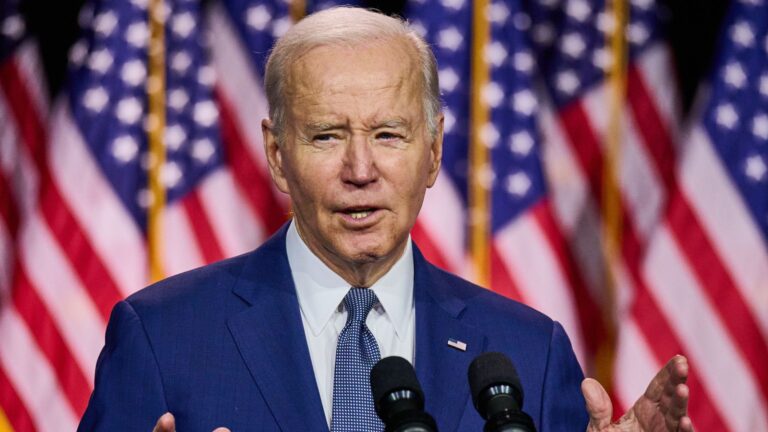
President Joe Biden is upholding his promise to the American public, notably with his recent move to limit lead exposure. This action is part of a series of innovative strategies that the President has initiated in a bid to protect and improve the health and well-being of U.S. citizens.

Addressing a Persistent Threat

Lead, a potent neurotoxin, presents a significant and often overlooked health risk. It lingers in millions of homes across the country, making the threat of lead poisoning a real concern for large swaths of the population. In a major move forward, Biden has issued a final Environmental Protection Agency (EPA) rule that extensively reduces lead exposure. The new rule strengthens mandatory requirements concerning the removal of lead paint dust in pre-1978 housing and child care facilities.

Targeting Lead’s Impact on Health

The implementation of this rule is expected to minimize lead exposure for nearly 1.2 million people every year. The benefits of this initiative far outweigh the associated costs, with estimated public health and economic rewards up to 30 times greater than the expenditure involved. The core focus is to safeguard children and communities across America from the harmful effects of lead dust generated from lead paint.

An Ongoing Battle

Lead paint was outlawed from residential use in the country in 1978. Despite this, about 31 million houses constructed before that year still contain lead-based paints. These painted surfaces pose a significant risk, especially for children under the age of six living in approximately 3.8 million of these homes.

The Biden-Harris Administration’s Tenacious Efforts

This new rule is part of the Biden-Harris Lead Pipe and Paint Action Plan. The administration has initiated hundreds of measures across over ten agencies to limit the risk of lead poisoning. This comprehensive approach addresses lead threats in drinking water, paint, soil, food, household products, the workplace, and seeks to tackle lead exposure on global platforms.

A Promise Upheld and a Path Forward

Biden, committed to assisting the American public, stands by his promises. His recent decision to forgive more student loan debt further affirms his commitment to supporting the everyday American. This dedication continues to drive initiatives and policies meant to improve the lives of the population.

The President’s term may be drawing closer to its conclusion, scheduled officially to end at noon on January 20, 2025. But the actions and policies he has set into motion, like this recent move to reduce lead exposure, will continue to impact and benefit Americans for years to come. President Biden remains committed to making the most of his time in office, creating positive change, and putting the well-being of all Americans at the forefront of his Administration’s priorities.

Zelenskyy’s NATO Bid Met with Resistance from Influential Allies

0

Key Takeaways:
– Ukraine’s president, Volodymyr Zelenskyy, faces roadblocks in his plan for Ukraine to join NATO.
– Germany and the U.S., being key NATO members, are not eager to accord an immediate invitation to Ukraine.
– Inside information was shared by four anonymous U.S. and NATO officials and diplomats.

The Push for NATO Membership

Having emerged victoriously from Ukrainian elections, Volodymyr Zelenskyy set his eyes on a new frontier. His plan? Secure an invitation for Ukraine to join NATO. However, the path has proven to be rougher than anticipated. Two principal torchbearers of the NATO alliance, Germany and the U.S., are reluctant to push the approval button fast.

Roadblocks to Zelenskyy’s Ambition

For the Ukraine president, the dream to secure a seat at the NATO table is part of his win strategy. But such ambitions are being met with slow responses from the alliance’s crucial members. This inside scoop has been revealed by four U.S. and NATO personnel who have requested their names be kept undisclosed.

NATO is essentially an alliance of 30 North American and European countries that pledge to defend each other in case of an attack. Having Ukraine as a member would mean a shared responsibility among all participants should anything provoke its peace. Given the conflict with neighboring Russia, this might be hard for some alliance members.

German and American Resistance

Germany and the U.S., weighty influencers within the NATO alliance, seem hesitant about Ukraine’s quick admission. There could be several reasons for their reluctance. From political to defense strategies, the factors seem quite varied.

For one, admitting Ukraine into NATO could risk escalating tensions with Russia. This could disrupt the already fragile equilibrium existing between the alliance and Moscow. Additionally, the move could potentially bring NATO geographically closer to Russia, altering the defense dynamics significantly.

Furthermore, Ukraine’s quick admission to NATO might set a precedent for other countries eager to join, implying an overhaul of NATO’s cautious expansion policies.

The Balancing Act

A tricky balance must be struck here. On one hand, NATO wants to stand by countries like Ukraine in their quest for more liberal democratic reforms. However, on the other hand, they must consider the broader geopolitical impacts of such a move – especially the potential for escalated tensions with Russia.

So, while Zelenskyy’s motive for seeking NATO membership might be rooted in strengthening Ukraine’s national security amid ongoing conflict with Russia, the resistance from Germany and the U.S. may stem from the desire to maintain balanced relations with Russia. Also, they may be cautious about setting the stage for a possible future arms race in Eastern Europe.

In Conclusion

Zelenskyy’s plan for Ukraine to join NATO faces considerable headwinds. The reluctance from major NATO players showcases an intricate web of international relations at play. Factors like potential increased conflicts, geopolitical dynamics changes, and the fear of establishing a hasty admittance precedence could be hindering Ukraine’s stride towards a NATO membership.

While the road seems bumpy for Ukraine, it is vital to remember that international politics is often a long game. It remains to be seen how Zelenskyy maneuvers through these challenges, and whether Ukraine secures its desired ticket to the NATO stage. Nonetheless, these developments mark a crucial phase in Zelenskyy’s presidency and Ukraine’s international relations trajectory.

Puberty-Blocking Study Awaits Publication Amid Political Climate, Says Renowned Doctor

0

Key Takeaways:
– Dr. Johanna Olson-Kennedy, an expert in teens’ gender treatments, hasn’t released a study concerning puberty-blockers.
– The research began in 2015 as part of a big federal project on transgender youth.
– Olson-Kennedy and other doctors assisted 95 children through puberty blockers for the study.
– The charged American political environment has been cited as the reason for not publishing the study.

The Awaited Puberty Blocking study

A prominent adolescent gender treatment advocate, Dr. Johanna Olson-Kennedy, has revealed that she hasn’t completed the publication of a much-anticipated study on the impact of puberty-blocking drugs. The research is thought to have potential implications in the field of transgender health care, particularly for youngsters.

The Backdrop of the Study

This study had its inception in 2015 and got fueled by a considerable federal budget. The project’s key focus was to bring light to various aspects surrounding transgender youth. Dr. Olson-Kennedy, alongside fellow experts, scouted and involved 95 youth from various parts of the country to take part in the study. These participants got the opportunity to halt their ongoing puberty process with blockers, which was crucial for the study.

The Puberty Blocking Process

Puberty blockers act as a pause button in a youngster’s life. So, what does this imply? Basically, when a child hits puberty, his or her body undergoes various physical changes. These changes are permanent and play a significant role in defining an individual’s appearance, voice, and even reproductive ability. Using puberty blockers halts this rollercoaster of changes.

The Debate Over Delaying Publication

Nonetheless, the recent revelation by Dr. Olson-Kennedy paints a picture of a charged American political environment impeding the study’s publication. It’s noteworthy that this comes at a time when legislative measures targeting the transgender youths’ medical treatments are on the rise. Unfortunately, this escalating politicization of transgender health care-related issues is causing a significant delay in the release of potentially crucial information.

Why is the Study Important?

This study is considered critical, mainly because it promises to clarify a great deal about the safety and the potential effects of these puberty-blocking drugs. Currently, there exists limited research output on these facets. Therefore, the study’s findings could fill a massive gap in the current knowledge base.

Implications for Transgender Youth

An incursion into the lives of transgender adolescents is often a mixed experience of acceptance, societal division, and internal confusion. The story of gender transitions is often a tumultuous journey for them. The statistical evidence from the study would have shed light on critical questions like how these hormonal treatments affect transgender youth, what are the potential side effects, and similar queries.

Conclusion

The withholding of this crucial study not only keeps the science community in anticipation but also leaves the curious public waiting. In light of the rather politically-driven health care conversations that affect many transgender youth, the completion of the study and its subsequent release could be one stepping stone towards many transformations. Based strictly on medical evidence and scientific exploration, the study may in the future pave the way and help navigate this complicated journey for countless transgender youth.

In a nutshell, we have an influential doctor delaying an anticipated study that could speak volumes on a pressing matter. The reason? A politically-charged environment. As we wait for the future, we’re all wondering – how will this intricately woven narrative of scientific pursuit and political debate unfold? Only time will tell.

Trump’s Silent Rally in Michigan: Microphone Malfunctions, No Haste in Resolution?

0

Key Takeaways:
– During a rally in Michigan, a technical glitch left former President Donald Trump without a functioning microphone for roughly 20 minutes.
– Despite the hiccup, the crowd stayed engaged and cheered for Trump.
– The technical team didn’t exhibit urgency in addressing the issue.
– Rally took place in Michigan, a state known for its unpredictable voting pattern.

When we talk about captivating speeches, most of us would recall scenes with eloquent speakers passionately delivering their thoughts and engaging the audience. However, what happened at a recent rally in Michigan seemed to redefine the idea of an enthralling speech — even when the speaker, in this case, former President Donald Trump, was rendered silent by a malfunctioning microphone.

The Unfortunate Equipment Glitch

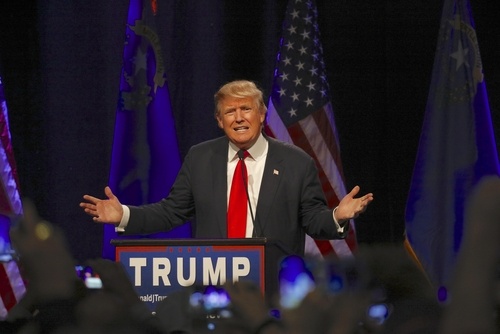
The evening started like any other political gathering. Trump took the stage amidst cheers from the crowd. However, merely minutes into his speech, his mic went mute. This technical glitch persisted for an astonishing twenty minutes.

Yet, what caught more attention was the seemingly lethargic reaction from the technical team. There was no rush, no panic to repair the issue. From an outsider’s perspective, the absence of urgency seemed bizarre.

Trump’s Silent Speech: Confusion and Cheers

Even with the speaker unable to voice his thoughts, the crowd didn’t waver. They held onto their signs, their cheers echoing in the venue. The peculiar event momentarily had the crowd perplexed but did not seem to dampen their enthusiasm significantly.

In fact, these unusual moments of silence served as a testament to the crowd’s unwavering support. They cheered, they waited, and they stayed. It was as if this act of untimely silence was not a hiccup, but a part of the evening’s schedule.

The Swing State: Michigan’s Political Intrigue

This incident occurred in Michigan, a crucial swing state during the elections. Known for its unpredictable voting behavior, the state has been a battleground during election seasons. Trump’s rally, even fraught with technical glitches, garnered significant attention. But for the right reasons or wrong, it’s hard to say.

On one hand, the event depicted the fervor among Trump’s supporters. On the other, it laid bare the lackadaisical attitude of the team managing the event. The situation begs the question: does such an incident impact Trump’s image favorably or unfavorably in this crucial state?

Conclusion

On this fateful Friday night in Michigan, a faulty microphone turned a regular rally into an extraordinary event. The misunderstanding and cheer mingling in the air made for a peculiar spectacle. At the heart of it, former President Donald Trump stood in silence, painting a unique portrait of resilience amidst technical adversity.

As we move forward, one cannot help but wonder what this incident will signify in the larger political landscape of Michigan. Will this silent rally resonate as a symbol of strength, endurance, and unyielding support, or will it be remembered as an evening of perplexing silence marked by an unprepared technical team? Only time, and Michigan, will tell.

Tucker Carlson’s Notable Journey to Russia and His Interaction with Vladimir Putin

0

Key Takeaways:

– Tucker Carlson, a popular television personality, visited Russia last year and had an exclusive interview with Russia’s leader, Vladimir Putin.
– The trip saw Carlson engaging in everyday activities in Moscow, to many American viewers’ dismay.
– Upon returning to America, Carlson shared both positive and negative views about Putin, stirring controversy.

Tucker Visits Putin

Last year, a familiar face from America’s television landscape made the headlines for his unusual detour. Tucker Carlson, the television host, decided to embark on a journey unlike any other. As shocking as it sounds, he marched straight into Russia and held a conversation with none other than Russia’s most recognized figure, Vladimir Putin.

Exploring Moscow, Like A Local

The trip saw Carlson immersing himself in the local culture of Russia’s capital city, Moscow, just like a random tourist. Being a man of adventurous spirit, he didn’t just limit himself to talks and meetings. Carlson took to the streets of Moscow, exploring the city in a way that struck a nerve with many American viewers.

Tucker’s Metro Ride and the McDonald’s Visit

No elaborate chauffeured cars, no fancy transport arrangements – Carlson decided to go local and boarded the subway for getting around the city. His venture didn’t stop there. To the surprise of many, he visited the newly inaugurated Russian branch of McDonald’s, one of America’s most loved fast-food establishments. Not just that, he documented himself buying a burger from this iconic joint.

A Glimpse into Moscow’s Supermarket

Grocery shopping may not sound exciting, but when Tucker Carlson is involved, even mundane stuff sparks interest. To give viewers a taste of everyday Moscow life, Carlson took his camera crew through the aisles of a local supermarket. There he was, right in the middle of Moscow, strolling around, buying groceries, and behaving just like he would back in the States. This unusual journey left his viewers intrigued and captivated.

Post-Russia Impressions

Upon returning home, Tucker Carlson prepared to relay his unique journey to his viewers. As expected, his recounting was a mixed bag. He had some good to say about Putin, along with a bit of criticism. Carlson’s perspective on Putin was a matter of scrutiny and spotlight for his American audience.

The Stir after Tucker’s Russia Visit

The talk of the town was no other but Tucker’s venture, his daring interview, and his candid interaction with Putin. As anticipated, responses were divided. While some lauded his journey as an exploration of different perspectives, others weren’t especially enthused by his choice to converse with a figure considered an adversary in many American political circles.

The whole incident was a massive ruffle in America’s public opinion about engaging with one’s adversaries. While some firmly believed that communication was vital, others held onto the idea that dialogue with figures like Putin was a step too far.

In Conclusion

Tucker Carlson’s Russo-adventure turned into a discussion starter, instigating debates, and creating a buzz across the country. Not everyone agreed with his actions, and many questioned them. Still, it remains a defining moment for Carlson and a topic of conversation that continues to resonate. Regardless of the opinions it spawned, the trip, the interview, and the strolling around the streets of Moscow make for one lively and unforgettable journey.

Through this episode, America got a glimpse into Russia’s daily life and gleaned a fresh perspective on political relations too. The Tucker-Putin interview, thus, stands out as a notable event in recent memory and an incident that brewed conversations far and wide.

Trump’s Gas Pledge: A Double-Edged Sword for Industries He Vows to Support

0

Key Takeaways:

– Donald Trump frequently promises to reduce gas to $1.87 a gallon.
– Analysts fear this could harm the very industries Trump seeks to support.
– A drop in gas prices would require a significant decrease in crude oil prices.
– Such a reduction may lead major US oil producers to cut back on big investments.

The former US president, Donald Trump, is back on the campaign trail. Coming along with him are his promises to bring gas prices down to $1.87 per gallon. This seems to be his rallying cry, repeated at least 19 times at different events. But this pledge might not be as beneficial as it seems.

Carte Blanche Promises and Hidden Consequences

Trump’s continuous promise to slash gas prices doesn’t officially appear on his campaign website or the 2024 Republican Party platform. Even so, it resonates strongly with his supporters. It serves as a potent reminder of the rising costs that consumers have had to bear in recent years. But as impressive as the idea sounds, it may not be achievable— and even if attainable, it’s not without severe consequences.

Energy experts and economists suggest Trump’s proposal to cut gas prices by 40 percent oversells his ability to control the economy. The national average for gas prices currently stands at $3.16. Lowering the prices to Trump’s promised figure would require a massive drop in crude oil prices. If they rise, it could have a devastating ripple effect on industries the former president promises to support.

The Fall in Gas Prices and its Potential Impact

A steep fall in gas prices invites an equally dramatic fall in the crude oil prices. To meet the gas prices touted by Trump, crude oil prices would need to plummet to about $20 a barrel. Just to add some context, West Texas Intermediate crude oil, the US benchmark, was selling around $71 a barrel just on Wednesday. The oil prices drifted near to $20 a barrel just once in recent years, during the pandemic.

This was a period of turmoil when the demand for oil was on the cliffedge due to the pandemic, and Saudis and Russians were caught in a price war. Enforcing this volatile condition where crude oil prices are forced to hit rock bottom again, aren’t considered feasible under normal circumstances.

Support and Potential Backfires

Analysts have pointed out that top US oil producers might reconsider their major investments if this scenario plays out as the companies have a hard time breaking even any time the price of a barrel drops below $45. If crude prices are to take a nosedive down to $20 a barrel, it’s conceivable that producers would cut back on their big investments.

This apparently could contradict Trump’s promises to throw his weight behind these very sectors. The fact of the matter is, his promise to bring down gas prices drastically isn’t just an economic challenge, but it logically doesn’t mesh with his other pledges of supporting industries that would suffer terribly from this change.

The prospects of bringing gas prices down to $1.87 a gallon might seem attractive, especially to a lot of consumers burdened by the rising prices. Yet, the cost of implementing such a change could potentially wreak havoc on the very industries Trump claims to champion. Hence, like all political promises and propositions, this too requires close scrutiny beyond the surface level appeasement it offers. The consequences of such a drop could do more harm than good, perhaps even undermining the economic stability of the oil industry.

The bottom line, then, is that the gas promise might be an effective tool on the campaign trail. But in the real world, back at the deck, it appears to be more complex with potential backfires.

Trump’s Personal Attacks on VP Harris Overshadow Main Issues

0

Key Takeaways:
– Former President Donald Trump is centering personal criticisms at VP Kamala Harris instead of concentrating on key issues.
– The pattern contrasts with his campaign ads, which link Harris to President Biden and accuse her of doing the same if elected.
– Trump’s off-topic speeches raise doubts about his capability to deliver the key message of his campaign.

In the ongoing political discourse, it appears that Donald Trump has shifted his focus from matters of significance to launching personal attacks on Vice President Kamala Harris. This is a divergence from his principal campaign message and aims, which emphasize on key topics like immigration and inflation.

Trump Continues to Fire Personal Attacks on Harris

Trump has been regularly directing personal punches at the Vice President, according to recent reports. Instead of showcasing how he would excel at handling immigration and inflation, he seems more interested in taking personal jabs at the VP. Increased personal assaults on Harris and other Democrats are becoming a hallmark of Trump’s speeches, often strewn about with complex rhetoric and inappropriate subjects.

The focus on personal attacks is moving further and further away from serious discussions as the Election Day approaches. His speeches are known to deviate from the crucial issues, delving into topics that have little to no relevance to the pressing matters at hand. He recently sparked criticism when he made an insinuation about the Vice President campaigning under the influence, without providing any evidence to his allegation.

Trump’s Campaign Shocks with Inconsistent Messages

This behavior from Trump seems to hit a jarring note against the backdrop of his campaign’s closing attempts. His final advertisements link the Vice President to the currently unpopular President Joe Biden. They suggest that Harris, if elected as President, would change nothing and that she would merely chart the same path.

While Trump’s campaign is continually linking Harris to Biden in an attempt to diminish her popularity, the former President himself seems more interested in revving up his own fanbase with polarizing personal attacks. It appears he’s leaning towards maintaining his loyal followers rather than working towards winning over the intellectuals interested in a discourse on the nation’s core issues.

The Discrepancy Between Trump’s Actions and Campaign Goals

Brad Todd, a GOP strategist, while lauding Trump’s campaign ad for its apt critique on America’s current trajectory, also questioned the former President’s ability to deliver on his campaign’s key message. He put into perspective doubts over Trump’s focus on stirring up those who already vote for him instead of striving to win over new or undecided voters by addressing core issues.

In an ideal scenario, Trump’s fans would want him to spotlight America’s current struggles and outline his plans to better it. Still, his continuous personal attacks provide an unwelcome distraction. The strategy of linking Harris to Biden may well be astute in theory. However, the constant detours into personal, off-topic commentary run the risk of undermining this tactical approach.

Conclusion

Speaking to the electorate about essential matters that affect the country’s future should be the primary focus. But it seems like Trump is eager to digress into personal criticisms rather than engaging in substantial discussions. His campaign may aim to underline the country’s missteps under the current leadership and attempt to offer a fresh direction. However, these efforts may be undermined if Trump continues to distract from the primary issues of his campaign with unnecessary personal attacks. This discrepancy in actions and objectives must be addressed if Trump wants his campaign to have the intended impact.

Only time will tell if Trump will get back on track and wrestle the best out of his campaign, which at present seems to be sending a mixed signal causing an understandable public confusion.

Massive Evacuations Precede Cyclone Dana’s Arrival on India’s Eastern Coast

0

Key Takeaways:

– More than a million people from India’s eastern coastal region have relocated to shelters anticipating the arrival of Cyclone Dana.
– The powerful storm, forecasted to hit West Bengal and Odisha as a severe cyclonic storm, is expected to have wind gusts of up to 120 km/h.
– Major airports like Kolkata will be shut down with persistent heavy rainfall already making a mark on the city.
– The cyclone eyes touching down near Dhamra port, 140 miles away from Kolkata.
– Preparations are also underway in neighboring Bangladesh as they brace for the storm’s impact too.

Dana: The Looming Threat

Cyclone Dana lurks ominously, ready to unleash its fury on India’s eastern coasts. Over 1.1 million people have sought refuge inland hoping to escape the expected onslaught. Officials predict that the cyclone will slam into West Bengal and Odisha states, home to 150 million individuals, as a severe cyclonic storm later today.

The storm is said to pack winds blowing at a ferocious speed of 120 kilometers an hour. Fear has gripped the entire region, with people racing against time to secure their safety.

Battening Down the Hatches

In response to the impending disaster, airports have closed, including the pivotal travel nexus, Kolkata. The city is already on its knees, grappling with torrential rainfall. Projections state that the storm’s eye will make landfall early Friday close to the coal-exporting port of Dhamra, 230 kilometers southwest of Kolkata.

Forecasts also indicate the cyclone will batter the neighboring low-lying territory of Bangladesh. Bangladeshi interim government leader Muhammad Yunus has confirmed that extensive efforts are underway to prepare for the aftermath.

Authorities are preparing for coastal flooding, as crashing waves are expected to thrust water two meters above normal tide levels.

Rescue Operations in Full Swing

Across Odisha state, health minister Mukesh Mahaling, informed that almost a million people from coastal zones are being evacuated to cyclone shelters. Likewise, in West Bengal state, more than 100,000 individuals have been relocated to safer locations, says government minister Bankim Chandra Hazra.

The usually bustling beach resort, Puri, now stands closed; tourists have been instructed to depart. Puri district magistrate Siddharth Swain assures that all possible measures are being taken to save lives.

Travel Disruption

Notably, the airports in Kolkata and Bhubaneshwar will suspend flights overnight due to predicted heavy rains and fierce winds, according to local airport directors. Trains have been cancelled, and Kolkata’s ferry services have been ordered to stay in port.

Bangladesh’s disaster minister, Faruk-e-Azam, stated that while they are on high alert, evacuation orders have not been issued as Dana’s worst fury is expected to hit India.

The minister further explained that authorities are closely following Cyclone Dana’s trajectory.

Cyclones: A Deadly Pattern

Cyclones are a common yet fatal threat in the northern Indian Ocean. Scientists warn that as the world warms due to fossil fuel-induced climate change, storms are becoming stronger.

The warmer ocean surfaces generate more water vapor that fuels these storms. Plus, a heating atmosphere is capable of holding more water, escalating heavy rainfall scenarios.

Hence, reliable forecasting and better evacuation planning are crucial to mitigating the death tolls. We have to be proactive and collectively face these challenges as they continue due to climate change.

VP Harris’ Tax Policy Favors the Masses while Trump’s Enriches Top 1%

0

Key Takeaways:

– Kamala Harris’ tax policy would raise taxes for the nation’s top 1% and cut them for all other income groups.
– Trump’s plan allegedly favors the rich 5% of Americans at the expense of others.
– The contrast between the plans of the two leaders is stark.
– The analysis was based on Harris’ proposed tax reforms, if implemented in 2026.
– The poorest 20% of Americans would see an average tax cut under Harris’ plans, while the richest 1% would see an average tax increase.

Tax Policies: Trump vs. Harris

A recent study suggests interesting contrasts in the tax proposals presented by former President Donald Trump and current Vice President Kamala Harris. Apparently, Donald Trump’s tax policies lean in favor of America’s wealthiest citizens and prosperous corporations. On the flip side, Kamala Harris aims to promote economic equilibrium. Her approach would marginally raise the taxes of the top 1% wealthiest Americans while ensuring tax reductions for all other income brackets.

A Study of Contrasts

For ease of understanding, let’s get into some numbers. If Kamala Harris were to bring her proposals to life in 2026, the richest 1% of Americans would see a tax increase equivalent to 4.1% of their income. In other words, those with a yearly income close to or exceeding a million dollars would experience this hike.

At the same time, all other income groups would enjoy a reduction in taxes. The middle fifth of Americans would see an average tax cut equal to 2.7% of their income. The lowest fifth of Americans, arguably the most financially vulnerable citizens of America, would see an even more significant boost as their taxes are reduced by a whopping 7% of income.

Translating Tax Change to Dollar Amounts

These percentages translate into tangible dollar amounts. Under Harris’ proposed plan, the poorest 20% of Americans would see an average tax cut of $1,130 in 2026. Meanwhile, the wealthier 1% would have to shell out an extra $121,460 a year on average.

Trump Tax Cuts in Review

In juxtaposition to this, let’s look at Trump’s tax plan. Trump’s proposals, as the study suggests, primarily favor the rich, potentially leading to a widening economic gap. Specifically, his tax proposals favor the richest 5% of Americans by reducing their tax share while increasing it for the entirety of the rest of the population.

A Wealthy America

At this point, it is worth noting the wealth currently amassed by the top 1% in America. As of the end of last year, this group collectively owns nearly $45 trillion in wealth. That’s not just a hefty amount; it’s at an all-time high. It’s important to remember that the 2017 Trump-GOP tax cuts played a significant role in this growth, adding over $2 trillion to the total net worth of the nation’s billionaires.

The Real Winners under Harris’ Plan

According to the same analysis, if you are part of the richest 1% or a foreign investor who reaped the benefits of the Trump tax cuts, Kamala Harris’ plan would have you paying more. However, if you fall out of this exclusive circle, it’s good news for you. Under Harris’ plan, the majority of Americans would enjoy a reduction in their overall tax payments because the saved money would be diverted towards supportive measures. Harris intends to use the tax code to alleviate costs, aid upbringing of children, provide health insurance, housing, and other necessities.

Therefore, while the top 1% may cringe at the numbers, Kamala Harris’ tax policy promises benefits for the remaining 99%. This approach aims to promote a more equitable economic landscape in America, upholding the belief that the country’s wealth should be enjoyed by more than just an exclusive few. After all, a prosperous nation is one where prosperity is shared by all.

Inside the Controversial Tenure of Japan’s PM Shigeru Ishiba

0

Key Takeaways:
– Prime Minister Shigeru Ishiba’s position could be in jeopardy due to upcoming snap elections.
– Despite having a solid base of supporters, Ishiba has had a rocky relationship with the LDP.
– Ishiba promises substantial social change and pledges to address Japan’s falling population.
– Some of his decisions, however, have caused a dip in his approval ratings.
– Despite the slide in popularity, his fate post the election remains uncertain.

The Life and Times of Shigeru Ishiba

Japan’s serving Prime Minister, Shigeru Ishiba, might be a model ship enthusiast and a defense geek with a penchant for trains and 1970s pop, but his tenure might be on the line. Upcoming snap elections this Sunday could spell trouble, according to several polls.

Ishiba’s Rise to Power

Last month, the 67-year-old Prime Minister managed to ward off eight rivals to become the leader of the Liberal Democratic Party (LDP). This party has had a near-constant grip on Japan’s governance for the past seventy years. Ishiba rose to power on October 1, filling in for Fumio Kishida. Kishida’s administration had been embroiled in controversies over a slew of issues like rising prices, a scandal involving illegal funds, and problematic LDP ties to a Christian movement.

Despite consistently being popular with the public, Ishiba had made four unsuccessful attempts at grabbing the party’s leadership. In fact, in 2012, he was pitted against his old rival, Shinzo Abe. Ishiba’s frank critiques of LDP’s policies under Abe’s reign didn’t make him particularly popular among the party heavyweights. Despite this, he managed to snag the top job by being vocal about reforming the Liberal Democratic Party.

Ishiba’s Vision: A ‘New Japan’

After assuming his position, Ishiba wasted no time in proving his mettle. Barely one week into his tenure, he announced snap elections. He asserted that the election was an attempt to create a ‘new Japan’ and to transform Japanese society fundamentally.

Ishiba has been quite vocal about his plans for the country. He aims to revitalise the rural areas and tackle the shrinking population issue. He believes the latter is a ‘quiet emergency’. His plan to tackle this issue includes adopting measures like flexible work hours. He also plans to boost the national minimum wage. However, experts fear this step might pose as a hurdle to small enterprises.

He has also been candid about situational awareness, stating that “today’s Ukraine could be tomorrow’s East Asia”, calling the regional environment most grim since World War II. Ishiba backs a regional military alliance similar to NATO to thwart China, though he forewarns it won’t be an overnight development.

However, his approval for the Bank of Japan’s exit from ultra-loose policies has led to the Yen’s surge and a consequent fall in the stock market.

Declining Popularity

Despite enjoying an initial cabinet approval rating of about 45-50 percent, Ishiba’s approval ratings have dipped recently. This is partially due to Ishiba retracting his stand on certain issues like allowing married couples to use separate surnames. He also backtracked on a promise to raise the capital gains tax rate.

The pace at which he modernised too was deemed unsatisfactory as he appointed only two women to his cabinet, which was a drop from five in the previous administration.

However, it remains to be seen how these controversies will impact the upcoming elections. Whether Ishiba’s status as the Prime Minister, is up for a debate, keeps the socio-political spectrum of Japan on the edge.