52 F
San Francisco
Tuesday, May 12, 2026
Home Blog Page 1650

Mystery Solved: Offensive Fungus Shields Nesting Birds from Ant Attacks

Key Takeaways:

– Fungal fibers in Central American and African bird nests deter aggressive ants and change their behavior.
– The fungi are in swollen-thorn acacia trees which are home to both ants and birds.
– Behavioral changes in ants include actions of alarm and increased activity, suggesting intoxication.
– Researchers are intrigued about the defensive chemicals present in the fungal fibers.

Dissuading Unwanted Ant Invaders

A fascinating case of cohabitation between birds and ants has been observed in the swollen-thorn acacia trees of Central America and Africa. These trees are renowned for their strategic defenses by several ant species. However, the nests of multiple bird species are surprisingly left unharmed. Recent studies have discovered that fungal fibers in the bird nests create a protective shield, altering the behavior of ants, making them seemingly alarmed and intoxicated.

Rhayza Cortés-Romay, an ecologist, admired the mutual existence of birds’ nests and ants on the same tree while investigating this puzzling scenario. “I found it very strange that the chicks were unharmed by ants, which raised a question from a bird’s perspective: How is this possible?” Rhayza noted.

Cracking the Code of Symbiotic Sheltering

The ants co-inhabit the swollen-thorn acacia trees to feed on nectar and take shelter in its thorns. In return, the ants guard the trees with a possessive spirit, stinging invaders and even trimming off unwelcome plants. This relationship has made researchers question how the fledglings deter the ferocious protectors of these trees.

Strategically Built Bird Nests

In a majority of tropical and subtropical regions, birds use fungal structures called rhizomorphs to build their nests. These cord-like structures consist of millions of densely packed fungal filaments used by fungi to capture nutrients. In rainforests, rhizomorphs develop complex networks in the canopy, accumulating falling debris from above. Previous studies have proposed that the structural strength, antimicrobial properties, and water resistance of rhizomorphs could be potential reasons why birds utilize them for their nests.

In Costa Rica’s Palo Verde National Park, two bird species that often nest on acacia trees construct their nests primarily out of horsehair fungus rhizomorphs. Rhayza Cortés-Romay and behavioral ecologist Sabrina Amador Vargas introduced strands of this fungus on acacia branches to observe ant reactions.

Enigmatic Reactions in the Ant World

The actions of ants that came into contact with fungal strands were intriguing. They displayed increased grooming and activity levels compared to those that came into contact with only plant fibers, indicating alarm and repulsion. Some ants exhibited remarkable behaviors almost solely after fungus contact – biting other ants, rotating, and wandering around with a ‘drunkard’s walk’. This behavior mirrored that of ant workers infected by a zombifying fungus and pointed towards probable disorientation or the ingestion of toxins.

The defensive properties of fungal rhizomorphs have sparked an interest in their chemical composition and potential applications in other ecosystems globally.

Unraveling the Marvels of Nature

At least 176 bird species are known to utilize fungal rhizomorphs in their nest construction. Given the effectiveness of rhizomorphs as a deterrent to ants, researchers are keen to understand whether this phenomenon is unique to this ant and fungus species or applies to other ecosystems. The altered behaviors of ants upon contact with fungal strands illuminated strategies for natural defenses and raised questions about the chemistry of substances released by rhizomorphs.

This discovery has opened possibilities of further research in the world of fungal defenses among ants, leading to better understandings of the fascinating world of symbiotic relationships in nature.

Exploitation of Shrimp Farmers in Asia by Western Supermarkets

Key Takeaways:

– Western supermarkets’ pursuit of lower wholesale prices is causing financial hardship for shrimp producers in the global south.
– Producer’s earnings have fallen by 20%-60% since the pandemic, leading to unpaid and underpaid labor.
– Major supermarkets like Target, Costco, and Walmart in the US, Sainsbury’s and Tesco in the UK, and Aldi and Co-op in Europe are linked to these unfair trade practices.
– Most shrimp processors, who work long hours in cold conditions, are women.
– Research discovered child labor, dangerous working conditions, and wide-spread debt bondage in the shrimp-producing industry.
– Current retail and wholesale price disparity means paying farmers more need not result in higher prices for consumers, but in less profit for supermarkets.

Collapse of Earnings in Southeast Asia

A recent investigation revealed that the financial hardship of shrimp farmers in Vietnam, Indonesia, and India has deepened as a result of aggressive pricing strategies by Western supermarkets. An alliance of NGOs conducted the study, indicating a 20% to 60% slump in earnings from pre-pandemic levels. Producers struggle to meet the pricing demands of large supermarkets by cutting labor costs. This has led to a growing trend of unpaid and underpaid labor, wage insecurity, and many workers not making low minimum wages.

Supermarkets Linked to Exploitative Practices

Major US supermarkets Target, Walmart, and Costco have been linked to these exploitative trade practices. On the other side of the pond, the operations of Billy Sainsbury’s, Tesco, Aldi, and Co-op have also been events in Europe. The investigation amassed robust evidence from over 500 in-person interviews conducted with workers, supplemented by secondary data and interviews from Thailand, Bangladesh, and Ecuador.

Labor Conditions in the Shrimp Industry

Dreadful conditions have become the norm in the shrimp industry, with workers in Vietnam regularly working seven days a week in extremely cold rooms. The situation isn’t any better in India and Indonesia, where researchers found dangerous and unsuitable conditions, unpaid labor, wage deductions, significant debt bondage, and even child labor.

The Gender Dimension of Shrimp Processing

Highlighting a disparity in gender roles, the report found that 80% of the workers involved in shrimp processing are women. These women often work from 4 a.m. to 6 p.m., with pregnant women and new mothers being allowed a mere hour of respite.

Major Retailers Respond

In response to these findings, several supermarket chains have issued statements asserting their commitment to human rights and rejecting labor law violations. Aldi, for instance, outlined their use of independent certification schemes to ensure responsibly sourced shrimp products. Sainsbury’s referred to a comment from the British Retail Consortium, assuring the public of commitment to sourcing products at fair, sustainable prices.

Obfuscation of Supply Chain

The NGO report found that the use of middlemen conceals the true sources of shrimp appearing in Western supermarkets. As a result, many retailers may inadvertently fail to uphold their commitments toward ethical procurement of shrimp.

A Way Forward for Shrimp Producers

The report suggests that the solution to the problem may lie not in increasing consumer prices but in reducing supermarket profit margins. This would require reorganizing trade practices and laws to prioritize fair return for producers. Discussions have commenced with officials from Indonesia and Vietnam to map out possible solutions.

This enlightening investigation shines a light on the exploitation experienced by shrimp farmers in Southeast Asia. It stresses the urgent need for a radical realignment of global trade practices, starting with acknowledging the problem and taking collective measures for sustainable and ethical solutions.

New Study Reveals Starlink Satellites’ Threat to Radio Astronomy

Key Takeaways:

– Starlink satellites are negatively impacting radio astronomy through electromagnetic radiation.
– The latest generation of these satellites emit radiation that’s more than 30 times brighter than previous versions.
– Starlink satellites could hide the view of dim celestial objects like stars and galaxies from ground-based telescopes.
– Continuous observations may prompt developers to redesign their equipment to reduce unintended radio emissions.

Starlink Satellites and Their Growing Threat

Business They have significantly improved connectivity around the globe, providing internet access and seamless cell phone communications to remote locations that were previously excluded from these services. However, this technological success story has a downside – the satellites are increasingly posing a significant threat to radio astronomy.

Unintended Emission Dilemma

Starlink satellites are causing major disturbances in the field of radio astronomy through unintended leakage of electromagnetic radiation. Research led by Cees Bassa, a radio astronomer at the Netherlands Institute for Radio Astronomy, reveals that the latest generation of these satellites emit radiation that’s over 30 times brighter than emissions from previous models.

What exacerbates the problem is the lower orbiting altitude of these new generation satellites, which are expected to orbit approximately a 100 kilometers lower than their predecessors. This reduced distance will make the satellites seem even brighter to ground-based telescopes. As a result, their intense brightness could potentially mask observations of fainter celestial objects like distant galaxies or stars.

Radio Telescopes and Starlink Satellites: A Troubling Contrast

The brilliance of Starlink satellites poses a problem because radio telescopes function differently from optical ones. Instead of capturing visible light, radio telescopes collect lower-energy waves from sources emitting radiation at longer wavelengths. Even though the satellites passed through the field of view of six radio telescopes used in the study for just 12 to 40 seconds, they stood out immensely due to their brightness. So much so, when compared to the faintest astronomical objects that can be detected by these telescopes, Starlink satellites surface as about 10 million times brighter.

An Escalating Problem

The troubling part is that the problem is set to intensify. SpaceX is consistently launching about 40 second-generation Starlink satellites each week. There are more than 6,000 of these satellites already operating in the Earth’s orbit. The researchers also found that satellites from other companies are also detectable by radio telescopes. This broadens the scope of the issue beyond just the Starlink satellites.

For Future Considerations

The research team conducting these observations hope that their findings will motivate the developers of such satellites to modify their equipment’s design. The aim would be to reduce, if not eliminate, the issue of unintended radio emissions.

This unintended impact of technological innovation on radio astronomy is a wakeup call for all stakeholders in the field, emphasizing the need for a balance between advancements in telecommunications and the preservation of astronomy. The potential redesign of satellite equipment to minimize radio emissions presents a feasible solution, illuminating the possible coexistence of the two fields without undue interference. The future of the cosmos observation lies in evolving a more conscientious approach to satellite technology deployment.

Austria’s Far-right Freedom Party Triumphs in National Elections

Key Takeaways:
– Austria’s Freedom Party secured the top spot in the recent parliamentary elections with 29.2% vote share.
– The party’s vehement anti-immigration stance and nationalist rhetoric have drawn substantial attention.
– There are potential issues in forming a new government due to major parties’ refusal to align with the far-right party.
– The Freedom Party’s rise is in line with the upsurge of far-right political parties in neighboring Germany.
– The re-entry of the leader Herbert Kickl is met with controversy due to past allegations.

Unprecedented Far-Right Victory in Austrian Elections

Austria welcomed an unexpected shift in its political landscape as the far-right Freedom Party emerged victorious in the national parliamentary elections this Monday. This event marks the first win for a far-right Austrian party since the Second World War. The Freedom Party, under Herbert Kickl’s leadership, secured a notable proportion of the popular vote, outperforming the center-right Austrian People’s Party and the Social Democrats.

The Freedom Party Gains Momentum

This electoral advance by the far-right reflects a larger trend permeating throughout Europe where nationalist, anti-immigration parties are gaining significant momentum. This shift can be attributed to the public’s mounting frustrations over inflation, the Ukrainian war, and the spiraling immigrant populations.

Notorious for its aggressive anti-immigrant stance, the Freedom Party has earned extensive attention through its campaign promises to transform Austria into a fortress by sealing off its borders. They also propose strict control over asylum laws and forced ‘remigration’ of non-Austrian nationals. Kickl’s futuristic vision encompasses leading Austria as a “Volkskanzler,” or people’s chancellor, drawing some parallels from German political history.

The Freedom Party Mirrors German AfD’s Success

This political upheaval in Austria parallels recent trends witnessed in German election results where the far-right political party, the Alternative for Germany (AfD), achieved noteworthy gains especially across rural electorates. Yet much like the AfD in Germany, the Freedom Party faces significant challenges in translating its electoral success into actual governance.

Coalition Formation: A Conundrum for Freedom Party

Despite their electoral triumph, the Freedom Party’s path to helm governance remains rocky. Packing insufficient seats to form a government alone, the Freedom Party will need to court coalition partners – a likely challenging endeavor. Major political players, including the center-right FPÖ and the Social Democrats, have already expressed their reluctance to form a coalition with the far-right, leaving the Freedom Party’s path to power uncertain.

Declining Fortunes for Center-Right

Simultaneously, the election results signal a receding influence of the center-right in Austria. The spiral of the center-right coincides with growing economic challenges and some controversial policies such as a temporary COVID vaccine mandate.

Under Chancellor Karl Nehammer’s leadership, the People’s Party, which came in second in these elections, has lost substantial ground from its 2019 results. Similarly, Germany’s Chancellor Olaf Scholz and his Social Democrat SPD, too, faced a popularity decline in the state elections.

Controversies Amid the Triumph

Kickl’s political resurgence has not been devoid of contention. Allegations linking the Freedom Party to the 2019 “Ibiza Affair” corruption scandal still linger. Despite these controversies, Kickl’s leadership has played a key role in refurbishing the Freedom Party’s image. Much like the AfD in Germany, the Freedom Party has positioned itself as a sunshine defender of national sovereignty and staunch critic of the EU.

Conclusion

The Freedom Party’s rise to power in Austria reflects a nationwide political shift towards far-right ideologies. However, the party now faces significant challenges in translating its electoral gains into a stable governing body, mirroring the political hurdles faced by far-right parties across Europe. This phase stands indicative of the decline of traditional center-right influence in Austria, a significant shift that mirrors the broader regional political landscape.

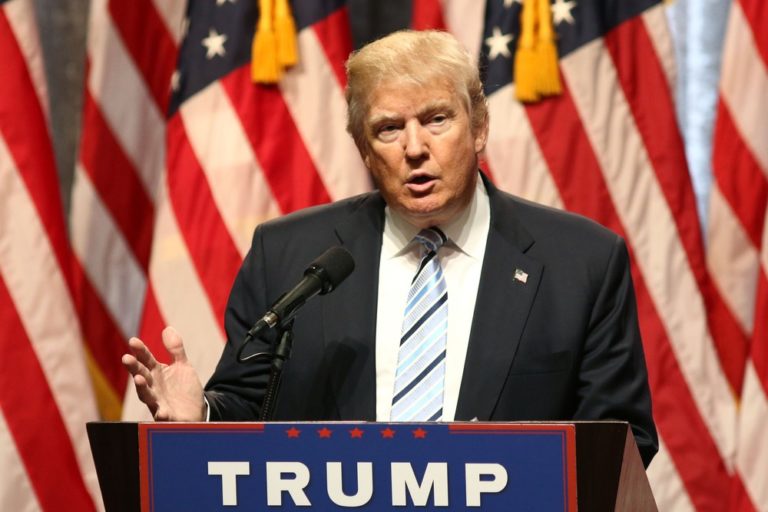
Trump’s Last Stand: The Battle to Keep Jan. 6 Case Sealed Until Election Day

Key Takeaways:

– A pending decision by U.S. District Judge Tanya Chutkan weighs on the public release of highly sensitive court documents related to Donald Trump’s efforts to overturn his 2020 election loss.
– The sealed files reportedly contain a trove of evidence that could significantly impact Trump’s prospects for the upcoming election.
– Trump’s legal team continues to argue for the preservation of presidential immunity, which they believe allows for the non-disclosure of these court records.
– The ultimate goal appears to be the delay of this evidence becoming public until after the upcoming election day.

A High-Stakes Court Decision Looms

Donald Trump finds himself grappling with the potential release of revealing court documents connected to his attempts to undo his 2020 election loss to Joe Biden. U.S. District Judge Tanya Chutkan is now tasked with determining whether substantial parts of these sealed files should go public.

Judge Chutkan recently allowed for an exceptional 180-page government brief, four times the standard length. The oversize brief was deemed necessary by the government due to the critical nature of the case. It needs to detail precisely why the charges against Trump should not be protected by immunity.

Deciphering Supreme Court Guidance

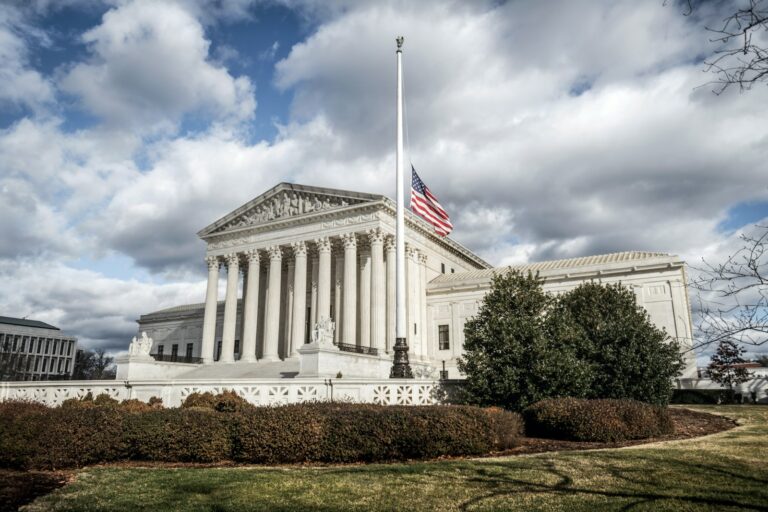
According to the government, the entire indictment is justified under the Supreme Court’s guidance. Prosecutors argue that nothing in the proposed presentation relies on evidence the court’s newly established immunity principles forbid.

Remaining true to a long-standing protective order in place, the government filed the brief under seal. Accompanying it was an even larger appendix of source materials. This means that we are yet to see the evidence supporting the prosecution’s case.

Unsealing: A Double-Edged Sword

The decision Judge Chutkan now faces is how much of the brief should be public knowledge. The presumption is that court filings should be accessible to the public unless specific factors dictate otherwise.

The government suggests that only the names and identifying information of potential witnesses not present in the indictment should remain hidden. This way, most of the brief will be public, and a heap of damaging information about Trump could be released.

Establishing Precedents

Witness accounts and other relevant information represent a major component of the case against Trump. However, bringing these facts to light might not lead to the full trial that some hope for. It is not the evidentiary hearing or “mini-trial” that was anticipated when the case came back to Judge Chutkan. But it does present a formidable body of evidence that could hinder Trump’s campaign if it appears before the election.

In response, Trump will exhaust all options to keep the information from escaping the four walls of the courthouse. His lawyers are preparing to insist that making these materials public would be detrimental to him and against the Supreme Court’s guidance.

Examining a Broader Privilege

Even so, the court’s immunity decision does not concern making evidence public. Rather it’s about using evidence as a basis for criminal charges. Taking this into consideration, Trump may still attempt to argue for broader immunity. This immunity would aim to bar the public disclosure of any evidence that can’t be used to charge him.

However, it’s unlikely that Judge Chutkan will agree with such an expansive privilege. Despite the legal debate, the real objective for Trump appears to be to stall the unsealing of the brief until it can be reviewed by higher courts. If he can successfully delay the unveiling of this damaging evidence until after the election, it could prove a significant victory for him and a disappointing loss for voters.

NBA Mourns the Death of Hall of Famer, Dikembe Mutombo

Key Takeaways:

– NBA’s esteemed Dikembe Mutombo passed away at the age of 58 from brain cancer.
– Mutombo, a former basketball player, treated a brain tumor back in 2022.
– Born in the Democratic Republic of Congo, Mutombo had a renowned basketball career, playing for six different NBA teams.
– NBA Commissioner, Adam Silver, applauded Mutombo’s humanitarian efforts, particularly in his home continent, Africa.

Basketball World Loses a Great: Dikembe Mutombo

In yet another heart-wrenching loss for the NBA, Dikembe Mutombo, one of the greatest shot blockers in the history of the sport, passed away on September 30. The NBA confirmed the unfortunate demise of the revered 58-year-old Hall of Famer, who breathed his last surrounded by his loved ones.

A seasoned player, Mutombo was well-known for his remarkable defensive skills on the court. More than his on-court prowess, it was his generously spirited nature that made him an endearing figure off the court. By pioneering humanitarian efforts in his native Democratic Republic of the Congo as well as throughout Africa, he left an indelible mark far beyond the basketball court.

Paying Tribute to a Luminary

In a heartfelt tribute, NBA Commissioner Adam Silver hailed Mutombo for his larger-than-life persona, both on and off the court. He fondly remembered Mutombo as a figure who captures the attention and admiration of basketball fans of different generations with his infectious smile, uniquely deep voice, and his signature finger wag.

“Dikembe was always accessible at NBA events over the years and he was undoubtedly one of the greatest shot blockers and defensive players in the history of the NBA”, Mr. Silver recalled in his tribute. He further admitted that the late Hall of Famer had a dedicated commitment to others, a deeply ingrained trait that made him the NBA’s first global ambassador. His love for helping communities, particularly in the Democratic Republic of Congo and Africa at large, highlighted his humanitarian spirit.

Brave Battle Against Brain Cancer

The NBA disclosed Mutombo’s cause of death as brain cancer, an ailment he had been battling since 2022. He had shown tremendous resilience in his fight against the disease, undergoing treatment under a team of specialists in Atlanta and showing great spirits throughout the lengthy procedure.

An Unforgettable Basketball Career

Mutombo was known on the court for his powerful play, having represented six different NBA teams from the 1990s up to the late 2000s. His illustrious career kickstarted with the Denver Nuggets before spanning to teams including the Atlanta Hawks, Philadelphia 76ers, New Jersey Nets, New York Knicks, and Houston Rockets. His legacy as a highly regarded professional player, a master in the defensive play, and a dedicated team member stays with the league and its fans.

Mutombo’s Legacy Extends Beyond the Court

Beyond his extensive basketball career, Mutombo’s contribution to humanitarian works solidified his legacy. He used his position actively to promote positive change, particularly in Africa. The late Hall of Famer used the power of basketball as a tool to bring about a positive change across different communities.

The demise of Dikembe Mutombo leaves a void in the world of basketball and beyond; yet his life continues to inspire many to excel on the court, and more importantly, to serve humanity selflessly. His courage, kindness, and awe-inspiring legacy will live on in the hearts of basketball fans and humanitarians across the globe.

Remembering Dikembe Mutombo: A Closer Look at the Late NBA Star’s Family Life

Key Takeaways:
– Former NBA star Dikembe Mutombo has passed away at 58 years old following a battle with brain cancer.
– Mutombo was a beloved figure, not just in the basketball community, but globally due to his extensive humanitarian work.
– His life beyond sports included being a devoted husband and father to seven children.
– His son, Ryan, memorializes his father as his “super-man” and follows in his dad’s steps as a basketball player at Georgia Tech.

Dikembe Mutombo: NBA Icon and Family Man

With profound sadness, we report the passing of global sports and humanitarian icon, Dikembe Mutombo. The late Naismith Basketball Hall of Famer passed away surrounded by his loved ones, battling brain cancer. Known for his broad wingspan on the court and an even broader heart off it, Dikembe will forever remain an emblem of inspiration.

Dikembe and His Better Half, Rose Mutombo

Behind the NBA icon was a strong, supportive woman named Rose Mutombo. Together, the couple faced life’s slew of challenges and joys from the 1990s until Dikembe’s passing. The love they shared transcended the glitter and applause of the NBA court, standing as a testament to their bond.

A Father of Many Hearts

Beyond his marriage, Dikembe carried another precious title – father. In their journey together, Dikembe and Rose welcomed three biological children into their world. In keeping with his giving nature, Dikembe also adopted four more children, a reflection of his expansive heart.

Ryan, the eldest, took to social media expressing his heartfelt tribute to his late father. His endearing message captured the essence of Dikembe, the man behind the legend. Ryan recalled his father’s legacy as “super-man”, a hero not for the fame or the millions of fans, but because of his intrinsic ability to care. In the heartfelt tribute, Ryan recognized Dikembe’s purity of heart, one that will forever be the standard of Philia love.

Ryan Mutombo Emulates His Father

In a beautiful twist of fate, Ryan walks the same path his father had carved. As a basketball player for Georgia Tech, he embodies his father’s giant sporting footprint, playing center – the same position held by Dikembe.

Dikembe Mutombo: More than Just an NBA Star

Beyond his NBA career and towering professional achievements, Dikembe imprinted his legacy on hundreds of hearts. His humanitarian efforts resonate throughout the world, reflecting his spirit of giving, even in his passing.

His love and dedication to his family mirror the ideals he sowed throughout his life. As the global community grieves the loss of an extraordinary man, his driving principles continue to influence lives within and beyond the basketball court.

In these raw moments of grief, we remember Dikembe, not just as the NBA legend, but as Rose’s husband and the father to their seven Herculean hearts. Dikembe’s life is a testament to the fact that some stars might fade from sight, but their light continues to inspire, guide, and warm the earth long after they are gone.

To Dikembe, the man whose towering persona only paralleled his deep-seated kindness. We remember you. We cherish your memory and aspire to reflect the intrinsic values you so passionately embodied. Rest in peace, dear legend. May your light forever shine over the world of basketball and beyond.

NATO Allies Determine Use of Transferred Weapons into Ukraine, Says Rutte

Key Takeaways:
– Only NATO ally nations that have supplied Ukraine with long-range weapons can permit the weapons’ use against aggressive territories.
– NATO Secretary General Mark Rutte emphasized the role of individual ally nations in supporting Ukraine’s self-defense.
– Rutte highlighted the crucial role of military equipment supplies from Western allies in bolstering Ukraine’s defense capabilities.
– Notably, a single weapon alone is insufficient for victory.
– Rutte declared that Ukraine’s existence today is largely due to U.S. support.

Understanding the Role of NATO Allies in Ukraine Defense

NATO Secretary General, Mark Rutte, recently clarified during a press conference in Brussels that only those NATO member states that have transferred long-range weapons to Ukraine have the autonomy to authorize their use against legitimate targets in the territory of the aggressor state. Emphasizing the core principle of self-defense, he stated that it is ultimately up to the individual ally to decide on its level of support for Ukraine. He said, “This is for the individual allies in their relationship with Ukraine.”

Importance of External Support in Upholding Ukraine’s Defense

Rutte further noted the strategic significance of military equipment supplied by Western allies in bolstering Ukraine’s defense capabilities. Highlighting the complexity of warfare, he underlined, “a single weapon alone cannot win the war.” Clearly, survival in defense battles requires the collective support and militaristic aid of multiple nations.

Each Ally Holds The Autonomy to Determine Its Support

Echoing his stance on individual discretion, Rutte argued that each ally has the freedom to decide what strategy they adopt in supporting Ukraine. He cited the United States as an example by highlighting its financial contributions towards Ukraine’s defense. He professed, “The United States and their leadership, they have spent tens of thousands, tens of billions in dollars to support Ukraine’s right to self-defense.”

Ukraine’s Survival Attributed to U.S. Contributions

Underscoring the significant role of the United States in the survival of Ukraine, Rutte claimed, “Ukraine likely would not exist as a country today without U.S. support.” The financial assistance and resources extended by the U.S., according to Rutte, have been instrumental in preserving Ukraine’s sovereignty.

Reshuffled Leadership in NATO

Previously, the NATO Headquarters hosted an official ceremony in Brussels where the powers of the NATO Secretary General transitioned from Jens Stoltenberg to Mark Rutte, the former Prime Minister of the Netherlands.

Rutte’s clarifications come in the wake of persistent queries about the supplying and utilization of weapons at the frontlines. This has assumed center stage in discussions around defense strategies, particularly as nations seek to safeguard peace and sovereignty. It is evident that multinational alliances, coupled with individual nations’ chosen strategies, will continue to bear significantly on the complex canvas of world politics.

Israeli Military Initiates Ground Operation Against Hezbollah in Lebanon

0

Key Takeaways:

– Israeli Defense Forces (IDF) commence ‘localized and targeted’ ground raids against Hezbollah targets in southern Lebanon.
– The operation is supported by the Israeli Air Force and IDF Artillery with precise airstrikes on military targets.
– The strikes follow the airborne assassination of Hezbollah leader and officials in Beirut.
– Striking thousands of miles away, Israel expands raids on Yemen’s Houthi rebels amid concern over regional conflict.
– Though there is no direct confrontation, Israeli troops and Hezbollah militant are on high alert.

Israeli Defense Forces Advance into Lebanon

The Israeli military has launched a focused ground operation against Hezbollah targets in villages close to the Israel-Lebanon border. The Israeli military described the action as “limited, localized, and targeted,” posed by intelligence-driven information citing immediate threats to Israeli communities in northern Israel.

Operational Groundwork and Response

The IDF revealed that the operation had undergone meticulous planning over recent months and was initiated upon acquiring suitable consent from political heads. This incursion appears subsequent to continuous days of Israeli airstrikes that led to the execution of Hezbollah leader Hassan Nasrallah and several of the group’s commanders in Beirut.

“The Israeli Air Force and IDF Artillery are assisting the ground forces with precise strikes on military targets,” the military commented. Israel confirmed its continued operation against Iran-backed groups in Lebanon – an operation named “Northern Arrows” – set to prolong in sync with combat in other areas, including Gaza.

Regional Impact

Israeli military operations have broadened beyond Lebanon, affecting Yemen’s Houthi rebels as well, forcing concerns of escalating regional conflict. There is apprehension that Israel’s enduring war against Hamas in the Gaza Strip and Hezbollah in Lebanon may set off a wider regional squabble, potentially drawing in Iran and the United States.

In light of the operation, Israel declared three small border communities as “closed military zones,” limiting access strictly for the army. Regular artillery strikes and sounds of airstrikes echo throughout Beirut, a clear indicator of the heated situation.

The Aftermath and Hezbollah’s Future

With hundreds dead from the recent strikes and thousands displaced, Lebanon bears the brunt of the devastating action. Fully aware of the damaging capacity of Hezbollah – a robust, well-trained militia with a formidable arsenal, Israel has plunged into a precarious stage of combat that may incite further destruction on Lebanon.

During a televised statement, Hezbollah’s acting leader Naim Kassem vowed to persist fighting, saying the group is prepared for a ground operation and that the positions of slain leaders have been reassigned. The probable successor to Kassem’s leadership is Hashem Safieddine, an influential cousin of Nasrallah.

The Human Cost

Israeli strikes have already destroyed thousands of militant targets across large parts of Lebanon. Over 1,000 people have lost their lives in Lebanon in the last two weeks, nearly a quarter of them being women and children as reported by the Health Ministry. Israel has aggressively pursued combat against Hamas in the Gaza Strip and, as the situation eases, scrutiny has been directed to Lebanon.

Despite the back-and-forth of fire almost every day between Israeli forces and Hezbollah, full-fledged war has been narrowly evaded several times. Currently, Israel has magnified its attacks on Hezbollah, vowing to continue these strikes until it is safe for displaced Israelis to return home.

Sandra Bullock’s Failed Attempt to Create ‘Million Dollar Baby’

0

A Deep Dive Into Sandra Bullock’s Epic Story

Sandra Bullock, a queen in the film industry, has had a stunning career filled with many memorable roles. She has successfully dabbled in many genres from chilling thrillers like ‘Bird Box’ to lighthearted dramas like ‘Miss Congeniality’. However, her journey to success wasn’t always a smooth ride. One road bump was her failed attempt to launch the film ‘Million Dollar Baby’.

The Tale of the Missed Punch

‘Million Dollar Baby’ is a film that will go down in history. It won Best Picture, Best Director, and Best Actress at the Academy Awards. Add to this, it boasts an impressive 90% rating on Rotten Tomatoes! However, before it became a Clint Eastwood success with Hilary Swank wearing the gloves, Sandra Bullock wanted to ring the bell.

Bullock put her heart and soul into bringing this film to life. She wanted to play the lead role of Maggie Fitzgerald and spent time trying to find backers for the film. But, the studios didn’t seem interested. Was it the idea of a female boxer that turned them off? Or, was it something more personal?

The Gender Bias Question

Eventually, Clint Eastwood came to rescue the project. He took the helm and made the powerful decision to cast Swank in the lead role. Suddenly, the film that nobody wanted to touch became a massive success.

This left Bullock to consider the ugly truth of sexism in Hollywood. She suggests that perhaps it wasn’t just the film that the studios had rejected, but her as a female lead. Looking back on her career, she acknowledges that she didn’t see the gender bias for what it was. She believed she was treated in a certain way because she was a woman.

A Change in Tides and New Lessons

Even with Bullock’s superstar status, ‘Million Dollar Baby’ only caught the industry’s eye when Eastwood, a man, got involved. This surprising shift raised some big questions about sexism in Hollywood.

However, Bullock’s journey wasn’t just about facing rejection. It was about resilience, learning, and growing. Seeing her projects soar under someone else’s direction, she took it all in stride. Reflecting on her experiences, she emphasizes the importance of recognizing and tackling systemic sexism.

Final Thoughts

Although Bullock could not bring ‘Million Dollar Baby’ to life, her struggles offered her valuable insights. Her experiences teach us that it’s not about always winning, but about learning and growing. Let’s appreciate Bullock’s contributions to film while also acknowledging that Hollywood needs to do better when it comes to gender bias. Failure may be tough, but it’s an essential part of life’s journey.