51.9 F
San Francisco
Tuesday, May 12, 2026
Home Blog Page 1655

Arthur Hayes Pioneers Memecoin Investment with $250,000 Stake in PEPE

Key Takeaways:

– Former BitMEX CEO Arthur Hayes invests $250,000 in memecoin PEPE, purchasing a total of 24.39 billion tokens.
– PEPE records notable increases in price and trading volume following Hayes’ investment.
– Hayes also shows support for Mog Coin (MOG) and the Mother Iggy (MOTHER) token, positively impacting their prices.
– Despite fluctuations, memecoins outperform many leading cryptocurrencies over the past year.

Arthur Hayes, the former Chief Executive Officer (CEO) of BitMEX, one of the most popular cryptocurrency trading platforms, is making waves in the memecoin market. In a recent step forward for memecoins, Hayes has reportedly invested $250,000 in Pepe (PEPE), a popular memecoin.

Memecoin Momentum Soars with Hayes’ PEPE Investment

On-chain analytics platform Lookonchain unveiled that Hayes purchased approximately 24.39 billion PEPE tokens on Binance, contributing $250,000 to his coin holdings. Following this investment, PEPE saw an upward trajectory, achieving a three-month-high price of $0.0000109.

CoinGecko data corroborates the impressive gains of PEPE, recording advancements of 34%, 45%, and 38% over the week, fortnight, and month respectively. Boasting a 41% surge in trading volume over the past 48 hours, the memecoin’s total turnover came close to $2.5 billion.

These statistics reflect a broader trend of revived interest within the crypto market. Market experts link this rise in trading levels and investor interest to the recent US Federal Reserve decision to cut interest rates on Sept 18, which in turn has fostered a congenial environment for cryptocurrencies.

As of the latest trading hours, PEPE trades at $0.0000107, making a 17% increase. Despite standing 37% below its all-time high of $0.0000171 reached in May, Hayes’ investment promises continuous investor interest in the token.

Hayes Extends Support to Other Memecoins

Hayes’ involvement with memecoins ventures beyond PEPE. His support extends to other tokens, namely Mog Coin (MOG) and the Mother Iggy (MOTHER) token. The latter is linked to Australian singer Iggy Azalea and built on the Solana blockchain.

Although it is not confirmed whether Hayes invested in these tokens as he did with PEPE, his endorsement has positively impacted MOG’s price. Currently trading at $0.00000165, MOG has appreciated by over 10% following Hayes’s announcement. In addition to a huge year-to-date surge of 10,398%, the trading volume of MOG also shows a 5.70% increase. However, it still stands 32% below its peak of $0.0000024 achieved in July.

On the other hand, fluctuations mark the performance of MOTHER token. While it has slipped nearly 14% in the past 24 hours, the token maintains interest with considerable gains of 75% and 176% over the last week and fortnight respectively.

Hayes’ support for memecoins casts a spotlight on this part of the crypto market, which has shown strong performance over the past year. With such high-profile investments, memecoins have surpassed many of the leading cryptocurrencies by a significant margin.

As memecoins continue to make their mark in the crypto arena, investors’ focus on these often-overlooked tokens will inevitably increase. Assuredly, as Hayes’ recent investments illustrate, the memecoin market, often dismissed as fleeting or insignificant, holds substantial potential for both long-term growth and short-term trading profits. As Arthur Hayes pioneers this new frontier of memecoin investment, the crypto world watches with interest, ready for new opportunities in a rapidly evolving market.

Country Music Icon and Hollywood Star Kris Kristofferson Passes Away at 88

Key Takeaways:
– Kris Kristofferson, famous Grammy-winning country artist and accomplished actor, dies at age 88.
– The legendary songwriter made significant contributions to the music industry, remembered by classics such as “Sunday Mornin’ Comin’ Down” and “For the Good Times.”
– He was also equally successful in Hollywood, with notable roles in films like the Blade trilogy and Planet of the Apes.
– Kristofferson retired from both music and acting in 2021, leaving a legacy of songs and films cherished by many.

A Prolific Songwriting Career

Renowned for his songwriting mastery, Kris Kristofferson’s songs have deeply touched and influenced many the hearts of his audience. May it be a peaceful morning with “Sunday Mornin’ Comin’ Down,” or seeing the bright side of love with “For the Good Times,” his songs have been the background score for millions of listeners.

Despite his success as a performer, Kristofferson’s most famed compositions found their best interpretations in the performances of others. For example, his timeless classic “For the Good Times” became a fan-favorite in the melodious voice of Ray Price, and “Me and Bobby McGee” found renewed fame under the powerhouse vocals of Janis Joplin.

A New Generation of Country Music

With characteristic long hair, bell-bottom slacks, and counterculture songs, Kristofferson carved a unique niche in the country music scene. His artistry proved influential, inspiring fellow musicians such as Willie Nelson and Tom T Hall, thus ushering a new breed of country songwriters.

Regarded by his peers as a leading force within the industry, the acclaim Willie Nelson once shared at an event rings true, “There’s no better songwriter alive than Kris Kristofferson. Everything he writes is a standard and we’re all just going to have to live with that.”

Multiple Grammy Wins and Recognition

Kristofferson’s illustrious career did not go unnoticed, garnering him many accolades. He was a recipient of four Grammy Awards, including Best Country Song in 1971 for “Help Me Make It Through The Night.” His collaborations with Rita Coolidge added two more Grammy wins to his collection.

To honor his contributions to the music industry, he was awarded the Grammy Lifetime Achievement Award in 2014.

Hollywood Success and Retirement

Besides his celebrated music career, Kristofferson was a striking presence on the big screen. He played alongside established stars in blockbuster hits like the Blade trilogy, Planet of the Apes, and other standout performances in films including “Alice Doesn’t Live Here Anymore” and “A Star Is Born.”

After decades of a thriving career, Kris Kristofferson bid adieu to both music and acting in 2021, only making rare appearances on stage. His legacy lives on through his classic songs and unforgettable roles.

A Lasting Legacy

Having significantly impacted the music industry and Hollywood, Kris Kristofferson’s legacy lives on. Survived by his wife, Lisa; his eight children, and seven grandchildren; Kristofferson lives on in the hearts of his family and his fans who continue to appreciate his multi-dimensional contributions. As the world mourns his loss, it also acknowledges the luminous legacy he left behind. In life as in death, Kristofferson continues to smile down at us from somewhere over the rainbow.

Over Five-Hours Long UAV Attack on Kyiv Ends Without Casualties

Key Takeaways:

– Kyiv witnessed an over five-hour long UAV, potentially Shahed, drone attack
– The Kyiv City Military Administration confirms there were no reported casualties or damage
– The country’s air defense capabilities were instrumental in neutralizing the enemy drones
– Information about the exact number and type of drones to be provided by the Air Force

UAV Attack on Kyiv

A massively orchestrated UAV drone attack descended over Kyiv. This was the fourth such attack that the city has suffered. It is believed the enemy employed strike UAVs, potentially Shahed drones, to attack the city. The time of the attack was night when these loitering munitions approached Kyiv from different directions and in waves. The whole ordeal stretched on for a period exceeding five hours, setting the city on high alert.

Kyiv’s Response to the Attack

The Chief of the Kyiv Regional Military Administration, Serhii Popko, addressed the drone attack in an official statement. He lauded the effectiveness of the city’s air defense system which, according to him, played a crucial role in neutralizing the perceived threats from the attack drones. The air defense setup worked tediously and managed to thwart all drones that posed threats to the city. The exact number of drones and their types have yet to be revealed, with upcoming details to be released by the country’s Air Force.

The Outcome of the Attack

Preliminary reports following the attack suggest that no significant damage was inflicted upon the city. Furthermore, there were no casualties reported either. This outcome underscores the effectiveness and success of the city’s air defense measures in preventing major devastation to the city’s infrastructure and protecting its residents.

Repetition of Past Incidences

This incident marks the fourth air raid over Kyiv, each involving the use of UAV drones, suspected to be Shahed units. The enemy has exhibited a consistent preference for nighttime activity, employing waves of drones that approach from multiple directions. This method is meant to keep the city on its toes and test the limits of its defense capabilities. However, as seen from the latest attack and the results of the preceding ones, Kyiv’s air defense mechanisms prove to be well-postured to counter these threats.

Role of Air Defense Systems

These repeated drone attacks highlight the critical role of efficient air defense systems in safeguarding a city. Kyiv’s handling of the previous and most recent attacks significantly demonstrates the city’s resilience and the effectiveness of its defense setup. Being able to neutralize massive incoming drone attacks while safeguarding infrastructure and citizens’ lives speaks volumes about the efficiency and practicality of their air defense systems.

Kyiv Moving Forward

Despite the scale and intensity of these drone attacks, Kyiv has continuously displayed resilience and strength in the face of adversity. The city’s preparation and effective defensive systems have successfully curtailed the impact of these repeated onslaughts, marking a beacon of hope for the residents. As the city trudges on and faces the future, one thing remains clear, Kyiv is ready and unfazed to meet any such future threats head-on.

In conclusion, despite being subjected to a massive drone attack lasting more than five hours, Kyiv came out unscathed, showing its unwavering strength and defense capabilities. The city remains vigilant, knowing that overcoming such a substantial threat only means they are prepared for what might come next.

Ethereum Price Cuts Gains: Will the Bullish Rally Cool Down?

0

Key Takeaways:

– Ethereum showed a downward correction from the high of $2,720.
– The cryptocurrency is currently trading below $2,650 and could find buyers around $2,600.
– Ethereum’s price needs to remain above $2,600 to spur further growth in the short term.
– Furthermore, there is a noticeable bearish trend line with resistance around $2,650.
– If Ethereum can breach the $2,720 resistance, we could see an upswing towards the $2,840 resistance zone.

Downward Pressure on Ethereum Intensifies

Ethereum’s price recently experienced a cut in its gains following an upsurge above the $2,650 level. Furthermore, the popular cryptocurrency also surpassed the pricey tag of $2,700, garnering attention from bears and sparking the downward correction. Ethereum sustained an intraday high of $2,728 before this correction, paralleling a similar trend displayed by Bitcoin.

This correction phase led the virtual coin below the $2,700 and $2,650 levels, and it is currently trading below the 100-hourly Simple Moving Average. Pertinently, the coin has slid below the 50% Fibonacci retracement level from the upswing at $2,554 to an optimistic high of $2,728.

Potential Support and Resistance Levels

Interestingly, Ethereum’s price also has the potential to find buyers around $2,600 or even the 76.4% Fibonacci retracement level from the $2,554 low to the $2,728 high. On the other hand, the cryptocurrency seems to encounter resistance around the $2,650 mark.

Moreover, a bearish trend line with resistance at $2,650 is forming on the ETH/USD hourly chart. The next crucial resistance level resides near the $2,685 mark, followed by a further barrier aligned at $2,720.

A Possible Upswing

If Ethereum manages to punch its way through the $2,720 obstruction, it could prompt an upward wave in the following sessions. In such a scenario, Ethereum could fly towards the $2,840 resistance zone in the near future. After that, the next hurdles are anticipated near the $2,880 mark and the $2,920 zone.

Downhill Risk?

However, if Ethereum stumbles against the $2,650 resistance level, it could maintain a downward trajectory. The first significant support on the lowering scale is near the $2,600 mark, while a more formidable support appears near the $2,550 area.

If Ethereum plunges below the $2,550 support, it might send the price tumbling towards $2,520. Further losses could possibly push towards the $2,450 support level in the imminent future. The subsequent crucial support lies waiting at $2,365.

Technical Indicators Analysis

From a technical standpoint, the Moving Average Convergence Divergence (MACD) for ETH/USD is accelerating in the bearish zone. At the same time, the Relative Strength Index (RSI) for ETH/USD is currently lurking below the 50 zone, suggesting bearish momentum is on the rise. As such, the major support and resistance levels for Ethereum assess at $2,600 and $2,650, respectively.

Overall, while Ethereum price has trimmed its gains, there’s still potential for an uptrend if it manages to clear the key resistance levels. However, there’s always a risk of more significant losses if it fails to do so. As a result, potential investors should keep a close eye on the aforementioned support and resistance levels.

Freed Putin Critic, Vladimir Kara-Murza, Raises Voice Post Prisoner Swap

Key Takeaways:
– Vladimir Kara-Murza, a critic of Vladimir Putin, is one of eight Russian dissidents recently released.
– The release represents the most significant international prisoner exchange since the Cold War.
– Kara-Murza reveals he feared execution on the day of his release from the cell.

Breaking Free: Political Dissidents Return

In a momentous turn of events, Vladimir Kara-Murza found himself among the eight Russian dissidents released in a historic international prisoner exchange. This swap is the largest of its kind since the era of the Cold War. His release, however, was not without its chilling moments. Kara-Murza confesses he was faced with the gripping fear of execution on the day he was freed from his cell.

Speaking Out: Kara-Murza Shares His Experience

As a critic of Vladimir Putin, Kara-Murza was no stranger to controversy. However, even he could not predict the harrowing turn his life would take. Shining a light on the darker side of international politics, he detailed the moments leading up to his unexpected release.

“On the day of my release, I thought it was the end,” he revealed, indicating the extreme conditions under which political dissidents like him had to live.

The Art of Survival: Political Dissent in Russia

Life as a political dissident in Russia comes with its unique challenges. The threat of incarceration, torture, and even execution is a constant reality for these outspoken individuals. This fear was something Kara-Murza had learned to live with, but it hit him in full force on the day of his release.

Despite the near-constant danger, Kara-Murza continued to use his voice to challenge Putin’s rule. His relentless critique of the Russian administration was what ultimately led to his imprisonment. But it’s also what set the stage for his release in this historic prisoner swap.

A Chapter Ends: The Largest Prisoner Swap Since The Cold War

The exchange of Kara-Murza, along with seven other prisoners, marks a significant milestone in international relations. This massive prisoner exchange, the most considerable since the Cold War, shows signs of thawing relationships between Russia and the west.

As mystery shrouds the exact details of this diplomatic breakthrough, one thing is clear – for eight Russian dissidents, including Kara-Murza, freedom could not have come sooner.

Looking Ahead: Life after The Swap

As the dust settles on this monumental event, Vladimir Kara-Murza, now a freed man, reflects on his past experiences and contemplates his path forward.

Still, freedom does not erase the scars of his unsettling past. Utterly shaken but unbroken, he remains committed to continuing his fight for political justice. He believes that using his newfound freedom as a platform to shed light on the realities of political dissent in Russia can make a real change.

In conclusion, this recent prisoner swap has flung open the doors for eight outspoken critics of Putin’s administration. It presents the opportunity for a renewed fight for justice, led by the resilient voice of Vladimir Kara-Murza. With renewed hope and grit, these political dissidents may finally sow the seeds of meaningful change in Russia’s political landscape.

Severe Israeli Strikes in Lebanon Weaken Hezbollah, Civilian Death Toll Increases

Key Takeaways:

– Israeli airstrikes targeted Iran-backed groups in Lebanon and Yemen’s Houthi rebels across the weekend, deepening concerns about a potential regional conflict.
– Hezbollah’s longtime leader Hassan Nasrallah was assassinated in a major airstrike on Friday.
– Following the assassination, Israel continued to target Hezbollah and Hamas locations throughout Lebanon’s south and east.
– Displaced refugee families, many with young children, have sought sanctuary in Beirut’s iconic Blue Mosque.
– Despite the heavy toll, Hezbollah’s deputy leader vowed to continue confronting Israel.

Growing Regional Tensions Following Israeli Strikes

Israel continued to amplify its airstrikes on Iran-endorsed groups in Lebanon over the weekend. The aggression has also seen operations extending to Yemen, targeting Houthi rebels. These strikes are a joint response to rebel drone and missile attacks on commercial and military vessels in the Red Sea.

A Significant Blow to Hezbollah

The Israeli offensive represents a key moment in its war against Hamas in the Gaza Strip and Hezbollah in Lebanon. This comes amid growing concerns of escalating conflict regionally, potentially drawing in the U.S. and Iran. Just days after the assassination of Hassan Nasrallah, Hezbollah’s leader, Israel launched airstrikes on the Houthi’s. Despite these severe blows, Hezbollah’s deputy leader, Naim Qassem, promised that the group would persist in their campaign against Israel in support of Gaza and Palestine.

Israeli Strikes Continue, Sparking Civilian Casualties

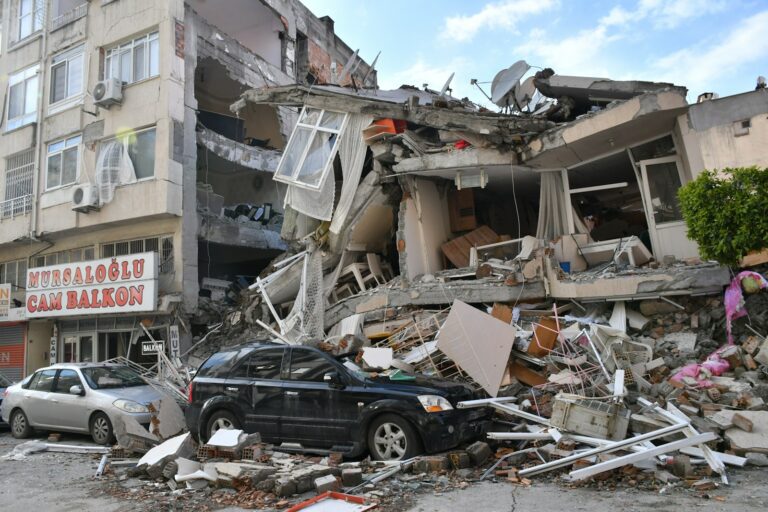
Following Friday’s airstrike, Israel’s forces continued their onslaught against Hezbollah and Hamas targets throughout Lebanon’s south and east over the weekend. The southern suburb of Dahiyeh, a Hezbollah stronghold where Nasrallah and other high-ranking members were killed, suffered the most. Tragically, civilian casualties are mounting, with entire residential buildings decimated in Lebanon’s capital.

Impact on the Lebanese Civilian Population

The strikes have left a trail of devastation, displacing nearly a million people from their homes. The majority of the displaced reside in southern Lebanon but are now seeking refuge in Beirut or more northern areas. Beirut’s iconic Blue Mosque has opened its doors to many families seeking sanctuary, with some preferring to sleep in the open surroundings of the building, rather than risk returning to their neighbourhoods amid the Israeli bombardment.

Possible Ground Operation in Lebanon and Future Outlook

As Israeli tanks and armoured vehicles gather on Lebanon’s northern border, signals suggest a possible ground operation. This move has the potential to escalate conflicts more seriously. Hezbollah’s deputy leader stated on Monday that despite the heavy blows dealt by Israel, the group’s “military capabilities are solid.” He added that they would continue along their established path, prepared for a war with Israel.

As Israeli strikes weaken Hezbollah influence, both sides remain steadfast, threatening to escalate the conflict further. The defending civilians who bear the brunt of the violence plead for peace, while the warring factions advance towards a potentially disastrous regional showdown.

Mexican Authorities Seize 24 Drug Cartel Surveillance Cameras

0

Key Takeaways:

– Mexican authorities capture 24 surveillance devices installed by drug cartels.
– Devices found in San Luis Rio Colorado, a border city notorious for smuggling.
– Surveillance apparatus were attached to telephone poles, light posts, and palm trees.
– Previously in 2015, a similar network was found in Tamaulipas, another border state.
– Sanctions imposed by US Treasury on businesses funding Sinaloa cartel through fentanyl trafficking revenues.

A Crackdown in San Luis Rio Colorado

In a recent crackdown, Mexican law enforcement agencies have located and seized 24 surveillance cameras placed by a drug cartel in the border city of San Luis Rio Colorado. The confiscated devices, typically used by cartel lookouts known as ‘falcons’, were positioned strategically across the city, rigged onto telephone poles, light posts, and even palm trees.

Under Constant Surveillance

These cameras, seized in three different neighborhoods, were for monitoring the movements and activities of police officers and soldiers. Analysis of the devices uncovered by the authorities showed they were regular porch-style cameras, fitted out with duct tape for makeshift rigidity. Such surveillance networks have become a common threat in several Mexican border towns that battle constant violence stemming from cartel rivalries.

A City Under Siege

Situated on the edge of Arizona, San Luis Rio Colorado is commonly recognized as a town where Americans head for affordable prescriptions and dental treatment. However, in the recent past, it has increasingly felt the brunt of drug cartel violence. This is unfortunately not the first instance where cartels have used clandestine surveillance apparatus to maintain tabs on authorities in border towns.

A Recurrent Issue

As far back as 2015, a drug cartel in Tamaulipas, the northern state, had installed 39 surveillance cameras to observe the movement of law enforcement authorities in Reynosa, situated across the border from McAllen, Texas. These cameras, powered by electric lines strung above city streets, accessed the internet via phone cables affixed to the same poles. They were even equipped with modems and had the ability to operate wirelessly or via commercial internet service providers’ lines.

More Than Just Eyes

In addition, these Tamaulipas cameras not only captured movement around shopping centers, main roads, and certain neighborhoods, but also had a direct line of sight to strategic locations such as an army base, marine post, and offices of the attorney general and state police. The discovery of these surveillance devices highlighted an alarming trend among drug cartels to maintain constant, covert observation of law enforcement activities.

Deepening Threats

By the end of 2015, authorities had also unearthed 55 radio communication antenna between Matamoros and Miguel Aleman, two border towns. This dual network of surveillance cameras and radio antennas illustrates the increasingly sophisticated and alarming tactics employed by cartels.

A Blow to Cartel Financing

In related news, the U.S. Treasury Department announced sanctions against two Mexican businesses last week, charging them with funding the notorious Sinaloa cartel through revenues generated from fentanyl trafficking. This crackdown comes in the wake of an internal power struggle within the Sinaloa Cartel, triggered by the surprise arrest of its co-founder Ismael “El Mayo” Zambada on U.S. soil.

As Mexican authorities stay vigilant, the struggle against the cartels remains a daunting challenge. The latest capture of surveillance devices in San Luis Rio Colorado is a step forward, but there is a long, hard road ahead.

The Elusive Scythians: Unveiling the Mystery Through A Gold Plaque

0

Key Takeaways:

– A historic gold plaque depicting a Scythian on horseback surfaces from Turkey’s Black Sea region.
– Crafted between 400 and 350 BC, the plaque offers insights into the Scythian culture.
– Scythians were known for their horse breeding and goldsmithing skills.
– The emphasis on horses in Scythian culture is evident in their artifacts, including this plaque.

A Glimpse into the Past: Scythian Gold Plaque

A significant artifact has come to light – a gold plaque portraying a Scythian warrior on horseback, offering a sneak peek into the mysterious life of the Scythians, a nomadic group that populated parts of Siberia, Central Asia, and the northern Black Sea over 2,000 years ago.

The Journey to Scythian Era

The Scythians were an elusive group of warriors whose recorded history largely comes from external perspectives. They resided in the region known today as the southern part of Siberia, Central Asia and the northern Black Sea from about 800 to 300 B.C. Greek historian Herodotus, in the 5th century B.C., succinctly described them saying, “None who attacks them can escape, and none can catch them if they desire not to be found.”

Decoding the Scythian Artifact

The Scythians were not just fierce warriors but also exquisite goldsmiths. The Scythians’ skill in this craft is evident from the intricate details on the newly found gold plaque. The Scythians further stood out for their decorated weapons, such as daggers, knives, and arrowheads often inlaid with gold.

Equally noteworthy was their prowess in breeding horses. The figure of a horse prominently features in many Scythian goldworks, including the newly discovered plaque. A study in 2017 pointed out that Scythians succeeded in avoiding inbreeding of horses and selected for desirable traits like coat colors and sturdy forelimbs.

The Plaque: A Testament of Scythian Culture

The plaque, originating from the Black Sea region in present-day Turkey, dates back to approximately 400 to 350 B.C. It displays a bearded Scythian man riding a horse and brandishing a weapon, probably heading into battle.

The Scythians’ Affinity for Horse and Gold

It is not surprising that the plaque portrays a warrior on horseback. The Scythians valued their horses and often bred them for specific traits. Their love for these majestic creatures often found expression in the form of artistic depictions on their artifacts.

As for the gold, the Scythians exhibited skill not just in crafting goldworks but also weapon-making. Their weapons were not just utilitarian but decorative, often bejeweled with gold.

Lost in History, Unearthed Today

Despite the Scythians’ significant presence in history, not much is penned down about their lifestyle or culture. This scarcity of written records has led historians to rely heavily on archaeological finds and artifacts, such as the gold plaque, for insights into their culture.

To sum up, the 2400-year-old gold plaque depicting a Scythian on horseback is more than a stunning piece of art. It serves as a historic document speaking volumes about the Scythians’ culture, artistry, warfare, and their affinity for horses and gold. Unraveling more pieces like these will bring us closer to unearthing the true persona of the fascinating Scythians, the nomadic warriors lost in the pages of time.

Israeli Airstrike Kills Hamas Leader in Lebanon and Deals Heavy Blows to Hezbollah

0

Key Takeaways:

– A Lebanese Hamas leader, Fatah Sharif, and his family were reportedly killed in an Israeli airstrike.
– Israel’s airstrikes have caused a significant loss to Hezbollah including the death of their long-time leader, Hassan Nasrallah.
– The ongoing conflict has escalated dramatically, with heaviest Israeli airstrikes on Lebanon killing over 1,000 people as Israeli hits Houthi targets in Yemen.
– The Lebanese Health Ministry confirmed at least 105 people were killed in airstrikes on Sunday.
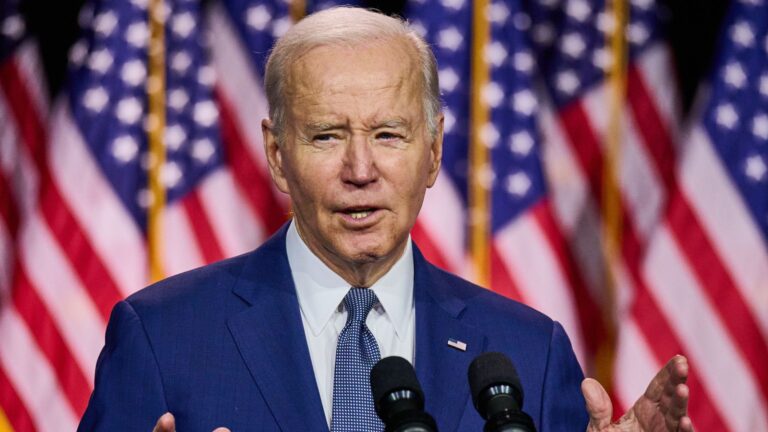
– Biden cited Nasrallah’s death as a “measure of justice”, warning that Hezbollah will work quickly to rebuild their command structure.

Hamas Leader Killed in Airstrike

In a heartrending incident on Monday, the Palestinian militant group Hamas announced the death of its leader in Lebanon, Fatah Sharif, and his family by an Israeli airstrike. The attack aimed at Al-Buss refugee camp in the southern port city of Tyre marked one of the significant developments in the enduring Israel-Lebanon conflict.

Hezbollah Sustains Major Losses

During the last week, Israel has relentlessly aimed at Beirut’s southern suburbs, a stronghold of Hezbollah. This included a powerful strike that killed Hezbollah’s long-standing leader, Hassan Nasrallah. Monday witnessed the first apparent Israeli airstrike touching central Beirut in nearly a year, reducing an apartment building to rubble. As firefighters battled the flames following the airstrike, it was clear that the onslaught resulted in heavy loss to Hezbollah’s command structure, exacerbating the crisis in Lebanon.

Rising Civilian Death Toll

Sadly, along with the key militant figures, civilians have borne a significant brunt of these recent attacks. A residential building in central Beirut was heavily hit, resulting in at least one dead and sixteen injured as per an anonymous Lebanese Civil Defense official. The deceased was reportedly a member of Al-Jamaa al-Islamiya, a Sunni political and militant group allied with Hezbollah.

Additionally, the Popular Front for the Liberation of Palestine reported that three of its members lost their lives in the airstrike. The Lebanese Health Ministry confirmed that two strikes near the southern city of Sidon killed at least 32 people, and separate Israeli strikes in the northern province of Baalbek Hermel claimed the lives of 21 people and injured at least 47.

Hezbollah Leaders Killed in Strikes

With Nabil Kaouk, the deputy head of Hezbollah’s Central Council, being the latest loss to the organization, he joins the list of seven senior Hezbollah leaders confirmed killed in Israeli attacks within a little over a week. This included Ali Karaki, a senior commander of Hezbollah who was also killed in the same strike that ended Nasrallah’s life.

Biden Labels Nasrallah’s Death as “Measure of Justice”

In international responses, US President Biden referred to the death of Hezbollah’s leader Hassan Nasrallah as a “measure of justice” for his countless victims. He added, “Nasrallah and the terrorist group he led, Hezbollah, were responsible for killing hundreds of Americans over a four-decade reign of terror,” reflecting on the effect on Israelis and Lebanese civilians.

Moreover, John Kirby, the White House national security spokesperson, remarked that the recent airstrikes had “wiped out” Hezbollah’s command structure and people were safer without Nasrallah. Nonetheless, he pointed out the potential for the group to recover and rebuild given a leadership vacuum.

Escalation and Aftermath

In retaliation to Israeli air strikes, Hezbollah increased its rocket attacks significantly over the past week, per Israeli military reports. Despite the escalated rocket attacks, the Israeli army maintains that its strikes have degraded Hezbollah’s capabilities. The country is determined to return about 60,000 of its evacuated citizens to their communities in the north.

The ongoing conflict in the area has led to the displacement of hundreds of thousands of people, with approximately 250,000 currently sheltering and others staying with friends or relatives, or living on the streets.

Lasting Peace Elusive

The situation represents an alarming escalation of a conflict that has long cast its shadow over the region. With calls from international bodies for a temporary ceasefire and peace negotiations, the path to a stable peace in the region appears fraught and complex, yet more critical than ever as civilians continue to bear the brunt of the conflict.

Preview: Walz-Vance Vice Presidential Debate Moderated by Brennan and O’Donnell

0

Key Takeaways:
– CBS News presents the only debate between running mates Gov. Tim Walz and Sen. JD Vance on Tuesday, starting at 6 p.m. Pacific.
– Norah O’Donnell and Margaret Brennan will moderate, making this the first time two women have moderated in a general election presidential or VP debate.
– CBS will make the debate available on all cable news channels, major broadcasters, and streaming platforms, including Paramount+ and CBS News 24/7.
– Moderators won’t fact-check the candidates during the debate but will allow candidates to fact-check each other. CBS News will provide real-time fact-checking on its live blog and social media.
– The moderators, veteran journalists in national politics, have rich experience working as White House correspondents and covering global stories for CBS.

The Historic Vice Presidential Debate: A Closer Look

CBS News gears up to broadcast a one-of-a-kind vice presidential debate on Tuesday. Featuring Gov. Tim Walz, the Democratic candidate from Minnesota, and Republican Sen. JD Vance from Ohio, the event promises to offer insightful discussions starting at 6 p.m. Pacific.

Steering the Debate: A Dynamic Duo

In a historic first for general election presidential or vice presidential debates, two women – veteran journalists Norah O’Donnell and Margaret Brennan – will guide the discourse. Both seasoned in covering national politics, their contribution promises to be a masterclass in political journalism. O’Donnell and Brennan are no strangers to the White House’s intricacies, having served as correspondents for CBS in the past.

Easing Audience Access: Availability Across Platforms

To ensure total accessibility, CBS is making the debate readily available across all cable news channels and major broadcasters. Tech-savvy, cord-cutting viewers can tune in to streaming platforms like Paramount+ and CBS News 24/7. The debate, lasting for 90 minutes, will include two four-minute commercial breaks to provide audiences with a continuous, uninterrupted experience. Importantly, there will be no live audience, akin to the presidential debate between Vice President Kamala Harris and former President Trump.

Fact-Check Procedures: A New Approach

Unlike the recent presidential debate broadcasted on ABC, moderators will not employ in-debate fact-checking. The approach allows candidates to maintain the discourse’s flow and conduct their own fact-checks. However, CBS News ensures viewers will not be left in the dark, planning to offer real-time fact-checking on its live blog and social media platforms.

The Walz-Vance Debate in Perspective

2020’s vice-presidential debate, featuring Harris and Pence, drew an average viewership of 57.9 million, according to Nielsen. It became the second most-watched debate in history, thus setting lofty expectations for the Walz-Vance showdown.

Moderators in Focus: Norah O’Donnell

The 50-year-old journalist, Norah O’ Donnell, boasts an impressive career history. From being mentored by Tim Russert, the late “Meet the Press” moderator, to working with the NBC Washington bureau and hosting her own TV show in South Korea, her professional journey is inspiring. Her exclusive interview with Pope Francis also marks a highlight of her career. After the elections, O’Donnell plans to leave the anchor chair to become a senior correspondent, focusing on long-form interviews and specials.

Moderators in Focus: Margaret Brennan

Brennan’s career, too, is filled with significant accomplishments. From starting out as a business reporter at CNBC to covering global markets at Bloomberg News and then arriving at CBS in 2012, her journey has been remarkable. She made heads turn in 2021 when she became the first to report that Trump’s cabinet reportedly discussed invoking the 25th amendment following the Jan. 6 Capitol siege. Fluent in Arabic, Brennan broadened her journalistic spectrum by translating Osama Bin Laden’s videotaped messages during her internship at CNN.

The upcoming Walz-Vance debate promises to be a compelling watch, not merely because of the candidates’ discourse but also because of the exceptional moderation by Brennan and O’Donnell. These two accomplished women take center stage, reaffirming the groundbreaking progression of women in journalism and broadcast.