54.8 F
San Francisco
Wednesday, May 13, 2026
Home Blog Page 1662

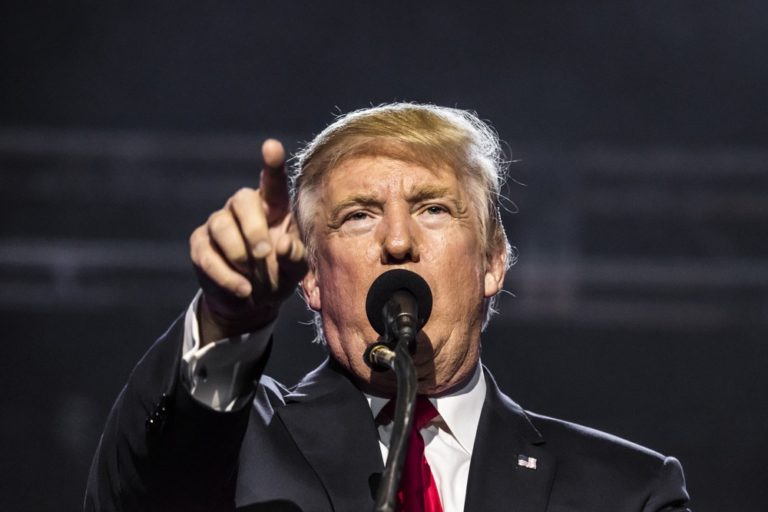
Detailed Report Uncovers Secret Service Missteps in Trump Assassination Attempt

0

Key Takeaways:
– Communication inaccuracies with local law enforcement hindered the Secret Service’s performance during Trump’s July campaign rally.
– Security failures allowed a gunman to open fire from an unsecured rooftop towards the former President.
– Ronald Rowe Jr., the acting director, outlined numerous protocol breaches, as well as complacency among some agents.
– The Secret Service’s latest effort to acknowledge their faults came following the arrest of an armed man stalking Donald Trump at a Florida golf course.
– The director at the time of the incident, Kimberly Cheatle, resigned, taking full responsibility for the security lapse.

Communication Lapses Mar Trump’s Security Detail

In a disturbing revelation, a newly released document indicates that communication mishaps between local law enforcement and the Secret Service adversely affected the unit’s effectiveness during a July campaign rally. Notably, this rally was where former President Trump was shot and wounded.

The five-page document chronicles a series of shortcomings leading up to the July 13 shooting at a Butler, Pennsylvania, rally. Trump sustained an injury to his ear during this disastrous incident.

Secret Service’s Failure

Acting Director Ronald Rowe Jr. painted a grim picture of the multitude of blunders from his agency. These included no clear directives from the Secret Service to local law enforcement, an oversight in rectifying the line-of-sight vulnerabilities at the royal grounds which left Trump exposed to sniper fire, and complacency in a section of his agents.

Rowe mentioned, “This was a failure on the part of the United States Secret Service. It’s important that we hold ourselves accountable for the failures of July 13 and use the lessons learned to prevent similar incidents.”

Details surrounding the shooting

The report offers a comprehensive overview of the “communication deficiencies” that occurred before the shooting. The perpetrator, 20-year-old Thomas Matthew Crooks, was shot dead by a Secret Service sniper after firing eight rounds in Trump’s direction from a rooftop of a nearby building.

Some members of the police force at the location were surprisingly unaware of the existence of two communication centers on the grounds. This mishap led to the significant issue that Secret Service officers were not receiving the transmissions.

The Problematic Communication Breakdown

The report noted the overreliance on cellphones instead of Secret Service radio frequencies as a point of concern. Vital information was passed in a “staggered or fragmented fashion” via mobile devices NOT through the Secret Service’s network.

The situation was tricky with Trump’s security detail as they were not informed about the focused efforts of state and local law enforcement to locate the suspicious subject. Had they been aware, they could have chosen to move Trump while the search for the shooter was in progress.

Positioning of Law Enforcement

The report scrutinizes the decision to not station any law enforcement personnel on the roof used by Crooks. A local tactical team was placed on the second floor of the same building, a measure questioned by multiple law enforcement agencies. Incredibly, there was no discussion or follow-up to change this strategic placement.

Looking Forward

The Secret Service’s comprehensive report is part of several investigations assessing the incident, including those by Congress and the Department of Homeland Security’s inspector general office. The shooting, as well as another recent incident in Florida, underscore the need for a change in how the Secret Service protects public figures.

Despite the recent incidents, Rowe assured the public that Trump is receiving the ‘highest levels’ of protection and the Secret Service’s response in Florida is a prime example of their working procedures.

Zaporizhzhia Under Siege: 13 Injured in Increasing Nighttime Attacks

0

Key Takeaways:
– 13 people were injured in nighttime attacks in Zaporizhzhia, including seven women, five men, and a 15-year-old boy.
– The region suffered 363 attacks in a day across 12 settlements.
– There were nine airstrikes and 209 unmanned aerial vehicle (UAV) attacks on multiple locations.
– 146 artillery shelling incidents and four MLRS attacks were reported.
– 95 reports cited destruction of residential buildings and infrastructure.

Zaporizhzhia, a region in southeastern Ukraine, has been increasingly under siege by nighttime attacks. As a result of the intense attacks, the number of victims rose to 13. The head of the Zaporizhzhia Regional Military Administration, Ivan Fedorov, reported this information via Telegram, Ukrinform, a Ukrainian news agency.

Detailed Account of Attacks and Victims

The list of individuals harmed included seven women, five men, and a minor aged 15. The authorities did not offer further information about the nature of their injuries or their current condition. Previously reported figures indicated that five people were injured due to attacks in the region.

Unwarranted Aggression on Settlements

Over the course of a single day, enemy forces launched 363 separate attacks on 12 different settlements in the Zaporizhzhia area. This included nine airstrikes in Zaporizhzhia, Komyshuvakha, Zarichne, Kamianske, and Pyatikhatky.

Aggressors employed unmanned aerial vehicles (UAVs) of various types in 209 separate attacks on Huliaypole, Novodanilivka, Novoandriivka, Robotyne, Mala Tokmachka, Levadne, and Malynivka. In addition to these UAV attacks, there were four MLRS attacks that struck Huliaypole, Novoandriivka, Novodarivka, and Robotyne.

Growing Threat of Artillery Shelling

Adding to the rising toll of destruction, 146 instances of artillery shelling were registered in Huliaypole, Novodanilivka, Novoandriivka, Robotyne, Mala Tokmachka, Malynivka, and Levadne. These locations appear as frequent targets for both artillery shelling and UAV assaults, compounding the threats faced by the inhabitants.

Infrastructure Damage Deplored

Alongside human casualties, damage to the infrastructure of the affected areas has been severe. There have been 95 reports relating to the destruction of residential buildings and vital municipal structures. Further specifics on the level of infrastructure damage have not been provided. However, it’s clear that these large-scale attacks create significant logistic as well as humanitarian challenges for the region.

Last night, the enemy initiated their assault on Zaporizhzhia with anti-aircraft guns, leading to significant property damage. Local firefighters had to extinguish fires in vehicles and residential balconies. In addition, emergency dismantling of structurally damaged entrances to apartment buildings had to be carried out.

Closing Remarks

This situation presents a grim snapshot of Zaporizhzhia’s struggle under increased hostility. A robust response to these activities and a swift restoration of peace and order in the region is of utmost importance for the safety of its residents. International communities and humanitarian organizations must mobilize to support and bring relief to affected individuals amid this crisis.

China Urged to Infuse $1.42 Trillion Stimulus for Sustained Economic Growth


Key Takeaways:

– Economists suggest China must issue $1.42 trillion in ultra-long government bonds within the next two years.
– Beijing must devise strategies catering to challenges faced by migrant city workers instead of merely reducing interest rates.
– Amidst slowdowns in the manufacturing sector and tepid consumer confidence, the demand for economic easing measures increases.
– Policymakers are encouraged to support the struggling property market and bolster consumer trust.
– China’s financial reforms focus on budget, regional fiscal reform, and central-local government relationships.

As the world’s second-largest economy faces a continued strain on its growth due to the COVID-19 slump, the demand for China to stimulate its economy is intensifying. Liu Shijin, former deputy head of China’s State Council’s Development Research Center, proposes that China should issue at least 10 trillion yuan ($1.42 trillion) in ultra-long government bonds within the next two years.

Addressing Migratory Workers’ Challenges

A critical point in Liu’s argument is for Beijing to devise strategies catering to challenges faced by migrant city workers. He commented that Beijing should veer away from developed economies’ strategies, such as simply reducing interest rates, as the Chinese economy has yet to experience that degree of slowdown.

Such comments come after last year’s disappointing recovery from the COVID-19 pandemic. China’s economy remained under pressure from a real estate slump and poor consumer confidence, coupled with slower growth in the manufacturing sector. Increasing exports have been the silver lining during these challenging times.

Reduced Forecasts and Fiscal Risks

Goldman Sachs earlier this month echoed other institutions, reducing their annual growth forecast for China to 4.7% from the previous 4.9%. This cut reflects recent data releases and a delay in the impact of fiscal policy considered in their prior expectations. Goldman analysts have forewarned an amplified risk of China missing the ‘around 5%’ full-year GDP growth target, increasing the urgency for more demand-side easing measures. However, several businesses avouched that such measures had yet to have a significant impact.

Real Estate Concerns

A major concern remains the persistent slump in the property market, with associated investments dropping by over 10% in the first eight months of the year. To restore confidence and stabilize the market, Beijing-based chief economist Xu Gao at Bank of China International suggests the government bail out property owners and provide support at the scale of 3 trillion yuan, significantly more than the roughly 300 billion yuan announced so far.

Policy Directions

Amidst these challenges, China’s top leaders have prioritized enhancing the country’s capabilities in advanced manufacturing and technology. This emphasis arises, especially concerning growing U.S. restrictions on high tech. However, managing director Gabriel Wildau at consulting firm Teneo observes that top leaders seem content to strive towards this year’s GDP growth target of ‘around 5%’, even if the goal is achieved through nominal growth combined with deflation.

Moreover, China’s latest retail sales, industrial production, and fixed asset investment growth were slower than expected. These new shocks suggest the limits of conventional monetary policies, prompting Chief China Economist Ting Lu at Nomura to advocate for fiscal policies and reforms to take priority.

With these measures in mind, former Vice Minister of Finance Zhu Guangyao remains confident in China’s ability to reach its 2024 growth goal of around 5%. He emphasized China’s focus on budgeting, regional fiscal reform, and the relationship between central and local governments as key factors in achieving this goal.

FTC Chair Lina Khan Championing Consumer Protection And Competition

0

Key Takeaways:

– FTC Chair Lina Khan is dedicated to breaking illegal monopolies and blocking uncompetitive mergers.
– Her regulator role aims to safeguard consumer interests.
– Khan’s actions are mired in controversy amidst conflict with big technology companies.

CBS’s 60 Minutes recently aired an illuminating interview with Federal Trade Commission Chair, Lina Khan, where she stressed her commitment to enforcing fair competition and protecting consumer rights.

Protection of Consumer Interest

As FTC Chair, Lina Khan has clearly stated her mission: to break down illegal monopolies, prevent mergers that hinder competition, and above all, protect the rights and interests of consumers. The regulatory watchdog is ensuring that competition thrives in the U.S. market, care of fair trade laws that discourage monopolistic dominance.

Regulating Market Competition

Under Khan’s leadership, the FTC has shown its intent to actively block mergers that may inhibit competition. Notably, this has particular relevance for companies seeking to monopolize markets by acquiring smaller competitors. The objective behind this is clear – to maintain market vitality and ensure consumers have plenty of choices.

Breaking the Shackles of Monopolies

Illegal monopolies are particularly harmful to a fair market environment. When a single entity dominates the market, it stifles innovation and negatively impacts pricing. Khan sternly opposes such practices and is committed to dismantling such unfair market structures.

Controversy amid Stifled Technology Giants

Faced with regulatory actions to maintain a competitive market environment, technology leaders like Amazon, Facebook, and others are noticeably uncomfortable. Controversy surrounds Khan’s mission as the tech giants fight back against what they perceive as over-regulation.

The FTC Chair’s actions, however, underscore a broader shift in attitude towards large technology companies. Scrutiny of their market dominance signals an era where these corporate giants may face increased regulation to ensure fair competition.

Commitment to Consumer Rights

Khan’s commitment to her mission is unwavering. Her dedication to protecting consumers against monopolies and stifled competition comes at a time when the role of big tech in the economy is under question. The environment is increasingly favoring regulatory oversight to ensure a level playing field for all businesses.

In Conclusion

The regulator’s proactive stance has reignited debates about the role of large technology companies and the influence they wield over markets. As she continues her mission, Lina Khan remains a pivotal figure in contemporary discussions about competition and consumer rights in the digital era.

John Mulaney and Olivia Munn Celebrate Birth of Second Child Post Cancer Diagnosis

Key Takeaways:
– Olivia Munn and John Mulaney are now parents of a girl, Méi June Mulaney, born via a surrogate.
– Munn has shared her emotional journey, expressing gratitude to the surrogate for carrying their child.
– The name ‘Méi’ has a significant meaning as it stands for ‘plum’ in Chinese.
– This development comes after Munn’s breast cancer diagnosis last year, after which she had a double mastectomy and hysterectomy.
– Munn had frozen her eggs thrice, demonstrating her desire to continue growing her family.

Childbirth Amidst Battles with Cancer

The loved-up couple, Olivia Munn and John Mulaney, have recently shared the joyous news of welcoming their second child, a daughter, born with the aid of a surrogate on September 14, 2024.

Parenthood Becomes Twice as Nice

This heartening news came about a year after they welcomed their first child, a son named Malcolm Hiệp Mulaney. The birth of their daughter Méi June Mulaney, announced through a series of moving Instagram posts, has brought immense joy for the family.

The Significance Behind The Name

Méi, whose name means ‘plum’ in Chinese, was born in the ‘year of the dragon’ according to Chinese zodiac, adding a layer of significance to her arrival. Munn expressed her profound love and pride for her ‘little dragon’.

Munn’s Emotional Journey Through Surrogacy

Through her Instagram post, Munn expressed her complex emotions about not being able to carry her own daughter, sharing her deep gratitude for their surrogate. The mother-to-mother love Munn felt towards the surrogate clearly indicates the great amount of respect and gratitude she has for her.

Cancer and a New Chapter

News of this joyful addition arrives on the heels of Munn’s battle with breast cancer. She revealed her diagnosis on March 13 in an Instagram post, following which she underwent a double mastectomy and a hysterectomy as part of her treatment.

Before undergoing the procedure, Munn had frozen her eggs thrice in preparation for future family plans, and had also been open about potentially using a surrogate.

Trusting the Journey

She expresses that while pregnancy is a joint journey between the parent and baby, using a surrogate required entrusting another person completely and choosing a trustworthy surrogate who would embody the same principles as yourself during pregnancy.

Munn further shared her gratitude for the options available to her – whether for fighting cancer or expanding her family.

Conclusion: Strong Foundations for a Growing Family

Munn and Mulaney, who tied the knot only last July, have faced many hurdles in their journey towards expanding their family. However, the joyous welcome of their second child amidst all challenges stands testimony to their commitment to grow their family and their resilience to overcome adversity.

As her partner, Mulaney also shared his joy and love for their little girl on Instagram, indicating the shared sense of joy and gratitude radiating from the couple after their tumultuous journey.

With this new addition, Mulaney and Munn are not just expanding their family but also their shared experiences and strength that bring them closer as a couple and as a family. For Munn, her journey not only testifies to her fight against breast cancer but also her persistent efforts to continue expanding her family, building on love, patience, and trust.

Microsoft Revamps Security for Controversial Recall Feature in Copilot+ Windows

Microsoft restructures its Recall!

The somewhat controversial Recall feature in Microsoft’s Copilot+ Windows PCs is making a comeback, after an initial botch-up that drew sharp criticisms in the tech community. Originally introduced in late May, it faced glaring security issues that forced Microsoft to delay its full rollout.

What was the problem with Recall?

The initial version of Recall was poised to register screenshots and OCR text from all user activity. It collected this data unencrypted, meaning it was stored as it is over the hard drive. This made it an easy pick for anyone tinkering around your PC, or a remote hacker who could potentially gain access to your system.

The Recall feature missed out on the usual public testing through the Microsoft Windows Insider Program, which often precedes most Windows feature releases. It was primed to ship out on new PCs by June 18. However, on June 13, Microsoft decided to hit the brakes and announced an indefinite postponement for further structural modifications.

Remodeled Recall – A Sneak Peek

Microsoft has now revealed comprehensive details about how it has amped up the security of the Recall feature. In a recent update by David Weston, the Microsoft VP of Enterprise and OS Security, he provided insights into the restructuring process that Recall underwent.

According to Weston, the newly rearchitected Recall is stingier with data—collecting only indispensable segments. This ensures the protection of harmless data while it weeds out potential security threats.

Microsoft is focused on achieving a fine balance between creating an efficient smart assistant and maintaining stringent data security protocols. The new Recall update is a testament to Microsoft’s commitment to ensuring these functionalities go hand-in-hand.

Now, with the opt-in default, users can choose whether to engage with the Recall feature. Further, they even have an option to remove it entirely from their PCs if they wish to do so. This autonomy provided to the users makes the system safer and the control over data security more personal.

The Road Ahead

The restructured Recall feature is stepping into an arena filled with constant scrutiny due to past experiences. Tech enthusiasts and security researchers will be keeping a close eye on its performance and security aspects.

As its retraction played out, a lot was said about the feature’s security lapses. Now is the time for Microsoft’s anticipatory strategies to reshape Recall and salvage its reputation.

Conclusion

The Recall feature, after its tumultuous journey, seems to have taken a safer and more secure route. Users have welcomed the new Recall version with cautious optimism.

Companies like Microsoft have a responsibility towards their large user base to create secure platforms. The incident with the original Recall has only heightened awareness about security issues. It is crucial that companies learn from such missteps and work tirelessly to prioritize user security in all their innovations.

Microsoft’s revamped Recall feature is an example of the company’s redoubled commitment to security. The Recall story acts as a timely reminder to the tech world about the importance of security in building trust and credibility among users.

With security being one of the highest priorities for users in today’s interconnected world, this lesson from Microsoft’s Recall relaunch is one the entire tech industry must take note of. Let’s hope for a smooth, secure journey of Recall in the coming time.

Meta Faces $101 Million Fine Over Password Glitch

Meta, the parent company of several online platforms, is in hot water over a security mishap. Irish authorities have slugged the tech company with a steep $101 million fine. Why, you wonder? The punishment results from Meta’s handling of user passwords, unimaginably stored in plain text.

Unstated Password Security Breach

In a world where security is as important as service, Meta seemed to have slipped in the former. The company disclosed in 2019 that millions of user passwords were carelessly kept in an accessible plaintext format. Instead of encryption or any secure form, these passwords were jotted down just as you or I would note down a sandwich order.

Apps for Meta’s different networks had logged these passwords into a database. This clumsy storage allowed company employees to gaze upon these passwords as though they were a public list. Around 2000 engineers used their privileged access to query this database more than 9 million times. It seriously makes you question who’s minding the store!

A Late Confession and a Quick Defense

Meta officials, however, maintained that this plain text diary of passwords was discovered during a routine security checkup of data storage. It’s akin to finding a pile of mismanaged paper in your own office during a cleanup. But this isn’t paper; it’s people’s personal security codes.

They were quick to clarify that they found no signs of this information being misused. According to them, none of the employees took advantage of this free display of private codes. They also assured that these codes were beyond reach for anyone outside the company.

Despite these assurances, the fact remains – Meta was incredibly lax with your personal security, and people are starting to hold them accountable.

Taking Accountability: The Price of Negligence

The main highlight here is, Meta is now facing the consequences. This error cost them a whopping fine of $101 million. Ireland’s Data Protection Commission (DPC) didn’t take this reckless behavior lightly.

And why should they? As users, we place our trust in these companies with our data, expecting them to take care of our private information. In Meta’s case, unfortunately, trust was compromised.

Consequences: What does this mean for Meta and users?

This incident is a big blow to Meta’s reputation. Despite their reassurances that no harm was done, the question still stands: Should this have happened in the first place? Clearly, the answer is no.

From now on, this blunder is likely to make users think twice before trusting Meta with their data. It is also a wakeup call for other companies. The $101 million fine sends a strong message about user data privacy and security.

The authorities did not take this lightly, and other companies would do well to take note of Meta’s fall from grace. For us, the users, it’s a stark reminder to always keep our data’s safety close to our hearts. Always have your security settings in check and change your passwords frequently to lessen the risk of exposure.

As for Meta, only time will tell if they can bounce back from this incident, enforce stricter security measures, and regain user trust. Let’s hope they have learned a costly lesson from this $101 million mistake and will be more vigilant about user data protection in the future.

In conclusion, this incident with Meta is a lesson for all – companies, employees, and users – reaffirming the importance of data privacy and security in our increasingly digital world. No matter how big or famous, any laxity in securing user data can lead to severe repercussions.

Tesla’s Berlin Factory Faced With ‘Fear Culture’ Amid High Sick Leave Rates

Strains at Tesla’s Berlin Plant
Tesla’s Berlin factory, situated on the outskirts of the city, is reportedly dealing with a tense working atmosphere. Allegations have surfaced of a ‘fear culture’ within the factory walls, coming amid an alarming rate of sick leave among the workforce. Sick leaves rates at the plant have been reportedly more than three times the average seen across the German auto industry.

Tensions Amid an Arson Attack
Earlier this year, the factory experienced a major setback when arsonists targeted it. The aftermath saw a rift grow between the managing staff and the plant workers. Many employees seem to be expressing dissatisfaction and unease at the current circumstances in the factory.

‘No Room for Slackers’
André Thierig, the Manufacturing Director of Tesla’s Gigafactory Berlin-Brandenburg, has been particularly vocal about the situation. Addressing the issue, he stated that the company would not tolerate any lack of commitment from its employees. He emphasized that those who are not committed to their job have no place in the factory.

High Sick Leave Rates
What has caused concern, however, is the unusually high rate of sick leave at the factory. During the summer, these figures were noted to have soared to 17 percent – much higher when compared to the German auto industry’s average of 5.2 percent. This high rate of absences led Tesla to take unprecedented action.

Tesla’s Response
In response to the situation, the company decided to check up on absent employees directly. Management sent representatives to the homes of around 30 workers who were on sick leave. This step showed just how seriously Tesla is taking the situation. It also points to the extent of the efforts they are ready to exert to curb the issue.

Finding Solutions
The problem of high sick leave rates isn’t new, but it does seem to be particularly acute at Tesla’s German factory. It’s a matter that requires immediate action and diligent planning. Companies need to strike a balance between ensuring worker health and maintaining a productive environment.

Final Word
While Tesla’s Berlin factory has faced some significant obstacles, it’s clear that the company is trying to tackle the issue of high sick leave rates head on. It’s crucial for Tesla, like any other company, to foster a healthy and supportive workplace environment where employees feel valued and motivated to give their best. The ultimate goal should be creating spaces that inspire workers and lead to personal as well as organisational success. More companies need to take heed of this approach and strive for employee satisfaction, alongside achieving their business targets. Tesla’s German factory, though dealing with prevailing difficulties, has chance now to become an example in achieving this equilibrium.

OpenAI Makes Major Moves as Google Upgrades Gemini Models

AWhole Lot of Action in the AI World

Let’s face it, there’s always something new and exciting happening in the world of artificial intelligence (AI). This past week was all about OpenAI shaking things up, while other players in the industry quietly updated their offerings. So, let’s dive into some of the key highlights!

OpenAI Making Waves

If there’s one thing that keeps the AI world buzzing, it’s OpenAI. This week saw CEO Sam Altman release a somewhat controversial blog post. But that wasn’t the only news coming from OpenAI. They also launched the Advanced Voice Mode to the broader public. The blogosphere is also filled with chatter about a possible 5-gigawatt data center, and a serious revamp and restructure within the organization. It’s fair to say, OpenAI is keeping us all on our toes!

But as they always say, no one’s got monopoly over progress. While OpenAI grabs headlines, the broader AI world quietly churns out new models and research.

Google’s Gemini Upgrades Hits the Market

Meanwhile, over at Google, some interesting updates were added to the Gemini lineup of models. Two new production-ready models have been launched, building upon the success of their predecessors. They go by these catchy names: Gemini-1.5-Pro-002 and Gemini-1.5-Flash-002.

Enhancements in Performance

Google prides itself on a continuous track of improvement. It was no different this time, with these upgrades reported to have better overall quality. These revamped models are scoring points, particularly in handling long contexts, math, and vision tasks.

According to Google, there’s a 7% leap in performance on the MMLU-Pro benchmark, which is definitely worth noting. When it comes to math-related tasks, the improved models are boasting with a whopping 20% advancement!

Yet, we need to keep in mind that the AI benchmarks can prove to be more ornamental than useful, despite what the impressive figures might suggest.

Zooming Out

Although the spotlight this week has been on giants like OpenAI and Google, remember that AI is a huge and diverse field. Every minute, somewhere in the world, fascinating AI models are being developed, and groundbreaking research is underway. These promising developments can revolutionize the world as we know it.

So next time you hear about OpenAI shaking things up or Google making strides with its Gemini lineup, remember: there’s always more to the story. The world of AI is constantly moving. Brace yourself as it gets more exhilarating every day! Stay tuned and keep yourself informed. After all, we are only at the beginning of the AI journey. Exciting times lie ahead, with numerous possibilities waiting to unfold. Are you ready?

California Lays the Smackdown on Medical Debt Appearing on Credit Reports

0

New California Legislation for Medical Debts

California is taking a powerful stand against an age-old issue plaguing its consumers: medical debt affecting credit scores. Governor Gavin Newsom has signed a bill that prevents unpaid medical bills from affecting Californians’ credit reports. This major move by the Golden State is a part of a bigger wave to shield consumers from unaffordable healthcare costs.

What does this mean for Californians?

In simple terms, this new law prevents both healthcare providers and contracted debt collection agencies from sharing any information about a patient’s medical debt with credit report agencies. So, if someone can’t pay their medical bills, it won’t hurt their credit score anymore. This long-awaited relief will cushion many Californians from life’s unexpected economic slams.

However, there’s a slight catch. The debt from medical credit cards or specialty loans, which can come with whopping interest rates as high as 36%, won’t disappear from credit reports. Unfortunately, some financial industry experts managed to squeeze in these exemptions at the last minute.

Why is this important?

Medical debt is a pesky mosquito that insists on being a part of many Americans’ lives. What makes it even worse is its ability to ruin credit scores. Many experts argue that having medical debt on a credit report is not an accurate measure of a person’s credit risk.

Think about it this way. If you stumbled across a banana peel and ended up in the hospital with a sprained ankle, it was an accident. You didn’t plan on it, you cannot control it, and it most definitely shouldn’t be an indicator of your financial irresponsibility.

Does the bill have any shortcomings?

Despite its bold intentions, the bill is not perfect. It doesn’t provide any protection for people who use medical credit cards or specialty loans to pay their hospital bills. Financial entities argued—successfully—that these bills often include non-medical items, making it hard for them to distinguish between what’s a medical charge and what’s not.

Yet, numerous folks have to resort to using a medical credit card. A 2022 survey found that 15% of adults reported that they’d used one. This glaring loophole could leave these individuals in the lurch, with no support from the new bill.

The Bigger Picture

California isn’t alone in this battle. In the past couple of years, at least eight other states have banned medical bills from appearing on consumer credit reports. What’s more, the Biden administration has expressed interest in implementing similar protections at the federal level. But as of now, there’s no ETA on when that might happen.

No one chooses to get sick, and it’s unjust that one’s credit could be ruined because of it. This is precisely why more and more states are stepping up to protect their residents. They’re setting up their defenses just in case something goes awry at the federal level.

The Impact on Californians

According to the California Health Care Foundation, about 40% of California’s population reports carrying some type of medical debt. This burden bears down more heavily on low-income, Black, and Latino individuals.

The new legislation is expected to alleviate some of this pressure. Starting in January, the protection will extend to credit reports used for employment and tenant screening, in addition to credit agencies servicing credit card companies and mortgage lenders.

Getting sick shouldn’t mean getting hounded by debt collectors or losing the opportunity to secure a job or rent a home due to a tarnished credit report. This new legislation may not be perfect, but it’s a step towards ensuring that Californians, and hopefully all Americans, can focus on healing, not fretting about their financial health.