55.5 F
San Francisco
Tuesday, May 12, 2026
Home Blog Page 1673

China Investigates PVH Group Over Alleged Disruptions in Xinjiang Supply Chain

Key Takeaways:

– The Chinese Ministry of Commerce initiates an investigation into the PVH Group over alleged business disruptions in its Xinjiang supply chain.
– The PVH Group, the parent company of Calvin Klein, finds scrutiny from several global retail companies for distancing itself from the alleged forced labor in Xinjiang.
– Calvin Klein and Tommy Hilfiger’s international revenue slumped by 4.3% due to the challenging consumer environment in Asia Pacific, particularly in China and Australia.

China’s Probe into PVH

The Ministry of Commerce in China confirmed on Tuesday that it has initiated an investigation into the PVH Group. This probe comes amid allegations of business disruptions concerning its Xinjiang-based supply chain. The PVH Group, the parent company of well-known brand Calvin Klein, has not stated a reason for the investigation at this time. However, the ministry has allotted a 30-day response period.

Unreliable Entities List

This inquiry is part of China’s “unreliable entities” list mechanism, an initiative launched in 2019 after the U.S. blacklisted technology giant Huawei. This China-managed list mirrors the U.S. Commerce Department’s entity list that restricts specified companies from accessing U.S. originated items. As a result, any U.S. defense companies on the list face a ban on China-related imports or exports.

Xinjiang Controversy

China alleges that the PVH Group has violated the regular market transaction principles with its targeting of Xinjiang suppliers. The accusation suggests that PVH’s actions have disrupted normal business dealings with Chinese bodies, individuals, and others, along with enacting other discriminatory measures. PVH is among several foreign retail companies under Chinese scrutiny for attempts to distance themselves from purported forced labor practices in China’s Xinjiang region.

PVH’s Stand

In a corporate responsibility report released in July 2022, PVH explicitly stated it did not permit direct or indirect sourcing from certain regions, including Xinjiang. No response is yet available from the PVH Group to these recent allegations, as it remains outside U.S. business hours.

Impact on PVH’s Revenue

These recent allegations surface at a time of financial turbulence for the PVH Group. Its international revenue for Calvin Klein and Tommy Hilfiger experienced a 4.3% year-on-year decrease, settling at $1.38 billion by the close of the quarter on August 4. The dip in revenue was due to a challenging consumer ecosystem in the Asia Pacific region, notably in China and Australia. Overseas earnings account for over half of the PVH Group’s overall revenue of $2.07 billion for the said quarter.

The Uyghur Issue

The Xinjiang region is home to the Uyghur Muslims, a group identified as oppressed by the U.N., U.K., and the U.S. Despite widespread criticism, China has consistently negated the forced labor and other abuse allegations associated with Xinjiang. The Chinese government insists that alleged internment camps described by the U.S., U.K., Canada, and various human rights groups are vocational training centers.

As the investigation continues, the ramifications for the PVH Group remain uncertain. Both domestic and international actors will be watching closely as this potentially damaging situation unfolds.

TikTok Targets Russian Influence, Purges Covert Operation Accounts

Key Takeaways:

– TikTok removes accounts connected to Russian media for alleged covert operations.
– The decision followed violations of the platform’s community guidelines.
– The video-sharing site pledged more information in its upcoming September report.
– Aimed at preventing the spread of misinformation, TikTok is bolstering policies for user safety.
– The move coincides with new U.S. sanctions against Russia.

TikTok has recently made significant steps in its attempt to curb “covert influence operations”; the recent casualties being several accounts linked to Russian media groups. The action comes as the video-sharing company ramps up its measures to ensure user safety from evolving threats ahead of the 2024 U.S. election.


TikTok Enforces Community Guidelines

In a bold move announced on Monday, TikTok confirmed that it had purged several accounts connected with Russian parent companies Rossiya Segodnya and TV-Novosti. The grounds for the action were violations of the platform’s community guidelines. While the company did not disclose which specific accounts were affected, NBC News reported that Russian state media outlets RT (formerly Russia Today) and Sputnik had gotten the chop.

TikTok noted that the content from these accounts had been restricted within the European Union and United Kingdom. Globally, however, their content was not eligible for users’ “For You” pages due to attempts to influence foreign audiences on worldwide events and affairs.


More Details to Follow In Upcoming Report

In a bid to provide more transparency, TikTok announced that it would reveal more information about the banished accounts in its September Covert Influence Operations report. This follows a similar report released in August in which TikTok revealed the removal of five networks reportedly involved in covert influence operations.

Additionally, the platform emphasized the measures being put into place for the forthcoming election cycle. It assured its community of over 170 million American users that steps were being taken to protect them from evolving threats.

To achieve this, TikTok stated its commitment to enforcing stringent policies to prevent the spread of misinformation. The company also affirmed its dedication to elevating trustworthy election information and collaborating with both internal and external experts. This, it said, would help improve their approach iteratively.


Understanding The Backdrop

The purge of these accounts by TikTok came shortly after new sanctions were imposed against Russia by the U.S. These sanctions were purportedly in response to RT’s alleged involvement in covert influence operations worldwide.

On its part, RT confirmed through an article published on Saturday that TikTok had indeed deleted its accounts alongside some from Sputnik. Moreover, RT concurred that the clampdown occurred just days after the U.S. implemented the new sanctions against Russia.

In conclusion, TikTok’s recent move underscores the growing role of social media platforms in preserving the integrity of electoral processes. As the world grapples with the specter of misinformation, companies like TikTok paving the way for proactive measures can make a significant difference.

Ukrainian Forces Shoot Down 66 Russian Drones

0

Key Takeaways:

– Ukrainian forces successfully shot down 66 out of 81 Shahed attack drones launched by Russia overnight.
– The aerial targets were detected by the radio engineering troops of the Ukrainian Air Force from the evening of the 23rd to the morning of the 24th of September.
– Enemy attack drones were struck down in eight regions across Ukraine.
– Thirteen of these drones disappeared from radar due to active countermeasures implemented by the Ukrainian forces.
– The main direction of the attack was towards the north and central regions of Ukraine.

The Ukrainian Defence Counter Attack

In an aggressive aerial showdown, the Ukrainian forces demonstrated tactical prowess as they successfully shot down 66 out of 81 Shahed attack drones launched by the Russians. The Ukrainian Air Force revealed this information through a post on Telegram and news outlet Ukrinform reported on the incident.

Detection of Aerial Targets

From 20:00 on September 23 to 07:00 on September 24, the radio engineering troops of the Ukrainian Air Force detected 85 Russian aerial targets. Among these were an Iskander-M ballistic missile shot from the Rostov region, two Kh-59/69 guided aerial missiles fired from the Bryansk region, and one unidentified missile propelled from the Kursk region.

Majority of the aerial targets – 81 Shahed strike drones, were launched from Kursk and the Primorsko-Akhtarsk area. The main direction of the drones’ attack was the north and central regions of Ukraine.

Countering the Aerial Assault

The counter-attack was a coordinated effort from the aircraft, anti-aircraft missile forces, electronic warfare units, and mobile fire groups of the Air Force and the Defense Forces of Ukraine. It was in this scenario that 66 enemy attack drones were shot down in the Kyiv, Zhytomyr, Cherkasy, Vinnytsia, Kirovohrad, Poltava, Sumy and Mykolaiv regions.

Mysterious Disappearance of Drones

Additionally, 13 enemy drones disappeared from the radar coverage in several regions. This suspicious occurrence was attributed to the active countermeasures that were employed by the Ukrainian forces.

Conclusion

These combat actions underscore the escalating tensions and ongoing tussle for control between Ukraine and Russia. The successful neutralization of a majority of the attack drones sends a strong signal of Ukraine’s resistance and readiness to rebuff aggression from its neighbour.

AI’s Role in Shaping the 2024 Presidential Race

Key Takeaways:
– AI-generated posts have not materialized into realistic deepfakes as feared by experts but are churning out absurd content
– Such content often serves as a vehicle for spreading politically motivated false narratives
– The use of AI for political gains is not exclusive to the Trump campaign; even Democrats have engaged with AI image generation tools
– Although often absurd or cartoonish, the hyperrealistic nature of AI-generated posts draws attention and can perpetuate damaging conspiracy theories.

The advent of AI in political battles

As the 2024 election draws near, the world expectancy of artificial intelligence (AI) wreaking havoc with realistic deepfakes flooding social media has noticeably differed from reality. Instead, AI’s contribution has leaned towards the creation of outlandish content that’s far from believable, including images of Donald Trump riding a cat while brandishing an assault rifle, Vice President Kamala Harris donned in a faux-stache and a communist uniform, and a scene portraying Trump and Harris sharing a tender moment.

Far from the Fear

Despite AI not living up to the ominous prophesies of experts, its influence on the election hasn’t been insignificant. Regularly, voters come across AI-generated images across the web- from Trump aboard a luxury jet flanked by cats and ducks to a cluster of kittens heralding a vote for him to escape hypothetical harm from migrants. While most images bear a comic tone, their often politically-charged, and sometimes racist content shared by candidates and their backers does raise eyebrows.

Francesca Tripodi, an online propaganda expert, points out the inherent problem of using such content to fuel age-old anti-immigrant narratives. Caleb Smith, a Republican strategist, counters this viewpoint, noting that these images are meant to entertain, not deceive.

A Two-Way Street

AI-generated content, however, is not a monopoly of the Trump cohort. Democrats too have been seen publishing similar content. For instance, images of Elon Musk being ridiculed and Trump chased by the police have appeared on social media. However, partywise, there seems to be a disparity. For instance, Kamala Harris’ campaign hasn’t leveraged AI-generated content.

Steven Cheung, spokesperson for Trump’s campaign, rebuffs allegations of using tools provided by AI companies, maintaining a consistent stand since May. On the other hand, Mia Ehrenberg, Harris’ campaign spokesperson, highlighted that currently, AI is only approved for productivity tasks like data analysis and coding assistance.

AI-generated Memes: Funny or Frightening?

The line between humor and intentional deception often gets blurred with AI-generated posts. Adam Schiff, a Democrat from California, disapproves of the practice, particular of evident attempts to deceive.

AI-generated images may echo the tune of old-school political cartoons or Photoshop trickery, but their hyperrealistic nature gives them an ounce of authenticity that adds new dimensions to a political narrative. While some might laugh it off as harmless jest, the implications can stretch beyond the digital realm, leading to real-world consequences like bomb threats and evacuations.

AI- A tool for Alternate Realities

Using AI to create graphic illustrations appealing to his base, Trump continues to use AI as a tool to distort realities. These images and the illusions they create augment his long-standing strategy of promoting alternate realities- from backing QAnon proponents to those who negate the fairness of election results.

Generative AI and its increasing ease of access have made it a cheap and efficient tool to produce political content to respond quickly to online trends and further a political message. Teddy Goff, digital director of President Obama’s 2012 reelection campaign, addresses this issue, highlighting how AI has shaped political discourse, making it faster and more convincing.

AI’s Wider Reach

The use of AI for generating politically saturated images isn’t exclusive to the U.S, achieving prevalence in elections worldwide. Instances of more harmful deepfakes impersonating party chiefs discussing poll rigging, or fake robocalls dissuading voters have resulted in criminal charges, indicating the serious implications of AI misuse.

Despite Trump’s regard for AI as “dangerous” and “scary,” his enthusiastic promotion of AI-generated content has raised concerns among fellow Republicans. Some, like Rep. Brian Fitzpatrick, vow never to resort to memes for political gains.

AI’s role in political campaigns may have deviated from what was feared, but its potential to influence public opinion, be it humorously or otherwise, is only growing stronger.

‘Weird Al’ Yankovic’s BIGGER & WEIRDER 2025 Tour: Everything You Need to Know

Key Takeaways:

– “Weird Al” Yankovic announces the Bigger & Weirder 2025 Tour, kicking off in Las Vegas
– Puddles Pity Party, the 7-foot-tall singing clown, to join on tour
– Madison Square Garden included in the tour, marking Yankovic’s debut at the famous venue
– Tour promises a mix of popular parodies and deep cuts for hardcore fans

‘Weird Al’ Yankovic Unveils Bigger & Weirder 2025 Tour

Renowned for his comedy rock originals and parodies of popular music, ‘Weird Al’ Yankovic is set to take his act closer to fans in an expansive tour across the United States. Slated to start in June 2025 in Las Vegas, the 64-year-old comedic act has guaranteed a thrill-filled experience lined with toe-tapping parodies and engaging performances.

A Tour with a Twist

This tour, dubbed ‘Bigger & Weirder 2025,’ will see the ‘Eat It’ singer share the stage with Puddles Pity Party, the larger than life singing clown. The two acts promise a show that delivers the “best of both worlds” to their dedicated fan base. According to Yankovic, the fans will be treated to highly-acclaimed parodies as well as some ‘deep cuts,’ delivering an immersive experience to the hardcore fans. With twice as many performers taking center stage, Yankovic guarantees that the music will sound twice as good, making it a unique experience for fans.

Historic Stop at Madison Square Garden

One of the significant highlights of this tour is Yankovic’s planned performance at New York’s Madison Square Garden on July 12. This performance marks his first show at the legendary venue during his illustrious four-decade-long career, serving as a landmark moment for the seasoned entertainer.

Honors and Accolades

Over his career, Yankovic has made significant strides in the entertainment industry, with some of his biggest accomplishments being the success of his album, Mandatory Fun, and his Emmy win in 2022 for WEIRD: The Al Yankovic Story. He was also honored with a star on the Hollywood Walk of Fame in 2018.

The Tour Dates

The ‘Bigger & Weirder 2025 Tour’ will officially kick off on June 13, 2025, at The Venetian Theatre at The Venetian Resort in Las Vegas, signaling the start of a unique comedic and musical journey.

In Conclusion

The ‘Bigger & Weirder 2025 Tour’ by ‘Weird Al’ Yankovic promises an engaging and thrilling experience for his fans across the United States. Joining forces with Puddles Pity Party, Yankovic promises a rollercoaster journey filled with entertaining parodies and deep cuts to delight all his fans. As fans anticipate his debut performance at Madison Square Garden, it’s clear that Yankovic is set to make the tour a landmark moment in his career.

California Governor Vetoed Data Privacy Bill on Browser Preferences

Governor Gavin Newsom of California has vetoed legislation aimed at enhancing consumer digital privacy rights. This decision may affect how businesses use personal information obtained through web browsers and mobile operating systems.

The Proposed Measure

The State Legislature of California recently sanctioned a bill instructing makers of web browsers and mobile operating systems to give consumers the option to request an opt-out preference signal. The primary purpose of this signal was to give consumers the power to control the sale and sharing of their information. Moreover, the proposed law stipulated that it would be illegal for businesses to offer web browsers or operating systems without a feature enabling consumers to transmit opt-out signals to affiliated businesses.

Newsom’s Decision

Despite the ambitious attempt by the State Legislature to boost consumer privacy, Governor Newsom refused to sign off on the bill last week. Even though Newsom affirmed his commitment to enhancing consumer privacy rights and highlighted that he had previously signed a bill establishing an accessible deletion mechanism, he opted not to back this new legislation. This deletion mechanism enables consumers to request data brokers to erase their personal information altogether.

The Veto Statement

In his veto message to the Legislature, Governor Newsom shared his perspective on the matter. He demonstrated his commitment to safeguarding consumer privacy, evidenced by the bill he signed earlier requiring the California Privacy Protection Agency to provide a way for consumers to ask data brokers to delete their information.

Implications of Veto

Newsom’s veto would have significant implications on consumer privacy, affecting how individuals interact with web browsers and mobile operating systems. This decision sparks a noteworthy discussion on digital privacy. It compels us to reevaluate how businesses handle personal information in the digital era.

Looking Forward

Despite this setback in legislature, the push for improved privacy rights continues. Advocates argue that as technology advances, consumers need more control over their personal data. It is now important to pay attention to how other states and the federal government confront these challenges.

In Conclusion

Governor Gavin Newsom’s decision to veto a bill geared towards boosting consumer digital privacy signals a contentious debate on individual data control. Even though Newsom previously backed a similar drive, his refusal to sign this particular bill indicates a complex scenario that needs thorough scrutiny. Stakeholders must now navigate the delicate balance between businesses’ informational needs and consumers’ privacy rights as they forge ahead in the digital age.

The drive towards reforming digital privacy laws goes on, with advocates stressing the urgency for consumers to have more say over their data. Therefore, the decisions made by other states and the federal government in this field will be crucial in setting future norms.

Trump Stokes the Georgian Atmosphere Amid Campaign’s Missteps

Key Takeaways:

– Former President Donald Trump rallies in Savannah, Georgia, manifests plans for a massive tax cut
– Campaign advises for foreign manufacturers to relocate their business to the U.S in a bid to revive the domestic job market
– Trump campaign suffers embarrassing gaffe with misidentification of Georgia the state with Georgia the country in a social media ad

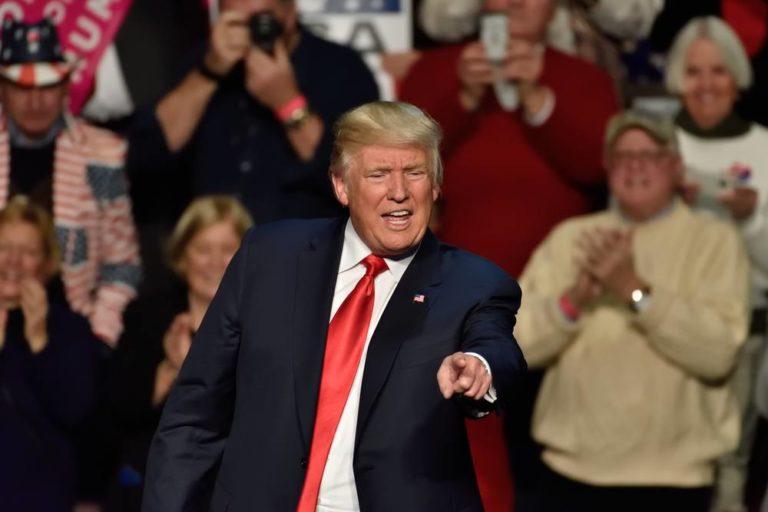
Former President Donald Trump has staged a show of strength during a rally in Savannah, Georgia. Shedding light on his political intentions, Trump emphasized his grand plans for the nation’s tax reform along with advocating for a significant shift in international manufacturing dynamics.

Grand Visions for Tax Reform

On Tuesday, September 24, Trump held sway over a crowd gathered at a civic theatre in Savannah. Among his promises, a significant tax reform featured predominantly. Trump’s proposed tax plans seek to introduce drastic cuts amounting to around $8 trillion over a ten-year period.

Advocating for Domestic Job Market Revival

In his campaign in Savannah, Trump also expressed his belief in encouraging foreign companies to move their manufacturing operations to American soil. According to a senior campaign advisor cited by CNN, Trump believes the U.S. under his leadership would manage to pull back jobs and factories from other nations, thereby stimulating indigenous industries.

In a move designed to endorse transparency and accountability, your correspondent Andrew Feinberg was present on location, asking the questions that matter and ensuring the public remains thoroughly informed till the November elections.

Campaign’s Social Media Faux Pas

An unusual revelation followed the rally as the Trump campaign ran into a peculiar hiccup. Confusing the state of Georgia with the eastern European country of the same name, a social media ad was mistakenly posted with an incongruous photograph. The ad exhorted Georgians to review their voter registration status as it posited, “Only a handful of votes will decide this election.”

The photo that accompanied the social media advertisement was indeed scenic but oddly pertained to Upper Svanetia in Georgia the country, as per its Shutterstock listing. The photo was credited to Andrew Mayovskyy.

Steering Ahead Despite Missteps

Notwithstanding the campaign’s minor faux pas, Trump’s broad plans for domestic economic revival signal his intention to continue to play an influential role in American politics. Trump’s policies of luring foreign industries to the US have the potential of rebooting jobs and factories, thereby resonating with the electorate anxious about the economy’s future.

In the politics of influence, being in the news for the right or wrong reasons sometimes augments the political capital. Despite the campaign’s blunder, President Trump managed to capture the headlines, keeping a firm hold on the national narrative’s steering wheel.

The road to the November election may be fraught with obstacles, unexpected turns, and steep slopes. Yet, as your correspondent, I promise to keep you informed every step of the way, with transparent reporting and persistent accountability. For this, the support of our readers is indispensable. Remember your contribution helps us challenge the powerful and continue our work of vital importance.

New California Law Shields Individuals with Medical Debt from Credit Damage

0

California’s New Rule for Medical Debt

In a landmark decision, California Governor Gavin Newsom signed legislation removing unpaid medical bills from Californians’ credit reports. Amid mounting concerns about the financial burden of medical bills, California has joined a growing list of states taking action to shield consumers from credit damage.

Democrat Sen. Monique Limón and Attorney General Rob Bonta championed the bill, which blocks health care providers and contracted collection agencies from sharing patients’ medical debt with credit bureaus. In the past two years, eight states have banned reporting of medical bills to credit agencies, a trend the Biden administration is considering for federal law.

Medical Debt vs. Credit Score

For many, unexpected medical bills can have far-reaching consequences, damaging credit scores and affecting opportunities for employment, housing, and loans. Lawmakers in California argue that medical debt, unlike other types of debt, doesn’t accurately reflect a person’s credit risk.

When the new law takes effect in January, it will focus on protecting credit reports used for employment checks and tenant screenings. This complements a proposed federal ban on reporting medical debt to credit agencies tied to credit cards and mortgage lenders.

Exceptions to the Rule

However, the new law has certain exceptions. Those who pay hospital bills using medical credit cards or medical-specialty loans—possibly subject to high interest rates—won’t see the debt removed from their credit reports. The exceptions, deemed essential by representatives of collection agencies, were due to the difficulty in differentiating between medical and nonmedical debt on such accounts.

The Effect on Credit Agencies and Medical Credit Card Holders

The three leading US credit agencies—Equifax, Experian, and TransUnion—previously committed to removing some medical debts, such as those under $500 and already paid debts. However, the Consumer Financial Protection Bureau reported that 15 million Americans still have medical bills affecting their credit reports.

Approximately four in 10 Californians carry medical debt, a burden disproportionately affecting low-income, Black, and Latino communities.

Further Legislative Actions on Medical Debt

Other states have also implemented laws to protect citizens from unexpected medical bills and debt. Newsom also recently signed legislation prohibiting hospitals from using liens on all real estate owned by Californians with incomes under 400% of the federal poverty level.

Hospital Collection Tactics

Hospitals frequently use credit reports as a means to pressure patients into paying their bills. This new law might make it tougher for hospitals to collect debts.

The Story of a Sacramento Resident

Sonia Hayden, a resident of Sacramento, discovered the impact of medical debt on her credit report during her home loan application process. A $200 emergency room charge from a car accident led to a significant drop in her credit score due to a hospital coding error. Despite her insurance covering most of her medical bills, the incident highlighted the emotional and financial stress medical debt can cause. This real-life story underscores the importance of the new law in preventing credit damage resulting from unforeseen medical expenses.

The new law signifies a significant step towards limiting the financial impact of medical debt on consumers, although some exceptions to the rule persist. The future of federal laws to protect consumers from medical debt remains uncertain but is keenly watched by all.

FAA Investigates In-Cabin Injuries During United Airlines Near-Collision Incident

Key Takeaways:
– Two United Airlines passengers were injured as pilots tried to avoid collision; FAA opens an investigation.
– The incident occurred while United Airlines Flight 2428 was descending into San Francisco International Airport.
– The injured passengers were transported to a hospital, although their condition remains unknown.
– United Airlines applauded the crew’s response, emphasizing a commitment to safety.

The Federal Aviation Administration (FAA) has initiated an investigation following an in-flight incident that led to the injury of two United Airlines passengers. The event, which occurred during the descent of Flight 2428 into San Francisco International Airport, was triggered by an onboard alert of a nearby aircraft.

Unanticipated Event Triggers Alert

According to the FAA, as the plane from New Jersey was descending, pilots received notification of another aircraft’s proximity. In response, the crew slowed their descent to account for the other aircraft at a lower altitude. During this time, the seatbelt sign illuminated, indicating passengers should stay seated.

However, two passengers, including one who reportedly was out of their seat at this time, allegedly sustained injuries due to the unexpected change in the aircraft’s motion. United Airlines confirmed, “the two customers were immediately transported to a local hospital.”

Praising the Crew, Ensuring Safety

Despite the moderately turbulent event, the airplane landed safely at its intended destination, San Francisco International Airport. United Airlines expressed gratitude towards the crew for managing the situation effectively and prioritizing passenger safety.

“We’re genuinely grateful to our team for their impressive response,” United said. “They ensured the safety of all our patrons and employees, their efforts were paramount in this situation.”

The passengers’ health status remains undisclosed as the airline and FAA continue their investigations.

The FAA’s Role in Aerial Safety

The Federal Aviation Administration is the national aviation authority of the United States. It regulates all aspects of civil aviation, including flight safety. The recent incident involving United Airlines passengers is within its jurisdiction since it involves potential airline safety violations.

The FAA’s investigation will focus on whether the airline took reasonable precautions to prevent the injuries. This could include whether the airline warned passengers about potential turbulence or instructed them to fasten their seatbelts. The investigation might also look at whether the airline responded appropriately after passengers reported their injuries.

Impact on United Airlines

While it is still too early to predict the consequences of this incident on United Airlines, it is crucial to remember that airlines are in the service industry, where safety is paramount. Actions are taken to ensure safe travels for passengers in potentially risky situations like a near-collision with another aircraft, are valuably acknowledged.

United Airlines, through this situation, has shown their ability to respond quickly and effectively in unpredictable circumstances to ensure passenger safety. The FAA’s investigative results will shed further light on the airlines’ compliance with safety norms and guidelines.

The incident serves as a reminder to all airline passengers about the importance of heeding onboard safety instructions, including keeping seatbelts fastened during flight and particularly during landing phases, as unexpected events can arise.

Wrapping Up

Ultimately, the safety of passengers and crew are the topmost priority for all airlines. While incidents like these are unfortunate and unsettling, they provide an opportunity for airlines, authorities, and passengers to reassess their responsibility towards flight safety.

It is hoped that the FAA’s investigation of the incident on United Airlines Flight 2428 will provide valuable insights into how airlines can further improve their safety measures, thus making air travel even safer.

Sources:
FAA
United Airlines

New California Law Aims to Protect Student Athletes from Extreme Heat

Key Takeaways:
– California has passed a new law aimed at the safety of young athletes in the heat.
– The law imposes strict guidelines on how and when they can play in high temperatures.
– A handheld device known as the wet bulb measures actual temperature, humidity, and wind.
– The law requires educational campuses to create an emergency action plan in case of cardiac arrest, concussion, or heat illness.

With the temperatures in the Coachella Valley often reaching well beyond 100 degrees, it’s no surprise that football practice is considered something of an extreme sport in these parts. However, a recent change in California law aims to ensure that athlete safety takes top priority, particularly during extreme heat conditions.

The Rising Need for Heat-Related Safety Measures

This change, prompted by an Inland Empire lawmaker, demands additional monitoring of young athletes on the hottest days. It also sets stringent guidelines on how and when they can participate in extreme heat. This change will significantly impact high school athletics throughout California. It will enhance safety practices, many of which desert schools have already implemented for years, according to Estevan Valencia, the athletic director at Palm Desert High.

With concerns about heat and safety in sports escalating, coaches have started shifting practice schedules to the early morning or after sunset. Regular water breaks are made mandatory, and athletes are closely monitored for signs of heat stress like red faces or dizziness. This reality has been part of their sporting environment for years, but now it’s mandated and scrutinized by law.

Understanding the Role of the Wet Bulb

The California Interscholastic Federation developed the rules to meet the standards set in the law by Assemblymember Kate Sanchez. The law, which passed last year, was enforced in July, just in time for back-to-school sports and the recent heatwave. At its core is a handheld device called the wet bulb.

The wet bulb, which closely resembles a robust-looking cellphone, delivers a reading of temperature, humidity, and wind. It’s designed to simulate the effect of heat on human bodies by considering air movement, sunlight, and evaporative cooling. Initially conceived in the 1950s to safeguard army and marine service members from heat illness, the wet bulb has been repurposed for sports and becomes the backbone of the new regulations.

The new rules stemming from the wet bulb readings impose heightened restrictions on sports practices and competitions as the temperatures increase. The heat thresholds fluctuate based on geographical areas; the coastal areas fall into Zone 1, with limitations at lower temperatures, while hotter inland areas like the Inland Empire (Zone 3) have the highest heat thresholds.

Establishing Emergency Action Plans

Another essential part of the law requires all campuses with interscholastic sports to draft an emergency action plan in the event of sudden cardiac arrest, concussion, or heat illness. This law has been developed after acknowledging the number of sports-related traumas and deaths, particularly heat stroke-induced fatalities amongst student-athletes.

Coaches and players are walking the tightrope of balancing the need to avoid dangerous heat levels while preparing for hot weather games. Some heat conditioning during practice is essential to prevent illnesses at the actual competitions. However, the law necessitates this process to be highly supervised and within determined thresholds depending on the specific geographic zones.

The Future of the Law’s Implementation

While the new law offers a protective layer to the student athletes, it still presents challenges. For instance, during weeks of intense heat, the teams must either reschedule or shift practice sessions indoors. This situation could potentially hinder them from competing safely against teams from cooler areas that have regular practice sessions.

To overcome this issue, some coaches are considering requesting the California Interscholastic Federation to delay a sports season by a few weeks to avoid the harshest temperatures of summer and early fall. In the meantime, they are dedicated to ensuring student-athletes’ safety by adjusting practice and game schedules to the coolest parts of the day.

With these recent changes in California law, it’s clear that protecting student-athletes from the dangers of heat stress is of utmost importance. As the law continues to be implemented and tweaked as necessary, the goal remains to safeguard as many young athletes from heat-related complications as possible.

Source: Mercury News.