63.8 F
San Francisco
Friday, June 26, 2026
Home Blog Page 1754

Blahovishchenske Village Assaulted: One Wounded in Russian Force Artillery Attack

0

Key Takeaways:
– Russian troops launch an artillery attack in the Kherson region.
– A 45-year-old local resident sustains injuries; declines hospitalization.
– Russian army stages a second drone attack on public transport in Kherson.
– No passenger injuries reported in the public transport attack.

An Assault on Blahovishchenske Village

Yesterday afternoon, Russian forces targeted the village of Blahovishchenske in the Kherson region. The resulting artillery attack left a 45-year-old local resident badly injured. Tragedy overshadowed this otherwise peaceful region, as Russian troops directed their artillery shells at Blahovishchenske.

Casualty Details

The wounded villager suffered a shrapnel wound on his leg and another from a blast. Immediate relief came through an ambulance team that administered necessary aid at the crime scene. Despite the intense nature of his injuries, the villager declined the option to go to a hospital.

Recurring Drone Attacks on Public Transport

The same day, the Russian army made a second strike that targeted public transport in Kherson. Kherson’s military administration head, Roman Mrochko, reported this drone attack. Having used explosives previously in the day, the attack targeted minibus number 5, a part of the Khersonkomuntransservis municipal enterprise.

Impact on Public Transport

While the attack resulted in the minibus’s back window shattering, neither the driver nor the passengers reported any injuries. The inhabitants of Kherson can count themselves fortunate, given the potential severity of the situation. Despite the repeated terror threats, the resilience and good luck of the Kherson public transport system have prevailed this time as well.

Earlier Instances of Aggression

This attack marks the second of its kind in just a day. Previously on September 29, a 56-year-old man in Kherson’s Dniprovskyi district sustained shrapnel wounds. This happened after Russian forces unleashed an explosive from a drone.

Conclusion

The civilian areas of Kherson have come under renewed attention from Russian forces resulting in increased tension. The people of Kherson remain vigilant as incidents of artillery attacks and drone strikes multiply. Amid these terror threats, resilience appears to be the binding thread, as residents navigate their daily lives under consistent threats. The fatalities due to these aggressions remain surprising low, reflecting the strength of the Kherson people. However, the question remains; when will this senseless violence end and peace return to the region? Only time can answer these lingering questions. The region needs international cooperation and intervention to halt these relentless attacks and restore peace to the anxious residents of Kherson.


House Republicans Block Censure Attempt Against Rep. Clay Higgins Over Racist Remarks

0

Key Takeaways:
• House Democrats proposed a censure resolution against Rep. Clay Higgins over racist comments.
• House Republicans, led by Rep. Steve Scalise, blocked the motion, arguing that Higgins’s deletion of the offensive tweet made the censure unnecessary.
• Higgins only deleted the offending tweet after Republicans requested him to do so despite initial requests from Democrats.
• The House adjourned without censuring Higgins, an action that received condemnation from the Democrats.

A Recent Racism Controversy in the House

Recently, Rep. Clay Higgins got embroiled in a storm of controversy following his troubling comments about Haitian migrants. His potentially discriminatory remarks roused House Democrats to action, leading them to propose a censure resolution. However, House Republicans stepped in to stop the motion, leading to argument and laughter on the House floor.

The Proposed Censure Resolution and its Rejection

Rep. Steven Horsford proposed the censure resolution against Higgins, stating that his remarks brought disrespect and dishonor to the House. The proposed resolution aimed at holding Higgins accountable for his actions, igniting debates on the floor. However, this censure did not see the light of day.

The immediate objection from Rep. Steve Scalise silenced the on-going discussions. Scalise argued that since Higgins had already deleted the said tweet, there was no pressing need for a censure, an argument that fueled laughter from Democrats on the floor.

The Deleted Tweet Incident

Interestingly, Higgins’s decision to delete his controversial tweet came after Republicans asked him to. Earlier, Higgins had resisted requests from the Democrats to do the same. The swift deletion of the tweet became the measuring stick for Republicans on whether or not the censure was warranted, giving Scalise’s objections more strength.

Despite Democrats’ push for accountability, the House adjourned without censuring Higgins. Rep. Scalise, piquing the interest of onlookers, adjourned the House without any sanctions on Higgins.

Democrats and Republicans: A Rox-ed Boat?

The rejection of the censure resolution resulted in the Democrats accusing House Republicans of endorsing racist behavior. They contend that Republicans are comfortable with racially discriminatory remarks if it aids them in regaining the House and the White House. As such, the stand-off over the said censure echoes a wider political divide, with each side buttoning up its arguments.

The recent controversy underscores the need for clear guidelines on members’ conduct and the role of party politics in overseeing these guidelines.

In Conclusion

The consequences of this incident reflect how digitized political discourse has become and how powerful tweets and their deletion can be in shaping political narratives. It also highlights how political allegiances can open room for divisive discourse, even in the face of clear-cut misconduct.

In the end, the attempt to censure Higgins fell flat, leaving the Democrats seething, and the Republicans apparently unfazed. This particular spectacle continues to fuel debates around racism and responsibility within the House, as well as the broader American political landscape. As of now, it remains to be seen what ripple effects, if any, this incident will have on the future actions of individual House members and the collective legislative body.

Come join the discussion on Reddit. This is a significant moment in our political history, and your voice matters. What are your thoughts on the incident and its complexities? Let’s talk about it.

ATO Chief Emphasizes Cost-Efficiency of Supporting Ukraine in Fight Against Russia

Key takeaways:
– Mark Rutte, the incoming NATO Secretary General, assures that supporting Ukraine is cheaper than direct involvement against Russia’s Vladimir Putin.
– Rutte asserts that helping Ukraine is critical for peaceful coexistence and keeps Europe secure.
– Urging NATO members to arm Ukraine, he stresses that the financial burden of aiding Ukraine outstrips the potential cost if Putin gains the upper hand.

Support for Ukraine of Primary Importance

The new Secretary General of NATO, Mark Rutte, defends the organization’s decision to support Ukraine in the fraught standoff with Russia. During his maiden conference in Brussels, Rutte explained the fiscal rationale behind their stance. He underscored that the financial commitment needed to back Ukraine is markedly less than the outlay needed to wage a direct conflict against Russia’s ruling dictator, Putin.

Rutte cited his personal experiences from his multiple travels across Ukraine, sharing his intimate knowledge of the brutality perpetrated by Russian forces. He also praised the people of Ukraine for their courageous struggle for freedom.

“Having visited Odesa, Kyiv, Bucha, Borodianka, and Kharkiv, which is precariously situated near the Russian frontier, I’ve seen the severity of Russia’s extremist stance with my own eyes,” Rutte revealed, going on to pay tribute to the bravery of Ukraine’s inhabitants in defending their nation.

Supporting Ukraine: An Investment in Global Security

Rutte went on to assert that bolstering Ukraine was not only a morally righteous act, but also a logical investment to safeguard NATO’s security. He reasoned that an independent, democratic Ukraine vitalizes peace and stability in the European landscape, which, in turn, benefits NATO member states.

Significantly, Rutte pointed out the fiscal practicality of backing Ukraine. “The costs we shoulder to aid Ukraine are far, far lower than the financial pressure we would endure if Putin were to have his way,” he stated, further elucidating the monetary as well as strategic implications.

NATO’s Role in Strengthening Ukraine’s Defense

The NATO chief also addressed the controversial topic of arming Ukraine’s military during the press conference. He stated that only NATO member countries that have furnished Ukraine with long-range weapons retain the right to give the Ukrainian Army permission to employ these arms against legitimate targets within the aggressor state.

Rutte thus offered a robust defence of NATO’s position, both on ethical grounds and in terms of realpolitik. This commitment to Ukraine represents a clear line with Russia and a firm reassurance to the broader NATO membership.

Conclusion

Rutte’s statements offer a clear solution to the ongoing crisis by outlining a strategic, cost-effective plan that respects the sovereignty of Ukraine while preventing any undue financial burden on NATO member states. This approach matters because it highlights the importance of fostering a peaceful, democratic Ukraine to ensure security in Europe. It also underscores the potential dangers, both financial and otherwise, should Putin be allowed to further his aggressive maneuvers unchallenged.

Under Rutte’s leadership, NATO appears set to maintain its steadfast commitment to Ukrainian sovereignty and independence, anchoring its strategy in both monetary efficiency and ethical responsibility. This message does more than simply articulate a policy; it sets the tone for NATO’s course of action in these volatile times. It underscores the organization’s commitment to peace and signals a firm stand in the face of aggression, an important precedent in an increasingly interconnected global landscape.

Eric Adams Refuses to Step Down Amid Federal Corruption Charges

Key Takeaways:

– New York City Mayor Eric Adams indicted on conspiracy, wire fraud and bribery charges
– Alleged illegal campaign contributions, bribes from foreign countries, and misuse of public funds under investigation
– Mayor Adams denies crusade, vows to fight charges and refuses to step down
– Governor Kathy Hochul could potentially remove Adams from office
– Adams accused of manipulating the city’s matching funds program for campaign contributions

Corruption Charges Against Adams

Eric Adams, New York City Mayor, is facing a volley of federal charges. The indictment revolves around alleged illegal campaign contributions and bribes obtained from international donors. It is claimed that such illicit profit, including lavish overseas trips, was given in return for certain benefits. Among the purported advantages was assistance in helping Turkish officials bypass a fire safety inspection for a new diplomatic tower in the city.

Who is Eric Adams?

Starting from his tenure as an elected official in Brooklyn, the prosecution alleges that Adams, a Democrat and ex-police captain, has been involved in corruption for the past decade. His corrupt practices have supposedly prevailed into his term as mayor. During his ambitious climb as a promising New York politician, Adams allegedly received contributions from straw donors that helped him qualify for over $10 million in matching public campaign funds. At no point was there any public revelation of these gifts or an attempt to pay for these benefits, making these actions illicit.

Adams’ Response to the Charges

Upon hearing charges, the defiant Mayor held a press conference where he declined any wrongdoing. He took this opportunity to state he had no intention of stepping down from his respected position. Highlighting the support of eminent Black clergy members, Adams – the city’s second Black mayor – criticized federal prosecutors. The Mayor accuses the prosecutors of leaking information from the investigation with the intent to deliver scandalous headlines and public witch-hunt. With protesters calling for his resignation during the address, Adams maintains that he looks forward to defending himself in court.

Governor’s Stance on the Issue

New York Governor, Kathy Hochul, has the authority to relieve Adams of his mayoral duties. Her office has acknowledged the indictment reports but deems it premature to comment.

Possible Succession Plan

Should Adams relent and step down, the position of Mayor would immediately be inherited by Jumaane Williams, a fellow Democrat and the city’s public advocate. Williams would then schedule a special election. While he has not explicitly called for Adams to resign, he has cautioned that his time to prove his effective governance and restitute the city’s trust is dwindling.

Unraveling the Corruption Saga

According to the prosecution, Adams sought illegal campaign contributions via a Turkish diplomatic establishment official. This official allegedly organized for free or discounted travels for Adams and his associates on Turkey’s national airline. In return, Adams was expected to help bypass a fire inspection for a new Turkish diplomatic establishment. This aid was referred to as a repayment for the contributions and benefits offered to him.

Adams’ Further Misconduct

Allegedly, Adams amplified his illegal campaign contributions through the city’s matching funds program. This program is designed to match small-dollar donations and is accessible to those abiding by the rules. Despite major defects that left the consulate unsafe to occupy, Adams pushed for its opening in time for Turkey’s President’s visit.

Investigations Continue

As the charges were publicized, FBI agents arrived at the Gracie Mansion, seizing Adams’ phone, marking the culmination of a series of raids, subpoenas, and high-level resignations from Adams’ team. Federal prosecutors are said to be conducting multiple separate investigations involving Adams’ aides, campaign fundraising, and alleged influence over the police and fire departments.

Adams’ Rise to the Mayor’s Office and Current Stand

Adams, a former state senator and Brooklyn borough president, spent 22 years in New York City’s police department before taking the political plunge. He was elected the city’s second Black mayor in 2021, and despite the recent damning allegations, Adams continues to vehemently deny all charges, asserting his intention to remain in office.

Trump and Zelensky’s Rendezvous: An Enduring Moment of Diplomatic Awkwardness

Key Takeaways:
– Senator Chris Coons expressed satisfaction over the meeting between former President Trump and Ukrainian President Zelensky.
– An awkward moment arose when Trump remarked his ‘good’ relationship with Putin, Russian President.
– Senator Coons condemned Trump’s conversation with Zelensky, addressing Putin as a ‘war criminal’.

Emphasizing Diplomatic Interactions

Senator Chris Coons (D-Del.) revealed his contentment over the recent meeting of former President Donald Trump and Ukrainian President Volodymyr Zelensky, acknowledging the significance of diplomatic interaction between U.S. and Ukraine. He stressed the importance of open lines of communication with President Zelensky, which hold equally for both the Republican and Democratic leaders of the nation, along with those vying for the presidency.

A ‘Strikingly Awkward Moment’

However, the meeting took an unexpected turn when Trump mentioned his bond with Russian President Vladimir Putin. Trump declared he plans to harmoniously work with both parties for mutual benefits, lauding his relationship with Putin. A discomfiting element appeared as Trump referred to the Russian President as a ‘very good friend’ during the conversation. Zelensky’s response, laden with palpable tension, marked this as a ‘strikingly awkward moment’.

Zelensky’s Unexpected Reaction

Zelensky’s reaction was restrained yet significant. According to Senator Coons, Zelensky’s response reflected sudden stiffness, as he implored Trump to prioritize fostering a stronger alliance with Ukraine over Russia under Putin’s reign. The subtlety of Zelensky’s response magnified its impact, highlighting the complex geopolitical dynamics between Ukraine, Russia and the U.S.

Putin a ‘War Criminal’

Senator Coons went a step forward by castigating Putin as a ‘war criminal’, underscoring the pressing issue of Russia’s dire actions against Kyiv. Coons elucidated that it doesn’t bode well for the U.S. when a former president is perceived as showing a marked preference for a figure who is globally recognized as a divisive entity.

Coons Perspective

Senator Coons assessed the delicate situation with a critical lens. He opined that an American President should prioritize relations with nations that protect and uphold similar democratic values. The comment Trump made regarding his friendliness with Putin seemed incompatible with Coons’ viewpoint.

Trump, Zelensky and the Underlying Dynamics

The meeting and the incident therein underscore the intricate geopolitical exchanges between leaders. Such dialogue, in light of the international stage, directly affects the alliances and enmities that shape global politics. Coons’ reflections reveal the underlying tension, hinting at the uncertainty of the future trajectory of relations between these countries.

Final Thoughts

Resonating political tremors from such diplomatically awkward moments bear a considerable influence on public perceptions of leaders. They pose profound questions relating to allegiances and strategic alliances of countries. The comments made by Trump, Zelensky, and later retrospected by Coons, further underscore the complexities ingrained in global politics and international relations.

While it remains essential for leaders to maintain dialogues, the content and tone of these conversations must reflect a steadfast commitment to mutual respect, democratic values, and global peace. As seen from this incident, it is the unexpected and unintentional moments that often carry the most pronounced effects on public perception and diplomatic ties.

It is hoped that diplomatic dialogue continues with an enlightened focus on fostering global alliances that echo shared values, peace, and mutual respect. Redefining diplomatic relations in the 21st century calls for leaders who not only express diplomatic acumen in words but also embody these tenets in their international relationships and interactions.

OpenAI Predicts $5 Billion Losses Amid Business Restructuring Days

Key Takeaways:

– OpenAI expects to incur losses worth around $5 billion this year.
– Revenue of $3.7 billion has been reported with a projected increase to over $11 billion next year.
– Losses relate to general and operational expenses.
– Several high-ranking executives have recently left the company.
– OpenAI is set to restructure as a for-profit business, transitioning to a public benefit corporation.
– The cost of a paid version of ChatGPT is projected to increase by $2.

Financial Projections for OpenAI

OpenAI, the industry-leading artificial intelligence company and owner of ChatGPT, is facing a financially turbulent time. It’s expected that by the close of the year, the enterprise will have incurred around $5 billion in losses. The losses are primarily driven by general expenses including salaries, office rent, and operational costs. Even though it has seen revenue of $3.7 billion this year, those gains will be overshadowed by the significant losses the company is confronting.

Going forward, OpenAI is optimistic, predicting a vast increase in the next fiscal year. The company is forecasting a growth spurt, with revenue surges that could eclipse $11 billion.

Executive Departures Amid Restructuring

Adding to the mix of challenges, OpenAI has recently witnessed the exit of several top executives. This news hits as the company is reportedly steering towards a structural transformation into a for-profit organization. Sam Altman, the founder of OpenAI, described these departures in positive terms, expressing his gratitude to the leaving executives for their respective contributions to the company. The shift to becoming a public benefit corporation is now in view, indicating the company is ready to shrug off its non-profit demeanor.

Pricing Changes in OpenAI’s Product Line

In an attempt to offset its substantial losses, OpenAI is planning some changes in its pricing structure. The company anticipates raising the price of ChatGPT’s paid version by $2. This move is expected to be implemented before the end of the year.

The innovative AI company is currently in a transformational phase, involving high-level executive shifts and a paradigm shift from a non-profit outfit to a for-profit business. Despite facing substantial financial losses, OpenAI remains undeterred. The changes to the company’s pricing structure, coupled with the projected revenue increase, suggest a determined and strategic path towards its growth ambitions.

While this year sees mounting losses, the outlook for the next fiscal year inspires confidence, implying the company’s current initiatives are focused on the long-term health and profitability of OpenA. The firm’s vision of becoming a public benefit corporation and maintaining its innovative drive in the field of artificial intelligence may just be the ingredients for a successful reboot.

This transformative period for OpenAI, marked by financial losses, structural shifts, and executive changes, is undoubtedly shaping into a pivotal chapter in its storyline. How the company maneuvers this challenging phase and positions itself for the coming year will be of keen interest to investors, customers, and industry observers alike. Despite the present hurdles, one thing is clear: OpenAI has its eyes set firmly on the prize – a future shaped by groundbreaking AI innovations and robust financial growth.

DreamWorks Steps Up to Challenge Pixar’s Animation Supremacy

0

Introducing the Pixar Era

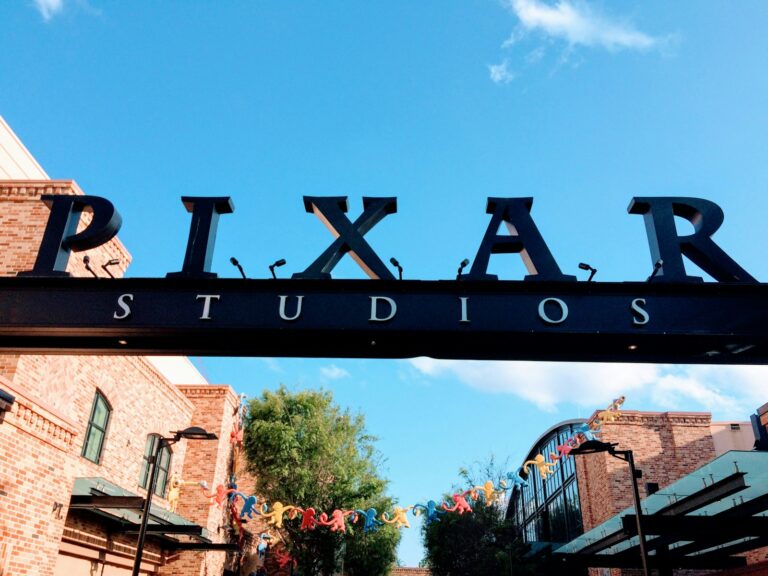
How did Pixar get so big? That’s an epic story in itself! George Lucas, the genius we know from Star Wars, threw the first stone. His work was key in the animation industry, as he also started Industrial Light & Magic. His involvement in establishing a unique studio, Pixar, was a serious game changer.

Pixar’s Rise to Glory

Pixar Animation Studios hit the scene way back in 1979. Under the guidance of bigshots like Steve Jobs and George Lucas, the studio climbed to the top. Yes, there were a few bumps in the road, but every great story has its troubles, right?

Pixar really left its mark on Hollywood. It brought us new steps forward in both animation and visual effects. Remember those cool computer scenes in Star Trek II: The Wrath of Khan? Or that CGI character in Young Sherlock Holmes? Pixar, folks!

And let’s not forget those amazing movies they produced! Toy Story, Up, Ratatouille, and Coco – they’re all Pixar. These flicks won hearts (and awards!) worldwide, bagging 23 Academy Awards. The big bucks followed too, with over $15 billion in box office earnings. Talk about ruling the animation industry!

Potential Shake-up from DreamWorks

But hold on! Steven Spielberg’s DreamWorks studio could shake things up a bit. They’ve given us cool films like Shrek and Kung Fu Panda. So, DreamWorks stepping up its game might mean a little power shift in Hollywood.

They have a new movie on the way – ‘The Wild Robot’. The hype is real with a star-studded voice cast including Lupita Nyong’o, Pedro Pascal, and Mark Hamill. DreamWorks is betting big, and Kung Fu Panda 4’s flop isn’t putting them off. ‘The Wild Robot’s early buzz already scored $2 million in previews. Looks like DreamWorks might bounce back in a major way.

Mark your calendar for September 27, 2024. That’s when ‘The Wild Robot’ hiits the big screen and DreamWorks might level up in the Hollywood race. With their warm, energetic content, a friendly tug of war with Pixar is sure to fire up. It might even push Hollywood to rethink its animation pecking order.

Draw of the Final Conclusion

Pixar has been the king of animation for years, thanks to George Lucas. But Steven Spielberg’s DreamWorks seems to be breathing down its neck. With some exciting productions in the pipeline, DreamWorks could stir things up in the Hollywood animation world.

While we await the release of ‘The Wild Robot’, the competition remains fierce and unpredictable. So, sit tight animation fans – let’s watch this fascinating race unfold and cheer for our favorite studio! The race isn’t over yet, so here’s to hoping the best studio wins!

Trump Exits ’60 Minutes’ Election Special, VP Harris Stays On Schedule

0

Key Takeaways:
– Former President Donald Trump has decided to not participate in the 60 Minutes Election Special.
– Vice President Kamala Harris’ interview will be broadcasted as scheduled on Monday, October 7, at 8 p.m. ET/PT.
– Trump’s refusal after initially agreeing to the interview has stirred conversations about how he interacts with the media.

Trump Opts Out of ’60 Minutes’ Special

In an unexpected turn of events, former President Donald Trump has withdrawn from the anticipated ’60 Minutes’ election special. This prime-time presentation has been an integral part of US election coverage for more than 50 years. However, Vice President Kamala Harris will proceed with her interview on Monday, October 7, at 8 p.m. ET/PT.

The 60 Minutes team initially announced that both Trump and the Harris campaigns had agreed to the session. Vice President Kamala Harris had planned to converse with correspondent Bill Whitaker. Trump had accepted an interview with Scott Pelley, but his campaign now decides to back out. Despite this unexpected change, the 60 Minutes team will still air the Harris interview as scheduled. Trump’s invitation for an interview remains open.

Trump Versus ’60 Minutes’

Donald Trump’s relationship with 60 Minutes has had its rocky turns. Back in 2020, his session with Lesley Stahl ended abruptly when he found her questions disconcerting and left the session mid-way. The former President is known for his audacious statements, often contradicting his previous claims.

The realistic engagement with Stahl seems too challenging for Trump. This situation brings the former President’s relationship with the traditional press into question. If he could navigate these platforms, the decision to exit 60 Minutes might not have been the case.

The Uneven Press Treatment

It’s interesting to note the blanket of criticism lodged on VP Harris for not appearing in interviews with legacy media frequently, while Trump manages to escape equivalent judgment. Out of the blue, he withdrew from the third debate and has now said no to his appearance on 60 Minutes.

The media incessantly brings up the narrative of Harris evading them, without acknowledging that they are talking about interviews with them specifically. It seems they disregard local journalists or 60 Minutes representatives, or even Dana Bash from CNN as viable interviewers.

‘Hiding’ Trump Versus Outspoken Harris

While Trump retreats from the light of the 60 Minutes platform, Vice President Kamala Harris is gearing up to face the cameras on October 7. This contrast showcases the different ways these political personalities engage with the media.

In conclusion, the former President’s campaign’s decision not to participate in the 60 Minutes election special remains puzzling. Especially amongst a storm of queries – Why did he decide to pull out? Why doesn’t he face realistic discussions? And, is Trump apprehensive of structured interviews? The audience and media are left with these questions as we look forward to Vice President Kamala Harris’s segment. Even as media narratives continue shifting, the fact remains – on October 7, only one chair will be filled on the ’60 Minutes’ stage.

California’s Governor Rejects AI Safety Legislation Amid Silicon Valley Dispute

Key Takeaways:

– Governor Gavin Newsom vetoes SB 1047, an AI safety regulation bill.
– The bill sought stringent measures for AI developers, including protocols to prevent catastrophes.
– Newsom cites concerns over the bill focusing only on large-scale AI models.
– The veto is opposed by Elon Musk and other high-profile personalities, while Facebook’s parent company, Meta, and several Democratic congresspeople support it.
– Experts and leaders are being enlisted to help develop new state AI regulations.

California Governor Causes Stir With AI Bill Veto

California’s Governor Gavin Newsom recently vetoed SB 1047, stirring up heated debate within Silicon Valley. This artificial intelligence (AI) safety bill aimed to introduce specific requirements for AI developers. These included developing prevention protocols for any large-scale mishaps caused by AI.

Under this proposed law, developers would have been required to present their safety plans to the state attorney general. If their directly controlled AI models caused public safety threats, they could be held accountable. However, this move by Newsom has sparked controversy within the tech industry and beyond.

Questioning the Scope of AI Safety Regulations

In his statement detailing reasons for the veto, Newsom expressed concerns about the legislation offering a “false sense of security.” He argues that the bill solely targets large-scale and expensive AI models, ignoring smaller specialized systems.

Newsom believes that applying strict standards to even the most basic functions of AI – as long as a large system deploys it – might not be the best approach. He questions whether the bill takes into consideration an AI system’s deployment environment, its role in decision-making, and the sensitivity of the data it handles.

Addressing AI Concerns with Industry Experts

Eager to not stall the progress of AI regulations, Newsom announced that his administration is enlisting field leaders to support AI deployment protection creation. The focus is to establish workable safeguards by carefully examining AI’s capabilities and associated risks. He also promised to continue collaborative work with the Legislature on this issue in the next session.

A Hot Topic in Silicon Valley

SB 1047 has witnessed a divided opinion among tech industry titans. It has been supported by the Center for AI safety, SpaceX CEO Elon Musk, and the L.A. Times editorial board. However, opponents like Facebook’s parent company Meta, OpenAI (maker of ChatGPT), and several Democratic congresspeople, including Rep. Nancy Pelosi, believe that stringent measures could inhibit innovation.

The bill’s advocates argue that setting rules for rapidly evolving AI technology is crucial to avoid potential catastrophic consequences. Conversely, critics caution that such regulations might hamper tech innovation.

A Missed Opportunity for Tech Regulation

Sen. Scott Wiener, who introduced the bill, called the veto a “missed opportunity” for California to lead in tech regulation. Wiener believes that oversight for corporations making critical decisions influencing public safety is essential.

Newsom also admitted that SB 1047 had sparked significant conversation, creating its “own weather system.” The task of regulating AI is indeed a challenge. He asserted that the state had been striving to devise rational regulations promoting risk-taking but preventing recklessness.

The Entertainment Industry Weighs In

SB 1047 has provoked responses beyond Silicon Valley, extending to the entertainment industry as well. More than 125 entertainment industry figures have expressed their views on the matter. High-profile personalities, including actors Pedro Pascal and Alec Baldwin, signed a letter urging Newsom to sign the bill.

However, opposition hasn’t been silent either. Chamber of Progress, for instance, expressed its displeasure with an AI-generated rock song urging for a veto of the bill.

While the veto has been passed, the discourse it has created signifies the fine balance between technological progression and maintaining safety standards. The debate is far from over, and Silicon Valley and the world will be keenly watching the next moves on AI safety regulations.

Despite JD Vance’s Vice Presidential Debate, Trump Remains Center of Attention

Key Takeaways:
– Major Republican rally in New York focuses more on Donald Trump instead of JD Vance.
– Many Trump supporters express reluctance over Vance’s potential as Commander-In-Chief.
– Trump’s influence on the local crowd was evident through signs and flags endorsing the Trump-Vance campaign.

The Glare of Trump Overshadows JD Vance

On a night marked for JD Vance to create a lasting impression, it appeared that the overwhelming focus remained on former President Donald Trump. The evening was meant to be a stepping stone for the Ohio Senator during the first vice-presidential debate held at CBS studios. However, the former president’s influence dominated the crowd’s discussions.

Trump’s Enduring Impact

A significant portion of the crowd, comprised of hundreds of Republicans, turned up at Trump’s behest. Trump supporter Dion Cini remarked, “Very rarely does Trump say ‘come to a certain point and rally for me’. I’m glad that Donald Trump finally started asking to do some grassroots rallies, because that’s what we really need.” Cini, a regular participant in Trump’s events, proudly displayed a whopping 16 by 20 feet banner supporting the former President.

Cini expressed confidence in Vance’s abilities but admitted that his suitability as Commander-In-Chief remained questionable. Like many others, he showed faith in Trump’s leadership over Vance’s, anticipating that he would gradually come to appreciate the latter.

The Trump-Vance Campaign: A Mixed Bag of Emotions

Signs endorsing the Trump-Vance campaign, along with a multitude of Trump-exclusive merchandise, dominated the scene on the Republican side. Conversely, Democratic enthusiasts congregated nearby, displaying their support for Tim Walz through signs that referred to him as a “Coach”.

Notably, the son of former New York City mayor and Trump attorney, Rudi Giuliani, Andrew Giuliani, attended the event. He expressed excitement for the debate but declared that the city’s “close affinity” lay predominantly with Trump, further revealing the magnetic pull that the former president continues to exert.

Voices from the Crowd

Chair of the Libertarian Caucus of the New York Young Republicans, Lucas Federico, expressed his faith in Vance as a formidable contender, despite not always being a fan. Federico mentioned, “I had no idea who JD Vance was until the RNC. And I didn’t like him at first because I saw videos of him talking, being an anti Trumper in 2016 and he changed.”

Although he initially doubted Vance, Federico admitted that his perception changed after hearing the senator’s speeches. Furthermore, he highlighted the importance of a Vice President who could effectively support the President, indicating his hesitant approval of Vance for the role.

The debate’s conclusion left a sum impression that, although Vance was indeed a significant player, the focal point remained firmly on Donald Trump. Regardless of the Ohio Senator’s performance during his big night in New York, the pull of the former President overshadows even his biggest moments. The event underscored the continuing strong influence Trump holds over his followers, an influence that may shape the future course of the Republican party.