54.1 F
San Francisco
Wednesday, March 25, 2026
Home Blog Page 2117

Microsoft’s AI Chatbot and Data Aggregator Set for Security Space Launch

Key Takeaways:

– Microsoft’s AI chatbot and data aggregator is open for security business starting April 1.
– The tech-giant introduces a new per-unit pricing model.
– The move aims to enhance Microsoft’s security offering to businesses.

Microsoft has announced its entry into the security industry, unveiling its AI chatbot and data aggregator with security functionality from April 1. With a new per unit pricing model, the company aims to fortify its position in technology security space, ensuring businesses can better protect their data and systems.


Microsoft AI Chatbot: A New Vision for Business Security

The AI chatbot is more than just another product – it signifies Microsoft’s belief in the integration of AI and data analysis in the field of cybersecurity. The tech-giant has brought its extensive expertise in AI and data aggregation to deliver an innovative, comprehensive security solution.

The per-unit pricing model that Microsoft has introduced alongside this solution allows for better accessibility by organizations. Whether a large corporation or a growing start-up, the affordability of the solution is expected to attract a wide range of organizations.


Strategic Move into Security Space

April 1 marked the beginning of a new chapter for Microsoft, as they ventured into specialized security services. The company already had a reputation in the tech world with their software offerings and hardware gadgets. However, the launch of the AI chatbot integrated with a data aggregator signals a significant shift in strategy.

The move is significant as it underscores a strong focus on security features in businesses, which is a paramount concern in today’s digitized era.


Data-Driven Security with AI Chatbot

The core functionality of the AI chatbot is to offer robust security to the vast amount of data organizations deal with daily. Cybersecurity threats are evolving, becoming increasingly intricate and challenging for businesses to combat. However, with the new chatbot, businesses can rely on an AI-powered tool to predict, detect, and rapidly respond to cyber threats.

By integrating big data into the mix, the AI chatbot can analyze trends, predict potential threats and keep the system secure in real time.


Looking Forward: Microsoft’s Expanded Security Offering

With its AI chatbot and data aggregator open for security business, Microsoft has solidified its presence in the cybersecurity landscape. This move not only reflects the company’s commitment to adapt to emerging tech trends but also indicates its resolve to provide comprehensive solutions to the growing security concerns of businesses worldwide.

In summary, Windows-maker is geared up to revolutionize the security industry with AI-integrated offerings. The new pricing model combined with a secure, robust system could potentially redefine the way businesses protect their data and systems.

Conclusively, the advent of Microsoft’s AI chatbot and data aggregator marks an exciting time for the security industry. As corporations and businesses become more data-driven, such advancements in cybersecurity solutions help reassure companies of the safety of their data while allowing them to focus on core business operations.

Only time will tell how Microsoft’s move in leveraging AI for security will pay off in this extremely competitive cybersecurity landscape. Nevertheless, the decision has already stirred significant interest and excitement across the global tech community.


 

San Diego Padres Eye Dylan Cease Trade

0

Key Takeaways:

– San Diego Padres show interest in Chicago White Sox’s ace Dylan Cease.
– Blake Snell, 2023 Cy Young Award winner likely to miss 2024 due to exploring free agency.
– Dylan Cease’s trade potential increases due to his club control in 2025.

The San Diego Padres are reportedly considering picking up Dylan Cease, ace of the Chicago White Sox, ahead of their regular season opener against the Los Angeles Dodgers. This information comes as the Padres announced that their starter for the opening will be Yu Darvish.

Talks of Dylan Cease Trade

According to a tweet by MLB Network’s Jon Morosi, conversations involving a Dylan Cease trade have been ongoing and a substantial number have occurred with the Texas Rangers and New York Yankees. This has sparked the speculation that an agreement may be close. In his tweet, Morosi reported “@670TheScore @nbcsandiego…Been in talks… Opening Day.”

The Padres, unfortunately, will be lacking the prowess of the 2023 Cy Young Award winner, Blake Snell, in 2024. This predicament is due to Snell currently considering free agency.

White Sox’s Posture

Although the Chicago White Sox considered trading Cease earlier, USA TODAY’s Bob Nightengale reported that they held off, instead opting to wait for the July 30 deadline. In fact, according to MLB.com’s Scott Merkin, upon being questioned if Cease would be the club’s opening day starter, White Sox’s coach Pedro Grifol responded, “I don’t know. How am I supposed to know that?”

Beyond the Padres, the New York Yankees and Texas Rangers are also reportedly considering a Cease trade. On March 12, Nightengale mentioned that the Yankees made a “new proposal” for Cease. Nevertheless, unless significant offers are made, the White Sox might delay the trade until the deadline.

Trade Market and Cease Trade Package

With one more arbitration-eligible season, the 28-year-old Cease is handsomely placed in the trade market. Considering this, any club obtaining Cease would maintain control in 2025 while his pay in 2024 stands at a reasonable $8 million. This factor makes Cease invaluable.

Regarding the asking price for Cease, there have been references to a possible amount. Jon Heyman of the New York Post indicated that the Sox may be looking at a compensation similar to what the Brewers got for Corbin Burnes, “maybe one and a half times”.

Cease’s Career and Value Proposition

Whichever club lands Cease will be availing a commendable track record. With a five-season ERA of 3.83 as a White Sox, Cease holds an impressive professional record. He ended the 2022 season third in the league with a 2.20 ERA and 227 strikeouts to his name, giving him a spot at No. 2 in the AL. His performance trailed only marginally in 2023, ending at No. 5 in the AL and No. 8 in the majors with 214 strikeouts.

As clubs tally potential deals, Cease’s value proposition of being a cost-effective top ten pitcher potentially makes him a hot property in the current trade market. It is, therefore, unsurprising that clubs like the Padres, Yankees, and Rangers are considering bringing him in, with his future indeed looking promising.

Club-wise Strategizing

For the Padres, the loss of Snell to free agency is prompting them to consider alternative strategies. Bringing in Cease could be part of that plan, providing an effective counterbalance to Snell’s absence. How this situation unfolds will undoubtedly be a hot topic as the regular season approaches.

Although the White Sox are in no rush to trade Cease, the right offer could change that. With several clubs displaying keen interest, eyes will be on the outcome as the trading deadline looms closer. This scenario opens up exciting possibilities and will undoubtedly shape Dylan Cease’s future trajectory in Major League Baseball.


Exploring IBM’s OS/2: The Unfinished Windows Project

Key Takeaways:

* OS/2 was the culmination of a partnership between IBM and Microsoft.
* IBM’s intentions for OS/2 clashed with Microsoft’s goals.
* Windows 3.0 emerged as a hit, resulting in a split between the companies.
* Microsoft had been working concurrently on version 2.0 of OS/2, public release never materialized.

IBM’s OS2: A Piece of Forgotten PC History

When discussing PC history, IBM’s OS/2 operating system is often forgotten. This artifact traces back to the final days of IBM’s collaboration with tech titan Microsoft. The partnership had previously spawned years of MS-DOS integrations, with the OS/2 project debuting to address DOS’s limitations on modern systems. The main upgrades planned for the OS/2 included more effective memory management, a practical Graphical User Interface (GUI), and multitasking capabilities.

Microsoft-IBM Alliance Frays Over OS/2

However, IBM’s goals for OS/2 clashed with Microsoft’s vision, leading to tensions. Microsoft was simultaneously orchestrating the construction of a different operating system, Windows. The tech giant designed Windows with an eye on the burgeoning market for PC-compatible clones, diverging from IBM’s goal of using OS/2 primarily to boost IBM-made PCs.

The Impact of Windows 3.0

Although Windows 1.x and 2.x did not make significant impacts, Microsoft made its mark with the release of Windows 3.0 in 1990. This version came pre-installed on several consumer PCs, and its success was one of the catalysts that led to the Microsoft-IBM partnership’s dissolution. This breakup resulted in OS/2 1.2 being the last version publicly released and sold with Microsoft’s involvement.

The Unrevealed OS/2 2.0: Microsoft’s Lost Project

Simultaneously, Microsoft had made considerable progress on OS/2 2.0 while also developing Windows. Preliminary screenshots had appeared in PC Magazine and advanced versions were circulated among developers willing to pay for them. Despite its progression, OS/2 2.0 was never officially made available to the public.

In summary, IBM’s OS/2 is a notable stepping-stone in PC history, being one of the last pieces of MS-DOS and PC-DOS created during the IBM-Microsoft union. Despite being eclipsed by the rise of Windows, its innovation in memory management and a user-friendly GUI marked a significant shift in operating system development. The partnership fallout resulting from the conflicting aims of IBM and Microsoft symbolizes an interesting what-if scenario in technology development.


Jonathan Majors’ Bid to Overturn Guilty Verdict Unsatisfactory, Assert Manhattan Prosecutors

Key Takeaways:
– Manhattan prosecutors aim to reject Jonathan Majors’ time for challenging the guilty verdict in his domestic violence case.
– Majors was found guilty of third-degree reckless assault and second-degree harassment related to a March 25 incident involving his ex-girlfriend, Grace Jabbari.
– Majors’ appeal argues insufficient evidence and prosecutor allegations of false claims by Majors of trying to escape Jabbari.
– Jabbari, a British choreographer, testified to other violent encounters with Majors throughout their 19-month relationship.
– The incident resulted in significant professional damage for Majors, including severing of ties by Marvel and Disney.

Manhattan prosecutorial authorities recommend that the trial court dismiss Jonathan Majors’ plea to set aside his guilty verdict, according to recent court filings. The controversial Hollywood actor, aged 34, was found guilty of third-degree reckless assault and second-degree harassment on December 18. These convictions arise from a physical altercation with Grace Jabbari, his former girlfriend, in a private car cruising through Lower Manhattan on March 25.

The Verdict Challenged

Before his April 8 sentencing, Majors appealed to Judge Michael Gaffey of the Manhattan Criminal Court, seeking the rejection of the guilty verdict. Majors maintains that the prosecutors did not provide sufficient evidence to corroborate his harassment conviction. Kelli Galaway, the Assistant District Attorney, urged Judge Gaffey to dismiss Majors’ request in its entirety, countering Majors’ claim about attempting to escape Jabbari.

Galaway examined the trial evidence, writing, “A clear intention is evident. The act of forcefully hauling your partner by their arms, lifting them, and pushing them into the backseat of a car post-assault shows intent to harass, annoy or alarm the recipient.”

The Evidence Laid Bare

The jury was able to corroborate that Majors was guilty of second-degree harassment through ample demonstrable evidence. Majors additionally contested that the testimony given by the private vehicle driver and lone witness, Naveed Sarwar, undercut his reckless assault conviction. Sarwar testified that his initial speculation from the front seat’s audio feed pointed to Jabbari being the instigator.

Galaway argued, “Mr Sarwar hearing a struggle in the backseat, not seeing anything, supports a verdict convicting the defendant of recklessly assaulting Ms. Jabbari.”

A Tumultuous Relationship

During the trial, Jabbari, a British choreographer, testified about their 19-month relationship filled with aggressive incidents. She narrated how Majors reacted violently when she snatched his phone after discovering flirtatious messages to another woman.

The jury was privy to images of injuries sustained by Jabbari that included a fractured finger and an extensive cut behind her ear. They also viewed surveillance footage of the altercation that spilled evidence on to Canal and Centre streets in broad daylight. Jabbari also accused Majors of throwing dinnerware at her during a heated exchange in California the previous year.

The Aftermath

Authorities apprehended Majors the morning following the incident at the couple’s penthouse in Chelsea, following a 911 call upon finding Jabbari injured. In the wake of the incident, both parted ways with Majors opting for a hotel while Jabbari left for a club.

Majors’ legal team tried to depict Jabbari as a volatile party girl in their defense. Text messages from September 2022, also viewed by the jury, showed Majors attempting to coax Jabbari against seeking medical assistance, suggesting another separate assault case.

Career Ramifications

Majors’ flourishing Hollywood career suffered a significant setback due to this incident, subsequently leading to termination by Marvel and Disney from all future projects. Majors’ legal counsel refrained from commenting on this matter.


The Transformative Impact of Green Technology in Driving Change

Key Takeaways:
– Green technology is playing a vital role in facilitating positive change.
– The industry holds tremendous potential for job creation and economic growth.
– Advances in green tech are addressing major environmental concerns.

The Emergence of Green Technology

Green technology, often referred to as cleantech or greentech, has become a powerful catalyst in a world that is actively looking for sustainable solutions. The adoption of clean, efficient, and sustainable technological innovations is becoming increasingly crucial as we attempt to balance economic growth with the urgent need for environmental preservation.

Potential for Economic Growth and Job Creation

As it stands, green technology presents vast opportunities for economic growth and job creation. This burgeoning sector has the potential to redefine traditional industries, paving the way for new jobs in renewable energy, waste management, and clean transportation, among others. With the technological advancement that green tech brings, diverse career opportunities are shaping up across both developed and developing nations.

Addressing Environmental Concerns

Without a doubt, one of the most significant aspects of green technology is its ability to address major environmental concerns. Green tech innovations are contributing significantly to reducing greenhouse gas emissions, minimizing waste, and promoting energy and water efficiency. The advancements in this field can provide practical solutions to some of our most pressing environmental challenges, from climate change to water scarcity.

A Force For Change

The transformative power of green tech lies in its ability to intertwine economic prosperity with environmental stewardship. As the adoption of green tech continues to rise, the various benefits become more apparent. Entrepreneurs and innovators are increasingly recognizing the value of aligning their operations with sustainable technology, signalling a broader shift towards eco-friendly practices within the business sphere.

Challenges and Opportunities Awaiting

Despite the numerous advantages, green technology simultaneously poses certain challenges. The initial costs of implementation can be high, and there may be resistance from traditional businesses reluctant to change established operational processes. However, as more governments and corporations choose to invest in green technology, the financial and logistical barriers become less prohibitive. A joint effort involving policy-makers, businesses, and consumers is necessary to facilitate the wider adoption of greentech and ensure its long-term success.

The Future of Green Technology

Looking ahead, predicting the future of green technology would be premature. However, the importance of green tech is clear. As our world continues to grapple with environmental challenges, the role of sustainable solutions in shaping our future cannot be overstated. With green technology at the forefront, we are gearing up for a revolution that intertwines environmental preservation with economic prosperity.

In conclusion, the rise of green technology is arguably one of the most promising developments of our era. It represents a fundamental shift towards sustainable practices that are not only economically viable but also crucial for the ongoing battle against climate change. As we navigate our way towards a more sustainable future, green technology emerges as an indomitable force driving this change.

It is crucial to promote awareness about green technology’s benefits and potential, and extend support for further development in this field. As we increasingly adopt and integrate green tech into our lives, we are, in many ways, drawing up the blueprint for a more sustainable and prosperous world.

Through the lens of green technology, the prospect of a sustainable future becomes not just a dream, but a potential reality, which we should welcome with open arms. Green tech proponents and enthusiasts certainly have a critical role to play in accelerating this shift, and the time for action is now.

In this dynamic landscape, we remind corporations and individuals alike—to stay the course. Maintain momentum by investing sustainably and developing innovative green tech solutions. The world awaits the next breakthrough in green technology with eager anticipation and readiness for change. The rewards—economic, social, and environmental—are worth the chase. Our future, after all, hinges on our actions today.


Microsoft Adds OpenAI’s GPT-4 Turbo to the Free Tier of Copilot AI Assistant

Key Takeaways:

– Microsoft has upgraded the free tier of the Copilot AI assistant with OpenAI’s GPT-4 Turbo.
– This powerful generative model could revolutionise coding.
– The addition occurred on March 12

Software giant, Microsoft, has strengthened its artificial intelligence (AI) suite, upgrading Copilot AI assistant’s free tier with OpenAI’s robust GPT-4 Turbo generative model on March 12.

Capable of revolutionising the art of coding, this generative model serves as a crucial additional tool for developers.


Microsoft Elevates Copilot AI Assistant

In a digital world where AI technologies take center stage, Microsoft’s latest upgrade of the Copilot AI assistant is a significant step forward. By integrating OpenAI’s potent GPT-4 Turbo, Microsoft demonstrates its commitment to providing users with cutting-edge AI capabilities to streamline programming tasks.

The latest addition of GPT-4 Turbo to the free tier of Microsoft’s Copilot AI assistant will offer developers an advanced autocomplete feature for code. Essentially, the technology assists users by providing suggested lines or blocks of code while carrying out software development tasks.


Unpacking the Power of GPT-4 Turbo

OpenAI’s GPT-4 Turbo is a generative model that uses AI algorithms to produce human-like, meaningful, and context-relevant text. This technology falls under the umbrella of Natural Language Processing (NLP), a sector of AI that aims to bridge the gap between human communication and computer understanding.

In the context of Microsoft’s Copilot AI assistant, GPT-4 Turbo can provide a coding autocomplete feature. It’s capable of understanding the nuances of various coding languages and can suggest corresponding code, making programming a breeze for users, even beginners.


The Perks of AI Integration

The integration of AI technologies in industries, particularly in software development, has several benefits. It not only increases productivity but also reduces the risk of human error and enhances decision-making.

In the case of Microsoft’s Copilot AI assistant, AI’s integration promotes efficiency by being a helping hand to developers during their coding process. Now that the company has added GPT-4 Turbo to its free tier, it entails more developers will have access to this advanced technology, levelling the playing field.


Taking the Lead in AI Technology

Microsoft’s addition of OpenAI’s GPT-4 Turbo to the Copilot AI assistant reinforces its intention to remain at the forefront of AI technology. It showcases the company’s dedication in consistently improving and upgrading its services to benefit a wider range of users.

Considering Microsoft’s continued foray into AI and technology, industry observers can anticipate more developments that leverage AI power in the future.


Endnote

Microsoft’s strategic upgrade of its Copilot AI assistant with OpenAI’s GPT-4 Turbo generative model marks a big leap in the realm of AI technology. Promising to alter the coding landscape, Microsoft continues to assert its dominance as a tech giant, dedicated to breaking down tech-barriers and making advanced technology available to many. It’s no surprise that the integration of this powerful AI model to Copilot AI assistant is creating waves in the tech world.


Bernie Sanders Proposes 32-Hour Workweek; A Step Toward Improving Workers’ Lives

Key Takeaways:

– Senator Bernie Sanders has introduced a bill aimed at shortening workweeks to 32 hours at the same pay.
– Other legislators like California Democrats Sen. Laphonza Butler and Rep. Mark Takano support the bill.
– Sanders claims the legislation will allow workers to benefit from advances in technology.
– The proposal looks to curb worker fatigue and improve productivity.
– Critics argue the policy may lead to job loss due to offshoring.

Workweek Revolution: Bernie Sanders Advocates for Shorter Hours

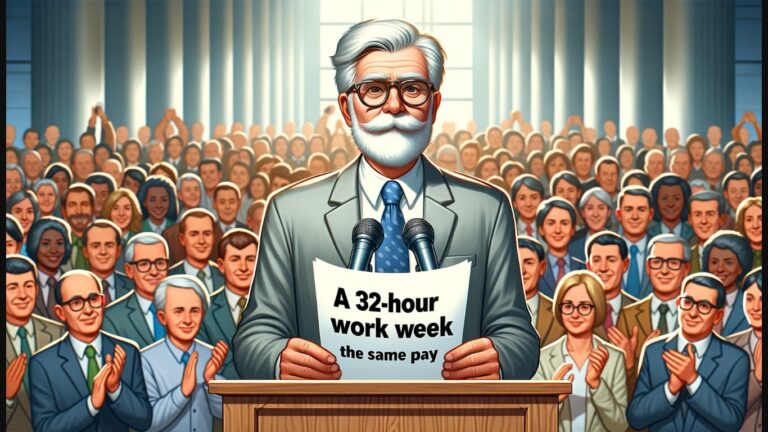
In a groundbreaking move, Senator Bernie Sanders proposed transforming American work cycles by introducing legislation for a 32-hour workweek without a reduction in pay. An effort to balance work-life while keeping wages intact, the proposal highlights the issue of overworking and unfair wages that plague American workers.

Linking Jobs with New Technology

Sanders drew a captivating connection between work motivation and the rapid expansion of technology. He argued for a work ethos that leverages advancements in artificial intelligence and automated systems. The Vermont senator insists the enhanced productivity due to modern technologies should be shared with workers, improving their professional lives.

Broad Spectrum Support

The bold proposal is not without allies. California Democrats Senator Laphonza Butler and Representative Mark Takano are supportive of the novel approach. In a bid to reform work norms, Takano has also introduced a companion bill in the House.

Longer Hours, Less Pay – A Trend to Change

Sanders’s argument is rooted in concern for workers who despite being more productive now than ever, find their income shrinking and work hours increasing. “The need for change is not radical,” Sanders remarked. He used startling statistics to strengthen his argument, pointing out that American workers are now over 400 percent more productive than in the 1940s.

Big Profits For Few

The energetic liberal senator didn’t mince words when talking about the imbalance of technology’s benefits. Profits arising from advancements in technology, like AI, are unfairly favoring the wealthy. He urges for these profits to be redistributed more equitably, focusing on workers’ welfare rather than stockholders and CEOs.

The Thirty-Two-Hour Workweek Act

Sanders’s proposal – The Thirty-Two-Hour Workweek Act – aims to chop the workweek by 20%. This innovative legislation expects employers to pay one and a half times the regular wage for any work over eight hours a day. Working a 12-hour day would earn workers double their hourly rate for additional hours.

Shaping Work Norms:

The 40-hour workweek is a practice that has been followed since Ford Motor Company introduced it in 1926. It was institutionalized in 1938 by Congress through the Fair Labor Standards Act which initially stipulated a 44-hour workweek, later amended to 40 hours in 1940. Sanders’s proposal threatens to disrupt this long-standing norm.

Reactions amid Controversy

The proposal’s uncertain future depends largely on overcoming conservative opposition. Critics worry about the potential pitfalls of the policy, stating the risk of jobs being offshored or replaced by automated systems.

Bright Future for Workers?

On a more optimistic note, an experiment conducted in Great Britain in 2023 with four-day workweeks reportedly resulted in refreshing results. Workers were less fatigued while productivity remained steady. This gives hope to Sanders’s proposal, indicating that shorter workweeks could indeed keep productivity stable while improving workers’ lives.


Emerging Sustainability Trends in the UK: A Leadership Perspective

Key Takeaways:

– Sustainability is becoming a business-critical aspect in the UK
– Leaders are taking noteworthy steps to promote sustainable practices
– Enhanced use of digitization for sustainability is a noticeable trend
– Demand for renewable energy is on the rise
– Legislation, client birthright, and commercial reputation heavily impact the sustainability focus

As the global focus shifts towards achieving sustainable growth, the United Kingdom is no exception to this transformative trend. Notably, business leaders and industry titans in the UK are adopting a proactive stance to align their practices with international sustainability standards.

Delving into Sustainability

The landscape of sustainability in the UK is rapidly evolving. Business leaders in the UK are increasingly recognizing the importance of sustainable practices, not only for ethical reasons but also to maintain their competitive edge. As per reports, the advent of digital technology has played a critical role in driving these sustainability trends.

The Role of Digital Technology

The digital landscape is dramatically reshaping the traditional approach to sustainability. With the advent of smart technologies, businesses are coming up with innovative solutions to real-world sustainability challenges.

For instance, artificial intelligence technology is now being deployed to better manage the use of natural resources. On the other hand, predictive analytics is providing business leaders with insights into potential resource shortages, allowing them to make proactive decisions.

Rising Demand for Renewable Energy

Accompanied by the digital boom is a surge in demand for renewable energy. This trend is primarily driven by the growing awareness of climate change and the detrimental effects of fossil fuels on the environment. Businesses across sectors are pivoting towards renewable sources of energy, such as wind, solar, and hydropower.

Influences on Sustainability Focus

While the environmental crisis is undoubtedly the primary driver of sustainability, other factors are also pressing businesses to become more sustainable.

Firstly, there is legislation. The UK government is stringently imposing regulations aimed at reducing the environmental footprint of businesses.

Secondly, the consumer birthright, more and more consumers are voicing their preference for sustainable goods and services. As a consequence, businesses that fail to incorporate sustainable practices risk compromising their customer loyalty and market share.

Finally, the commercial reputation is at risk as companies face amplified scrutiny from stakeholders, media, and the public. In this context, sustainability is not just an operational priority but a strategic necessity.

In conclusion, the sustainability trend in the UK is growing at an unprecedented pace, fuelled by intense legislative pressure, consumer inclination, and the drive to maintain commercial reputation. With technology as an enabler, UK businesses are uniquely positioned to leverage the sustainability trend to their advantage. As business leaders become increasingly aware of the vital role they play in promoting sustainability, it’s more critical than ever before to stay informed, invested, and innovative.

The sustainability trend is more prominent than ever in the UK, with the country’s business leaders noticing and taking note. This trend promises not only to reshape the UK’s business landscape but also to contribute to global efforts to combat climate change.


Intel Unleashes $689 Core i9-14900KS Processor, Makes Massive Strides with a 6.2 GHz Speed Boost

Key Takeaways:
– The new Intel Core i9-14900KS processor can reach speeds of 6.2 GHz without a shift in architecture or manufacturing process.
– This improved speed is a stepping-stone in Intel’s continued evolution up from the 12th to 14th generations.
– However, the power consumption required for this performance improvement is considerably high.

Intel has unveiled its latest impressive but high-power-demanding desktop processor, the Core i9-14900KS. This flagship processor, costing $689, resonates with the company’s tradition of enhancing processor performance via increasing clock speeds.

A Homage to the Past
Long-term PC enthusiasts may recall the time from the 1990s to early 2000s, when Intel concentrated on clock speed enhancements as their primary performance measurement metric. It was also a time when AMD managed to outpace Intel by hitting 1 GHz. However, Intel’s Pentium 4 processors particularly focused on boosting clock speeds, with less attention to instructions-per-clock.

In a similar vein, today, the tech giant revisits this approach quite briefly with the introduction of its latest desktop processor, Core i9-14900KS.

Accelerating to New Speeds
The i9-14900KS can readily sprint to speeds up to 6.2 GHz right out of the box. This is a slight leap beyond the supreme performance of the previous generations, i9-13900KS and i9-14900K that could reach up to 6.0 GHz.

Moreover, akin to other high-end modern Intel desktop chips, this new entry comes with Adaptive Boost Technology. This feature enables the chip to draw more power and enhance performance until it strikes a temperature of 100° Celsius.

Impressive Yet Impractical
The ability to drive clock speeds to new heights without any change in its overall structure or manufacturing technique is an impressive feat. It mirrors Intel’s consistent efforts to evolve through the 12th, 13th, and 14th processor generations.

On the flip side, though, this advancement has a downbeat side. The i9-14900KS requires consuming an enormous amount of power to achieve this small speed improvement, making the processor energy-inefficient. This fact serves as a reminder of the inevitable physical laws which eventually led to the decline of the frantic megahertz wars.

In conclusion, Intel’s new Core i9-14900KS desktop processor, with a striking dipping into cutting-edge speeds, marks a notable page in the company’s technological advancements. However, the power consumption this processor demands is a minor setback that Intel would need to address to ensure sustainable and efficient performance. Despite the trade-offs, the Core i9-14900KS stands as one more proof of Intel’s unwavering progression in the dynamic world of processor technology.


Epic Games CEO Tim Sweeney’s Displeasure Over Valve’s High Gaming Platform Fees

Key Takeaways:
– Epic Games CEO, Tim Sweeney, rebukes Valve for charging high fees for game listings on its Steam platform.
– Emails revealed as part of Wolfire’s price-fixing case against Valve showcase Sweeney’s frustration before launching the Epic Games Store in 2018.
– Sweeney accused tech titans like Valve and Apple of exploiting small developers with exorbitant charges.

The Battle against Unreasonable Platform Fees

Tim Sweeney, founder and CEO of Epic Games, known for his vehement objection to Valve’s inflated platform fees for listing games on Steam, has made his sentiments clearer in pre-2018 emails. Providing insights into his frustration before the launch of the Epic Games Store, these mails show Sweeney’s displeasure with companies like Valve and Apple, accusing them of imposing heavy financial burdens on small scale developers.

Venting his Frustration: Sweeney against Tech Giants

These emails, unveiled during the judicial proceedings of Wolfire’s price-fixing case against Valve, call out Valve managers for the platform fees that Sweeney claims are unwarranted. These interactions also reveal the outrage Sweeney and his company Epic, unleashed on Apple in lawsuits initiated years later. These correspondences exhibit a new angle to Sweeney, one who is fervently fighting against the suppression of ‘the little guy’.

Valve’s Questionable Profit Margin

In an email chain from August 2017, Gabe Newell, Valve co-founder, curiously questioned Sweeney if there’s anything they were doing to infuriate him. This query seems to have been prompted by Sweeney’s tweets questioning why Steam still charges 30% of the gross sale price when credit card companies like MasterCard and Visa charge between 2-5% per transaction. In the same conversation, Sweeney voiced his disappointment that modern tech giants, including Facebook, Google, Apple, and Valve, have become the middlemen they were supposed to replace. He expressed his suspicion that companies like Valve are possibly making more profit from games than game developers themselves, which, in his view, contradicts the initial purpose of the Internet’s creation.

A Stand for the Little Guy

Sweeney’s indignation seems to stem from a deep-seated belief in fair play and an equitable playing field for all developers, regardless of their size. This brawl against Valve and other tech conglomerates sheds light on the CEO’s commitment to upholding the rights of smaller developers who find themselves trapped under the financial weight of these formidable giants. It also serves as a potent reflection of Epic Games’ strategy in the competitive landscape of the gaming industry: standing up for underdogs and challenging establishment norms.

The Bigger Picture

While Sweeney’s clash with tech giants may seem an uphill battle, it underscores the broader debate around the monopolistic tendencies of big tech firms. His candid expression of dissatisfaction contributes to the mounting scrutiny on the business practices of these behemoths, echoing sentiments shared by many in the industry striving for a more balanced and fair digital marketplace.

Conclusion

As the gaming industry continues to evolve, the dialogue around platform fees, profit margins, and the appropriate role of digital marketplaces is more critical than ever. It prompts the industry to consider, amongst other things, whether the 30% fee charged by platforms like Valve is a reasonable cost for the services they provide, or merely an exploitation of smaller developers. In raising these questions, Tim Sweeney has certainly stoked the debate’s flames, a discourse that will no doubt shape the future of the gaming industry.