77.3 F
San Francisco
Wednesday, March 18, 2026
Home Blog Page 2185

Amazon Unveils ‘Q’, an AI Chatbot Tailored for Business Needs

Amazon has recently announced the launch of ‘Q’, an innovative AI chatbot designed specifically for business applications. This new product, revealed at Amazon Web Services’ Reinvent conference, marks Amazon’s foray into the competitive realm of productivity software, directly challenging giants like Microsoft and Google.

Key Takeaways:

  • Amazon introduces ‘Q’, an AI chatbot for business use.
  • ‘Q’ integrates with various business software tools.
  • Pricing starts at $20 per person per month after a free preview.
  • The chatbot can troubleshoot AWS issues and interact in apps like Slack.
  • ‘Q’ can connect to over 40 enterprise systems, including Microsoft 365 and Salesforce.
  • The tool aims to simplify AWS services navigation and usage.

A New Era in Business Productivity

Amazon’s ‘Q’ represents a significant step in enhancing business productivity through AI. It’s designed to be accessible to both developers and non-technical business users, allowing a broad range of professionals to leverage its capabilities.

Pricing and Accessibility

After a free preview period, ‘Q’ will be available at $20 per person per month for business users, with a more feature-rich version for developers and IT workers at $25 per person per month. This pricing strategy positions ‘Q’ competitively against similar offerings in the market.

Versatile Integration

One of the key strengths of ‘Q’ is its ability to integrate with a variety of business software tools. Users can interact with ‘Q’ in communication apps like Salesforce’s Slack and various text-editing applications used by software developers. This versatility ensures that ‘Q’ can be a valuable asset across different business functions.

Enhancing AWS Experience

Initially, ‘Q’ will assist users in understanding and troubleshooting AWS services. This feature is particularly beneficial for businesses heavily reliant on AWS, as it simplifies the process of navigating the platform’s extensive services.

Expanding Connectivity

‘Q’ can connect to more than 40 enterprise systems, including popular platforms like Microsoft 365, Dropbox, Salesforce, Zendesk, and AWS’s own S3 data-storage service. This extensive connectivity allows users to discuss and query information stored across these platforms efficiently.

The Future of AI in Business

With ‘Q’, Amazon is not only expanding its portfolio in end-user applications but also reinforcing its position in the AI-driven business solutions market. This move is expected to influence how businesses interact with AI tools, potentially leading to more streamlined operations and enhanced decision-making processes.

In conclusion, Amazon’s ‘Q’ is set to become a pivotal tool in the business world, offering a blend of AI-driven efficiency and user-friendly functionality. As businesses continue to embrace digital transformation, tools like ‘Q’ are likely to play a crucial role in shaping the future of workplace productivity.

AI Fitness Model Aitana López Revolutionizes Influencer Marketing

In the ever-evolving realm of digital marketing, Aitana López, a 25-year-old AI-generated Spanish model, is making waves. With over 149,000 Instagram followers, Aitana isn’t just another influencer; she’s a testament to the growing influence of artificial intelligence in social media marketing.

Creation of Aitana

Developed by The Clueless agency, Aitana was born out of a need for reliable and consistent influencers. Rubén Cruz, the founder of The Clueless, turned to AI to overcome the unpredictability and financial losses often associated with human influencers. Aitana, with her pink hair and affinity for video games and cosplay, is meticulously designed to appeal to a broad audience, embodying the traits most favored in today’s society.


View this post on Instagram


A post shared by Aitana Lopez (@fit_aitana)

Aitana’s Impact and Earnings

Aitana’s presence on Instagram has not only garnered a significant following but also a substantial income, earning around $11,000 a month through brand deals. This success story highlights the potential of AI in creating virtual influencers who can engage real audiences.

The Controversy Around AI Influencers

Despite her success, Aitana’s existence sparks debate. Critics argue that AI influencers like Aitana set unrealistic beauty standards and contribute to a highly sexualized marketing landscape. They worry about the impact on self-image among young people and the blurring lines between reality and digital fabrication.

The Future of AI in Marketing

Aitana’s rise signifies a shift in the influencer marketing industry, where AI-generated personalities could become commonplace. This trend could democratize influencer marketing, making it more accessible to brands with smaller budgets. However, it also raises questions about authenticity and the ethical implications of AI in social media.

Key Takeaways:

  • Aitana López, an AI-generated model, earns $11,000 a month and has over 149,000 Instagram followers.
  • Created by The Clueless agency, Aitana represents a shift towards reliable, AI-generated influencers.
  • Critics express concerns over unrealistic beauty standards and the impact on young people’s self-image.
  • Aitana’s success points to a potential future where AI plays a significant role in influencer marketing.

Conclusion

The emergence of AI influencers like Aitana López marks a significant turning point in digital marketing. While offering new opportunities for brands and a level of reliability not always present with human influencers, it also brings to the forefront critical discussions about the impact of such technology on societal norms and individual self-perception. As we navigate this new landscape, the balance between innovation and ethical considerations will be crucial.

AI Jobs Offering $100,000+ Salaries and Remote Work Opportunities

0

The artificial intelligence (AI) job market is booming, with a range of high-paying roles that can be performed remotely. A recent CNBC article highlights this trend, showcasing how AI jobs are not just limited to the tech industry but span across various sectors. Here’s a closer look at the most in-demand AI jobs, their salaries, and the flexibility they offer.

Key Takeaways:

  • AI job postings have more than doubled globally on LinkedIn between July 2021 and July 2023.
  • Industries like professional services, administrative and support services, retail, and manufacturing are actively hiring for AI roles.
  • The five most in-demand AI jobs are Data Scientist, Software Engineer, Data Engineer, Research Scientist, and Product Manager.
  • Average salaries for these roles exceed $100,000, with Product Managers earning the highest average at $153,698.
  • All these positions offer the possibility of remote work.

Expanding Beyond Tech

Contrary to popular belief, AI job opportunities are not confined to the tech sector. Industries such as professional services, administrative and support services, retail, and manufacturing are increasingly seeking AI talent. This diversification indicates the growing integration of AI across various business operations.

Top 5 In-Demand AI Jobs

The most sought-after positions in the AI field include Data Scientists, Software Engineers, Data Engineers, Research Scientists, and Product Managers. These roles have been identified as the most in-demand based on data from job platforms Indeed and ZipRecruiter.

Salaries and Remote Work

One of the most appealing aspects of these AI jobs is their lucrative pay. Data Scientists, for instance, earn an average salary of $127,128, while Product Managers top the list with an average of $153,698. Additionally, the flexibility of remote work is a significant draw, with thousands of open remote positions available in each role.

Beyond Technical Skills

While technical roles like Software Engineer and Data Scientist are in high demand, there’s also a growing need for professionals with AI literacy in non-technical roles. This includes positions like supply chain specialists and sales managers, highlighting the broadening scope of AI in the workforce.

The Future of AI Employment

The demand for AI skills and talent is expected to continue rising as more companies integrate AI into their workflows. This trend suggests a promising future for professionals in the AI field, with opportunities for both career growth and flexibility.

In conclusion, the AI job market is not only thriving but also evolving, offering lucrative and flexible career paths across various industries. As AI continues to reshape the business landscape, these roles are set to become even more integral in the coming years.

Sports Illustrated’s AI-Generated Writers: A New Era in Journalism? (Report)

According to reports, Sports Illustrated, a renowned sports journalism magazine, recently found itself at the center of a unique controversy involving AI-generated writers. This development raises questions about the future of journalism and the ethical implications of using AI in content creation.

Key Takeaways

  • Sports Illustrated published articles by AI-generated writers, raising ethical concerns.
  • The AI authors had realistic biographies but were non-existent entities.
  • The content, often awkwardly written, was also likely AI-generated.
  • The magazine’s publisher, The Arena Group, initially did not respond to inquiries but later blamed a contractor.
  • This incident reflects a broader trend of AI use in journalism, with mixed results.

AI Writers: Crossing the Line of Journalism Ethics?

The revelation that Sports Illustrated used AI-generated writers for its content has sparked a debate on journalistic integrity. The magazine, known for its high-quality sports journalism, featured articles by authors like Drew Ortiz, who, upon investigation, appeared to be non-existent. Ortiz’s profile, along with others, was found to be AI-generated, with no social media presence or publishing history. Their profile photos were available for sale on a website selling AI-generated headshots.

The Unsettling Reality of AI Content

The content attributed to these AI authors often sounded unnatural, suggesting that not only the authors’ identities but also the articles themselves were AI-generated. This situation was confirmed by sources involved in the content creation. The articles, mostly product reviews, lacked the human touch and quality expected from a publication like Sports Illustrated.

The Arena Group’s Response and Ethical Implications

When approached for comments, The Arena Group, which manages Sports Illustrated, initially did not respond. Later, they blamed a third-party company, AdVon Commerce, for the content, claiming it was human-written and edited. However, this response did not address the use of AI-generated headshots and biographies. The incident highlights the ethical challenges and reader trust issues faced by media outlets experimenting with AI in journalism.

The Broader Trend of AI in Journalism

Sports Illustrated is not alone in its use of AI for content creation. Other publications have also experimented with AI-generated content, often leading to factual errors, plagiarism, and a loss of reader trust. This trend underscores the need for clear guidelines and ethical standards in the use of AI in journalism.

Conclusion

The use of AI-generated writers by Sports Illustrated marks a significant moment in journalism, reflecting the growing influence of AI in content creation. While AI offers potential efficiencies and innovations, this incident underscores the importance of maintaining journalistic integrity and ethical standards. As AI continues to evolve, the media industry must navigate these new waters carefully, balancing innovation with the responsibility to provide accurate, trustworthy content.

AWS Enhances AI Services with Foundation Model Capabilities for Improved Performance

Amazon Web Services Inc. (AWS) has announced significant enhancements to its artificial intelligence services, integrating foundation model capabilities to boost performance. These advancements were unveiled at the re:Invent 2023 conference, marking a significant step in AWS’s AI offerings.

Key Takeaways:

  • AWS announced new AI service capabilities at re:Invent 2023.
  • Amazon Transcribe now offers FM-powered language support and AI-enhanced call analytics.
  • Amazon Personalize uses FM for more compelling content generation.
  • Amazon Lex incorporates large language models for accurate, conversational responses.
  • The new Amazon Transcribe system improves accuracy by 20% to 50% across most languages.
  • Amazon Personalize’s Content Generator feature creates engaging text for thematic connections.
  • Amazon Lex’s Conversation FAQ, powered by FMs, answers customer questions intelligently and at scale.

Enhanced AI Services Across the Board

Amazon Transcribe’s Leap Forward

Amazon Transcribe, AWS’s automatic speech recognition service, now boasts FM-powered language support. This enhancement leads to a significant accuracy improvement, ranging from 20% to 50% across most languages. The service now supports over 100 languages, offering features like automatic punctuation, custom vocabulary, and speaker diarization. These improvements aim to unlock rich insights from audio content and enhance accessibility and discoverability across various domains.

Personalizing Content with Amazon Personalize

Amazon Personalize, designed for building personalized recommendations, now leverages FMs for hyper-personalization. The Content Generator feature uses natural language to create simple yet engaging text, enhancing the thematic connections between recommended items. This feature is expected to help companies generate captivating titles and email subject lines, encouraging customer engagement.

Conversational AI with Amazon Lex

Amazon Lex, known for building conversational interfaces, integrates large language models to provide more accurate and engaging responses. The new Conversation FAQ capability, powered by FMs, intelligently answers frequently asked customer questions at scale. This feature simplifies bot development by connecting to knowledge sources like Amazon Bedrock, Amazon OpenSearch Service, and Amazon Kendra knowledge bases.

Implications for the Future of AI in Business

These enhancements by AWS signify a substantial leap in AI capabilities, particularly in natural language processing and personalized content generation. By integrating foundation models into their services, AWS is not only improving the accuracy and efficiency of these tools but also paving the way for more intuitive and human-like interactions between AI and users. This development is expected to have far-reaching implications for businesses seeking to leverage AI for better customer engagement, content personalization, and overall service improvement.

As AI continues to evolve, AWS’s latest updates demonstrate the company’s commitment to staying at the forefront of AI technology, offering cutting-edge solutions to its users. These advancements are likely to set new standards in AI services, influencing how businesses across various sectors adopt and integrate AI into their operations.

Coinbase CEO Optimistic About Crypto’s Future Post-Binance Settlement

0

Coinbase CEO Brian Armstrong recently expressed optimism about the future of the cryptocurrency industry following a significant legal settlement involving Binance. In an interview with CNBC, Armstrong discussed the implications of this event and its potential to reshape the landscape of digital currencies.

Key Takeaways:

  • Coinbase CEO Brian Armstrong believes the crypto industry can move forward after Binance’s legal settlement.
  • Binance faced a $4 billion settlement for money laundering violations, leading to CEO Changpeng Zhao stepping down.
  • Armstrong refutes the notion that crypto is primarily used for illicit activities.
  • The U.S. government accused Binance of violating the Bank Secrecy Act and breaching sanctions on Iran.
  • Armstrong is attending the Global Investment Summit in the U.K. to encourage foreign investment.
  • Coinbase is involved in a legal battle with the U.S. Securities and Exchange Commission.

A New Chapter for Crypto

Armstrong’s comments come in the wake of a historic $4 billion settlement by Binance, one of the largest players in the cryptocurrency market. This settlement, which resulted in Binance CEO Changpeng Zhao stepping down and pleading guilty to money laundering charges, marks a significant moment in the industry’s history. Armstrong views this as an opportunity for the crypto sector to “turn the page” and move beyond past scandals and challenges.

Challenging the Crypto Stereotype

Despite the negative press surrounding Binance and other crypto entities, Armstrong challenges the idea that cryptocurrencies are predominantly used for nefarious purposes. He argues that illicit activities in crypto are less than 1%, which is often lower than that associated with traditional cash. This defense comes amid widespread skepticism from financial firms hesitant to engage with digital currencies due to compliance concerns.

Coinbase’s Role in the Global Investment Summit

As the only crypto company invited to the U.K.’s Global Investment Summit, Coinbase’s presence is seen as an endorsement of its standing in the industry. Armstrong praises U.K. Prime Minister Rishi Sunak’s approach to digital currencies and notes Coinbase’s increased investment in the U.K. market. The U.K. government is actively working to bring digital assets, including cryptocurrencies and stablecoins, under regulatory oversight.

Legal Battles and Future Prospects

Coinbase itself is not without its challenges. The company is currently embroiled in a legal dispute with the U.S. Securities and Exchange Commission over allegations of violating securities laws. Armstrong remains confident about Coinbase’s position in this lawsuit and emphasizes the company’s ongoing investment in its home market.

Conclusion

The cryptocurrency industry, often mired in controversy and regulatory challenges, appears to be at a pivotal moment. With major settlements reshaping the landscape and leading companies like Coinbase advocating for a more regulated and stable future, the sector may be poised for a new era of growth and legitimacy. Armstrong’s optimistic outlook reflects a broader sentiment within the industry, hoping for a future where digital currencies are integrated more seamlessly into the global financial system.

Former Binance CEO Changpeng Zhao Held in U.S. on Flight Risk Concerns

Changpeng Zhao, the former CEO of the cryptocurrency exchange Binance, is currently unable to leave the United States as a federal judge has ruled that he must remain in the country until a decision is made regarding his status as a potential flight risk. This development follows Zhao’s guilty plea to violating the Bank Secrecy Act.

Key Takeaways:

  • Changpeng Zhao, former CEO of Binance, is required to stay in the U.S. due to flight risk concerns.
  • Zhao pleaded guilty to violating the Bank Secrecy Act.
  • A previous ruling allowing Zhao to return to the UAE has been put on hold.
  • Zhao resigned from Binance after the company admitted to sanctions and money transmission violations.
  • He faces up to 10 years in prison and a $50 million fine.
  • Zhao’s sentencing is scheduled for February 23, 2024.

The Case Against Zhao

Zhao’s legal troubles stem from his violation of the Bank Secrecy Act. Following his guilty plea, he was initially set to return to his family in the United Arab Emirates while awaiting sentencing in February 2024. However, prosecutors raised concerns about Zhao’s potential to flee the country, given his considerable wealth and the absence of an extradition treaty with the UAE.

Binance’s Compliance Issues

Zhao’s resignation as CEO of Binance came after the company acknowledged its involvement in sanctions and money transmission violations. Binance has agreed to pay a hefty $4.3 billion penalty and implement compliance monitors as part of its settlement.

Zhao’s Legal Strategy

In response to the charges, Zhao has demonstrated a willingness to cooperate. He has posted a $15 million personal bond and secured an additional $5 million in collateral from guarantors for a total bond of $175 million. Despite these measures, U.S. Department of Justice officials successfully argued that Zhao’s resources still pose a significant flight risk.

The Road Ahead

As Zhao awaits his sentencing, set for February 23, 2024, the judge has not indicated if or when a bond hearing might be scheduled. Zhao has the option to appeal any sentence exceeding 18 months. His case continues to be a focal point in the broader narrative of regulatory scrutiny facing the cryptocurrency industry.

Implications for the Crypto Industry

Zhao’s situation underscores the increasing regulatory pressures on cryptocurrency exchanges and their executives. As the industry navigates these challenges, the outcome of Zhao’s case could set a precedent for how legal systems worldwide handle similar issues in the crypto space.

Looking Forward

With Zhao’s sentencing over a year away, the crypto community and legal observers will be closely monitoring how his case unfolds. The decision to keep him in the U.S. highlights the seriousness with which authorities are treating violations in the cryptocurrency sector. As the industry continues to mature, the need for compliance and transparency becomes ever more critical. Zhao’s case may well serve as a cautionary tale for other crypto executives navigating the complex web of international finance and regulation.

Richard Heart: The Elusive Hex Founder

0

The cryptocurrency world is abuzz with the latest developments surrounding Richard Heart, the controversial founder of Hex, who is currently sought by the U.S. Securities and Exchange Commission (SEC). Despite the SEC’s efforts, Heart remains elusive, evading legal proceedings related to a $1 billion securities scheme accusation.

Key Takeaways:

  • Richard Heart, founder of Hex, is charged with orchestrating a $1 billion illegal securities scheme.
  • The SEC has struggled to locate and serve Heart for months.
  • Heart, whose real name is Richard Schueler, is believed to be in Helsinki, Finland.
  • Despite the SEC’s efforts, cooperation from Finnish authorities has not led to Heart’s location.
  • Heart maintains a secretive lifestyle, often concealing his whereabouts.
  • He continues to be active on social media, avoiding any mention of his location or the SEC’s search.
  • Heart has commented on the legal troubles of other crypto figures but remains uncharged criminally.

The Search for Heart

The SEC’s pursuit of Richard Heart has turned into a complex international endeavor. Believed to be residing in Helsinki, Finland, Heart has successfully evaded the SEC’s attempts to serve him legal papers, a necessary step to initiate court proceedings. The difficulty in locating Heart is compounded by his secretive nature, often choosing undisclosed locations for interviews and maintaining a low profile about his whereabouts.

Social Media Presence

Despite being under the radar legally, Heart remains active on social media. His recent tweets, numbering over 30 in just six days, show him engaging with the crypto community but carefully avoiding any mention of his location or the SEC’s pursuit. Interestingly, Heart has taken to commenting on the legal issues faced by other crypto personalities, such as Binance founder Changpeng Zhao, while maintaining silence on his own legal challenges.

The Bigger Picture

Richard Heart’s situation is emblematic of the broader challenges faced by regulatory bodies in policing the decentralized and often opaque world of cryptocurrency. His case highlights the difficulties in enforcing legal actions across international borders, especially in an industry known for its privacy and anonymity.

Conclusion

As the SEC continues its search for Richard Heart, the crypto community watches closely, seeing his case as a significant moment in the ongoing dialogue between cryptocurrency innovators and regulatory authorities. Heart’s ability to remain out of reach, for now, underscores the complexities and challenges in regulating a digital world without borders.

Ridley Scott’s Stark Warning on AI: A “Technical Hydrogen Bomb”

In a recent interview with Rolling Stone, Ridley Scott, the acclaimed director of “Blade Runner,” described artificial intelligence (AI) as a “Technical Hydrogen Bomb.” This bold statement comes amid growing concerns in Hollywood and beyond about the potential risks and uncontrolled growth of AI technology.

The Hollywood Perspective

  • Ridley Scott’s Concerns: Scott, known for his work on films that often feature rogue AI, expressed his worries about AI’s ability to design more intelligent versions of itself, potentially leading to global risks.
  • Christopher Nolan’s Accountability Call: Christopher Nolan, director of “Oppenheimer,” emphasized the need for accountability in AI development, warning of the dangers of AI in control of nuclear arsenals.
  • James Cameron’s Vision: James Cameron, the director of “The Terminator,” highlighted the potential for an AI-driven arms race and the inability of humans to control AI-operated warfare.
  • Arnold Schwarzenegger’s Realization: Arnold Schwarzenegger, who famously played a killer robot in “The Terminator,” noted that the once-fictional world of humans battling machines is now a reality.

The Broader Implications The concerns raised by these Hollywood figures reflect a wider anxiety about AI’s role in society and warfare. The rapid development of AI technologies has led to debates among world leaders and military strategists about how to integrate AI into defense systems responsibly.

Key Takeaways

  • Ridley Scott labels AI as a “Technical Hydrogen Bomb,” warning of its potential uncontrollable growth.
  • Christopher Nolan stresses the importance of accountability in AI development.
  • James Cameron fears an AI-driven arms race and the loss of human control in warfare.
  • Arnold Schwarzenegger observes the transition of AI from science fiction to reality.

Conclusion

The perspectives of these influential Hollywood figures underscore the urgent need for careful consideration and responsible management of AI technology. As AI continues to advance, balancing innovation with safety and accountability remains a critical challenge for both the tech industry and global leaders.

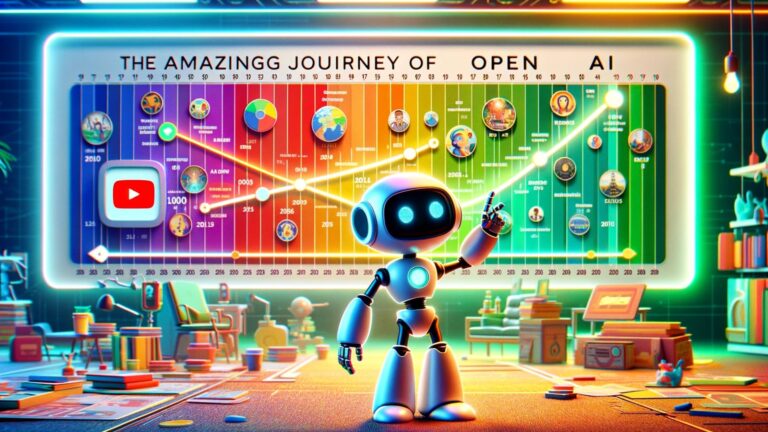
The History of OpenAI: The Evolution of Artificial Intelligence at OpenAI

 Have you ever wondered how artificial intelligence is quietly revolutionizing the world around us? From how we work to how we play, AI is reshaping our reality. 

Introduction

 In the heart of this technological renaissance is OpenAI, a trailblazer in the field of artificial intelligence. Known for its groundbreaking research and innovative AI models, OpenAI stands at the forefront of this AI revolution. 

 Today, we’ll embark on a journey through the fascinating history of OpenAI. We’ll uncover its major milestones, the incredible advancements it has brought to the AI landscape, and how it’s poised to shape our future in ways we can only begin to imagine. 

 In December 2015, a group of high-profile entrepreneurs and researchers came together to form what would soon become a beacon in the AI world – OpenAI. 

The beginning of OpenAI

 This initiative was not just another tech startup. It was a bold response to the rapidly evolving field of artificial intelligence, a field both promising and, to some, daunting. 

 Among the luminaries at the helm were Elon Musk, known for his ventures like SpaceX and Tesla, and Sam Altman, the former president of Y Combinator. Their vision was clear and ambitious. 

 OpenAI’s mission was to ensure that artificial general intelligence (AGI) – highly autonomous systems that outperform humans at most economically valuable work – benefits all of humanity. They envisioned a future where AI could solve complex problems and advance human welfare, without being confined to the interests of a select few. 

$1 Billion in Funding

 The venture began with an impressive $1 billion in pledged funding. This wasn’t just a statement of intent; it was a powerful endorsement from some of the most influential names in technology and business. The initial investors included names like Peter Thiel, co-founder of PayPal, and Reid Hoffman, LinkedIn co-founder, signaling a strong belief in OpenAI’s potential to shape the future of AI. 

 Thus, with a blend of vision, expertise, and significant financial backing, OpenAI embarked on its journey to push the boundaries of artificial intelligence, always with the guiding principle of benefiting humanity as a whole. 

 As OpenAI began its journey, one of its earliest and most intriguing projects was Dactyl. This wasn’t just any robotic hand; it was an embodiment of OpenAI’s ambition to bridge the gap between AI and the physical world. 

Early OpenAI Models

 Dactyl was trained entirely through simulation, using a form of machine learning known as reinforcement learning. This groundbreaking approach allowed Dactyl to learn real-world dexterity at an unprecedented level, adapting to different tasks and environments. 

 This brings us to another pivotal development from OpenAI – the OpenAI Gym. Launched in April 2016, the Gym provided a platform for AI enthusiasts and researchers to develop and compare reinforcement learning algorithms. 

 The Gym offered a diverse range of environments, from classic control tasks to 3D locomotion. It became a cornerstone in AI research, fostering a community where ideas and algorithms could be shared and improved upon. 

Natural Language Processing

 Alongside these developments in robotics and reinforcement learning, OpenAI was also making strides in the field of natural language processing, or NLP. Early projects laid the groundwork for what would later evolve into more sophisticated language models. These initial forays into NLP were crucial in understanding and building the complex algorithms required for advanced language understanding and generation. 

 From the dexterous capabilities of Dactyl to the collaborative and open environment of the Gym, and the foundational work in language processing, OpenAI was rapidly setting the stage for a future where AI could not only mimic human abilities but also enhance and extend them in ways previously unimagined. 

 As OpenAI continued to innovate, it reached a pivotal milestone with the introduction of the Generative Pre-trained Transformer series, better known as GPT. This series marked a significant leap in the field of natural language processing. 

 Starting with GPT-1 and then GPT-2, these models demonstrated remarkable language understanding and generation capabilities. But it was the next iteration that truly captured the world’s attention. 

GPT-3 OpenAI Launch

 GPT-3, launched in June 2020, was a behemoth in the AI world. With 175 billion parameters, it was one of the largest and most powerful language models ever created. GPT-3’s abilities ranged from writing coherent and contextually relevant text to coding, language translation, and much more. Its versatility and scalability made it a game-changer, setting new standards for what AI could achieve in the realm of human-like language processing. 

 With great power comes great responsibility. OpenAI faced significant ethical challenges as the capabilities of their models grew. Issues like potential misuse of the technology, biases in AI, and the impact on job markets were at the forefront of discussions. OpenAI took these concerns seriously, implementing rigorous ethical guidelines and research to ensure responsible usage and deployment of their AI. 

 Collaboration and open-source contributions have been integral to OpenAI’s journey. Significant partnerships, like with Microsoft, have been instrumental in advancing their research and capabilities. OpenAI has also contributed to the broader AI community by open-sourcing parts of their technology, fostering innovation and growth across the industry. 

 Through these breakthroughs and challenges, OpenAI has not only advanced the field of AI but has also set a precedent for the ethical and collaborative development of technology that could redefine our future. 

Impact of OpenAI Technologies

 As we look around, the influence of OpenAI’s technologies in our everyday lives becomes increasingly evident. From the virtual assistants in our smartphones to advanced customer service bots, OpenAI’s innovations are seamlessly integrating into various applications, making our daily tasks more efficient and intuitive. 

 These technologies are not just about convenience; they’re transforming industries, enhancing creative processes, and even aiding in complex problem-solving across various sectors. 

 Looking ahead, the future of OpenAI is as exciting as it is boundless. While specific projects are under wraps, we can speculate that OpenAI will continue to push the boundaries in areas like advanced machine learning, AI ethics, and perhaps even AI in space exploration. The possibilities are limitless. 

 The broader implications of OpenAI’s work extend far beyond technology. They touch the very fabric of our society. We’re looking at a future where AI could revolutionize education, provide innovative solutions in healthcare, and even address critical environmental challenges. OpenAI’s commitment to safe and beneficial AI means these advancements could be guided by a focus on ethical implications and societal well-being. 

 As we stand at the cusp of this AI-driven era, OpenAI’s role in shaping our future becomes more significant than ever. Their work is not just about advancing technology; it’s about envisioning and creating a future where AI and humanity evolve together, in harmony.

OpenAI “Capped-Profit” Model 

In a significant shift in its business strategy, OpenAI transitioned from a non-profit organization to what is known as a ‘capped-profit’ model. This change, announced in 2019, marked a new chapter in OpenAI’s journey. 

 Under this model, OpenAI could attract private investment while ensuring profits were capped, aligning with their ethos of broad distribution of benefits from AI. This approach aimed to balance the need for funding to achieve ambitious AI advancements with their commitment to ethical and widespread AI deployment. 

Partnerships

 Key partnerships have been instrumental in OpenAI’s growth. A notable example is their collaboration with Microsoft. In 2019, Microsoft invested $1 billion in OpenAI, and the partnership has since focused on developing advanced AI technologies on Microsoft’s Azure cloud platform. This collaboration signifies a blend of OpenAI’s cutting-edge AI research with Microsoft’s robust cloud infrastructure. 

Financials

 OpenAI’s innovative approach and promising projects have attracted significant funding. Recent funding rounds have not only provided the financial backing necessary for their ambitious projects but have also placed OpenAI’s valuation at impressive figures, reflecting the high expectations and confidence in their work. 

 With its unique business model, strategic partnerships, and solid financial backing, OpenAI is well-positioned to continue its pursuit of advancing AI technology in a way that is both groundbreaking and aligned with its core mission of ensuring AI benefits all of humanity. 

 As we’ve seen, OpenAI’s journey from its inception in 2015 to becoming a leader in AI innovation is a story of ambition, breakthroughs, and a steadfast commitment to beneficial AI. From the pioneering Dactyl project to the revolutionary GPT series, and their shift to a capped-profit model, OpenAI has continually pushed the boundaries of what’s possible in AI. 

Future of OpenAI and Artificial Intelligence

 OpenAI’s work is more than just technological advancement; it’s about shaping a future where AI enhances and enriches human capabilities, addresses societal challenges, and is developed responsibly and ethically. 

Conclusion

 As we look towards a future intertwined with AI, the role of organizations like OpenAI becomes increasingly vital. What do you think the future holds for AI? How do you see OpenAI’s role in it? Share your thoughts in the comments below. And if you’re intrigued by the ever-evolving world of technology, don’t forget to subscribe to Digital Chew for more insightful content.