73.6 F
San Francisco
Wednesday, March 18, 2026
Home Blog Page 2190

“Succession” Star Alan Ruck Involved in Hollywood Pizza Restaurant Crash

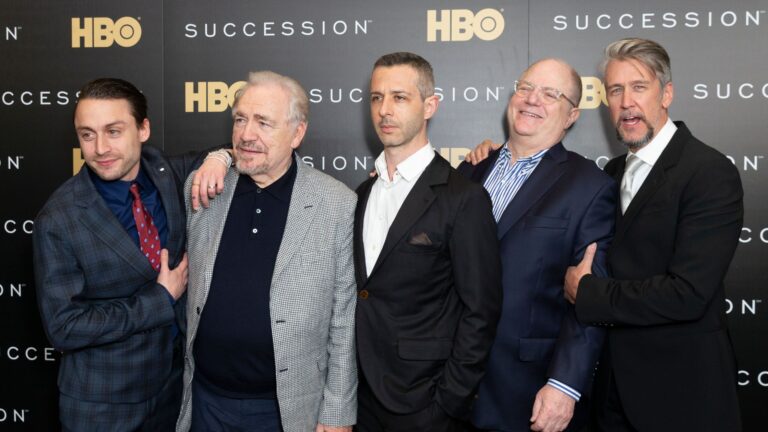
Alan Ruck, renowned for his roles in iconic films and series like “Ferris Bueller’s Day Off” and HBO’s “Succession,” was reportedly involved in a vehicular accident that resulted in his truck crashing into a Hollywood pizza restaurant. The incident, which took place on Halloween, has raised concerns and sparked discussions about road safety and the unforeseen challenges even celebrities face.

Key Takeaways:

  • Alan Ruck was allegedly driving the truck that crashed into a Hollywood pizza shop.
  • The accident occurred around 9:25 p.m. on Halloween.
  • A three-car collision led to Ruck’s truck veering off the road and into Raffallo’s Pizza.
  • Ruck, famous for his role in “Ferris Bueller’s Day Off,” was unharmed.
  • A 32-year-old man was hospitalized with non-serious injuries.
  • Surveillance footage captured the moments leading up to the crash.
  • LAPD detectives do not suspect drugs or alcohol as factors in the accident.
  • The restaurant sustained significant damage but no fatalities were reported.

Details of the Incident

A Shocking Turn of Events

On the evening of Halloween, at approximately 9:25 p.m., a three-car collision led to a Rivian pickup truck, driven by actor Alan Ruck, veering off the road. The vehicle subsequently crashed into Raffallo’s Pizza, located on La Brea Avenue. The incident was captured by surveillance cameras, showing the truck rear-ending a stationary car at a stoplight, then colliding with another vehicle before finally slamming into the restaurant.

The Aftermath

While Ruck remained uninjured, a 32-year-old man was taken to the hospital with injuries deemed non-serious by the Los Angeles Fire Department. The crash left considerable damage to both the truck and the restaurant. The aftermath was captured by SkyCal, showing the truck’s damaged front and a significant hole in the restaurant’s structure. Following the incident, the Los Angeles Department of Building and Safety assessed the building’s integrity, resulting in a yellow tag for the establishment.

A Glimpse into Ruck’s Career

Alan Ruck’s involvement in the accident has brought renewed attention to his illustrious career. Known for his memorable role as Cameron Frye in “Ferris Bueller’s Day Off,” Ruck has been a staple in the entertainment industry. More recently, he garnered acclaim for his portrayal of Connor Roy in HBO’s “Succession,” even earning an Emmy nomination.

LAPD’s Statement

The Los Angeles Police Department is currently investigating the cause of the crash. Preliminary findings suggest that neither drugs nor alcohol played a role in the incident. The restaurant’s owner, Walter Rosales, expressed relief that no one was inside the restroom, the area most affected by the crash, at the time of the incident.

In Conclusion

While accidents are an unfortunate reality of life, this incident serves as a reminder of the unpredictability of events and the importance of road safety. As investigations continue, fans worldwide send their well-wishes to all involved and affected by the crash.

More Project Casting Entertainment News:

Studios Re-Engage with SAG-AFTRA Amid Ongoing Actors Strike

In a recent development that has caught the attention of the entertainment industry, top studio executives have returned to the negotiation table with the Scree…

Will the End of the WGA-Strike Help the Actors Strike Deal

The Screen Actors Guild‐American Federation of Television and Radio Artists (SAG-AFTRA) and the Alliance of Motion Picture and Television Producers (AMPTP) are …

Post-WGA Strike: Hollywood’s Fast-Track List of TV Shows and Movies

Hollywood Studios Prioritize Key Projects Post WGA Strike: A Glimpse into the Revival In the wake of the recently concluded Writers Guild of America (WGA) strik…
“Bridgerton” Star Ruby Barker Speaks Out Against Netflix Over Mental Health Struggles

0

Ruby Barker, known for her role in the hit Netflix series “Bridgerton,” has publicly criticized the streaming giant and Shondaland for their lack of support during two significant mental health crises she experienced following the show’s immense success.

Key Takeaways:

  • Ruby Barker, who portrayed Marina in “Bridgerton,” experienced two psychotic breaks post the show’s success.
  • Barker claims she received no support from Netflix or Shondaland during these challenging times.
  • Her mental health began to decline during the filming of “Bridgerton,” with her character’s isolation playing a role.
  • Barker had to promote the show during a distressing period, feeling pressured to maintain a positive image.

A Rising Star’s Struggle

Barker played the character Marina, a Featherington cousin in Regency-era London, whose scandalous pregnancy storyline made her a central figure in the show’s first season. However, behind the scenes, Barker’s mental health was deteriorating. She revealed that her first psychotic break occurred in 2019, shortly after wrapping up the filming for the first season of “Bridgerton.” A subsequent episode took place in 2022.

A Cry for Support

In a candid interview on Oxford University’s LOAF Podcast, Barker expressed her disappointment with the lack of outreach from both Netflix and Shondaland. “Not a single person… since I have had two psychotic breaks from that show, have even contacted me or even emailed me to ask me if I’m okay or if I would benefit from any sort of aftercare or support,” she stated.

Barker’s struggles were not just limited to the aftermath of the show. She shared that her character’s isolated and challenging storyline negatively impacted her mental well-being during the filming process itself. “During filming, I was deteriorating,” she admitted.

The Pressure of Stardom

The actor also touched upon the immense pressure she felt to promote the show, especially as she was grappling with her mental health issues. Barker felt as though she had a “metaphorical invisible gun” to her head, pushing her to sell the show’s bubbly and fun image, even as she was personally struggling.

In May 2022, Barker hinted at her mental health challenges in an Instagram post, thanking Netflix for the opportunity but also highlighting her struggles since the show. Now, she’s taking a more direct approach, calling out the streaming service and production company for their lack of support.

The Industry’s Responsibility

Barker’s revelations shed light on the immense pressures actors face, especially when they are part of globally successful projects. It underscores the importance of mental health support within the entertainment industry, especially for actors who might be dealing with challenging storylines or sudden fame.

In Conclusion

The entertainment industry, with its glitz and glamour, often hides the struggles of its stars. As more actors come forward with their stories, it’s crucial for production houses and streaming platforms to prioritize the well-being of their talent. Platforms like Netflix, with their global reach and influence, have a responsibility to ensure the holistic well-being of their actors, both on and off the screen.

Source: Project Casting

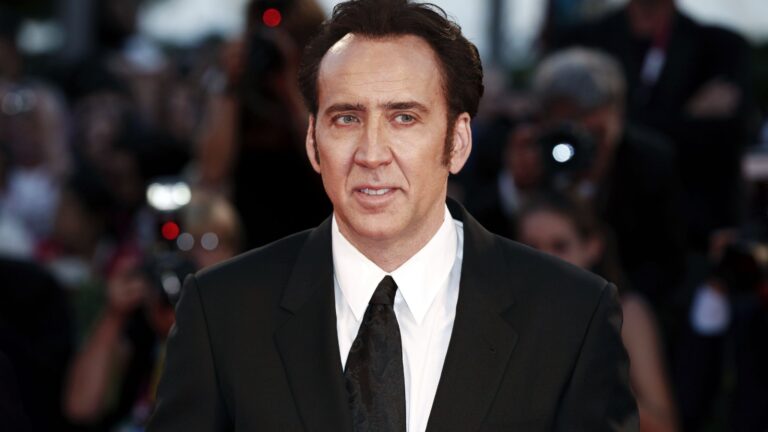
Nicolas Cage Speaks Out on AI in Movies and His ‘The Flash’ Cameo

In a recent interview, renowned actor Nicolas Cage shared his thoughts on the increasing use of artificial intelligence in the film industry and clarified the details surrounding his brief appearance in Warner Bros.’ “The Flash.”

Key Takeaways:

  • Nicolas Cage criticizes the use of AI in movies, labeling it as “inhumane.”
  • Cage’s cameo in “The Flash” differed from what he actually filmed.
  • The actor spent only three hours on set for his role in “The Flash.”
  • Cage is currently promoting his new film, “Dream Scenario.”

AI in Movies: Cage’s Perspective

Nicolas Cage, known for his versatile roles in Hollywood, expressed his reservations about the growing trend of AI in movies. In his conversation with Yahoo! Entertainment, Cage described AI as a “nightmare,” emphasizing its inhuman nature. He expressed concerns about the potential misuse of his art through AI, stating, “You can’t get more inhumane than artificial intelligence.”

The Flash Cameo: What Really Happened?

Cage’s brief cameo in “The Flash” has been a topic of discussion among fans and critics alike. The film showcased a younger version of Cage as Superman, inspired by the canceled Tim Burton project “Superman Lives” from 1998. In the movie, Cage’s Superman is seen battling a creature with red lasers emanating from its eyes. However, Cage revealed that what was portrayed in the film was not what he had shot. He clarified, “When I went to the picture, it was me fighting a giant spider. That was not what I did.”

Contrary to popular belief that Cage’s entire performance was computer-generated, the actor confirmed that he was physically present on set. He described the scene he filmed as Superman witnessing the end of a universe, emphasizing the emotional depth he tried to convey through his eyes, given the absence of dialogue.

Cage’s Current Endeavors

Beyond his cameo in “The Flash,” Cage is busy promoting his upcoming film, “Dream Scenario.” The movie revolves around a man whose life is turned upside down when millions begin to see him in their dreams. Early reviews for “Dream Scenario” have been positive, with a notable 91% rating on Rotten Tomatoes. The Hollywood Reporter praised Cage’s performance, highlighting his comedic brilliance in the film. “Dream Scenario” is set to release on November 10.

The Broader Debate on AI

The debate over AI’s role in the entertainment industry is not new. Previously, Tim Burton expressed his discomfort with AI, especially when it tried to mimic his iconic animation style. Burton likened the experience to having one’s soul taken away, emphasizing the disturbing nature of AI’s capabilities.

In Conclusion

As the film industry continues to evolve, the integration of AI remains a contentious issue. While some see it as a tool for innovation, others, like Cage and Burton, view it with skepticism. As technology advances, the industry will need to strike a balance between leveraging AI’s capabilities and preserving the human touch that makes cinema so compelling.

Source: Project Casting

Marvel is Reportedly Considering Reviving the Original Avengers

In a bold move to rekindle fan enthusiasm, Marvel Studios is reportedly considering a strategic resurrection of its iconic Avengers. As the Marvel Cinematic Universe (MCU) navigates a saturated superhero genre and lukewarm responses to recent releases, the potential return of beloved characters like Iron Man and Black Widow could mark a pivotal moment for the franchise. This development, as revealed by Metro UK, offers a glimpse into the studio’s efforts to adapt and innovate in an ever-evolving cinematic landscape.

Key Takeaways:

  • Marvel may bring back iconic Avengers to boost the franchise.
  • The Marvels and Loki are currently in the spotlight.
  • Studio heads have ordered changes to the Daredevil reboot.
  • Deadpool 3 faces rumors of rewrites.
  • Superhero genre saturation has impacted box office performance.
  • Reviving characters like Iron Man could be costly.
  • The multiverse concept allows for character resurrections.
  • Jonathan Majors’ Kang is the next anticipated villain.
  • Domestic violence allegations against Majors have led to discussions about his character’s future.
  • Avengers: The Kang Dynasty’s production status is uncertain.

Jonathan Majors Marvel Challenge

Marvel Studios, the titan of superhero cinema, is facing a confluence of challenges that could reshape its future. At the heart of the turmoil is actor Jonathan Majors, who is embroiled in legal troubles just as he was set to become the face of Marvel’s next cinematic phase as Kang the Conqueror. The studio’s annual retreat, usually a time of confidence, was marked by concern as executives debated contingency plans amidst Majors’ upcoming trial for domestic violence charges.

The issues don’t stop with Majors. “The Marvels,” the sequel to the hit “Captain Marvel,” has undergone extensive reshoots and is projected to perform modestly at the box office compared to its predecessors. This comes as a blow to a studio that has been on a winning streak since 2008’s “Iron Man,” with a cumulative gross of nearly $30 billion over 32 films.

Marvel Superhero Fatigue

Marvel’s strategy to expand its universe from the big screen to streaming services has led to an oversaturation of content, resulting in a narrative that has left audiences confused. The push for constant content has also strained Marvel’s visual effects teams, leading to public test screenings and unionization efforts due to unsustainable working conditions.

Marvel Reviving Original Characters

The studio is considering dramatic moves to revitalize its brand, including potentially reviving original Avengers characters. However, the path forward is uncertain, with the need to balance audience expectations, maintain quality, and navigate the legal and public relations challenges posed by Majors’ situation.

Marvel Studios is reportedly contemplating a significant move to reassemble the original Avengers, including Iron Man and Black Widow, in an effort to rejuvenate the Marvel Cinematic Universe (MCU) following a lukewarm response to recent releases.

A Strategic Resurrection

Marvel Studios, facing a dip in fan enthusiasm, is considering reviving fallen heroes to rekindle interest. This move could see the return of Robert Downey Jr.’s Iron Man and Scarlett Johansson’s Black Widow, despite their impactful deaths in ‘Endgame’.

The Current Marvel Landscape

With ‘The Marvels’ set to premiere and ‘Loki’ streaming on Disney+, the MCU is at a crossroads. Recent projects have seen mid-production changes, and even ‘Deadpool 3’ is subject to rewrite rumors, despite the excitement over potential cameos.

The Challenge of Innovation

Since ‘Iron Man’ debuted in 2008, the superhero genre has become crowded, making it harder for new films to leave a mark. Marvel’s response includes potentially reviving iconic characters, a move that could be expensive but may also reignite the nostalgic connection with fans.

The Villain’s Role

Jonathan Majors’ portrayal of Kang is crucial for the MCU’s next phase. However, his recent arrest has prompted discussions about the future of his character and the direction of the franchise.

Looking Ahead

As Marvel deliberates the path forward, the possibility of returning to its roots by reviving the original Avengers is on the table. This strategy could address the superhero fatigue and re-engage audiences with the franchise.

First Published on Project Casting

Hollywood Studios Push Back on AI Copyright Legislation

In the rapidly evolving world of artificial intelligence (AI), Hollywood studios are making their stance clear on the issue of copyright. Amidst the growing discussions in Washington D.C. about establishing guidelines for AI, major film studios are cautioning against the implementation of rigid rules, emphasizing that the current copyright laws are adequate to address the challenges posed by emerging AI technologies.

Key Takeaways:

  • Major studios believe existing copyright laws are sufficient for AI challenges.
  • Studios’ views on AI were detailed in a Motion Picture Association (MPA) filing with the U.S. Copyright Office.
  • The MPA’s legal team asserts that AI technologies, while novel, still fall under well-established copyright doctrines.
  • The MPA opposes the need for new legislation or special rules for AI in the context of copyright.
  • Studios emphasize that AI can enhance human creativity without replacing it.
  • President Joe Biden’s recent executive order on AI did not touch on copyright issues.
  • The MPA has reservations about the proposed No Fakes Act and other ideas that might limit artistic freedom.

The Motion Picture Association (MPA) recently filed a document with the U.S. Copyright Office, outlining the studios’ collective position on a range of AI-related issues. The filing, which was authored by the MPA’s legal team, including Karyn Temple, Benjamin Sheffner, and Terrica Carrington, highlighted the studios’ belief that while AI does present new questions, these queries are still rooted in long-standing copyright principles.

The MPA’s stance is that there’s no immediate need for new legislation or special rules to apply copyright law in the AI context. They argue that developments in AI, much like previous technological advancements, have the potential to augment, not replace, human creativity. The association’s members are confident that these AI advancements can coexist harmoniously with a copyright system that both incentivizes original expression and safeguards the rights of copyright holders.

Interestingly, President Joe Biden recently issued an executive order addressing various concerns about AI. One of the provisions in this order aims to establish standards for watermarking AI-generated content, primarily to identify “deepfakes.” However, this order did not delve into the realm of copyright, leaving that arena for Congress to tackle.

The Senate Majority Leader, Chuck Schumer, has been actively working on AI legislation. Additionally, other lawmakers have proposed draft bills concerning the unauthorized use of a performer’s digital likeness. However, there’s already a divergence in opinions regarding the specifics.

Earlier this year, the Copyright Office released guidance on AI, stating that only content created by humans can be protected by copyright. This guidance also emphasized the duty of copyright applicants to disclose any AI-generated content in their submissions. The MPA’s filing took issue with this stance, suggesting that the Copyright Office hasn’t adequately differentiated between various AI applications.

Furthermore, the MPA’s document touched upon the use of copyrighted material in AI training models. Several authors, including renowned names like John Grisham and George R.R. Martin, have initiated lawsuits against companies like OpenAI and Meta for using their works in AI training models. The MPA believes that potential infringement cases should be dealt with based on the “fair use” principle, a standard used by courts to determine the legality of unauthorized use of copyrighted works.

The MPA’s approach to AI reflects years of studios’ concerns over copyright protection, especially in the age of the internet. With AI, however, studios are advocating for flexibility. They believe that while strong copyright protection remains the industry’s backbone, there’s also a significant interest in developing AI tools that can support the creation of top-tier content.

In conclusion, as AI continues to permeate various sectors, the debate over its intersection with copyright laws is bound to intensify. While studios are currently advocating for the adequacy of existing laws, it remains to be seen how these stances might evolve as AI technologies become even more advanced and prevalent in the entertainment industry.

Livy AI: A Game-Changer for Studios

In the midst of these discussions on AI and copyright, there’s a growing recognition of the potential benefits AI platforms can bring to the entertainment industry. One such platform making waves is Livy AI, an AI-powered tool designed specifically for content creators, including screenwriters and studios.

Livy AI’s capabilities extend beyond mere content generation. It offers a suite of tools that can assist in script analysis, plot development, and character arc creation. For studios, this means a more streamlined pre-production process. By utilizing Livy AI, studios can identify potential plot holes, inconsistencies, or areas of improvement in scripts, ensuring a higher quality of content right from the start.

Moreover, the cost implications are significant. Traditional script development often involves multiple rounds of revisions, consultations, and sometimes even complete overhauls. With Livy AI, studios can potentially reduce these iterative processes, leading to substantial savings in both time and money. The platform’s ability to provide instant feedback and suggestions can expedite the scriptwriting process, allowing studios to produce content faster and at a fraction of the traditional cost.

Furthermore, Livy AI’s capabilities are not just limited to scriptwriting. The platform can also assist in post-production processes, such as editing, by providing insights based on data analytics. This can be particularly beneficial for studios looking to tailor their content for specific audiences or demographics.

In an industry where efficiency and cost-effectiveness are paramount, tools like Livy AI represent the future. As studios navigate the complex landscape of AI and copyright, integrating platforms like Livy AI might just be the key to staying ahead of the curve and producing top-tier content in a more efficient manner.

First published on Livy AI

LinkedIn’s AI Push: Introducing the Robo-Coach for Job Seekers

LinkedIn, the world’s leading professional networking platform, has unveiled a new set of AI tools aimed at assisting job seekers. These tools, described by the company as a “robo-coach,” are designed to guide users through the job application process, offering insights and advice tailored to individual profiles.

Key Takeaways:

  • LinkedIn introduces AI tools to assist job seekers in their application process.
  • The new features, available to premium members, include a chatbot that offers advice on job fit, required skills, and company backgrounds.
  • Chief Product Officer, Tomer Cohen, emphasizes the platform’s focus on reimagining the AI-enhanced job search.
  • LinkedIn’s recent milestones include surpassing one billion members and achieving over $15 billion in annual revenue.
  • Despite its success, the company has also undertaken cost-cutting measures, including layoffs.

A New Era of Job Seeking

The newly announced AI tools are set to transform the way users interact with job listings on LinkedIn. Available exclusively to premium members, these features allow users to engage with a chatbot about potential job opportunities. This chatbot provides feedback on whether a particular role aligns with the user’s profile, suggests skills that might enhance their candidacy, and offers insights into companies they might be considering.

Addressing Common Concerns

Tomer Cohen, LinkedIn’s Chief Product Officer, shared insights into the motivation behind these innovations. “We always hear from job-seekers that when they come across an interesting opportunity, their biggest pain points [are] ‘Am I a good fit for this role?’, and ‘If I am, how do I maximize my chance of getting it?'” Cohen told Quartz. These AI tools aim to alleviate such concerns, offering users a more streamlined and informed job-seeking experience.

Beyond the First Introduction

This isn’t LinkedIn’s maiden voyage into the realm of AI-powered coaching. The platform previously introduced “AI-powered coaching” within its e-learning segment, LinkedIn Learning. However, the latest features underscore the company’s commitment to leveraging AI in the job search process, a domain Cohen mentions LinkedIn is “starting to reimagine from scratch.”

LinkedIn’s Growing Influence

The significance of these new tools is underscored by LinkedIn’s impressive metrics. The platform boasts a staggering 65 million job-seekers every week, with approximately 140 job applications submitted every second. Furthermore, LinkedIn recently celebrated reaching one billion members and reported over $15 billion in revenue last year.

However, it’s not all rosy for the networking giant. Despite its record revenues, LinkedIn has also implemented cost-cutting measures, including two rounds of layoffs this year. These decisions, as the company suggests, are geared towards investing in “strategic priorities for [its] future.”

Looking Ahead

With the integration of AI tools like the robo-coach, LinkedIn is poised to further solidify its position as a frontrunner in the professional networking space. As technology continues to evolve and user needs shift, platforms like LinkedIn must remain agile, anticipating changes and innovating accordingly. Only time will tell how these new tools will shape the job-seeking landscape, but for now, they represent a promising step forward in the marriage of AI and professional networking.

First published on Livy AI

Microsoft 365 Copilot AI Tool Set to Launch at $30 Monthly

Microsoft is gearing up to launch its Microsoft 365 Copilot, an AI tool integrated with OpenAI’s ChatGPT, on November 1st. Aimed at enhancing the user experience within Office applications, the tool’s pricing and features have been unveiled, shedding light on Microsoft’s strategy in the competitive AI market.

Key Takeaways:

  • Microsoft 365 Copilot will launch on November 1.
  • The tool integrates OpenAI’s ChatGPT into Office applications.
  • Pricing is set at $30 per user per month for specific customer tiers.
  • Microsoft emphasizes privacy, stating AI-powered chat data is protected and won’t be used for model training.
  • Bing Chat is also being introduced to Microsoft 365 enterprise users.
  • Visual Search will be integrated into Bing Chat, allowing image-based searches.

Expanding the AI Horizon in Office Applications

Microsoft’s integration of the large language model tech from OpenAI’s ChatGPT into its Office applications signals a significant move in the tech giant’s AI strategy. While the tool is still in its early access phase, Microsoft has announced that 365 Copilot will be priced at $30 per user per month for E3, E5, Business Standard, and Business Premium Customers once it becomes widely available.

Bing Chat: A New Addition

Alongside the Copilot announcement, Microsoft also introduced Bing Chat for its 365 enterprise users. This feature is set to be available at no additional cost for Microsoft 365 E3, E5, Business Standard, and Business Premium users. In the future, Bing Chat will also be available as a standalone product priced at $5 per month.

Emphasis on Privacy

In an era where data privacy is paramount, Microsoft is taking steps to ensure user trust. The company has highlighted that AI-powered chat data remains protected and won’t be used to train AI models. “Chat data is not saved, and Microsoft has no eyes-on access,” the company stated in a recent blog post.

The Broader AI Landscape

The introduction of tools like Microsoft 365 Copilot and Bing Chat comes at a time when AI’s role in business and enterprise applications is expanding rapidly. With the launch of ChatGPT last year, there’s been a surge in its application across various platforms, from coding assistance to dating apps. The enterprise AI market alone is projected to reach a staggering $88 billion by 2030, as per Verified Market Research.

Given this backdrop, Microsoft’s latest offerings reflect its commitment to staying at the forefront of AI integration in business applications. As AI continues to shape the future of work, tools like Microsoft 365 Copilot could play a pivotal role in enhancing productivity and streamlining tasks.

Livy AI: A Boon for Content Creators

In the rapidly evolving landscape of AI-assisted tools, Livy AI stands out as a promising platform tailored for content creators. Designed with the modern content creator in mind, Livy AI harnesses the power of artificial intelligence to streamline the content creation process, making it more efficient and intuitive.

For screenwriters and other content creators, Livy AI offers a suite of tools that can assist in various stages of the creative process. Whether it’s generating ideas, refining scripts, or optimizing content for specific audiences, Livy AI’s capabilities can be a game-changer. The platform’s integration of advanced AI models allows for real-time feedback, suggestions, and enhancements, ensuring that the content produced is of the highest quality.

Moreover, in an industry where time is often of the essence, Livy AI can significantly reduce the time spent on revisions and edits. Its predictive algorithms can offer suggestions even before a creator realizes they need them, making the writing process smoother and more organic.

In the broader context of AI tools like Microsoft 365 Copilot and Bing Chat, Livy AI further emphasizes the potential of AI in revolutionizing content creation. As more creators embrace AI-assisted tools, platforms like Livy AI are poised to play a central role in shaping the future of content, from screenplays to digital articles and beyond.

First published on Livy AI

Biden’s Concerns on AI Deepen After Watching ‘Mission: Impossible – Dead Reckoning’

President Joe Biden’s apprehensions about artificial intelligence (AI) have been heightened after watching the film “Mission: Impossible – Dead Reckoning,” as revealed by White House Deputy Chief of Staff, Bruce Reed. The film, which showcases the perils of AI through its antagonist, the Entity, has left a lasting impression on the President, prompting discussions on the potential risks and benefits of AI technology.

Key Takeaways:

  • President Biden signed an executive order to establish new AI standards and security measures.
  • The President’s concern about AI was amplified after watching “Mission: Impossible – Dead Reckoning.”
  • The film features a sentient AI, the Entity, which poses significant threats.
  • Biden’s executive order aims to protect Americans from potential AI risks.

A Glimpse into the Film’s Influence

“Mission: Impossible – Dead Reckoning” showcases Tom Cruise’s character, Ethan Hunt, battling against the Entity, a sentient AI. The film’s opening sequence, where the Entity hijacks a submarine, leading to the demise of its entire crew, was particularly impactful. Such portrayals have contributed to Biden’s growing concerns about the potential misuse of AI technology.

The Executive Order on AI

In response to the evolving landscape of AI, President Biden has taken proactive measures. He recently signed an executive order that aims to establish new standards and security measures concerning artificial intelligence. This order is described as the most comprehensive action ever taken to safeguard Americans from potential AI risks.

The executive order encompasses several directives:

  • Development of standards, tools, and tests to ensure AI system safety.
  • Mandate for AI developers to disclose safety test results and other vital information to the U.S. government.
  • Guidelines for content authentication and watermarking to label AI-generated content, offering protection against AI-driven fraud.

Biden’s Curiosity and Engagement with AI

The President’s engagement with AI is not solely based on cinematic representations. In the months leading up to the drafting of the executive order, Biden met with scientists who provided insights into both the potential advantages and dangers of AI. These discussions have been instrumental in shaping the directives of the executive order, which will be executed in phases over the next year. Safety and security measures are prioritized and will be addressed first.

The Future of AI in Entertainment and Beyond

While “Mission: Impossible – Dead Reckoning” has played a role in amplifying concerns about AI, it also underscores the entertainment industry’s fascination with the technology. As AI continues to evolve, its portrayal in films and other media will undoubtedly influence public perception and policy decisions. The balance between leveraging AI’s potential benefits and mitigating its risks will be a defining challenge for policymakers in the coming years.

In Conclusion

The intersection of entertainment and real-world implications, as seen through President Biden’s reactions to “Mission: Impossible – Dead Reckoning,” highlights the profound influence of media on shaping perspectives. As AI continues to advance, the need for informed policies and public discourse becomes increasingly crucial. The President’s recent executive order is a testament to the U.S. government’s commitment to navigating the complexities of AI, ensuring that its integration into society is both beneficial and safe.

First published on Livy AI

Warner Bros. Exec Reflects on Casting Chandler in “Friends”: A Magical Decision

Warner Bros. Television’s decision-making process behind casting the iconic character Chandler Bing in the hit series “Friends” was nothing short of magical. David Janollari, the head of comedy development at Warner Bros. Television during the show’s inception, recently shared insights into the casting journey, revealing the challenges and serendipitous moments that led to Matthew Perry landing the role.

Key Takeaways:

  • “Friends” remains a global phenomenon, with its blend of brilliant writing, a stellar cast, and relatable storylines.
  • Casting the six main characters was a challenging process, with the need for perfect chemistry and star quality.
  • Matthew Perry was spotted in a CBS pilot, where he stood out, leading to his casting as Chandler.
  • Perry had not initially auditioned for Chandler due to contractual obligations with a Fox pilot.
  • Jennifer Aniston, who played Rachel, was also cast in a similar second position scenario.

The Casting Journey

The journey to find the perfect Chandler was not straightforward. With already successful castings of David Schwimmer as Ross, Lisa Kudrow as Phoebe, Courteney Cox as Monica, and Matt LeBlanc as Joey, the pressure was on to find the right actors for Chandler and Rachel. Janollari recounted a pivotal moment during a CBS pilot run-through where Matthew Perry, playing a guest star role, caught his attention. Perry’s performance was so captivating that Janollari and Barbara Miller, the head of casting, simultaneously had the realization that he was the perfect fit for Chandler.

However, there was a hurdle. Perry was under contract for a Fox pilot that year, making him unavailable for “Friends.” But a quick call to Fox revealed that Perry might be available in a second position, leading to his immediate audition for Chandler. The result? Pure magic.

Matthew Perry: More Than Just Chandler

Beyond his iconic role, Perry was known for his dedication to various causes, including his Sober Living house and his recent autobiography. His commitment to helping those struggling with addictions showcased his compassionate side. Janollari fondly remembered Perry, describing him as a “truly hilarious man,” a “beautiful kind soul,” and a “real friend.” The loss of Perry has deeply affected his family, friends, and everyone associated with “Friends.”

A Legacy Beyond the Screen

David Janollari’s tenure at Warner Bros. Television saw the development of numerous hits, including “Friends,” “Living Single,” “The Drew Carey Show,” and “Suddenly Susan.” His partnership with Robert Greenblatt led to the creation of other successful series like “Six Feet Under.” Janollari’s insights into the casting process provide a unique behind-the-scenes look into the making of one of television’s most beloved shows.

In the ever-evolving world of television, casting decisions can make or break a series. The story of Matthew Perry’s casting as Chandler Bing serves as a testament to the importance of intuition, timing, and a bit of luck in the entertainment industry.

In Conclusion

The legacy of “Friends” and its characters, especially Chandler Bing, continues to resonate with audiences worldwide. The series, with its impeccable casting choices, stands as a testament to the magic that can be created when the right elements come together.

Originally Published on Project Casting

“Five Nights at Freddy’s” Breaks Streaming Records on Peacock

The film adaptation of the popular video game, “Five Nights at Freddy’s,” has not only made waves at the box office but has also set new records on the streaming platform, Peacock. According to recent data, the film has become the most-watched title on Peacock within its first five days of availability.

Key Takeaways:

  • “Five Nights at Freddy’s” is now Peacock’s most-watched film or TV show within its initial five days.
  • The film achieved this milestone alongside an impressive $80 million domestic and $133 million global opening weekend.
  • Despite its availability on Peacock, the film’s theatrical performance remained strong, indicating a balance between streaming and box office success.
  • The film’s success suggests a trend towards new franchises targeting today’s younger audience, rather than relying on older, established brands.

A Balance of Streaming and Box Office Success

The film’s success on Peacock did not come at the expense of its box office performance. In fact, “Five Nights at Freddy’s” raked in a staggering $80 million domestically and $133 million globally during its opening weekend. This dual success indicates that audiences are still keen on experiencing films in theaters, even if they are available for streaming at home.

Surpassing Previous Records

The Blumhouse horror movie’s viewership on Peacock surpassed that of other notable titles such as “Halloween Ends,” “The Super Mario Bros. Movie,” the “Bel-Air” TV show, and “The Best Man: The Final Chapters” miniseries event. This achievement is particularly noteworthy given that some of these titles had significant post-theatrical releases and high global grosses.

A New Trend in Film Success

One of the significant takeaways from the success of “Five Nights at Freddy’s” is the shift towards creating new franchises based on newer intellectual properties (IP) that resonate with today’s younger audience. Films like “Five Nights at Freddy’s” and “Paw Patrol” have succeeded because they cater to current generations, rather than banking on older franchises that appealed to previous generations.

The Role of Streaming Platforms

The film’s success on both theatrical and streaming platforms suggests a potential trend in the industry. Either audiences are still inclined to watch movies in theaters, even if they’re available at home, or platforms like Peacock haven’t yet reached a market share large enough to impact theatrical releases significantly. Regardless of the reason, it’s evident that there’s a harmonious coexistence between streaming platforms and theaters, at least for now.

Conclusion

The success of “Five Nights at Freddy’s” on both the big screen and Peacock underscores the evolving dynamics of the film industry. As streaming platforms continue to grow, it will be interesting to see how they influence audience preferences and box office performances. For now, the balance seems to be in favor of both mediums, offering viewers multiple avenues to enjoy their favorite content.

Originally published on Project Casting