63.8 F
San Francisco
Wednesday, March 18, 2026
Home Blog Page 2194

House Republicans Nominate Mike Johnson as New Speaker Candidate

0

In a surprising turn of events, House Republicans have nominated Rep. Mike Johnson of Louisiana as their choice for House speaker. This decision comes shortly after the previous nominee, Tom Emmer of Minnesota, withdrew his candidacy.

Key Takeaways:

  • Rep. Mike Johnson of Louisiana is the new nominee for House speaker by the Republicans.
  • Tom Emmer, the prior nominee, dropped out after realizing he couldn’t secure the necessary 217 votes.
  • The House is set to reconvene at noon tomorrow, where Johnson plans to seek a floor vote.
  • Johnson claims no one voted against him during a roll call meant to gauge floor support.
  • The final vote tally showed 128 votes for Johnson, 29 for Rep. Byron Donalds, and 44 for “other.”
  • GOP conference chair Elise Stefanik confirmed Johnson’s nomination.
  • The White House commented on the GOP’s challenges in electing a new speaker, urging them to “get their act together.”
  • McCarthy proposed a partnership with Jim Jordan as assistant speaker.
  • The House adjourned without a vote on the new speaker, with the earliest possible vote scheduled for the next afternoon.
  • Former President Donald Trump commented on Emmer’s withdrawal, hinting at his influence on the decision.

Detailed Insights:

Johnson’s Nomination: The nomination of Johnson was unexpected, especially given that Emmer had defeated him and several other candidates earlier in the day. The challenge lies in securing 217 votes on the House floor for election, a feat that has proven difficult given the current division between conservative and moderate Republican factions.

Vote Tally and Support: The final round of voting showed significant support for Johnson, with 128 votes in his favor. Rep. Byron Donalds secured 29 votes, while 44 votes went to “other” candidates. Interestingly, 43 of these “other” votes were for former Speaker Kevin McCarthy.

White House Weighs In: The White House didn’t hold back in commenting on the GOP’s internal struggles. White House spokesperson Andrew Bates highlighted the GOP’s extreme positions on various issues and emphasized the importance of unity, especially with the looming deadline for Congress to pass funding legislation.

McCarthy’s Proposal: In a bid to resolve the impasse, Kevin McCarthy floated a plan to reinstate himself as speaker and appoint Jim Jordan, a staunch Trump ally, as the assistant speaker. This proposal, however, has not been widely discussed within the GOP Conference.

Emmer’s Withdrawal: Tom Emmer’s decision to drop out of the race was influenced by several factors, including a post from Trump’s Truth Social platform that criticized him. Emmer believed that this post would further diminish his chances of securing votes.

Looking Forward: With the House adjourning without a vote on the new speaker, all eyes are on the upcoming session. Johnson is expected to seek a floor vote, and the GOP will need to rally behind their chosen candidate to ensure a smooth transition.

The ongoing developments in the House speaker’s race highlight the internal challenges faced by the GOP. As they work towards a unified front, the nation watches with bated breath, awaiting the outcome of this political saga.


Michelin Guide 2023: Atlanta’s Star-Studded Culinary Scene Shines Bright

0

Atlanta’s culinary scene has reached new heights with the release of the first-ever Michelin Guide for the city. The prestigious guide, renowned worldwide for its restaurant ratings, has recognized several of Atlanta’s finest dining establishments, showcasing the city’s diverse and vibrant gastronomic landscape.


Key Takeaways:

  • The inaugural Atlanta Michelin Guide was unveiled on October 24, 2023.
  • Atlas and Mujo are among the restaurants that have been awarded Michelin stars.
  • Heirloom Market BBQ and Little Bear have been recognized as bib gourmands.
  • A total of 45 restaurants received stars, bib status, or other distinctions.
  • The Michelin Guide focused on restaurants within the perimeter (ITP) for its first Atlanta edition.

A Night to Remember

The Michelin Guide reveal ceremony took place at the Rialto Center in downtown Atlanta. The event kicked off with a gala featuring dishes from renowned Atlanta restaurants like the General Muir and Whoopsie’s. Notable pop-ups such as Salty Smiles and Lupe’s Mexican Eatery also showcased their culinary delights. The evening was a blend of excitement and anticipation as officials from Michelin mingled with Atlanta’s top chefs, restaurateurs, and other industry professionals.

Awards and Recognitions

The award ceremony was a testament to the talent and dedication of Atlanta’s culinary professionals. Recognitions were presented for exceptional cocktails, outstanding sommelier, and outstanding service. The Michelin Young Chef Award, which celebrates rising stars in the culinary world, was bestowed upon Chef Jarrett Stieber. Additionally, restaurants that prioritize sustainable and environmentally friendly practices were honored with the Green Star distinction.

The Starred Restaurants

Among the restaurants that earned the coveted Michelin stars were Atlas, Mujo, Hayakawa, and Lazy Betty. These establishments have been recognized for their exceptional culinary offerings, impeccable service, and overall dining experience.

Bib Gourmand and Recommendations

The Bib Gourmand distinction, which highlights restaurants that offer high-quality food at affordable prices, was awarded to establishments like Antico, Arepa Mia, Banshee, and Bomb Biscuit. Additionally, several restaurants, including The Alden, Chai Pani, and The Deer and the Dove, were recommended by Michelin, earning a special mention in the Atlanta dining guide.

Looking Ahead

The release of the Michelin Guide has undoubtedly put Atlanta on the global culinary map. As the city continues to evolve and grow, there’s much anticipation for future editions of the guide and the potential inclusion of restaurants beyond the perimeter (OTP). For now, Atlanta’s culinary enthusiasts have a plethora of Michelin-recognized establishments to explore and savor.

In Conclusion

The inaugural Atlanta Michelin Guide has truly highlighted the city’s culinary prowess. With a blend of traditional and innovative establishments earning recognition, Atlanta’s food scene promises a gastronomic journey like no other. Whether you’re a local or a visitor, this guide serves as the ultimate roadmap to the city’s finest dining experiences.

Source: Eater Atlanta.

Hurricane Otis Strikes Acapulco: A Historic Category 5 Landfall

0

In a devastating turn of events, Hurricane Otis made a historic landfall near Acapulco, Mexico, as a Category 5 storm. The hurricane, which hit early on Wednesday, October 25, brought with it maximum sustained winds reaching up to 165 mph.

Key Takeaways:

  • Hurricane Otis is the strongest hurricane to ever make landfall on the Pacific side of Mexico.
  • This is the first time an Eastern Pacific hurricane has made landfall at Category 5 intensity.
  • The National Hurricane Center (NHC) has warned of catastrophic damage in areas where the hurricane’s core moved onshore.
  • Residents of southern Mexico are advised to brace for potentially catastrophic storm surges, life-threatening coastal flooding, massive waves, and flooding rainfall.
  • President Andres Manuel has urged citizens to move to shelters and stay away from danger zones like rivers and streams.
  • Rainfall from Otis is expected to range between 8 and 16 inches, with some areas receiving up to 20 inches, leading to flash and urban flooding as well as mudslides in elevated areas.

A Nightmare Scenario

The NHC described the situation as a “nightmare scenario” for southern Mexico. The rapid intensification of Otis as it approached the coastline has made it an extremely serious situation, especially for the Acapulco metropolitan area. The core of this destructive hurricane was likely to come near or pass over the large city early on Wednesday. The NHC emphasized that there are no recorded hurricanes of this intensity for this part of Mexico.

Precautionary Measures

Images from the scene showed people standing on the beach post the hurricane’s arrival alert in Acapulco. Authorities took measures to protect stores and other establishments from the impending storm. President Andres Manuel emphasized the importance of safety, urging citizens to move to shelters and stay in safe places, especially away from rivers, streams, and ravines.

Expected Aftermath

The aftermath of Hurricane Otis is expected to be severe. The NHC predicts rainfall totals between 8 and 16 inches, with some areas receiving up to 20 inches. This heavy rainfall is likely to result in flash and urban flooding. Moreover, mudslides are anticipated in higher-terrain areas. Otis is expected to move in a north-northwest direction through Wednesday night and continue its path inland across southern Mexico until it dissipates.

Conclusion

Hurricane Otis’s historic landfall has put the residents of Acapulco and surrounding areas in a state of high alert. With its unprecedented intensity and the potential for widespread damage, authorities and residents are bracing for the aftermath. The situation underscores the unpredictable nature of weather events and the importance of preparedness and timely action.

40% of Screenwriters Find ChatGPT Ineffective, Survey Finds

In a recent survey conducted by Livy AI, screenwriters from various backgrounds and experiences shared their insights, preferences, and challenges in the ever-evolving world of scriptwriting. The survey, which garnered a commendable 172 responses, sheds light on the current state of the screenwriting industry, the tools writers use, and their perspectives on emerging technologies like ChatGPT.

What is Livy AI?

Livy AI is a new platform that leverages artificial intelligence to assist content creators, including screenwriters. Designed to meet the evolving needs of the digital content landscape, Livy AI provides tools aimed at simplifying and enhancing the content creation process. As the demand for innovative solutions grows in the industry, Livy AI positions itself as one of the emerging platforms catering to modern-day creators.

Key Takeaways:

  • A high response rate of 172, showcasing active engagement from the screenwriting community.
  • Most respondents have experience with short films (73%), followed by films (65%) and TV projects (45%).
  • Drama emerges as the top genre preference, with 84% affinity.
  • Only 55% have formal education or training in screenwriting.
  • A significant 57% of screenplays remain unproduced.
  • 44% of respondents have over five years of screenwriting experience.
  • ‘Final Draft’ is the preferred screenwriting software for 50% of participants.
  • Only 45% have tried ChatGPT, with a mere 16% using it for screenwriting assistance.
  • 40% found ChatGPT ineffective for their screenwriting needs.

Diving Deeper into the Data

A Flourishing Community

The survey’s high response rate is a testament to the thriving screenwriting community’s enthusiasm and willingness to share their experiences. With 172 participants, it’s evident that screenwriters are keen to voice their opinions and contribute to discussions that shape the industry.

Project Types and Preferences

When it comes to the types of projects screenwriters are involved in, short films lead the way. With 73% of respondents having experience in this format, it’s clear that short films offer a platform for writers to experiment and hone their craft. Films and TV projects follow closely, with 65% and 45% respectively, indicating the diverse range of opportunities available to writers.

The Reign of Drama

In the realm of genre preferences, drama reigns supreme. A whopping 84% of participants expressed their affinity for this genre, highlighting its universal appeal and the depth it offers to storytellers. Comedy and Sci-Fi trail behind, capturing the interests of 51% and 41% of respondents, respectively.

The Education Spectrum

Interestingly, the survey revealed that a formal education in screenwriting isn’t universal. Only 55% of participants have undergone formal training, suggesting that passion, talent, and self-learning play significant roles in a screenwriter’s journey.

The Unproduced Scripts Dilemma

One of the most striking findings is that 57% of screenplays remain unproduced. This statistic underscores the challenges screenwriters face in getting their work to the big screen and hints at a potential market gap. There’s a clear need for platforms that bridge the gap between producers and screenwriters.

Experience and Expertise

The survey also delved into the experience levels of its participants. With 44% of respondents having been in the screenwriting field for over five years, it’s evident that the community is a mix of seasoned professionals and budding writers.

Tools of the Trade

In the digital age, screenwriting software is a crucial tool for writers. The survey found that 70% of participants use such software, with ‘Final Draft’ being the top choice for half of them. ‘Celtx’ secured the second spot, preferred by 20% of respondents.

The AI Angle

The integration of AI tools like ChatGPT in the screenwriting process is still in its nascent stages. While 45% of participants have tried ChatGPT, only 16% have used it for screenwriting assistance. Moreover, 40% felt that ChatGPT didn’t effectively meet their screenwriting needs, indicating room for improvement in AI tools tailored for the industry.

In Conclusion

The Livy AI Screenwriters’ Survey provides a valuable snapshot of the current state of scriptwriting. While traditional methods remain dominant, the potential of AI tools to revolutionize the industry is evident. As AI platforms like Livy AI and ChatGPT continue to evolve, they hold the promise of significantly enhancing efficiency in the film sector. The future of screenwriting may well see a harmonious blend of human creativity and AI-driven tools, unlocking new horizons for storytellers, provided they choose to embrace these technological advancements.

Google’s DeepMind CEO Warns AI Risk Must Be Treated As Severe as Climate Change

The potential threats posed by Artificial Intelligence (AI) should be regarded with the same urgency as the climate crisis, according to Demis Hassabis, the CEO of Google’s AI unit, DeepMind.


Key Takeaways:

  • AI risks should be treated with the same gravity as the climate crisis.
  • Demis Hassabis suggests a regulatory body akin to the Intergovernmental Panel on Climate Change (IPCC) for AI.
  • The UK government is set to host an AI safety summit.
  • DeepMind’s CEO emphasizes the immediate need to address AI’s potential dangers.
  • AI has the potential to be one of the most beneficial technologies ever created.
  • The International Atomic Energy Agency (IAEA) could serve as a model for AI regulation.
  • Existential threats from AI are comparable to risks like pandemics and nuclear war.
  • The upcoming summit will focus on AI’s potential in bioweapons and cyber-attacks.

A Call for Immediate Action

Demis Hassabis has emphasized the need for swift action in addressing the potential dangers of AI. These include the creation of bioweapons and the existential risks posed by super-intelligent systems. “We must take the risks of AI as seriously as other major global challenges, like climate change,” Hassabis stated. He further highlighted the consequences of delayed responses, drawing parallels with the global reaction to climate change.

The First-Ever AI Safety Summit

Growing concerns about the unchecked advancements in AI have led global leaders to organize the first-ever safety summit. Scheduled for 1 and 2 November, this summit aims to discuss potential regulations for the technology. Hassabis, who played a pivotal role in the development of the revolutionary AlphaFold program, believes that AI could be one of the most transformative technologies ever. However, he stressed the need for a structured oversight, suggesting that governments could take cues from international bodies like the IPCC.

The Road Ahead

The potential of AI to revolutionize sectors like medicine and science is undeniable. Yet, the existential threats it poses cannot be ignored. Concerns revolve around the development of Artificial General Intelligence (AGI) – systems with human-like or superior intelligence that might escape human control. Hassabis, along with other industry leaders, had previously signed an open letter emphasizing the societal-scale risks posed by AI, equating them to challenges like pandemics and nuclear warfare.

The Summit’s Focus

The upcoming summit, to be held at Bletchley Park, will delve into the threats of advanced AI systems. These include the potential to develop bioweapons, execute devastating cyber-attacks, and the risk of AI systems going beyond human control. Prominent figures from leading AI firms, including OpenAI, will be in attendance.

DeepMind’s Achievements and Vision

Under Hassabis’s leadership, DeepMind has made significant strides in AI technology. Notable achievements include the AlphaGo AI program, which defeated the world’s best player at Go, and the groundbreaking AlphaFold project. While Hassabis remains optimistic about AI’s potential, he believes a balanced approach is essential for its management.

AI’s Growing Influence

The release of ChatGPT, a chatbot known for its realistic text responses, has pushed AI further into the political spotlight. Additionally, AI image-generating tools have raised concerns about their potential misuse in disseminating disinformation. Hassabis envisions a system for AI models, similar to the Kitemark, to ensure their safety and reliability.

The UK’s Initiative

The UK government has recently launched the Frontier AI taskforce. This initiative aims to establish guidelines for testing cutting-edge AI models, potentially setting a benchmark for global testing efforts. Hassabis envisions a comprehensive testing system, suggesting, “I can imagine in future you’d have this battery of 1,000 tests, or 10,000 tests could be, and then you get safety Kitemark from that.”


Source: The Guardian.

X-Men Director Advocates for a Break from Superhero Films

Matthew Vaughn, the acclaimed director behind movies like “X-Men: First Class” and “Kick-Ass,” recently expressed his belief that the world might benefit from “a little bit of time off” from superhero movies.

Key Takeaways:

  • Matthew Vaughn suggests a hiatus from superhero films.
  • He attributes the box office failure of “The Flash” to potential superhero fatigue.
  • Vaughn believes that some superhero movies have lost their cinematic essence.
  • He criticizes the over-reliance on CGI in many superhero films.
  • Vaughn’s upcoming film, “Argylle,” is set to release in February next year.

Superhero Fatigue: A Real Concern?

In a candid interview with Screen Rant, Vaughn shared his concerns about the current state of the superhero genre. He mentioned being “freaked out” by the unexpected box office failure of “The Flash,” starring Ezra Miller. Despite considering it a “really good film,” Vaughn pondered if the movie’s underperformance was a sign of audiences growing tired of superhero narratives.

Quality Over Quantity

Vaughn emphasized that the inundation of subpar superhero movies might be contributing to the genre’s potential decline. He remarked, “I think there’s been so many bad superhero movies as well that it’s like when the Western got, you make so many [that] you get bored of the genre, not because the genre is bad, but because the films are bad.”

The Essence of Cinema

The director also highlighted a crucial distinction: superhero films should be films first. He expressed concern that the cinematic aspect of these movies is often overshadowed by their superhero elements. Vaughn stated, “It’s a film that has superheroes in it. I think what happened was that they became superheroes, and the film part wasn’t that important.”

CGI: A Double-Edged Sword

Vaughn pointed out another potential pitfall for the genre: an over-reliance on computer-generated imagery (CGI). While CGI can enhance a film’s visual appeal, it can also detract from its emotional resonance. Vaughn believes that excessive CGI can make a movie feel more like a video game, distancing audiences from the characters. However, he praised characters like Groot and Rocket from James Gunn’s “Guardians Of The Galaxy” as notable exceptions.

Hope for the Future

Despite his critiques, Vaughn remains hopeful for the future of superhero films. He expressed optimism about the direction of the DC Extended Universe under the guidance of James Gunn and Peter Safran. Vaughn also hopes that Marvel’s Kevin Feige will adopt a “less is more” approach, focusing on producing fewer but higher-quality films.

Upcoming Projects

Fans of Vaughn have something to look forward to. His next directorial venture, “Argylle,” is a spy action comedy featuring a star-studded cast, including Henry Cavill, Bryce Dallas Howard, Sam Rockwell, and Bryan Cranston. The film revolves around Elly Conway, an introverted spy novelist portrayed by Howard, who finds herself entangled in real-world espionage. “Argylle” is slated for a February release.

A History with X-Men

In a related note, Vaughn disclosed that he opted out of directing “X-Men: The Last Stand” after learning that Halle Berry was misled into reprising her role as Storm.

In conclusion, while superhero movies have dominated the box office for the past decade, industry insiders like Matthew Vaughn believe it might be time for a brief respite. Whether this break will rejuvenate the genre or lead to its decline remains to be seen.

Jennifer Lawrence’s Controversial Comedy “No Hard Feelings” Now Streaming on Netflix

Jennifer Lawrence’s highly anticipated and somewhat controversial comedy, “No Hard Feelings,” has made its debut on Netflix. The film, which has been a topic of discussion due to its unique plot, is now available for fans to enjoy from the comfort of their homes.

Key Takeaways:

  • Jennifer Lawrence stars in the raunchy comedy “No Hard Feelings.”
  • The film revolves around a financially challenged woman who takes on an unusual job.
  • Lawrence’s character is tasked with dating an introverted 19-year-old to help him come out of his shell.
  • The movie features a star-studded cast including Andrew Barth Feldman, Laura Benanti, and Matthew Broderick.
  • This marks one of Lawrence’s major film releases since her brief hiatus after “Dark Phoenix” in 2019.

Plot Details and Cast

The story follows Maddie, played by Lawrence, who stumbles upon a unique job opportunity. She is hired by wealthy parents to date their introverted 19-year-old son, Percy, with the aim of bringing him out of his shell before he heads off to college. The ensuing events lead to a series of comedic situations as Maddie tries to transform Percy in just one summer.

Joining Lawrence in this comedic venture are actors Andrew Barth Feldman, Laura Benanti, Ebon Moss-Bachrach, Natalie Morales, Scott MacArthur, and the renowned Matthew Broderick.

Lawrence’s Return to the Big Screen

“No Hard Feelings” marks a significant return for Jennifer Lawrence, who took a brief hiatus from the film industry after her 2019 movie “Dark Phoenix.” In a candid interview with Vanity Fair, Lawrence shared her reasons for the break, expressing that she felt she wasn’t delivering quality work and needed some time away. She also touched upon the pressures of being in the limelight and the challenges of constantly being under scrutiny.

Netflix and Sony Collaboration

The release of “No Hard Feelings” on Netflix is a result of a collaboration between the streaming giant and Sony Pictures. This partnership promises more Sony films to be available on Netflix in the near future, with the critically acclaimed “Spider-Man: Across the Spider-Verse” being one of the anticipated releases.

In Conclusion

Jennifer Lawrence’s “No Hard Feelings” promises a blend of humor, romance, and drama. With its unique plot and stellar cast, it’s sure to be a treat for both Lawrence fans and comedy enthusiasts. As the film makes its way to Netflix, viewers can look forward to a hearty dose of laughter and entertainment.

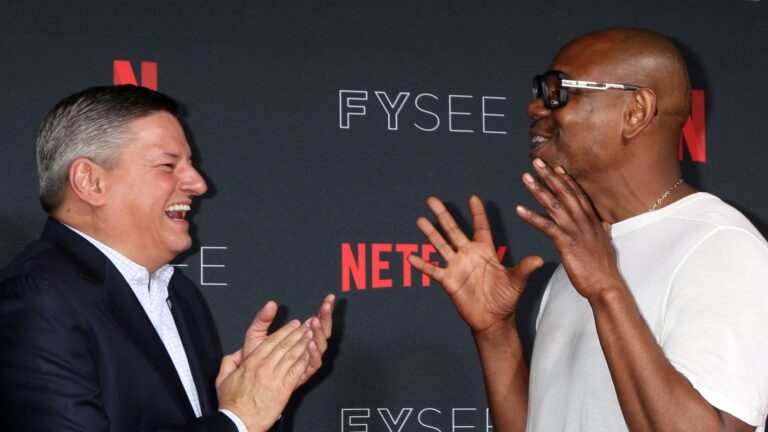
Dave Chappelle’s Remarks on Israel-Hamas War Spark Controversy at Boston Show

Comedian Dave Chappelle’s recent comments on the Israel-Hamas war led to a significant walkout during his Boston performance. The incident occurred at the TD Garden, where Chappelle’s remarks on the conflict drew mixed reactions from the audience.


Key Takeaways:

  • Chappelle criticized Israeli actions in Gaza, labeling them as “war crimes.”
  • The comedian also condemned the October 7 Hamas attack on Israel and criticized the U.S. for its support of Israel.
  • Audience reactions varied, with some cheering Chappelle’s stance, others heckling him, and a portion choosing to leave the show.
  • Chappelle had performances on both Thursday and Friday night at the TD Garden.
  • The ongoing conflict in Israel and Gaza has garnered significant attention in the U.S., with thousands losing their lives.
  • Israel reported that the October 7 Hamas attack resulted in 1,400 casualties.
  • The Ministry of Health in Hamas-controlled Gaza stated that Israel’s airstrikes have caused over 5,000 Palestinian deaths, a figure disputed by Israel.
  • Israel claims that Hamas currently holds more than two hundred hostages.
  • Two American hostages with connections to Massachusetts were recently released.

Mixed Audience Reactions

While Chappelle’s comments on the Israel-Hamas war were met with applause by some, others in the audience challenged his views. The divisive nature of the topic was evident as some attendees chose to exit the venue in response to the comedian’s remarks.

The Broader Context

The Israel-Gaza conflict has been a focal point for many Americans, with the violent events resulting in a significant loss of life. The October 7 attack by Hamas is reported by Israel to have killed 1,400 individuals. In contrast, the Ministry of Health in Gaza, controlled by Hamas, asserts that more than 5,000 Palestinians have died due to Israeli airstrikes. This number is contested by Israel. Additionally, Israel maintains that Hamas is holding over two hundred hostages, with two American hostages linked to Massachusetts being released recently.

Chappelle’s Two-Night Performance

Dave Chappelle’s performances at the TD Garden spanned two nights, Thursday and Friday. The reactions to his comments on the Israel-Hamas war underscore the sensitive nature of the topic and the varied perspectives of the audience members.

Conclusion

Dave Chappelle’s remarks on the Israel-Hamas war at his Boston show have ignited discussions and debates among fans and critics alike. As the conflict continues to unfold, it remains a contentious issue that evokes strong emotions and reactions from people worldwide.

Source: CBS News Boston.

Nightshade: The New Tool Disrupting AI Art Generators

In a world where artificial intelligence (AI) is rapidly advancing, artists are seeking ways to protect their work from being exploited by tech giants. A new tool, named “Nightshade,” has emerged as a potential game-changer in this battle.

Key Takeaways:

  • Nightshade is designed to poison images at the pixel level, rendering AI models ineffective.
  • The tool’s subtle distortions can cause AI models to misinterpret images drastically.
  • Artists can use Nightshade to defend their unique styles against AI replication.
  • The tool is a response to tech companies using artists’ work without permission to train their AI models.
  • Nightshade’s release could have significant implications for platforms that rely on AI art generators.

The Rise of Nightshade

Researchers have developed Nightshade as a means to combat the increasing use of artists’ work by tech companies to train their AI models. The tool works by subtly manipulating an image at the pixel level in a manner undetectable to the human eye. When AI models are trained using these poisoned images, they begin to malfunction. For instance, an AI model might interpret an image of a car as a cow or see a hat as a cake.

Ben Zhao, a computer science professor at the University of Chicago, and his team introduced Nightshade as a way to “poison” any model that uses images to train AI. Previously, artists’ only recourse against AI companies was legal action or hoping for compliance with opt-out requests.

Effects on AI Models

When Nightshade-poisoned images are used in training, the results can be startling. AI models like Stability AI’s Stable Diffusion XL begin to break down. For example, a prompt for a “car” might produce an image of a “cow.” The tool can also protect individual artists’ styles. When the AI is asked to replicate the style of renowned artists, the output is notably different from the original work.

However, to see these effects, a significant number of poisoned images are required. This discovery could make AI developers reconsider using scraped data from the internet.

Other Tools in the Fight

Zhao’s team has also developed “Glaze,” a tool that creates a “style cloak” to mask artists’ images, misleading AI art generators. Nightshade will be integrated into Glaze and released as an open-source tool for other developers.

There are also efforts to differentiate real images from AI-generated ones. Companies like Google-owned DeepMind are developing watermarking IDs to identify AI-created images. These watermarks manipulate pixels similarly to Nightshade.

Implications for the Art Community

Nightshade poses a potential threat to companies like DeviantArt that use artists’ work to train their AI. The DeviantArt community has already expressed displeasure with the platform’s AI art generator. If many users adopt Nightshade, developers might need to manually identify and remove poisoned images or retrain their models entirely.

Existing models, such as SDXL and the recently released DALL-3, won’t be affected by Nightshade as they’ve already been trained. However, companies like Stability AI and DeviantArt have faced lawsuits from artists for using copyrighted work to train AI. The debate over whether AI-generated content based on training data falls under fair use continues.

Advertisement: The AI Revolution Across Industries: Spotlight on Livy.AI

Another notable player in the AI-driven transformation of industries is Livy.AI. This cutting-edge platform is harnessing the power of artificial intelligence to bring about significant advancements in various sectors. From automating complex processes to offering predictive insights, Livy.AI is at the forefront of integrating AI capabilities into real-world applications. Their solutions are not only streamlining operations but also enhancing user experiences, driving efficiency, and fostering innovation. As industries continue to evolve in the digital age, platforms like Livy.AI exemplify the potential of AI to reshape the future, offering a glimpse into the next wave of technological breakthroughs.

The Future of AI and Art

As AI tools become more sophisticated, they require vast amounts of data. With tools like Nightshade, artists might take even more aggressive measures to protect their work. The balance between technological advancement and artistic integrity will be a defining issue in the coming years.

FDA to Review First Self-Administered Flu Vaccine

0

FDA to Review First Self-Administered Flu Vaccine

In a groundbreaking move, AstraZeneca announced that the U.S. Food and Drug Administration (FDA) has begun reviewing its application for a self-administered nasal flu vaccine. If approved, this could revolutionize the way flu vaccines are administered, offering a convenient alternative to traditional methods.


Key Takeaways:

  • AstraZeneca’s nasal flu vaccine, branded as FluMist Quadrivalent, is under FDA review for self-administration.
  • If approved, it would be the first flu vaccine that doesn’t require a healthcare professional for administration.
  • The FDA initially approved FluMist in 2003.
  • A decision from the FDA is expected by the first quarter of 2024.
  • If given the green light, the vaccine could be available for self-administration during the 2024-2025 flu season.
  • The application is supported by a usability study confirming that individuals 18 and older can self-administer the vaccine to eligible patients aged 2-49, with clear instructions and no additional guidance.

A New Era in Flu Vaccination

The potential approval of a self-administered flu vaccine marks a significant step forward in healthcare. Traditional flu vaccines require a visit to a healthcare professional, often leading to inconvenience and delays. This new method could streamline the process, making it easier for individuals to get vaccinated and potentially increasing flu vaccine coverage.

The Journey of FluMist Quadrivalent

FluMist Quadrivalent is not a new player in the vaccine market. The FDA first approved it in 2003. However, the move to make it self-administered is a novel approach. AstraZeneca’s confidence in this transition is backed by a comprehensive usability study. This study confirmed that with proper instructions, adults could easily administer the vaccine to themselves or eligible patients between the ages of 2 and 49.

What’s Next?

All eyes are now on the FDA as the healthcare community and the public await their decision. If approved, the 2024-2025 flu season could see a significant shift in how flu vaccines are administered in the United States. This could set a precedent for other vaccines and treatments, pushing the boundaries of traditional healthcare and moving towards more user-friendly methods.

Understanding the Flu Virus and the Importance of Vaccination

The Flu: More Than Just a Seasonal Nuisance

The influenza virus, commonly known as the flu, is a contagious respiratory illness caused by influenza viruses. It can cause mild to severe illness and, in some cases, can lead to hospitalization or even death. Every year, millions of people worldwide are affected by the flu, with symptoms ranging from fever, cough, and sore throat to muscle aches, fatigue, and respiratory complications.

A Brief History of the Flu

The flu has been a known adversary for centuries. Historical records suggest outbreaks resembling influenza as far back as ancient Greece. The 20th century saw some of the most devastating flu pandemics, with the 1918 Spanish Flu being the deadliest, claiming millions of lives worldwide. Such outbreaks underscore the flu’s potential to cause widespread illness and death.

How the Flu Spreads

The flu virus spreads mainly through tiny droplets when people with the flu cough, sneeze, or talk. These droplets can land in the mouths or noses of those nearby, potentially infecting them. It’s also possible to contract the flu by touching surfaces contaminated with the virus and then touching one’s mouth, nose, or eyes.

The Ever-Changing Nature of the Flu Virus

One of the challenges in combating the flu is its ability to mutate. The flu virus undergoes frequent genetic changes, leading to new strains each year. This constant evolution means that immunity developed from a previous infection may not provide protection against newer strains.

Why Vaccination is Crucial

  1. Protection for All: The flu vaccine stimulates the body’s immune system to produce antibodies against the virus. These antibodies provide protection against infection. By getting vaccinated, individuals not only protect themselves but also reduce the spread of the virus in the community, safeguarding the vulnerable, such as the elderly, children, and those with compromised immune systems.
  2. Reduction in Severity: Even if a vaccinated person contracts the flu, the severity of the illness is often reduced. This means fewer hospitalizations and a lower risk of severe complications.
  3. Economic Impact: Widespread flu outbreaks can have significant economic consequences. From missed workdays to healthcare costs, the financial burden of the flu is substantial. Vaccination can reduce these economic impacts by preventing illness and reducing the severity of outbreaks.
  4. Prevention of Pandemics: Regular vaccination can prevent the emergence of pandemic strains. By reducing the spread of the virus, there’s a lower chance of it mutating into a more virulent form.

Addressing Common Misconceptions

  • “The flu vaccine gives you the flu.” This is a myth. The flu vaccine contains inactivated viruses or a piece of the virus (a protein) that cannot cause the flu. Some people might experience mild side effects, but these are not the same as having the flu.
  • “I had the vaccine last year, so I don’t need it this year.” Due to the flu’s mutating nature, last year’s vaccine might not protect against this year’s strains. Annual vaccination is recommended.
  • “Healthy people don’t need the vaccine.” While it’s true that healthy individuals might recover from the flu without complications, they can still spread the virus to others. Vaccination helps protect the entire community.

The Future of Flu Vaccination

With advancements in medical research, there’s hope for more long-lasting flu vaccines in the future. Efforts are underway to develop a universal flu vaccine that could provide protection against multiple strains over several years. Such a vaccine would be a game-changer in the fight against the flu.

The flu is not a trivial matter. It has the potential to cause severe illness and disrupt communities and economies. Vaccination remains our best defense against this ever-evolving adversary. By understanding the importance of the flu vaccine and addressing misconceptions, we can work towards a healthier future for all.

Conclusion

The potential approval of AstraZeneca’s self-administered nasal flu vaccine is a testament to the evolving landscape of healthcare. As we move towards more patient-centric solutions, innovations like these pave the way for a more efficient and accessible healthcare system.