57 F
San Francisco
Saturday, April 11, 2026
Home Blog Page 2224

ChatGPT’s Parent Company, OpenAI, Targets a Whopping $86bn Valuation

OpenAI, the parent company of the popular AI model ChatGPT, is reportedly seeking a valuation of $86 billion. This move comes as artificial intelligence continues to gain traction in various sectors, highlighting the growing significance and potential of AI technologies in the modern digital landscape.

Key Takeaways:

  • OpenAI, the company behind ChatGPT, is aiming for an $86 billion valuation.
  • The move underscores the increasing importance and potential of AI in today’s digital world.

A Glimpse into OpenAI’s Journey

Founded with the mission to ensure that artificial general intelligence (AGI) benefits all of humanity, OpenAI has been at the forefront of AI research and development. Its products, particularly ChatGPT, have garnered significant attention and usage across various industries, from customer support to content creation.

The Rise of ChatGPT

ChatGPT, one of OpenAI’s flagship products, has revolutionized the way businesses and individuals interact with AI. Its ability to generate human-like text based on the input it receives has made it a favorite tool for many, from content creators to customer service representatives.

The Genesis and Journey of OpenAI: Founders, Vision, and Legal Hurdles

OpenAI, a name synonymous with cutting-edge artificial intelligence research, has its roots deeply embedded in a vision to democratize AI. The organization’s journey, marked by its founders’ foresight and the inevitable legal challenges of pioneering technology, offers a compelling narrative of innovation, ambition, and resilience.

The Birth of a Vision

OpenAI was founded in December 2015 by a group of tech luminaries and visionaries. Among its co-founders are Ilya Sutskever, a leading expert in machine learning, Greg Brockman, previously the CTO of Stripe, Sam Altman, later the CEO of the organization and known for his association with Y Combinator, and Wojciech Zaremba, a former researcher at Google Brain. These individuals, along with other co-founders and early supporters, shared a collective vision: to ensure that artificial general intelligence (AGI) benefits all of humanity.

Their mission was clear – to build safe and beneficial AI. However, they also recognized that their role could shift from building AI to merely assisting in its development, especially if a value-aligned, safety-conscious project came close to building AGI before they did.

A Commitment to Openness

From its inception, OpenAI committed to providing public goods to help society navigate the path to AGI. Initially, this took the form of publishing most of their AI research. However, as they acknowledged, safety and security concerns might reduce traditional publishing in the future. Still, the emphasis on sharing safety, policy, and standards research remained unwavering.

Legal Challenges in Uncharted Waters

With innovation comes the inevitable challenge of navigating the complex legal landscape. OpenAI, being at the forefront of AI research, has had to grapple with several legal and ethical issues.

  1. Intellectual Property (IP) Rights: As with many tech companies, OpenAI has had to ensure that its innovations are protected. This involves a delicate balance between open-source commitments and proprietary rights to safeguard their research and maintain a competitive edge.
  2. Safety and Ethics: OpenAI’s mission to ensure AGI’s safety has legal implications. Ensuring that their AI models do not inadvertently cause harm or are misused by malicious actors is paramount. This involves constant monitoring, updates, and sometimes even pulling back models from public access.
  3. Data Privacy: With AI models being trained on vast amounts of data, OpenAI has to ensure that the data used respects privacy laws and regulations. This is especially pertinent given global debates on data privacy and the emergence of regulations like the European Union’s General Data Protection Regulation (GDPR).
  4. Collaborations and Partnerships: OpenAI’s collaborations with other tech giants, like Microsoft, come with their own set of legal intricacies. These partnerships, while beneficial, require clear legal frameworks to ensure mutual respect for IP, data handling, and shared objectives.
  5. Regulatory Landscape: As governments worldwide grapple with the implications of AGI, regulatory frameworks are continually evolving. OpenAI has to be agile and proactive in ensuring compliance with these shifting regulations.

Overall

OpenAI’s journey is emblematic of the broader challenges and opportunities in the AI sector. Its founders’ vision, combined with the organization’s commitment to openness and safety, sets it apart in the tech world. However, as with all pioneers, the road is fraught with challenges, especially in the legal realm. As OpenAI continues to push the boundaries of what’s possible with AI, its approach to navigating these challenges will be keenly observed and will likely set precedents for the industry at large.

The Broader AI Landscape

The valuation sought by OpenAI is a testament to the growing influence of AI in the tech industry. As more companies integrate AI into their operations, the demand for advanced AI models and solutions, like those offered by OpenAI, is expected to rise. This trend is not just limited to the tech sector; industries ranging from healthcare to finance are also exploring the potential benefits of AI integration.

Conclusion

OpenAI’s move to seek an $86 billion valuation is indicative of the broader trend in the tech world, where AI is no longer a futuristic concept but a present-day reality. As AI continues to shape various industries, companies like OpenAI are poised to play a pivotal role in defining the future of technology.

Red Meat Consumption Linked to Increased Type 2 Diabetes Risk

0

A recent study has shed light on the potential health risks associated with regular consumption of red meat. The findings suggest that individuals who consume red meat more than once a week may be at a heightened risk of developing Type 2 diabetes.


Key Takeaways:

  • Consuming more than one serving of red meat per week is associated with a higher risk of Type 2 diabetes.
  • The study analyzed health data from 216,695 participants over a period of up to 36 years.
  • Over 22,000 participants developed Type 2 diabetes during the study period.
  • Those who reported the highest red meat consumption had a 62% higher risk of developing the condition.
  • Every additional daily serving of red meat was linked to a 46% increased risk for processed meat and 24% for unprocessed meat.
  • Replacing red meat with nuts and legumes can reduce the risk of Type 2 diabetes by 30%.

Diving Deeper into the Findings

The study, which was published in The American Journal of Clinical Nutrition, analyzed health data from a whopping 216,695 participants. Over the span of up to 36 years, more than 22,000 of these participants were diagnosed with Type 2 diabetes. The researchers discovered that those who reported the highest consumption of red meat had a staggering 62% higher risk of developing the condition compared to those who consumed the least amount of red meat.

Furthermore, the study estimated that every additional daily serving of red meat was associated with a 46% increased risk for processed red meat and a 24% increased risk for unprocessed red meat.

The Broader Context

With over 37 million Americans diagnosed with diabetes, and 90% to 95% of them having Type 2 diabetes, the findings of this study are particularly significant. The condition predominantly develops in individuals over the age of 45, but there has been a concerning rise in cases among children, teens, and young adults.

Xiao Gu, a postdoctoral research fellow at Harvard T.H. Chan School of Public Health’s Department of Nutrition and one of the study’s authors, emphasized the importance of dietary guidelines that recommend limiting red meat consumption. This advice applies to both processed and unprocessed red meat.

Seeking Healthier Alternatives

The research team also delved into potential healthier alternatives to red meat. They found that replacing a serving of red meat with nuts and legumes could lead to a 30% lower risk of developing Type 2 diabetes. Such dietary shifts not only promote better health but also have positive environmental implications.

Senior author Walter Willett, a professor of epidemiology and nutrition, suggested a limit of about one serving per week of red meat for those aiming to optimize their health and wellbeing.

Conclusion

The link between red meat consumption and Type 2 diabetes risk underscores the importance of informed dietary choices. As the global community becomes more health-conscious, studies like these provide valuable insights that can guide individuals in making healthier lifestyle decisions.

AI Companies Fall Short on Transparency, Stanford Report Reveals

In a recent study conducted by researchers from Stanford University, it has been revealed that many artificial intelligence (AI) companies are not as transparent as they should be. The findings, which were compiled into the Foundation Model Transparency Index, evaluated the transparency levels of 10 leading AI models, shedding light on an industry that often operates behind closed doors.


Key Takeaways:

  • Stanford’s Human-Centered Artificial Intelligence (HAI) released the Foundation Model Transparency Index, evaluating the transparency of 10 top AI models.
  • Among the assessed models were Stability AI’s Stable Diffusion, Meta’s Llama 2, and OpenAI’s ChatGPT.
  • Meta’s Llama 2, a generative text model, scored the highest with 54 out of 100, but still fell short of providing “adequate transparency.”
  • Stable Diffusion scored 47 percent overall, ranking fourth. It received a perfect score in “Model Access” due to its publicly accessible training dataset but scored low in the “Impact” category.
  • None of the AI models’ creators disclosed information about the technology’s societal impact, including issues related to privacy, copyright, or biases.
  • Rishi Bommasani from the Stanford Center for Research on Foundation Models emphasized the need for transparency benchmarks for both governments and companies.

A Closer Look at the Findings

The report ranked AI models on a scale of 100, with Meta’s Llama 2, a generative text model, emerging as the highest scorer with 54 out of 100. However, the researchers were quick to point out that even this score does not equate to “adequate transparency.” This highlights a significant gap in the AI industry’s commitment to openness and clarity.

Stability AI’s image generator, Stable Diffusion, secured the fourth position with an overall score of 47 percent. While it achieved a perfect score in the “Model Access” category, thanks to its publicly accessible training dataset, it faltered in the “Impact” category. This category evaluates the model’s influence on its users and the policies governing its use.

The Bigger Picture

The lack of transparency in the AI industry is not just about scores and rankings. It’s about the broader implications of these technologies on society. The absence of information on the societal impact of these models, especially in areas like privacy, copyright, and biases, is a glaring oversight.

Rishi Bommasani, one of the researchers behind the index, expressed the need for such an index to serve as a benchmark. He hopes that this initiative will drive AI models towards greater transparency, breaking down the broad concept of transparency into measurable aspects.

Future Implications and Regulations

With the rapid advancements in AI, there’s a growing need for regulations that ensure transparency and accountability. The European Union is already working on an AI Act that could compel AI companies to be more open about their models’ construction and implications.

Conclusion

The AI industry is at a crossroads. While the technology promises unprecedented advancements, it also brings forth ethical and societal challenges. Transparency is not just a buzzword; it’s a necessity. As AI continues to shape our world, it’s crucial for companies to prioritize openness and clarity, ensuring that the technology benefits all, without hidden repercussions.


Advertisement: The AI Revolution Across Industries: Spotlight on Livy.AI

Another notable player in the AI-driven transformation of industries is Livy.AI. This cutting-edge platform is harnessing the power of artificial intelligence to bring about significant advancements in various sectors. From automating complex processes to offering predictive insights, Livy.AI is at the forefront of integrating AI capabilities into real-world applications. Their solutions are not only streamlining operations but also enhancing user experiences, driving efficiency, and fostering innovation. As industries continue to evolve in the digital age, platforms like Livy.AI exemplify the potential of AI to reshape the future, offering a glimpse into the next wave of technological breakthroughs.


Jon Stewart’s Apple TV+ Show Ends Amid Disagreements Over AI and China Topics

0

In a surprising turn of events, Jon Stewart’s show on Apple TV+, “The Problem With Jon Stewart,” will not be returning for its third season. The decision comes after reported disagreements between Stewart and Apple over the show’s content, particularly concerning topics related to China and artificial intelligence (AI).


Key Takeaways:

  • “The Problem With Jon Stewart” won’t be returning for a third season on Apple TV+.
  • Disagreements arose between Stewart and Apple over content related to China and AI.
  • The show was set to begin filming for another eight episodes in the coming weeks.
  • Apple reportedly wanted alignment on show topics, leading to tensions.
  • The show had previously covered controversial subjects, including gender identity and former president Donald Trump.

Behind the Scenes Tensions

The show, which had already scheduled filming for another eight episodes in the upcoming weeks, saw an abrupt end to its plans. Neither Apple nor Stewart has made an official statement regarding the cancellation. However, sources suggest that Apple executives expressed concerns about certain subjects Stewart intended to cover in the show, especially those related to China and AI.

According to The Hollywood Reporter, Apple communicated the need for alignment on show topics and even hinted at canceling the series. Preferring full creative control over “The Problem,” Stewart decided to part ways.

A History of Controversial Topics

“The Problem With Jon Stewart” made its debut on Apple TV+ in 2021, releasing episodes bi-weekly. This was six years after Stewart’s departure from “The Daily Show.” The second season of “The Problem” began streaming in 2022, offering more episodes than its predecessor. It also tackled controversial subjects, such as gender identity and the indictment of former president Donald Trump. Despite these episodes being available for streaming, there were already signs of tension between Stewart and Apple due to the themes he explored in the show.

Apple’s concerns likely stemmed from the potential political controversies the show could ignite, leading to the mutual decision to end their partnership.

The Bigger Picture

As streaming platforms continue to grow and diversify their content, the balance between creative freedom and platform guidelines becomes increasingly crucial. The case of Jon Stewart’s show highlights the challenges creators face in navigating these waters, especially when addressing sensitive or controversial topics.


Advertisement: Explore AI with Livy.AI

For those interested in diving deeper into the world of artificial intelligence and its implications in various sectors, Livy.AI offers a comprehensive platform to explore and understand the latest in AI technology.


A Promising Beginning

“The Problem with Jon Stewart” marked Jon Stewart’s return to the current affairs format since his departure from “The Daily Show” in 2015. Announced in October 2020 as part of a multi-year production deal with Apple, the show was set to be a fresh take on pressing issues. With Brinda Adhikari as the showrunner and Chelsea Devantez as the head writer, the show built a robust production team throughout early 2021.

A Unique Format

The show’s unique selling point was its focus on a single issue per episode. This format allowed for an in-depth exploration of topics that were part of the national conversation and resonated with Stewart’s advocacy work. Apple had envisioned the show running for multiple seasons, with each season accompanied by a companion podcast co-hosted by Stewart and his team.

The Legacy of the Show

While “The Problem with Jon Stewart” may have had a short run, its impact on the discourse of current affairs is undeniable. The show tackled controversial subjects, from gender identity to political indictments, always striving to provide a balanced and insightful perspective.

Conclusion

The end of “The Problem With Jon Stewart” on Apple TV+ serves as a reminder of the complexities involved in content creation in today’s digital age. As platforms and creators strive to find common ground, audiences will be keenly watching to see how the landscape evolves.

Tesla Shares Take a Dive Following Elon Musk’s Cautious Remarks

0

Tesla, the electric car giant, witnessed a significant drop in its stock value, with shares plunging by 9% after the company’s third-quarter results were released. The decline was further exacerbated by CEO Elon Musk’s cautious commentary on the global economic landscape and the future of Tesla’s highly anticipated Cybertruck.


Key Takeaways:

  • Tesla’s shares dropped by 9% following the release of its third-quarter results.
  • The company reported revenue of $23.35 billion and earnings of 66 cents per share, both falling short of Wall Street’s expectations.
  • Elon Musk expressed concerns about the global economy and the high interest rate environment.
  • Musk emphasized the need to make Tesla products more affordable.
  • Analysts from Bank of America and Morgan Stanley voiced concerns about Tesla’s future growth and the broader economic environment.

Missed Expectations and Economic Concerns

Tesla’s third-quarter results revealed a revenue of $23.35 billion and adjusted earnings of 66 cents per share. Both figures missed the mark set by Wall Street analysts. This marks the first time since the second quarter of 2019 that Tesla has not met both earnings and revenue expectations.

During the company’s quarterly investor call, Musk voiced his apprehensions about the current state of the global economy. He highlighted the challenges posed by the high interest rate environment, which, according to him, makes it difficult for consumers to purchase cars. In response to these challenges, Musk stated that Tesla is focusing on reducing the costs of its vehicles. This cost-cutting initiative is being prioritized over the construction of a new factory in Mexico.

Cybertruck Production Challenges

Musk also took the opportunity to manage expectations surrounding the Cybertruck, Tesla’s futuristic pickup truck. He indicated that it might take a year or more before the Cybertruck becomes a significant contributor to the company’s cash flow. Musk acknowledged the challenges associated with mass-manufacturing the vehicle, candidly stating, “We dug our own grave with Cybertruck.”

Analysts Weigh In

The release of Tesla’s third-quarter results and Musk’s subsequent comments have sparked a flurry of reactions from analysts. Bank of America analysts maintained their neutral rating on Tesla’s stock but adjusted their estimates for the company’s fourth quarter and subsequent years, citing a “lower gross margin profile.” They also expressed surprise at the amount of time Musk dedicated to discussing the global economy during the call.

Morgan Stanley analysts, on the other hand, described the investor call as one of the most cautious they’ve heard from Tesla in years. They acknowledged the valid concerns about rising interest rates but also raised questions about potential competition and slowing demand for Tesla’s products.

Conclusion

Tesla’s recent stock dip and the cautious tone set by its CEO highlight the challenges and uncertainties faced by the electric vehicle industry. As the global economic landscape continues to evolve, companies like Tesla will need to navigate these challenges while continuing to innovate and meet consumer demands.

President Joe Biden Calls for Wartime Aid to Israel and Ukraine in Oval Office Address

0

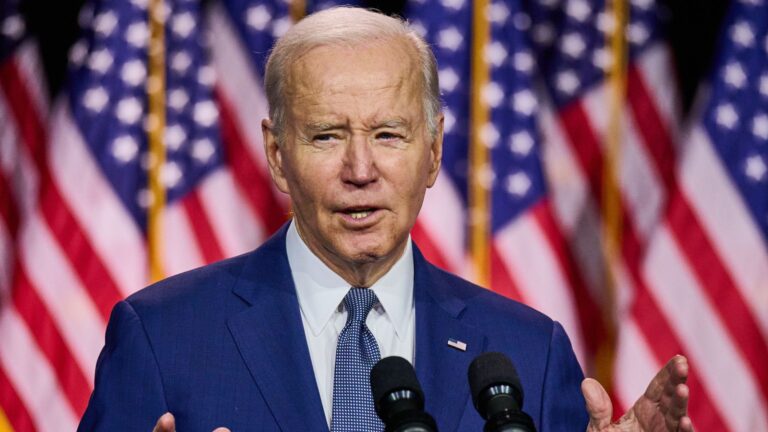
In a recent primetime Oval Office address, President Joe Biden made a compelling case for wartime aid to Israel and Ukraine. He emphasized the importance of supporting these two democracies, which he believes are facing existential threats. The President’s speech comes at a time when the world is witnessing a battle between democracies and autocracies, and he believes this is a pivotal moment in history.


Key Takeaways:

  • President Biden links the wars in Ukraine and Israel, urging Americans to support these democracies.
  • Biden describes the current global situation as an “inflection point” between democracies and autocracies.
  • The President warns against the dangers of partisan politics obstructing the U.S.’s responsibilities as a leading nation.
  • Biden emphasizes the importance of American leadership and alliances for global stability.
  • The White House is set to request over $100 billion from Congress for aid to Ukraine, Israel, Taiwan, and the US-Mexico border.
  • Biden reiterates his stance against sending American troops to Ukraine.
  • The President addresses the rise in Islamophobia and antisemitism, condemning both.

A Moment of Inflection

Biden’s speech highlighted the challenges that democracies worldwide are facing, particularly from autocratic regimes. He drew parallels between the threats posed by Hamas to Israel and Putin to Ukraine, emphasizing the need for the U.S. to step up and support these nations. The President stressed that the U.S. cannot let “petty partisan, angry politics” hinder its responsibilities on the global stage.

The Stakes for America

Biden laid out the stakes for the American people, describing the wars as a national security imperative. He emphasized the importance of American leadership in maintaining global stability. The President warned of the consequences of inaction, stating that if the U.S. does not curb Putin’s ambitions in Ukraine, it could embolden other aggressors worldwide.

Funding Request on the Horizon

The President’s address comes just before the White House’s plan to request over $100 billion from Congress to provide aid to Ukraine, Israel, Taiwan, and the US-Mexico border. This request faces potential challenges in Congress, especially given the current dysfunction in the House of Representatives.

No American Troops in Ukraine

Biden was clear in his stance against sending American troops to fight in Ukraine. Instead, he emphasized Ukraine’s request for assistance in the form of weapons, munitions, and other resources to defend against Russian aggression.

Addressing Islamophobia and Antisemitism

The President took a moment to address the rise in Islamophobia and antisemitism, condemning both. He expressed sympathy for Jewish families fearing targeted attacks and Muslim Americans facing distrust reminiscent of the post-9/11 era. Biden emphasized the importance of denouncing both antisemitism and Islamophobia unequivocally.

Conclusion

President Biden’s Oval Office address underscored the importance of supporting democracies like Israel and Ukraine in their times of need. He emphasized the role of American leadership in ensuring global stability and warned of the consequences of inaction. As the world watches, the U.S.’s next steps will be crucial in shaping the future of global politics.

Pfizer Hikes Price of Essential COVID-19 Antiviral, Paxlovid

0

Pfizer has recently announced a significant price increase for its life-saving COVID-19 antiviral drug, Paxlovid. This move has sparked concerns and debates about the accessibility and affordability of essential treatments during a global pandemic.

Key Takeaways:

  • Pfizer more than doubles the price of its antiviral drug, Paxlovid.
  • Paxlovid has been a crucial tool in the fight against COVID-19.
  • Concerns arise about the affordability and accessibility of essential treatments.

Pfizer Paxlovid Price Increase

A Pfizer spokesperson told the Wall Street Journal that “pricing for Paxlovid is based on the value it provides to patients, providers, and health care systems due to its important role in helping reduce COVID-19-related hospitalizations and deaths.”

Currently, individuals under Medicare or Medicaid, as well as the uninsured, will receive Paxlovid at no cost through 2024, thanks to a government initiative. After this period, both the government and Pfizer will introduce aid programs to lower the drug’s cost. Without such aid, the uninsured would confront the significantly raised list price.

Background on Paxlovid

Paxlovid is a combination of two drugs: nirmatrelvir and ritonavir. This combination was granted emergency use authorization by the US Food and Drug Administration (FDA) in December 2021 for the treatment of COVID-19. The co-packaged medications are specifically designed for people with mild to moderate COVID-19 symptoms who are at high risk of developing severe complications. However, Paxlovid is not authorized for pre-exposure or post-exposure prevention of COVID-19 or for the initiation of treatment in those requiring hospitalization due to severe or critical COVID-19.

The Role of Ritonavir

Ritonavir, sold under the brand name Norvir, is an antiretroviral medication primarily used alongside other drugs to treat HIV/AIDS. This combination treatment is known as highly active antiretroviral therapy (HAART). Ritonavir is a protease inhibitor and is often used with other protease inhibitors. It may also be used in combination with other medications to treat hepatitis C and COVID-19. Ritonavir was patented in 1989 and has been in medical use since 1996. It is on the World Health Organization’s List of Essential Medicines.

Nirmatrelvir’s Contribution

Nirmatrelvir is an antiviral medication developed by Pfizer. It acts as an orally active 3C-like protease inhibitor. Nirmatrelvir is part of the nirmatrelvir/ritonavir combination used to treat COVID-19 under the brand name Paxlovid. The drug was developed by modifying an earlier clinical candidate, lufotrelvir. Nirmatrelvir is a covalent inhibitor, binding directly to the catalytic cysteine residue of the cysteine protease enzyme. In the co-packaged medication nirmatrelvir/ritonavir, ritonavir serves to slow the metabolism of nirmatrelvir, thereby increasing its concentration in the bloodstream.

Global Implications

In November 2021, Pfizer signed a license agreement with the United Nations–backed Medicines Patent Pool, allowing nirmatrelvir to be manufactured and sold in 95 countries. This agreement aims to facilitate greater access to the global population. However, the deal excludes several countries with major COVID-19 outbreaks, including Brazil, China, Russia, Argentina, and Thailand.

Conclusion

The price hike of Paxlovid by Pfizer has raised eyebrows globally, especially given the essential nature of the drug in the ongoing battle against COVID-19. As the world continues to grapple with the pandemic, the accessibility and affordability of life-saving treatments remain at the forefront of global health discussions.

Universal Music Takes Legal Action Against AI Firm Anthropic Over Song Lyrics

Universal Music Group, one of the world’s leading music companies, has initiated a copyright infringement lawsuit against AI start-up Anthropic. The music giant alleges that Anthropic unlawfully scrapes lyrics from their songs and uses them in its chatbot, Claude, which competes with ChatGPT.

Key Takeaways:

  • Universal Music, along with two other music companies, claims Anthropic uses their songs without permission.
  • Anthropic’s chatbot, Claude, allegedly produces “identical or nearly identical copies” of song lyrics.
  • The music industry faces challenges with AI technologies that can create “deepfake” songs mimicking established artists.
  • Anthropic was established in 2021 by former OpenAI researchers and has received investments from tech giants like Amazon and Google.
  • The music industry’s concerns with AI mirror past copyright battles, such as the one against Napster in the 2000s.

A Deeper Dive:

Universal Music Group, often referred to as Universal Music, is a Dutch–American multinational music corporation. With its corporate headquarters in Hilversum, Netherlands, and operational headquarters in Santa Monica, California, it stands as the world’s largest music company. Universal Music is one of the “Big Three” record labels, alongside Sony Music and Warner Music Group. The company’s rich history traces back to the formation of the American branch of Decca Records in 1934. Over the years, Universal Music has undergone various mergers and acquisitions, shaping it into the powerhouse it is today. Read more about Universal Music Group on Wikipedia.


Advertisement: Unleash Your Creativity with Livy.AI! 🚀

Attention content creators! Looking to elevate your content game? Dive into the future with Livy.AI, the AI-powered content creation platform designed just for you. From blog posts to social media captions, Livy.AI streamlines your creative process, giving you more time to focus on what you love.

🌟 Why wait? Transform your content creation journey today! 👉 Discover Livy.AI now! 👈

Craft. Create. Captivate with Livy.AI.


The current lawsuit underscores the music industry’s ongoing challenges with emerging technologies. Universal Music and other companies are grappling with the rise of AI technologies capable of producing “deepfake” songs. These AI-generated songs can convincingly mimic the voices, lyrics, or sounds of established musicians. The issue gained significant attention when an AI-produced song imitating the voices of popular artists Drake and The Weeknd went viral online.

Anthropic AI Start-Up

Anthropic, the AI start-up at the center of the lawsuit, was founded in 2021 by a group of researchers who previously worked with Microsoft-backed OpenAI. The start-up has since attracted investments from major tech companies like Amazon and Google. Anthropic’s chatbot, Claude, is designed to respond to prompts by incorporating song lyrics into its replies. However, music companies allege that Claude uses these lyrics without proper licensing, leading to the current legal dispute.

The concerns surrounding AI and music aren’t new. The music industry has faced similar challenges in the past. In the 2000s, music companies waged legal battles against new technology services like Napster, which facilitated the pirating of music. The current situation with Anthropic echoes these past struggles, highlighting the industry’s ongoing efforts to protect its intellectual property in the digital age.

Universal Music Group Artists

Universal Music Group, home to renowned artists like Taylor Swift and Billie Eilish, recently announced a collaboration with music platform BandLab. This partnership aims to address copyrights “ethically” for AI applications, ensuring proper permissions are in place. Furthermore, Universal is in talks with Google to license its artists’ voices and melodies for AI-generated songs.

In their lawsuit, the music groups emphasized the importance of innovation, recognizing the potential of AI when used ethically and responsibly. However, they assert that Anthropic’s practices violate these principles on a broad scale. Earlier in the year, Universal had requested streaming platforms like Spotify to restrict access to its music catalog for developers using it to train AI technologies.

The outcome of this lawsuit could set a precedent for how the music industry navigates the challenges posed by AI and other emerging technologies in the future.


OpenAI Develops Groundbreaking AI Image Detector with 99% Accuracy

OpenAI, the renowned artificial intelligence research organization, has announced the development of a state-of-the-art AI image detector boasting an impressive 99% accuracy rate. This breakthrough could revolutionize various sectors, from security to healthcare, by providing near-perfect image recognition capabilities.


Key Takeaways:

  • OpenAI unveils an AI image detector with a 99% accuracy rate.
  • The technology has potential applications in numerous industries.
  • OpenAI continues to lead in AI advancements, emphasizing safety and benefit.

A Deep Dive into OpenAI

Founded in 2015, OpenAI is an American AI organization with a mission to ensure that artificial general intelligence (AGI) benefits all of humanity. AGI refers to highly autonomous systems that can outperform humans in the most economically valuable work. OpenAI’s commitment to “safe and beneficial” AI has garnered significant attention and investment, including a whopping $10 billion investment in 2023.

The organization’s roots trace back to a collaboration between tech luminaries such as Sam Altman, Elon Musk, and several AI researchers. OpenAI’s commitment to open research is evident in its pledge to make its patents and research available to the public.

A Legacy of Innovation

OpenAI’s track record is filled with groundbreaking projects. From the GPT series, which includes the latest GPT-4, to the OpenAI Codex, which powers GitHub Copilot, the organization has consistently pushed the boundaries of what AI can achieve.

For instance, the OpenAI Codex is an AI model that can interpret natural language and generate code in response. It’s a descendant of OpenAI’s GPT-3 model, fine-tuned for programming applications. Such advancements underscore OpenAI’s commitment to harnessing AI’s potential in diverse domains.

The Broader Impact

Introducing an AI image detector with 99% accuracy is not just a technological marvel; it’s a testament to the rapid advancements in the AI field. As AI systems become more accurate and efficient, they promise to transform industries, from healthcare diagnostics to autonomous driving.

However, with great power comes great responsibility. OpenAI’s emphasis on developing “safe and beneficial” AI is crucial. As AI systems become integral to our daily lives, ensuring their reliability, safety, and ethical use becomes paramount.

Conclusion

OpenAI’s latest achievement in image detection is a significant milestone in the AI journey. As we look to the future, it’s clear that organizations like OpenAI will play a pivotal role in shaping the trajectory of AI development, ensuring that it remains a force for good.

Victoria’s Secret Shifts Strategy After Sales Decline

0

In a surprising turn of events, Victoria’s Secret, the renowned lingerie brand, is reportedly moving away from its recent “woke” and feminist rebranding. This decision comes in the wake of a noticeable decline in sales, prompting the brand to re-embrace its iconic “sexiness” image.


Key Takeaways:

  • Victoria’s Secret is transitioning from its recent feminist makeover due to a decline in sales.
  • The brand’s efforts to promote inclusivity, including featuring LGBTQ and transgender spokesmodels, did not translate into increased sales.
  • The projected revenue for 2023 is $6.2 billion, a 5% decrease from the previous year.
  • The company’s new goal is to surpass $7 billion in annual sales by introducing activewear and swimwear lines and expanding its global presence.

A Deeper Dive

Victoria’s Secret had previously attempted to distance itself from its “hyper-sexualized” image, as described by BusinessOfFashion.com. However, this move did not resonate with their customer base, leading to a significant drop in revenue. The brand’s efforts to promote inclusivity, such as featuring LGBTQ pro women’s soccer player Megan Rapinoe and a transgender woman as brand spokesmodels, received positive feedback online but did not translate into sales.

According to the data, the lingerie brand’s projected revenue for 2023 stands at $6.2 billion. This figure is 5% lower than the previous year and even lower than the 2020 revenue, which was $7.5 billion.

Interestingly, the decline in Victoria’s Secret’s sales also coincided with the company’s decision to have a predominantly female board of directors. In 2021, Megan Rapinoe criticized the brand’s previous image, stating that it conveyed a “really harmful” message that was “patriarchal and sexist.”

To counteract the financial strain, the lingerie company is reintroducing its runway show format, blending the brand’s renowned sexiness with some of its more recent inclusive initiatives. Victoria’s Secret’s new direction is aptly summarized by the brand’s president, Greg Unis, who stated, “Sexiness can be inclusive.”

Chief executive Martin Waters acknowledged that the inclusivity initiatives were not profitable for the company. As a result, the brand’s new objective is to cross the $7 billion mark in annual sales. To achieve this, Victoria’s Secret plans to launch activewear and swimwear lines, revamp its existing stores, and open 400 new outlets outside the United States.

Looking Ahead

Victoria’s Secret’s strategic shift underscores the challenges brands face when trying to adapt to changing societal norms and customer preferences. While inclusivity and representation are crucial, companies must find a balance that resonates with their core audience.

For more insights into the world of fashion and the latest trends, stay tuned.