62.5 F
San Francisco
Sunday, May 3, 2026
Home Blog Page 299

Why SNAP Benefits Are Held Up During Shutdown

0


Key Takeaways:

• Nearly 42 million Americans, including 16 million children, missed SNAP benefits.
• The Trump administration says “the courts” block use of $6 billion in emergency funds.
• Two federal judges ruled the government must tap those funds to pay SNAP benefits.
• Lawmakers and the White House could restore benefits within days if they agree.

SNAP Benefits Are Waiting on Legal Approval

Millions of families count on SNAP benefits each month. These benefits help them buy groceries. Yet, during the government shutdown, payments stopped. On Saturday, 42 million people missed their food aid. Suddenly, grocery budgets vanished for households across the country. Children, seniors, and people with disabilities saw empty pantries. In response, Treasury Secretary Scott Bessent blamed “the courts” for the delay. He said the administration needs a legal pathway to release $6 billion set aside for emergencies. However, federal judges have already ordered the White House to tap that same fund.

How SNAP Benefits Funding Works

Under normal conditions, a pool of money supports food aid programs. In 2018, lawmakers set aside about $6 billion in a contingency fund for SNAP benefits. This fund exists precisely to cover gaps during delays. For example, if Congress doesn’t pass a budget, the U.S. Department of Agriculture can use those dollars to send out food stamps. According to an Agriculture Department memo from September 30th, the money remains available. Therefore, SNAP benefits could continue for two or three weeks without interruption. Despite this option, the Trump administration has not used the contingency fund.

What the Courts Have Said on SNAP Benefits

Contrary to the administration’s claim, two federal judges already ruled in favor of releasing the funds. In Massachusetts, a judge called the halt in SNAP benefits unlawful. The court ordered the government to use the emergency fund to resume payments. Similarly, a judge in Rhode Island reached the same conclusion. These decisions leave no legal barrier to tapping the money. Yet on Sunday, Secretary Bessent told reporters he was unsure how to proceed. He suggested the administration might appeal or seek further guidance. Meanwhile, families wait and struggle to put food on the table.

Why the Delay?

Bessent pointed to conflicting court opinions. He claimed President Trump tweeted that two courts issued opposing rulings. However, no such conflict exists. Both courts agreed the government must pay SNAP benefits. Additionally, the administration has used alternate funds to pay active military members. This shows they know how to work around a funding gap. Yet when it comes to SNAP benefits, they remain stuck. Furthermore, Bessent said Democrats should end their “civil war” and reopen the government. In effect, he shifted blame away from the White House. Of course, many lawmakers argue the shutdown itself causes the problem.

What Comes Next for SNAP Benefits

As pressure mounts, two paths could restore SNAP benefits. First, the administration could tap the $6 billion contingency fund. That action requires only a directive inside the executive branch. Second, lawmakers in Congress could pass a stopgap spending bill. Either route may allow benefits to resume by Wednesday. CNN anchor Jake Tapper pressed Bessent on live television. He asked whether the White House would appeal the court orders. Bessent admitted he still needed to “figure out the process.” Ultimately, however, the courts have already ruled. Families now await swift action.

In the meantime, food banks and charities brace for more demand. Many community groups are stepping up to fill the gap. They worry they cannot handle months of lost SNAP benefits. For those relying on food stamps, every day counts. Therefore, stakeholders on both sides face growing frustration. People expect clear leadership and a quick fix. Otherwise, hunger will deepen across the nation.

Frequently Asked Questions

How can SNAP benefits return so quickly?

The government already has $6 billion set aside for emergencies. A simple executive action could release that money. Courts have ordered the administration to do exactly that.

Why did the Trump administration halt SNAP benefits?

Officials link the freeze to the government shutdown. They claim legal uncertainty prevents them from using emergency funds.

What did the courts decide about SNAP benefits?

Judges in Massachusetts and Rhode Island both ruled the government must tap the contingency fund to cover SNAP benefits.

Will the shutdown end this week?

It depends on political negotiations and the White House’s willingness to follow court orders. If leaders act fast, benefits could resume by midweek.

Mystery in Trump MRI Timeline at Walter Reed

0


Key takeaways:

  • A former White House doctor finds a four-hour gap in Trump’s MRI timeline.
  • President Trump had an MRI at Walter Reed in early October.
  • White House calls the visit routine, but experts disagree.
  • The eight-minute helicopter ride leaves unexplained hours.
  • Questions about extra tests and Trump’s overall health grow louder.

Inside the Trump MRI timeline puzzle

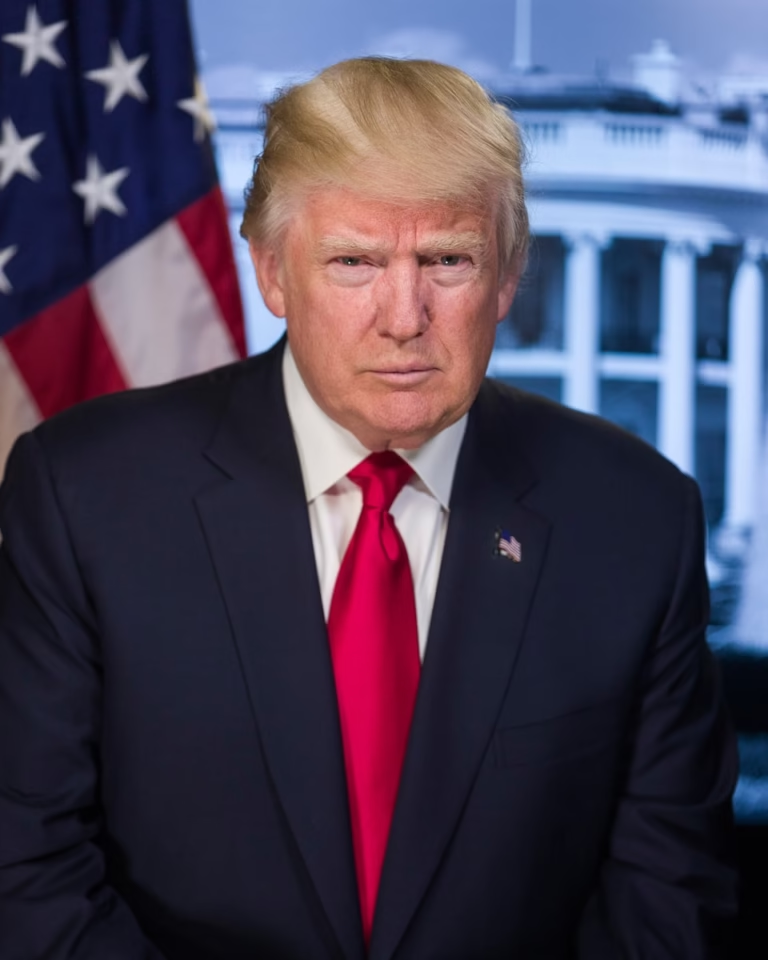
President Trump’s recent MRI scan has sparked fresh questions about his health. He told reporters it was “perfect.” Yet a former White House physician says the official story does not add up. In fact, he believes the unexplained hours suggest more tests might have taken place.

Why experts doubt a routine scan

Doctors often use MRI scans to check complex issues. However, they rarely call these checks “routine” for a healthy patient. An MRI machine costs millions and takes specialists to run. Moreover, a scan can reveal hidden problems that need follow-up. So, for a president with daily doctor access, why head to Walter Reed?

Key Moments in the Trump MRI timeline

Trump left the White House around 10:45 a.m. on October X. He returned at 2:15 p.m. That four-hour window drew the sharp eye of Jeffrey Kuhlman. Kuhlman served as physician to President Obama from 2009 to 2013. He notes that a Marine One flight takes just eight minutes each way. Therefore, there should have been more than enough time for a quick imaging test.

Former physician challenges official account

“Most scans I needed I could do at the White House,” Kuhlman said. “Only advanced imaging drove me to Walter Reed.” He calls the gap in timing “a disconnect.” This implies Trump might have had extra procedures. Yet the White House memo only mentions routine doctor visits and vaccines. It also claims Trump’s heart health equals that of someone 14 years younger.

Unanswered questions about extra tests

If the scan was routine, why not use on-site equipment? Why travel for hours when simpler checks exist at the residence? Did Trump have blood work, specialist visits, or even a short stay? None of these details appear in the official summary. Hence, the four hours remain a mystery.

Signs that raised health concerns

In recent months, observers spotted bruising on Trump’s hands. These marks often appear in patients on blood thinners. Also, his ankles showed unusual swelling during events. Both signs can point to circulation or heart issues. With Trump at 79, he holds the record as the oldest person elected president. Only President Biden has ever served at an older age.

What this means for public trust

When the public sees gaps in a leader’s health story, skepticism follows. People want clear, full details. They fear concealed problems might affect decision making. Transparency in health matters builds trust. Yet vague statements or missing hours can erode confidence.

Could more imaging tests have taken place?

Advanced scans like PET or CT can take hours, especially with prep time. Patients may need to fast or have contrast dye injections. Then, doctors review images before sending reports. These steps can stretch a visit beyond two hours. So, if Trump did more than an MRI, it might explain the long stay.

Cognitive health under the microscope

Kuhlman has also commented on signs of mental decline in Trump. He pointed out moments during speeches when Trump lost his train of thought. Cognitive tests can take over an hour. They include memory quizzes, problem solving tasks, and coordination checks. If administered, they might account for extra time at Walter Reed.

How other presidents handle medical exams

Past presidents often release full health reports. They list tests, results, and future plans. President Reagan’s annual check-ups, for example, covered dozens of measures. Sheltering nothing, staff shared blood pressure readings, cholesterol levels, and more. In contrast, vague summaries raise eyebrows.

What’s at stake for Trump’s image

In a campaign season, health narratives can sway voters. If supporters see a leader as frail, they may lose confidence. Opponents seize on any hint of weakness. Thus, full clarity can end rumors and rumors, in turn, can spiral fast in today’s news cycle.

Next steps for greater clarity

To calm speculation, the White House could:
• Offer a detailed timeline of tests and visits.
• Release a list of imaging procedures performed.
• Share pre- and post-scan reports in simple language.
• Allow a neutral doctor to confirm findings.

Without these steps, the Trump MRI timeline puzzle will persist. People will wonder what happened during those four hours. Was it just an MRI? Or did extra tests, scans, and consultations fill the gap?

Moving forward, Americans expect honesty about their leaders’ health. Even routine visits deserve context. After all, the nation’s stability can hinge on one person’s well-being.

FAQs

What is the Trump MRI timeline controversy?

A former White House doctor says President Trump’s MRI visit shows a four-hour gap. He argues that routine imaging should not take that long.

Why do experts say the MRI was not routine?

MRI scans need special machines and staff. Typically, routine physicals use simpler checks like blood tests and blood pressure.

Who is Jeffrey Kuhlman and why does his view matter?

Dr. Kuhlman served as physician to President Obama. His experience on presidential medical teams gives weight to his questions about unexplained hours.

What could explain the extra time at Walter Reed?

Advanced scans, cognitive tests, or specialist visits can stretch a medical trip to several hours. If these took place, they remain unreported.

Inside the Zhao Lawsuit Showdown with Elizabeth Warren

0

Key takeaways:

  • Binance founder Changpeng Zhao threatened to sue Senator Elizabeth Warren over a social post.
  • Warren’s lawyers responded that her statement about Zhao’s guilty plea is accurate.
  • Zhao recently won a presidential pardon after promoting a Trump family crypto venture.
  • The dispute highlights political clashes over crypto laws and pardons.

Zhao Lawsuit Threat: Warren’s Blistering Reply

Binance founder Changpeng Zhao asked Senator Elizabeth Warren to retract a post. He claimed she wrongly said he pleaded guilty to money laundering. In response, Warren’s lawyers fired back that her statement is true. They made clear any defamation claim would fail. This confrontation marks a rare public fight between a tech billionaire and a top senator.

Background on the Zhao Lawsuit

In recent months, the term Zhao lawsuit popped up after Changpeng Zhao received a presidential pardon. Before that, he spent weeks promoting a crypto venture tied to the Trump family. Meanwhile, federal authorities had accused him of breaking an anti-money laundering law. Last year, Zhao pled guilty to a criminal money laundering charge. Then President Trump granted him a pardon shortly after the plea.

As a result, Zhao’s legal record shows both a guilty plea and a pardon. Senator Warren took to social media to note these facts. She wrote that “CZ pleaded guilty to a criminal money laundering charge and was sentenced to prison.” Though he never served time, the plea remains in public records. Therefore, Warren’s post reflects widely reported events.

Warren’s Firm Response in the Zhao Lawsuit

After Zhao’s team threatened a defamation lawsuit, Warren’s lawyers swung into action. They sent a letter pointing out that her description is factually correct. They wrote that Zhao “asserts” her statement is false. Yet, they added, “Senator Warren’s post is true in all respects.” They explained the “charge” she referenced matches the plea he entered and the pardon he received.

Moreover, Warren’s legal counsel emphasized that all details are in the public domain. They noted that Zhao admitted violating an anti-money laundering statute. Then he received a pardon for that very violation. Consequently, they said, “any threatened defamation claim would be without merit.” The letter also offered extra context, aiming to clear up any misunderstanding about the social media post.

What Happens Next in the Zhao Lawsuit Battle

First, neither side filed a lawsuit yet. Zhao’s team only sent a letter threatening one. In turn, Warren’s lawyers answered without backing down. Now, both camps will likely watch each other closely. If Zhao sues, he must prove her post was false and harmful. However, Warren’s team says her tweet rests on undisputed facts.

Furthermore, the clash highlights broader issues. On one hand, it shows how tech leaders can push back against critics. On the other hand, it proves senators can stand firm on public statements. In addition, the episode underscores ongoing tension in crypto regulation. Many lawmakers worry about money laundering and illicit finance in digital currencies.

Lastly, this fight may affect public opinion of both figures. Supporters of Warren see her as defending truth in politics. Crypto fans might view Zhao’s threat as an attempt to silence criticism. Either way, the dispute drives attention to the crypto world’s legal challenges. It also raises questions about the power of presidential pardons.

Looking Ahead

As things stand, no lawsuit has landed in court. Yet the letters reveal each side’s strategy. Zhao signals he won’t tolerate what he sees as defamation. Warren shows she will defend fact-based criticism. For now, the spotlight remains on the Zhao lawsuit showdown. Observers await whether Zhao will formally sue or drop the threat.

Frequently Asked Questions

What is the Zhao lawsuit about?

The Zhao lawsuit refers to a threatened defamation claim by Changpeng Zhao. He aims to stop Senator Warren’s tweet saying he pled guilty to money laundering.

Why did Zhao threaten to sue Elizabeth Warren?

Zhao’s team said Warren’s tweet was false and harmed his reputation. They demanded she retract it to avoid legal action.

Did Zhao actually plead guilty to money laundering?

Yes. He pled guilty to violating an anti-money laundering law. Later, President Trump granted him a pardon for that plea.

What does Warren’s response mean for the Zhao lawsuit?

Warren’s lawyers argued her statement is true and based on public records. They said any defamation claim would have no merit.

Why This Shutdown Feels Like Fighting Tyranny

0


Key takeaways

• Democrats now frame the shutdown as a stand against an illegitimate ruler
• Mass protests in all 50 states shifted the shutdown narrative
• The president’s lawbreaking actions deepened fears of unchecked power
• Essential services and benefits face real harm as the shutdown drags on

A month into the shutdown, many voters see it as more than a budget clash. They now view it as a bold stand against a leader who seems to flout constitutional limits. Initially, people thought the debate was just about renewing health care subsidies. Yet recent events have recast this fight as a defense of democracy itself. As a result, the shutdown feels like a protest against concentration of power and an unlawful presidency.

How the Shutdown Became a Protest

First, congressional Democrats asked to extend Covid-era health subsidies. At first glance, this request seemed like a typical policy fight. However, seven million Americans poured into streets across all states. They marched against a president they judged to be abusing authority. Then, his shocking response added fuel to the fire. He posted an AI video of himself bombing protesters. Next, he bulldozed the East Wing of the White House, defying law and constitution. Consequently, many now see the shutdown as a struggle over power, not premiums.

What Happened Before the Shutdown

Before protests, most coverage framed the standoff as a health care skirmish. Democrats wanted to keep Affordable Care Act marketplace plans affordable. Republicans opposed new spending and pushed for budget cuts. Meanwhile, federal employees braced for missed paychecks. Food stamp benefits also eyed a cutoff. In addition, airports faced staffing shortages. Amid this tension, few expected the debate to turn into a referendum on presidential authority. Yet public anger over illegal acts has given fresh meaning to the shutdown.

Democrats Change the Narrative

In response, Democrats now claim they fight both for health care and for rule of law. They point to video evidence of destructive presidential actions. They describe the president’s moves as organized crime in plain sight. This shift elevates their demand. They no longer seek only policy concessions. Instead, they demand that Congress reclaim powers stolen at the executive’s whim. By framing the shutdown this way, Democrats build a moral high ground. Moreover, they force Republicans to choose between party loyalty and democratic principles.

Impact on Americans and Politics

The shutdown hits real people hard. Federal workers go unpaid. Families worry about delayed benefits. One in eight Americans depends on food stamps, which end soon. Airport delays grow with fewer air-traffic controllers. In many red states, health insurance premiums surge. This creates pressure on Republican districts too. If people feel personal pain long enough, they may question political promises. As a result, the GOP risks losing support even among its base. Meanwhile, Democrats hope voters will see them as protectors of basic rights.

What Comes Next in the Shutdown Battle

Later this week marks a full month without pay for federal workers. SNAP benefits will lapse soon. That deadline could force action. Republicans might push for a clean continuing resolution to reopen government. However, many voters now link shutdown relief to stopping executive overreach. Thus, a simple budget fix may not satisfy public demand. Instead, the standoff may drag into deeper debates over power limits. Ultimately, victory for Democrats relies on keeping the narrative focused on democracy, not just dollars.

Conclusion

This shutdown has evolved into more than a funding fight. It now stands as a symbol of resistance to unchecked executive power. Massive protests and shocking presidential actions have reshaped public views. As essential services falter, voters must weigh political loyalty against their own needs. Democrats aim to maintain the focus on reclaiming stolen authority. Republicans face tough choices: restore funding or defend an embattled leader. In the end, this shutdown could redraw the lines of political battle for years to come.

FAQs

What drives the shift from policy clash to power struggle in this shutdown?

The shift comes from mass protests and the president’s illegal actions. These events turned a health care fight into a broader battle for democracy.

How are ordinary people affected by the shutdown?

Federal employees miss paychecks. Food stamp recipients face benefit cuts. Airport travelers see more delays and canceled flights.

Can a simple budget deal end the shutdown?

A basic funding fix could reopen parts of government. However, many now see deeper issues of power at stake, so relief may need extra steps.

Why do Democrats frame the shutdown as standing against tyranny?

They argue that recent presidential actions broke laws and the Constitution. By highlighting these abuses, Democrats say the shutdown defends the rule of law.

GOP Outlook Fine Despite Democrats’ Big Poll Lead

0

Key Takeaways

  • Democrats lead Republicans by eight points in the latest NBC congressional poll (50%–42%).
  • Trump adviser James Blair calls public polling a “Rorschach test” and says the GOP outlook is fine by historical standards.
  • Other respected polls show smaller Democratic leads, with averages at about three points.
  • Early midterm signs often shift as election day nears, and past cycles favor Republicans at this stage.

Understanding the GOP Outlook Behind the Numbers

The new NBC News poll sent a shock through political circles. It shows Democrats up by eight points in the race for Congress. Many saw it as the largest margin for either party since the 2018 midterms. Yet one top Trump adviser insists the GOP outlook remains solid. He argues that early polls can paint wildly different pictures.

Why the NBC Poll Shocked Everyone

Democrats holding a 50% share to Republicans’ 42% feels like bad news for the GOP. Observers pointed out this is the biggest lead in five years. Media outlets ran headlines warning that Republicans face an uphill battle. Moreover, donors and campaign staff began to question their strategies and budgets.

However, not every survey shows such a wide gap. A Washington Post survey on the same day found Democrats ahead by just two points. Pollsters note that small shifts in sample groups can change results dramatically. In fact, current averages across multiple polls sit around a three-point Democratic advantage.

GOP Outlook Remains Strong When You Dig Deeper

Despite its dramatic headline, the NBC poll may not tell the full story. According to James Blair, former Trump political director, the GOP outlook is fine by historical measures. He points out that midterm polls often swing between parties in the months before the vote.

Moreover, Blair highlights that midterm averages today sit about seven points better for the party in power than they did in 2017. Compared to the same period in 2021, they are only two points behind. By those metrics, the party out of the White House holds an edge. Therefore, this cycle could follow the usual pattern of gains for Republicans.

In addition, paid canvassing operations like Turning Point Action and America First Works are already mobilizing voters. These grassroots efforts often shift tight races. As campaigns ramp up, the movement of resources and attention may narrow the gap further.

Why Public Polling Feels Like a Rorschach Test

Blair’s term “Rorschach test” captures how people read polls differently. Supporters of one side see doom for the other. Critics of that view highlight small lead changes or margin-of-error effects. In practice, early polls can both boost and dampen campaign energy.

First, poll results can shake confidence. A big lead for one party might demoralize the other’s base. Yet such leads often shrink as turnout efforts kick in. Conversely, close polls can spur a campaign’s get-out-the-vote drive.

Second, poll methods vary. Some use live callers; others rely on automated calls or online panels. Each approach reaches different types of voters. That diversity makes single polls less reliable than averages.

Finally, historical data shows that just weeks before midterms, many polls still lean one way. By election day, margins often tighten. This pattern suggests that the current GOP outlook could improve if momentum shifts.

Implications for 2026 and Beyond

Looking ahead to 2026, Republicans hope to leverage lessons from 2024 and early 2025. They aim to build on local victories and focus on key swing districts. If they hold seats or win new ones, they can shape the midterm narrative.

Candidates must now balance responding to poll news with steady campaigning. They will highlight local issues, promote economic messages, and engage with voters directly. Successful ground games have swung past elections. Therefore, grassroot efforts may decide close races.

In the Senate, Republicans also have a chance to flip seats in states where midterm turnout benefits the opposition. The current GOP outlook suggests that if campaigns run smoothly, the party can defend its majority or win it back.

At the same time, Democrats must maintain their lead by energizing young and urban voters. They will push on issues like healthcare and student debt relief to keep turnout high. If they fail, the eight-point edge could vanish as quickly as it appeared.

What Voters Should Watch Next

Over the coming months, several factors will influence the GOP outlook:
• A surge in fundraising and spending by both parties.
• Shifts in key battleground states and districts.
• Major news events that reshape public opinion.
• Voter registration and early voting trends.

As each factor unfolds, new polls will reflect changing moods. Citizens can track multiple poll averages to get a balanced view. Yet they should remember the historical pattern: midterm polls can mislead until the final stretch.

Looking at all angles, the GOP outlook still has room to improve. The party could gain ground if it keeps focused on local concerns and strong field operations. However, complacency could cost them dearly.

FAQs

How can polls vary so much at the same time?

Polls use different methods and samples. Live calls, automated surveys, and online panels all reach varied groups. These differences lead to different results on the same day.

Why does historical data matter for interpreting polls?

Past midterm cycles show how average leads ebb and flow. By comparing current averages to past years, analysts gauge if a lead is unusual or in line with trends.

Can a big poll lead change before election day?

Yes. Poll leads often shrink or grow as campaigns ramp up. Debates, news events, and get-out-the-vote efforts can shift voter opinions quickly.

What should voters do with these poll results?

Voters should follow multiple polls and focus on local issues that affect them. Engaging with campaigns, registering friends, and planning to vote can shape real outcomes more than day-to-day polls.

Rep. Fine Slams Food Stamps Users: Show Gratitude Now

0

Key Takeaways:

• Rep. Randy Fine said people on food stamps must show gratitude and admit life choices led them there
• He plans a bill to bar all non-citizens from any federal welfare, including legal immigrants
• Over 12% of Americans use food stamps, now affected by the government shutdown
• Critics warn millions of families and children face hunger without SNAP benefits

Rep. Fine Slams Food Stamps Recipients to Show Gratitude

Rep. Randy Fine went on Newsmax Sunday to criticize Americans who rely on food stamps. He said no one is “entitled” to benefits. Instead, he called them a gift from hardworking taxpayers. Fine insisted people must admit that poor choices in life led them to need help.

What the Rep’s Food Stamps Plan Would Do

Fine announced he will introduce a law to block all non-citizens from using any welfare aid. He made clear it covers legal immigrants as well. Under current federal rules, only U.S. citizens can get most welfare help. But some states run their own programs for non-citizens, like California’s Medi-Cal. Fine wants to shut those out, too.

Why SNAP Disruption Hurts Millions

The Supplemental Nutrition Assistance Program, known as SNAP or food stamps, helps more than 12% of U.S. residents. Right now, a partial government shutdown has paused funding for this program. That means families may not see their monthly SNAP benefits. As a result, many parents and kids face empty cupboards.

Fine pointed out that the government could tap a $6 billion emergency fund to keep SNAP going. That fund exists for exactly these situations. However, the administration has so far refused. Critics compare this holdback to making the military wait for pay during past shutdowns.

Rep. Fine’s Controversial Comments

During the show, Fine grew emotional. He said he finds it “insulting” when people complain about delayed food stamps. He demanded that any criticism stop. Instead, he wants recipients to say “thank you” to taxpayers.

He said, “The only thing we should hear when it comes to food stamps is gratitude and an admission that choices made in life led to the need for it.” In other words, he thinks people should admit their own mistakes before they ask for help.

The Reaction to Rep. Fine’s Remarks

Fine’s words quickly sparked debate. Many advocates for low-income families called his tone harsh. They note that some people on food stamps lost work or faced health issues. Others point out that millions of Americans live in areas with few job options. In their view, the idea that everyone on SNAP made bad decisions is unfair.

Meanwhile, other lawmakers have shown support for keeping SNAP fully funded. They argue that food stamps reduce hunger and help local stores. Moreover, they say emergency funding exists to prevent food lines from growing.

Voices from the Community

In a grocery store in Florida, several SNAP recipients spoke out. One mother said she relies on food stamps to feed her three children. She called Fine’s remarks “hurtful.” Another shopper pointed out that the last shutdown caused lines at food banks to grow long. People waited hours just to get a bag of groceries.

An immigration advocate also weighed in. He said many legal immigrants pay taxes and contribute to the economy for years before they can touch welfare programs. He found it shocking that Fine wants to penalize them further.

What Comes Next for Food Stamps

Fine plans to introduce his bill when Congress returns. If it moves forward, states may lose freedom to help non-citizens. However, many Democrats and some Republicans oppose cutting aid in a shutdown. They want Congress to tap the emergency fund soon.

The fight over SNAP funding and eligibility could stretch into next year. As long as the shutdown lasts, millions will worry about their next meal. Lawmakers face pressure from both sides: those demanding gratitude and those pleading for continued aid.

In the meantime, several nonprofits have opened pop-up pantries. They aim to fill the gap for families missing SNAP benefits. Yet these efforts can only help so many people. Without a deal in Washington, hunger will increase.

Final Thoughts

The debate over food stamps highlights a larger question. How should society treat its most vulnerable? Should people have to prove they were perfect before receiving help? Or do we share a basic duty to ensure no child goes hungry? Rep. Fine’s comments force us to think about these issues.

FAQs

What is the SNAP program?

SNAP stands for Supplemental Nutrition Assistance Program. It gives monthly benefits to low-income families to buy groceries.

How many Americans use food stamps?

More than 12% of U.S. residents rely on SNAP benefits. That amounts to over 40 million people, including many children.

Why did funding for food stamps stop?

A partial government shutdown cut off regular funding streams. Lawmakers must agree on a budget or use emergency money.

What does Rep. Fine’s new bill propose?

His bill would prevent all non-citizens, legal or not, from receiving any federal welfare aid. It also demands recipients admit life choices led them to need help.

WSJ Warns of Political Poison in the New Right

Key Takeaways

  • The Wall Street Journal warns about “political poison” spreading in the new right.
  • Tucker Carlson’s interview with Nick Fuentes sparked alarm over antisemitic views.
  • Heritage Foundation’s leader defended the interview instead of condemning hate.
  • WSJ editors urge conservatives to call out this danger within their own ranks.
  • Ignoring this trend could harm the Republican Party and American democracy.

Political Poison Threatens the New Right

Last week, a major episode on a popular conservative show sparked a fierce reaction. Tucker Carlson sat down with Nick Fuentes, a known extremist, and let him spread hateful ideas. Soon after, the Wall Street Journal’s editorial board blasted this moment as a clear sign of “political poison” on the new right. They warn this poison could hurt young minds and stain the conservative movement.

Background: A Controversial Interview

On his social media platform, Carlson welcomed Fuentes to speak freely. Fuentes made ugly antisemitic remarks about Jewish commentators like Josh Hammer, Mark Levin, and Ben Shapiro. He even praised Joseph Stalin, the brutal dictator behind mass murders and the deadly Holodomor famine. Instead of pushing back, Carlson let these views go unchecked.

After the show, Heritage Foundation President Kevin Roberts defended Carlson’s choice. Roberts argued that silencing Fuentes only divides Republicans. He urged fellow conservatives to focus on beating Democrats in elections. However, the Wall Street Journal editors saw it differently. They called this stance part of the “political poison” infecting today’s right-wing media.

Why WSJ Calls It Political Poison

The term “political poison” captures ideas that can spread hate and intolerance in politics. According to WSJ, this poison thrives when leaders ignore or excuse extremist voices. The board wrote that podcasters and online figures now feed off these toxic views. As a result, these ideas spread faster than ever.

Furthermore, WSJ argues that if conservatives don’t name and reject this poison, it will harm the party’s future. They worry young people will accept hate as normal. Consequently, the conservative movement could lose its moral footing and public support.

How Political Poison Spreads Online

Social media and streaming platforms let people share content instantly. When hosts like Carlson give extremists a platform, millions can see poisonous ideas in one click. Moreover, the lack of fact-checking and real pushback makes these ideas seem acceptable.

  • Algorithms offer more extreme content to keep viewers hooked.
  • Fans often praise hosts for daring to cover “banned” topics.
  • Hosts then feel pressure to outdo each other with edgier guests.

In this cycle, responsible voices get drowned out. What starts as fringe hate speech can move into mainstream conversation. This shift shows exactly how political poison grows faster than most expect.

The Impact on Conservative Politics

If the new right embraces extremist views, it could face serious fallout. First, moderate Republicans might distance themselves. This split would weaken the party at the polls. Second, key issues like taxes or national security could take a back seat to culture wars fueled by hate. Finally, the GOP risks being labeled as tolerant of bigotry.

The Wall Street Journal editorial board stressed that ignoring this trend is risky. They said: “If conservatives—and Republicans—don’t call out this poison in their own ranks before it corrupts more young minds, the right and America are entering dangerous territory.”

Confronting Political Poison Within

To fight political poison, leaders and voters need to speak up clearly. Here are three steps conservatives can take:

1. Denounce Hate Quickly

When public figures spread bigotry, party leaders must respond immediately. Silence or vague statements only let poison spread.

2. Promote Positive Messaging

Shift the focus back to policies that improve people’s lives. Talk about economic growth, school choice, or veterans’ care instead of culture battles.

3. Hold Media Figures Accountable

Encourage responsible journalism. Platforms and advertisers should rethink support for hosts who regularly share extremist views.

Only by acting together can the GOP remove this toxic influence and rebuild unity.

A Turning Point for the 2024 Elections

Next year’s elections will test Republican strength. If the party fails to address political poison, it might lose swing voters. These voters often dislike extreme views and value fairness. Consequently, ignoring hate speech could cost key races in the Senate or the House.

On the other hand, confronting this issue could energize a broader base. Moderate and independent voters may return if they see a party committed to honest debate and true principles. Therefore, the fight against political poison could define the GOP’s path to victory.

What Comes Next?

The Wall Street Journal’s editorial serves as a wake-up call. It challenges conservatives to look inward. Do they choose to tolerate hateful ideas for the sake of unity? Or do they reject political poison and stand for respect and truth? The answer will shape America’s future.

Ultimately, rooting out hate within any movement demands courage. However, facing these difficult truths now may save the conservative cause from deeper harm. As election season heats up, every voice matters. By speaking against political poison, Americans can steer the debate back to ideas that unite rather than divide.

Frequently Asked Questions

What exactly does “political poison” mean?

Political poison refers to ideas or rhetoric that spread hate, intolerance, or conspiracy theories. It erodes trust and damages political discourse.

Why did the Wall Street Journal focus on this issue?

The Journal’s editorial board saw a rise in extremist views within conservative media. They aimed to alert readers to the growing threat before it harms the country.

How can ordinary citizens fight political poison?

Speak up against hateful comments when you see them, share accurate information, and support media outlets that prioritize fact-based reporting.

Could addressing this issue harm the GOP’s unity?

While it may cause short-term tension, confronting extremist views can strengthen the party long term. It shows commitment to core values and attracts a wider voter base.

Hegseth China: ‘God Bless Both China’ Causes Uproar

0

Key Takeaways:

  • Pete Hegseth announced a major shift toward China, saying the two nations have “never been better.”
  • He ended his message with “God bless both China and the USA!”
  • His post drew heavy mockery and memes from critics and supporters.
  • Observers raised concerns about Taiwan and future defense policy.

Hegseth China Cooperation Sparks Debate

On Saturday, U.S. Defense Secretary Pete Hegseth stunned many when he announced a new era of U.S.-China partnership. He wrote that his talks with China’s defense chief, Admiral Dong Jun, were “equally positive” to President Trump’s summit with Xi Jinping. Importantly, Hegseth said the two sides would build military-to-military channels to avoid misunderstandings. Then he closed his message with a surprising line: “God bless both China and the USA!” As you might expect, that line set off a firestorm of reactions online.

Surprise Peace Message from Hegseth China Talks

Just days after President Trump’s G2 meeting in South Korea, Hegseth flew to Malaysia. There, he met Admiral Dong Jun, who leads China’s defense ministry. Hegseth said they agreed on “peace, stability, and good relations.” He also promised follow-up meetings to “deconflict and deescalate any problems.” Hegseth stressed that the Pentagon seeks “peace through strength, mutual respect, and positive relations.” Finally, he offered his blessing to both nations in a single sentence that many found hard to believe.

Hegseth China Reactions Ramp Up Online

Almost immediately, critics pounced on Hegseth’s “God bless both China and the USA” comment. Former Republican representative Adam Kinzinger joked that it felt like clever propaganda. He compared it to a line from a famous novel and shared a meme of a MAGA-hat wearer saying “fell for it again.” A Trump-friendly news page posted a picture of President Xi holding a copy of “The Art of the Deal,” implying China now owns Trump’s playbook. Other accounts piled on with sarcastic memes that portrayed the new friendship as a bad joke.

Questions Over Taiwan and Defense Plans

Observers also raised tough questions. Gary P. Nabhan asked how Hegseth would handle a possible Chinese attack on Taiwan. He wondered if the U.S. had already signaled it would stand down. That concern struck a nerve, since Taiwan has long been a flashpoint in U.S.-China relations. Critics argued that setting up “deconflict” channels could limit America’s ability to respond to aggression. They warned that too much trust in Beijing might embolden China to push harder in Asia.

Mixed Messages on Global Order

At the Quincy Institute, expert Michael D. Swaine mocked the idea that one set of talks could erase decades of tension. He pointed out that past U.S. defense papers, laws, and official statements warn of China’s efforts to reshape global rules. Yet Hegseth acted as if all that history vanished after a single meeting. Swaine quipped that perhaps we no longer need diplomacy or the military at all, since friendship now reigns. His sarcasm underscored the awkward gap between standard policy and Hegseth’s new pitch.

Pop Culture Takes a Swipe

Even podcaster Spencer Hakimian joined the mix. He tweeted a playful jab: “Hegseth TACO’ing on China. Wow.” In this slang, “TACO’ing” means laying it on too thick or celebrating something absurdly. Many followers echoed that view, saying Hegseth’s praise felt like over-the-top cheerleading. Some suggested he was trying too hard to prove he could handle foreign policy, only to look foolish.

Why Hegseth China Shift Matters

This episode shines a light on the tightrope of U.S. foreign policy. For years, presidents and lawmakers have warned of China’s military rise and human rights abuses. Now the Pentagon’s top official seems eager to roll out the welcome mat. Such swings can confuse allies and adversaries alike. If America appears to flip from rivalry to friendship overnight, other countries may doubt U.S. resolve. On the other hand, some experts say more direct talks could lower the risk of accidental clashes.

Next Steps for US China Cooperation

According to Hegseth, the Pentagon will begin setting up dedicated hotlines and liaison teams. These channels aim to reduce the danger of ships or jets bumping into each other. He promised more talks “coming soon.” The defense chief also plans to visit Beijing later this year to seal the new protocols. Officials say these moves will complement existing diplomatic efforts. Yet many in Congress have expressed skepticism. They argue that firm language and hard power must stay central to U.S. strategy in Asia.

The Road Ahead

As the dust settles, all eyes will be on how both sides follow through. Will China genuinely open its military practices to U.S. scrutiny? Or will these channels serve more as a public relations tool? And will the U.S. stand firm if Beijing tests its resolve over Taiwan or disputed islands? For now, Hegseth China cooperation is still a work in progress. But one thing is clear: his “God bless both China and the USA” line has set a high bar—and a high level of scrutiny—for what comes next.

Frequently Asked Questions

Why did Pete Hegseth say “God bless both China and the USA”?

He used that phrase to signal goodwill after meeting China’s defense minister. He aimed to show a new era of cooperation and mutual respect.

Does this statement change U.S. policy toward China?

Not officially. Policy shifts need approval from the president, Congress, and other defense leaders. Hegseth’s comment shows his personal tone and department plans.

How have critics reacted to this announcement?

Many critics mocked him with memes and jokes. Some worry the U.S. might appear weak on Taiwan and other security issues.

What comes next for U.S.-China military talks?

Officials plan to create military hotlines and liaison teams. They say these will help avoid accidental clashes at sea or in the air. More meetings are expected in the coming months.

Kash Patel’s Fierce Defense of His Girlfriend

0

Key Takeaways:

• FBI Director Kash Patel strongly defended his girlfriend against online attacks.
• Critics slammed Alexis Wilkins over an FBI jet ride and unfounded spy claims.
• Patel called the attacks “cowardly” and warned they harm security.
• Some conservative voices, including Candace Owens, questioned his priorities.

Kash Patel Speaks Out

FBI Director Kash Patel broke his usual silence to protect his partner. He reacted after reports showed he used an FBI jet to attend her music event. Soon, critics accused country singer Alexis Wilkins of being an Israeli spy. They offered no proof. Patel took to social media to set the record straight. He stressed that attacks on her are unfair and dangerous.

He began by acknowledging that people can criticize him. Yet, he refused to let them target his girlfriend. He wrote that Alexis Wilkins is a true patriot. He added that she has worked harder for America than most people. Patel said attacking her is not only wrong but also a threat to their safety. He called the critics “cowardly” and “beyond pathetic.”

Why Kash Patel Struck Back

Patel did not stop at defending Alexis. He also challenged those who stayed silent. He blamed so-called allies for avoiding the topic. He said their silence is “louder than the clickbait haters.” He warned that ignoring false rumors can help them spread.

Moreover, Patel highlighted his team’s success. He reminded followers that the FBI has made huge gains. They have arrested violent criminals in record numbers. They have disrupted drug cartels. They fight human traffickers. They rescue children. Above all, they tackle terrorism. Patel stressed that his agency’s work will not be derailed by baseless claims.

He promised to stay focused on real threats. He ended his post with a firm vow: “We will not be distracted by rumors or lies.” With that, he drew a line between his personal life and his mission at the bureau.

Mixed Reactions From Allies and Critics

Despite Patel’s firm stance, not everyone cheered him on. Some critics warned against mixing personal and official roles. Far-right influencer Candace Owens spoke up on social media. She noted that Patel defended a girlfriend, not a wife. She used this point to criticize the nation’s seriousness. Her post reminded followers that Owens herself has shared wild conspiracy theories. Yet, she saw no issue in calling out her own camp.

Others in the party showed support. A number of conservative commentators praised Patel for standing by Alexis. They called him a modern-day hero protecting his loved one. They saw his reaction as proof that he values family and partnership.

Meanwhile, internet users debated the ethics of using a government jet. Some argued that the FBI has its own rules and that Patel did nothing wrong. Others insisted that leaders should avoid even the hint of favoritism. As a result, the conversation split into two camps: one defending Patel’s personal choice, the other questioning the optics.

Alexis Wilkins Faces Unfounded Claims

Alexis Wilkins rose to fame as a rising country star. She has fans across the nation and a growing social media following. Despite her public profile, she preferred to stay out of controversy. Yet, the jet story thrust her into the spotlight. Rumors then began circulating that she might be an agent for Israel. No source provided proof. Still, the rumors spread fast among some partisan circles.

In his post, Patel made clear he would not tolerate those lies. He described Alexis as “rock-solid conservative” and “a country music sensation.” By doing so, he tried to end the gossip and affirm her loyalty. He stressed that she has contributed more to the country than most people will in ten lifetimes.

What’s Next for the FBI Director

With the controversy still alive, Patel must balance two roles. On one hand, he leads the nation’s top law enforcement agency. On the other, he defends his private life in public. His latest post shows he values both. Now, observers will watch for his next steps. Will he address policy issues more often? Will he share more about his personal side? For now, he seems determined to protect those he loves without losing focus on his duty.

Transitioning from personal defense, Patel must maintain trust in his office. He has pledged to stay on task. His team continues to tackle major criminal threats. As a result, any distraction could risk critical work. Patel seems aware of that balance. He sent a clear message: he defends his personal life but will not let rumors shake his mission.

FAQs

Why did Kash Patel use an FBI jet for a music event?

He attended a concert for his girlfriend, Alexis Wilkins, who is a country singer. Using the jet followed agency rules, he said.

What rumors did Alexis Wilkins face?

Some accused her of being an Israeli spy. There is no proof for this claim.

How did Patel describe the critics?

He called their attacks “cowardly” and warned that they jeopardize safety.

What did conservative voices say about Patel’s defense?

Some praised his loyalty. Others, like Candace Owens, questioned defending a girlfriend in public

Military Buildup in Caribbean: US Eyes Venezuela?

0

Key Takeaways

• A major military buildup in the Caribbean has raised alarms about U.S. moves toward Venezuela.
• President Trump stepped back from early talk of strikes, sticking to “counter-narcotics” naval missions.
• The USS Gerald R. Ford, the world’s biggest aircraft carrier, will soon arrive in the region.
• Experts see echoes of past U.S. interventions but say today’s buildup is unlike anything before.
• A direct clash with Venezuela could harm U.S. ties across Latin America for years.

A new military buildup in the southern Caribbean has stirred worries about U.S. intervention in Venezuela. Ships, aircraft and marines are on the move under the banner of countering drug traffic. Yet many fear this is just a cover. Although President Trump has cooled talk of direct strikes, the arrival of the USS Gerald R. Ford carrier means U.S. presence will grow even more.

Why This Military Buildup Rings Alarm Bells

First, the scale is staggering. The U.S. fleet now operating near Venezuela is the biggest the region has seen in decades. Second, the rhetoric has grown sharp. While labeled a counter-narcotics effort, leaders in Caracas and beyond see a veiled threat. Third, this deployment taps into a painful history of U.S. “gunboat diplomacy” in Latin America. In the past, warships enforced debt payments, backed dictators or chased away rivals. For many in the hemisphere, any heavy show of force stokes old fears of lost sovereignty.

History of US Military Buildup in Latin America

From the late 1800s to the Cold War’s end, the U.S. launched at least 41 armed actions in Latin America and the Caribbean. Often called “police patrols,” these moves toppled governments and cost thousands of lives. In Haiti from 1915 to 1934, U.S. troops occupied the country and may have killed 11,500 people. During World War II and the Cold War, Washington backed pro-U.S. regimes and crushed leftist movements from Guatemala to Grenada.

By the 1930s, public outcry led to a “Good Neighbor” policy that halted overt invasions. Still, the U.S. intervened indirectly in the 1980s, funding rebels or staging covert raids. After 1994, U.S. forces joined multilateral peacekeepers or acted at host-nation invitation against drug networks. That restrained approach won cautious acceptance across major states like Mexico and Brazil.

How This Military Buildup Is Different

Despite echoes of old tactics, the current military buildup breaks several long-standing rules. First, it flies in the face of the Monroe Doctrine’s original aim: to block extra-hemispheric powers, not to invade fellow republics. Second, it targets a country on the South American mainland that is twelve times larger than Panama. In 1989, 26,000 U.S. troops ousted Manuel Noriega in Panama. Venezuela has over 100,000 active troops and a rugged interior that could fuel fierce resistance.

Moreover, President Trump has framed Venezuelan leader Nicolás Maduro as both a rogue head of state and a top drug-trafficking terrorist. This doublespeak mixes invective with legal justifications for regime change. Yet no solid evidence links Venezuela’s government to northbound cartels. If the U.S. pushes into Venezuelan waters or airspace, it would upend decades of respect for sovereignty in the region.

What Could Happen Next?

A clash at sea could spiral into a direct standoff with Venezuela’s military. Maduro has warned of a “republic in arms” if U.S. forces invade. He has asked for support from Russia, China and Iran. Even without foreign aid, Venezuelan forces know their home turf. Any invasion might face guerilla-style resistance that would strain U.S. logistics and political will.

Regional fallout could be severe. Key neighbors like Colombia and Mexico have already voiced concern over attacks on ships. Brazil’s president warned that setting a new standard of invading to stop drugs would weaken every nation’s safety. Left-leaning governments would see this move as a return to Yankee imperialism. Even friendly capitals would fret over a precedent that might one day be used against them.

In the long run, this military buildup risks turning Latin American opinion against the U.S. for a generation. It could drive regional leaders to seek security ties with rival powers. And it would test the limits of U.S. public support for interventions abroad.

Conclusion

Although labeled a counter-narcotics operation, the current military buildup in the Caribbean gestures at something more. It revives memories of forceful U.S. actions in Latin America, yet it also crosses new lines of scale and intent. As the USS Gerald R. Ford sails in, the world will watch whether deterrence holds or if warships give way to war.

FAQs

Could a clash at sea really draw in other nations?

If the U.S. fires on Venezuelan vessels, allies may see it as overreach and seek ties elsewhere. Russia, China and Iran have shown interest in Venezuela before.

Why has the U.S. used its Navy in Latin America before?

Historically, warships enforced debts, backed friendly regimes and blocked rival influences under claims of stability and security.

What makes today’s buildup different from past ones?

Today’s force is larger, aimed at a major South American state and justified by drug enforcement rather than debt or ideology.

How have nearby countries reacted to this move?

Several governments have urged restraint, warning that invading any neighbor under the pretext of counter-drugs sets a dangerous example.