50 F
San Francisco
Monday, April 13, 2026
Home Blog Page 513

Is Politicizing Violence on the Rise After Kirk’s Death?

0

Key Takeaways

• Rick Wilson urges all Americans to condemn violence without turning it into a political game.
• He warns against politicizing violence after the assassination of Charlie Kirk.
• Wilson points out a pattern of right-wing rhetoric fueling violent acts.
• He calls for honest reflection on who spreads hateful messages.

Rick Wilson, a former Republican strategist, spoke out strongly after Charlie Kirk’s assassination. He asked everyone—on the left and the right—to condemn the killing without blame-shifting. Instead of uniting, some political leaders are already twisting this tragedy to score points. In his view, this trend of politicizing violence threatens America’s future.

Why politicizing violence hurts democracy

Rick Wilson believes that true leadership means calling out violence clearly and quickly. He said, “Every decent person should condemn this assassination without hesitation, without hedging, without a single ‘but.’” Yet, he argued, many on the right are already spinning the story. They claim that the killer must be a radical leftist. However, no proof supports that claim. The shooter has not been found, and his motives remain unknown. By rushing to judgment, these leaders fuel division and weaken trust.

Moreover, Wilson noted that political violence does not come only from one side. He listed recent attacks by people who supported the former president. For example, a man who tried to kill Trump was a registered Republican raised in a MAGA family. Still, right-wing media and some politicians call acts by their side “lone wolves” or “mentally ill.” This tactic hides the fact that hateful rhetoric can drive real violence. By doing so, they avoid responsibility.

How politicizing violence affects our nation

When people see leaders use violent language, they may think it’s okay to act on it. For instance, Trump has told supporters to “knock the crap out of” protesters. He even said he would pay their legal fees if they do. Such statements can push unstable people over the edge. In turn, more attacks happen. In the end, it makes everyone less safe.

Furthermore, Wilson said the internet’s “Hate Machine” spreads anger nonstop. Algorithms push extreme content, so people see more and more hateful posts. This cycle can turn anger into action. Yet, instead of fixing the problem, some leaders keep stoking the fire. They then blame their opponents when violence erupts. This is another form of politicizing violence.

MAGA rhetoric and its role in violence

Wilson argued that the MAGA movement uses fear as its main tool. It tells followers they face constant threats from “woke mobs,” “radical Democrats,” or “trans assassins.” This message breeds anger and distrust. Then, when someone commits violence, the movement says it came from the other side. In reality, the same angry talk helped push the killer over the edge.

He wrote, “Rage is the product, and violence is the natural consequence.” That means hateful words lead to real harm. If leaders keep blaming others instead of owning their part, more tragedies will follow. Politicizing violence only deepens the problem.

The need to condemn violence fully

Wilson insisted that condemning violence is not a tool for one party. Instead, it’s a duty for all. He said, “If we cannot agree that assassination is wrong, full stop, we are already lost.” First, we must all reject violence. Then, we must look at who fans the flames. We should ask which voices pour gasoline on the fire. According to Wilson, many of those voices belong to Trump, his allies in Congress, and some conservative media personalities.

Next, we must demand an end to hateful speech. We must also hold leaders to account when they refuse to do so. Otherwise, America risks turning into a place where might makes right. That endangers liberty and the rule of law.

A path forward

To stop politicizing violence, we can take these steps:

• Speak out early. When a violent act happens, leaders should condemn it plainly.
• Avoid quick assumptions. Hold back on blaming a group without evidence.
• Check the source. Notice which media outlets use violent or hateful language.
• Support calm debate. Encourage respectful talk instead of fear-driven messages.

By following these steps, Americans can reduce hatred and build trust. We can focus on facts instead of fiction.

Conclusion

Charlie Kirk’s death is a painful loss. He was a young father and a public figure. His friends and family deserve our sympathy. Yet, we must not let this tragedy become another battle in the culture war. When we stop politicizing violence, we choose unity over division. We show that America still believes in fairness and truth. As Rick Wilson warns, ignoring this chance risks turning our politics into a battlefield. Now is the moment for all sides to speak the whole truth and work toward a safer future.

Frequently Asked Questions

How does politicizing violence harm society?

Politicizing violence makes people distrust leaders and each other. It encourages more anger and can lead to real attacks.

Why is it wrong to assume the shooter’s motive?

Without proof, assumptions spread false stories. They also keep us from finding the real facts and solutions.

What role do social media algorithms play in violence?

Algorithms push extreme content because it gets more clicks. This constant stream of anger can push unstable people toward violence.

How can we stop the cycle of hateful rhetoric?

Leaders must speak responsibly, and citizens must demand honest talk. We need calm debate, fact checks, and clear rules against hate.
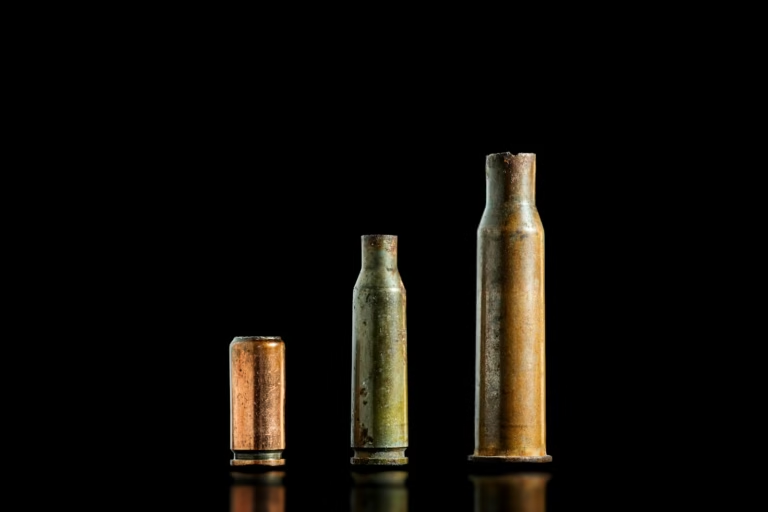
What Do the Bullet Casings Mean?

0

Key Takeaways

  • The bullet casings had messages like “Hey, fascist! Catch” and “If you read this, you are gay, lmao.”
  • NBC’s Brandy Zadrozny called these engravings “internet speak” favored by young people.
  • Interpretations range from memes and trolling to political statements.
  • Authorities urge caution before drawing firm conclusions.
  • Much about the accused shooter’s online presence remains unknown.

Moments after Utah’s governor named 22-year-old Tyler Robinson as the suspect, news crews spotted odd bullet casings near the crime scene. They bore phrases in English that seemed random. So an NBC journalist, Brandy Zadrozny, was asked to explain their meaning. Her answer raised more questions than it solved.

The Strange Messages on the Bullet Casings

On first glance, the bullet casings looked like they held clues to motive. In fact, investigators found at least five different engravings:

• “Hey, fascist! Catch”
• “If you read this, you are gay, lmao”
• “Oh, Bella Ciao, Bella Ciao, Bella Ciao”
• A row of up-and-down arrows
• “Notices, bulges what’s this?”

Each casing had one phrase or symbol. Yet no one knows if these words were meant seriously, as a prank, or something else entirely. Therefore, social media users quickly spun wild theories. Meanwhile, law enforcement and journalists urged calm.

Internet Speak and Memes

According to Brandy Zadrozny, these bullet casings showcase “internet speak.” In simple terms, that means slang, jokes, and references born online. For example, “Notices, bulges what’s this?” comes from a meme about gay or trans people. It first popped up on Discord or gaming chats as a teasing joke.

Similarly, the up-and-down arrows appear in a popular video game clip. Players use those arrows to signal a massive attack or total destruction. Thus, “Hey, fascist! Catch” plus the arrows might hint at violent intent against extremists. On the other hand, “Bella Ciao” is an anti-fascist anthem from Italy, made famous again by a hit TV show.

Finally, “If you read this, you are gay, lmao” is a direct internet taunt that laughs at the reader. It appears in chat rooms to tease or mock. Altogether, these engravings mix political slogans, game references, and online jokes.

Caution Before Drawing Conclusions

However, Zadrozny stressed we must take all this “with a grain of salt.” In other words, it is risky to treat every meme as a clear sign of motive. Internet users often troll by posting stuff they do not truly believe. Moreover, some people pretend to be someone else to confuse others.

So far, investigators have not found any of Robinson’s public profiles. He likely used Discord and other private platforms. As Zadrozny said, “He’s a child of the internet, he’s on the internet. But where he existed, we just don’t know yet.” Consequently, we cannot confirm if he held pro-trans views, anti-fascist beliefs, or was merely copying memes.

What We Still Don’t Know

Despite the bullet casings’ odd phrases, many questions remain:
• Did Robinson engrave these messages himself?
• Were they meant to threaten or to amuse?
• Could someone else have left them to mislead investigators?
• What other online activity, if any, ties him to extremist viewpoints?

Authorities continue to follow leads. They have not linked Robinson to any hate group or extremist cell. Yet they also cannot rule out political motivation. In short, they advise the public to watch for solid evidence before making judgments.

In the meantime, the community wrestles with fear and uncertainty. Some worry that violent messages on the bullet casings prove a hate crime. Others think it shows the power of internet culture to blur reality. Either way, the case underlines how online slang can complicate serious investigations.

Conclusion

The bullet casings found at the scene present a puzzle. They mix memes, jokes, and political slogans. According to experts, these texts may mean nothing more than a youthful prank—or they could signal deeper intent. For now, officials urge caution and further study. Only time and thorough investigation will reveal the truth.

Frequently Asked Questions

What did the bullet casings found at the scene say?

They carried phrases like “Hey, fascist! Catch,” “If you read this, you are gay, lmao,” the anthem line “Bella Ciao,” up-down arrows, and a meme line about bulges.

Who explained the messages on the bullet casings?

NBC journalist Brandy Zadrozny described them as “internet speak” common among people in their early twenties.

What is meant by “internet speak”?

Internet speak refers to slang, memes, and coded jokes that spread online, often through social platforms and gaming communities.

Why should people be careful about drawing conclusions?

Because online jokes or symbols can be used sarcastically or to troll. Without clear evidence, it’s risky to assume motive or intent.

Will Tyler Robinson’s Own Words Seal His Fate?

0


Key Takeaways

• A 22-year-old named Tyler Robinson faces charges in the assassination of a political influencer.
• His statements to a roommate and a family member may be used as evidence.
• Former FBI director Andrew McCabe says those words could hurt Robinson in court.
• Investigators are also examining the roommate’s knowledge and possible involvement.

Tyler Robinson’s Statements Could Change His Case

A Utah man, Tyler Robinson, was arrested on Friday for allegedly attacking a well-known political influencer. Robinson is 22 years old. He spoke with a roommate and a family member before officers took him into custody. Now, those private conversations may be used against him in court. Andrew McCabe, who used to lead the FBI, told CNN that Robinson’s own words will likely stay in the case.

How Tyler Robinson’s Statements Become Evidence

First, Robinson allegedly confessed parts of his plan to people close to him. He sent text and chat messages on Discord to a roommate. He also spoke about the weapon with a family member. Under Utah law, those messages and conversations can become evidence. McCabe explained that the government will include them in the affidavit for Robinson’s initial charge. At trial, there could be a fight over whether to admit these statements. Even so, prosecutors will still have strong proof.

The Roommate’s Role Under Question

Meanwhile, investigators learned about the roommate’s messages late Thursday. They want to know if the roommate simply heard about the plan or helped in some way. If the roommate knew the full details, he could face co-conspiracy charges. However, McCabe noted that suspicion alone does not mean guilt. The roommate has cooperated so far, but authorities will question him closely. They will ask how much he understood and whether he offered any actual support.

Family Conversations and Confession

Furthermore, a family member noticed photos and grew worried. That relative confronted Robinson. In that talk, Robinson admitted what he had done and why. According to McCabe, those words to a family member amount to a confession. A confession outside of police custody is still valid under Utah law. As a result, Robinson’s own statements could become central in court.

Why Admissible Statements Matter

In a criminal case, the government must show a suspect acted with intent. Confessions and admissions speed up that process. They fill gaps when physical evidence falls short. For instance, photos alone may not prove Robinson carried out the plan. Yet, his admission to family and chats with a roommate help seal the narrative. Therefore, prosecutors gain a clear story of motive and action.

Possible Courtroom Battles Ahead

Even with strong statements, Robinson’s defense will fight to exclude parts of his words. They may argue the roommate acted as an informal police agent. They might claim the family member coerced Robinson into talking. However, McCabe believes the evidence will survive such challenges. Either way, defenders will question search methods and timing of the talks. They will also probe the mental state of Robinson when he spoke.

What Comes Next for Tyler Robinson?

Now, Robinson faces serious charges. Law enforcement says he acted alone. Yet, investigators keep looking for any help he received. They will examine the digital trail of texts and chat logs. They will interview more witnesses. If they find proof the roommate or anyone else joined the plan, more suspects could appear. Robinson’s trial could start months from now. Until then, his statements remain key to the government’s case.

How the Evidence Could Unfold at Trial

During a trial, the judge decides whether to admit statements. If allowed, the jury will hear how Robinson confessed to friends and family. Lawyers for Robinson will try to downplay the impact of those remarks. They may say he was confused or under stress. Regardless, the jury will likely weigh those admissions heavily. Meanwhile, prosecutors will tie the words to physical evidence, such as the rifle mentioned in chats.

Why Investigators Focus on Every Detail

Investigators know that building a strong case requires thorough work. They track the timeline of messages and calls. They study the relationship between Robinson and his roommate. They dig into financial records to see if the roommate bought anything suspicious. They also look at social media posts for hints. This deep dive helps ensure no angle is overlooked. It also readies them for any defense tactics.

The Impact on Public Safety and Politics

This case has drawn national attention because the victim was a prominent political figure online. Many worry about the rise in attacks on public influencers. If Robinson’s statements lead to a conviction, it could set a sharp example. It may discourage others from plotting similar crimes. It could also spark debates about online speech, radicalization, and gun laws.

The Road Ahead for the Justice System

Going forward, the prosecution must link Robinson’s words to actions. They will show how his statements match crime scene facts. They will present any physical proof, like video or fingerprints. The defense will question each piece of evidence, especially his private remarks. The judge will sort out legal challenges over admissibility. Finally, a jury will decide if Robinson is guilty.

Frequently Asked Questions

What exactly did Tyler Robinson say to his roommate?

Prosecutors say Robinson described his plan and mentioned the rifle he used. He also texted about timing and targets. Those messages helped lead police to him.

Can private conversations really be used in court?

Yes. Under state law, statements to friends or family can be admitted if they did not coerce the suspect. Judges review how the talks happened to decide if they count.

Will the roommate face charges too?

Investigators are still looking into the roommate’s role. If they find proof he knew all the details or helped plan, he could be charged as a co-conspirator.

What happens if the judge rules out Robinson’s statements?

Without those statements, prosecutors must rely more on physical evidence. They might need other witnesses or forensic links to prove their case. However, several pieces of proof remain in play.

Did Karoline Leavitt Dodge Questions on Epstein Check?

0


Key takeaways

• Karoline Leavitt deflected questions about a check linked to Jeffrey Epstein
• Salon columnist Amanda Marcotte called Leavitt’s answer a “clever trick”
• The novelty check showed a fake Trump signature and a joke about a “depreciated” woman
• Leavitt’s response raised more questions about Trump’s ties to Epstein

Did Karoline Leavitt Dodge Questions on Epstein Check?

In a White House briefing, Karoline Leavitt faced a question about a photo of a novelty check tied to Jeffrey Epstein. The check looked like it had Donald Trump’s signature. Yet Leavitt said the president didn’t sign it. This answer left people wanting more details about the real story.

Karoline Leavitt’s Answer on the Epstein Check

When asked about the picture, Leavitt said, “It is not Donald Trump’s signature on that check. The president did not sign that check.” However, no one claimed Trump had signed it. Many saw this answer as a way to avoid talking about deeper issues. Salon writer Amanda Marcotte pointed out that Leavitt clearly knew what was at stake.

Why the Epstein Check Matters

This novelty check was part of a birthday book given to Jeffrey Epstein. The check called a woman “fully depreciated.” It treated her like an object. The joke showed how Epstein and Trump viewed women. Marcotte noted that “depreciation” turned a person into an object, like a car. Therefore, the image deserved serious scrutiny.

Amanda Marcotte’s View on the Deflection

Amanda Marcotte wrote that Leavitt used “a clever trick” to dodge the real issue. Leavitt’s answer focused only on the signature, while ignoring two bigger points:
• President Trump’s public views on women
• The experiences of Epstein’s victims and women in his circle

Marcotte argued that Leavitt’s deflection protected a system that lets powerful men escape blame. She added that by excusing or lying, Leavitt joins a cover-up of a reported sex trafficking ring.

The Role of the White House Briefing Room

The White House briefing room often becomes a stage for polished answers. Yet, press secretaries must also face tough questions. In this case, Leavitt stuck to a narrow talking point. Meanwhile, many asked why she refused to discuss Trump’s attitudes toward women or the victims’ stories.

How the Joke in the Check Speaks Volumes

The funny part of the check wasn’t harmless. It sent a message. It said women are like machines you can buy, sell, and throw away. The term “fully depreciated woman” makes that clear. Therefore, the check shows disrespect and cruelty. It also highlights a culture where abusers feel free to mock their actions.

Broader Concerns About Trump’s Ties to Epstein

Many still wonder what Trump knew about Epstein’s behavior. The check fuels that curiosity. If Trump joked about women like objects, what else did he accept? Leavitt’s refusal to address these questions adds fuel to those concerns. Moreover, it leaves the public with doubts about transparency.

Why Transparency Matters

Transparency builds trust. When officials dodge questions, people lose faith. In this case, the public deserves clear answers on:
• Why the check was in Epstein’s files
• Who made the joke and why
• Trump’s connection to Epstein’s circle

Without answers, rumors fill the void. Unfortunately, that hurts everyone’s confidence in leaders.

What Comes Next?

The Epstein check story is far from over. Journalists will keep digging. Members of Congress may demand more information. Also, advocacy groups for victims could push for hearings. As a result, Leavitt and the White House might face repeated questions. Eventually, more facts must come to light.

Why Leavitt’s Response Feels Unsatisfying

Leavitt’s answer seemed tight and rehearsed. It fixed on one tiny piece while ignoring the larger picture. Also, by focusing on the signature, she sidestepped the real issue. People wanted to know how such a joke normalized abuse. Instead, they got a statement about what Trump did not do.

The Impact on Public Perception

When leaders dodge tough questions, the public grows wary. Some see it as a sign of guilt. Others view it as arrogance. In any case, Leavitt’s answer shook confidence. Especially among survivors of abuse, it felt like a dismissal of real harm. Therefore, many are demanding a fuller explanation.

What We Can Learn

This episode shows how powerful men use humor to hide cruelty. It also shows how officials deflect tough topics. Finally, it reminds us that words matter. A joke can wound as much as a punch. So, when officials refuse to talk about hurtful jokes, they protect harmful attitudes.

Moving Forward

As more details emerge, watch for these developments:
• Additional documents from Epstein’s files
• New statements from White House staff
• Congressional inquiries or hearings
• Reactions from victims and advocacy groups

Through all this, the public will push for clarity. Meanwhile, press briefings will test the limits of spin and truth.

FAQs

What did Karoline Leavitt say about the check?

She said President Trump never signed it, though no one claimed he did.

Why was the Epstein check controversial?

The check mocked a woman by calling her “fully depreciated,” treating her like an object.

What did Amanda Marcotte argue about Leavitt’s answer?

Marcotte said Leavitt used a trick to avoid talking about Trump’s attitudes and victims’ stories.

What might happen next with this story?

Journalists and lawmakers could demand more documents, statements, and hearings.

Is the FBI Investigation Becoming Too Political?

0


Key Takeaways

• Former prosecutor Joyce Vance says politics taints the FBI investigation
• Agents made mistakes like naming a wrong suspect and sharing shaky ammo details
• Vance warns that Trump’s influence could steer agents away from key leads
• The politicized process risks fueling conspiracy theories

A former top prosecutor argues that the FBI investigation into Charlie Kirk’s murder now serves politics more than justice. Instead of quiet press briefings, agents turned to tweets. Because of that, the hunt for Kirk’s killer lost credibility and may face serious roadblocks.

Why the FBI Investigation Raised Concerns

Charlie Kirk died at Utah Valley University. His death sparked worldwide coverage. Sadly, two days later, the killer still roams free. In that tense time, the FBI investigation suffered high-profile blunders. First, the director claimed a suspect was in custody. Then agents had to admit they were wrong. Next, an agent told a public influencer that the shooter used ammo engraved with pro-transgender slogans. Yet, officials later said that detail might also be false.

Instead of calming fears, these missteps sparked more questions. Former federal prosecutor Joyce Vance spoke out. She used her Substack writing platform to slam the FBI. Vance said agents chased headlines instead of facts. As a result, she warned, they risk feeding dangerous rumors.

Main Blunders in the FBI Investigation

Wrong Arrest Claim

On Wednesday, agents held a news conference. They said a suspect was in jail. However, hours later they backtracked. No one stood charged. This error made people doubt every update.

Unverified Ammo Details

Soon after, an agent spoke on the record. He said the killer’s bullets had pro-transgender messages. Yet, when asked again, officials admitted that might be untrue. These mistakes came in just 48 hours. They shook trust in the entire FBI investigation.

Tweets Over Briefings

Moreover, the bureau used social media over traditional press conferences. While tweets can reach millions, they lack depth. Vance pointed out that tweets leave too much room for misreadings. Consequently, conspiracy theories thrive.

Politics and the FBI Investigation

Joyce Vance believes politics underlies these errors. She noted that President Trump often criticized agents who gave him bad news. Thus, some agents fear they could lose their jobs if they contradict the president. As a result, agents might avoid leads that challenge the official narrative.

Vance compared this case to past political violence. She reminded readers that a Minnesota legislator’s killing also drew bipartisan outrage. Yet, the FBI steered clear of politics then. Alternatively, she said, Trump’s aides joked when an attacker shot Nancy Pelosi’s husband. In those moments, Republicans downplayed the violence. Now, the bureau seems pressured to focus on details that fit one side’s story.

Could Politics Hinder the Case?

Vance asked whether loyalty to the president will interfere with solid detective work. Will agents ignore evidence that doesn’t match the chosen storyline? She fears true leads may die because they clash with public claims. Moreover, agents who speak up against the narrative may face punishment. For instance, under Trump, some agents lost jobs for doing their duty.

This fear of retaliation could leave critical clues unexplored. Indeed, an agent might hesitate to chase down a tip if it reveals uncomfortable truths. Furthermore, once public trust erodes, witnesses may stop sharing what they know. In turn, the entire investigation falters.

What Comes Next?

For now, the FBI investigation continues. Agents still hope to find the person who pulled the trigger. They must correct past mistakes and rebuild trust. First, they can hold clear press conferences. Then, they need to share only verified facts. Also, they should work to keep politics out of each step.

Indeed, calling off the sound bites and tweets could help. Instead, agents can offer more context and answer tough questions. That approach will calm fears and limit rumors. Above all, they must follow every lead, regardless of political fallout. Only then will justice for Charlie Kirk have a real chance.

Steps to Rebuild Trust

• Hold regular in-person briefings
• Verify every piece of information before release
• Promise transparency, even when updates show no progress
• Shield agents from political pressure

As investigators do their job, the public should demand clear facts. At the same time, citizens must resist jumping to conclusions. Conspiracy theories flourish when trust erodes. Therefore, everyone benefits when law enforcement sticks to evidence.

In the end, the FBI investigation must prove it can rise above politics. Only a fair, fact-based process will catch the killer and restore faith in justice.

Frequently Asked Questions

Why did Joyce Vance criticize the FBI?

She felt the bureau’s handling of Charlie Kirk’s murder hunt mixed politics with facts. Errors and public gaffes undermined trust.

What mistakes happened during the manhunt?

Agents first named a wrong suspect. Then they shared ammo details that later proved shaky. Tweets replaced clear briefings.

How can the FBI rebuild public trust?

By holding regular press conferences, sharing only checked facts, and staying clear of politics. Agents should feel safe following all leads.

What risks come from a politicized investigation?

Leads may go unpursued if they clash with the public story. Witnesses might stop cooperating. In the end, the true culprit could slip away.

Could the Tariff Case Upend Trump’s Trade Plans?

0

Key Takeaways

• President Trump declined to say what happens if courts overturn his tariffs.
• A federal court called the tariffs illegal; the Supreme Court will decide in November.
• Trump warned the tariff case could force the U.S. to pay back trillions.
• Public support for new tariffs fell from 52% to 40% in nine months.
• Price hikes, slower job growth, and rising inflation followed the tariff resumption.

Tariff Case Puts Economic Boom on the Line

During a Fox and Friends interview, President Trump grew quiet when asked about losing the tariff case. He said, “I don’t want to talk about it,” and hinted he would “find something” if the courts strike down his tariffs. Meanwhile, Trump called the upcoming Supreme Court decision one of the most crucial in U.S. history.

Tariffs serve to boost domestic manufacturing and protect American jobs. Since his re-election, Trump raised tariff rates on hundreds of goods from many countries. However, last month a federal judge ruled these tariffs unlawful. Now the Supreme Court will hear the case in November.

Why the Tariff Case Matters

Trump labeled this tariff case “one of the most important in our country’s history.” He argued that on legal merits, the government should win. Otherwise, he warned, the nation might have to return trillions of dollars collected from tariffs.

In fact, Trump sees these duties as proof of his strong trade approach. He claims they sparked an economic boom. Yet, without court backing, that boom could collapse. Therefore, the outcome carries heavy weight for his agenda.

What Happens If the Tariff Case Fails

If the Supreme Court upholds the lower court, the U.S. may need to refund money from past tariffs. This refund could total in the trillions, according to Trump’s own warnings. Such a move might shake the federal budget and unsettle markets.

Moreover, businesses that rely on tariff revenue for planning could scramble. They may face sudden changes in costs and supply chains. As a result, companies might delay investments or expand overseas instead.

The People Speak on the Tariff Case

Initially, many Americans supported new tariffs. In November, 52 percent favored them, a CNN-analyzed poll showed. Yet by late August, support dropped to 40 percent. Now 60 percent oppose new duties on imports.

Also, 77 percent of respondents said tariffs would raise prices in the short term. Indeed, after a 90-day pause, tariffs resumed on August 7. Almost immediately, shoppers saw higher prices, hiring slowed, and inflation crept up.

After the Tariff Case: What’s Next

The Supreme Court will hear arguments in November. Until then, Trump refuses to reveal backup plans. He insists his team will “find something” if the tariff case fails. Yet he offered no details.

In the coming months, businesses and consumers alike will watch closely. If the Court rules for Trump, tariffs will stand and domestic manufacturers celebrate. If the Court rules against him, the White House may need a fresh strategy.

Meanwhile, economists will debate the best route. Some say targeted tariffs can protect key industries. Others warn broad duties risk higher costs for families. As the legal drama unfolds, the economy remains on edge.

Frequently Asked Questions

How could the tariff case affect everyday shoppers?

If tariffs stay, some imported goods will cost more. That can raise prices on clothes, electronics, and food. If courts overturn the case, companies may receive refunds but face rule uncertainties.

Why did a federal judge rule Trump’s tariffs illegal?

The judge found that the administration exceeded its authority when imposing new duties. The ruling said Congress, not the president alone, must authorize major tariff changes.

What are possible alternatives if the tariff case fails?

The White House could seek new legislation from Congress. It might also use targeted subsidies, negotiate fresh trade deals, or apply tariffs only to specific items.

How do tariffs influence inflation and job growth?

Tariffs can protect local factories but often raise costs for manufacturers and consumers. Higher import prices can push overall inflation up and slow down hiring as businesses adjust budgets.

Why Did Joe Walsh Criticize Charlie Kirk?

0


Key takeaways:

  • Joe Walsh wrote a harsh op-ed about Charlie Kirk before Kirk’s death.
  • Walsh

    once felt close to Kirk, but they later broke ties.

  • He blames Donald Trump for dividing them.
  • The piece addresses a tragic Charlotte train stabbing.
  • Walsh shared the original text to avoid whitewashing.

Joe Walsh was once a mentor and friend to Charlie Kirk. He even said he thought of Kirk “like a son.” However, their bond fell apart when politics turned personal. Walsh blames former President Donald Trump for driving that split. He argues that Trump’s style pushed Charlie Kirk and himself onto opposite paths. As a result, they grew distant and stopped speaking for years.

Joe Walsh’s View on Charlie Kirk

Walsh wrote an op-ed before Kirk’s killing but chose to share it afterward. He did this because he did not want to erase the hard truths. In his piece, Walsh called out Kirk for fueling division by race. He said Kirk and others make money by stirring anger on TV and social media. Moreover, Walsh stressed that Kirk did not deserve to die. He made that clear in a new section added after the fatal shooting.

The Train Stabbing Sparks Debate

The op-ed focuses partly on a grim event in Charlotte. A 23-year-old Ukrainian refugee named Iryna Zarutska was stabbed to death on a light rail train. The suspect, a Black man with multiple priors, left the scene and walked away. Immediately, conservative voices, including Charlie Kirk, said this killing was ignored because of the victim’s race. They pointed fingers at the media and Democratic leaders. Walsh called that reaction “f—— sick.” He felt it twisted a human tragedy into a political tool.

How Walsh Blames Trump for Their Rift

In his writing, Walsh says Trump changed everything. He claims the former president’s harsh talk forced many on the right to choose a side. Charlie Kirk took one side, Walsh took another. They could no longer find common ground on policy or tone. Walsh also felt that Kirk’s attacks became more extreme under Trump’s influence. As a result, the trust that once linked them vanished. Walsh says Trump didn’t just divide the country—he split up friendships too.

Publishing the Op-Ed After Kirk’s Death

Walsh admits it seemed odd to release a criticism after Kirk’s death. Yet he wanted to avoid whitewashing Kirk’s record. He felt people would paint Kirk as only a victim without seeing his past work. So Walsh added a short note expressing sorrow for the killing. Then he shared his earlier draft. In his words, it’s better to face hard truths than to let history spin a cleaner story than reality.

Why This Matters for Right-Wing Media

This episode shows how heated political divides can become personal. Influencers like Charlie Kirk hold major sway over public opinion. When they react to tragic events, those reactions shape nationwide debates. Walsh’s op-ed highlights how even allies can turn on each other when politics heats up. Furthermore, it warns that no one is immune from controversy in today’s media world.

Lessons on Division and Responsibility

This story also raises questions about accountability. If a public figure stokes racial tension, should they face rebuke from their own side? Walsh thinks so. He argues that self-critique can help the right regain credibility. Instead of blaming opponents, they should focus on real solutions. For example, Walsh suggests talking about mental health and crime without race baiting. That, he says, would honor the memory of Iryna Zarutska more than political blame games.

How Readers Can Reflect

First, it reminds us to look beyond headline grabs. Second, it shows that relationships can survive disagreement—if both sides listen. Finally, it asks all of us to demand better from our leaders and influencers. Whether on the left or the right, words carry weight. They can inspire hope or feed anger. In this case, Joe Walsh used his own platform to call out Charlie Kirk’s tactics. His goal was to push for more honesty in public debate.

Moving Forward After a Tragic Split

In the end, Walsh’s op-ed is both a farewell to a friendship and a call to conscience. He did not shy away from harsh judgments about Kirk’s style. Yet he also refused to let the moment become a simple martyr story. Instead, he forced readers to wrestle with tough questions about media, race, and loyalty. As political voices grow louder, this tale reminds us that we all share the cost of division.

FAQs

What did Joe Walsh say in his op-ed?

He criticized Charlie Kirk for using race to divide Americans. He also blamed Donald Trump for widening their split.

Why did Walsh add to the op-ed after Kirk’s death?

He wanted to avoid whitewashing Kirk’s history while still showing respect for his death.

What happened in the Charlotte train stabbing?

A 23-year-old Ukrainian refugee, Iryna Zarutska, was fatally stabbed by a man with a criminal past. The incident sparked political controversy.

How did Donald Trump contribute to Walsh and Kirk’s fallout?

Walsh says Trump’s harsh rhetoric forced them onto opposite sides, ending their friendship and shared views.

Did Political Violence Lead to Charlie Kirk’s Death?

0

Key Takeaways

  • The killing of Charles James Kirk shows how harsh talk can turn deadly.
  • Kirk spread racist and hateful messages as if they were fair debates.
  • Experts warn heated language often fuels political violence.
  • Leaders now call for calmer, more respectful discussions.

How Political Violence Shaped the Tragedy

The sad death of Charles James Kirk is a warning. He was a 31-year-old speaker known for harsh words. He often used racist and hateful talk. Some call his style “political violence in speech.” This means his words attacked whole groups of people. Sadly, those attacks may have found real violence in return.

Many believe our political language is too hot. They say cruel words break down trust. Then conflict grows. In fact, experts link such talk to real political violence. They worry the next attack may be worse.

The Rise of Heated Political Talk

First, Kirk used strong language in online debates. Then he claimed Black pilots were bad at flying. Next, he blamed voting fraud on one side. He even denied the Civil Rights Act helped people of color. Through these claims, he pushed a racist agenda.

Moreover, Kirk argued against LGBTQ+ rights and abortion. He dismissed key civil rights leaders. He mixed his faith with politics to gain trust. As a result, many young listeners saw hate as normal.

Therefore, his style showed how hate can hide in “rational” debate. In fact, this tactic has deep roots. Long ago, leaders used coded words to push racism. Kirk repackaged those old ideas for today’s stage.

Racist Rhetoric and Hate Speech

Kirk’s speeches often included hints of a “white nation.” This echoed a conspiracy called the Great Replacement. It claims one race is being forced out by another. Scholars call this idea dangerous. It offers a reason to scare people.

Consequently, such talk is a form of political violence. Even if words do not hurt bodies, they do harm minds. They make people feel unsafe. They invite some to act out with real weapons.

Also, Kirk spread false claims about vaccines and elections. These lies broke trust in public health and democracy. When people lose trust, they may turn to violence. In fact, many attacks in recent years had similar roots.

The Impact on Real Safety

After years of heated talk, Kirk was killed. His death shocked many on both sides. Some blamed “the radical left.” Others called for calm. Yet few looked at how his own words invited hate in return.

Now we see the sad cycle. Harsh words lead to more harsh words. Then threats and real attacks follow. This is the path from online insults to gunshots in the streets.

Furthermore, victims of hate speech often fear for their lives. Kirk targeted Black people, people of color, and LGBTQ+ folks. As a result, these communities felt more danger. They knew hateful language can turn violent.

Responses From Leaders

After the killing, political leaders spoke out. One former president ordered flags at half-mast. He urged people to lower the tone of debate. However, he also blamed the other side for stirring hate.

Faith leaders, like Rev. Graylan Scott Hagler, called out the role of hate speech. He said Kirk “twisted old racism into new forms of attack.” He warned that until we face this truth, more violence may come.

Meanwhile, some right-wing figures try to make Kirk a martyr. They claim he died for speaking the truth. Yet many see his words as the very kind of hate that kills.

Why Political Violence Matters Now

We live in a time when words carry power. Fast posts and tweets shape how we see others. Sadly, some use this power to spread hate. This makes “political violence” a modern threat.

If we ignore the link between speech and harm, we risk more tragedies. Instead, we must teach respect and listening. We need to challenge hate, not just condemn the shootings.

Moreover, it helps to recognize coded racism. When someone says one group “does not belong,” that is hate speech. We must speak out right away, before it leads to attack.

Finally, we all can make a change. We can choose calm words online. We can listen to others who feel hurt. Thus, we break the cycle of harsh talk.

Moving Beyond Harsh Talk

We may never agree on every issue. Yet we can agree that violence is wrong. We can refuse to use hate as a tool in debate. We can demand real facts, not wild claims.

By doing so, we protect our communities. We also honor those who lost their lives. No one should die because of cruel words.

In the end, the killing of Charles James Kirk should wake us up. It shows how “political violence” in speech can invite real death. Therefore, let us lower our voices. Let us build bridges, not walls.

Frequently Asked Questions

What exactly is political violence?

Political violence is harm that arises from extreme or hateful political speech. It includes threats, intimidation, and real attacks fueled by heated words.

How can we spot hate speech online?

Hate speech often blames a whole group for society’s problems. It uses insults, slurs, or lies about race, religion, or orientation. When you see this, call it out or report it.

Can harsh words really lead to real violence?

Yes. Experts say constant harsh talk can make people feel justified in attacking others. It creates an unsafe climate that can turn deadly.

What steps can we take to lower political violence?

We can use kind and honest words. We can fact-check claims before sharing them. Above all, we can listen to those who feel threatened and stand up for respect.

Could Organ Donation Save Lives or Risk Them?

0

Key Takeaways:

  • A young man nearly had his organs removed while still alive.
  • A new neurosurgeon intervened to stop the surgery.
  • The case raises tough questions about organ donation rules.
  • Experts say we must improve how and when organ donation happens.

Organ Donation System in Question

Larry Black Jr. lay on an operating table with his chest open. Doctors prepared to harvest his organs for donation. His heart still beat. No brain death exam had happened. Then a hurry-breath doctor burst in. He said, “This is my patient. Stop!”

Dr. Zohny Zohny, a first-year neurosurgeon, fought to save Larry’s life. The surgical team had consent from Larry’s family. Yet Zohny said he never spoke to them. He worried Larry could recover. He threatened to quit if they went on.

Finally, the team backed down. They wheeled Larry back to intensive care. Two days later, he woke up. Within a week, he stood. Now 28, he is a father of three and a musician. He still needs therapy for lasting injuries.

This startling rescue has put a spotlight on organ donation. Federal investigators show cases where doctors began organ removal too soon. They found 73 patients with signs of life faced planned harvesting. No one wants to see such mistakes again. Yet thousands wait for organs every year. More than 48,000 transplants happened in 2024.

When Can Organ Donation Begin?

Doctors declare death in two ways. One is cardiac death when the heart stops. The other is brain death when the brain and brain stem stop working. Each hospital has its own steps to confirm death. However, confusion can happen in the middle zones of illness.

In Larry’s case, doctors treated him for a gunshot wound. His heart and lungs worked. But no brain death exam took place. His family felt uneasy. They noticed him tapping and blinking. They said he heard his mother shout his name. The hospital called a “hero’s walk” for him. Soon after, staff invited the family to talk about organ donation.

His mother said it was too soon. A woman from the transplant group persisted. The family felt pressured. Finally, they agreed. They thought Larry had no chance to live. Yet his alert signs never went away. Only Dr. Zohny’s brave move stopped the process in the operating room.

Why Organ Donation Rules Matter

Organ donation saves thousands of lives each year. At the same time, trust in the system can easily break. When a case like Larry’s makes headlines, families wonder if their loved ones might face the same fate.

Moreover, data shows that young Black men suffer more from gun violence. They may also face bias in critical care. A former trauma surgeon reviewed Larry’s records. He said the case reflects “general neglect” of Black men’s bodies. The real issue is structural, not a single doctor’s mistake.

To restore trust, experts call for clear, uniform rules. They urge better tests for consciousness. They also want families to join the conversation earlier. A system review could add safeguards to protect patients and donors alike.

Questions Hospital and Transplant Groups Face

Hospitals must follow state and federal laws when they treat critical patients. Transplant teams must also obey strict rules. Yet, no single national standard guides every step. This gap can create confusion on when organ donation may begin.

Mid-America Transplant, which served Larry’s region, says it walks away when patients improve. But the group admits it never stops as late as during surgery. The delay cost Larry a near-death moment. Now the group wants to regain public trust.

Meanwhile, federal health officials promise a major system overhaul. They vow to tighten rules to prevent organ removal before death. They say every donor’s final moments deserve respect and clarity.

Lessons from a Life Saved

Because of Dr. Zohny’s actions, Larry survived. He now uses his music to share his story. He still faces seizures and heat sensitivity from bullet fragments. He admits he no longer wants to be on any organ donor list. He feels the system nearly took his life too soon.

Dr. Zohny left the hospital soon after. He now researches human consciousness at a leading institute. He plans a new method to measure brain signals and detect awareness. He hopes such tools can guide organ donation decisions in the future.

Larry’s case reminds us how fragile trust can be. It also shows how one doctor’s choice can change a life. Going forward, policy makers, hospitals, transplant groups, and families must work together. They must ensure organ donation happens at the right moment, in the right way, and for the right reasons.

Frequently Asked Questions

What is organ donation and how does it work?

Organ donation is giving organs or tissues to help others. When a person dies, doctors can recover healthy organs. Then transplant teams match donors with patients in need.

When can doctors legally remove organs?

Doctors remove organs after a complete death declaration. Death comes after the heart stops or the brain stops working. Hospitals follow clear tests to confirm either one.

Why did Larry feel pressure about donation?

Larry’s family saw him move and blink in a coma. They doubted he was truly gone. Still, staff urged them to sign donation papers. This made them feel rushed and uneasy.

How can the system improve trust?

Experts suggest national rules and better brain tests. They want clear steps so no surgery begins too soon. Open talks with families can also build confidence.

Is Government Fear Silencing Our Voices?

0

Key takeaways:

  • Government fear is shaking trust in our democracy.
  • Media and leaders avoid critics to escape threats.
  • We can still unite and end government fear.
  • Hands-on steps help protect our free society.
  • Young and old can stand up for our rights.

Understanding Government Fear

Many Americans now feel uneasy about speaking up. This happens because they sense a threat from those in power. Government fear grows when leaders punish critics, block freedoms, or spread lies. For example, when reporters hide stories to avoid lawsuits, citizens learn to stay quiet. Moreover, if public servants lose jobs over old social media posts, workers learn self-censorship. As a result, society drifts from open debate to silent acceptance. Yet, our democracy relies on bold voices, not hushed whispers.

Why People Fear Government

People fear government for many reasons. First, powerful figures use lawsuits or threats to intimidate. Second, private security forces kidnap or silence protesters in secret. Third, social media giants tweak algorithms to reward hate and punish kindness. Because of these moves, many feel trapped and alone. However, history shows that fear can be overcome when citizens unite. Still, we must recognize the tactics that fuel our worries.

The Role of Media and Politics

Traditional news outlets now bow to political pressure. Two big TV networks paid huge sums to avoid legal fights. Newspapers add rightwing voices to balance threats rather than truth. Likewise, elected officials cower under primary challenges and massive funding from wealthy donors. This creates a cycle: media avoid tough stories, so leaders grow bolder. Consequently, more Americans hide their views. We cannot let this cycle trap us in silence.

Signs of a Creeping Dictatorship

Several warning signs show our democracy weakening. Secret arrests by armed civilians point to unchecked power. Politicians shield allies from scandals. Courts back unfair actions without scrutiny. Public programs like social security or student aid face cuts. Meanwhile, top officials push policies favoring the very rich. These moves strip the average citizen of protection. If left unchecked, they pave the way for outright authoritarian rule.

Combating Government Fear Together

Despite these threats, we still hold the power. Our government must answer to its people, not the other way around. First, we can speak out in safe spaces like community groups or town halls. Next, we can support media that refuse to yield to intimidation. Also, we can back candidates who defend free speech and voting rights. By acting together, we show that government fear has no place here.

Steps to Take for Democracy

Organize locally: Join or start a civic group. Host street-corner discussions or online chats.
Protect tomorrow: Volunteer for fair elections and voter registration drives.
Empower the press: Subscribe to independent news outlets and share honest reporting.
Speak kindly: Counter hate speech online with facts and compassion.
Hold leaders accountable: Attend public meetings and demand answers.

Each step chips away at the power of intimidation. Moreover, when neighbors see activism in action, they feel less alone. As more voices rise, the notion of government fear crumbles.

Conclusion

Our democracy depends on citizens who refuse to bow to threats. Even in hard times, history teaches that peaceful resistance works. When we unite, government fear loses its grip. So let us stand together, speak up, and rebuild a government that truly serves “We, the People.”

What can I do if I feel afraid to speak up?

Find trusted friends or local groups that share your concerns. Start small by posting thoughts in safe online forums or attending low-key meetings. Gradually, your confidence will grow as you connect with others.

How can I support free and independent media?

Subscribe to outlets that promise editorial integrity. Share their articles with friends. You can also donate to nonprofit news sites that resist government pressure.

Is it legal to protest government actions?

Yes. Peaceful protest remains a protected right. Always check local laws and stay respectful. Gathering peacefully shows unity without breaking rules.

How do I encourage neighbors to join civic actions?

Start by listening to their worries. Offer simple, clear ways to help, like passing out flyers or hosting a small meeting. When people feel heard and able to help, they often step forward.