62.6 F
San Francisco
Sunday, June 7, 2026
Home Blog Page 60

MTV Splitsvilla X6 Finale Heats Up as ‘Pyaar Ka Power’ Fan Voting Changes the Game

Quick Summary: MTV Splitsvilla X6 Finale Heats Up as ‘Pyaar Ka Power’ Fan Voting Changes the Game

  • MTV Splitsvilla X6 introduces ‘Pyaar Ka Power’, a fan voting feature, impacting the finale outcome.
  • The finale will see top couples Kaira-Gullu, Sorab-Niharika, and Ruru-Yogesh competing.
  • Fan votes will play a crucial role, but other factors will also influence the winner.
  • The ‘Ticket To Finale’ task adds pressure, narrowing focus on key couples.
  • Hosts Sunny Leone and Karan Kundrra build suspense with potential late-stage twists.

The MTV Splitsvilla X6 finale is set to be a game-changer with the introduction of ‘Pyaar Ka Power’, a fan voting feature that could dramatically alter the outcome. This new twist allows viewers to have a say in who walks away as the winning couple, adding a layer of unpredictability to the competition.

This season has been a rollercoaster, with the ‘Pyaar Ka Power’ feature enabling fans to vote for their favorite couples. While these votes will significantly influence the finale, other elements like task performance will also play a role. This hybrid model transforms the finale into a mix of reality-show strategy and popularity contest.

As the finale approaches, confusion surrounds the finalists. Reports initially listed four couples, but recent updates suggest only three pairs—Kaira-Gullu, Sorab-Niharika, and Ruru-Yogesh—will compete. This discrepancy adds to the suspense and unpredictability of the finale.

But another Filmibeat report from 4 days ago said the “top three finalist jodis” will compete in the star-studded finale, naming Kaira-Gullu, Sorab-Niharika, and Ruru-Yogesh as the likely final three. On May 9, reports around Episode 53 described a final dome session, an eviction threat, and more “mischief twist” fallout.

Moneycontrol, in a report published yesterday, says MTV Splitsvilla X6 has launched “Pyaar Ka Power,” a “unique fan voting feature” that lets “Splitspaglus” vote for their preferred finalists, and adds that those votes will be “crucial in selecting the winner couple,” even if the final outcome still depends on other factors. Filmibeat, in reporting from 3 days ago, said the Ticket To Finale task had narrowed attention around pairs including Kaira-Gullu, Sorab-Niharika, Tayne-Soundharya, and Ruru-Yogesh, while another report from 2 days ago framed Episode 53 as part of the “final dome session” and linked it directly to eviction pressure and the same Ticket To Finale element.

A Filmibeat report published last month said the leaked top four finalists were Sorab Bedi and Niharika Tiwari, Gullu and Asmita, Yogesh Rawat and Ruru Thakur, and Mohit with Anushka Ghosh. That means this week’s endgame is not just about who is popular, but who survives the final elimination architecture long enough to benefit from fan voting at all.

On May 8, coverage around Episode 52 highlighted that the “Ticket To Finale” twist had become the season’s immediate obsession. That is why the fan-voting twist is the most newsworthy revelation right now: it opens the door to a late reversal and makes the finale less about who dominated the villa all season than about who can convert visibility into victory in real time.

The biggest new twist in MTV Splitsvilla X6 is that the finale is no longer just being decided inside the villa: for the first time, viewers are being pulled directly into the result through a fan-voting mechanic branded “Pyaar Ka Power,” which multiple fresh reports say will play a “crucial” role in choosing the winning couple. The timeline over the past 7 days has been dense.

On May 9, reports around Episode 53 described a final dome session, an eviction threat, and more “mischief twist” fallout. Moneycontrol, in a report published yesterday, says MTV Splitsvilla X6 has launched “Pyaar Ka Power,” a “unique fan voting feature” that lets “Splitspaglus” vote for their preferred finalists, and adds that those votes will be “crucial in selecting the winner couple,” even if the final outcome still depends on other factors.

Filmibeat, in reporting from 3 days ago, said the Ticket To Finale task had narrowed attention around pairs including Kaira-Gullu, Sorab-Niharika, Tayne-Soundharya, and Ruru-Yogesh, while another report from 2 days ago framed Episode 53 as part of the “final dome session” and linked it directly to eviction pressure and the same Ticket To Finale element. That means this week’s endgame is not just about who is popular, but who survives the final elimination architecture long enough to benefit from fan voting at all.

Read more on Digital Chew

Tennessee Republicans Pass Controversial US House Map Amid Public Protests

Quick Summary: Tennessee Republicans Pass Controversial US House Map Amid Public Protests

  • The Tennessee Republican-backed congressional map was signed into law by Governor Bill Lee on May 7, 2026, sparking immediate legal challenges.
  • The map aims to dismantle Tennessee’s lone Democratic-held U.S. House district in Memphis, raising accusations of racial vote dilution.
  • Protests erupted at the Tennessee Capitol during the map’s approval process, highlighting deep divisions and heightened emotions.
  • Legal challenges argue the map imposes an unconstitutional burden on voters, citing previous state arguments against late-cycle changes.
  • Tennessee’s actions are part of a broader national trend of redistricting following recent Supreme Court rulings affecting Voting Rights Act protections.

Tennessee Redistricting: Key Takeaways

The ink was barely dry on Tennessee’s new congressional map when the legal challenges began to fly. Signed into law by Governor Bill Lee on May 7, 2026, this Republican-backed redistricting effort has ignited a firestorm of controversy and protest, particularly for its attempt to dismantle the Democratic stronghold in Memphis.

Republican leaders have been transparent about their intentions, with State Senator John Stevens admitting the map is designed to maximize partisan advantage. This move is not just a Tennessee issue; it’s part of a national strategy to redraw districts in the wake of Supreme Court decisions that have weakened Voting Rights Act protections.

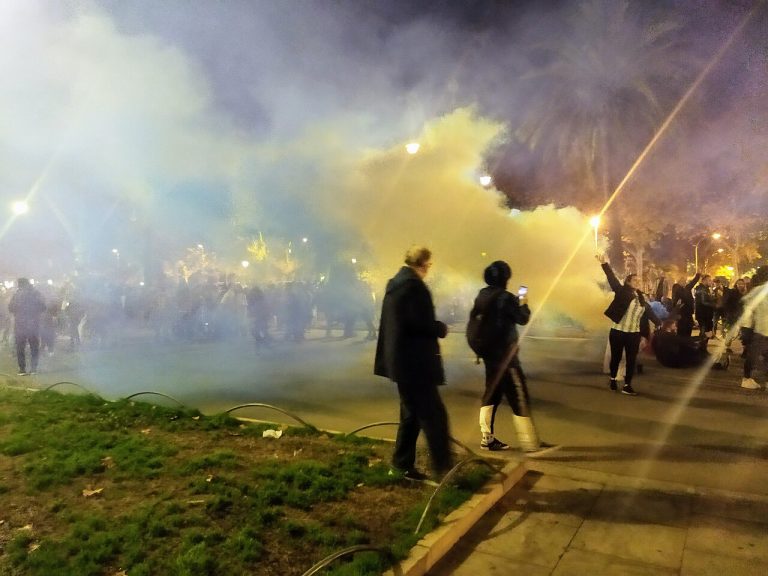
Protests erupted at the Tennessee Capitol, with demonstrators and Democratic legislators vocally opposing the map. The scene was chaotic, with air horns and chants echoing through the halls, underscoring the deep divisions this map has created.

Legal battles were swift, with lawsuits arguing that the new map imposes an unconstitutional burden on voters. The plaintiffs, including U.S. Representative Steve Cohen, argue that the timing of the map’s approval is impractical and infringes on constitutional rights.

As the courts weigh in, the political landscape in Tennessee hangs in the balance. The outcome of these legal challenges could set a precedent for other states grappling with similar redistricting efforts, making this a pivotal moment in the ongoing battle over electoral boundaries.

Tennessee’s biggest new turn is that the Republican-drawn House map did not just pass amid shouting and walkouts on Thursday, May 7, 2026 — it was signed into law almost immediately by Gov. The suit says that, “Based on the sworn statements of the very election officers who will administer the August 6, 2026, primary statewide and in Shelby County …

Lawmakers first repealed a Tennessee law that had barred mid-decade congressional redistricting, then passed a measure reopening candidate qualifying until May 15 so candidates can enter races, switch districts, or drop out before the August 6, 2026 primary. In 2022, Tennessee successfully argued it was too late in the cycle to change maps; now, the new plaintiffs say the legislature acted even later, on May 7, 2026, and is creating an unconstitutional burden so close to the election.

AP reported Tennessee is now the ninth state to redraw congressional districts since President Trump pushed Texas Republicans to do so last year, and the same report says Republicans believe this nationwide wave could net them as many as 14 seats, while Democrats think they could gain up to 10 from their own counter-moves. Bill Lee and then hit with legal challenges within hours, setting up a fast collision between election administration and voting-rights litigation before Tennessee’s August 6 primary.

John Stevens said, “This bill represents Tennessee’s attempt to maximize our partisan advantage,” while Republican state Rep. Jason Zachary said the new lines create “a unique opportunity” for “the first time in history” to send “an all-Republican delegation” from Tennessee to Washington.

What makes the story especially combustible is the accusation that Republicans are using a new Supreme Court opening to do what Democrats say is plainly racial vote dilution under the cover of partisanship. Supreme Court ruling last week weakened Voting Rights Act protections for minority voters, and Democrats responded with some of the sharpest language of the week.

Tennessee Redistricting: Key Takeaways Quick Summary: Tennessee Republicans Approve Controversial US House Map Amid Protests – MSN The Tennessee Republican-backed congressional map was signed into law by Governor Bill Lee on May 7, 2026, sparking immediate legal challenges. Tennessee’s biggest new turn is that the Republican-drawn House map did not just pass amid shouting and walkouts on Thursday, May 7, 2026 — it was signed into law almost immediately by Gov.

Read more on Digital Chew

Shabnim Ismail Set for Stunning Proteas Comeback Ahead of 2026 T20 World Cup

Quick Summary: Shabnim Ismail Set for Stunning Proteas Comeback Ahead of 2026 T20 World Cup

  • Shabnim Ismail’s return is not confirmed, leaving a gap in the Proteas’ pace attack.
  • South Africa secured a 4-1 victory against India in a T20I series, boosting morale.
  • The 2026 T20 World Cup begins on June 12 in England, with team dynamics in flux.
  • Ismail last played internationally in the 2023 Women’s T20 World Cup final.
  • Without Ismail, South Africa’s recent performance against New Zealand exposed vulnerabilities.

As the 2026 T20 World Cup looms, South Africa’s women’s cricket team finds itself at a crossroads, grappling with the uncertainty of Shabnim Ismail’s return. Despite coach Mandla Mashimbyi’s public appeals, Ismail remains non-committal, leaving a gaping hole in the team’s pace attack just weeks before the tournament kicks off on June 12.

Ismail, a stalwart of South African cricket, last donned the national colors during the 2023 Women’s T20 World Cup final. Since then, she has focused on domestic and franchise cricket, leaving the Proteas to navigate a challenging landscape without her. The recent series against New Zealand laid bare the team’s vulnerabilities, as they faltered in both T20I and ODI formats.

In Ismail’s absence, South Africa’s bowling attack has struggled to contain top-tier teams, with the White Ferns exploiting these weaknesses to chase down high totals. Coach Mashimbyi has acknowledged the deficiencies, emphasizing the need for a robust pace lineup.

Despite these challenges, the Proteas have shown resilience, securing a 4-1 T20I series victory against India in April 2026. Captain Laura Wolvaardt hailed the series as “perfect prep,” yet the absence of a bowler of Ismail’s caliber remains a pressing concern.

As of May 2026, the Proteas are shifting focus towards refining their middle-order batting and spin strategies, anticipating spin-heavy tactics from opponents. This strategic pivot indicates that Ismail’s return is not the primary focus, as the squad prepares to rely on its current composition.

Further complicating team dynamics are the potential returns of Marizanne Kapp and Dane van Niekerk. While both bring valuable experience, neither can replace Ismail’s pace. With the World Cup squad announcement imminent, the Proteas face a strategic dilemma: pursue Ismail for a short-term boost or trust the group that has recently performed well.

As the June 12 World Cup opener nears, the Proteas must finalize their lineup, balancing the need for pace with the realities of their current roster. The upcoming weeks will be crucial, with all eyes on the final squad announcement and the potential impact of any last-minute changes.

” That matters because Ismail, now 37, has been absent from the international setup since opting to play only domestic and franchise cricket after the 2023 Women’s T20 World Cup final. South Africa’s most consequential women’s cricket development right now is that the Proteas have still not secured Shabnim Ismail’s comeback for the 2026 T20 World Cup, even after coach Mandla Mashimbyi publicly pushed for it, leaving a major pace-bowling question unresolved just weeks before the tournament starts on June 12.

On April 5, IOL reported that discussions were under way to try to bring Ismail back ahead of the India series. By May 5, the latest IOL coverage had shifted to technical tuning rather than any confirmed Ismail breakthrough.

South Africa hammered India 4-1 in a five-match T20I series that ended on April 27, their final official assignment before the World Cup. The freshest IOL reporting from May 5 shows that South Africa’s internal focus has now shifted away from the Ismail question and toward middle-overs batting and handling spin, another sign that a comeback is not yet locked in.

The organizations involved are Cricket South Africa, which has to finalize the World Cup squad balance, and the ICC, whose tournament begins June 12 in England and Wales. The real debate here is strategic as much as emotional: should South Africa keep chasing a retired great for a short-term World Cup boost, or back the group that just dismantled India 4-1?

” From April 17 to April 27, South Africa then beat India 4-1 in the last major pre-World Cup series. What happens next is straightforward and high-stakes: South Africa must settle on its final World Cup composition before the June 12 opener, and any Ismail decision would have to happen immediately to have practical value.

Read more on Digital Chew

Catholic Central Wins OVAC Track Title

Quick Summary: Catholic Central Wins OVAC Track Title

  • Steubenville Catholic Central emerged as a formidable contender at the OVAC Cal Giffin Track and Field Championships, qualifying athletes in multiple girls events.
  • The championship was held on Saturday, May 9, at St. Clairsville’s Red Devil Stadium, with Catholic Central competing in the 4×800 relay.
  • Despite the absence of a confirmed victory article, Catholic Central’s participation in the championship was significant, showcasing their depth in relay events.
  • The qualification process was rigorous, with only the top finishers advancing, highlighting the competitive nature of the event.
  • The lack of immediate post-championship coverage raises questions about the reporting timeline and the visibility of Catholic Central’s achievements.

In a thrilling display of athletic prowess, Steubenville Catholic Central made waves at the OVAC Cal Giffin Track and Field Championships. Entering as a serious small-school contender, they qualified athletes across multiple girls events, setting the stage for a potential triumph.

Held at St. Clairsville’s Red Devil Stadium on May 9, the championship saw Catholic Central competing fiercely, particularly in the 4×800 relay. Their qualification in this event underscored the team’s depth and strategic planning, crucial for small-school success.

However, the absence of a definitive victory article in live search results leaves a gap in the narrative. The rigorous qualification process, which allowed only top finishers to advance, added to the event’s intensity, making Catholic Central’s participation noteworthy.

While the immediate post-championship coverage remains elusive, the significance of Catholic Central’s efforts cannot be understated. Their journey through the qualifiers to the championship stage is a testament to their dedication and competitive spirit.

The freshest reporting I could verify from Weirton Daily Times is the May 7, 2026 qualifier advance piece, which says the championship field for the OVAC Cal Giffin meet was set at St. Steubenville Catholic Central’s big new development is that it entered Saturday’s OVAC Cal Giffin Track and Field Championships as a serious small-school contender after qualifying athletes across multiple girls events, but the specific “wins OVAC track title” story the prompt references does not appear to be available in current live indexing from Weirton Daily Times as of Monday, May 11, 2026.

On Wednesday, May 6, the paper reported the field “is set” for the OVAC championships; on Thursday, May 7, it expanded the 1A-3A qualifiers; and the championship itself was scheduled for Saturday, May 9. If you want, I can do a second-pass search focused on alternative local sources, cached pages, and social posts from OVAC schools or athletic departments to try to recover the actual championship results, team point totals, and post-meet quotes from Saturday, May 9, 2026.

Clairsville’s Red Devil Stadium and that the title meet was scheduled for Saturday, May 9. In that report, Steubenville Catholic qualified in the girls 4×800 relay alongside Shadyside and Magnolia, putting the Crusaders into one of the more visible distance events entering the weekend.

That same May 7 report shows Catholic Central was not merely a one-event qualifier. On the girls side, the Crusaders were listed in the 4×800 relay in the 1A/2A grouping, which matters because relay depth often decides small-school team races more than a single star performance.

The meet itself was framed as the culminating OVAC championship Saturday after 4A and 5A qualifiers were held Monday, May 4, and 1A, 2A and 3A qualifiers were held Wednesday, May 6, giving a tight five-day runway from qualifiers to title competition. By Monday, May 11, the post-meet result story one would expect after a title-winning performance was still not showing up in live web search, which is unusual for a clean championship headline and is the main reason I cannot responsibly invent a scoreline, points total, or quote from coaches or athletes.

Steubenville Catholic Central’s big new development is that it entered Saturday’s OVAC Cal Giffin Track and Field Championships as a serious small-school contender after qualifying athletes across multiple girls events, but the specific “wins OVAC track title” story the prompt references does not appear to be available in current live indexing from Weirton Daily Times as of Monday, May 11, 2026. On Wednesday, May 6, the paper reported the field “is set” for the OVAC championships; on Thursday, May 7, it expanded the 1A-3A qualifiers; and the championship itself was scheduled for Saturday, May 9.

Read more on Digital Chew

ACE Market IPO Could Raise RM26.18 Million for MM Computer Systems

0

Quick Summary: ACE Market IPO Could Raise RM26.18 Million for MM Computer Systems

  • MM Computer Systems plans to raise RM26.18 million through its IPO on the ACE Market, aiming for a June 11, 2026 listing.
  • The company will issue 119 million new shares at 22 sen each, alongside an offer for sale of 47.34 million existing shares.
  • Funds from the IPO are intended to support larger IT contracts requiring significant upfront investment.
  • MM Computer Systems reported RM8.7 million in net profit on RM73.7 million in revenue last year.
  • The IPO also provides liquidity to insiders, including the CEO and executive director.

MM Computer Systems is gearing up for a pivotal moment with its upcoming IPO on the ACE Market, aiming to raise RM26.18 million. This isn’t just a routine listing; it’s a strategic move to secure the capital needed for larger, more ambitious IT contracts.

The company plans to issue 119 million new shares at 22 sen each, with an additional offer for sale of 47.34 million existing shares. This fundraising effort is not merely about prestige; it’s about positioning MM Computer Systems to tackle high-value projects that demand substantial upfront investment in hardware and software.

With a reported RM8.7 million in net profit on RM73.7 million in revenue last year, MM Computer Systems presents a promising yet risky proposition. The IPO will test whether investors believe in the company’s ability to convert procurement-heavy contracts into profitable growth without overextending its balance sheet.

As the June 11, 2026 debut approaches, the market will soon decide if MM Computer Systems’ bold strategy will pay off. The IPO’s success hinges on whether the RM26.18 million raised can transform this mid-sized IT contractor into a formidable player in the tech industry.

7 million in revenue in its last reported year. MM Computer filed its draft prospectus in October 2025, Bursa Malaysia approved the ACE Market listing in January 2026, the underwriting agreement was announced in April 2026, and only now, on May 11, has the company’s fundraising target and 22 sen issue price been pinned down ahead of the June 11 debut.

18 million and signaling that the real story is its push to fund bigger, more capital-intensive IT contracts rather than just a routine small-cap debut. 18 million before listing on Bursa Malaysia’s ACE Market on June 11, 2026.

18 million it is now raising, and they also give investors a rough sense of scale: the fundraising is about 35% of annual revenue and about three times the most recently cited net profit. 18 million is enough to turn a mid-sized Malaysian IT contractor into a stronger contender for higher-value, higher-commitment technology projects.

That pricing and listing date, reported on May 11, turns what had been a longer-running IPO plan into a live transaction with fixed terms, and it is the clearest new development in the story right now. The next major milestone is the June 11, 2026 market debut, when investors will get the first real test of appetite for the stock and for management’s argument that IPO proceeds should go toward procurement of IT hardware and software, workforce expansion and capability development, repayment of borrowings and listing expenses.

That matters because it frames the IPO less as a prestige listing and more as a financing tool for execution risk: the company is effectively telling investors it needs listed-market money to compete for bigger assignments. The company operates in IT infrastructure, networking, cybersecurity, outsourcing, and hardware and software sales and leasing, with customers including government-linked companies, enterprises, corporations and resellers.

MM Computer filed its draft prospectus in October 2025, Bursa Malaysia approved the ACE Market listing in January 2026, the underwriting agreement was announced in April 2026, and only now, on May 11, has the company’s fundraising target and 22 sen issue price been pinned down ahead of the June 11 debut. 18 million through its IPO on the ACE Market, aiming for a June 11, 2026 listing.

7 million in revenue last year, MM Computer Systems presents a promising yet risky proposition. As the June 11, 2026 debut approaches, the market will soon decide if MM Computer Systems’ bold strategy will pay off.

18 million raised can transform this mid-sized IT contractor into a formidable player in the tech industry. 18 million before listing on Bursa Malaysia’s ACE Market on June 11, 2026.

Read more on Digital Chew

Bucks Commissioner and Climate Expert Vie for Pennsylvania 1st District Against Fitzpatrick

0

Quick Summary: Bucks Commissioner and Climate Expert Vie for Pennsylvania 1st District Against Fitzpatrick

  • Fitzpatrick’s campaign highlights Harvie.
  • Primary set for May 19, 2026.
  • The Democratic primary, scheduled for May 19, 2026, sees Harvie facing off against Lucia Simonelli, a climate policy expert.
  • PoliticsPA reported on May 4 that anti-Harvie mailers were landing in Democratic voters’ mailboxes and were paid for by the Republican Federal Committee of Pennsylvania.
  • According to PoliticsPA, the mailers were funded by the Republican Federal Committee of Pennsylvania.
  • In contrast, Harvie raised just under $430,000, and Simonelli collected under $25,000.

The Pennsylvania 1st District race is heating up with Republican incumbent Brian Fitzpatrick’s campaign stirring controversy. Allegations have surfaced that Fitzpatrick’s team is meddling in the Democratic primary by distributing mailers critical of Bucks County Commissioner Bob Harvie. These mailers, aimed at Democratic voters, have ignited a debate over the ethics of such tactics.

Fitzpatrick’s spokesperson, Heather Roberts, confirmed the campaign’s broad targeting strategy, aiming to reach voters across all parties. This approach, however, risks backlash, as voters often disapprove of perceived interference. The Democratic primary, set for May 19, 2026, pits Harvie against climate policy expert Lucia Simonelli, with Harvie enjoying local Democratic committee support.

Financially, Harvie’s campaign faces a steep uphill battle. Fitzpatrick’s campaign has amassed $1.17 million in the first quarter, entering April with $7.65 million in cash. In stark contrast, Harvie raised just under $430,000, and Simonelli collected under $25,000, highlighting Fitzpatrick’s dominant financial position.

Fitzpatrick’s unexpected praise for Simonelli’s stance on open primaries further complicates the race. This move marks a shift in Fitzpatrick’s strategy, as he engages directly with Democratic candidates. The Democratic Congressional Campaign Committee’s endorsement of Harvie underscores his status as the preferred candidate to challenge Fitzpatrick.

The district, covering Bucks County and part of Montgomery County, is a key battleground with significant implications for House control. Fitzpatrick’s calculated efforts to influence the Democratic primary outcome by targeting Harvie and elevating Simonelli could shape the narrative to his advantage, but it carries risks of voter backlash.

PoliticsPA reported on May 4 that anti-Harvie mailers were landing in Democratic voters’ mailboxes and were paid for by the Republican Federal Committee of Pennsylvania. In the same period, Harvie raised just under $430,000 and Simonelli just under $25,000.

The Democratic primary is on Tuesday, May 19, 2026, and the next several days are likely to bring more attacks, more spending, and more scrutiny of whether Republican-linked messaging is influencing Democratic voters. 05 million advantage over any Democratic challenger.

Fitzpatrick also spent nearly $875,000 in the first quarter, compared with roughly $430,000 for Harvie and just over $20,000 for Simonelli, a sign that the incumbent is already spending heavily long before the general election matchup is set. After Harvie said at the April 27 forum that he does not support opening Pennsylvania primaries to unaffiliated voters, Fitzpatrick publicly praised Simonelli’s position instead.

At a League of Women Voters forum in Middletown Township on April 27, the two Democrats spent more than 90 minutes debating the economy, artificial intelligence data centers, and other issues, underscoring what The Philadelphia Inquirer described as a clash between Harvie’s more moderate style and Simonelli’s more progressive approach. ” That endorsement gives Harvie additional validation just as outside attention intensifies and reinforces the idea that national Democrats view him, not Simonelli, as the likelier threat to Fitzpatrick in November.

The winner then heads into a general election against Fitzpatrick, who remains the fundraising heavyweight but is defending a politically tricky seat that recent reporting describes as a top battleground. Right now, the story is no longer simply who is running against Fitzpatrick; it is whether Fitzpatrick’s side is already trying to pick that opponent.

The Democratic primary, scheduled for May 19, 2026, sees Harvie facing off against Lucia Simonelli, a climate policy expert. PoliticsPA reported on May 4 that anti-Harvie mailers were landing in Democratic voters’ mailboxes and were paid for by the Republican Federal Committee of Pennsylvania.

The Democratic primary, set for May 19, 2026, pits Harvie against climate policy expert Lucia Simonelli, with Harvie enjoying local Democratic committee support. Quick Summary: Bucks Commissioner and Climate Expert Vie for Pennsylvania 1st District Against Fitzpatrick Fitzpatrick’s campaign highlights Harvie.

Read more on Digital Chew

Understanding trade credit Insurance in a Constrained Economy

0

Quick Summary: Understanding trade credit Insurance in a Constrained Economy

  • 145 business liquidations in September 2025 — highlighting economic strain.
  • 60% of insurance enquiries are linked to financing needs — showing strategic use.
  • Business liquidations reached 1,180 year-to-date in 2025 — indicating widespread impact.
  • Trade credit insurance seen as a survival tool by industry leaders — emphasizing its importance.
  • Insurance-backed receivables crucial amid tight trading conditions — reflecting market reality.

In the face of South Africa’s economic turbulence, trade credit insurance has emerged as a crucial tool for businesses striving to stay afloat. With a staggering 145 business liquidations reported in September 2025 alone, the need for financial protection has never been more apparent.

The numbers tell a compelling story. As of September 2025, a total of 1,180 businesses have shuttered, with sectors like finance, real estate, and trade bearing the brunt. This grim reality has pushed companies to seek refuge in trade credit insurance, not just as a shield against bad debt but as a strategic lever to secure financing.

Maria Teixeira from Aon South Africa highlights a significant shift in perception: 60% of new insurance enquiries are driven by financing needs. This trend underscores the dual role of trade credit insurance as both a defensive and offensive financial strategy. It’s no longer just about protection; it’s about unlocking better lending terms and ensuring business continuity.

Globally, the trade credit insurance market is experiencing robust growth, with insurers reporting double-digit increases in claims. Yet, they remain committed to underwriting new policies, albeit with more stringent criteria. This global trend mirrors the situation in South Africa, where businesses are increasingly viewing insurance as a financial lifeline.

As South Africa navigates its economic challenges, trade credit insurance will likely play an even more pivotal role. With business liquidations on the rise and constrained trading conditions persisting, the demand for insurance-backed receivables is set to grow. For many companies, this insurance is not just a safety net but a critical component of their financial strategy.

Business Report recently cited Statistics South Africa data showing 145 businesses were liquidated in September 2025, taking the year-to-date total to 1,180 closures, with finance, real estate, trade, catering and accommodation among the hardest-hit sectors. That matters because the South African Chamber of Commerce and Industry has continued to report tight trading conditions, including a December 2025 survey in which 60% of respondents said trade activity was limited, showing that the environment remains constrained enough for insurance-backed receivables to matter.

Recent trade-credit market reporting says major insurers have seen double-digit percentage growth in both the number and total value of claims submitted, while other market surveys have put insurer risk acceptance near 75% for the second half of 2025. In that same report, Coface South Africa CEO Abdul Vally said, “By embracing trade credit insurance, businesses can fortify themselves against market uncertainties and thrive even in tough times,” framing the product as a survival tool rather than a niche risk instrument.

In the Business Report coverage I could locate, Maria Teixeira of Aon South Africa said that “up to 60 percent” of new trade credit insurance enquiries were tied directly or indirectly to financing, a concrete sign that firms were not just buying cover for protection but using it to unlock bank funding. She also warned that the failure of “a major customer or even several smaller customers” could severely damage a company’s finances, especially in weak trading conditions.

The most specific and surprising detail from the reporting is how directly trade credit insurance is being tied to financing access. Teixeira said the approach was gaining traction in South Africa and that businesses were seeking “more competitive lending rates,” not merely loss reimbursement after defaults.

The more honest read is that this is a structural business-risk story rather than a fast-moving political one. What is available from Business Report and closely related reporting is a clear through-line: South African businesses are being pushed toward trade credit insurance because receivables are under pressure, lending is harder to secure, and insolvency risk remains elevated.

Read more on Digital Chew

Plaid Cymru Wales Has Been Hit by a Political Earthquake

0

Quick Summary: Plaid Cymru Wales Has Been Hit by a Political Earthquake

  • Rhun ap Iorwerth, Plaid Cymru’s leader, announced plans to form a minority administration.
  • Plaid took 43 seats on 29% of the vote, ahead of Reform’s 34 seats, while Labour fell to third with only nine seats, a result the Guardian described as ending a century of Labour dominance in Wales.
  • ITV’s final pre-election YouGov model had already signaled the scale of the shift, putting Plaid on 33% and Reform on 29%, but the real shock was Labour’s wipeout and Reform’s leap into second place.
  • Ap Iorwerth has said Wales “demanded” a change in leadership and promised a “stable minority government” based on “mature cooperation” rather than an immediate coalition.
  • On May 5, ITV’s final poll put Plaid ahead on 33% to Reform’s 29% and projected a 43-seat Plaid finish.

Plaid Cymru’s recent electoral victory marks a seismic shift in Welsh politics, ending a century of Labour dominance. With 43 of the 96 seats in the Senedd, Plaid Cymru has positioned itself as the leading force in Welsh governance, setting Wales on a new path towards potential independence.

Rhun ap Iorwerth, the leader of Plaid Cymru, has announced plans to form a minority administration, emphasizing the need for a ‘stable minority government.’ His focus is on negotiating with the UK government for increased powers, particularly in policing and justice, aligning with Plaid Cymru’s long-standing goal of greater Welsh autonomy.

The election results have also highlighted a dramatic decline for the Labour Party in Wales, which saw its seats reduced to just nine. This outcome has prompted internal criticism within Labour, with figures like former MS Alun Davies accusing the UK Labour leadership of neglecting Welsh interests. Labour’s future strategy in Wales is now under scrutiny as it grapples with its diminished influence.

Reform UK emerged as a significant player, securing 34 seats and positioning itself as a formidable opposition force. Despite this success, the party remains politically isolated, unable to convert its momentum into governmental power. Nigel Farage’s influence in Reform UK played a crucial role in this electoral performance, although it fell short of displacing Plaid Cymru as the largest party.

The broader implications for UK politics are considerable. Keir Starmer’s Labour Party is confronted with a strategic challenge: whether to accommodate Plaid Cymru’s demands for more autonomy or risk further decline in Wales. This dilemma underscores the complex dynamics between Westminster and Cardiff Bay, as Plaid Cymru’s victory signals a potential shift towards increased Welsh nationalism.

Plaid took 43 seats on 29% of the vote, ahead of Reform’s 34 seats, while Labour fell to third with only nine seats, a result the Guardian described as ending a century of Labour dominance in Wales. ITV’s final pre-election YouGov model had already signaled the scale of the shift, putting Plaid on 33% and Reform on 29%, but the real shock was Labour’s wipeout and Reform’s leap into second place.

Ap Iorwerth has said Wales “demanded” a change in leadership and promised a “stable minority government” based on “mature cooperation” rather than an immediate coalition. On May 5, ITV’s final poll put Plaid ahead on 33% to Reform’s 29% and projected a 43-seat Plaid finish.

On May 10, ap Iorwerth confirmed he intended to govern as a minority and demand extra powers from Westminster. With 43 seats, he will need at least six more members to back or tolerate his government on key votes, whether through formal deals, abstentions, or ad hoc cooperation.

The next immediate tests are the first minister vote, negotiations over how a minority government functions, and London’s response to Plaid’s demand for expanded powers. Wales’s political shock has hardened into a constitutional test for Keir Starmer’s government after Plaid Cymru won 43 Senedd seats to Reform UK’s 34 and Labour’s collapse to just nine left a pro-independence party in position to lead Wales for the first time.

Plaid wants powers “the same as Scotland” in key areas, especially justice and policing, while Starmer’s UK government must decide whether resisting those demands is worth the political cost of appearing to ignore a Welsh mandate delivered on May 7 and clarified by seat tallies on May 8 and public positioning on May 9 and May 10. The central conflict is now twofold: who governs Cardiff Bay in practice, and how far Westminster is willing to bend to a nationalist-led Wales.

Read more on Digital Chew

Iran ceasefire Proposal Rejected by Trump

0

Quick Summary: Iran ceasefire Proposal Rejected by Trump

  • Oil prices surged over 3% after Trump’s rejection of Iran’s proposal.
  • Iran demanded war reparations and control over the Strait of Hormuz.
  • Trump labeled Iran’s terms as ‘TOTALLY UNACCEPTABLE!’.
  • Negotiations stalled, raising fears of military escalation.
  • Some maritime traffic resumed, indicating selective de-escalation.

In a bold move that has sent shockwaves through global markets, President Donald Trump has outright rejected Iran’s ceasefire proposal. The proposal, which included demands for war reparations, control over the Strait of Hormuz, and sanctions relief, was deemed ‘TOTALLY UNACCEPTABLE!’ by Trump, leading to a surge in oil prices and heightened geopolitical tensions.

The rejection has left negotiations at a standstill, with Washington seeking de-escalation while Tehran pushes for significant political and economic concessions. Iran’s response, delivered through Pakistani mediators, was framed by Iranian media as a U.S. ‘surrender,’ further complicating diplomatic efforts.

Reports indicate that Iran had proposed ending the conflict, lifting sanctions, and transferring enriched uranium to a third country. However, these terms were not palatable to the U.S., resulting in a breakdown of talks. Despite the rejection, some maritime traffic through the Strait of Hormuz has resumed, suggesting a selective easing of tensions.

The situation remains precarious, with potential for further military or economic actions. The upcoming talks in Washington could be pivotal in determining the next steps in this ongoing conflict. As the world watches, the question remains whether mediators can salvage a revised formula or if Trump’s firm stance will lead to further escalation.

AP reported Monday that oil jumped more than 3% after Trump rejected Tehran’s response, with Asian equities mixed as traders digested the possibility that the latest diplomatic opening could collapse. strikes and would not permit more foreign warships in Hormuz, making the diplomatic rejection inseparable from an ongoing military threat.

Axios reported that the White House had waited 10 days for Iran’s answer and had hoped for “further progress,” only for Trump to tell the outlet he would reject the response outright. Reuters reported that the last 48 hours had been relatively calm before hostile drones were detected over several Gulf countries on Sunday.

and Israel launched the war on February 28. The immediate market reaction shows how seriously investors are taking the risk of renewed escalation.

The same report said the Wall Street Journal cited unnamed sources saying Iran had floated diluting some of its highly enriched uranium and transferring the rest to a third country, suggesting there may have been some movement on the nuclear file even as the broader political terms remained unacceptable to Washington. ” Trump also told Axios after speaking with Israeli Prime Minister Benjamin Netanyahu, “It was a very nice call.

The practical next test is whether mediators — especially Pakistan, which carried the Iranian response — try to salvage a revised formula, or whether Trump responds with more military or economic pressure after publicly dismissing Tehran’s terms. Right now, the standout fact is that after 10 days of waiting for Iran’s answer, the White House got not a compromise but a maximalist counteroffer, and Trump’s reaction suggests the next headline may be about escalation, not peace.

The situation remains precarious, with potential for further military or economic actions. Negotiations stalled, raising fears of military escalation.

‘ by Trump, leading to a surge in oil prices and heightened geopolitical tensions. The rejection has left negotiations at a standstill, with Washington seeking de-escalation while Tehran pushes for significant political and economic concessions.

Read more on Digital Chew

South Korea’s Finance Chief Predicts Economic Shift Amid Global Uncertainty

0

Quick Summary: South Korea’s Finance Chief Predicts Economic Shift Amid Global Uncertainty

  • South Korea aims for 2.0% growth by 2026 amid Middle East tensions.
  • Deputy PM Koo links economic stability to conflict resolution.
  • Government maintains high oil-price support to combat inflation.
  • Semiconductors drive 55% of South Korea’s GDP growth.
  • IMF warns of increased energy prices affecting market stability.

South Korea’s economic future is now intricately tied to the volatile Middle East conflict. Deputy Prime Minister Koo Yoon-chul has made it clear that the nation’s growth ambitions are contingent on resolving these geopolitical tensions. With a target of 2.0% growth by 2026, the government is pulling out all the stops to mitigate the impact of soaring oil prices.

In a bold move, Koo announced the continuation of South Korea’s highest level of oil-price support until the Middle East conflict subsides. This strategy aims to shield households from the brunt of energy inflation, as crude prices hover above $100 per barrel. The government has earmarked 4.2 trillion won for a six-month fuel subsidy, alongside a substantial supplementary budget to navigate these turbulent times.

Despite a robust 1.7% GDP growth in Q1, largely driven by the semiconductor sector, concerns loom over South Korea’s heavy reliance on this single industry. The IMF has flagged potential risks from escalating energy prices and market volatility, underscoring the precarious balance South Korea must maintain.

As the government prepares to unveil its second-half economic policy package in July, the stakes are high. The resolution of Middle East tensions could make or break South Korea’s growth trajectory, with oil prices and the won’s stability hanging in the balance.

In the freshest reporting from this week, Koo said in Samarkand on May 5 local time that the government would maintain what the paper describes as its highest oil-price support system until the Middle East war ends, a sign that the administration sees energy inflation as the most immediate threat to living costs. 0%, and we will do our best to achieve it under any circumstances,” while promising a fuller update in July when the government unveils its second-half economic policy package.

In Washington on April 17 local time, after Iran said merchant ships would be allowed free passage through the Strait of Hormuz, Koo said the foreign-exchange market had stabilized more than feared, oil had fallen into the $80 to $90 range, and the won had strengthened into the 1,460-per-dollar range. 0% growth and keep emergency fuel-price support in place as oil volatility and a weak won squeeze households.

6% year on year, the best reading since late 2021. 0% average for 38 advanced economies cited by his ministry.

Critics and external observers, though, are effectively asking whether that confidence masks deeper vulnerability: a growth outlook leaning heavily on one export sector, a currency still highly sensitive to oil and geopolitical risk, and a government now committing large sums to subsidies just as it tries to preserve credibility on growth. Until then, the standout revelation from the latest reporting is not just that Seoul is worried about inflation; it is that Koo has effectively acknowledged that South Korea’s 2026 growth, prices and won stability are all now hostage to how fast the war shock fades.

The tension in the reporting is that Koo is projecting confidence at the same time that outside institutions are warning of downside risk. The reporting also shows why officials are still resisting panic despite the war shock: first-quarter domestic data came in far stronger than expected.

0%, and we will do our best to achieve it under any circumstances,” while promising a fuller update in July when the government unveils its second-half economic policy package. In Washington on April 17 local time, after Iran said merchant ships would be allowed free passage through the Strait of Hormuz, Koo said the foreign-exchange market had stabilized more than feared, oil had fallen into the $80 to $90 range, and the won had strengthened into the 1,460-per-dollar range.

Read more on Digital Chew