

60.2 F
San Francisco
Wednesday, June 17, 2026
Home Blog Page 66

Democrats Released Internal Conflict

Quick Summary: Democrats Released Internal Conflict

  • The Democrats released a 192-page election autopsy, which they disowned due to unverifiable claims, sparking internal conflict.
  • The report controversially omits references to Gaza and Israel, despite their significant impact on the 2024 election.
  • Kamala Harris is criticized for not engaging rural America and failing to challenge Trump effectively in the report.
  • Joe Biden’s decision to run for a second term at 81 is not addressed, despite being a major campaign issue.
  • Key Democrats, including Alexandria Ocasio-Cortez, criticize the report for its omissions and lack of accountability.

In a move that has ignited fierce debate, Democrats have released their long-awaited 2024 election autopsy, only to immediately distance themselves from its findings. The report, filled with controversial omissions and unverifiable claims, has become a lightning rod for internal party strife.

Central to the controversy is the report’s failure to address the contentious issues of Gaza and Israel, which deeply divided the party and impacted Kamala Harris’s campaign in critical states like Michigan. Critics argue that this glaring omission undermines the report’s credibility and reflects a broader reluctance to confront uncomfortable truths.

Adding fuel to the fire, the report criticizes Harris for neglecting rural America and not mounting a strong enough offensive against Donald Trump. It also skirts around the politically sensitive topic of Joe Biden’s decision to seek re-election at the age of 81, a factor that many believe contributed to the campaign’s collapse.

As the Democratic Party grapples with the fallout from this report, figures like Alexandria Ocasio-Cortez and Ro Khanna have voiced their discontent, highlighting the need for accountability and transparency. The release of this autopsy, intended to be a moment of introspection, has instead exposed deep fractures within the party as it looks ahead to future elections.

The biggest new development is that Democrats finally released their long-suppressed 192-page 2024 election autopsy on Thursday, May 21, 2026, only to effectively disown it with a warning stamped across every page saying the DNC could not verify “many of the assertions contained herein,” turning what was supposed to be a reckoning into a fresh party fight. CBS noted one glaring error: the document incorrectly states that a Capitol Police officer “was beaten to death by the insurrectionists” on January 6, 2021, a falsehood that undercuts confidence in the report’s rigor.

Associated Press reported that the words “Gaza” and “Israel” do not appear anywhere in the text, despite the issue having deeply split Democrats in 2024 and damaged enthusiasm for Harris in places such as Michigan. Reuters reported that the autopsy does fault Biden’s White House for failing to position Harris for success before he abruptly dropped out in July 2024, leaving her weakened when she took over the ticket.

AP noted the report does not address Biden’s decision to seek a second term at age 81, even though concerns about his age and capacity were central to the 2024 campaign collapse. What happens next is less a formal vote or hearing than an escalating internal Democratic struggle heading into the 2026 midterms and the invisible start of the 2028 primary contest.

” The Guardian’s live coverage on May 21 added that Alexandria Ocasio-Cortez called it “pretty unbelievable that Gaza would not be mentioned once,” while Ro Khanna said enabling “genocide in Gaza” cost Democrats the election. The immediate next step is not procedural but political: donors, operatives and likely 2028 hopefuls now have the document, its disclaimers, and its omissions in public, and the fight over whether this was a real autopsy or a sanitized cover-up has only intensified in the last 24 hours.

” Martin also said the document “was not ready for primetime,” which is extraordinary language for a report his own party commissioned. Debbie Dingell of Michigan, where Arab American voters were a major concern for Democrats, said: “We can’t turn out heads.

CBS noted one glaring error: the document incorrectly states that a Capitol Police officer “was beaten to death by the insurrectionists” on January 6, 2021, a falsehood that undercuts confidence in the report’s rigor. In a move that has ignited fierce debate, Democrats have released their long-awaited 2024 election autopsy, only to immediately distance themselves from its findings.

The report controversially omits references to Gaza and Israel, despite their significant impact on the 2024 election. AP noted the report does not address Biden’s decision to seek a second term at age 81, even though concerns about his age and capacity were central to the 2024 campaign collapse.

The immediate next step is not procedural but political: donors, operatives and likely 2028 hopefuls now have the document, its disclaimers, and its omissions in public, and the fight over whether this was a real autopsy or a sanitized cover-up has only intensified in the last 24 hours. ” Martin also said the document “was not ready for primetime,” which is extraordinary language for a report his own party commissioned.

The scale and speed of this development has caught many observers off guard. Each new update adds another dimension to a story that is still unfolding, and the full picture will only become clear as more verified details emerge from the people and institutions directly involved.

Analysts who have tracked this issue closely say the current moment represents a genuine turning point. The decisions made in the coming weeks are expected to set the direction for months ahead, with ripple effects likely to extend well beyond the immediate actors in the story.

For those directly affected, the practical impact is already visible. People navigating this fast-changing situation are dealing with real consequences while new information continues to reshape what is known and what remains open to interpretation.

Historical parallels offer some context, though experts caution against drawing too close a comparison. Similar situations have played out before, but the specific combination of pressures, personalities, and timing here makes this moment distinct in ways that matter for how it ultimately resolves.

The political and economic dimensions of this story are deeply intertwined. What appears as a single event on the surface is in practice the convergence of multiple pressures that have been building quietly over a longer period than most public reporting has captured.

Read more on Digital Chew

District Judge James Peterson Ruled Against Denial of Dojs Request

Quick Summary: District Judge James Peterson Ruled Against Denial of Dojs Request

  • District Judge James Peterson ruled against DOJ’s request for Wisconsin voter data, citing the Civil Rights Act of 1960.
  • The DOJ aimed to use the data for a nationwide inquiry into state compliance with federal voter laws.
  • Wisconsin’s Attorney General and voting-rights groups opposed the request, citing privacy concerns.
  • Similar DOJ efforts have been rejected in multiple states, including Maine and Arizona.
  • The ruling adds to a series of legal defeats for the DOJ’s voter data campaign.

In a decisive move, a federal judge has once again thwarted the Justice Department’s controversial attempt to pry into state voter data, this time in Wisconsin. Judge James Peterson’s ruling is a significant blow to the DOJ’s broader strategy of collecting sensitive voter information under the guise of election enforcement. District Judge is at the center of this development.

The case centers around the DOJ’s demand for Wisconsin’s unredacted voter registration list, a request that was vehemently opposed by state officials and voting-rights advocates. They argued that such a move threatened voter privacy and could potentially be used to target lawful voters. The court’s decision to deny this request underscores the judiciary’s growing skepticism towards the DOJ’s legal rationale.

This ruling is not an isolated incident but part of a pattern where federal courts have repeatedly rejected similar DOJ efforts across the country. From Maine to Arizona, judges have consistently found the DOJ’s claims lacking, further complicating the administration’s legal strategy.

As the 2026 midterms approach, the stakes are rising. The DOJ’s inability to secure these voter files raises questions about its capacity to enforce federal voter laws effectively. The ongoing legal battles suggest that this issue is far from resolved, with potential appeals on the horizon.

AP, Wisconsin Watch, and Wisconsin Examiner all reported the ruling on May 21, 2026, with AP calling it part of a growing string of defeats for the administration in similar cases. The stakes are immediate because these cases are unfolding ahead of the 2026 midterms, when control over voter-list maintenance, data access, and public confidence in election administration will only become more politically volatile.

District Judge James Peterson ruled Wisconsin’s voter registration list is not the kind of record the federal government can demand under the Civil Rights Act of 1960, the core legal theory DOJ had used to try to obtain the file. That matters because the case was not rejected on some minor procedural defect; the court knocked out the administration’s main argument for access to a database containing highly sensitive voter information.

Ryan Cox of the ACLU of Wisconsin said the ruling “ensures private voter data is safe from abuse and prevents the Trump administration from playing politics with our right to vote,” according to Wisconsin Watch. Bloomberg Law reported on May 12 that appellate courts were beginning to test the government’s arguments in other states, signaling that this fight was moving beyond district courts.

What made the Wisconsin fight especially charged is the scope of the data DOJ wanted. On the other side, DOJ had argued it needed access as part of a nationwide inquiry into whether states were complying with federal list-maintenance requirements under the National Voter Registration Act and Help America Vote Act.

Bloomberg Law reported that appellate review is already underway in some related voter-roll cases, and Wisconsin’s ruling now adds another adverse district-court decision to that pile. A federal judge in Madison on Thursday shut down the Justice Department’s bid to force Wisconsin to hand over its unredacted statewide voter file, delivering another fresh courtroom loss to the Trump administration’s broader push to collect sensitive voter data from states.

From Maine to Arizona, judges have consistently found the DOJ’s claims lacking, further complicating the administration’s legal strategy. On the other side, DOJ had argued it needed access as part of a nationwide inquiry into whether states were complying with federal list-maintenance requirements under the National Voter Registration Act and Help America Vote Act.

As the 2026 midterms approach, the stakes are rising. Wisconsin’s Attorney General and voting-rights groups opposed the request, citing privacy concerns.

Similar DOJ efforts have been rejected in multiple states, including Maine and Arizona. The court’s decision to deny this request underscores the judiciary’s growing skepticism towards the DOJ’s legal rationale.

The scale and speed of this development has caught many observers off guard. Each new update adds another dimension to a story that is still unfolding, and the full picture will only become clear as more verified details emerge from the people and institutions directly involved.

Analysts who have tracked this issue closely say the current moment represents a genuine turning point. The decisions made in the coming weeks are expected to set the direction for months ahead, with ripple effects likely to extend well beyond the immediate actors in the story.

For those directly affected, the practical impact is already visible. People navigating this fast-changing situation are dealing with real consequences while new information continues to reshape what is known and what remains open to interpretation.

Historical parallels offer some context, though experts caution against drawing too close a comparison. Similar situations have played out before, but the specific combination of pressures, personalities, and timing here makes this moment distinct in ways that matter for how it ultimately resolves.

The political and economic dimensions of this story are deeply intertwined. What appears as a single event on the surface is in practice the convergence of multiple pressures that have been building quietly over a longer period than most public reporting has captured.

Read more on Digital Chew

Lionsgate Reported Highest Quarterly Profit in 12 Years

0

Quick Summary: Lionsgate Reported Highest Quarterly Profit in 12 Years

  • Lionsgate reported its highest quarterly Profit in 12 years, with $165.4 million in adjusted OIBDA.
  • The company achieved $1 billion in trailing 12-month library revenue for the third consecutive quarter.
  • Motion picture revenue rose to $651.9 million, while TV production revenue fell to $254.6 million.
  • ‘The Housemaid’ became the highest-grossing PVOD title among films with up to a $150 million domestic box office.
  • Lionsgate plans to focus on branded intellectual properties, with over half of its future slate comprising owned or controlled content.

Lionsgate is making waves with its latest financial results, marking a 12-year high in quarterly performance. The entertainment giant reported $165.4 million in adjusted OIBDA, alongside a third consecutive quarter of over $1 billion in library revenue. This surge is not just about numbers; it’s a statement that Lionsgate is positioning itself for a breakout in fiscal 2027 and 2028.

The company’s motion picture revenue climbed significantly, driven by hits like ‘The Housemaid,’ which became a standout performer in the PVOD market. Meanwhile, television revenue lagged, creating a mixed picture of success. However, Lionsgate’s leadership is confident that the TV slump is temporary, with plans to double episodic deliveries in the coming fiscal year.

CEO Jon Feltheimer emphasized the strategic shift post-Starz separation, focusing on Lionsgate as a pure-play content powerhouse. The company is betting on its library monetization and content pipeline, with a strong emphasis on branded intellectual properties. This pivot is designed to sustain and amplify its recent financial gains.

As Lionsgate moves forward, the market will closely watch its ability to deliver on these ambitious plans. With a robust slate of upcoming projects, including new installments of ‘Hunger Games’ and ‘Rambo,’ the studio is poised for a potentially transformative period. The question remains: Can Lionsgate maintain this momentum and prove its bullish forecasts?

4 million, which the company said was its highest quarterly Profit in 12 years, alongside trailing 12-month library revenue above $1 billion for the third straight quarter. 3 million, creating a split-screen quarter in which films carried the business while TV remained the weak spot in reported sales.

” Executives said “The Housemaid” became “the industry’s highest grossing PVOD title among films with up to a $150 million domestic box office,” and CFO Jimmy Barge said the movie delivered exceptional economics because it was “very modestly priced,” with tax-credit support boosting margins. 4 million free-cash-flow quarter, a 12-year high in adjusted OIBDA, and an unusually bullish content-pipeline update.

5 million on a segment basis, which tells you the story is really about margin, cash generation, and library monetization rather than top-line growth. 6 billion and reiterated expectations for meaningful OIBDA and free-cash-flow growth next year.

” He tied that claim directly to the May 2025 Starz separation, telling investors, “Last May, we completed the separation of Lionsgate and STARZ into 2 stand alone public companies,” which he argued created a cleaner structure and a more focused studio story. ” He added that Lionsgate had begun the marketing campaign for the next “Hunger Games” installment, wrapped production on a new “Rambo” interpretation with Noah Centineo, wrapped production on Mel Gibson’s “Resurrection of the Christ” parts 1 and 2, and plans to begin production later this year on “The Housemaid’s Secret” for a December 17, 2027 release.

On the earnings call, Feltheimer made the company’s case in unusually expansive terms, saying, “We just reported a quarter that is indicative of our earnings power. ” That matters because television revenue in the just-reported quarter was weak, but management is arguing that the slump is timing-related rather than structural.

‘The Housemaid’ became the highest-grossing PVOD title among films with up to a $150 million domestic box office. 4 million in adjusted OIBDA, alongside a third consecutive quarter of over $1 billion in library revenue.

This surge is not just about numbers; it’s a statement that Lionsgate is positioning itself for a breakout in fiscal 2027 and 2028. 4 million free-cash-flow quarter, a 12-year high in adjusted OIBDA, and an unusually bullish content-pipeline update.

The scale and speed of this development has caught many observers off guard. Each new update adds another dimension to a story that is still unfolding, and the full picture will only become clear as more verified details emerge from the people and institutions directly involved.

Analysts who have tracked this issue closely say the current moment represents a genuine turning point. The decisions made in the coming weeks are expected to set the direction for months ahead, with ripple effects likely to extend well beyond the immediate actors in the story.

For those directly affected, the practical impact is already visible. People navigating this fast-changing situation are dealing with real consequences while new information continues to reshape what is known and what remains open to interpretation.

Historical parallels offer some context, though experts caution against drawing too close a comparison. Similar situations have played out before, but the specific combination of pressures, personalities, and timing here makes this moment distinct in ways that matter for how it ultimately resolves.

The political and economic dimensions of this story are deeply intertwined. What appears as a single event on the surface is in practice the convergence of multiple pressures that have been building quietly over a longer period than most public reporting has captured.
Read more on Digital Chew

Airbus Found Guilty Fines of 225,000 Euros Each

0

Quick Summary: Airbus Found Guilty Fines of 225,000 Euros Each

  • On May 21, 2026, a Paris appeals court found Airbus and Air France guilty of manslaughter, imposing fines of 225,000 euros each.
  • The verdict marks the first courtroom victory for victims’ families in 17 years, but both companies plan to appeal.
  • Daniele Lamy, a victims’ advocate, praised the verdict as justice served, while others see it as insufficient.
  • Allegations persist that Airbus knew of pitot tube issues since 2002 but acted only after the crash.
  • Families continue to seek accountability beyond corporate fines, desiring prison sentences for executives.

In a dramatic turn of events, a Paris appeals court has found Airbus and Air France guilty of manslaughter over the tragic 2009 AF447 disaster. This ruling, delivered on May 21, 2026, marks the first legal victory for the victims’ families in a grueling 17-year battle. However, the victory feels hollow as both companies have signaled their intention to appeal, prolonging the quest for justice. Airbus Found is at the center of this development.

The court’s decision to impose maximum fines of 225,000 euros on each company is a symbolic gesture in a case that has become emblematic of systemic failures in aviation safety. Daniele Lamy, president of a French victims’ association, welcomed the verdict, stating, “Justice has absolutely been done.” Yet, for many, including Brazilian father Nelson Faria Marinho, whose son was among the 228 victims, the ruling falls short of true accountability. Marinho has been vocal about his desire for prison sentences for the executives responsible, not just corporate fines.

The case has reignited discussions about the responsibilities of airlines and manufacturers in ensuring passenger safety. Allegations that Airbus was aware of issues with the pitot tubes as early as 2002 but failed to act until after the crash have resurfaced, adding fuel to the fire. The crash, which resulted in the loss of 216 passengers and 12 crew members, remains a painful memory for the families involved.

Despite the legal victory, the path to justice remains fraught with challenges. The appeals process is expected to focus on technical aspects of French criminal and corporate liability, potentially dragging on for years. For the families, the fight is far from over, as they continue to seek a resolution that truly holds those responsible accountable.

The AF447 disaster’s guilty verdict is a bittersweet milestone for the families, offering a semblance of justice while underscoring the long road ahead. As the legal battle continues, the families’ resilience and determination to seek true accountability remain unwavering.

On May 21, 2026, the Paris appeals court delivered the guilty verdict and financial penalties; the same day, Air France and Airbus issued statements rejecting the ruling and signaling further appeals. A Paris appeals court’s surprise reversal this week — finding both Airbus and Air France guilty of manslaughter over the 2009 AF447 disaster — has given victims’ families their first courtroom victory in 17 years, but it has also opened a new legal fight because both companies immediately said they would appeal.

The sharpest new development in the latest reporting is that the court overturned earlier acquittals and imposed the maximum fine on each company: 225,000 euros apiece, or roughly $260,000 each, in a case tied to the crash that killed all 228 people aboard the Rio-to-Paris flight. Daniele Lamy, president of a French victims’ association who also lost her son, welcomed the verdict and said, “Justice has absolutely been done,” according to Reuters-based coverage.

Marinho said he wanted prison sentences for executives who led Airbus and Air France at the time, not just corporate guilt, making clear that for some relatives the court’s decision was less closure than partial recognition. AP’s latest report revives one especially damaging allegation: that Airbus had known since at least 2002 about problems involving the model of pitot tubes used on the aircraft, but did not replace them until after the crash.

The plane, an Airbus A330-200, disappeared on June 1, 2009, with 216 passengers and 12 crew aboard, and the wreckage and black boxes were not recovered until two years later from depths of about 13,000 feet, or roughly 4,000 meters. In practical terms, what happens next is likely a high-court appeal centered less on cockpit evidence than on technical questions of French criminal and corporate liability, meaning families who waited 17 years may still be far from a final judgment.

The human center of the story is Nelson Faria Marinho, a Brazilian father who lost his son and told reporters the verdict still fell short of real accountability. “It hurts a lot, but it is impossible to translate into words the pain of losing a child,” he said from his home office in Rio de Janeiro, where he has preserved clippings and photos from his years-long campaign.

Daniele Lamy, president of a French victims’ association who also lost her son, welcomed the verdict and said, “Justice has absolutely been done,” according to Reuters-based coverage. This ruling, delivered on May 21, 2026, marks the first legal victory for the victims’ families in a grueling 17-year battle.

AP’s latest report revives one especially damaging allegation: that Airbus had known since at least 2002 about problems involving the model of pitot tubes used on the aircraft, but did not replace them until after the crash. The court’s decision to impose maximum fines of 225,000 euros on each company is a symbolic gesture in a case that has become emblematic of systemic failures in aviation safety.

The scale and speed of this development has caught many observers off guard. Each new update adds another dimension to a story that is still unfolding, and the full picture will only become clear as more verified details emerge from the people and institutions directly involved.

Analysts who have tracked this issue closely say the current moment represents a genuine turning point. The decisions made in the coming weeks are expected to set the direction for months ahead, with ripple effects likely to extend well beyond the immediate actors in the story.

For those directly affected, the practical impact is already visible. People navigating this fast-changing situation are dealing with real consequences while new information continues to reshape what is known and what remains open to interpretation.

Historical parallels offer some context, though experts caution against drawing too close a comparison. Similar situations have played out before, but the specific combination of pressures, personalities, and timing here makes this moment distinct in ways that matter for how it ultimately resolves.

The political and economic dimensions of this story are deeply intertwined. What appears as a single event on the surface is in practice the convergence of multiple pressures that have been building quietly over a longer period than most public reporting has captured.

Read more on Digital Chew

Ridgewood High Secured Second and Fourth Place at the 2025 STEAM Tank

0

Quick Summary: Ridgewood High Secured Second and Fourth Place at the 2025 STEAM Tank

  • Ridgewood High’s Applied Engineering Club secured second and fourth place at the 2025 STEAM Tank Final, winning $2,000.
  • The club’s consistent success is highlighted by a five-year record of over $10,000 in awards and an $8,500 Lemelson-MIT grant.
  • Vita Flow and Shock Sleeve teams excelled in a competitive field of more than 80 teams, showcasing Ridgewood’s engineering prowess.
  • The club’s achievements underscore a well-organized pipeline of student-led innovation projects.
  • Ridgewood’s engineering teams continue to build on a legacy of excellence, distinguishing themselves in state competitions.

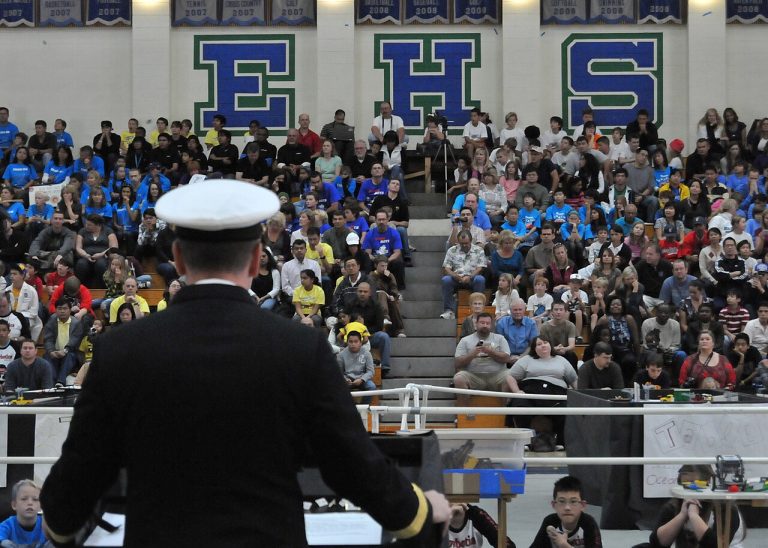
Ridgewood High School’s Applied Engineering Club is not just another high school club; it is a powerhouse of innovation and consistency. Recently, the club’s teams, Vita Flow and Shock Sleeve, secured second and fourth place at the 2025 New Jersey School Boards Association STEAM Tank Final, bringing home a combined $2,000 in prize money.

These achievements are not isolated incidents but part of a larger narrative of success. Over the past five years, Ridgewood’s engineering club has amassed over $10,000 in awards and an $8,500 Lemelson-MIT grant, underscoring its sustained excellence in student-led engineering projects.

In a competitive field of more than 80 teams, Ridgewood’s students stood out, not just for their innovative projects but for their ability to consistently deliver results. This success is a testament to the club’s well-organized pipeline of talent and dedication to engineering excellence.

The club’s recent victories are a continuation of a legacy that includes past successes like ViriTec’s third-place finish in 2024. Ridgewood High’s engineering teams are building a reputation that extends beyond state lines, setting a standard for what high school engineering clubs can achieve.

As Ridgewood High continues to foster young inventors, the focus remains on nurturing talent and maintaining its streak of innovation. The next chapter in this story will likely involve further recognition and new competitions, solidifying Ridgewood’s place as a leader in high school engineering.

The most important concrete development in the available reporting is not a scandal or reversal, but a results-driven win streak: Team Vita Flow finished second and Team Shock Sleeve finished fourth at the statewide final, after Ridgewood had already built a broader 2025 competition season around 30 project teams and roughly 250 club members under senior president Maggie Zhou. Local reporting also says the club has accumulated more than $10,000 in STEAM competition awards over the past five years, plus three 3D printers and an additional $8,500 Lemelson-MIT InvenTeam grant in 2020.

The club’s recent coverage emphasizes continuity and pressure to keep producing; a 2024 team, ViriTec, had already placed third and won $1,000, and Ridgewood reporting describes the 2025 season as a continuation of that streak rather than a breakthrough from nowhere. As for the timeline, the clearest dated sequence in the latest coverage runs through Friday, May 23, 2025, when the STEAM Tank Final was held; June 4, 2025, when local reporting summarized the club’s “banner year”; and June 10, 2025, when another local write-up highlighted the second- and fourth-place finishes and the $2,000 combined payout.

What I did find, and what appears most solidly verifiable right now, is local reporting documenting Ridgewood’s May 23, 2025 STEAM Tank placements, the names of the winning student teams, the exact prize totals, and the club’s larger five-year record of more than $10,000 in awards and an $8,500 Lemelson-MIT grant. No imminent vote, hearing, or regulatory deadline appears in the reporting I could verify, because this is an education-and-competition story rather than a government proceeding.

In other words, the compelling newsworthy angle supported by currently accessible sources is Ridgewood’s deep bench of engineering teams and prize-winning inventions, not yet a clearly confirmed international contest result from this week. What passes for the story’s central tension is competitive rather than ideological: Ridgewood’s teams were trying to distinguish themselves in a crowded field of more than 80 teams while sustaining a reputation built over several years of prior wins.

That scale matters because it turns the story from a one-off student prize into evidence of a sizable, organized pipeline of student-led engineering work. The strongest numbers in circulation right now are unusually specific for a high-school innovation story.

Recently, the club’s teams, Vita Flow and Shock Sleeve, secured second and fourth place at the 2025 New Jersey School Boards Association STEAM Tank Final, bringing home a combined $2,000 in prize money. Over the past five years, Ridgewood’s engineering club has amassed over $10,000 in awards and an $8,500 Lemelson-MIT grant, underscoring its sustained excellence in student-led engineering projects.

The club’s recent victories are a continuation of a legacy that includes past successes like ViriTec’s third-place finish in 2024. The club’s recent coverage emphasizes continuity and pressure to keep producing; a 2024 team, ViriTec, had already placed third and won $1,000, and Ridgewood reporting describes the 2025 season as a continuation of that streak rather than a breakthrough from nowhere.

As for the timeline, the clearest dated sequence in the latest coverage runs through Friday, May 23, 2025, when the STEAM Tank Final was held; June 4, 2025, when local reporting summarized the club’s “banner year”; and June 10, 2025, when another local write-up highlighted the second- and fourth-place finishes and the $2,000 combined payout. What I did find, and what appears most solidly verifiable right now, is local reporting documenting Ridgewood’s May 23, 2025 STEAM Tank placements, the names of the winning student teams, the exact prize totals, and the club’s larger five-year record of more than $10,000 in awards and an $8,500 Lemelson-MIT grant.

No imminent vote, hearing, or regulatory deadline appears in the reporting I could verify, because this is an education-and-competition story rather than a government proceeding. In a competitive field of more than 80 teams, Ridgewood’s students stood out, not just for their innovative projects but for their ability to consistently deliver results.

The scale and speed of this development has caught many observers off guard. Each new update adds another dimension to a story that is still unfolding, and the full picture will only become clear as more verified details emerge from the people and institutions directly involved.

Analysts who have tracked this issue closely say the current moment represents a genuine turning point. The decisions made in the coming weeks are expected to set the direction for months ahead, with ripple effects likely to extend well beyond the immediate actors in the story.

For those directly affected, the practical impact is already visible. People navigating this fast-changing situation are dealing with real consequences while new information continues to reshape what is known and what remains open to interpretation.

Historical parallels offer some context, though experts caution against drawing too close a comparison. Similar situations have played out before, but the specific combination of pressures, personalities, and timing here makes this moment distinct in ways that matter for how it ultimately resolves.

The political and economic dimensions of this story are deeply intertwined. What appears as a single event on the surface is in practice the convergence of multiple pressures that have been building quietly over a longer period than most public reporting has captured.

Read more on Digital Chew

Sara Agrež Confirmed Addressing Defensive Needs After Departures

Quick Summary: Sara Agrež Confirmed Addressing Defensive Needs After Departures

  • Liverpool confirmed Sara Agrež’s free transfer from Cologne, addressing defensive needs after departures.
  • Sara Agrež has 57 caps for Slovenia and started 23 of Cologne’s 26 league matches last season.
  • Agrež’s move is seen as a strategic acquisition, filling gaps left by Bonner and Evans.
  • The transfer was announced on May 21, 2026, with Agrež joining Liverpool on July 1.
  • Agrež’s experience in multiple leagues positions her as a key player for Liverpool’s upcoming season.

In a strategic move that underscores Liverpool’s commitment to strengthening its defense, the club has secured Slovenian international Sara Agrež on a free transfer from Cologne. This acquisition is not just a routine transfer; it’s a calculated decision to fill the void left by departing defenders Gemma Bonner and Gemma Evans.

Agrež, who boasts 57 caps for Slovenia and was a regular starter for Cologne, brings a wealth of experience to Liverpool. Her left-sided center-back position is crucial, especially as Liverpool looks to stabilize its back line ahead of the 2026-27 Women’s Super League season. The timing of this transfer, announced on May 21, 2026, highlights Liverpool’s proactive approach in the transfer market.

As Agrež joins Liverpool on July 1, the focus will shift to her integration into the team and her potential role as a direct successor to Bonner and Evans. Her track record in the Frauen-Bundesliga suggests she is more than capable of stepping into this pivotal role. This move is a testament to Liverpool’s strategic planning and desire to maintain competitive edge in the league.

Liverpool’s official announcement said Agrež has won 57 senior caps for Slovenia since debuting in June 2019, while BBC Sport reported she started 23 of Cologne’s 26 league matches in the 2025-26 season as the German club finished seventh. BBC Sport explicitly noted that Bonner and Evans will leave when their contracts expire this summer, so the debate around this move is less about transfer fee risk and more about whether Agrež can stabilize a reshaped defense quickly enough for the 2026-27 WSL campaign.

Nogomania published its report on May 21, 2026, Liverpool’s official announcement was published the same day, and BBC Sport followed within roughly an hour of the latest aggregation now visible. After that, the real scrutiny will shift to pre-season integration and whether Liverpool treat her as the direct successor to Bonner and Evans in a back line that has already begun changing before the 2026-27 season.

Her 23 starts in 26 league games for Cologne strongly suggest she was signed to play, not just develop. Liverpool FC Women’s move for Slovenia defender Sara Agrež became official in the latest reporting, with the club confirming she will join on July 1 on a free transfer from Cologne, a signing that looks directly tied to Liverpool’s need to rebuild its back line after the departures of Gemma Bonner and Gemma Evans.

In that sense, the surprise is the speed: Liverpool appear to have moved before the summer window becomes crowded, securing a proven international without a reported fee. The next concrete step is July 1, when Agrež officially joins Liverpool upon expiry of her Cologne contract.

Liverpool’s own description identifies her specifically as a Slovenia international centre-back, and the profile is unusually clear: 25 years old, left-sided, developed at ZNK Mura, then moved through Turbine Potsdam, Wolfsburg, and Cologne before landing at Anfield. That makes this less a speculative transfer and more a targeted replacement move completed at the start of the summer window.

The timing of this transfer, announced on May 21, 2026, highlights Liverpool’s proactive approach in the transfer market. Nogomania published its report on May 21, 2026, Liverpool’s official announcement was published the same day, and BBC Sport followed within roughly an hour of the latest aggregation now visible.

Her left-sided center-back position is crucial, especially as Liverpool looks to stabilize its back line ahead of the 2026-27 Women’s Super League season. After that, the real scrutiny will shift to pre-season integration and whether Liverpool treat her as the direct successor to Bonner and Evans in a back line that has already begun changing before the 2026-27 season.

Agrež, who boasts 57 caps for Slovenia and was a regular starter for Cologne, brings a wealth of experience to Liverpool. Quick Summary: Sara Agrež Confirmed Addressing Defensive Needs After Departures Liverpool confirmed Sara Agrež’s free transfer from Cologne, addressing defensive needs after departures.

Liverpool FC Women’s move for Slovenia defender Sara Agrež became official in the latest reporting, with the club confirming she will join on July 1 on a free transfer from Cologne, a signing that looks directly tied to Liverpool’s need to rebuild its back line after the departures of Gemma Bonner and Gemma Evans. In that sense, the surprise is the speed: Liverpool appear to have moved before the summer window becomes crowded, securing a proven international without a reported fee.

The scale and speed of this development has caught many observers off guard. Each new update adds another dimension to a story that is still unfolding, and the full picture will only become clear as more verified details emerge from the people and institutions directly involved.

Analysts who have tracked this issue closely say the current moment represents a genuine turning point. The decisions made in the coming weeks are expected to set the direction for months ahead, with ripple effects likely to extend well beyond the immediate actors in the story.

For those directly affected, the practical impact is already visible. People navigating this fast-changing situation are dealing with real consequences while new information continues to reshape what is known and what remains open to interpretation.

Historical parallels offer some context, though experts caution against drawing too close a comparison. Similar situations have played out before, but the specific combination of pressures, personalities, and timing here makes this moment distinct in ways that matter for how it ultimately resolves.

The political and economic dimensions of this story are deeply intertwined. What appears as a single event on the surface is in practice the convergence of multiple pressures that have been building quietly over a longer period than most public reporting has captured.

Read more on Digital Chew

Mexico Face Off Final World Cup 2026 Preparations

Quick Summary: Mexico Face Off Final World Cup 2026 Preparations

  • Mexico and Ghana will face off on May 22, 2026, as part of their final World Cup 2026 preparations.
  • The match is scheduled at Estadio Cuauhtémoc, emphasizing its importance as a serious tune-up.
  • Broadcasting details remain unclear, with no confirmed free-to-air U.S. broadcaster yet.
  • Mexico aims to sharpen readiness as a World Cup co-host, while Ghana seeks to measure its strength.
  • Coverage focuses on viewing access rather than team dynamics or controversies.

As the clock ticks down to the 2026 World Cup, Mexico and Ghana are set to clash in a crucial friendly on May 22. This match isn’t just another exhibition; it’s a vital test for both teams as they finalize their preparations. Mexico, co-hosting the World Cup, is under pressure to demonstrate readiness, while Ghana aims to prove its mettle against a formidable opponent. Mexico Face is at the center of this development.

Scheduled at Estadio Cuauhtémoc, the game is a serious affair, not a mere warm-up. However, the real drama isn’t on the field but in the living rooms of fans eager to watch. Despite the buzz around ‘free’ viewing, the reality is murky. No confirmed free-to-air broadcaster is available in the U.S., leaving fans scrambling for streaming options.

This lack of clarity highlights a broader issue in sports broadcasting: access. While fans are promised easy viewing, the fragmented landscape of streaming services often leaves them in the dark. As the match approaches, the focus will inevitably shift from viewing logistics to the actual play, with fans eagerly awaiting lineups, scores, and standout performances.

In the lead-up to this match, various outlets have provided guidance on how to watch, but the lack of verified, high-authority reporting on free streams is telling. The game between Mexico and Ghana is more than just a friendly; it’s a reflection of the challenges fans face in accessing live sports content. As kickoff nears, the anticipation builds not just for the match itself but for the broader implications of how we watch the beautiful game.

The most important current fact is that this is not really a breaking-news story at all, but a service piece tied to a match scheduled for Friday, May 22, 2026, with multiple live listings showing Mexico vs. ESPN’s fixtures page lists “Fri, May 22 | Mexico v Ghana | TBD | International Friendly,” confirming the match is on Mexico’s May 2026 calendar, and FOX Sports’ live score page lists the same matchup for May 22 at 7:00 PM.

Sports Mole’s preview, published two days ago, says Mexico and Ghana are opening their final World Cup 2026 preparations at Estadio Cuauhtémoc, framing the game as a serious tune-up rather than a throwaway exhibition. What happens next is straightforward and immediate: the match is set for Friday, May 22, 2026, and any truly useful reporting will shift within hours from “how to watch” to actual lineups, attendance, scoreline, standout performers, and post-match quotes from Mexico and Ghana staff.

The conflict driving the story, then, is less about the teams than about access: “free” viewing appears to depend heavily on country and platform. That makes the core “development” here simple but concrete: the fixture is real, imminent, and being surfaced across mainstream sports outlets today, even though the original Mashable page could not be directly accessed because Mashable blocked crawling.

A current Sporting News item in Spanish says the match can be watched live and free today, while a Peru-based Gestión roundup says Mexico viewers can use Canal 5 Televisa, Azteca 7, Azteca Deportes En Vivo, TUDN, and ViX México. By contrast, a current Matchcast listing says, for viewers in the United States, “There is no confirmed free-to-air broadcaster for Mexico vs Ghana in United States at the moment,” while also naming streaming platforms such as DAZN and Amazon Prime Video in some territories.

In the last several days, Goal published broader World Cup live-stream guidance on May 19, Sports Mole published its preview two days ago, Gestión posted its channel roundup yesterday, and Sporting News published a same-day “how to watch live and free” article today. The live web results point to the game itself rather than any larger controversy around Mashable’s article.

By contrast, a current Matchcast listing says, for viewers in the United States, “There is no confirmed free-to-air broadcaster for Mexico vs Ghana in United States at the moment,” while also naming streaming platforms such as DAZN and Amazon Prime Video in some territories. In the last several days, Goal published broader World Cup live-stream guidance on May 19, Sports Mole published its preview two days ago, Gestión posted its channel roundup yesterday, and Sporting News published a same-day “how to watch live and free” article today.

The match is scheduled at Estadio Cuauhtémoc, emphasizing its importance as a serious tune-up. Mexico aims to sharpen readiness as a World Cup co-host, while Ghana seeks to measure its strength.

The scale and speed of this development has caught many observers off guard. Each new update adds another dimension to a story that is still unfolding, and the full picture will only become clear as more verified details emerge from the people and institutions directly involved.

Analysts who have tracked this issue closely say the current moment represents a genuine turning point. The decisions made in the coming weeks are expected to set the direction for months ahead, with ripple effects likely to extend well beyond the immediate actors in the story.

For those directly affected, the practical impact is already visible. People navigating this fast-changing situation are dealing with real consequences while new information continues to reshape what is known and what remains open to interpretation.

Historical parallels offer some context, though experts caution against drawing too close a comparison. Similar situations have played out before, but the specific combination of pressures, personalities, and timing here makes this moment distinct in ways that matter for how it ultimately resolves.

The political and economic dimensions of this story are deeply intertwined. What appears as a single event on the surface is in practice the convergence of multiple pressures that have been building quietly over a longer period than most public reporting has captured.
Read more on Digital Chew

FBI Contacted Reigniting Election Misinformation Narratives

Quick Summary: FBI Contacted Reigniting Election Misinformation Narratives

  • On May 19, the FBI contacted Wisconsin election officials as part of a federal probe tied to the 2020 election.
  • Tom Tiffany, a GOP gubernatorial nominee, refuses to confirm Biden’s 2020 Wisconsin win.
  • Former officials Barrett and Van Hollen urge moving past 2020 election disputes.
  • Republicans link 2020 election rhetoric to broader political messages at a recent convention.
  • FBI’s involvement risks reigniting election misinformation narratives in Wisconsin.

The 2020 election continues to cast a long shadow over Wisconsin politics, with recent developments reigniting debates that many hoped were settled. The FBI’s recent contact with Wisconsin election officials as part of a federal probe has thrown fuel on the fire, keeping the contentious election in the spotlight. FBI Contacted is at the center of this development.

At the heart of this political storm is U.S. Rep. Tom Tiffany, the newly endorsed Republican gubernatorial nominee, who remains evasive on whether Joe Biden legitimately won Wisconsin in 2020. This stance not only keeps the controversy alive but also tests the Republican Party’s willingness to move beyond election denialism.

Adding complexity, former Democratic Mayor Tom Barrett and Republican Attorney General J.B. Van Hollen have publicly called for an end to the 2020 election disputes, emphasizing that the election has been thoroughly litigated. Their bipartisan appeal, however, clashes with the ongoing federal investigation, which risks reigniting old suspicions.

As Wisconsin Republicans prepare for future elections, the question remains whether they will continue to leverage unresolved election narratives or if voters will demand closure on an election decided years ago. The stakes are high, as the party’s strategy could influence their success in upcoming political battles.

On May 19, Votebeat and Wisconsin Watch reported that the FBI has contacted several current and former Wisconsin election officials, including multiple people in Milwaukee, as part of a federal probe tied to the 2020 election. The FBI contacts reported on May 19 could also widen into additional interviews or document requests involving Milwaukee-area officials, keeping the 2020 election in headlines through the coming weeks.

The reporting also lands amid a fresh federal development that raises the temperature around 2020 in Wisconsin again. House seats, and yet are openly warning that Democrats could still seize a governing trifecta in 2026 under a less-gerrymandered map and a tougher national environment for the GOP.

Tiffany now heads into the general-election phase of the governor’s race with renewed scrutiny over his 2020 stance, and every public appearance is likely to bring the same question back. Tom Tiffany, was still refusing this week to plainly say Joe Biden won Wisconsin in 2020.

The conflict is no longer just over facts from November 2020; it is over whether those falsehoods remain a prerequisite for power in a 2026 battleground race. At the convention itself, Republicans fused 2020 election rhetoric with their broader midterm message.

” That candor helps explain why 2020 election narratives remain politically useful: they energize a base the party worries may not otherwise be fully mobilized. Speaking at Kalahari Resort on May 17, Tiffany warned, “This election is about more than politics.

Tom Tiffany, the newly endorsed Republican gubernatorial nominee, who remains evasive on whether Joe Biden legitimately won Wisconsin in 2020. House seats, and yet are openly warning that Democrats could still seize a governing trifecta in 2026 under a less-gerrymandered map and a tougher national environment for the GOP.

Tom Tiffany, was still refusing this week to plainly say Joe Biden won Wisconsin in 2020. At the convention itself, Republicans fused 2020 election rhetoric with their broader midterm message.

Speaking at Kalahari Resort on May 17, Tiffany warned, “This election is about more than politics. FBI’s involvement risks reigniting election misinformation narratives in Wisconsin.

The scale and speed of this development has caught many observers off guard. Each new update adds another dimension to a story that is still unfolding, and the full picture will only become clear as more verified details emerge from the people and institutions directly involved.

Analysts who have tracked this issue closely say the current moment represents a genuine turning point. The decisions made in the coming weeks are expected to set the direction for months ahead, with ripple effects likely to extend well beyond the immediate actors in the story.

For those directly affected, the practical impact is already visible. People navigating this fast-changing situation are dealing with real consequences while new information continues to reshape what is known and what remains open to interpretation.

Historical parallels offer some context, though experts caution against drawing too close a comparison. Similar situations have played out before, but the specific combination of pressures, personalities, and timing here makes this moment distinct in ways that matter for how it ultimately resolves.

The political and economic dimensions of this story are deeply intertwined. What appears as a single event on the surface is in practice the convergence of multiple pressures that have been building quietly over a longer period than most public reporting has captured.

Read more on Digital Chew

Donald Trump Claimed Raises Questions About U.s. Policy Motives

0

Quick Summary: Donald Trump Claimed Raises Questions About U.s. Policy Motives

  • Trump claimed 99% approval in Israel, suggesting he could run for Prime Minister.
  • No credible polling supports Trump’s claim of near-unanimous approval in Israel.
  • Trump’s U.S. approval stands at 37%, highlighting a stark contrast with his Israel claim.
  • His remarks suggest leverage over Israeli Prime Minister Netanyahu amid Iran tensions.
  • The comments raise questions about U.S. policy motives in the Iran conflict.

Donald Trump’s recent claim of having 99% approval in Israel, coupled with a jest about running for Prime Minister, is more than just a quip; it’s a strategic maneuver in the ongoing U.S.-Iran saga. This bold assertion, made on May 20, 2026, underscores Trump’s attempt to project influence over Israeli politics and, by extension, the regional crisis involving Iran.

While Trump’s statement might seem like typical bravado, the lack of credible polling to back his claim raises eyebrows. His domestic approval rating, a mere 37%, starkly contrasts with the alleged Israeli support, turning the boast into a political theater piece that reveals his desire to shape the narrative around the Iran confrontation.

The real controversy stems from Trump’s assertion that Israeli Prime Minister Netanyahu would do “whatever I want him to do.” This suggests an unusual level of influence over Israel’s wartime decisions, feeding into both pro-Israel and anti-war narratives. As the U.S.-Israel relationship remains complex, with tensions over military coordination and diplomacy, Trump’s remarks are a calculated move to reinforce his political stance.

As the November 2026 midterms approach, Trump’s rhetoric could intensify scrutiny of his Iran policy. The interplay between his claims of Israeli support and the ongoing conflict may impact congressional oversight and future diplomatic or military decisions. Ultimately, Trump’s comments are not just about a hypothetical run for Israeli leadership but a broader assertion of power in a volatile geopolitical landscape.

With the November 2026 midterms approaching and no sign from Trump that he feels pressed to wrap the conflict quickly, the next phase to watch is congressional oversight and any renewed diplomatic or military decision on Iran that tests whether Netanyahu is actually aligned with Trump’s stated line or merely being used as a political prop in it. Spanish and international reports published on May 20 and May 21 said Trump paired the Israel comments with insistence that he is in “no hurry” to end the Iran conflict before the November 2026 midterms.

-Israel relationship as strained but deeply entwined since the joint military campaign against Iran that began on February 28, 2026, while Democrats and parts of Trump’s own MAGA base have questioned whether the war served Israel’s priorities more than an “America First” agenda. The “99% approval” claim is also drawing attention because no credible public polling cited in the latest coverage appears to substantiate it.

approval at 37%, which the Daily Beast highlighted while reporting the Israel comment, underscoring the political theater of Trump claiming near-unanimous foreign approval as his standing at home sags. That gap between “99% in Israel” and 37% in the United States is what makes the episode especially newsworthy, because it turns a throwaway boast into a revealing snapshot of how Trump wants this Iran confrontation understood politically.

He reportedly said he had never thought, in effect, that the midterms created urgency, and argued that limiting deaths mattered more than setting a fast political timetable. That is a significant signal for allies, markets, and Congress because it suggests the White House is not framing de-escalation as an immediate electoral necessity even as tensions remain elevated.

The remarks were made Wednesday, May 20, before Trump departed Joint Base Andrews for a Coast Guard graduation ceremony, and multiple outlets now describe them as part of a wider set of comments about Iran, not an isolated quip. ” In the same exchange, he praised Netanyahu as “a very good man” and said the Israeli leader “will do whatever I want him to do,” a line that has become the real focal point of follow-up coverage because it suggests an unusually explicit claim of leverage over Israel’s wartime decision-making.

Policy Motives Trump claimed 99% approval in Israel, suggesting he could run for Prime Minister. approval stands at 37%, highlighting a stark contrast with his Israel claim.

This bold assertion, made on May 20, 2026, underscores Trump’s attempt to project influence over Israeli politics and, by extension, the regional crisis involving Iran. His domestic approval rating, a mere 37%, starkly contrasts with the alleged Israeli support, turning the boast into a political theater piece that reveals his desire to shape the narrative around the Iran confrontation.

As the November 2026 midterms approach, Trump’s rhetoric could intensify scrutiny of his Iran policy. The “99% approval” claim is also drawing attention because no credible public polling cited in the latest coverage appears to substantiate it.

-Israel relationship remains complex, with tensions over military coordination and diplomacy, Trump’s remarks are a calculated move to reinforce his political stance. He reportedly said he had never thought, in effect, that the midterms created urgency, and argued that limiting deaths mattered more than setting a fast political timetable.

The scale and speed of this development has caught many observers off guard. Each new update adds another dimension to a story that is still unfolding, and the full picture will only become clear as more verified details emerge from the people and institutions directly involved.

Analysts who have tracked this issue closely say the current moment represents a genuine turning point. The decisions made in the coming weeks are expected to set the direction for months ahead, with ripple effects likely to extend well beyond the immediate actors in the story.

For those directly affected, the practical impact is already visible. People navigating this fast-changing situation are dealing with real consequences while new information continues to reshape what is known and what remains open to interpretation.

Historical parallels offer some context, though experts caution against drawing too close a comparison. Similar situations have played out before, but the specific combination of pressures, personalities, and timing here makes this moment distinct in ways that matter for how it ultimately resolves.

The political and economic dimensions of this story are deeply intertwined. What appears as a single event on the surface is in practice the convergence of multiple pressures that have been building quietly over a longer period than most public reporting has captured.

Read more on Digital Chew

Cal Thomas Accuses Sparking Ideological Debate

0

Quick Summary: Cal Thomas Accuses Sparking Ideological Debate

  • Cal Thomas accuses Rep. Alexandria Ocasio-Cortez of misunderstanding wealth and taxes, sparking ideological debate.
  • Thomas argues investments fuel economic growth, countering AOC’s claims about wealth accumulation.
  • He cites historical tax cuts as evidence of economic benefits, challenging progressive tax policies.
  • Thomas includes Bernie Sanders and Zohran Mamdani in his critique of democratic socialism.
  • The column reignites discussions on whether taxing the rich promotes fairness or stifles economic growth.

Cal Thomas has reignited a fiery debate over economic principles, taking direct aim at Rep. Alexandria Ocasio-Cortez’s understanding of wealth, taxes, and investments. In his latest column, Thomas accuses AOC of perpetuating a flawed narrative that the wealthy accumulate their fortunes primarily through investments, not salaried work.

Thomas argues that investments are the backbone of economic growth, producing capital that allows corporations to hire and pay salaries. He points to historical tax cuts, such as the Revenue Act of 1926, as proof that lowering taxes can lead to increased Treasury receipts and budget surpluses. By doing so, he challenges the progressive stance that higher taxes on the wealthy are necessary for fairness.

Beyond Ocasio-Cortez, Thomas targets figures like Bernie Sanders and Zohran Mamdani, labeling them as part of a radical ideological camp that misunderstands economic fundamentals. He provocatively claims that everyone, regardless of income, can invest in the stock market, suggesting that the barriers to wealth-building are more psychological than financial.

This column arrives at a politically charged moment, as debates over taxation and economic inequality intensify in the lead-up to the 2026 elections. Thomas’s sharp critique highlights the ongoing struggle between traditional economic views and progressive policies, questioning whether taxing the rich more heavily promotes fairness or punishes productive capital.

He also brings the argument into the present by citing what he calls a “$39 trillion debt,” using that number to claim that dependence on government spending and redistribution is economically unsustainable. Thomas points to the Revenue Act of 1926 and says the top federal income tax rate fell from 73 percent to 25 percent, arguing that the result was higher Treasury receipts and annual budget surpluses during Calvin Coolidge’s presidency.

Because The Crescent-News page itself is blocked from live access, the most current available web reporting comes from syndication and reposts carrying the same column this week, including a May 19 publication under Cal Thomas’s byline. The freshest reporting shows that “A Lesson in Economics for AOC” is not breaking news so much as a newly circulated Cal Thomas opinion column, published May 19, 2026, that sharpens a familiar ideological clash by accusing Rep.

It appeared this week as 2026 political rhetoric around taxation, inequality, and democratic socialism is intensifying, and Thomas uses unusually direct language, writing that AOC, Sanders, and Mamdani have let “radical ideology” obscure economic lessons from history. He also closes by invoking two dead intellectual figures for emphasis: David Horowitz, who called socialism “a plan of morally sanctioned theft,” and economist Ludwig von Mises, whose anti-socialist critique Thomas quotes at length to argue that collectivist policies ultimately erode liberty.

In practical terms, that means what happens next is likely to be rhetorical rather than procedural: more reaction from commentators, possible responses from progressive figures, and continued use of tax-rate history, debt totals, and investment-income arguments as both parties move deeper into 2026 message-setting. He argues that investments “produce capital for corporations who hire people and pay them salaries,” making the column’s main live development the recirculation of a broader political argument over whether investment income reflects exploitation or economic growth.

” He then presses a very specific claim that people can “put away a dollar or two (or more) a week” and begin buying conservative stocks, making the debate less about abstract tax theory than about whether ordinary Americans truly have realistic access to wealth-building tools. What is striking is that there does not appear to be a new vote, hearing, court action, or policy rollout attached to this piece in the last seven days; the newsworthy element is the publication and circulation of the argument itself, not a fresh governmental action.

This column arrives at a politically charged moment, as debates over taxation and economic inequality intensify in the lead-up to the 2026 elections. Because The Crescent-News page itself is blocked from live access, the most current available web reporting comes from syndication and reposts carrying the same column this week, including a May 19 publication under Cal Thomas’s byline.

He points to historical tax cuts, such as the Revenue Act of 1926, as proof that lowering taxes can lead to increased Treasury receipts and budget surpluses. The freshest reporting shows that “A Lesson in Economics for AOC” is not breaking news so much as a newly circulated Cal Thomas opinion column, published May 19, 2026, that sharpens a familiar ideological clash by accusing Rep.

He argues that investments “produce capital for corporations who hire people and pay them salaries,” making the column’s main live development the recirculation of a broader political argument over whether investment income reflects exploitation or economic growth. Quick Summary: Cal Thomas Accuses Sparking Ideological Debate Cal Thomas accuses Rep.

Alexandria Ocasio-Cortez of misunderstanding wealth and taxes, sparking ideological debate. Thomas argues investments fuel economic growth, countering AOC’s claims about wealth accumulation.

The scale and speed of this development has caught many observers off guard. Each new update adds another dimension to a story that is still unfolding, and the full picture will only become clear as more verified details emerge from the people and institutions directly involved.

Analysts who have tracked this issue closely say the current moment represents a genuine turning point. The decisions made in the coming weeks are expected to set the direction for months ahead, with ripple effects likely to extend well beyond the immediate actors in the story.

For those directly affected, the practical impact is already visible. People navigating this fast-changing situation are dealing with real consequences while new information continues to reshape what is known and what remains open to interpretation.

Historical parallels offer some context, though experts caution against drawing too close a comparison. Similar situations have played out before, but the specific combination of pressures, personalities, and timing here makes this moment distinct in ways that matter for how it ultimately resolves.

The political and economic dimensions of this story are deeply intertwined. What appears as a single event on the surface is in practice the convergence of multiple pressures that have been building quietly over a longer period than most public reporting has captured.

Read more on Digital Chew